The best time to visit the Banda Sea is mid-September to early November, and October is the pick of the year. There is no second season. Outside those weeks Banda Sea diving ranges from hit-and-miss to not worth the flights, because this is open ocean several kilometres deep with very little land to break the wind, and for about half the year the wind blows hard.
We run our Banda Sea liveaboard trips in that window and at no other time, and nearly every other boat in eastern Indonesia does the same. That makes the departure calendar a better guide to the season than most weather charts. An idle boat costs a fortune, so if the whole fleet has sailed off to Komodo by June, the June crossings are not ones you want to be on.
When is the Banda Sea diving season?
There is one season, and it is short.
It opens in mid-September as the southeast trade winds ease off, and it is over by early November, when the boats head north for Raja Ampat. October sits right in the middle. It has the calmest seas, the clearest water (30 to 40 metres at the offshore sites is normal rather than lucky) and more departures than any other month. Boats do pass through the Banda Sea on repositioning crossings at other times of year, but those are transits between regions, not a season, and we would not plan a Banda trip around one.
From late May to August the trades blow at 15 to 25 knots across the whole basin. December to February brings the northwest monsoon, with squalls that are harder to predict. Hardly anyone operates in either period. We don't.
The opening edge moves a little from year to year. Some Septembers are glassy from the first week, and in others the swell hangs around until the 20th. A single tropical low down in the Timor Sea can spoil a week that should have been perfect. The closing edge does not move: by early November the season is over.
Banda Sea weather: why the monsoons hit so hard
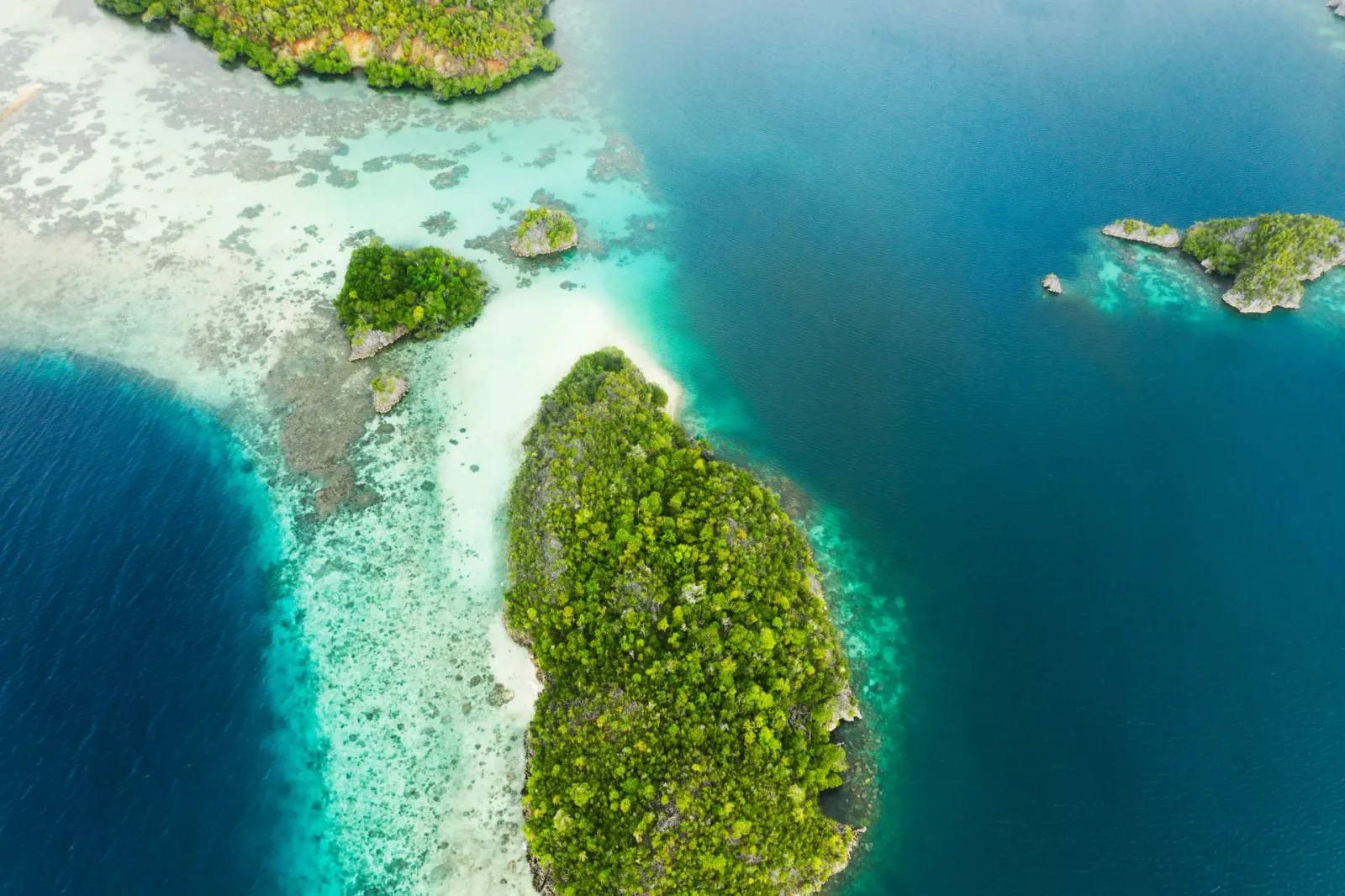
Look at a map and it makes sense. Raja Ampat is hundreds of islands packed close together. Komodo is all channels and bays, so a captain can nearly always tuck in behind something. The Banda Sea is a basin. It drops to roughly 7,200 metres at the Weber Deep, the deepest water in Indonesia, and the island groups inside it are small and a long way apart. On the run out to the southern seamounts you can spend a night more than 100 kilometres from land.
Two monsoon systems run Indonesian weather, and the basin catches both of them head-on.
- Southeast monsoon, roughly June to August. Dry trade winds come up from Australia and, with hundreds of kilometres of open water to work on, build a short, steep swell. The same winds cause the upwelling that cools the surface and fills it with plankton.
- Northwest monsoon, roughly December to February. Wetter westerlies and lines of squalls, often in the afternoon. Less steady than the trades, but enough to make overnight crossings rough and shut the exposed sites for days at a time.
- The autumn transition, September to early November. The trades have died and the northwest monsoon has not yet arrived. The wind can drop to almost nothing for days on end, and the sea goes glassy. This is the Banda season.
Ambon is where plans usually come unstuck. The gateway city gets most of its rain in June and July, the opposite of Bali, Lombok and Komodo, which are bone dry at that time of year. Plan around "the Indonesian dry season" and you land in Ambon's wettest months to board a boat on the roughest stretch of the Banda Sea's year. Guests ask us about August Banda trips every year for exactly this reason, and every year we point them towards Komodo instead.
The upwelling also explains why the season is so good for big fish. Three months of trade winds pull cold, nutrient-rich water up from depth. By September the wind is dying but the food is still there: plankton feeds the baitfish, and the baitfish pull in tuna, trevally and sharks around the seamounts. An autumn trip catches the end of that cycle once the sea is flat enough to reach the sites where it all concentrates.
The Banda Sea month by month
January and February: northwest monsoon
Squall lines roll through, usually in the afternoon, and 15 to 20 knots of wind can sit over the area for several days in a row. Scheduled Banda liveaboards are rare. A few boats run short trips out of Ambon, and the muck sites in Ambon Bay are sheltered enough to dive, but the routes out to the seamounts are unreliable. We don't schedule the Banda Sea in these months and wouldn't plan a first trip around them.
March to August: off-season
The northwest monsoon fades through March and April, but the open basin stays unsettled, and by late May the southeast trades are building. From June they blow at 15 to 25 knots on most days. With open sea stretching hundreds of kilometres to the southeast, every crossing turns into a long, lumpy ride, and Ambon is in its rainy season at the same time. The fleet spends these months in Raja Ampat and then Komodo, where the same winds bring the dry season. Boats sometimes pass through the Banda Sea on their way between the two, but that is a transit, not a Banda season. Some calendars online show July or August as the season opening. We've never found the crossings comfortable enough in those months to agree.
September: the season opens
The trades fade through September, not always smoothly, and the first half of the month can still bring leftover swell. The water is at its coolest, around 26 to 27°C at the surface and sometimes a degree or two lower at depth on the seamounts. It is also full of life after the upwelling. Our boats come north from Alor and the Forgotten Islands to Ambon in mid-September, and the first round trips out of Ambon leave in the last week of the month. Visibility climbs steadily, so late September is noticeably better than early September.
October: the best month to dive the Banda Sea
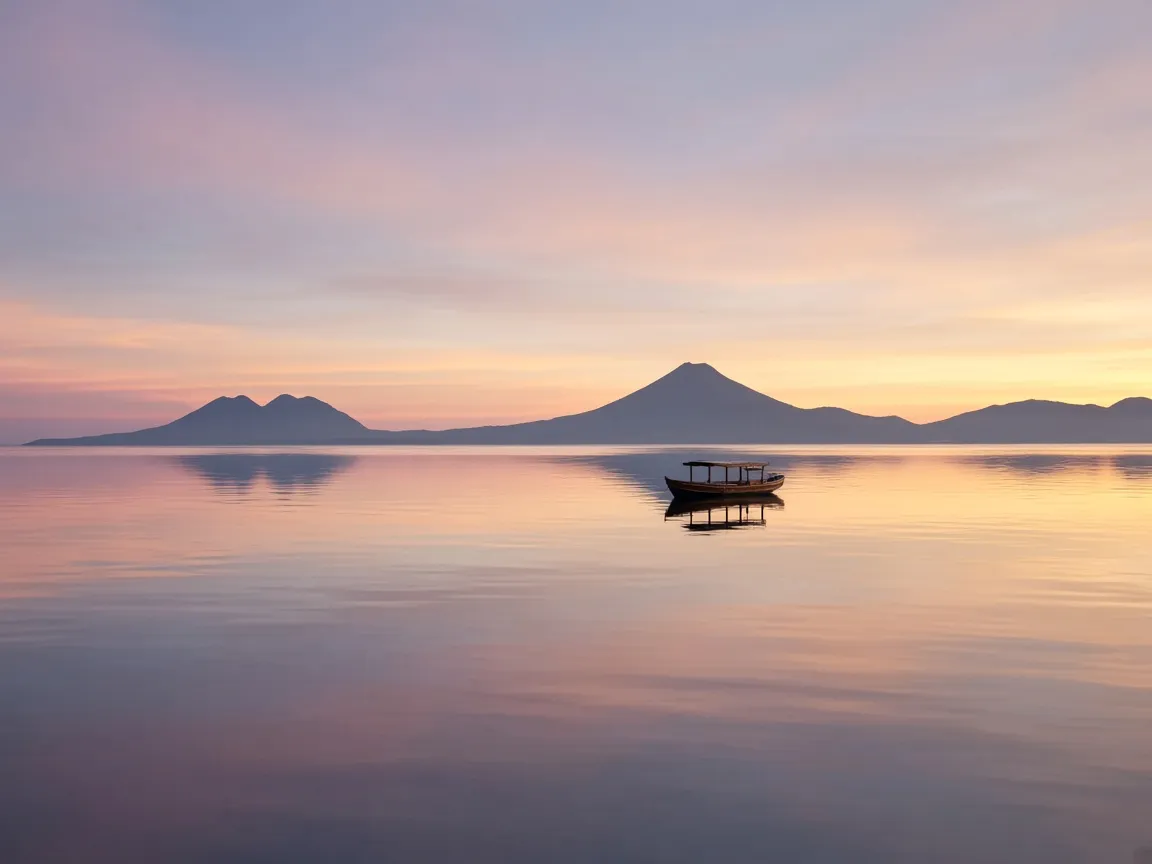
In most years October wins on nearly every count. The wind has usually gone, the sea can stay flat for days at a time, and 30 to 40 metres of visibility is common at the offshore sites. The pelagic life left behind by the upwelling is still around, and October produces the most consistent hammerhead reports of the year. It also has the most departures, with both of our Banda boats running back-to-back trips from Ambon through the whole month. The one real drawback is demand. October cabins go first, often a year or more ahead.
Early November: the season ends
The first days of November are still very good. The water warms back towards 28°C and visibility usually holds, but this is the end of the season, and by early November the boats are leaving for Raja Ampat. That makes late October and early November the time for the long exit crossings: Banda Sea to Triton Bay, to Misool and Sorong, or north to Halmahera. If you have ten or eleven nights to spare, these are some of the most varied routes in Indonesia.
Mid-November to February
The northwest monsoon builds through November and December, squall lines roll through, and the fleet has gone to Raja Ampat. We don't run Banda trips in these months. If this is the only time you can travel, Raja Ampat is the better choice.
Banda Sea diving conditions by month
| Month | Sea state | Water | Visibility | Boats running | Our verdict |
|---|---|---|---|---|---|
| January | Squally, northwest monsoon | 28 to 29°C | 15 to 20m | None | Off-season |
| February | Squally, variable | 28 to 29°C | 15 to 20m | None | Off-season |
| March | Unsettled | 28 to 29°C | 15 to 25m | None | Off-season |
| April | Unsettled | 29°C | 15 to 25m | None | Off-season |
| May | Trade winds building | 28°C | 15 to 20m | None | Off-season |
| June to August | Rough, southeast trades | 26 to 27°C | 15 to 25m | None | Off-season |
| September | Easing, some early swell | 26 to 27°C | 25 to 35m | Season opens mid-month | Good, better late |
| October | Often flat | 27 to 28°C | 30 to 40m | Peak | Best |
| Early November | Calm | 28°C | 30 to 40m | Last departures and exit crossings | Very good, season ends |
| Mid-November to December | Northwest monsoon building | 28 to 29°C | 20 to 30m | None | Off-season |
Water temperatures in the table are surface readings. On deep seamount dives, especially early in the season, you can drop through a cooler layer, so dress for the lower figure.
Banda Sea hammerhead season
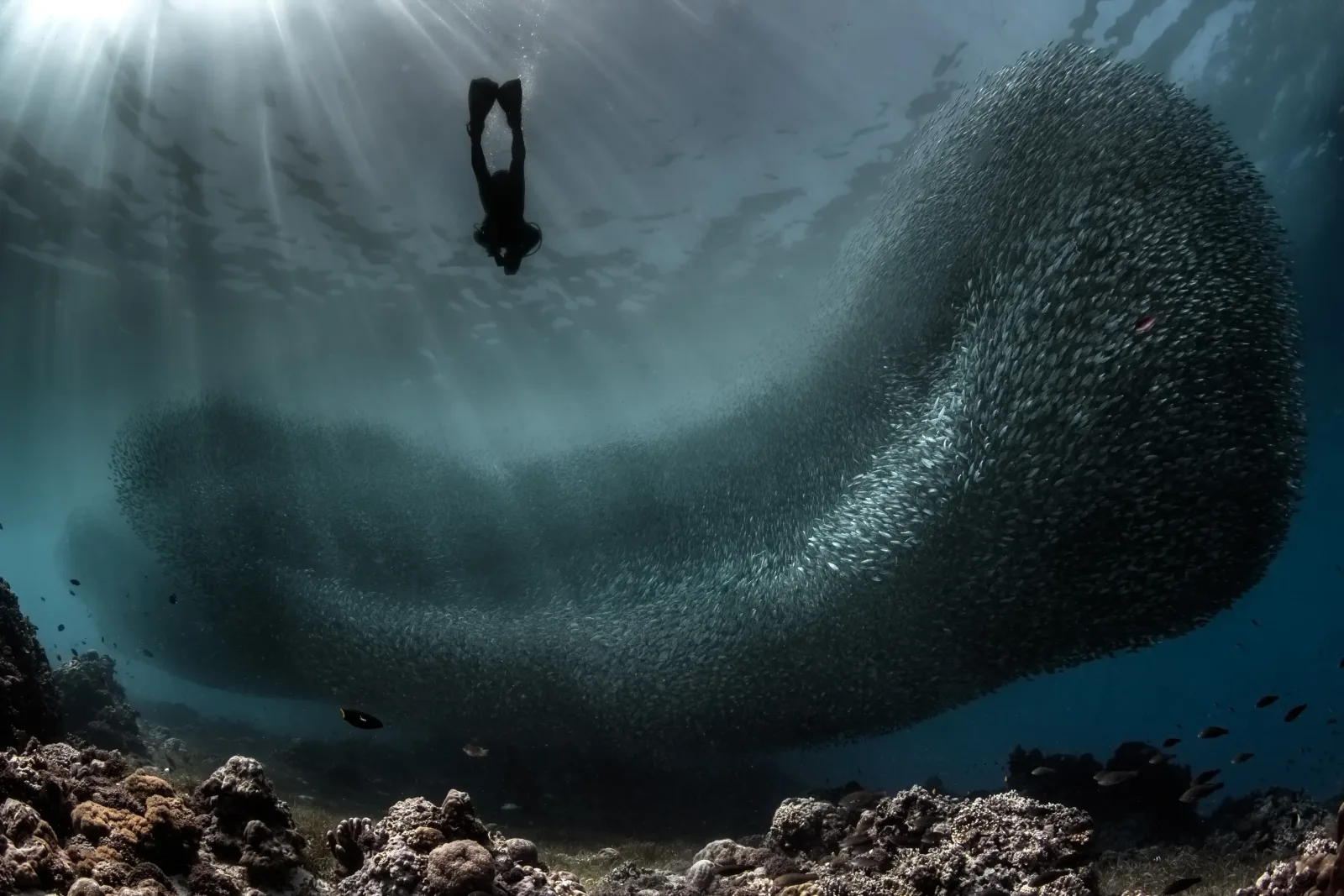
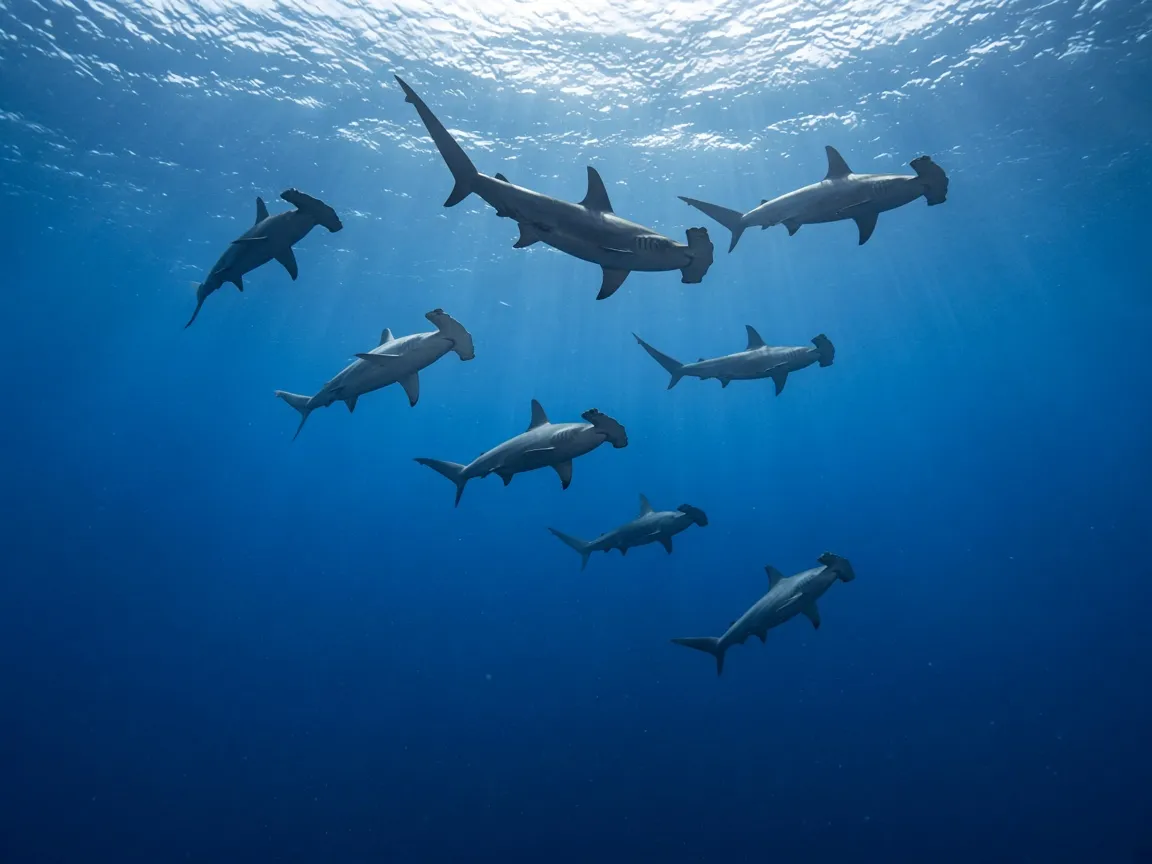
Hammerhead season in the Banda Sea is the diving season: late September to early November, with October the strongest month.
Scalloped hammerheads turn up at the offshore seamounts and on a few exposed walls. Reports of real schools, dozens of animals rather than two or three, come from late September into early November, when the upwelling has left the seamounts full of food and the sea is finally calm enough to dive them. You will see other months quoted online. With the basin unsettled and no boats out there to look, we don't plan around them.
The month changes the odds. It doesn't change how the dives work.
- Early. Usually the first dive of the day, often before breakfast, when the sharks sit a little shallower and closer to the reef.
- Deep. Most encounters are between 25 and 40 metres, sometimes hanging off the wall in open blue with no visual reference.
- Quiet. Scalloped hammerheads are shy, and a noisy group pushes them off. Good guides keep the group tight and still, and ask everyone to slow their breathing.
- Repetitive. A week of deep morning profiles eats into no-decompression time, and this is exactly the kind of trip where nitrox on a liveaboard earns its extra cost.
Scalloped hammerheads are listed as critically endangered, and the Banda Sea is one of very few places in Indonesia where schooling encounters still happen with any regularity. If they are the main reason you're going, book October. Choose a route that spends real time at the outer seamounts, not one that passes them overnight, and count any sighting as a bonus. Alor and southern Komodo have hammerhead sites too, and they sit alongside the other big-animal spots in our overview of shark diving in Indonesia.
Whale and dolphin season in the Banda Sea
Very deep water close to land makes the Banda Sea one of the better places in Indonesia to see whales and dolphins from the deck. Pilot whales, melon-headed whales and big groups of spinner dolphins are regular on the crossings, especially in calm autumn weather. Sperm whales show up now and then. Blue whales are reported passing through the eastern Indonesian straits and the Banda Sea around October and early November, but sightings are occasional at best and we would never sell a trip on them.
Flat water matters more than anything else here. A one-metre chop can hide a dorsal fin at 200 metres, so the calm that makes October good underwater also makes it the best month to look for whales. Leave binoculars on the sundeck during crossings and ask the crew to shout. They nearly always spot the blow first.
Plenty of the Banda Sea's best diving doesn't care what month it is. Mandarinfish come out at dusk in Banda Neira harbour every evening of the year. The sea snakes at Manuk Island in the Banda Sea are resident. The hard coral that has grown back over Gunung Api's 1988 lava flow is there whenever you can reach it, and so are the forts and nutmeg plantations left behind by the history of the Banda Islands. Most of these feature on any shortlist of the best dive sites in the Banda Sea, whatever the season.
Late September, October or early November?
The weeks inside the season aren't identical, and the right one depends on what you want from the trip.
| Late September | October | Early November | |
|---|---|---|---|
| Typical trip | Alor to Ambon crossing, or the first Ambon round trips | 7 to 8 night Ambon round trips, back to back | 10 to 11 night exit crossings to Triton Bay, Misool or Halmahera |
| Sea conditions | Easing, some leftover swell | Often flat | Usually calm |
| Water | 26 to 27°C | 27 to 28°C | Around 28°C |
| Visibility | 25 to 35 metres | 30 to 40 metres | 30 to 40 metres |
| Hammerheads | Schools arriving | Most consistent reports | Still possible on the outer seamounts |
| Availability | A little more room | Sells first | Limited, mostly crossings |
Late September suits divers who want the most life in the water and don't mind a bit of leftover swell. The water is at its coolest and richest after the upwelling, and the Alor crossings pass some of the least-dived reefs in the country.
October is the safe choice, and on a first visit it's the one we'd usually recommend: flat seas, the clearest water of the year and the best odds on hammerheads. Early November suits divers with time for a longer one-way crossing, and the route north pairs well with Misool diving in southern Raja Ampat.
Banda Sea liveaboard routes through the season
Within the good months, the route matters almost as much as the dates. Our Banda schedule follows the same pattern as most boats in the region, with three kinds of trip.
Alor to Ambon, mid-September. Boats finish the dry season around Alor and the Forgotten Islands, then work north through a string of remote volcanic islands to Ambon. You get the start of the season, some of the least-dived reefs in the country and ten or eleven nights on board. Early swell is more likely on this route than on any other. The southern half covers much of the same water as an Alor liveaboard, then threads through the Forgotten Islands of Indonesia on the way north.
Ambon round trips, late September and October. Seven or eight nights from Ambon and back, taking in the central Banda Islands, Gunung Api, Run and Ai, and the outer seamounts. This is the classic Banda trip and the one to choose if the Banda Sea itself is what you're after. Seven nights usually adds up to about 20 dives, give or take a few depending on how the crossings fall.
Exit crossings, late October and early November. Ten or eleven nights from Ambon to Kaimana for Triton Bay diving, to Sorong via Misool, or north to Ternate for Halmahera diving. More variety, more time at sea and a one-way flight home. More nights doesn't always mean more dives, since part of every crossing is spent under way.
Both of our Banda boats, King Neptune and Neptune One, follow this pattern every year. Dates shift a little between seasons, so check the live schedule on each boat's page rather than assuming last year's dates will repeat.
Banda Sea water temperature, visibility and what to pack
The water is warm all year, but four or five deep dives a day in open ocean feel colder than the numbers suggest.
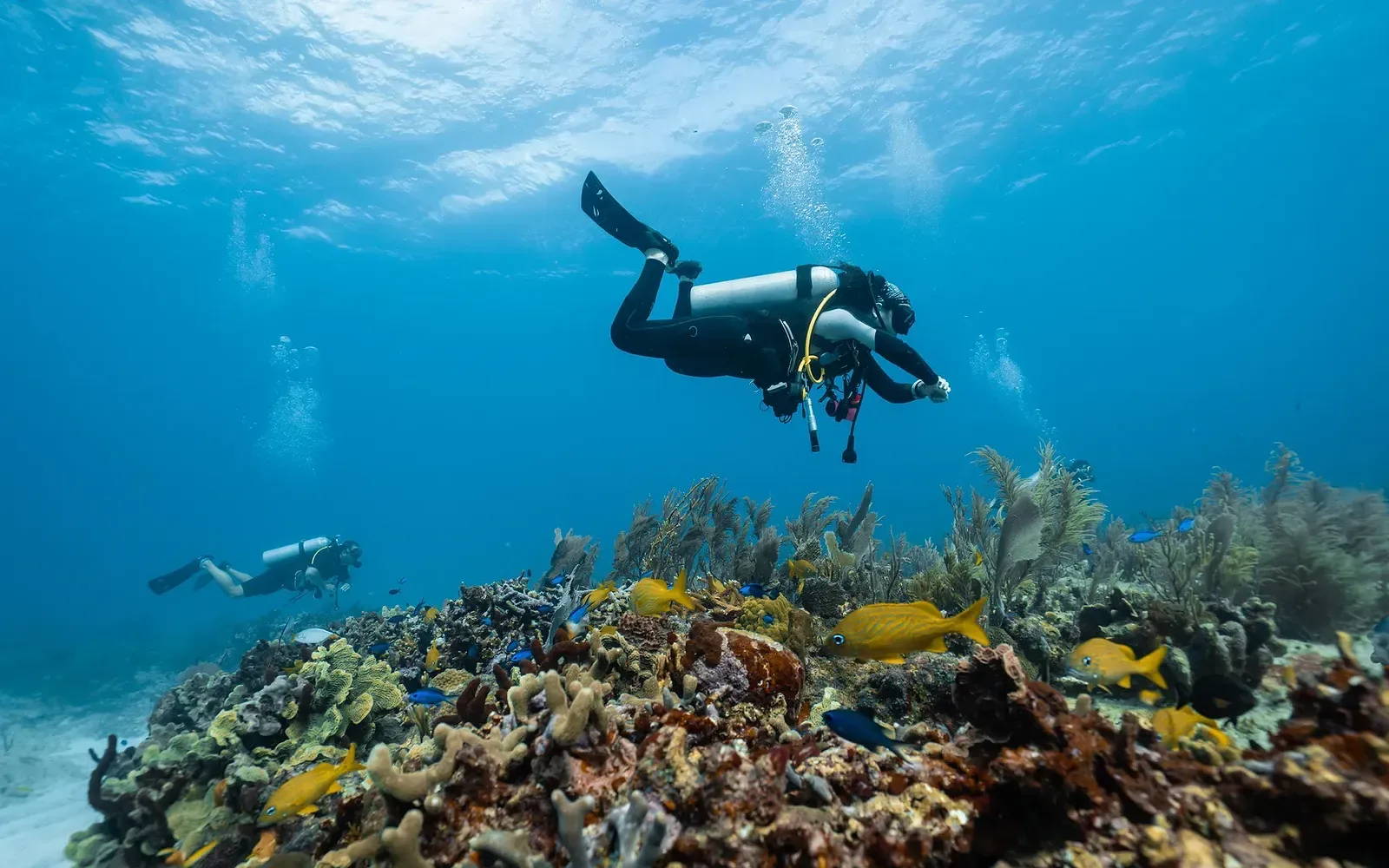
- Wetsuit: surface water stays between about 26 and 29°C. A 3mm full suit works for most people. If you feel the cold, bring a 5mm or add a hooded vest for early-season seamount dives.
- Visibility: 25 to 40 metres offshore in autumn, less inside Banda Neira harbour and on the Ambon muck sites, where nobody minds.
- Currents: the seamounts can run hard. A reef hook, a surface marker buoy and some previous experience of diving in currents in Indonesia all help.
- Experience: we recommend Advanced certification, around 50 logged dives and some deep diving before a Banda trip. If you're short of that, the dive certifications worth taking before a liveaboard are the quickest way to close the gap.
- Seasickness: even in October an overnight crossing can roll. Start your seasickness prevention on a liveaboard before the first night at sea, not after it.
On land, the Banda Islands are the one Indonesian liveaboard destination where you need proper shore clothes: walking shoes for the forts and the climb up Gunung Api, and long sleeves for the nutmeg plantations and village visits. For everything else, work from a liveaboard packing list for Indonesia.
Flights to Ambon, and why buffer days matter
Almost every Banda trip starts or ends in Ambon, at Pattimura Airport (AMQ), usually reached via Jakarta or Makassar. Exit crossings finish in Kaimana, Sorong or Ternate, each with its own domestic connections. Schedules in eastern Indonesia change constantly, and cancellations are routine.
Arrive the day before you board. Leave at least a full day between getting off the boat and any international flight, which also takes care of the rules on how long to wait before flying after diving. A spare day in Ambon isn't wasted, either. The bay has excellent critter diving of its own, and Ambon muck diving is a good reason to fly in two days early.
When to book a Banda Sea liveaboard
Earlier than almost anywhere else in Indonesia. October departures sell first, and it's normal for them to be heavily booked a year out. Our Banda departures for 2027 and 2028 are already on the schedule. September and early November have a little more room.
Particular cabins go before the boat does. Solo travellers looking for a shared cabin, and couples set on one cabin category, need the longest lead time.
Expect to pay more per night than for a similar week in Komodo. The reasons are unglamorous: fuel for long open-water legs, provisioning far from supply ports, and fewer departures to spread fixed costs across. Crossings also mean one-way domestic flights, which are rarely cheap. A realistic budget starts from the full breakdown of Indonesia liveaboard costs, including the extras a quoted fare leaves out.
Banda Sea, Komodo or Raja Ampat in the same year?
The three seasons barely overlap, which is handy if you dive Indonesia more than once a year. Komodo can be dived all year and peaks in the dry months, exactly when the Banda Sea shuts down. Raja Ampat's main season runs from roughly October to April, so the boats leaving Banda in early November are sailing straight into it. If you're weighing up regions, compare the best time to visit Komodo and the best time to visit Raja Ampat against the months above, or see all three calendars side by side under Indonesia liveaboard seasons.
If you know roughly when you can travel, contact us and we'll tell you which Banda weeks still have space.