The water in Raja Ampat is warm all year. On most dives it reads 28 to 30°C on a dive computer, it rarely drops below 27°C at the surface, and in the calm months around March and April the reefs of Misool can touch 31°C. That warmth is one of the reasons the archipelago feels so easy to dive: no hood, no gloves, no shivering on the tender between dives. But "warm" hides more variation than most guests expect, and it is the variation, not the average, that decides whether you are comfortable on dive four of day eight.
We run our Raja Ampat liveaboard season from November to April, out of Sorong, on two boats. Over a week of three or four dives a day you will feel the difference between the Dampier Strait and Misool, between an incoming and an outgoing tide, and between 12 and 28 metres. None of it is dramatic. A degree or two here, a cool layer there. Still, the questions we get most often before a Raja Ampat trip are about exactly this: how warm, how cold at depth, and which wetsuit to pack.
The figures below are the ranges our guides and dive computers record on the water, cross-checked against the temperatures we already publish in our season guides. Read them as typical ranges rather than a forecast. Ocean temperature moves with the monsoon, with the tides and, in some years, with the wider swings of El Niño and La Niña, so any single week can run a degree warmer or cooler than the table says.
What is the Raja Ampat water temperature?
The Raja Ampat water temperature is usually 27 to 30°C at the surface all year, warmest from November to April and coolest during the July and August southeast monsoon.
- Surface: 27 to 30°C
- Misool peak: about 31°C
- Thermocline: 18 to 25 metres
- Coolest month: July or August
It sits at the warm end of Indonesian diving, a degree or two above the Banda Sea and several degrees above southern Komodo in its upwelling season.
It matters most for:
- Multi-day trips of scuba diving in Raja Ampat
- Private yacht charter in Raja Ampat
- Deeper dives on the southern Misool reefs
In short: pack a 3mm full wetsuit, and expect warm water with the odd cool layer at depth.
Dampier Strait vs Misool: what is the difference in water temperature?
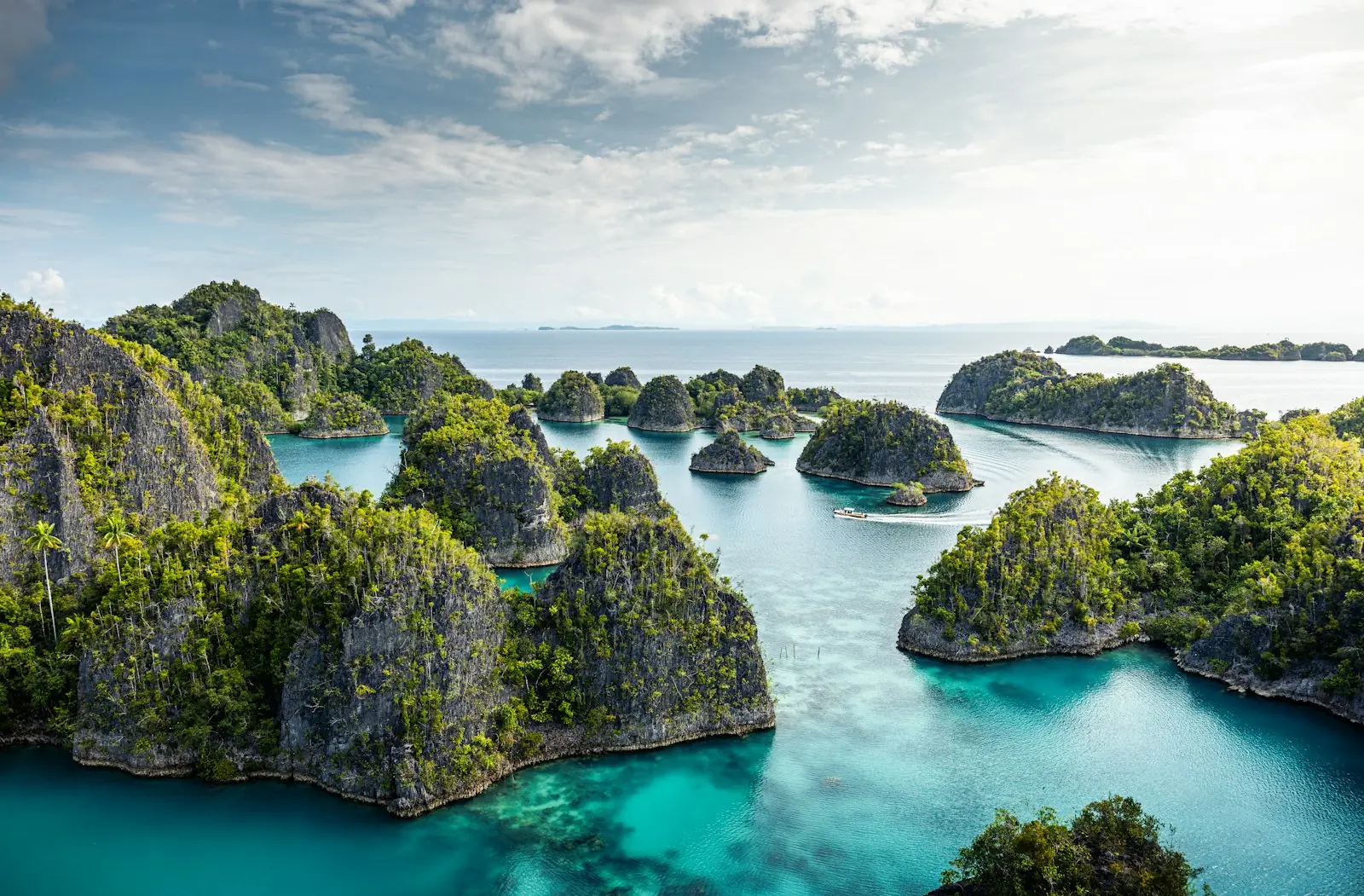
Raja Ampat stretches roughly 300 kilometres from Wayag in the north to the reefs south of Misool, and the two areas most guests dive, the Dampier Strait in the centre and Misool in the south, behave a little differently. The difference is small on paper and noticeable in the water.
Dampier Strait
The Dampier Strait is a channel between Waigeo and Batanta where water moving between the Pacific and the Indian Ocean surges back and forth on every tide, usually at 28 to 30°C. On strong tides the current can lift slightly cooler water from depth onto the points, so a site like Cape Kri or Blue Magic can feel a degree cooler at the end of the dive than at the start.
Misool
Misool sits on the southern edge of the archipelago, facing the Seram Sea, and its sheltered lagoons and karst walls hold heat, so it reads 29 to 31°C through most of our season. In the southeast monsoon, from about June to September, it is the first part of Raja Ampat to cool and roughen, because the wind and swell come straight across the Seram Sea.
Key distinction:
- The Dampier Strait changes with the tide, hour by hour.
- Misool changes with the monsoon, month by month.
Raja Ampat water temperature by month
The table groups the year into six blocks, because neighbouring months rarely differ by more than half a degree. The first two columns are surface readings; at depth, on the days a thermocline is present, knock off one to three degrees. The last column is when our boats are actually there, so you can see which months we can describe from our own logs and which we describe from the regional pattern.
| Months | Central and Dampier Strait | Misool | Sea state | Our boats |
|---|---|---|---|---|
| November to December | 29 to 30°C | 29 to 30°C | Calm, light northwest winds | Season opens |
| January to February | 28 to 30°C | 29 to 30°C | Mostly calm, some rain squalls | Full season |
| March to April | 29 to 30°C | 29 to 31°C | Calmest of the year | Full season, last departures |
| May | 28 to 30°C | 28 to 29°C | Winds starting to turn | Boats leave for Komodo |
| June to August | 27 to 28°C | 26 to 28°C | Southeast monsoon, rough south | Not running |
| September to October | 27 to 29°C | 27 to 29°C | Settling, warming | Not running |
Two things stand out. First, the whole annual range at the surface is only about four degrees, which is less than the swing you can get inside a single dive in southern Komodo. Second, our season lines up with the warm half of the year almost exactly. That is not a coincidence. The same southeast monsoon that cools the water from June also brings the wind and swell that make Misool and the open crossings uncomfortable, so from May the boats head west to Komodo and the Banda Sea, and they come back in November when the sea flattens out again.
If you are weighing months for reasons other than temperature, such as mantas, crowds or rain, our guide to the best time to visit Raja Ampat goes through the year month by month. For this article the short version is simple: every month we sail, the water is warm.
How water temperature plays out on a Raja Ampat liveaboard
Average temperature is the wrong number to plan around. What actually makes divers cold in warm water is accumulated time: lots of long dives, close together, over many days, with the body never quite getting back to where it started. Here is how that works across a typical trip.
1. The first day feels warmer than it is
On day one, 29°C water feels almost like a bath. You arrive rested, you are well fed, and the check dive is usually short and shallow. Plenty of guests tell us on the first evening that they will not need their wetsuit at all. In our experience, most of them are wearing it by day three.
2. Heat loss adds up, dive after dive
Water draws heat from the body roughly 25 times faster than air at the same temperature. Your skin sits at around 33°C, so even 29°C water is pulling heat away the whole time you are in it, slowly but without a break. One dive costs you very little. Four dives a day for ten days is a different matter.
3. The dive pattern sets the exposure
On our boats the day usually runs to three or four dives: an early dive, a late morning dive, an afternoon dive, and a dusk or night dive on most days. Surface intervals are typically 90 minutes to two hours, which is enough to eat and rest but not always enough to warm right through, especially if you sit on deck in a wet suit with the breeze on you.
4. Depth and tide add the cool patches
Most Raja Ampat diving happens between 5 and 25 metres. On a reef slope you may drop into a cooler layer at 20 metres or so, or meet a pulse of cooler water as the tide turns on a point. These patches are usually one or two degrees, sometimes three. They are rarely uncomfortable on their own, but they arrive on top of the cumulative loss from the days before.
5. The night dive is where it shows
The dusk or night dive is the coldest you will do all day, even though the water temperature has barely changed. You are tired, the sun has gone, and you get back onto the tender into the evening air. If anybody on the boat is going to start shivering, this is when it happens.
A worked example
Take one of King Neptune's eleven-day, ten-night Raja Ampat trips from Sorong in February, a route that usually covers the Dampier Strait, the north and Misool. Our cost guide lists about 27 dives on that trip. At a typical 55 to 60 minutes each, that is roughly 25 to 27 hours underwater, more than a full day in total, spread over nine diving days.
The water on that trip will mostly read 28 to 30°C at the surface. In Misool, on the walls and pinnacles, you may drop through a thermocline at around 20 to 25 metres to 27 or 28°C. On a strong tide in the Dampier Strait, a site that starts at 29°C can end at 28°C. Now multiply that by 27 dives. Each one takes a little heat, and the gap between 33°C skin and 28 or 29°C water is four to five degrees on every single dive.
In practice, that is why we suggest a 3mm full-length wetsuit as the baseline for a trip like this, not a shorty and not a rash vest. A shorty is fine for one or two dives. It stops being fine somewhere around dive ten. For context on costs, the same trip carries the Raja Ampat marine park card at IDR 700,000 (about USD 39), valid for twelve months, and the regency visitor levy of IDR 1,000,000 (about USD 55) per visit, both on top of the fare, as our Raja Ampat liveaboard cost guide explains in detail. Wetsuit rental, if you do not bring your own, is also an extra on all our boats.
Thermoclines in Raja Ampat: where, when and how cold
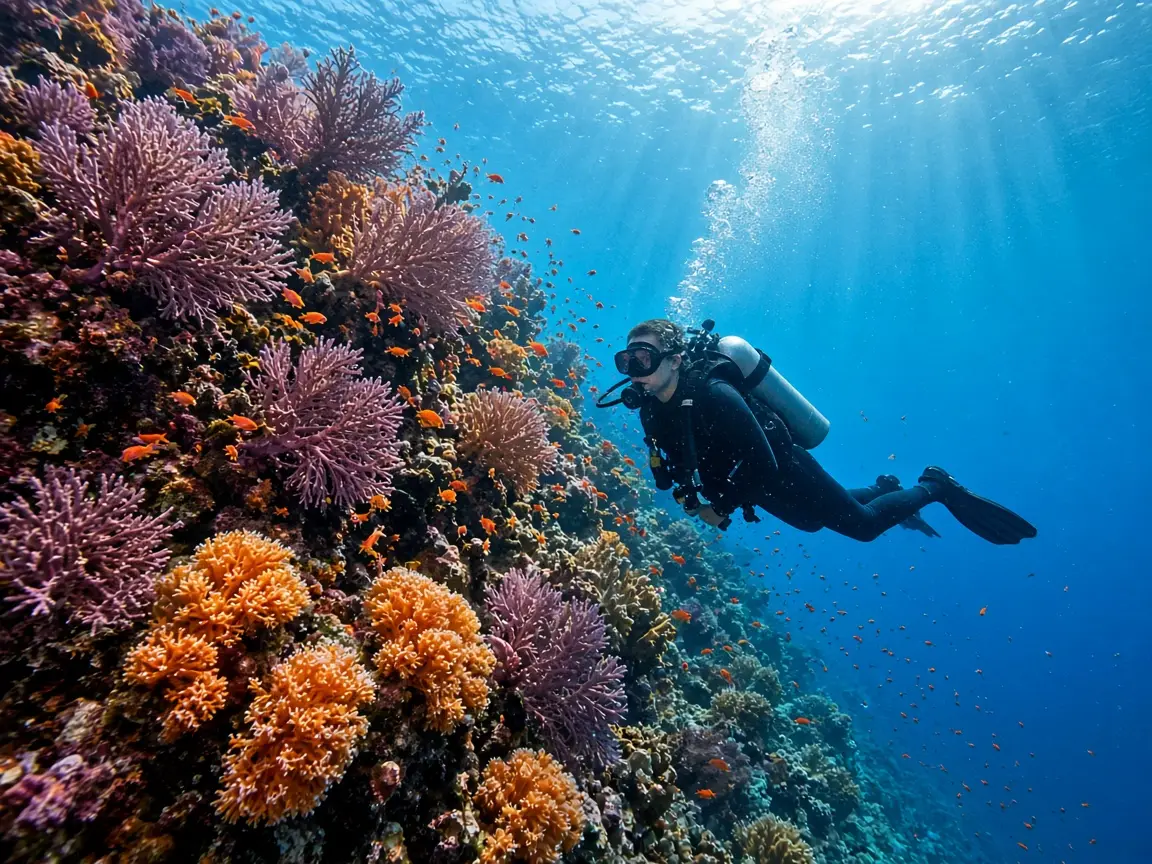
A thermocline is the boundary between warm surface water and cooler water below it. You see it before you feel it: the water shimmers, as if you were looking through hot air above a road, and then the cold arrives on your face and hands. In Komodo's south or at the Banda Sea seamounts in August, that drop can be six degrees or more. In Raja Ampat it is gentle by comparison.
During our season the thermocline, when there is one, usually sits somewhere between 18 and 25 metres, and the water below it is typically one to three degrees cooler than the surface. On many days there is no clear thermocline at all, because the tide mixes the water column. It is most noticeable on deeper walls and pinnacles exposed to open water, such as the outer reefs of Misool, and on points in the Dampier Strait just as the current changes.
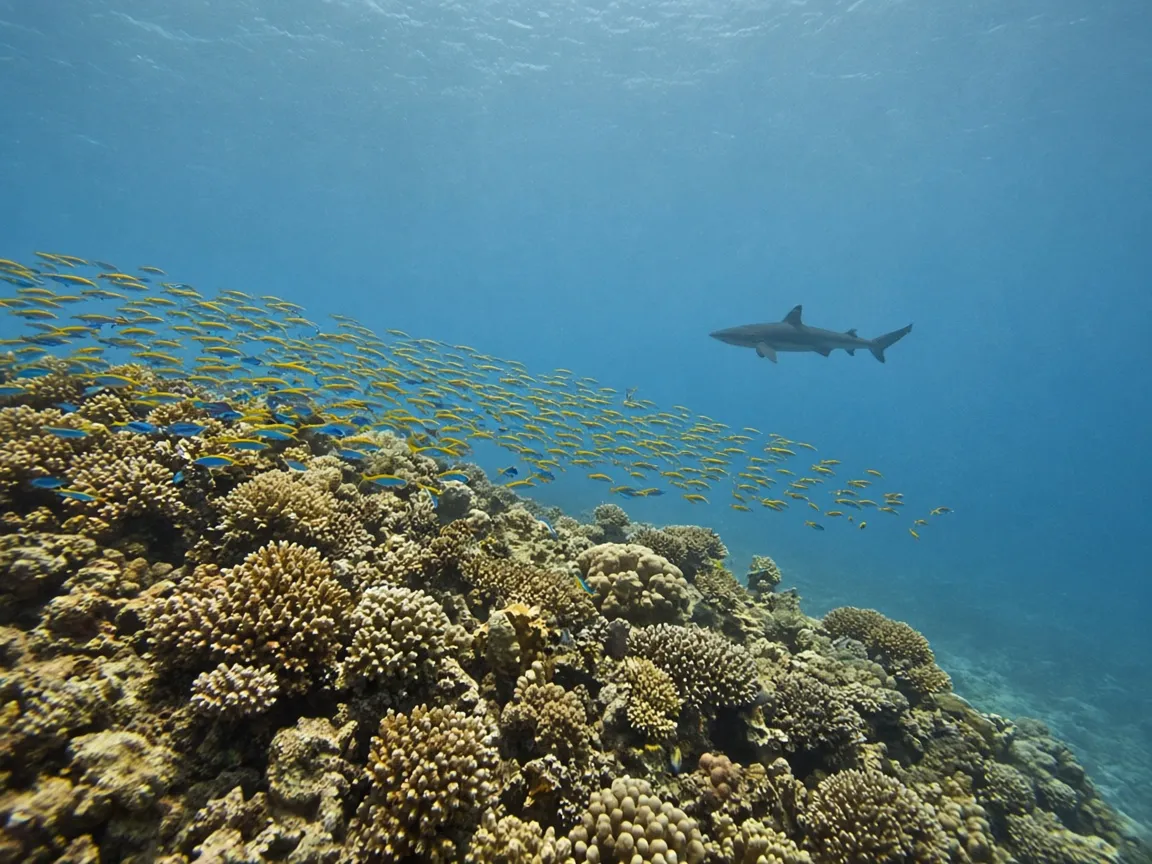
Why does it matter if it is only two degrees? Partly comfort, since a drop from 29 to 27°C on a long dive is enough to make a lightly dressed diver start counting the minutes. And partly because the cooler water is often the reason the site is good in the first place. The same currents that bring cooler, nutrient-rich water up from depth feed the plankton, which feeds the fish, which brings in the reef sharks, trevally and big schools of fusiliers that Raja Ampat is famous for. Our Dampier Strait diving guide covers the sites where this happens most often.
Two habits make thermoclines a non-issue. Keep your wetsuit zipped to the collar rather than open at the neck on the descent, and plan the deep part of the dive first, as you would anyway, so the coldest water comes when you have the most heat in reserve. If you find yourself cold at depth, rise a few metres. The warm layer is rarely far above you.
What wetsuit to wear in Raja Ampat
For most divers, the answer is a 3mm full-length wetsuit, in any month we sail. It is the suit we see most often on our dive decks in Raja Ampat, and it covers almost everyone from the first check dive to the last night dive. Beyond that, the right choice depends on how much you dive, how much body fat you carry and, frankly, whether you are the sort of person who feels the cold. Those three things matter more than the half-degree difference between January and March.
| Who you are | Suggested protection | Why |
|---|---|---|
| Snorkeller or one dive a day | Rash vest or 1.5mm shorty | Short exposure, mainly sun protection |
| Two or three dives a day | 3mm shorty or 3mm full | Comfortable for most people in 28 to 30°C |
| Four dives a day, a week or more | 3mm full wetsuit | Cumulative heat loss over many days |
| Feels the cold, or slim build | 5mm full, or 3mm plus hooded vest | Extra core warmth for night dives |
| Long photography dives | 5mm full | Very slow, very long dives at depth |
The photographers are the group people forget. A macro photographer hovering over a pygmy seahorse at 22 metres for 70 minutes is barely moving, and moving is how you generate heat. We regularly see photographers in 5mm suits on the same boat where everyone else is in 3mm, and they are right to be.
A few practical points that matter as much as thickness. Fit is everything: a 5mm suit that lets water flush through at the neck and wrists will keep you colder than a snug 3mm one. A hooded vest, a thin neoprene layer with a hood that goes under the wetsuit, is the most useful extra a cold-prone diver can pack, because it adds warmth to the core and head without the bulk of a thicker suit, and you can leave it off on the warmest days. Dry off and change out of the wet suit between dives where you can. Sitting in wet neoprene in the shade with a sea breeze will cool you more than the dive did.
Should you bring your own or rent? If you own a suit that fits, bring it. Rental suits on the boats are maintained and serviced, but rental is charged as an extra, and no rental suit will fit as well as one bought for your shape. For the rest of what to pack, including reef-safe sunscreen and a warm layer for the evenings, see our Indonesia liveaboard packing list.
Raja Ampat vs Komodo vs Banda Sea water temperature
Guests who are choosing between our routes often ask how Raja Ampat compares with the other two areas we dive most. The short answer is that Raja Ampat is the warmest and the most stable. Komodo is the least predictable, because it sits where the warm Flores Sea meets the cold Indian Ocean. The Banda Sea sits in between, but we dive it in the cooler part of its year.
| Region | Typical range when we dive it | Coldest you are likely to meet | Suggested suit |
|---|---|---|---|
| Raja Ampat (November to April) | 28 to 30°C, up to 31°C in Misool | About 26 to 27°C below a thermocline | 3mm full |
| Komodo, north and centre | 26 to 29°C | About 25°C on some tides | 3mm full |
| Komodo, south (June to September) | 22 to 26°C | About 20 to 22°C at times | 5mm full, hood optional |
| Banda Sea (September to October) | 26 to 28°C | Low 20s on the seamounts | 3mm to 5mm full |
The biggest contrast is southern Komodo. From about June to September the dry-season winds drive an upwelling that brings cold, green, plankton-rich water up from the Indian Ocean onto sites like Cannibal Rock and Manta Alley. It is superb diving, and it is cold diving: a guest who has been perfectly comfortable in a 3mm in the north can be shivering in the same suit a few hours later in the south. Our guide to the best time to dive Komodo goes through that seasonal swing in detail.
The Banda Sea is a quieter version of the same story. Its season runs while the southeast monsoon is still stirring the deep water, so the surface sits around 26 to 28°C, and on the hammerhead seamounts at Manuk and Serua a thermocline can drop the water into the low 20s at depth. The timing is covered in our piece on the best time to dive the Banda Sea. Then, from late October, the boats cross back to Raja Ampat and the water warms by two or three degrees in the space of a few weeks.
If you plan to combine regions in one trip, or to dive Komodo in August and Raja Ampat in the same year, pack for the coldest place on the list. A 5mm suit worn open at the wrists in Raja Ampat is a nuisance. A 3mm suit in southern Komodo in August is a miserable week.
What to check before you book a Raja Ampat liveaboard
Temperature is only one part of the picture, but several practical questions follow from it. These are the ones worth asking any operator, including us.
1. Which part of Raja Ampat the route covers
A route through the north and centre stays in the Dampier Strait and around Waigeo; a south and centre route spends days in Misool, which is warmer in our season but more exposed if the weather turns. Ask which areas the itinerary visits and how many days it spends in each.
2. How many dives a day, and how long
Four dives a day of 60 minutes is a very different exposure from three of 45. Ask the typical dive count for the trip and the usual dive length, and choose your suit from that answer rather than from the water temperature.
3. Whether rental wetsuits come in your size and thickness
If you plan to rent, ask what thicknesses the boat carries and whether your size is likely to be available, especially if you are very tall, very small, or want a 5mm suit.
4. Whether nitrox is included
Nitrox does not make you warmer, but many guests report feeling less tired at the end of a long day, and fatigue makes cold worse. On King Neptune nitrox refills are included in the fare; on Neptune One they are an extra.
5. What the deck set-up is like between dives
Ask whether there are warm showers on the dive deck and towels at the tender, both of which make more difference to comfort between dives than a millimetre of neoprene. On Neptune One, cabin and diving towels are listed in the inclusions.
6. How the guides handle cold or tired divers
A good guide team will shorten a dive or sit out a night dive with you without fuss. Ask how they group divers, and whether you can skip a dive and rejoin later without losing your spot in the group.
How to choose your Raja Ampat month by water temperature
Because the water is warm all season, temperature should rarely be the deciding factor on its own. It becomes useful as a tie-breaker, or when it is combined with the other things you care about. Here is how we would think about it for different kinds of diver.
- You feel the cold: March and April, when Misool reaches its warmest and the sea is at its calmest.
- You want mantas: November to March, when reef manta numbers peak at Manta Sandy and Manta Ridge in the Dampier Strait. The water is still 28 to 30°C.
- You want quiet and calm: November, at the start of the season, warm at 29 to 30°C and usually with fewer boats on the sites.
- You are combining with Komodo: pack for southern Komodo, and dive Raja Ampat in the same suit with the zip open.
- You can only travel in July or August: the water is at its coolest at 27 to 28°C, but the bigger issue is the sea state, which is why our boats are elsewhere.
Experience matters more than month. Raja Ampat's currents, particularly in the Dampier Strait, are a bigger factor in how a dive feels than a degree of temperature, and we recommend Advanced Open Water or equivalent for most routes. If you are newer to drift diving, our article on diving in currents in Indonesia explains what to expect, and the Misool route, with its sheltered lagoons and gentler walls, is usually the easier introduction. Our Misool diving guide describes those sites in more detail.
Trip length matters too. On a seven-night trip with about 19 dives, a cold-prone diver in a good 3mm suit usually gets through comfortably. On ten nights and 27 or so dives, that same diver will be glad of the hooded vest by the second half of the week.
Who a Raja Ampat liveaboard is for, and who it is not for
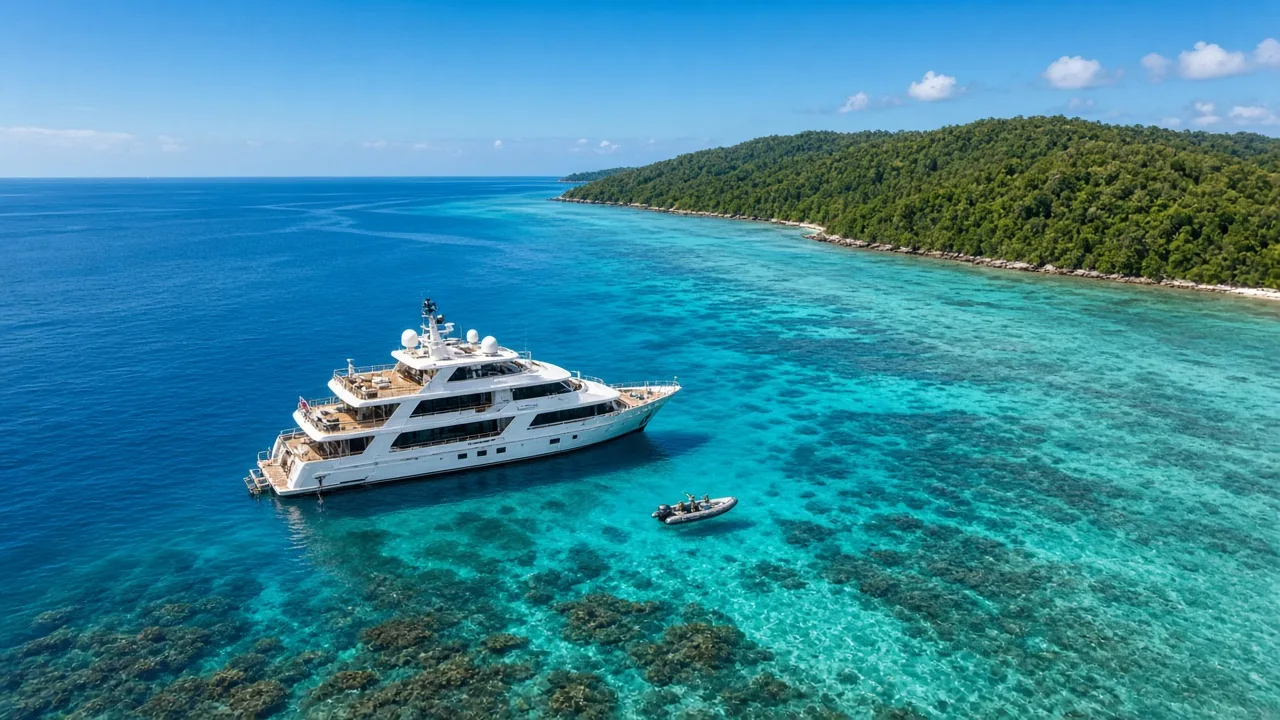
Two of our boats sail Raja Ampat from Sorong between November and April. Neptune One is a 39-metre liveaboard with eight cabins for sixteen guests, and it runs most of our departures, usually seven or eight-night loops of either the north and centre or the south and centre. King Neptune is our 46-metre flagship, with ten cabins for twenty guests and nitrox included, and it runs longer trips of up to ten nights that usually take in both the north and Misool. Both boats carry rental equipment, including wetsuits, at extra cost.
A Raja Ampat trip in our season suits divers who want warm, comfortable water with the richest reef life in Indonesia, photographers who are going to spend long, slow dives at depth and can dress for it, and anyone who has found Komodo's southern upwelling too cold. It also suits couples where one partner is a confident diver and the other prefers shorter dives or snorkelling, since the warm water makes it easy to skip a dive and swim from the tender instead.
It is not the right choice for everyone. If you want to see Raja Ampat in July or August, we cannot take you, because our boats are in Komodo and the Banda Sea then. If you are a newly certified Open Water diver with only a handful of logged dives, the currents in the Dampier Strait will challenge you more than the temperature, and you may get more out of a few days of guided diving elsewhere first. And if your priority is cold-water pelagics, such as the mola mola of Bali, the warm water of Raja Ampat is not where you will find them.
For a group that wants its own schedule and route, a private Raja Ampat yacht charter lets you pick the months and sites yourself. For everyone else, the full season of Raja Ampat liveaboard trips is on our schedule with live prices.
Key takeaways
- Raja Ampat's sea stays warm all year, usually 27 to 30°C at the surface, with Misool reaching about 31°C in March and April.
- The Dampier Strait changes with the tide, a degree or so hour by hour. Misool changes with the monsoon, cooling first from June.
- Thermoclines, when present, sit at 18 to 25 metres and are usually one to three degrees cooler than the surface.
- A 3mm full wetsuit suits most divers in every month we sail; go to 5mm or add a hooded vest if you feel the cold.
- Our boats run Raja Ampat from November to April, the warm and calm half of the year, and leave before the southeast monsoon.
- Raja Ampat is warmer and steadier than the Banda Sea and far warmer than southern Komodo from June to September.