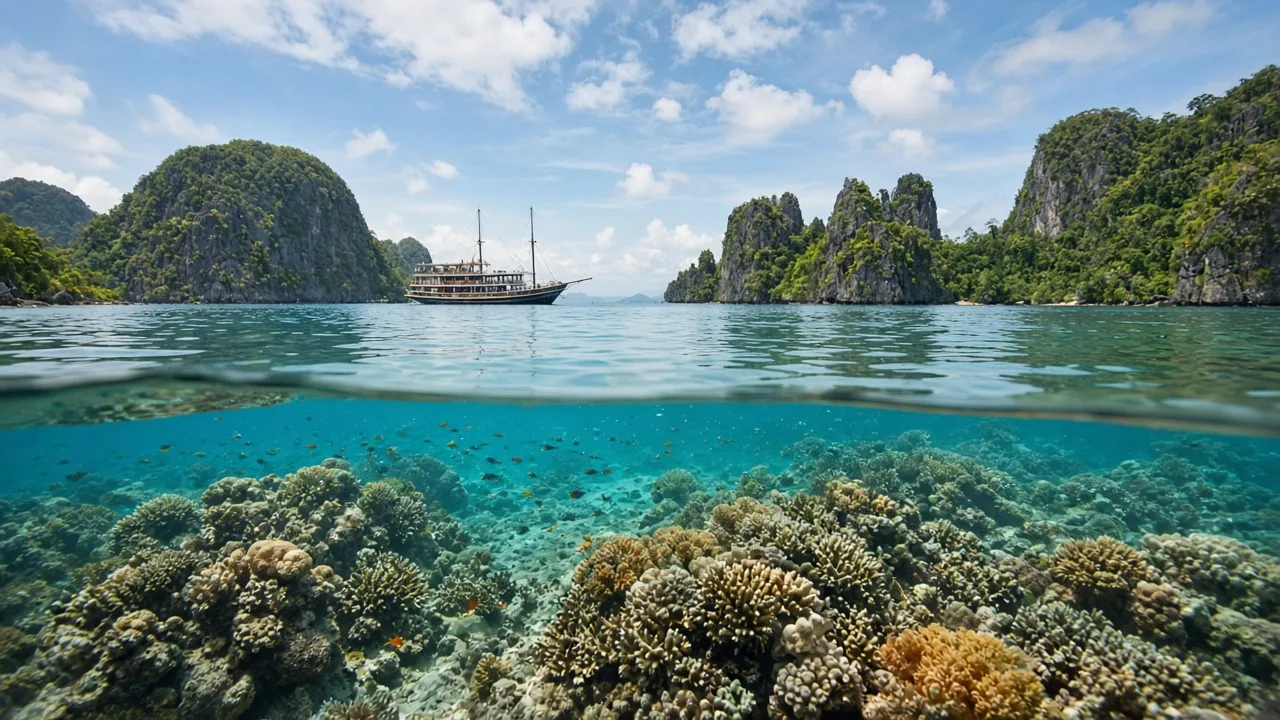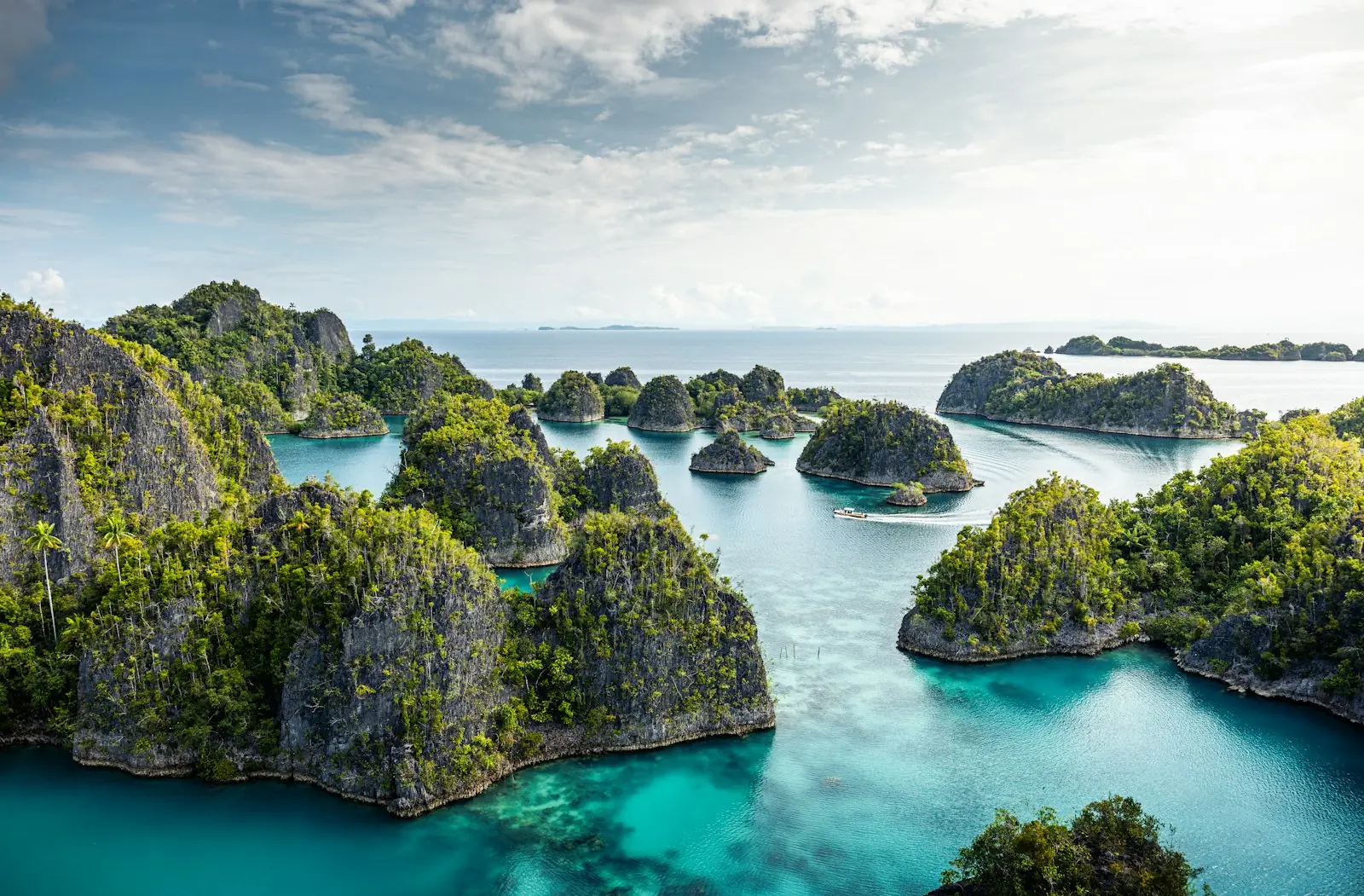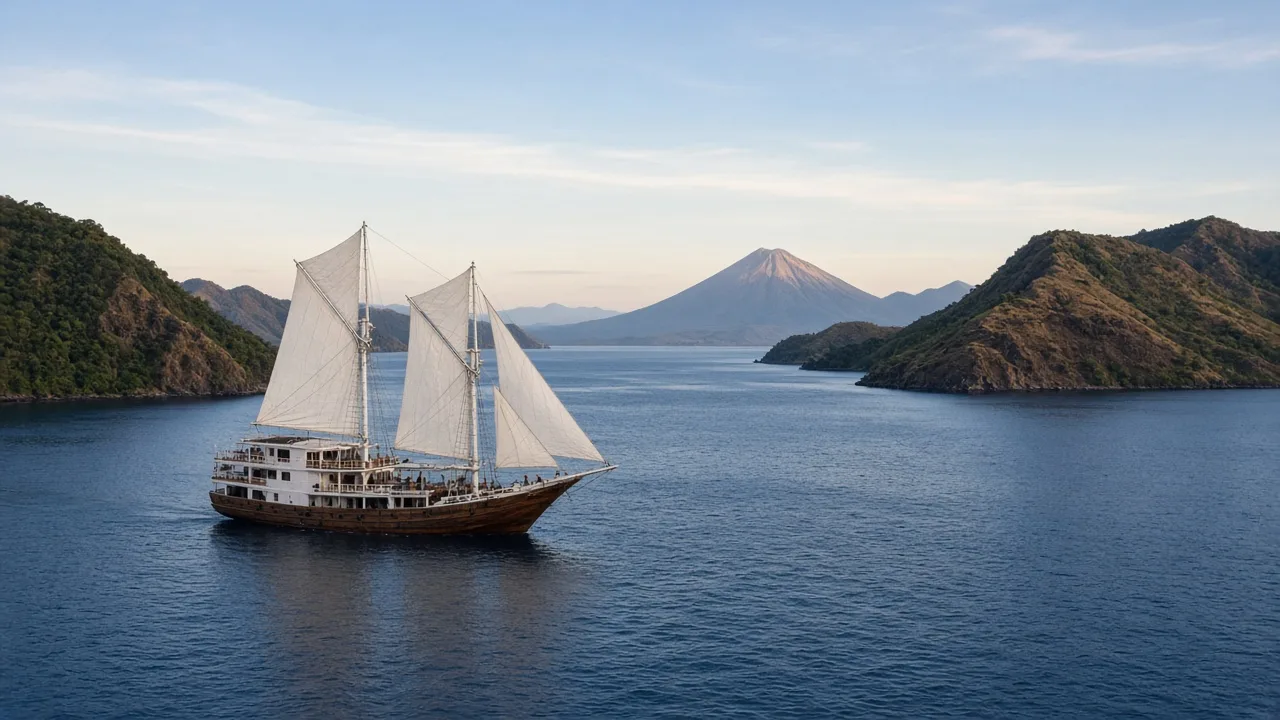
Indonesia and the Philippines share the same piece of ocean, the Coral Triangle, and on a good day the reefs of both look almost identical through a mask. What separates them is how you reach the diving. In the Philippines most of the famous sites sit within a short boat ride of a resort, while in Indonesia the best of it lies so far from any airport that an Indonesia liveaboard is often the only realistic way in. We run three boats in Indonesia and none in the Philippines, so read this with that in mind; we have tried to say plainly where the Philippines simply wins.
The short version is that neither country is better across the board. Indonesia has more remote reef, stronger currents, more big pelagic action and a liveaboard calendar that moves around the archipelago with the seasons, which is the core of scuba diving in Indonesia. The Philippines has easier logistics, cheaper day diving, a couple of encounters you cannot get anywhere else (thresher sharks every morning, a sardine ball off a public beach) and a typhoon season that shapes when you can go far more than anything in Indonesia does.
The facts below come from our own schedule and fares, the published fee tables in both countries and the Philippine weather service, checked in November 2026. Prices for Philippine boats are the ranges operators publish for the 2026 season, not quotes.
Indonesia vs Philippines diving: which is better?
Indonesia vs Philippines diving is the choice between remote, current-fed reefs reached mostly by liveaboard and compact island dive hubs reached mostly from a resort.
- Biodiversity and reef health
- Big animals and macro
- Seasons and typhoon risk
- Cost per night and per dive
- Flights and transfers
It sits between a pure liveaboard decision and a pure resort decision, because each country leans hard towards one of the two.
On the Indonesian side, the trips people compare with the Philippines are usually:
- A week-long Komodo liveaboard in the dry season
- A Raja Ampat liveaboard from October to April
- A Banda Sea liveaboard for hammerheads in autumn
In short: pick Indonesia for remote reefs and pelagics by boat, the Philippines for easy, varied diving from land.
Indonesia vs the Philippines: what is the difference?
Both countries are archipelagos on the western edge of the Pacific, both sit inside the Coral Triangle and both have world-class muck diving. The difference is mostly about distance, weather and how the dive industry grew up.
Indonesia
More than 17,000 islands spread over roughly 5,000 kilometres, with the richest reefs in the far east, in West Papua, Maluku and the Lesser Sunda islands. Getting there usually means two flights and a boat, and once you arrive the diving tends to be drift diving in real current, often with nobody else at the site.
The Philippines
About 7,600 islands packed into a much smaller area, with most dive regions within a domestic flight and a short transfer of Manila or Cebu. The dive scene is resort-led and very good value, and the big liveaboard draw, Tubbataha, opens for only about three months a year.
The key distinction:
- Indonesia: remoteness, current and pelagic life, mostly by liveaboard.
- The Philippines: access, variety and value, mostly by resort and day boat.
The two countries side by side
A table flattens a lot of nuance, and the sections after it fill that back in. Treat each row as the typical case, not a promise for every site.
| Factor | Indonesia | The Philippines |
|---|---|---|
| Main way to dive | Liveaboard, plus resorts in Bali, Lembeh, Bunaken | Resort and day boat, plus seasonal liveaboards |
| Signature encounters | Mantas, hammerheads, whale sharks, vast reef fish schools | Thresher sharks, sardine run, WWII wrecks |
| Currents | Often strong, especially Komodo and Dampier Strait | Mostly mild, strong at a few pinnacles |
| Storm risk | Low; equatorial, cyclones rare | About 20 tropical cyclones a year in its waters |
| Liveaboard nightly rate | Roughly USD 400 to 800 on our boats | Roughly USD 400 to 530 at Tubbataha |
| Entry for most Western visitors | e-VOA, IDR 500,000, 30 days | Visa-free 30 days, free eTravel form |
Two rows matter more than the rest. The storm row decides when you can go, and the "main way to dive" row decides how the holiday feels: one base and lots of variety by road, or one boat and a new site every few hours.
Marine life: biodiversity, big animals and macro
Start with the claim people argue about most. In 2005 two marine biologists, Kent Carpenter and Victor Springer, mapped the ranges of nearly 3,000 marine species and found the highest concentration per unit area in the central Philippines, peaking in the Verde Island Passage between Luzon and Mindoro, where a single 10 by 10 kilometre cell held 1,736 species (Carpenter and Springer, 2005). They called it the "center of the center" of marine shore fish diversity. That is a real result and Filipino dive centres are right to quote it.
It does not settle the question, though. Species richness per square kilometre is one measure; how much reef there is, how intact it is and how many large animals still use it are others. Indonesia holds far more reef area in total, and surveys in Raja Ampat alone have logged well over 1,500 reef fish species and more than 550 hard corals. The honest summary is that both countries sit at the top of the world list for variety, and you will not notice the difference in species count on any given dive. What you will notice is the fish biomass, the sheer weight of fish in the water, and on the remote Indonesian reefs that is usually higher, because fewer people have fished them and fewer divers have visited them.
Big animals
For pelagics the two countries specialise. The Philippines owns the thresher shark: at Malapascua, off northern Cebu, threshers come up to a cleaning station almost every morning. A detail many older guides miss is that since 2022 they have mostly used Kimud Shoal, where the cleaning station sits at about 12 to 22 metres, rather than the deeper Monad Shoal they were famous for. Tubbataha adds grey reef and whitetip sharks in numbers, with mantas and the odd hammerhead.
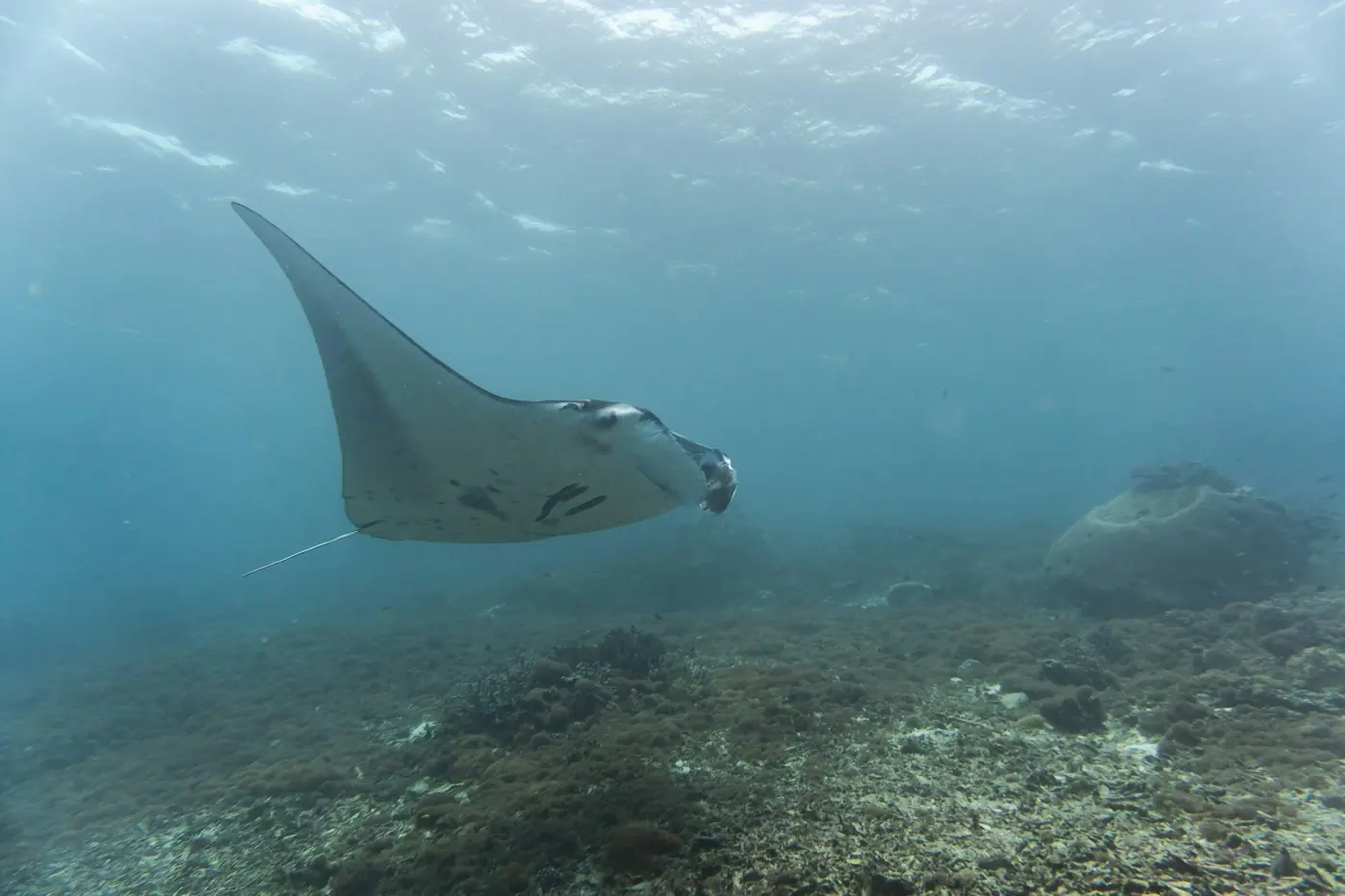
Indonesia's list is longer but more spread out. Komodo has reef mantas almost all year, with the central sites busiest in the wet season and Manta Alley in the south during the dry months. The Banda Sea has schooling scalloped hammerheads from roughly late September to early November, a short window we build a whole season around. And for oceanic sunfish, Bali's Nusa Penida is one of the few places on earth where divers see mola mola with any regularity, in the cold water months from about July to October.
Whale sharks
Both countries have them, and both have a version of the same ethical problem. In the Philippines, Donsol in Sorsogon offers wild whale sharks seen from a boat, snorkel only, roughly from December to May, while at Oslob in southern Cebu the sharks are hand-fed every morning so tourists can swim beside them, a practice marine biologists have criticised for years because it changes the animals' behaviour and exposes them to boat propellers. In Indonesia the sharks come to the bagan fishing platforms, where fishermen sometimes throw them bait fish, in Cenderawasih Bay, Triton Bay and Saleh Bay in Sumbawa. Our guide to where to see whale sharks in Indonesia covers each site and the codes of conduct.
Macro
Here it is close to a draw, and anyone who tells you otherwise has probably dived only one side. Anilao, south of Manila, and Dauin on Negros are as good as anywhere for nudibranchs, frogfish and blackwater diving. Indonesia answers with the Lembeh Strait, Ambon and the black sand of Tulamben in Bali. If macro is the whole reason for the trip, decide on logistics, not on critters.
Seasons, monsoons and typhoons
This is where the two countries really part ways. Indonesia straddles the equator, and most of it lies outside the main typhoon tracks of the western Pacific. The Philippines sits squarely in them. The national weather service, PAGASA, counts about 20 tropical cyclones entering Philippine waters in an average year, eight or nine of which cross the country, and puts the peak from July to October, when nearly 70 per cent of them form (PAGASA).
That does not make the Philippine summer a write-off. Malapascua and the Cebu side dive all year, and a storm hundreds of kilometres away often means no more than an evening of rain. But boats get cancelled, domestic flights get pushed back and the west coast, including Coron and El Nido, takes the south-west monsoon (habagat) from roughly June to October. The safe Philippine window is November or December through to May, with March to May usually the calmest.
Indonesia's seasons are monsoons without the storms, and they push the liveaboard fleet around the map rather than shutting it down. Komodo is at its best in the dry season from about April to November. Raja Ampat is best from October to April. The Banda Sea fits into the gap in September to November, when the boats move between the two. On our own schedule that means Komodo runs through the middle of the year and Raja Ampat and the Banda Sea run from September to April. The one caveat is the far south: the islands of Nusa Tenggara sit on the edge of the Australian cyclone belt, and in April 2021 Cyclone Seroja caused severe flooding in Flores and Alor. Storms like that are rare there, but not unknown.
| Months | Indonesia | The Philippines |
|---|---|---|
| January to March | Raja Ampat prime; Komodo wet, central mantas | Dry season; good almost everywhere |
| April to May | Komodo opens fully; Raja Ampat season ending | Calmest seas; Tubbataha at its best |
| June to August | Komodo peak; cold green south; mola at Nusa Penida | Tubbataha closes mid-June; typhoon risk rising |
| September to November | Banda Sea hammerheads; Raja Ampat reopens | Typhoon peak to October; settling in November |
| December | Raja Ampat and Misool in season | Dry season starting; holiday crowds |
The practical rule: if you can only travel in July or August, Indonesia is the safer bet by a distance. If you can only travel in April or May, both work, and the Philippines has the edge for Tubbataha. Our Indonesia liveaboard seasons guide goes region by region.
How a dive week works in each country
The best way to compare is to put a typical Indonesian liveaboard week next to the closest Philippine equivalent, step by step. For Indonesia we use a seven-night Komodo loop on Komodo Sea Dragon, because that is the trip most often weighed against the Philippines. For the Philippines we use a six-night Tubbataha trip, the country's best-known liveaboard, with notes on the resort alternative.
1. Getting to the boat
For Komodo you fly into Bali or Jakarta, then take a domestic flight to Labuan Bajo; from Bali it is a little over an hour in the air, and our group transfer collects you at the airport or hotel. For Tubbataha you fly into Manila, then on to Puerto Princesa in Palawan, and board in the afternoon for an overnight crossing of 10 to 12 hours. A resort week in Anilao, by contrast, starts with two or three hours by road from Manila airport, traffic permitting.
2. The diving days
Komodo Sea Dragon runs one to four guided dives a day at a ratio of four divers per guide, so across a seven-night loop expect somewhere around 20 dives, give or take, depending on how many the first and last days allow. Tubbataha boats typically plan three or four dives a day for four or five full days, which works out at roughly 12 to 16 dives. That gap is the overnight crossing at each end: Tubbataha sits about 150 kilometres out in the Sulu Sea, while the first Komodo dive is a couple of hours from port.
3. The kind of diving
In Komodo the guides plan around the tide tables. Sites like Batu Bolong and Castle Rock are dived on the right part of the tide, sometimes with reef hooks, and the south of the park can be several degrees colder than the north. Tubbataha is mostly wall diving with gentle to moderate current, superb visibility in April and May and very little to plan around except the weather. A resort week in the Philippines mixes in whatever is nearby: wrecks in Coron, sardines in Moalboal, threshers at dawn in Malapascua.
4. The fees
Here is a worked example for one non-Indonesian diver on our seven-night Komodo loop. The national park charges IDR 250,000 per person per day plus a diving surcharge of IDR 25,000 a day, so seven days inside the park comes to IDR 1,925,000, a little over USD 100 at current rates. At Tubbataha the official conservation fee is PHP 5,000 per visitor, about USD 85 to 90, but operators bundle it with vessel and port charges and usually quote USD 100 to 150 per diver, paid on board (Tubbataha Management Office). The fees, in other words, are close to identical.
5. The bill
At full fare, before any seasonal promotion, a seven-night Komodo Sea Dragon trip on our current schedule costs roughly USD 3,000 to 3,900 per person, depending on cabin and date, with group transfers, meals, guided diving, tanks and weights included. Published 2026 prices for six-night Tubbataha trips run from about USD 2,460 to 3,200 per person, and some boats add a fuel surcharge of a few hundred dollars on top. Per night, then, the two trips cost about the same; the Philippines comes out cheaper only if you skip the liveaboard and dive from a resort.
Currents, water temperature and experience level
If you are a newly certified diver, the Philippines is the gentler place to build a logbook. Most resort sites have mild current, short boat rides and shallow reef tops, and the dive centres run courses in every price bracket. The country has its hard dives too, notably the open-ocean pinnacles at Tubbataha and the current at Verde Island, but you choose when to do them.
Indonesia asks more of you. Komodo's channels are where the Indian and Pacific oceans push past each other, and on spring tides the water moves fast enough that negative entries, reef hooks and a surface marker buoy become routine rather than exotic. The Dampier Strait in Raja Ampat and parts of the Banda Sea are similar. None of that means beginners cannot come, and our guides regularly plan easier sites for newer divers, but you will get much more from the trip with Advanced Open Water, about 30 to 50 logged dives and some recent experience in current. Our article on diving in currents in Indonesia explains the techniques.
Temperature is the other surprise. Most people expect both countries to be bath-warm, and most of the time they are: 27 to 30°C across Raja Ampat and much of the Philippines. But southern Komodo in July and August usually sits at about 22 to 25°C because of cold upwelling, and Nusa Penida can drop lower still when the mola are around. In the Philippines the coolest water comes in January and February, when places like Anilao can feel decidedly fresh at depth. A 3 mm full suit covers most trips in both countries; for southern Komodo in the dry season we would pack a 5 mm and a hood.
What it costs
Comparisons online often claim the Philippines is "much cheaper". That is true for one style of trip and not for another, so it helps to separate them.
| Cost line | Indonesia liveaboard | Philippines liveaboard | Philippines resort |
|---|---|---|---|
| Nightly rate | About USD 400 to 800 on our boats | About USD 400 to 530 at Tubbataha | Usually far less |
| Park fees for a week | About USD 100 in Komodo | About USD 100 to 150 at Tubbataha | A few dollars per dive day |
| Domestic flight | Bali to Labuan Bajo, or to Sorong | Manila to Puerto Princesa | Often none, road from Manila |
| Typical extras | Tips, alcohol, rental, nitrox on some boats | Fuel surcharge, tips, nitrox, rental | Per-dive fees, transfers, meals |
For Raja Ampat, add the marine park card of IDR 700,000 (about USD 40, valid for twelve months) and the regency visitor levy of IDR 1,000,000 (about USD 56); our guide to Indonesia park fees and visas keeps the current figures. Our Indonesia liveaboard cost breakdown goes through the rest line by line.
So the fair answer is this. Liveaboard for liveaboard, the two countries cost roughly the same per night, and long-haul flights to Bali, Jakarta or Manila cost similar amounts from Europe, North America or Australia. The Philippines is cheaper if you want to dive from land, stay in a simple resort and pay by the dive. Indonesia costs more if the reefs you want are only reachable by boat, which in Raja Ampat, the Banda Sea and southern Komodo they mostly are.
Getting there and entry rules
The Philippines is the easier country to get into. Visitors from the UK, the US, Australia, Canada and most of Europe enter visa-free for 30 days with a passport valid for six months beyond the stay and an onward ticket. Every arriving passenger also has to complete the free eTravel registration in the 72 hours before landing and show the QR code; airlines may refuse boarding without it, and any site asking for payment to complete it is a scam. International flights land in Manila or Cebu, and from there most dive regions are one domestic flight or a road transfer away.
Indonesia asks for a little more paperwork. Most Western visitors buy the e-VOA online before travel or a visa on arrival at the airport, at IDR 500,000 (roughly USD 28), valid for 30 days and extendable once from inside the country. The bigger difference is distance. Bali is the usual gateway, and from there Labuan Bajo for Komodo is a short hop, but Sorong for Raja Ampat and Ambon for the Banda Sea usually mean a connection through Jakarta or Makassar, and often an overnight stop along the way. We always tell guests to arrive the day before embarkation; on the eastern routes we would not consider it optional.
Time zones add a small twist. All of the Philippines runs on one time zone, eight hours ahead of UTC. Indonesia has three, and Raja Ampat and Ambon sit an hour ahead of Bali and Komodo, which catches people out when they book connecting flights by hand.
Liveaboard or resort: where each country is strongest
Ask a Philippine dive pro and an Indonesian dive pro the same question and you will notice they think in different units. In the Philippines the unit is the resort: you choose a base, maybe two, and dive the sites around it. The country has a handful of liveaboard routes, but outside the Tubbataha season most of them visit regions you could also reach from land, such as the Visayas, Apo Reef or the wrecks of Coron, which were sunk by a US carrier air raid on 24 September 1944 and now sit at depths from about 10 metres to a little over 40.
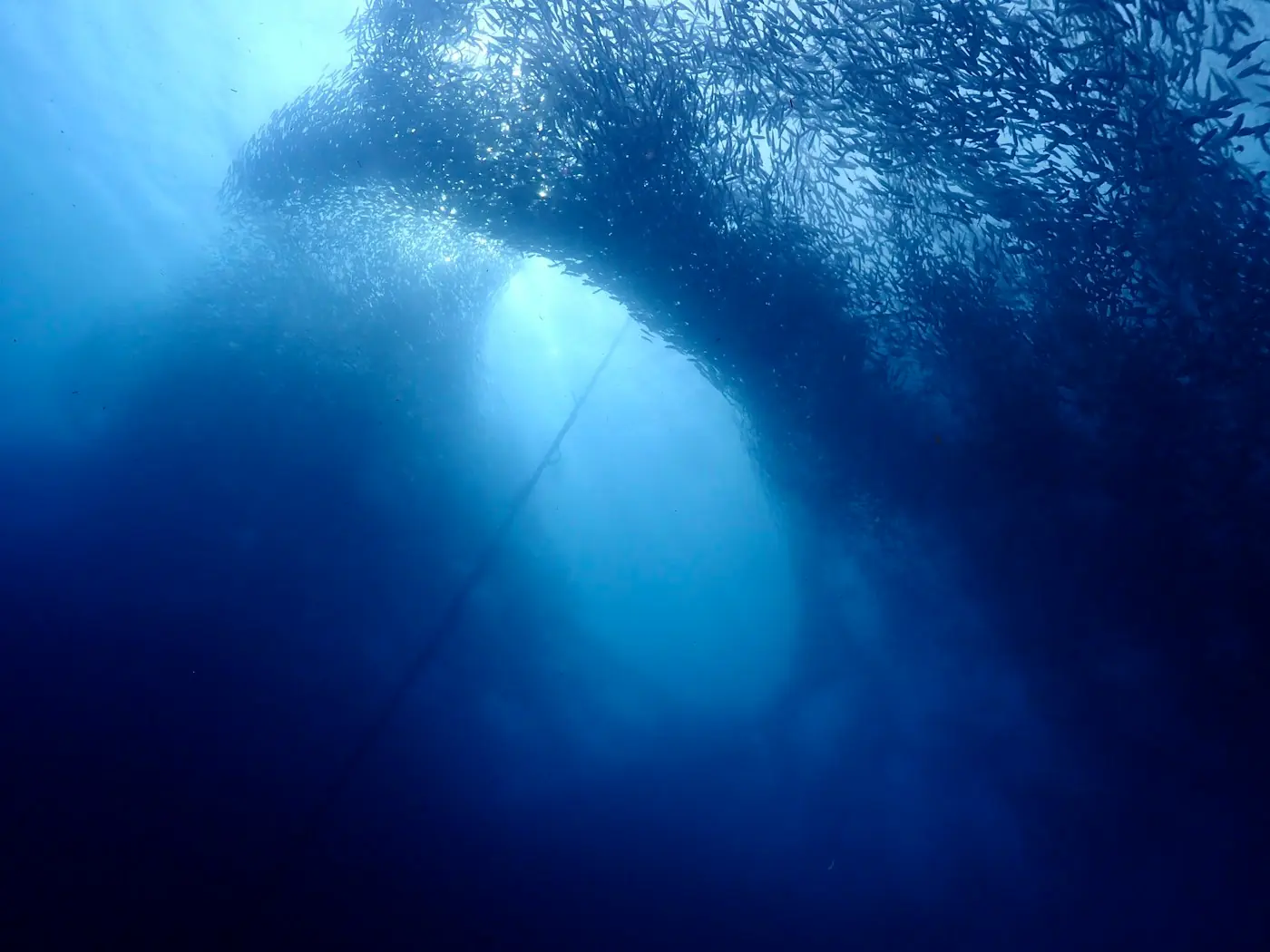
In Indonesia the unit is the route. A liveaboard is not a premium version of resort diving there; for the far east of the country it is usually the only practical way to dive at all. There are no dive resorts at Koon, the Forgotten Islands or most of southern Misool, and the few that exist in Raja Ampat cover a fraction of the area a boat covers in a week. That is also why our schedule moves: Komodo in the dry months, then Raja Ampat and the Banda Sea from September to April, with crossings in between.
The other side of that coin is that Indonesia has excellent land-based diving too, just in different places. Bali, Lembeh, Bunaken and Ambon are all resort destinations, and many guests combine a few days in one of them with a liveaboard week. If you would rather not sleep on a boat at all, Indonesia still works, but you give up most of what makes it different from the Philippines.
How to choose between Indonesia and the Philippines
Most people can decide in a couple of minutes once they line up their own constraints. These are the ones that settle it in practice:
- Your travel month. July to October points firmly at Indonesia; March to May suits both, with Tubbataha open in the Philippines.
- Your experience. Under about 30 dives and no current experience, the Philippines is gentler; Advanced divers comfortable in current get more out of Indonesia.
- What you want to see. Threshers or a sardine ball: Philippines. Mantas, hammerheads, mola or remote reef fish schools: Indonesia.
- Your style of trip. One resort base and freedom to skip a dive: Philippines. A new site every few hours and no planning: an Indonesian liveaboard.
- A non-diving partner. The Philippines' resort islands usually work better; on a liveaboard they will mostly snorkel and read.
If you are torn between Indonesia and somewhere else entirely, our Indonesia vs Maldives comparison uses the same approach.
Who an Indonesia liveaboard suits, and who it does not
We run three boats, and each matches a different reader of this article. King Neptune and Neptune One follow the seasons across the country: Raja Ampat and Misool from roughly October to April, the Banda Sea in the autumn window, and Komodo, Alor and Wakatobi in the middle of the year. Komodo Sea Dragon stays in Komodo National Park all year with trips of three to seven nights, which suits anyone with only a week of leave. Trip lengths, cabins and inclusions differ by boat, and the vessel pages list them in full.
An Indonesian liveaboard suits you if you are an Advanced diver who wants remote reef, real current and big animals, if your holiday falls in the Philippine typhoon months, or if you would rather wake up at the dive site than drive to it. It also suits divers who have already done the Philippines and want to see how the same ocean looks with fewer people in it.
It is not the right trip for everyone. If you are newly certified and nervous in current, a Philippine resort week, or a calmer Indonesian resort such as Bali or Lembeh, will be more enjoyable as a first step. If your budget is tight and you are happy diving from land, the Philippines will give you more dives for the money. And if the main reason for your trip is thresher sharks or Tubbataha, go to the Philippines; nothing we run will replace either.
Key takeaways
- Indonesia means remote, current-fed reefs mostly reached by liveaboard; the Philippines means accessible dive hubs mostly reached from a resort.
- The Philippines has the highest measured species density per area; Indonesia has more reef overall and usually more fish biomass.
- About 20 tropical cyclones a year reach Philippine waters, peaking July to October; Indonesia is largely outside the typhoon belt.
- Liveaboard for liveaboard, both cost roughly USD 400 to 800 a night; Philippine resort diving is the budget option.
- Threshers, sardines and Coron wrecks favour the Philippines; mantas, hammerheads, mola and remote reefs favour Indonesia.
- Newer divers often start in the Philippines; Advanced divers comfortable in current get the most from Indonesia.