A packing list is the easiest part of a liveaboard trip to get wrong. We've watched a guest land in Labuan Bajo with three pairs of jeans and zero reef-safe sunscreen. We've watched a photographer arrive in Sorong with two camera batteries for an eleven-night Raja Ampat cruise. We've seen brand-new wetsuits that still had the price tags on them, brought as carry-on, and we've seen prescription dive masks left in a checked bag that never made it past Jakarta. Almost none of these mistakes are about laziness. They're about not knowing what an Indonesian liveaboard actually is, what the boat already provides, what the climate does each month, and where the regulations bite. This guide is the version we wish every guest had read before they zipped the suitcase.
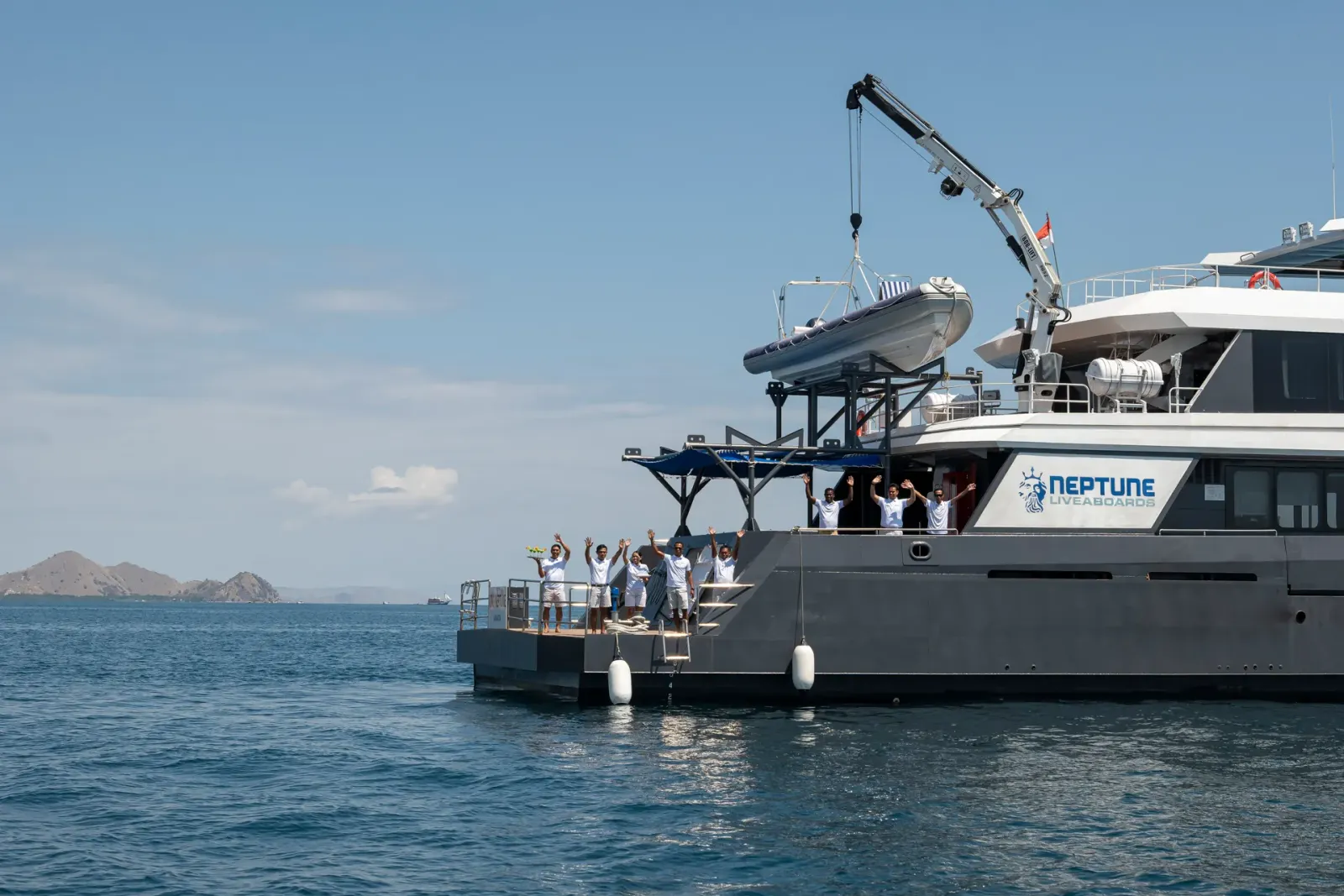
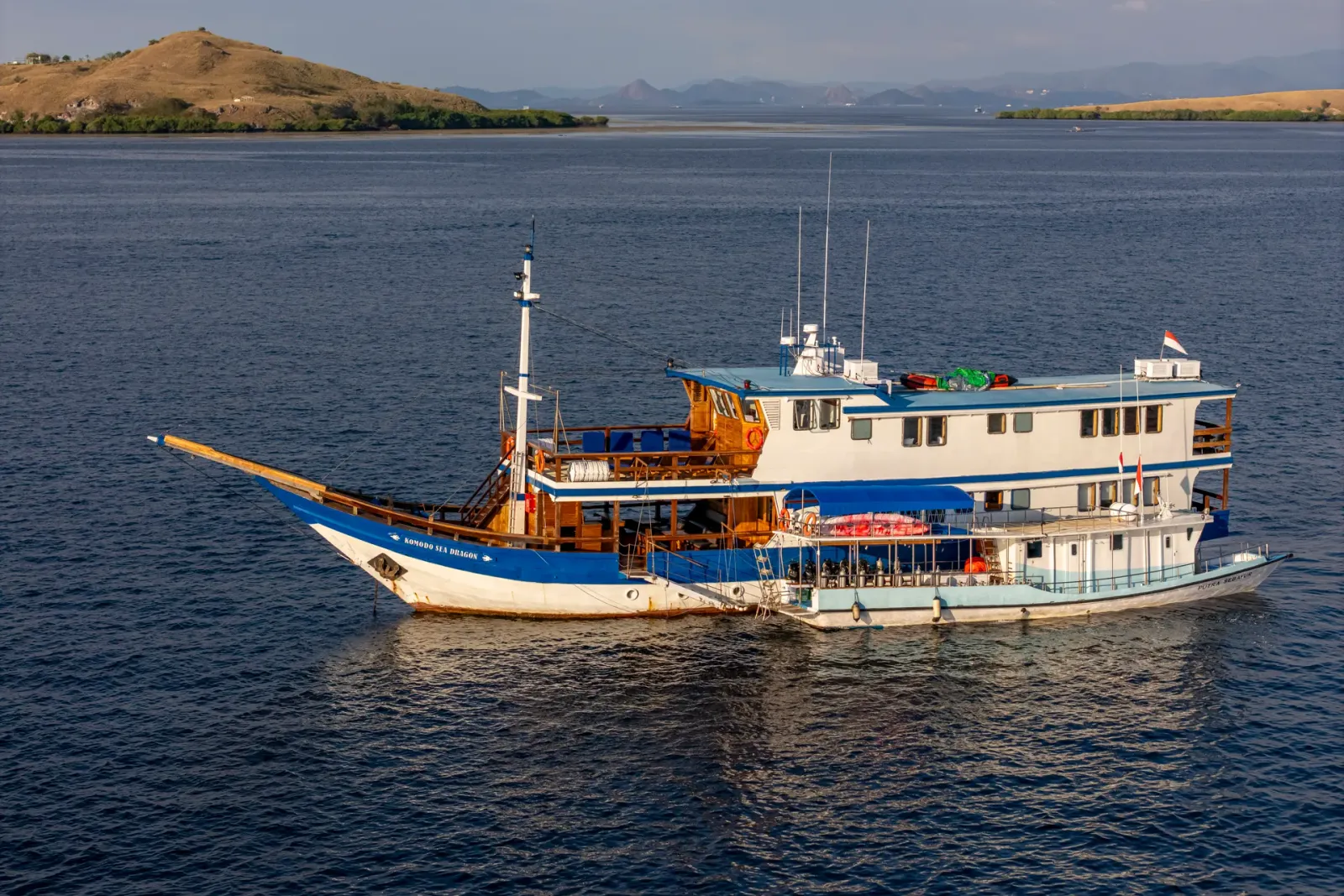
We run two phinisi liveaboards and one steel-hulled motor yacht across Komodo, Raja Ampat, the Banda Sea, and the Forgotten Islands. Between the three vessels we host roughly two thousand guest-trips a year, which means we've seen every variation of "what do I bring" and most of the answers. The list below is what we tell our own friends when they book a trip with us. It's organised the way you'd actually pack: carry-on first, then dive gear, then climate-dependent topside clothing, then the small things that ruin a week if you forget them. At the end is a five-minute pre-departure check we recommend running the night before the flight, and a section on what you can safely leave at home because the boat already has it.
How this guide is organised
This guide covers any Indonesian liveaboard trip across the three regions Neptune Liveaboards visits and most of our peer operators sail. The packing logic is broadly the same for Komodo, Raja Ampat, and the Banda Sea, with three real variables: water temperature (which dictates wetsuit thickness), trip length (which scales clothing and consumables), and whether you're flying out of Bali or out of Sorong (which changes the carry-on weight rules slightly). Where a section diverges by region we say so directly. If you're already booked with us, every section also tells you what's specifically true on Neptune One, King Neptune, or Komodo Sea Dragon. If you're booked with another operator, the destination-level guidance still applies.
This is a packing guide for divers. Snorkel-only and topside-only guests can use the same list and skip the dive-gear section. Underwater photographers should pair this guide with our 2026 underwater photography guide for the camera-specific extensions. Honeymoon and special-occasion travellers will find the romantic-trip variations in our honeymoon liveaboard guide. First-time liveaboard guests should also read our first-time liveaboard primer, which covers the daily rhythm and cabin life rather than the pack list specifically.
Carry-on essentials: what never goes in checked luggage
The single most important rule of liveaboard packing is the carry-on rule. Anything that would end the trip if your checked bag was delayed, lost, or sent to the wrong island goes into your hand luggage. Indonesian domestic baggage handling is reasonable, but Garuda's connection through Jakarta, Lion Air's transit at Surabaya, and the small turboprops that fly into Sorong (DMU) and Labuan Bajo (LBJ) all have a non-zero rate of bag misroutes. We see one or two guests per season arrive a day or two ahead of a delayed bag, and the difference between an inconvenience and a ruined week is what they put in the carry-on.
The non-negotiable carry-on items are these. Passport with at least six months validity from the date of departure. Printed and digital copies of your dive certification cards (PADI, SSI, SDI, NAUI, or your national equivalent), at minimum Open Water and ideally Advanced Open Water and Nitrox if you have them. Printed and digital copies of your dive insurance certificate (DAN, DiveAssure, or your regional equivalent). Prescription medication for the entire trip plus three buffer days, in original pharmacy packaging with a copy of the prescription. Glasses or contact lenses with a spare pair if you wear them. Your dive computer and the manual or quick reference card, because computer interfaces vary and the boat's spare units are configured for the captain's preferences, not yours. Your prescription dive mask if you use one; corrective lenses cannot be sourced in remote eastern Indonesia. A toothbrush, toothpaste, and the pharmacy basics for forty-eight hours.
If you're a photographer, the carry-on extends. The camera body, lenses, housing seals, and at least two batteries always travel as hand luggage. Underwater housings travel in carry-on whenever airline rules allow because a knocked port can ruin a trip and there's no replacement available east of Bali. Lithium-ion batteries are required as carry-on under IATA rules; check the watt-hour limits with your specific airline before you fly because Garuda Indonesia and Lion Air have slightly different declared thresholds for spare-cell quantities.
One small carry-on detail that catches a surprising number of guests: a zip-top plastic bag with twenty-four hours of toiletries. If the checked bag is delayed, you arrive in Bali or Jakarta on a connection without a toothbrush, and the airport options are limited late at night. Throw in a small folded shirt and a clean pair of socks too, just for the first night.
The total carry-on weight you can take depends on the segment. International long-haul to Jakarta or Bali is usually seven kilograms in cabin baggage, with a personal item allowed underseat. The domestic legs to Labuan Bajo or Sorong are often capped at seven kilograms total including personal items, weighed at the gate, and the small turboprops to Sorong sometimes weigh you and your bag together. If you're carrying a heavy camera kit, our standard advice is: split the kit across two pieces (a backpack with the body, lenses, and batteries; a smaller padded pouch with housing and dome) so that a strict gate agent can't make you check the whole rig. The backpack tends to get less scrutiny.
Dive gear: what to bring and what to rent
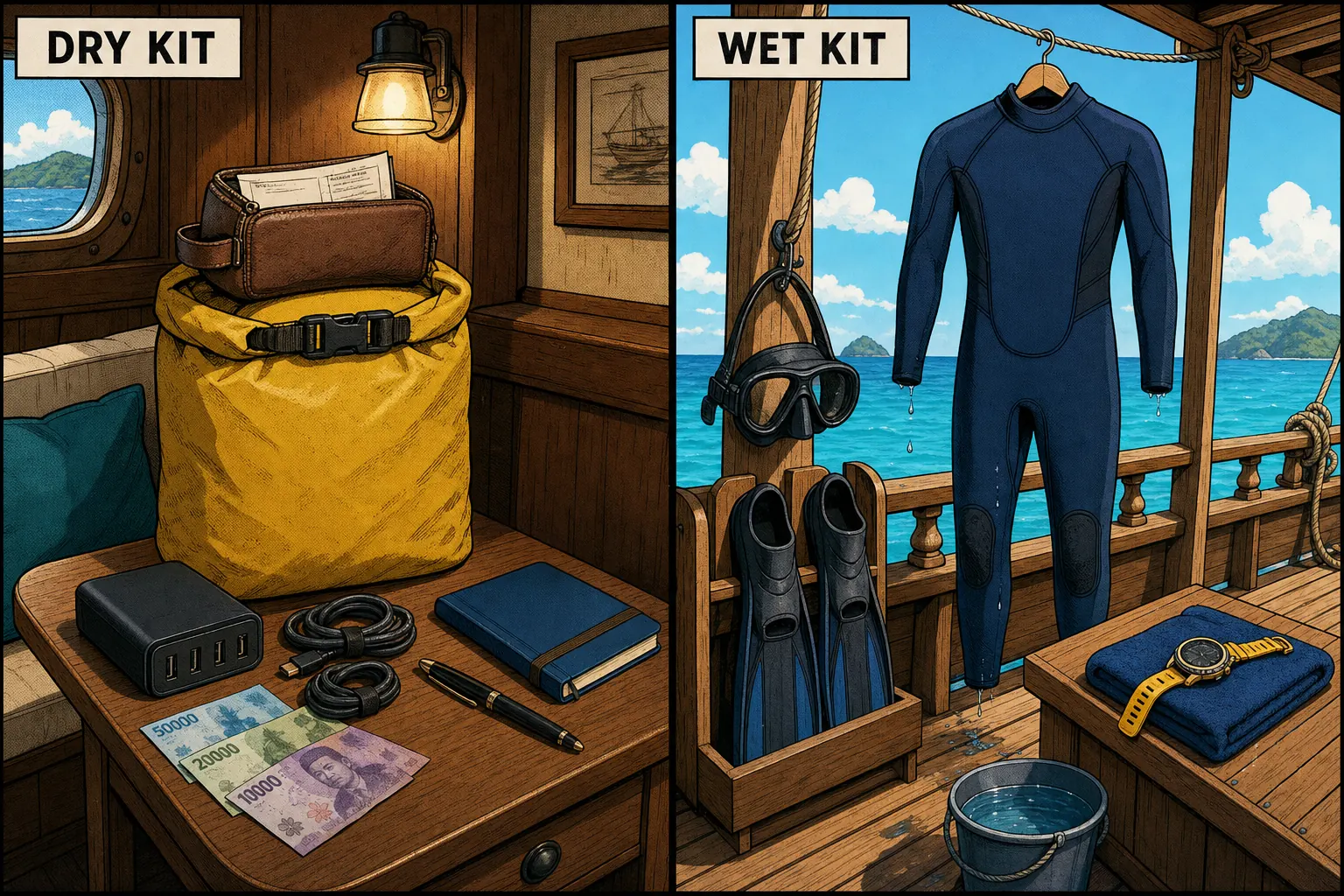
The dive-gear question splits cleanly into two camps and the boundary line is comfort. Things that touch your face, fit your body, or hold the data of your dive history should always be your own. Things that are commodity-issue and easy to swap for another size on the boat are fine to rent. We rent quality kit on all three Neptune vessels (ScubaPro and Mares depending on the boat), and the same is true of most reputable Indonesian operators, so if you're a casual diver and you'd rather travel light, the rent-everything option is genuinely viable. The trade-off is one practice dive on day one to confirm fit, weighting, and BCD strap configuration, which most boats build into the schedule anyway. That is the packing question. The buying question is a separate one, and our guide to what scuba gear to buy first covers the order to acquire a kit in.
The items we strongly recommend you bring yourself are: your mask (face fit is personal and a leaking mask ruins the photography or the wide-angle viewing of mantas), your dive computer (with current battery, downloaded log software if you use one, and the manual), and your wetsuit if you have a properly fitting one. We also recommend bringing a hood for Komodo currents and the Banda Sea cooler thermoclines, even if you don't normally wear one, because Indonesian ear infections are usually water-temperature-related and a hood reduces the flush rate. A pair of dive boots or wet-shoes is useful for the inflatable tender boardings on remote sites, and most photographers bring their own gloves for camera handling at the surface.
The items most people rent on the boat without issue are: BCD (we stock S, M, L, XL with men's and women's specific cuts), regulators, fins (in standard sizes), and weights. If you're a small-framed diver, an XS BCD is rarer in Indonesia than in Europe or North America and we'd suggest checking with your operator three weeks before sailing rather than the night before. If you're a tall or large-framed diver, similarly, confirm XL or XXL availability in writing.
Three small dive items are routinely forgotten. A surface marker buoy (SMB) and a small finger-spool reel are required by most Indonesian dive guides for any current dive in Komodo and most Raja Ampat sites. Many operators carry shared SMBs but having your own keeps the briefing simple. A reef hook is essential for the Komodo pinnacle sites (Castle Rock, Crystal Rock) and for the Banda Sea hammerhead pinnacles; the boat usually has loaners, but bringing your own one-metre stainless hook on a thin tether is the safer call. The Cauldron, or Shotgun is the exception among the famous current sites: it is a directed drift rather than a hook dive, so your hook stays stowed for it. A small dive knife or shears is required by some insurance policies; most operators have these on board too.
Save your dive logbook for the boat. Whether you log on paper or digitally, plan to log every dive on this trip; you'll want the records for insurance, future cert advancement, and personal memory. Pen-and-paper logs hold up best on a damp boat. Digital loggers like Subsurface or DiveLogs work well too, paired with a Bluetooth computer; just remember the cable.
Climate and wetsuit thickness by region and season
Indonesia sits squarely in the tropics, but tropical does not mean uniform. Surface water temperature varies from a steady 28 to 30 degrees Celsius in the equatorial Raja Ampat archipelago year-round to a noticeably cooler 24 to 26 degrees Celsius in the Banda Sea during August and September, with thermoclines that can drop to 21 or 22 degrees at depth. Komodo sits between these two extremes, with surface temperatures of 26 to 28 degrees in the dry-season months of April to November and a few cold-water upwellings at sites like Cannibal Rock that surprise first-time Komodo divers. The right wetsuit choice is the single biggest comfort variable on a liveaboard trip, and most cold-discomfort complaints we get are from divers who packed for the brochure photos rather than the actual conditions.
For Raja Ampat, our recommendation is a 3mm full wetsuit for most divers in any month. The sites are gentle, the surface intervals are warm, and 3mm is a good compromise between protection from coral scrapes and packed-bag bulk. A 5mm is overkill for the equatorial sites but reasonable if you're a cold-prone diver doing four or five dives a day. A shorty or 2mm is enough for some divers in the December-to-April peak window.
For Komodo, we recommend 5mm full for most divers and 3mm only for warm-bodied divers doing fewer dives per day. The current sites in the central park (Castle Rock, Batu Bolong, Crystal Rock) sit in north-channel waters that are noticeably cooler than the southern sites (Manta Alley, Cannibal Rock, Pink Beach), and the wind patterns in August and September can push surface temperatures down to 25 degrees on the way to the dive site. Add a hood for the southern sites in August.
For the Banda Sea, our standard recommendation is 5mm full plus a 3mm hooded vest or a 5mm hood. The hammerhead pinnacles at Manuk and Serua are the coldest dives most guests do all season, with a cold thermocline at 18 to 25 metres that can be a sharp shock if you're not prepared. Bring a thicker wetsuit than you think you need; you can always vent it. A 7mm is not unreasonable for divers who are particularly cold-sensitive.
For topside weather, the dry season (May through October) is hot and dry across most of the country, with daytime temperatures of 28 to 33 degrees Celsius and the wind picking up in the afternoons in Komodo. The wet season (November through April) brings short, intense afternoon showers that pass quickly. Sun protection is the constant year-round; the equatorial sun is genuinely strong and a single unprotected day on the dive deck will burn most fair-skinned guests through a t-shirt. We'll cover sun protection and reef-safe rules in the next section.
For region-specific seasonal details and which destination matches which months, see our full Indonesia liveaboard seasons guide. The wetsuit choice should follow the destination, not the calendar.
Topside clothing and boat etiquette
Liveaboards are barefoot environments. The teak decks of a phinisi like Neptune One or King Neptune are kept clean of grit by a strict no-shoes-inside-the-boat rule, and the dive platforms on Komodo Sea Dragon are similarly shoeless. Pack accordingly. The right topside wardrobe for an Indonesian liveaboard is light, quick-drying, and minimal. Most guests overpack by about a factor of two; the laundry service on board (where available) and the relaxed dress code mean you'll wear the same three or four outfits in rotation and not care.
For a seven-night cruise, our suggested topside wardrobe is roughly this. Two pairs of board shorts or quick-dry shorts. Two t-shirts and one long-sleeve UPF rashguard or sun shirt for surface intervals. One pair of light cotton trousers or a sarong for evenings. Two sundresses or a kaftan for women who prefer them. One nicer outfit for the captain's dinner on the last evening (smart casual, no jacket needed). A swimsuit or bikini, plus a backup. A wide-brimmed hat or cap with a chinstrap, because the wind on the upper deck is real. Polarised sunglasses with a retainer strap. A light fleece or hoodie for the early morning departures and the Banda Sea evenings, which can drop to 22 or 23 degrees Celsius at sea. A pair of flip-flops or rubber sandals for the tender boardings.
For an eleven-night Forgotten Islands or Banda Sea cruise, scale up by a third. For a four-night Komodo highlights trip, scale down by half. Laundry service is available on King Neptune and Neptune One after day three of any cruise of seven nights or longer; on Komodo Sea Dragon and on most peer operators it's available on request. Quick-dry fabrics will dry overnight on a hanger inside the cabin even without laundry service.
One topside item that gets overlooked: a long-sleeve light-coloured shirt for the Komodo dragon walks on Rinca and Komodo Island. The trails are open and exposed, the dragons are real, and the rangers expect modest dress. The same shirt covers you on the Padar viewpoint hike and the Pink Beach landings.
For the cabin specifically, pack indoor clothes that are different from outdoor clothes. The cabins on Indonesian liveaboards are air-conditioned and run cool; a soft long-sleeve top and light loose trousers are far more comfortable for sleeping than dive-deck clothes that have spent the day in the salt air.
Reef-safe sunscreen and the rules in Komodo and Raja Ampat
Reef-safe sunscreen is no longer a polite request in Indonesian marine protected areas. It's a regulation. Both Komodo National Park and the Raja Ampat MPA have published bans on sunscreens containing oxybenzone (benzophenone-3) and octinoxate (ethylhexyl methoxycinnamate), the two ingredients linked most directly to coral bleaching at low concentrations. In practice, park rangers don't inspect bottles, but the operator community treats the rules as enforceable, and we've had Komodo park rangers spot-check tenders for reef-unsafe sunscreens twice in the past two seasons.
What this means for packing: bring a sunscreen labelled "reef-safe" or "ocean-safe" with mineral active ingredients (zinc oxide or titanium dioxide) rather than chemical filters. Brands we've seen work well at tropical SPF 30 to 50 strength include Stream2Sea, Thinkbaby, Badger, Raw Elements, and All Good. Avoid the spray-on formulations because they aerosolise into the rinse tanks and onto neighbours; pack a tube or pump bottle of cream instead. Bring more than you think you need; the equatorial sun chews through sunscreen at a rate that surprises European and North American visitors, and reef-safe brands are not reliably stocked in Bali or eastern Indonesia.
The most effective sun protection is not sunscreen, it's clothing. A long-sleeve UPF rashguard worn during surface intervals, a wide-brimmed hat with a chinstrap on the upper deck, and a buff or neck-gaiter for the back of the neck will save you more reapplication than any sunscreen brand. For divers with very fair skin or photosensitivity, we'd recommend a long-sleeve thin sun shirt worn full-time on the dive deck, with sunscreen only on the face, ears, and back of the hands.
For lip protection, bring a stick of high-SPF lip balm and use it more often than feels reasonable. Sun-blistered lips are the most common discomfort complaint we get from first-time tropical-dive guests, and the only effective prevention is reapplication every hour during dive days.
For after-sun care, a small bottle of aloe vera gel and a moisturising lotion are worth the carry-on space. The combination of salt, sun, and dry air on the dive deck takes a real toll on skin over a week, and a five-minute post-shower routine prevents the dry, taut, and slightly burnt face that most guests develop by day five.
One final note on sunscreen and dive masks: most chemical sunscreens cause mask seal failure within a few minutes of being applied. If you've recently sunscreened your face, rinse with fresh water and dry with a microfibre cloth before donning the mask, and use a small amount of dish soap or commercial mask defog on the inside lens. The mineral sunscreens are far better behaved on mask seals but still need a clean dry zone around the seal contact line.
Electronics, batteries, and the Indonesian drone rules
Indonesian liveaboards run on 220-volt power with Type C and Type F European-style two-pin sockets. North American visitors and travellers with Type A or B plugs need a basic plug adapter (not a voltage converter; modern devices handle 220V natively). Most boats provide one or two adapters in the lounge but they're shared, so bring your own. A four-port USB charger (60-watt or higher, with PD support) is more useful than four separate chargers, and frees up a precious socket count in the cabin.
For phones and tablets, expect to be offline most of the trip. Indonesian mobile coverage is patchy in Komodo (good around Labuan Bajo, intermittent in the central park, none in the south), nearly absent in eastern Raja Ampat (Misool and Wayag are both effectively offline), and entirely absent in the Banda Sea and the Forgotten Islands. Most boats have a satellite-based crew Wi-Fi for emergencies but not for guest streaming. Download offline maps, audiobooks, podcasts, and any reading material before you leave Bali. The reading-app caches on Kindle and Kobo readers do well on a liveaboard; an iPad with downloaded films does too.
For headphones, noise-cancelling models are quieter on the boat than open-air earbuds, particularly during transits when the engines run. A small Bluetooth speaker is reasonable for the cabin but stays in the cabin; the deck speakers are shared and crew-controlled.
For drones, the rules in Indonesia have tightened. Komodo National Park requires an active drone permit issued by the park authority, in addition to the national CAA registration; recreational drone flying without these permits in the park has resulted in confiscation. The permit process can be initiated through the park office in Labuan Bajo but takes several days, and most guests don't have the permits. The practical consequence: leave the drone at home for Komodo trips. For Raja Ampat, the rules are slightly looser but still require the national CAA registration, and the local Bahasa Papua MPA prefers no-fly over manta cleaning stations, fish aggregations, and bird-of-paradise nesting areas. Some operators allow drone flight from the boat in open water with permission; others ban it entirely. If you plan to bring a drone, ask your operator in writing before you fly. We don't allow recreational drone flight from any Neptune Liveaboards vessel inside the Komodo or Raja Ampat marine parks.
For cameras specifically, see our underwater photography guide for detailed gear notes. The short version: bring three batteries per shooting day minimum, charge overnight, pack at least ten o-rings of each port size you use, and carry a small silica-gel desiccant pack for your housing during the equatorial humidity transit.
Cash, tipping, and what's already included
Bring more rupiah cash than you think you need. The Indonesian rupiah is a soft currency and ATM access in Labuan Bajo and Sorong is reliable but not unlimited, with daily withdrawal caps that can be reached in a single sitting if you're paying for park fees, tips, and incidental expenses. We recommend arriving with the equivalent of fifty US dollars in small denominations of rupiah for the first day's incidentals, then drawing a larger amount from a major-bank ATM (BCA, Mandiri, or BNI) before boarding.
The standard Komodo National Park fee for an international visitor as of 2026 is around 290,000 rupiah per day per person for the dive sites, plus a separate boat-entry fee that the operator handles. Raja Ampat's environmental tag is one million rupiah per visitor for ten days of access, sold at the Sorong office. Most operators include these in the cruise price; ours do. Confirm with your specific operator before you board so you know whether the fee is paid by you in cash on day one or already covered.
For tipping, the Indonesian convention on liveaboards is a single shared crew tip presented at the end of the cruise, and the captain distributes it among the crew. Budget USD 15 to 25 per guest per day, so roughly USD 140 each for a week, and bring it as cash in a sealed envelope. Rupiah is more useful to the crew than dollars, and there is no cash machine anywhere once you leave Labuan Bajo or Sorong, so draw the money before you board. Our full guide to tipping on an Indonesia liveaboard covers the amounts by trip length, who is actually in the tip pool, and the awkward cases.
Most cruises include all meals, all soft drinks, all dives with tanks and weights, and the daily park fees. Most do not include alcoholic drinks (which are charged to a bar tab and settled on the final day), additional rental of premium dive gear (cameras, special lights), and shore-based excursions like Komodo dragon ranger fees. Confirm the inclusions in writing with your operator before you board so you know what cash to budget for.
Medication, first aid, and what's available in Labuan Bajo
Pack the medication you'd want on a sailboat in remote tropical water, not the medication you'd want at home. The pharmacies in Labuan Bajo and Sorong stock the basics but not the specifics, and pharmacies in Bima, Banda Neira, or Misool are essentially non-existent for international travellers. The boat carries a comprehensive first-aid kit and an emergency oxygen supply, and most operators have a designated dive medic on the crew, but personal prescriptions and chronic-condition medications are entirely your responsibility. Menstrual supplies belong in the same bracket for the same reason, and our guide to what to pack for your period at sea explains why pads are sold everywhere in Indonesia while tampons are much harder to find east of Bali.
The personal medication kit we recommend includes the following. Seasickness preparation in two forms: a long-acting transdermal patch (Scopolamine, by prescription in most countries) for the multi-day rough passages, and a fast-acting oral preparation like Stugeron or Bonine for short bumpy transits. A short course of antibiotics suitable for ear and skin infections (the most common medical issue on Indonesian liveaboards), prescribed in advance by your travel doctor. Antihistamines for jellyfish stings and minor coral abrasions. Anti-diarrhoeal medication for the first few days as your gut adjusts to the local water. Ibuprofen or paracetamol. Topical antibiotic cream for cuts; even small reef scrapes can infect quickly in the tropics. Vinegar for jellyfish stings (the boat carries this too but a small bottle in your day bag is useful). If a decongestant for your ears is on that list, check the timing advice in our guide to barotrauma in scuba diving first, because using one every day for a week sets up the reverse block it was meant to prevent.
For divers with chronic medical conditions (diabetes, asthma, cardiac history), bring more than the trip duration’s worth of medication, with the prescription in original packaging, and a written summary of your condition and medications in English. Decompression sickness is rare but possible. The chamber closest to our Komodo itineraries is at Siloam Hospitals in Labuan Bajo, which opened in October 2018 and was the first in East Nusa Tenggara; there is a further hyperbaric unit at the regional hospital in Maumere, and the facilities operators route serious cases to are in Bali (Sanglah Hospital, Denpasar), Makassar and Manado. Treat that list with care, because a hyperbaric unit at a regional hospital is not the same as a dive medicine service on call overnight, and our guide to diving Maumere goes through what that means on the eastern itineraries. Evacuation from a remote dive site takes hours to a day depending on weather and location, which is why DAN insurance is essentially mandatory for liveaboard diving.
For ear care specifically, see our guide on equalisation and ear health. Bring a small bottle of ear-drying drops (the recipe is one part vinegar to one part rubbing alcohol; many divers prefer the commercial preparations like Swimear). Use them after every dive. Indonesian ear infections are the single most common reason a guest has to skip a dive day on our boats, and they're almost entirely preventable.
Documents and visas: the pre-flight checklist
Indonesia's visa rules have changed twice in the last three years and are likely to change again. As of mid-2026, most Western passports (US, UK, EU, Canada, Australia, New Zealand, Japan) qualify for either Visa on Arrival or e-VOA at thirty days for a standard tourist entry. The fee is around 500,000 rupiah and is paid at the airport on arrival or pre-paid online. Single-entry e-VOA is now available through the official immigration portal (molina.imigrasi.go.id), and we recommend pre-paying it before you fly because the queues at Bali's Ngurah Rai airport for VOA on arrival can run over an hour during peak season.
Your passport must have at least six months of validity from the date of arrival in Indonesia, with at least two blank pages for stamps. This is a hard rule; we've had guests turned away at the gate in their home country because their passport had only five months of validity, and the airline cannot board them.
The documents we recommend you carry, both physically and as encrypted copies on your phone:
- Passport with at least six months validity and two blank pages
- e-VOA confirmation (printed) or VOA cash in US dollars or rupiah at the airport
- Onward or return flight ticket (immigration may ask)
- Confirmed accommodation for the first night in Indonesia (hotel booking, even if the cruise begins the next day)
- Confirmed cruise booking and itinerary from your operator
- Travel insurance certificate (most policies include emergency medical, evacuation, and trip cancellation)
- Dive insurance certificate (DAN World, DAN Asia-Pacific, DiveAssure, or your regional equivalent)
- Dive certification card (PADI, SSI, SDI, NAUI, BSAC) at minimum Open Water level
- Vaccination records: a copy of routine vaccinations and any country-specific requirements (yellow fever certificate is required if you're connecting from a country with active yellow fever)
- Emergency contact information for your home country
For copies, we recommend the following: a printed paper copy of every document in your carry-on, a digital copy in your encrypted cloud storage, and a digital copy on your phone in an offline-accessible folder. The principle is redundancy. If your phone breaks or your bag is lost, you should still have access to enough documentation to get to the boat.
What our boats already provide (so you don't pack it)
This section is the least exciting and possibly the most useful: things you should not bring because the boat already has them. Packing-by-omission saves more weight and stress than packing-by-addition.
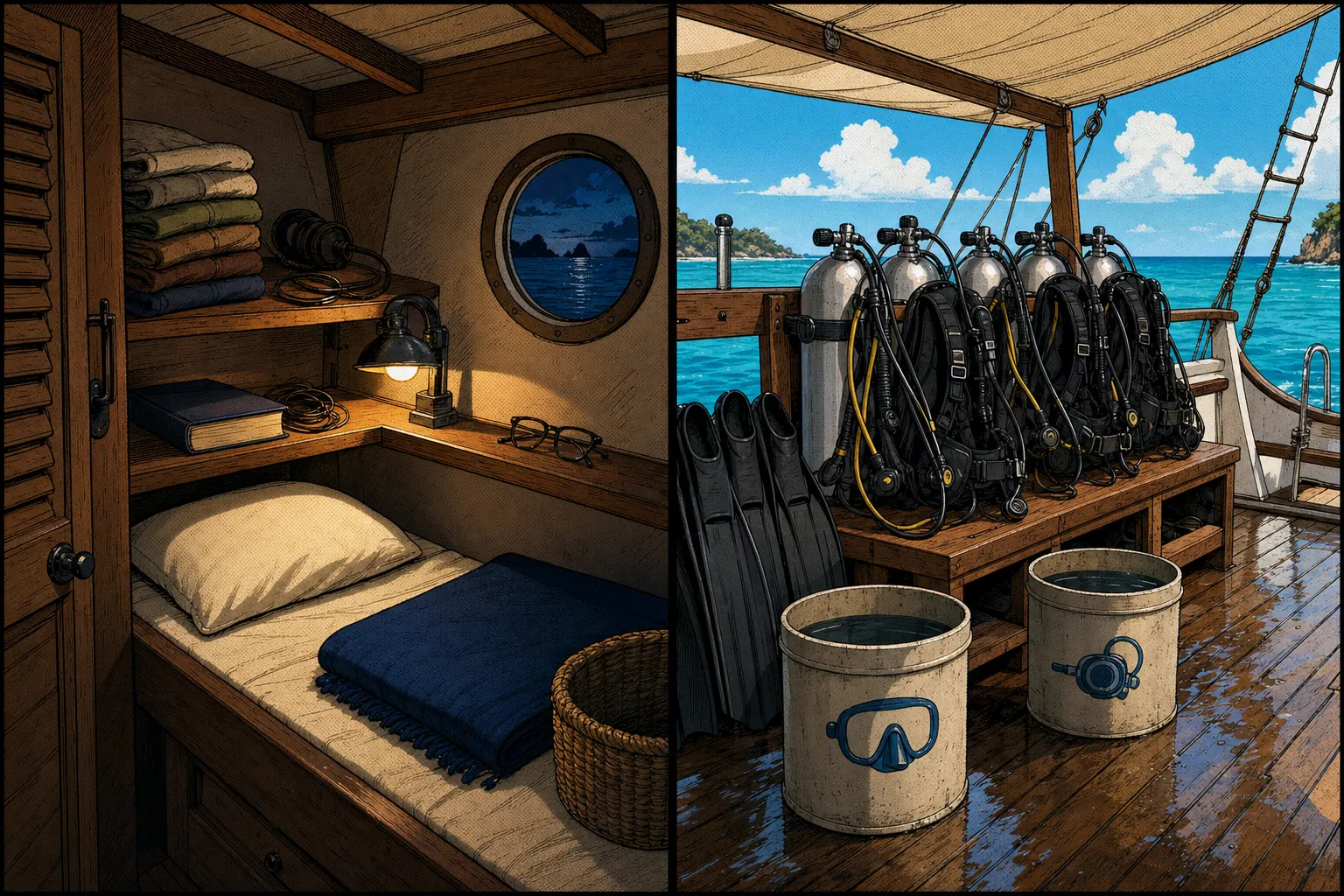
On all three Neptune Liveaboards vessels, the cabins include the following as standard. Towels (shower, beach, and tender-boarding), refreshed daily. Bed linen and pillow refresh as part of the housekeeping schedule. Hairdryer in each cabin. Reading lamp, USB ports, and one or two power outlets. A basic toiletry set (soap, shampoo, conditioner) refreshed as needed; if you have specific brand preferences for skin or hair, bring your own travel sizes. A bathrobe and slippers (slippers for use inside the cabin only). A safe for valuables, large enough for a passport pouch, a wallet, and a small camera body.
On the dive deck, all three vessels provide: rinse tanks for masks and computers (separated from rinse tanks for cameras), individual gear-storage cubbies, hangers for wetsuits, fresh-water rinse showers, and a tank-staging area where the crew loads your tank each dive. You don't need to bring a small towel for mask-wiping (we provide them) or a personal rinse bucket (the rinse tanks are shared and managed). Camera rooms with regulated humidity, electrical sockets, and dedicated wash tanks are available on Neptune One and King Neptune.
In the dining and lounge areas: bottled water, juice, soft drinks, tea, and coffee are continuously available and included. A small selection of cocktails, beer, and wine is available at the bar, charged to a bar tab. The kitchen produces three full meals plus a snack rotation each day, with vegetarian, gluten-free, and most allergy options accommodated if you note them on the booking form.
The boat does not provide: prescription medication, prescription dive masks, dive computers (we have rentals for emergencies but not for the full week), specialised camera kit, books in your language other than the small English-language library, headphones, or a personal SIM with data. Where to buy that SIM, and what the counter will ask you for, is covered in our guide to Indonesian SIM cards and eSIMs.
Trip-length adjustments: 4-day vs 7-day vs 11-day
Trip length affects the pack list more than most guests expect. The base list above scales with two factors: clothing rotations and consumables. The dive-gear and electronics sections are essentially the same regardless of trip length.
For a four-day Komodo highlights trip, pack the base list minus one t-shirt, minus one set of board shorts, and minus the eleven-night-only items like the spare batteries beyond four. Skip the hardback book and bring an e-reader. The trip is short enough that one or two laundry rotations isn't worth the effort.
For a seven-night cruise, the base list as given is the standard. Plan one laundry cycle around day four if your vessel offers it, or rotate quick-dry fabrics and don't worry. Bring slightly more sunscreen than feels necessary, because seven days of equatorial dive deck consumes a 200ml tube faster than expected.
For an eleven-night Forgotten Islands or Banda Sea cruise, scale the topside wardrobe up by one extra rotation, plan two laundry cycles, and double the sunscreen and reef-safe insect repellent budget. Bring an extra book or two; the long passages between dive blocks (six to twelve hours of cruising at a stretch) are excellent reading time. Pack one more set of cabin-only clothes for evening comfort. The Banda Sea evenings are cooler than Komodo or Raja Ampat; a warmer fleece is worth the bag space.
For comparison guidance on which trip length and route fits which traveller, our Komodo liveaboard itineraries guide and Raja Ampat vs Komodo comparison are the natural follow-ups.
Common packing mistakes we see every season
The five mistakes we see most often are these. First, packing dive gear as carry-on while skipping clothing essentials in checked. Dive gear is heavy, and a weight-conscious traveller who carries a regulator and BCD as hand luggage is going to lose to the gate agent's scale. Pack the regulator first stage and dive computer in carry-on, and the rest in checked.
Second, bringing too much sunscreen of the wrong type and too little of the right type. A litre of oxybenzone-loaded spray sunscreen is going to be confiscated in Komodo and Raja Ampat at worst, used by no one at best. Bring 200 to 400 millilitres of mineral-zinc sunscreen, in cream form, and one stick of high-SPF lip balm.
Third, packing for the brochure photos rather than the wind. The dive deck of a phinisi at full sail in Komodo's August trade winds is gusty, salty, and cool by tropical standards. A long-sleeve sun shirt that doubles as wind protection is worth more than a fashion outfit.
Fourth, bringing too many shoes. The boat is barefoot. The shore excursions are flip-flops or rangers' boots (provided on the Komodo dragon walks). One pair of flip-flops, one pair of barefoot-style sandals or wet-shoes for the tender, and that's it. Leave the dressy shoes at home; the captain's dinner is barefoot too.
Fifth, forgetting the small dental, ear, and skin items that are unavailable east of Bali. A spare toothbrush, dental floss, ear-drying drops, antibiotic cream, hydrocortisone cream for jellyfish itch, and a set of waterproof bandages are five small items that solve five common irritations on a week-long boat. Buy them at home; they're not reliably stocked in Labuan Bajo.
Your 5-minute pre-departure check
The night before the flight, run through this short list at the suitcase. If something is missing, you have a few hours to fix it. If you're at the airport, you don't.
- Passport in carry-on, with at least six months validity from the day after the cruise ends. e-VOA confirmation printed and saved to phone.
- Dive certification card (physical or e-card) and dive insurance certificate (DAN or equivalent), printed and saved to phone.
- Dive computer in carry-on, battery confirmed full, manual in same bag.
- Prescription medication for the trip plus three buffer days, in carry-on, in original packaging.
- Plug adapter for Indonesian Type C/F sockets and a four-port USB charger.
- Reef-safe sunscreen (mineral, cream, 200 to 400 ml) and high-SPF lip balm.
- One change of clothes and 24-hour toiletry kit in carry-on (in case checked bag is delayed).
- Cash in small denominations: 50 USD equivalent in rupiah, plus a backup card and notification to your bank that you'll be travelling to Indonesia.
- Dive logbook, three pens, and a small dry bag for the dive deck.
- For photographers: camera body, two lenses, four to six camera batteries, housing seals, ten o-rings per port, all in carry-on.
If you can tick all ten of these the night before, the rest of the pack list is variation, not necessity. Most guests who follow the carry-on rule and the ten-point check have a smooth start to their trip even when their checked bag is briefly delayed in transit.
Where to go from here
If you haven't booked yet, our Komodo dive site guide and Raja Ampat dive site guide are the natural starting points for choosing a destination, and the seasons guide tells you when each region is at its peak. If you're already booked with us, we'll send a final pre-trip email with vessel-specific details (cabin amenities, exact transfer logistics, and any current park-fee changes) about ten days before sailing, and the captain will run a packing-confirmation call with photographers and special-needs guests two weeks out.
Once aboard, the daily rhythm is the easy part. The right pack list is what makes the first three days feel like the rest of the trip: comfortable, prepared, and entirely focused on the diving rather than what you forgot. Our boats run year-round across Komodo, Raja Ampat, the Banda Sea, and the Forgotten Islands; if you'd like our team to help match a route and a vessel to your dates and pack list constraints, we're a message away.