If you ask ten Raja Ampat operators what the best time to visit is, you will get answers that overlap on the broad strokes and disagree sharply on the edges. The broad strokes are easy: October to April is the high season, May to September is the low season, the difference is driven by which monsoon is blowing, and most boats are not in the region for the wind months. The edges are where the trip planning actually happens, and the edges depend on whether you care more about manta rays, photography conditions, birds-of-paradise displaying, your budget, or the simple question of whether the ocean will be calm enough to enjoy the surface intervals. Raja Ampat is the most biodiverse marine ecosystem on earth and the trip can be excellent in any month it is operating; what changes is the kind of trip you are taking.
This guide is the operator's-side answer to when to plan a Raja Ampat trip in 2026, structured month-by-month and by traveller intent. We cover the underlying weather drivers (NW monsoon vs SE trade winds, why most operators leave the region for three to four months a year), what visibility and sea state actually look like in each month, when the manta numbers peak at Manta Sandy and Manta Ridge, when the wide-angle and macro photography conditions are at their best, and the booking lead-times that work for each month. Most of what is covered here applies to any reputable Raja Ampat operator, but our Raja Ampat liveaboard departures are scheduled around the patterns described in this article, and the booking guidance reflects what we see across hundreds of guest decisions every year.
Raja Ampat seasons: the underlying weather pattern
Raja Ampat sits just south of the equator (around 0 to 1 degree south latitude), which means it does not have the four-season pattern most northern-hemisphere travellers are used to. Instead, the year divides into two monsoon-driven phases, separated by short transitional shoulders. Understanding which monsoon is blowing in any given month is the most important single piece of information for planning a trip.
The NW monsoon: October to April
From October through April, the prevailing winds in the Raja Ampat archipelago come from the north-west, generally lighter (5 to 15 knots most days), and the sea state inside the Dampier Strait and across the central archipelago stays calm enough for daily dinghy work. Surface temperatures sit at 28 to 30 degrees Celsius, visibility runs 25 to 40 metres at most exposed sites, and the manta cleaning stations at Manta Sandy and Manta Ridge see consistent reef-manta numbers. Rain is part of the season (we are in the equatorial tropics during the NW monsoon), but it tends to fall as short heavy showers in the late afternoon rather than as multi-day storms. This is the high season for Raja Ampat liveaboards, and roughly 80 per cent of all liveaboard departures the region sees in a year happen in this window.
The SE trade winds: May to September
From May through September, the wind direction reverses. The south-east trade winds are stronger and more consistent than the NW monsoon, often running 20 to 30 knots for weeks at a time, and the sea state across the Dampier Strait and on the open-ocean Misool crossings becomes too rough for comfortable liveaboard operation. Surface temperatures stay warm (27 to 29 degrees Celsius) and the underwater conditions at sheltered sites can still be excellent, but the topside experience is challenging: dinghy transfers in 2 to 3 metre swell are not the relaxed early-morning you booked, and Misool (in the south of the archipelago) is largely unreachable from a comfort standpoint. Most liveaboards relocate to Komodo or the Banda Sea for these months. A small number of locally operated boats and sheltered-area resorts continue to dive central Raja Ampat through the SE wind season; conditions are workable for committed divers but not the postcard-quality experience that the high-season trips deliver.
Why most boats leave the region for the SE wind season
This is one of the things that surprises first-time Raja Ampat planners: the region is not a year-round liveaboard destination. The structural reason is that most Indonesian liveaboards are not designed for sustained 25-knot winds and 2.5-metre seas; the phinisi-style yachts that dominate the fleet are deep-bellied and stable in calm water but rough-riding in head seas. The economic reason is that Komodo's high season is the inverse of Raja Ampat's, so a fleet that runs Raja Ampat from October to April can run Komodo from May to September and keep utilisation high all year. The fleet relocates with the weather, and the months you can book a Raja Ampat trip largely match the months a serious operator is in the region. We cover the broader Indonesian seasonal pattern in our Indonesia liveaboard seasons guide; this article zooms in on Raja Ampat specifically.
The high season at a glance: October to April
If you want the simple answer: the best months to visit Raja Ampat are November through March, with December and January as the most popular and February as the technical sweet spot for many of our most experienced returning guests. October is the season opener and shoulder, often offering the best value and gradually improving conditions. April is the season closer, often with the calmest water of the year as the SE winds have not yet established but the NW monsoon is winding down.
What you can expect across the high-season window:
- Visibility: 25 to 40 metres at most exposed sites; 15 to 25 metres at the protected nutrient-rich macro sites where the lower viz is part of the appeal. Misool and the Dampier Strait sites are at their clearest from mid-November to mid-March.
- Water temperature: 28 to 30 degrees Celsius, occasionally a cooler thermocline at depth around 18 to 25 metres. A 3mm full wetsuit is enough thermal protection for most divers; 5mm if you are cold-blooded or doing four dives a day.
- Sea state: Generally calm inside the Dampier Strait and the central archipelago. Misool crossings are doable on most days; some boats relocate from central RA to Misool in late November or December and stay south through March.
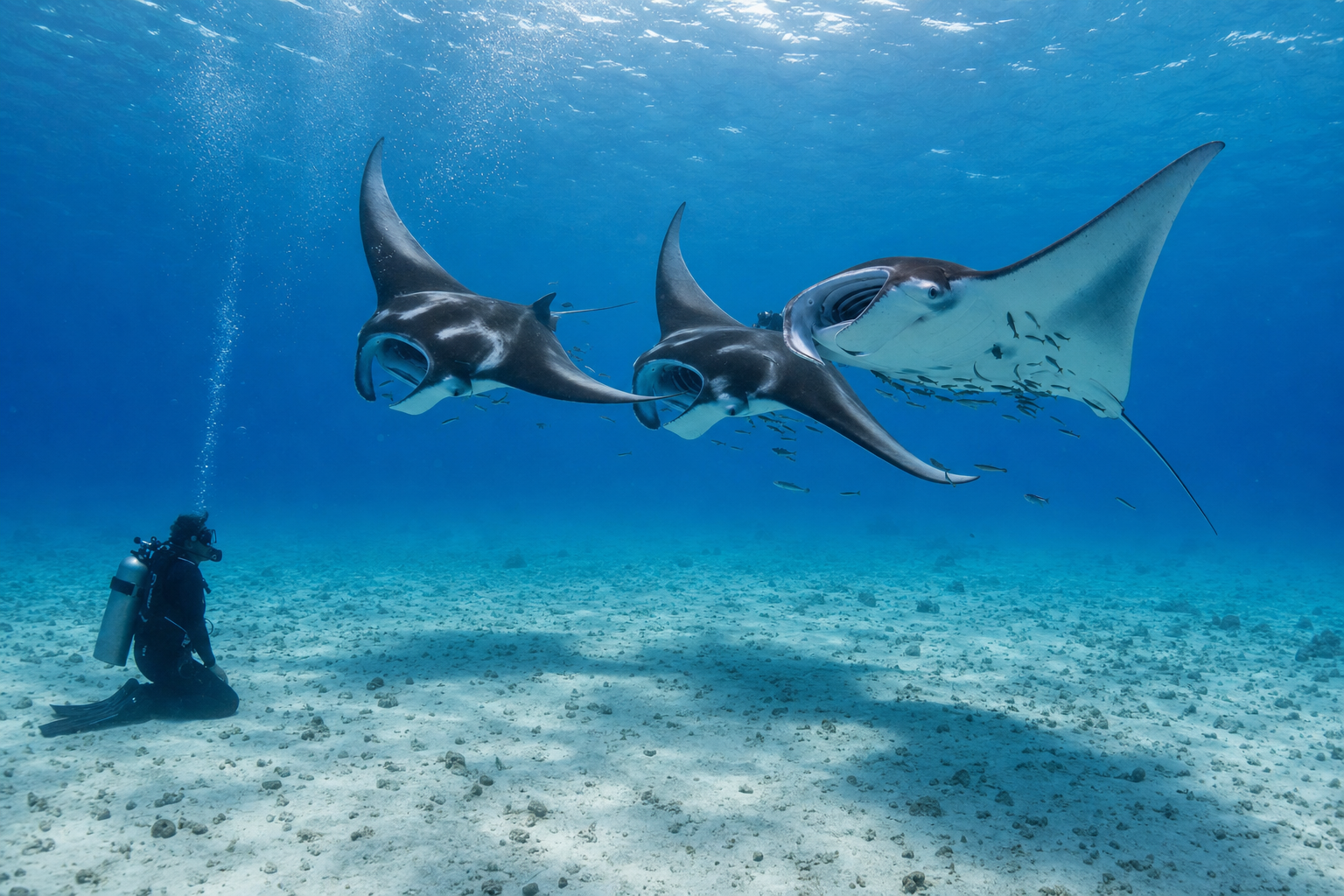
- Manta rays: Reef manta numbers at Manta Sandy and Manta Ridge are highest from November through March. Eight to fifteen mantas at a single cleaning station is normal in peak weeks. We cover the manta side in detail in our guide to diving with mantas in Indonesia.
- Wide-angle photography: Conditions are at their best with calm water, high viz, peak manta numbers, and dependable sun. December and January are the most-booked photography months for this reason.
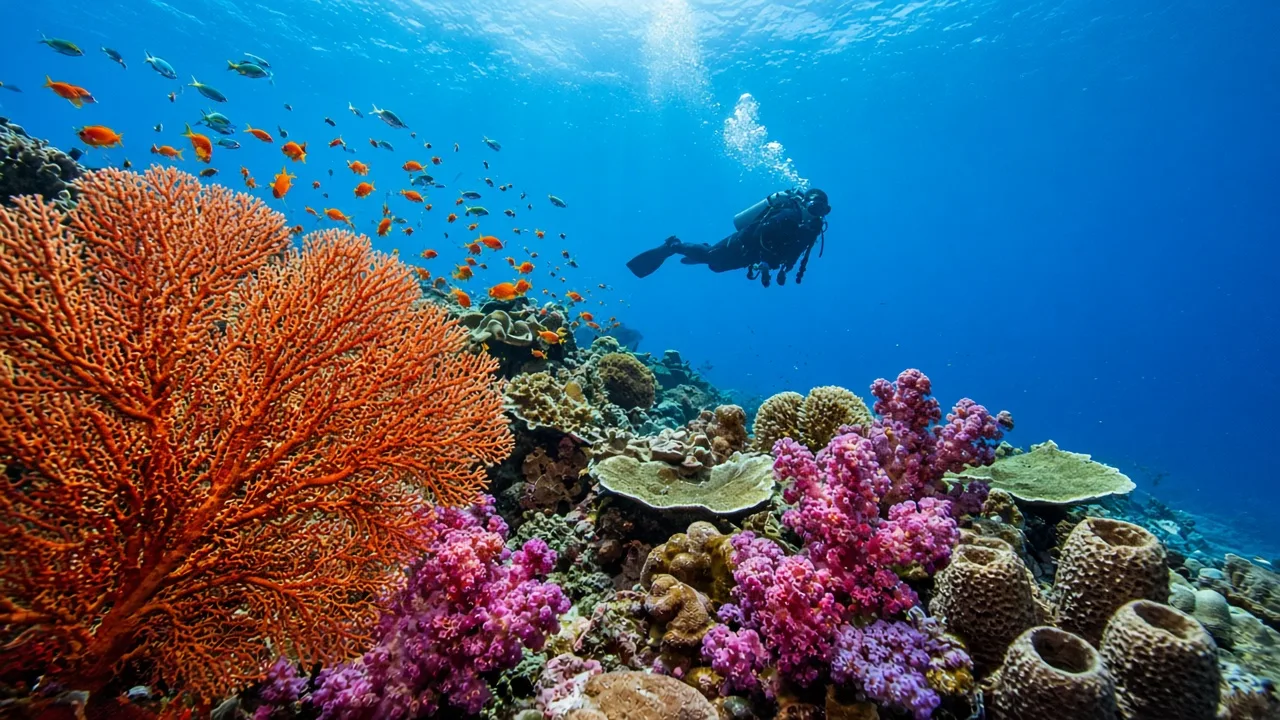
- Macro photography: Macro is good year-round in Raja Ampat (it is biodiversity-driven, not season-driven), but the easier topside conditions in the high season make for more relaxed shooting days.
- Bird-of-paradise displaying: The Wilson's bird-of-paradise and the red bird-of-paradise display at sunrise leks in Waigeo. Peak displaying season is September through November, with secondary displaying through January. Most liveaboards offer optional pre-dawn shore excursions to a forest hide for this.
- Topside: Warm, humid, with afternoon rain showers. Mornings are usually sun and calm. Sunsets are the best of the year, with afternoon clouds breaking up at the horizon.
The low season at a glance: May to September
If you have flexibility on dates, we recommend booking inside the October-to-April window. If your dates are fixed in May to September, the trip is still possible, just with a different shape and a smaller operator pool. What to expect:
- Wind: SE trade winds 15 to 30 knots for weeks at a time. June and July are the windiest. May and September are the transitional shoulders, sometimes calm enough for a workable Raja Ampat trip.
- Sea state: 1.5 to 3 metres on Dampier Strait crossings; 2 to 4 metres on Misool runs (which most boats simply do not attempt in the wind months). Sheltered northern-archipelago sites are workable.
- Visibility: 15 to 25 metres at exposed sites, often dropping below 15 metres after a multi-day blow, but visibility at sheltered sites can still be 25 metres on calmer days.
- Water temperature: 27 to 29 degrees Celsius. Slightly cooler than the NW monsoon at the surface; about the same at depth.
- Mantas: Still resident at Manta Sandy and Manta Ridge, but the surface conditions for getting there are less reliable. Numbers can be excellent on calmer days.
- Operator availability: Most international liveaboards relocate to Komodo. Some local Raja Ampat-based boats and most homestays continue to operate. Booking lead-times shorten dramatically.
- Pricing: 15 to 30 per cent below high-season rates on the boats that do run. The flip side is that the trip-quality variance is wider; pick operators with experience in the SE wind season specifically.
Our own departures pause from late April to early October, with the boats relocating to Komodo. If you want to dive Indonesia in the wind months and Raja Ampat is closed, our Komodo liveaboards are the recommended alternative. The two regions have inverted seasons, which is the architectural reason the Indonesian dive year works as well as it does.
Raja Ampat month-by-month guide
The month-by-month notes below cover what we and the broader operator community see across a normal year. Year-to-year variation exists; the El Nino and La Nina cycles shift the timing of the monsoon transitions by two to four weeks in either direction, so a calm April in one year can be a windy April in the next. Use this as a planning baseline, not a guarantee.
January in Raja Ampat
January is one of the two or three peak months of the Raja Ampat year and is a strong choice for a first-time visitor. The NW monsoon is fully established, but in January it tends to deliver shorter rain showers in the afternoon rather than multi-day weather, and the mornings are usually clear and calm. Visibility runs 30 to 40 metres at most central archipelago sites and at Misool, water temperature is 29 to 30 degrees Celsius, and the manta cleaning stations at Manta Sandy and Manta Ridge are at peak numbers, with eight to fifteen reef mantas typical at a single cleaning visit. The bird-of-paradise displaying season tapers in January but is still active at the best leks. The downside is demand: January departures (especially anything overlapping with Chinese New Year) book out six to nine months in advance, prices are at their annual peak, and the boats run full. If you want January, book early.
February in Raja Ampat
February is many returning divers' favourite month, and we agree. The NW monsoon is at its calmest middle phase, the rain showers thin out compared to January, the Misool crossings are reliable, and visibility at the exposed sites in the south of the archipelago hits the 35 to 40 metre annual peaks. Water temperature is identical to January at 29 to 30 degrees Celsius. Manta numbers stay high. The Misool sub-region is at its absolute best in February: the cleaning stations at Magic Mountain and the soft coral walls at Boo Window photograph as well in February as they do in any month. February is also a slightly easier booking window than January because the holiday peaks are over; departures in mid-to-late February sometimes have shoulder availability up to two months out.
March in Raja Ampat
March is the last reliably high-season month, and many of our most experienced photographer guests time their trips to land in early to mid-March specifically. Conditions are excellent: visibility 30 to 40 metres, water temperature 29 to 30, calm seas across the central archipelago and Misool. The wind transitions can begin in the last week of March in some years (the SE trade winds sometimes pre-empt themselves), but the underwater conditions remain at their best through the month. Manta numbers are high; the macro life is at peak in the protected sites; and the Misool magic-mountain conditions are sometimes even better than February because the marine life has been undisturbed by the heaviest holiday traffic and the sites are quiet. March is also the last reliable Misool month; from April onwards the south-archipelago crossings become weather-dependent.
April in Raja Ampat
April is a transitional month and is genuinely two months in one. The first half of April (week 1 and 2) tends to be the calmest water of the entire Raja Ampat year, with mid-April often delivering glassy water across the Dampier Strait and the lowest swell of the season. The second half of April (week 3 and 4) is when the SE trade winds start to come in, sometimes gradually, sometimes in a single weather change over 48 hours. Visibility stays high (25 to 35 metres) through both halves. Manta numbers are slightly down from the February-March peak but still well above the SE wind season levels. Misool is reachable in early April but not reliably in late April. April is the season closer for most boats and is the last full month our own departures run before relocating to Komodo. April pricing tends to be 10 to 15 per cent below January-February peaks, which makes early-April departures one of the best value-for-conditions windows in the year. We cover the wider regional comparison in our Raja Ampat vs Komodo guide, since by late April the question of "Raja Ampat or Komodo" starts to tip in Komodo's favour.
May in Raja Ampat
May is a transitional month in the other direction: the NW monsoon is winding down, the SE trade winds are establishing, and depending on which way the timing falls, May can be the last calm month of the Raja Ampat season or the first windy month of the SE shoulder. In a "calm year" with late SE winds, mid-May can be one of the highest-value windows in the entire calendar, with most boats already relocated to Komodo (so the central archipelago is uncrowded) and underwater conditions still high-season-quality. In a "windy year" with early SE winds, May 1st is the start of the rough water and most planning should treat May as the first low-season month. Pricing in May is significantly below high-season rates, often 25 to 35 per cent below February peaks. We do not currently run our boats in May; if you have flexibility, look at early-May departures from operators that have continued through to that point. If you do not have flexibility on dates, May is a higher-variability bet than April.
June in Raja Ampat
June is the first full SE wind month and is the month most international liveaboards have already left the region for. Winds run consistently 20 to 25 knots, sea state on Dampier Strait crossings sits at 2 to 3 metres, and Misool is largely unreachable from a comfort standpoint. Underwater conditions at sheltered sites in the central archipelago remain workable, with visibility 15 to 25 metres and water temperature still warm at 27 to 28 degrees Celsius, but the topside experience is rough. June is when most of our regular guests who want Indonesian diving are on our Komodo trips instead; if Raja Ampat is non-negotiable in June, look at homestay-based diving from a sheltered base on Mansuar or Kri rather than a liveaboard. Pricing on the few boats that still run is the lowest of the year.
July in Raja Ampat
July is the windiest month of the year in Raja Ampat. Twenty-five to thirty knots is normal, two-and-a-half to three-and-a-half metre seas on Dampier Strait crossings is normal, and the boats that do run are doing so on tight sheltered itineraries that skip Misool entirely. Visibility holds up at the sheltered sites (15 to 25 metres) but can drop after multi-day blows. Water temperature is at its annual coolest, around 27 to 28 degrees Celsius. We strongly recommend looking at Komodo or the Banda Sea for July rather than fighting the Raja Ampat conditions. July is also the peak whale shark season at Cenderawasih Bay, which is north-east of the Bird's Head peninsula and accessible by separate liveaboard charters; we cover the Cenderawasih option in our Cenderawasih Bay diving guide, and the broader Indonesian whale shark question in our whale sharks Indonesia guide.
August in Raja Ampat
August is similar to July in wind and sea state but begins to show small signs of relenting in the last ten days. Most international boats are still in Komodo or the Banda Sea. The local Raja Ampat operators continue to run sheltered itineraries, and the homestay scene at Kri and Arborek remains active. August is the peak summer-holiday month in the European market, so air ticket pricing into Sorong is higher than the surrounding months despite the diving conditions being at their poorest. Underwater visibility 15 to 25 metres at sheltered sites; water temperature 27 to 28 degrees. Whale shark proximity at Cenderawasih remains excellent through August.
September in Raja Ampat
September is the start of the transition back to high season. The first ten days of September are typically still windy, but by mid-month the SE winds are dropping and by the last week the water is often workable for liveaboard operations. The early returners (some Filipino-flagged boats and some early-arriving phinisis) start running sheltered Raja Ampat itineraries in the second half of the month. Visibility starts climbing back towards 25 to 30 metres. Water temperature climbs to 28 to 29 degrees. Manta numbers begin to build. The bird-of-paradise displaying season starts in earnest in September: the Wilson's bird-of-paradise displays at sunrise leks in Waigeo through September and October, which is one of the strongest reasons to book a late-September trip if your interests extend beyond diving. September pricing tends to be among the best value-for-condition months of the year on the boats that have returned. We do not run our own departures in September; the first of our boats arrives in early October.
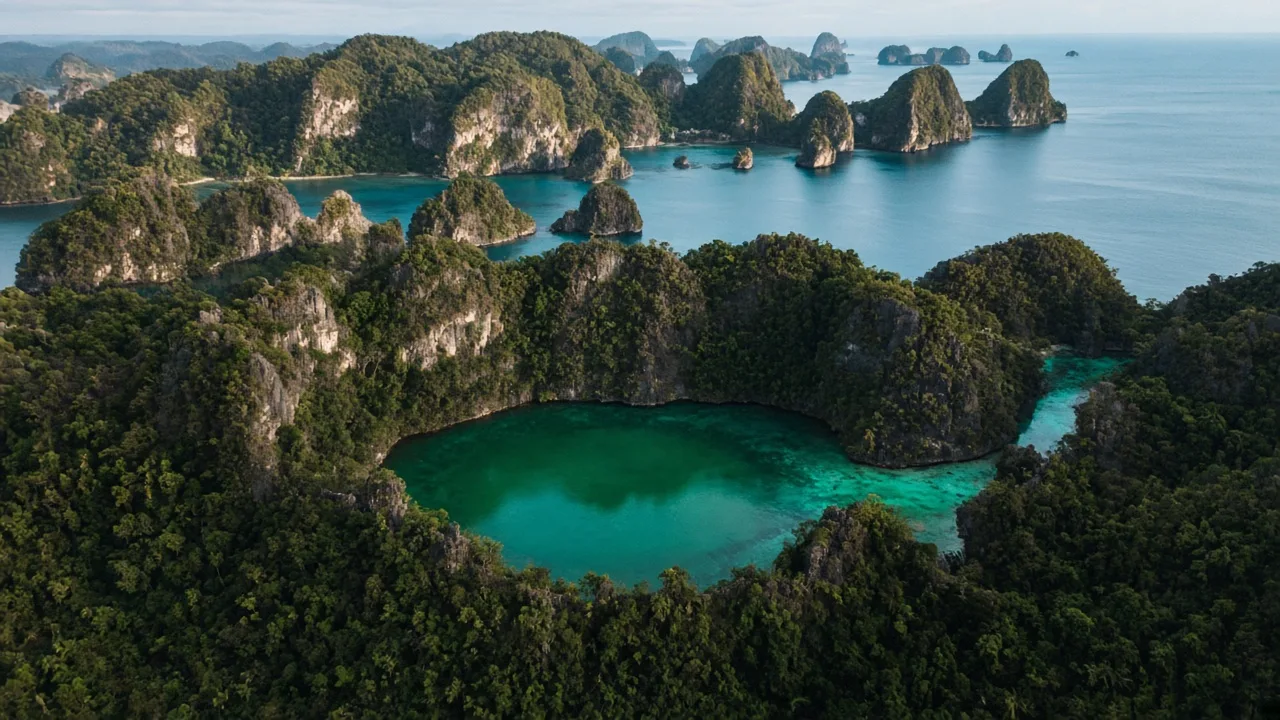
 Wayag karst islands viewpoint in northern Raja Ampat, looking down across dozens of dome-shaped jungle-covered limestone islets in calm turquoise water, with a wooden phinisi liveaboard yacht visible at anchor below" loading="lazy">
October in Raja Ampat
October is the season opener. The first week of October is sometimes still in the wind tail, but by mid-October most operators are back, conditions are improving rapidly, and the underwater visibility climbs from the 20-to-25 metre September average to the 25-to-35 metre November numbers. Water temperature climbs to 29 to 30. Manta numbers are building. The bird-of-paradise displaying season is at its peak in October. Pricing in October is typically 15 to 25 per cent below the January-February peak, and availability is the easiest of the high-season window because the booking pressure has not yet built. October is also the start of the Misool season; most boats start running Misool itineraries from late October onwards. October is the right answer for budget-conscious divers who want high-season conditions without high-season prices, and is one of the most-recommended months for our second-time-Raja-Ampat returners.
November in Raja Ampat
November is when the season fully establishes. Visibility runs 30 to 40 metres at most sites, the manta cleaning stations are near peak, the Misool itineraries are running reliably, and the bird-of-paradise displaying continues at high intensity. Water temperature is 29 to 30, the topside conditions are the warm-rainy mix of the NW monsoon, and the demand pressure is starting to build but has not yet hit the December-January peak. November tends to have a strong split: the first half is high season at near-shoulder pricing, the second half (especially the run-up to American Thanksgiving and the European pre-Christmas window) is full peak. November is one of our most-booked months for repeat guests who know the patterns and book the value-side of the curve. Booking lead times of three to four months are usually sufficient.
December in Raja Ampat
December is peak season. Manta numbers are excellent, visibility 30 to 40 metres, water temperature 29 to 30, and the boats are full. Christmas and New Year departures are some of the most-requested of the year and need to be booked six to nine months in advance, often longer for the most popular Misool itineraries. Pricing is at the annual peak. The trade-off for the price is the highest probability of glass-calm water, dependable sun in the morning, and the densest manta and bumphead parrotfish numbers of the year. December is also one of our most-requested months for honeymooners; we cover the couples-side angle in our honeymoon liveaboard Indonesia guide, with most of the recommendations applying directly to Raja Ampat in December.
Best month for what: planning by interest
If you have a specific interest driving the trip, the calendar narrows further. Here is how the highest-conviction interest-based recommendations break down for Raja Ampat.
Manta rays
Manta numbers at Manta Sandy and Manta Ridge peak from December through March, with February as the single highest month in most years. Reef mantas are present year-round at the cleaning stations, but the encounter rates and the typical numbers per cleaning visit are highest in this window. If mantas are the primary draw, book January or February. October-November and March-April are still excellent.
Bird-of-paradise photography and birding
The Wilson's bird-of-paradise (Diphyllodes respublica) and the red bird-of-paradise (Paradisaea rubra) display at sunrise leks in Waigeo, the largest island in northern Raja Ampat. Peak displaying season is September through November, with secondary displaying through January. Most liveaboards offer optional pre-dawn shore excursions to a forest hide for this; the hide visit takes 90 minutes and requires a 4 to 5 AM start. October is the top recommendation if birds-of-paradise are the secondary trip driver.
Wide-angle and underwater photography
The wide-angle photography window is November through March, with December and January as the best balance of high manta numbers, high visibility, and dependable morning sun. February is the technical sweet spot for many of our returning photographers because the visibility numbers are at peak, the water is at its calmest, and the holiday-period pressure has eased. Macro photography is good year-round; macro photographers tend to book on the basis of when they can travel rather than when the macro subjects are best, because the macro subjects are always there.
Snorkeling and non-diver guests
Raja Ampat's snorkel-friendly conditions are at their best November through March: calm water, high visibility, and the reef-tops at Sawandarek and Yenbuba in clear shallow water. We cover the snorkeling and non-diver question specifically in our Indonesia liveaboard for non-divers and snorkelers guide; the seasonal recommendation for non-divers in Raja Ampat is the same as for divers, and the December-March window is the strongest for couples in which one person dives and the other snorkels.
Solo travellers
If you are travelling alone, the practical seasonality recommendation is November through March (the months our boats are at their fullest, which means the highest probability of being able to share a cabin and avoid the single supplement). October and April have lighter passenger lists, which can be an advantage if you want a quieter trip but a disadvantage if cabin sharing matters to your budget. Our solo liveaboard diving guide covers the cabin-sharing economics in detail.
First-time Raja Ampat visitors
For a first-time visitor, the recommendation is December through March, ideally a 7-night central Dampier Strait itinerary with a Misool extension if budget allows. The conditions are at their high-season best, the trip-quality ceiling is at its highest, and the first impression of Raja Ampat is the postcard version that most marketing materials are based on. Our Raja Ampat islands guide covers the geography of where the trip actually goes; our Raja Ampat dive sites guide covers the dive-side sites in detail.
Returning guests and second-time visitors
Returning guests have more flexibility and tend to book the value-side of the curve: October, November, March, and early April. The conditions are 80 to 95 per cent of the December-February peak at 75 to 85 per cent of the price, and the boats are less crowded. Many of our most experienced repeat guests book exclusively in this shoulder window and report consistently excellent trips.
Booking strategy and lead times by month
The right time to book depends entirely on which month you are targeting. The pattern across our own departures and what we see across the broader operator community:
- December and January departures: Book six to nine months in advance. Christmas and New Year departures often go to waitlist twelve months out. The best Misool itineraries for this window can sell out fourteen to fifteen months ahead in the most popular years.
- February departures: Book four to six months in advance. The holiday pressure has eased but demand from photographers and repeat guests keeps booking lead times non-trivial.
- March and April departures: Book three to four months in advance for first-half-of-month departures; two to three months for late-month departures. April is the easiest high-season month to find late availability.
- October and November departures: Book three to four months in advance for the popular weeks (Thanksgiving, pre-Christmas). October is the easiest month to find late availability while still getting high-season conditions.
- September late-season returners: Often available within two months. Variable conditions, but the operators that have come back are the experienced ones.
- May to August: Often available within a few weeks. The booking constraint in this window is operator availability, not demand. Confirm the operator runs Raja Ampat in your specific weeks before paying a deposit.
How to read pricing across the year
Raja Ampat pricing varies by 30 to 40 per cent between the annual peak (December-January) and the deepest shoulder (October, April). Mid-November and early March, the two "shoulders of the high season", are typically 10 to 20 per cent below the December-January peak. The genuinely cheap months (May-August) are not directly comparable because the trip product is different: a sheltered-area boat in July at 60 per cent of the December price is not delivering the same trip as a Misool-itinerary boat in December at full price. Pricing alone is not a useful month-to-month comparison; you have to weight by what you are actually getting.
What we tell first-time guests when they ask about timing
The conversation we have with most first-time Raja Ampat guests, condensed:
If your dates are flexible, target late November through mid-March, with February as the single best week if you can land it. If your dates are not flexible, work backwards: take whatever month you can travel in, treat the corresponding section of this article as the brief, and book accordingly. October and April are excellent shoulders that most first-timers underrate. May to September is workable if you absolutely have to be there, and you should accept that the trip will be a different shape and budget your expectations accordingly. If you cannot travel in October to April and you are flexible on destination, look at our Komodo liveaboard departures instead; Komodo's high season is the inverse of Raja Ampat's, and most divers would rather have a Komodo trip in July than a poor-conditions Raja Ampat trip.
The other piece of guidance we offer: do not over-optimise. The variance between February and November in Raja Ampat is much smaller than the variance between booking the right operator versus the wrong operator. A well-run trip in October will outperform a poorly-run trip in February every time. Once you have a window of two or three months that works for your travel calendar, the operator selection and the itinerary structure matter more than fine-tuning the exact week.
Putting it together
Raja Ampat is a year-round-bookable destination on paper but in practice has a seven-month operating window from October through April, with the strongest five-month run from November through March. The high season is driven by the NW monsoon's calm water and high visibility; the low season is driven by SE trade winds that most boats are not designed to operate in. Inside the high season, January-February is peak, October and April are the value shoulders, and December has the highest demand pressure. Pick the month that matches your interests (manta-driven divers should target December-March, birders should target September-November, photographers should target February, value-conscious returners should target October or early April), and then book at the lead time that matches the popularity of that window.
If you are weighing Raja Ampat against another Indonesian destination, our Raja Ampat vs Komodo comparison is the right next read; if you are looking at the dive geography itself, our complete Raja Ampat dive sites guide covers the named sites. If you have a specific Raja Ampat trip in mind and want operator-side input on the timing, get in touch; we are happy to talk through the trip rather than send a brochure. The right month for Raja Ampat is the month that fits your interests and your booking calendar; the goal of this guide is to make sure you choose with the same information the operators are using.