If you ask the dive guides who work the Raja Ampat boat circuits which single sub-region of Raja Ampat they would choose if they could only dive one for the rest of their careers, more than half of them say Misool. The reasons are partly objective (the highest soft-coral coverage in the Coral Triangle, the most reliable manta cleaning station on the south side of Raja Ampat, the global hotspot for tasselled wobbegongs) and partly more emotional (the karst islands look like a fictional landscape, the boat traffic is a fraction of Dampier Strait, and the diving is the closest thing the region has to a true wilderness experience). The wider Raja Ampat destination guide places Misool in context with the central and northern groups; this article is the operator-side answer to the more focused question, which is what makes Misool worth a dedicated trip and what specifically to plan around.
The structural reason Misool diving is what it is comes down to remoteness, geography and policy. Misool sits roughly 165 kilometres south-southwest of Sorong, across an open-water crossing that takes most liveaboards 8 to 12 hours overnight. The atoll-like cluster of small islands at the southern end (the Yefnabi and Daram groups, the Fiabacet pinnacles, the Boo islands) sits on the edge of a deep oceanic trench, with the seabed dropping to 1,000 metres immediately offshore. The current that wraps around these outer islands is what feeds the wide-angle scenery: cold, plankton-rich water rises along the deep walls, the soft corals on the upper slopes feed on it, and the fish biomass concentrates at the points and overhangs. The other structural factor is policy. Misool was the first region in Raja Ampat to be declared a no-take marine protected area, in 2007, partly through the work of the local NGO that became Misool Foundation. The shark and manta populations rebuilt from a low base, and the soft-coral coverage that everyone now photographs is partly the result of two decades of strict no-fishing protection. The visit fee that every diver pays at the start of a Raja Ampat trip funds this protection directly. The Raja Ampat liveaboard page covers the route options that include Misool and the schedules.
The headline summary, before we get into the individual sites and the seasonal logic, is this. Misool has roughly 30 named dive sites that operators visit on a typical itinerary, and another 15 that require specific weather windows. The strongest 10 sites span four sub-regions: the Boo group in the centre (Boo Window, Tank Rock, Whale Rock), the Fiabacet pinnacles in the south (Nudi Rock, Two Tree, Boo Rock), the Daram and Wedding Cake area in the northeast (Magic Mountain, Andiamo, Candy Store, No Contest) and the Sagewin Strait transit on the way in or out. A standard 9 to 11 night Raja Ampat South and Central liveaboard hits 8 of these on a single trip; the dedicated Misool Exploration routes hit all 10 plus the lesser-visited eastern sites. The rest of this article walks the geography, the season, the dive sites and the booking decisions that make a Misool trip work.
Misool geography and what makes the diving distinctive
Three geographic features drive the diving in Misool, and a brief look at them makes the rest of the article easier to follow.
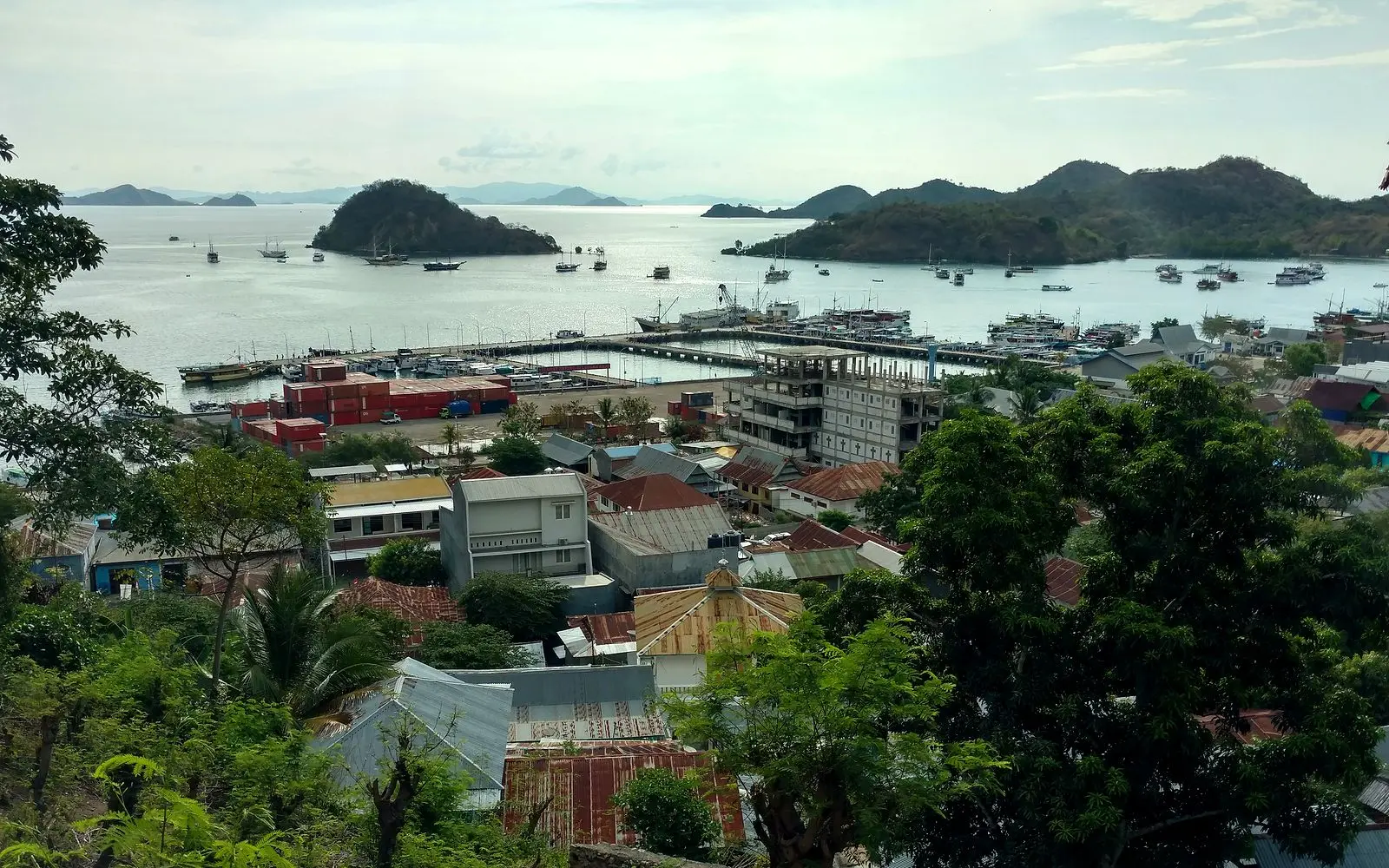
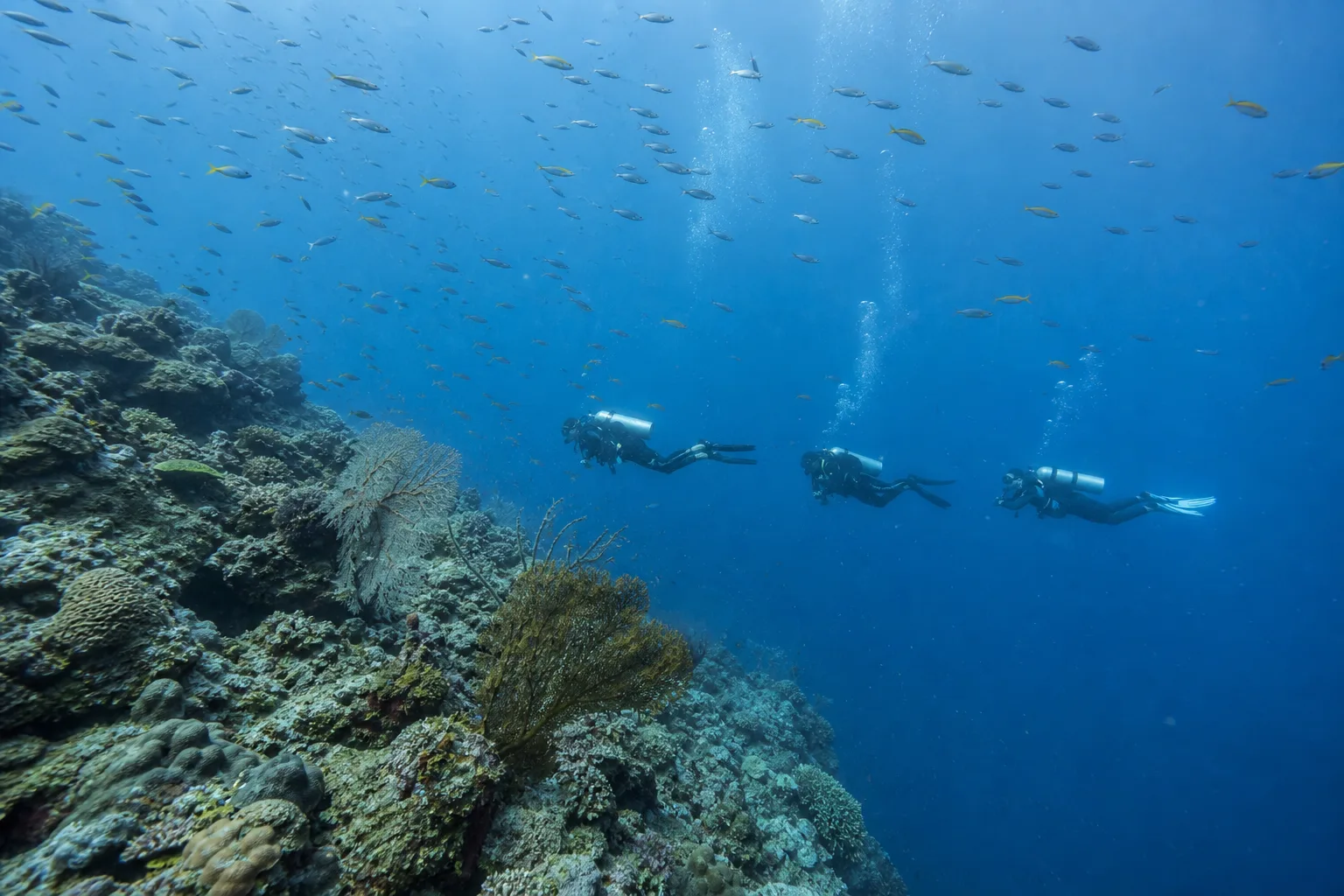
The first is the karst archipelago itself. Misool is the second largest of the four big islands that give Raja Ampat its name (the other three are Waigeo, Batanta and Salawati), and the southern coast is fringed with hundreds of small mushroom-shaped limestone islands. These are not coral atolls but ancient uplifted limestone, and the underwater topography mirrors the surface scenery: sheer walls, large overhangs, swim-throughs, and the pinnacle-like seamounts that the locals call rocks (Boo Rock, Nudi Rock, Whale Rock, Magic Mountain). The wide-angle photography that defines Misool is built on this topography. A typical dive site has a wall that drops from 5 metres to 35 or 40 metres, with the photogenic soft corals concentrated in the 8 to 18 metre band where the surface light still reaches and the current still feeds.
The second is the deep-water proximity. Misool's southern flank borders the Seram Trough, with the seabed at 1,000 metres less than 5 nautical miles offshore in places. This drives the upwelling that feeds the soft corals and brings the pelagic schools to the outer points. It also explains why the manta cleaning stations at Magic Mountain and Eagle Rock work: the cool deep-water current rises predictably on specific tides, the cleaner wrasses set up shop on the seamount tops, and the mantas come to the upwelling point on the right tide cycle. We can predict the manta encounter window to the day on Magic Mountain in the strongest months (February to April); other sites in the region are less consistent.
The third is the seasonal pattern. Raja Ampat as a whole has a clean dive season from October to early May, but Misool's specific best-window starts later (mid-November) and ends earlier (late April). The reason is that Misool sits exposed to the southeast trade winds and the open-water crossings from Sorong are uncomfortable to unsafe in the May-to-October period. Most operators do not run scheduled Misool routes outside the November-to-April window. Within that window, January through March is the strongest period for both visibility and manta encounters; April produces the warmest water and is the favourite month for soft-coral macro work. The wider Raja Ampat seasonal guide covers the cross-region timing in more detail; the short version is that Misool's window is the tightest within Raja Ampat.
One more practical note. The diving in Misool overlaps strongly with the wider Raja Ampat liveaboard diving overview and with the best dive sites in Raja Ampat ranking. This article focuses specifically on the southern atoll; the overview pieces cover the trip as a whole, the central Dampier Strait sites, and the northern Wayag and Kawe groups. If you are choosing between a Misool-focused itinerary and a north-of-the-equator route, the Raja Ampat vs Komodo comparison sets the wider context for that decision.
The Fiabacet pinnacles: where Misool earns its reputation
The Fiabacet group is a small cluster of limestone seamounts and submerged pinnacles roughly 12 nautical miles south of the main Misool island. The diving here is the most-photographed in all of Raja Ampat, and the four named sites in the cluster (Nudi Rock, Whale Rock, Boo Rock at Fiabacet, and Two Tree Rock) deliver wide-angle scenery that consistently surprises divers who arrive from Komodo or Bali expecting the same kind of reef.
1. Nudi Rock
The headline site of the Fiabacet cluster, named after the cluster of nudibranch species that the dive guides used to point out on the upper reef but more accurately remembered for the soft-coral wall on the eastern face. The dive plan is a slow circumnavigation of the seamount at 18 to 25 metres in the current direction of the day, with the eastern wall reserved for the strongest soft-coral light around 12 metres. The fish life is the standard Coral Triangle wide-angle list: schooling fusiliers and snapper at the points, dogtooth tuna passing in the open water beside the wall, the occasional grey reef shark on the deeper slopes. The marquee shot, in season, is the manta sighting that Nudi Rock produces on roughly one in three dives in February through April. Visibility is consistently 25 to 40 metres on the right tide, and the maximum depth for a recreational dive is 30 metres.
2. Whale Rock
Two minutes by tender from Nudi Rock, Whale Rock is a smaller pinnacle that punches well above its size. The named feature is the swim-through at 14 metres on the southern face, where soft corals cover the entire ceiling of a 6-metre-long natural arch and the surface light filters down through the gap. The same arch hosts a resident school of bigeye trevally that hangs against the current on the upcurrent side of the pinnacle, and the photographic geometry (school + soft-coral ceiling + sun beams) is the single most-published image from Misool. Whale Rock is a slightly easier dive than Nudi Rock (less current, more shelter on the leeward side) and is often used as the warm-up dive on the morning that includes Boo or Magic Mountain.
3. Boo Rock at Fiabacet (Boo Reef)
Distinct from the larger Boo Window site further north, Boo Rock at Fiabacet is a small submerged seamount that tops out at 8 metres and drops to 35 metres on its southern flank. The site is the cluster's strongest big-fish dive: the upcurrent point reliably produces grey reef sharks, schooling jacks and the occasional blacktip, and the wall on the southern side is hung with massive Muricella and Melithaea soft-coral fans that the photographers spend the most time on. Maximum depth 30 metres for the recreational plan, bottom time 60 minutes, and the dive is current-dependent (briefing on the day determines which side of the pinnacle is the entry).
4. Two Tree Rock
The fourth named site of the Fiabacet group, named for the pair of conspicuous trees on the small emergent rock above the dive site. Two Tree is the easiest of the four (least current, the shallowest top of any Fiabacet site at 5 metres) and is often the third dive of a Fiabacet day after Nudi Rock and Whale Rock. The diving features a continuous soft-coral wall on the southwestern side, the highest density of pygmy seahorses in the cluster (Bargibanti on the deeper Muricella fans, Denise on the shallower whip corals), and a constant traffic of small reef fish. Two Tree is the dive most macro photographers prefer in the cluster; the wide-angle photographers usually skip it for a return to Nudi Rock.
The Boo group: the iconic Misool image
The Boo group is a small cluster of three or four named islands roughly 8 nautical miles north of the Fiabacet pinnacles. The cluster takes its name from the two-island Boo formation that hosts the most-photographed swim-through in Raja Ampat: the natural arch on Boo Window.
5. Boo Window (Boo Rock)
The single most-photographed dive site in Raja Ampat. Boo Window is a natural arch about 4 metres wide and 6 metres tall on the western face of a small limestone island, sitting at 12 metres depth. The arch frames the open blue water on the far side, and the geometry produces the iconic over-and-under shot that has appeared on the cover of more dive magazines than any other Indonesian site. The dive itself is more than just the arch: a shallow soft-coral garden at 8 metres extends along the entire southern flank of the island, a deeper wall at 25 metres hosts the wide-angle pelagic scenery, and the eastern point reliably produces a school of barracuda hovering against the current. Boo Window is the dive most operators schedule for the second morning of a Misool route, and the briefing emphasises the importance of clear buoyancy in the arch (it is shallow enough that excellent buoyancy is not optional, and the silt on the floor lifts easily).
6. Tank Rock
Three minutes by tender from Boo Window, Tank Rock is a submerged pinnacle that complements the wide-angle Boo Window with serious pelagic action. The seamount tops out at 10 metres and drops to 50 metres on its outer flank. The diving plan is a slow drift along the upcurrent side, with the schooling action concentrated at the corner: jacks, fusiliers, snappers, and the consistent passage of dogtooth tuna feeding on the smaller fish. The current is moderate to strong (1 to 2 knots on the wrong tide), and the briefing always covers the safe descent and ascent route. Tank Rock is included on essentially every Misool itinerary.
7. Whale Rock at Boo (distinct from Fiabacet's Whale Rock)
Confusingly, the Boo group has its own Whale Rock, a smaller seamount three hundred metres north of Tank Rock. Less photographed than its Fiabacet namesake but a strong macro dive: the shallow reef has a high density of pygmy seahorses, ghost pipefish, and the various hairy-frogfish and crocodilefish that Misool produces in lower numbers than Lembeh but more reliably than Komodo. The wider Indonesian macro diving guide covers the species side; for Misool specifically, this site is the macro highlight if your itinerary does not include the Sagewin Strait transit.
Magic Mountain and the Daram group: manta cleaning stations and yellow-coral country
The Daram and Wedding Cake area in the eastern reach of Misool is the cluster that most surprises first-time visitors. The dive sites are less well-known internationally than Boo Window or Nudi Rock, but the photographic and species-list output is arguably the strongest in the region. Two sites in particular deserve detailed treatment.
8. Magic Mountain (Shadow Reef)
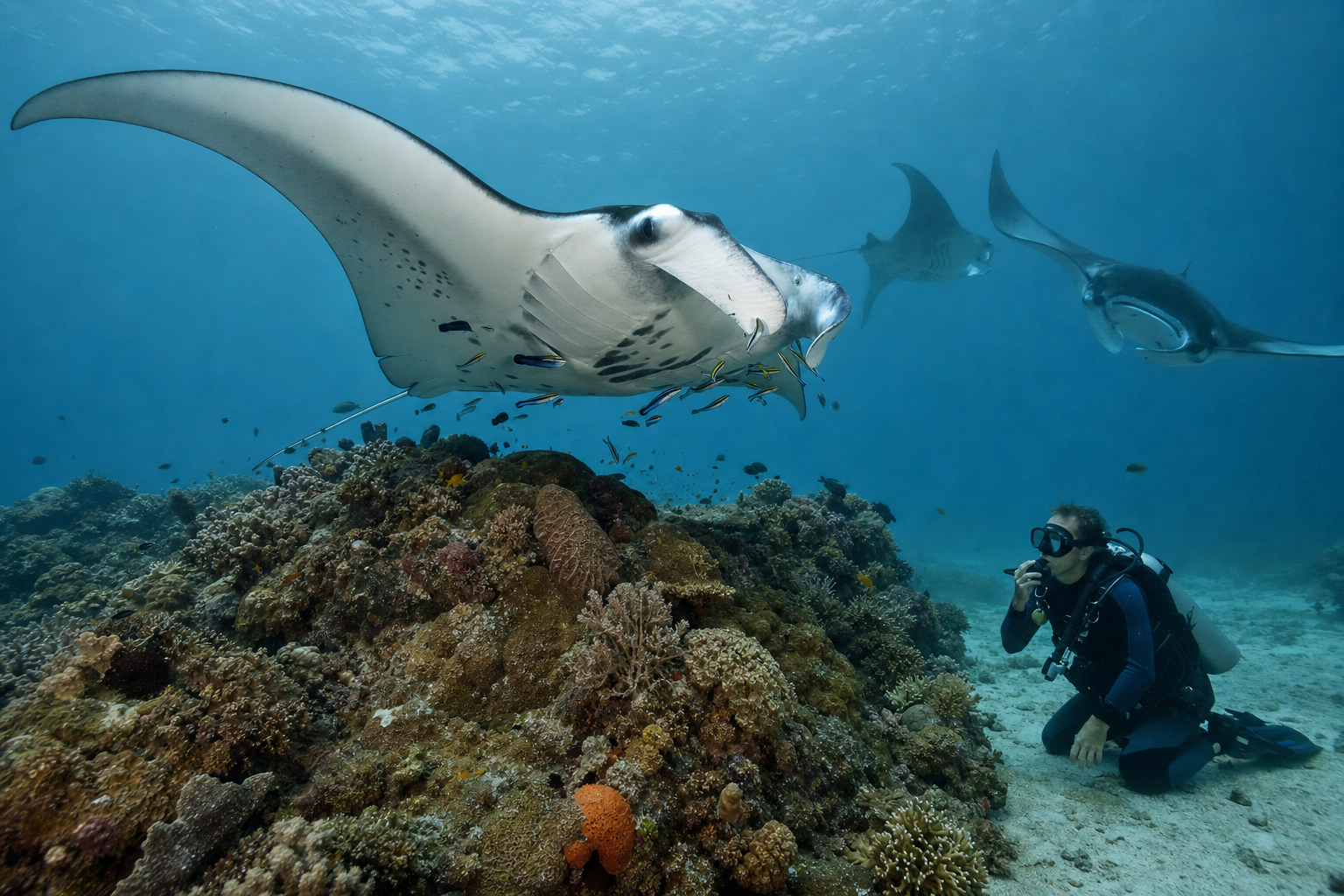
The single most reliable manta cleaning station in southern Raja Ampat, and the dive that most guests rank as their favourite of the entire trip. Magic Mountain is a submerged seamount that tops out at 8 metres and drops to 35 metres on its flanks, sitting in a strong-current channel between two larger islands. The seamount supports two distinct cleaning stations: the eastern one for reef mantas (Mobula alfredi) and the western one for the larger oceanic mantas (Mobula birostris). On a strong day in the February-to-April window, both stations work simultaneously, and divers see 6 to 12 reef mantas circling the eastern station while one or two oceanic mantas pass through the western one.
The dive plan is deliberately conservative. The descent is to 18 metres on the upcurrent side of the seamount, the divers then position themselves on the sand flat at 20 metres beside the cleaning station and wait, the bottom time is 50 to 60 minutes depending on air consumption and water temperature, and the ascent is along the upcurrent slope to the safety stop. Movement is kept to a minimum: the mantas are extremely current-sensitive and the cleaning behaviour is suppressed by chasing or photographic over-positioning. Operators who run Magic Mountain regularly all enforce the same etiquette, and the local NGO and the marine reserve authority have put up signage at the briefing platform. The encounter quality at Magic Mountain on a calm February morning is comparable to the best manta sites in the Maldives or French Polynesia, at a fraction of the diver density.
9. Andiamo (Daram East)
A 20-minute crossing east of Magic Mountain, Andiamo is the headline dive of the Daram cluster and the site that most photographers associate with the bright-yellow soft-coral coverage that Misool is famous for. The site is a curving wall that runs north-south for roughly 200 metres, with a coral-covered slope from 5 metres at the top to 35 metres on the deeper edge, and a large overhang at 18 metres that hosts a school of sweetlips. The yellow soft corals (mostly Dendronephthya and Scleronephthya species) are concentrated on the eastern face where the upcurrent feeds them most reliably, and the wide-angle work here at sunset light is the imagery that defines Misool. Schooling pelagic fish are less reliable than at the outer Fiabacet sites, but the consistent species list includes wobbegongs on the shallow ledges, walking sharks at dusk, and a high density of pygmy seahorses on the deeper Muricella fans.
10. Candy Store (Daram West)
One ridge west of Andiamo, Candy Store is the second site in the Daram cluster that consistently appears on photographers' return lists. The site is named for the bright variety of soft-coral colours on the upper reef (yellows, reds, oranges, pinks all on the same 8-metre patch), and the diving rewards a slow, careful pace. Macro work is exceptional here: pygmy seahorses, pygmy pipefish, ghostpipefish, and the occasional rhinopias on the deeper sand patches at 28 to 32 metres. The site does not produce big-fish encounters reliably, and is best programmed as a third dive after a morning of wide-angle pelagic work elsewhere.
The marine life that makes Misool different
Beyond the named sites, four species or species groups are reliable enough in Misool that they deserve individual mention.
Tasselled wobbegong sharks
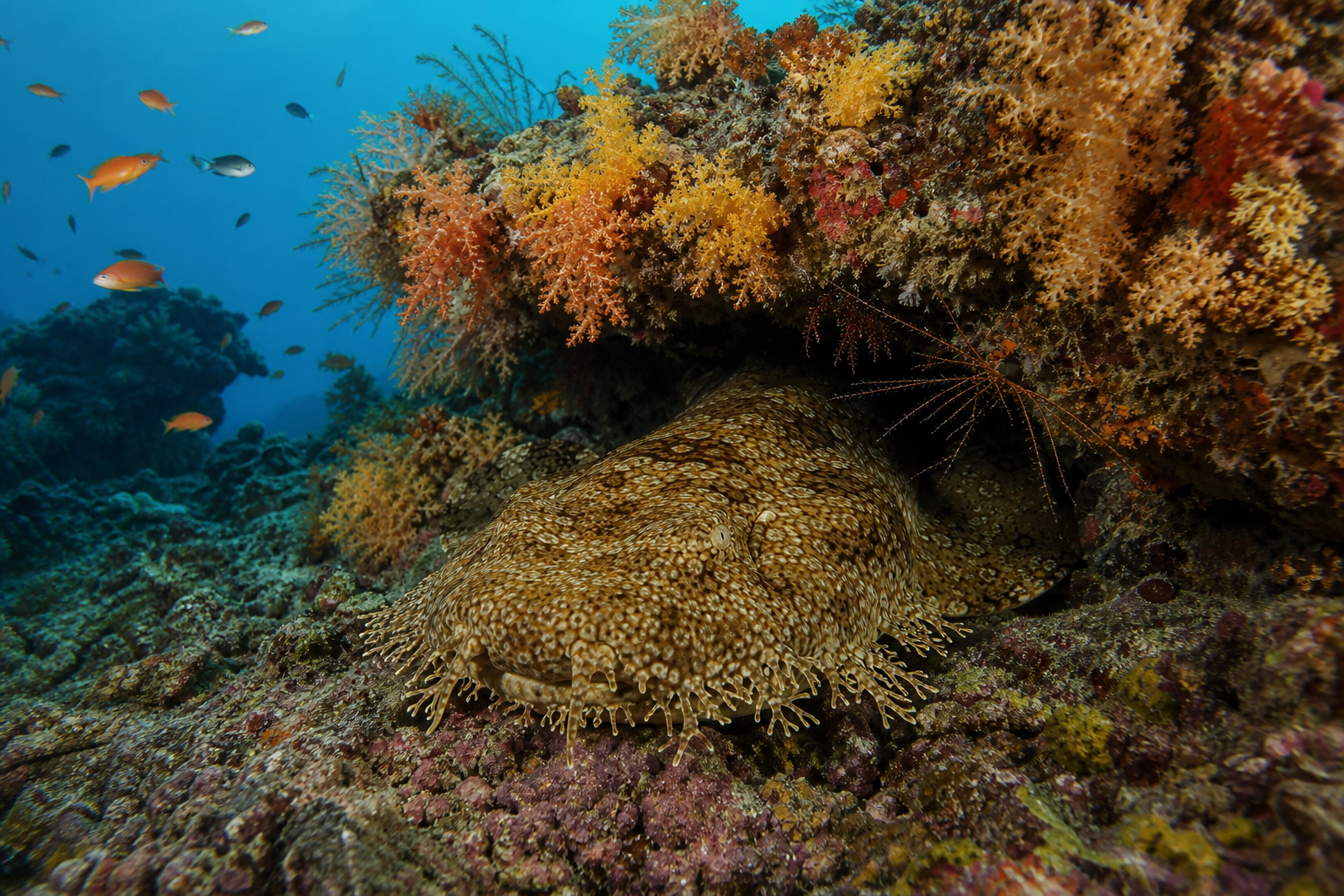
Misool is the global hotspot for tasselled wobbegongs (Eucrossorhinus dasypogon), the bottom-dwelling carpet sharks with the distinctive fringe of dermal lobes around the head. We log 2 to 6 wobbegongs per dive across the standard Misool itinerary, with the highest concentration on the Daram cluster's shallow reefs and the Boo group's overhangs. The wobbegong sightings are one of the few species highlights that work across all months, including the lower-visibility April end of the season. Photographic etiquette is straightforward: do not touch, do not move them, do not block the cave or overhang they are sleeping in. They are slow predators and they do bite when surprised.
Walking sharks (epaulette sharks)
The Raja Ampat walking shark (Hemiscyllium freycineti) and its endemic Misool cousin (Hemiscyllium galei) are night-dive specialties. We see them on the dusk and night dives at Andiamo, Two Tree Rock and the shallow reefs around the Misool resort area, walking on their pectoral fins along the coral rubble looking for crustaceans. The wider Indonesia shark-diving guide covers the species side in more detail; for Misool specifically, the night dive at Andiamo or Candy Store is essentially guaranteed to produce a walking shark sighting in a 60-minute dive.
Manta rays
Beyond Magic Mountain, Misool hosts at least three other manta cleaning stations that work in the right season: Eagle Rock, Karang Bayangan, and a smaller unnamed station near the Wedding Cake area. The reef manta (Mobula alfredi) is the resident species at all four sites, with oceanic mantas (Mobula birostris) appearing intermittently at Magic Mountain and Eagle Rock. The strongest months are February to April, with a secondary peak in late November and early December. The wider Indonesia manta ray guide compares Misool with the other Indonesian manta hotspots in detail.
Pygmy seahorses and macro coverage
Misool is one of the few sub-regions in Indonesia where you can find Bargibanti, Denise, and Pontohi pygmy seahorses on the same dive trip, often on the same dive site (Two Tree Rock and the shallow reefs around Daram are the most reliable). The macro density is below Lembeh's, but the wide-angle-and-macro combination is unique: a dive at Andiamo can deliver a school of fusiliers and a Bargibanti in the same 60-minute window. The wider Indonesia underwater photography guide covers gear and lens choices for this kind of mixed-itinerary trip.
When to dive Misool: the operating window in 2026
Misool has the tightest operating window of any Raja Ampat sub-region, and timing the trip well matters more here than for the central Dampier Strait routes. The reliable season runs from mid-November through late April, and the four key periods within that window have distinct profiles.
Mid-November to mid-December is the early-season window. Visibility is improving (25 to 30 metres on average), the manta cleaning stations are starting to fire, and the boat traffic is at its lowest of the year. The water temperature is 28 to 30 degrees and the surface conditions are typically calm. This window is the favourite of returning Misool guests who want a slightly less-crowded experience and are willing to accept that the manta encounter probability is lower than the February-to-April peak.
January through early February is the visibility peak. The Raja Ampat dry-season pattern produces 30 to 40 metre visibility on most days, and the reef-clarity for wide-angle photography is at its annual best. Manta encounters are moderate (Magic Mountain works on roughly 60 per cent of dives in this window), and the surface conditions remain generally calm. The wide-angle photographers we book most often request mid-January departures specifically.
Mid-February to mid-April is the manta peak. Magic Mountain's encounter rate rises to roughly 85 per cent of dives in this window, with multi-manta encounters (4 to 12 individuals) on most working days. Visibility drops slightly from the January peak (25 to 35 metres average) but remains excellent. Water temperature is 29 to 31 degrees, the warmest of the season. This is the window most first-time Misool guests should target.
Mid-April to late April is the soft-coral macro window. The water temperature peaks at 31 degrees, the soft-coral pulsing reaches its annual maximum, and the macro work (pygmy seahorses, ghostpipefish, juvenile critters) is at its best. Manta encounters drop slightly from the February-to-April peak but remain strong. The trade-off is that the south-east monsoon starts to set up by late April, the open-water crossings from Sorong start to get rougher, and the operating window closes for most operators by the first week of May.
Outside the November-to-April window, Misool is essentially unreachable for liveaboard diving. The May-to-October period is the southeast trade wind season, the open-water crossings from Sorong are rough to dangerous, and almost no operators run scheduled itineraries. The wider Indonesia liveaboard seasons guide covers the cross-region timing.
Liveaboard versus resort versus cabin charter
Misool can be dived from one of three operating bases, and the choice meaningfully affects the trip experience.
Liveaboard. The dominant option, and the one we recommend to roughly 80 per cent of our Misool guests. The advantages are obvious: you reach all of the named sites including the offshore Fiabacet pinnacles and the eastern Daram cluster, you can adjust the schedule to follow the manta encounter or the current pattern, and you get three to four dives a day across the trip. The 9 to 11 night Raja Ampat South and Central liveaboard route hits 8 of the 10 strongest Misool sites; the dedicated 11 to 14 night Misool Exploration route hits all 10 plus the lesser-visited eastern reefs. The luxury liveaboard category covers the boats most likely to run the longer Misool routes.
Resort. Misool Eco Resort, on Batbitim Island in the heart of the southern atoll, is the only fixed-base resort operating in the protected zone. The diving from the resort is excellent (the resort sites include sites the liveaboards can also access, plus a few exclusive house reefs), and the experience is the more comfortable, less-mobile alternative for guests who do not enjoy long boat days. The trade-off is that the resort cannot reach the offshore Fiabacet pinnacles or the eastern Daram cluster on a comfortable day-trip, so the dive site list is roughly 60 per cent of what a liveaboard covers. We sometimes recommend the resort for guests on a second Misool trip after they have already done the full atoll on a liveaboard.
Cabin charter on a smaller boat. A handful of small operators run 7 to 9 night Misool-only routes from Sorong on smaller phinisi yachts (10 to 14 guests rather than 16 to 20). The rate per person is typically 10 to 25 per cent lower than the bigger luxury yachts, the dive site coverage is similar, and the experience is more intimate. The trade-off is the smaller boat handles the Sorong-Misool open-water crossing less smoothly, and the cabin sizes are usually below the luxury standard. This is the option we recommend to budget-conscious experienced divers who prioritise the dive site coverage over the on-board experience.
Permits, fees and the marine reserve
Every diver entering Raja Ampat pays the regional entry charges at the start of the trip, and since January 2026 there are two of them rather than one. The marine park entry card, the environmental services fee, is IDR 700,000 per person and is valid for twelve months; the regency visitor levy is a further IDR 1,000,000 per foreign visitor per visit, up from IDR 300,000. That is IDR 1,700,000 in total, roughly 105 USD, and it covers the whole trip regardless of length. Our Dampier Strait guide sets out exactly what each charge funds and how to pay it. Misool diving additionally falls under the Misool Marine Reserve protection, which is funded directly by these fees and does not add a separate cost. Operators handle the permit collection at embarkation in Sorong and provide each diver with a personal entry tag that is checked by patrol boats at random throughout the trip.
The practical implication is that diving in Misool requires a registered operator. Independent boats and unregistered charters are turned back at the marine reserve boundary, and the patrol enforcement is genuine. We list the registration requirements and the supporting documentation in the booking confirmation; for the operator side, the registration is renewed annually and is part of every legitimate operator's standard procedure.
Common mistakes Misool divers make
Five mistakes recur on Misool trips, often enough that we mention them on the welcome briefing of every itinerary.
Trying to do too much in one trip. The strongest Misool itineraries are 9 to 11 nights of dedicated southern Raja Ampat diving. Routes that compress Misool into a 3-day visit at the end of a Komodo trip miss the manta peak, miss the offshore Fiabacet sites, and reduce the experience to what amounts to a sampler. If Misool is the reason you are coming to Indonesia, give it the full route.
Underestimating the current. The outer Fiabacet sites and Magic Mountain run 1 to 2 knots on the wrong tide. Recent advanced or current-experienced certification within the last 12 months is the right preparation. Operators who run Misool typically require a minimum of 50 logged dives, and the briefing on each site walks the entry point, the descent strategy and the safety stop position carefully.
Booking the wrong window. First-time Misool guests almost always come for the mantas, but they sometimes book the November early-season window because it coincides with northern-hemisphere holidays. November Misool diving is excellent but the manta encounter rate is lower than mid-February to mid-April. If the mantas are the priority, book the February-to-April window.
Skipping the night dives. Misool's walking sharks, the rhinopias, the various decorator crabs and the resident school of squid that hunts on the shallow reef at Andiamo all appear on the night dives. Divers who treat the night dive as optional miss roughly 30 per cent of the species action across a typical week.
Ignoring the karst itself. The surface scenery in Misool is genuinely spectacular: hundreds of small mushroom-shaped limestone islands rising from turquoise water, with sand cays and hidden lagoons that only become visible at low tide. The kayaking and the lagoon excursions that operators schedule on rest afternoons are the second-best part of the trip, after the diving. Guests who skip them miss what makes Misool different from the rest of Raja Ampat at the surface level.
What separates a good Misool operator
Misool diving rewards local knowledge and flexible scheduling more than it rewards any brochure itinerary, and Magic Mountain is where that shows up most clearly. Two attempts on consecutive mornings can produce one distant reef manta and then nothing at all, which is disheartening if you have built the trip around the site. The variable is rarely the site itself, it is the timing. A captain watching the moon phase and the current overlay may conclude that a dawn descent two hours before the standard plan is the better bet, and on the right morning that call is the difference between a blank and a sustained encounter with a dozen reef mantas and the occasional oceanic working both stations at once. Good boats make that call and build the safety case around it. Less-good ones run the printed schedule and hope. Ask, before you book, how often the plan moves and who decides.
How to book and what to ask
Misool liveaboards book further in advance than the central Raja Ampat routes because the operating season is shorter and the inventory is genuinely scarce. For 2026 February-to-April departures, book by August 2025; for November-to-January departures, book by April 2025. The popular weeks (the first three weeks of March specifically, and the holiday weeks in late December and early January) sell out 12 to 14 months ahead in most years.
The questions worth asking before booking, beyond the standard cabin and food questions, are: how many of the 10 strongest Misool sites are scheduled on this departure (operators sometimes substitute weather-dependent sites without disclosure, and the brochure version of the itinerary is often more generous than the actual schedule); what the deep-diving and current-experience requirement is for the offshore Fiabacet sites; whether the boat carries nitrox at no surcharge for the multi-dive days; and what the contingency plan is if the Sagewin Strait crossing is rough on the way down. A good operator answers all four directly. To start that conversation, the contact page reaches our reservations team, and the King Neptune, Neptune One and Komodo Sea Dragon pages cover the boats themselves. The scuba diving Raja Ampat page covers the route options at a glance.