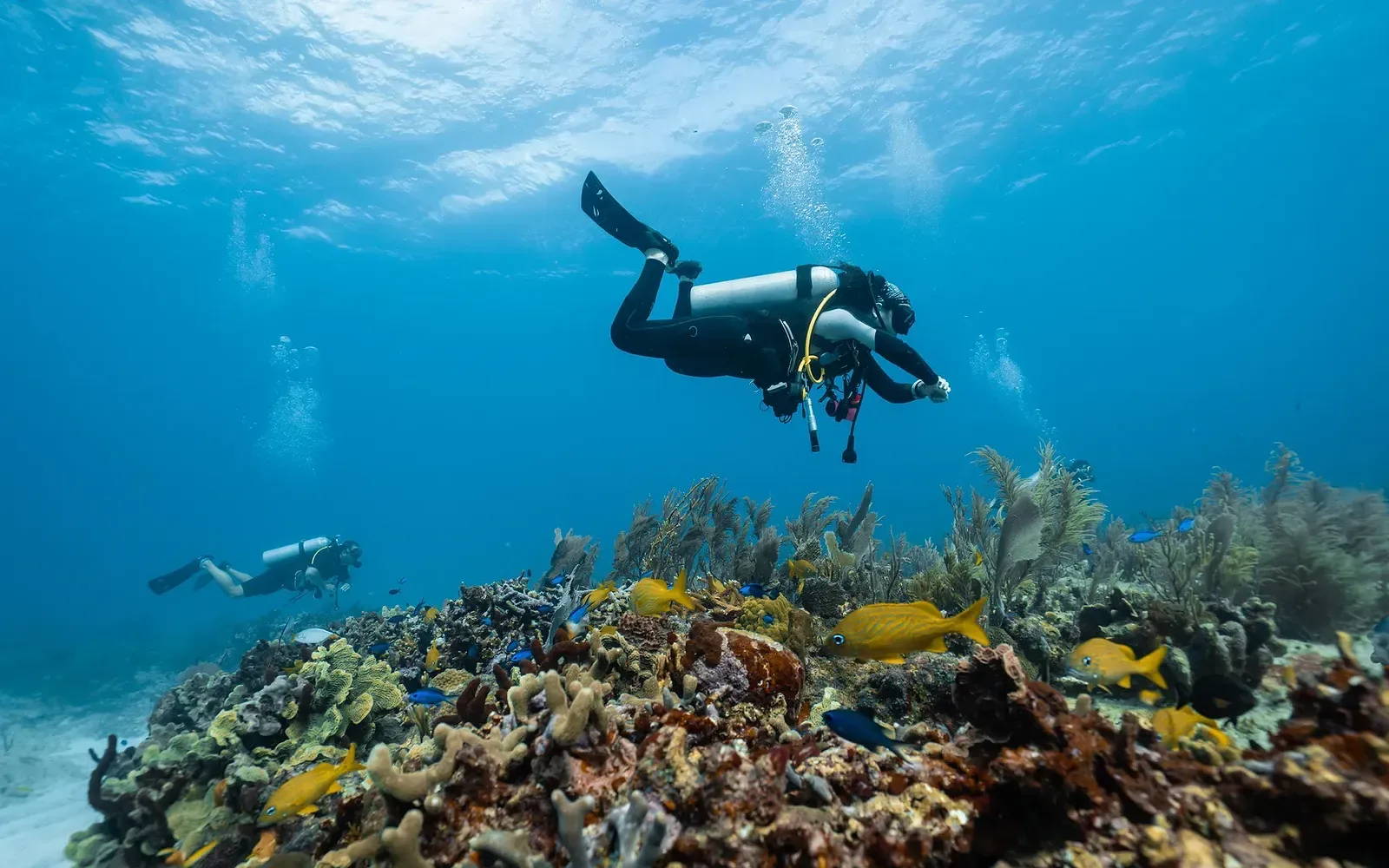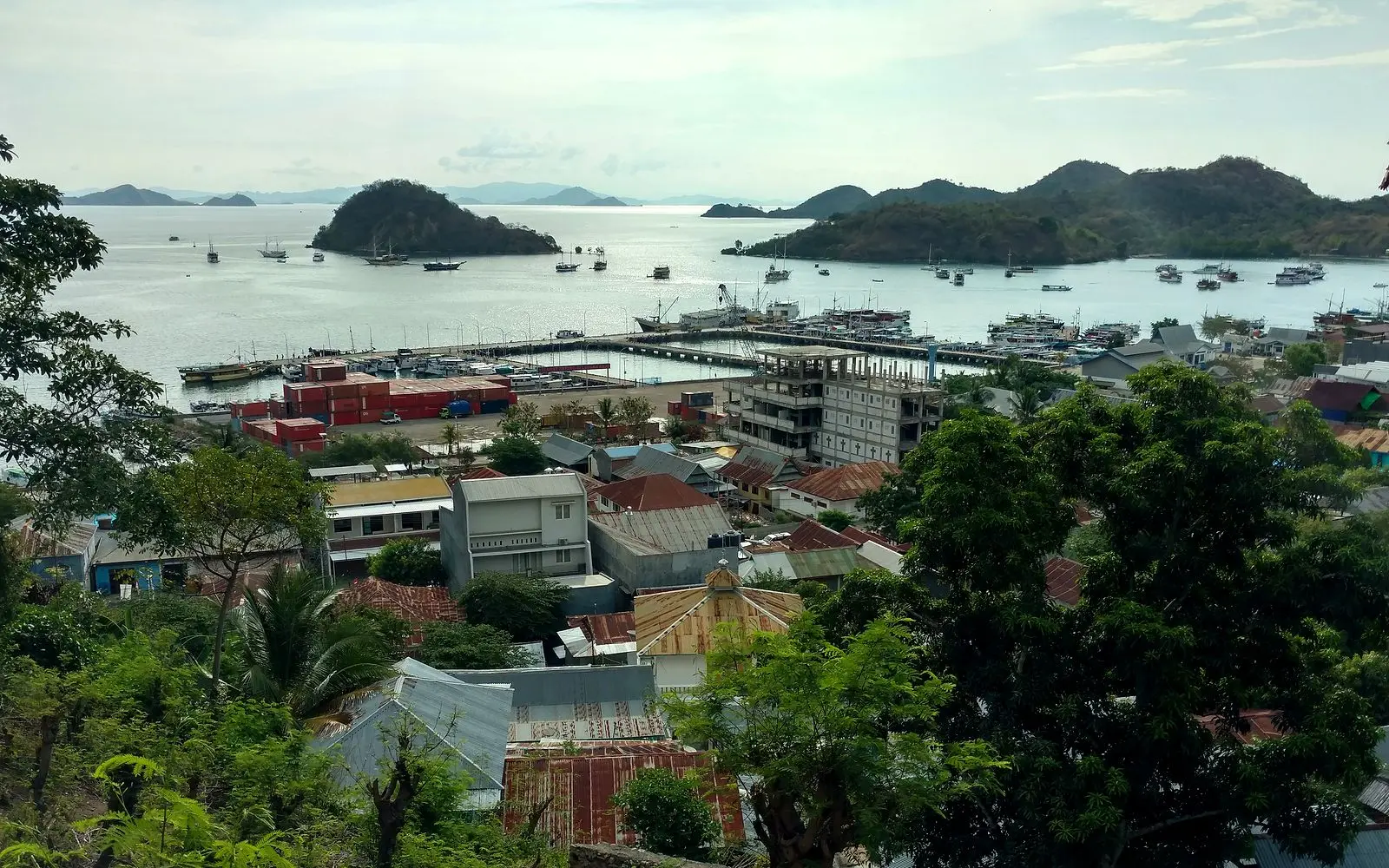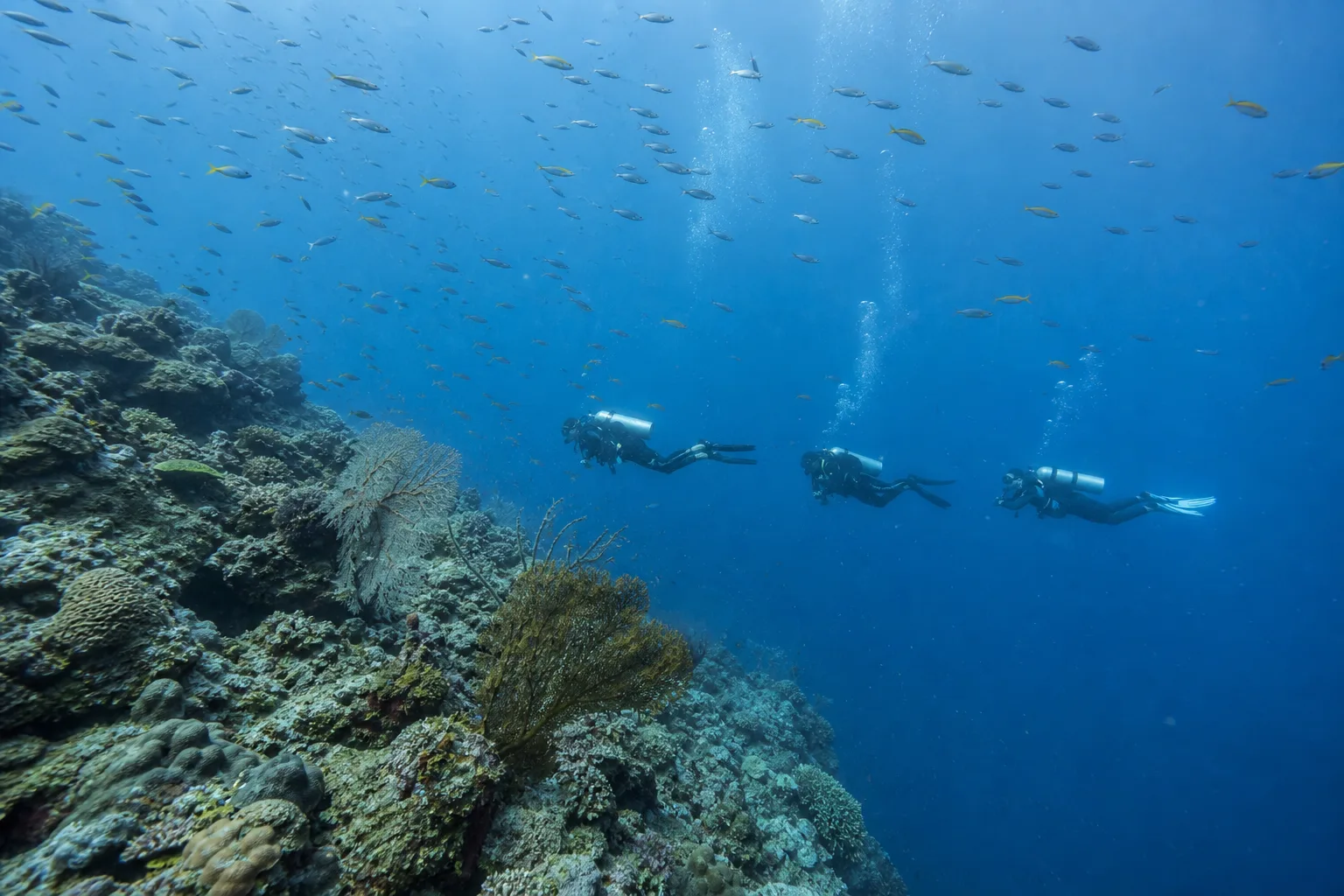
Triton Bay sits on the southern coast of West Papua's Bird's Head Peninsula, inside the Kaimana Marine Protected Area. For years it was the place operators mentioned in passing on a Raja Ampat itinerary without actually stopping. That has changed. Marine biologists first surveyed the bay properly in 2006, the Kaimana MPA was formalised in 2008, and by 2024 a small but growing number of liveaboards were running dedicated Triton Bay legs on cross-region routes from Ambon, Sorong or Kaimana itself. The diving is its own thing: soft coral as dense as anything in the Coral Triangle, whale sharks that gather under traditional bagan fishing platforms on much the same schedule as Cenderawasih Bay, endemic walking sharks on the night dives, and far fewer boats than you will see anywhere in Raja Ampat. We run liveaboard trips across Indonesia, and this article digs into the narrower question: what makes Triton Bay worth treating as a destination in its own right, rather than a transit note on a Banda Sea crossing.
Here is the short version before the detail. Triton Bay packs four distinct diving experiences into one week-long itinerary: whale sharks at the Namatota and East Kaimana bagan platforms, the soft-coral walls of Pulau Aiduma (Larry's Heaven and Black Forest), the volcanic boulder and macro sites around Pulau Dramai (Batu Jeruk, Tim Rock, Goby Gully), and the pelagic reefs out on the Bomberai Peninsula. The species list backs that up. You get the Triton epaulette walking shark (Hemiscyllium trispeculare), one of the better whale shark encounter rates in Indonesia, flasher wrasse with their stronghold in the Bird's Head Seascape, and soft coral that marine survey teams have called some of the densest in the region. If you want the bigger picture first, our overview of scuba diving in Indonesia sets the cross-regional context. Below, we walk the geography, the four sub-regions, and the 10 dive sites in the order most liveaboards reach them.
Think of Triton Bay in 2026 as Raja Ampat around 2008. Fewer than 15 boats run it with any regularity, there is a single land-based resort near Kaimana town, and the park fees stay modest next to Raja Ampat or Komodo. Peak weeks are not yet hard to book, but October through March fills earlier every year, and for the first time we are telling guests to lock in cross-region trips ten months ahead. The trade-off cuts the right way. Diving here stays quiet, and it rewards anyone willing to step off the usual Sorong-to-Wayag loop.
Triton Bay geography: four sub-regions and what each one delivers
Triton Bay divides naturally into four diving sub-regions, and a typical 7-night route hits all four in sequence. A quick look at each makes the rest of the article easier to follow.
The bagan group (East Kaimana and Namatota) is built around the whale shark aggregation at the traditional fishing platforms in the eastern waters of the bay. The bagan are floating lift-net rafts, roughly 12 by 15 metres across, crewed by local fishermen who work through the night with kerosene lanterns to draw in baitfish, then release the bycatch at dawn. Over two decades the whale sharks have learned that schedule, and they now hang under the platforms at first light. This is the headline draw, and the surrounding water throws in something most whale shark sites cannot match: dolphins.
The Aiduma group centres on Pulau Aiduma, the most photographed island in the bay and the strongest wide-angle reef diving on the trip. Larry's Heaven, on the northern and southern faces of the island, is the dive that turns first-timers into repeat visitors, with vertical walls and sloping reefs draped in soft coral at a density survey teams have set against Misool's Fiabacet pinnacles. Black Forest, on the same island, is a different animal entirely: volcanic boulders cloaked in the black coral that gives the site its name.
The Dramai group sits on the sheltered inner side of the Bomberai Peninsula and covers the volcanic rubble and macro sites that round out a trip. Batu Jeruk, Tim Rock, Goby Gully and 7th Heaven are the names here: shallow to moderate depth, species-rich, and usually slotted in as check-out or afternoon dives after the Aiduma walls. For cephalopod density the macro rivals Lembeh, though the bottom is hard volcanic rubble rather than fine black sand.
The outer Bomberai group lies on the seaward side of the peninsula and holds the pelagic reefs that operators add on longer itineraries. Conditions here ride the current, so recent experience helps. Survey boats are still mapping parts of this cluster, which is half the appeal: Triton Bay still feels like an unsolved problem rather than a fixed route.
A practical note before the site list. The four sub-regions are linked by overnight crossings of two to six hours. The standard 7-night trip either runs round-trip from Kaimana (KNG airport) or forms a one-way leg on a longer route out of Ambon or Sorong. If you want to pair Triton Bay with the Banda Sea or Raja Ampat, the 14-night Ambon-to-Sorong or Sorong-to-Kaimana crossings are the cleanest answer.
The bagan group: whale sharks and the fishing platform etiquette
The whale shark aggregation at Triton Bay runs on the same human-and-shark relationship that operates at Cenderawasih Bay to the north and Saleh Bay in Sumbawa. Fishermen work the lift nets at night. The whale sharks learn the schedule. At dawn, when the bycatch is released, they are waiting. What sets Triton Bay apart from Cenderawasih is scale and informality: fewer operators, a smaller cluster of platforms, and an etiquette that is enforced by local custom rather than written rules. That makes the operator briefing matter more here than at the bigger, more managed aggregations.
1. The Namatota bagan aggregation
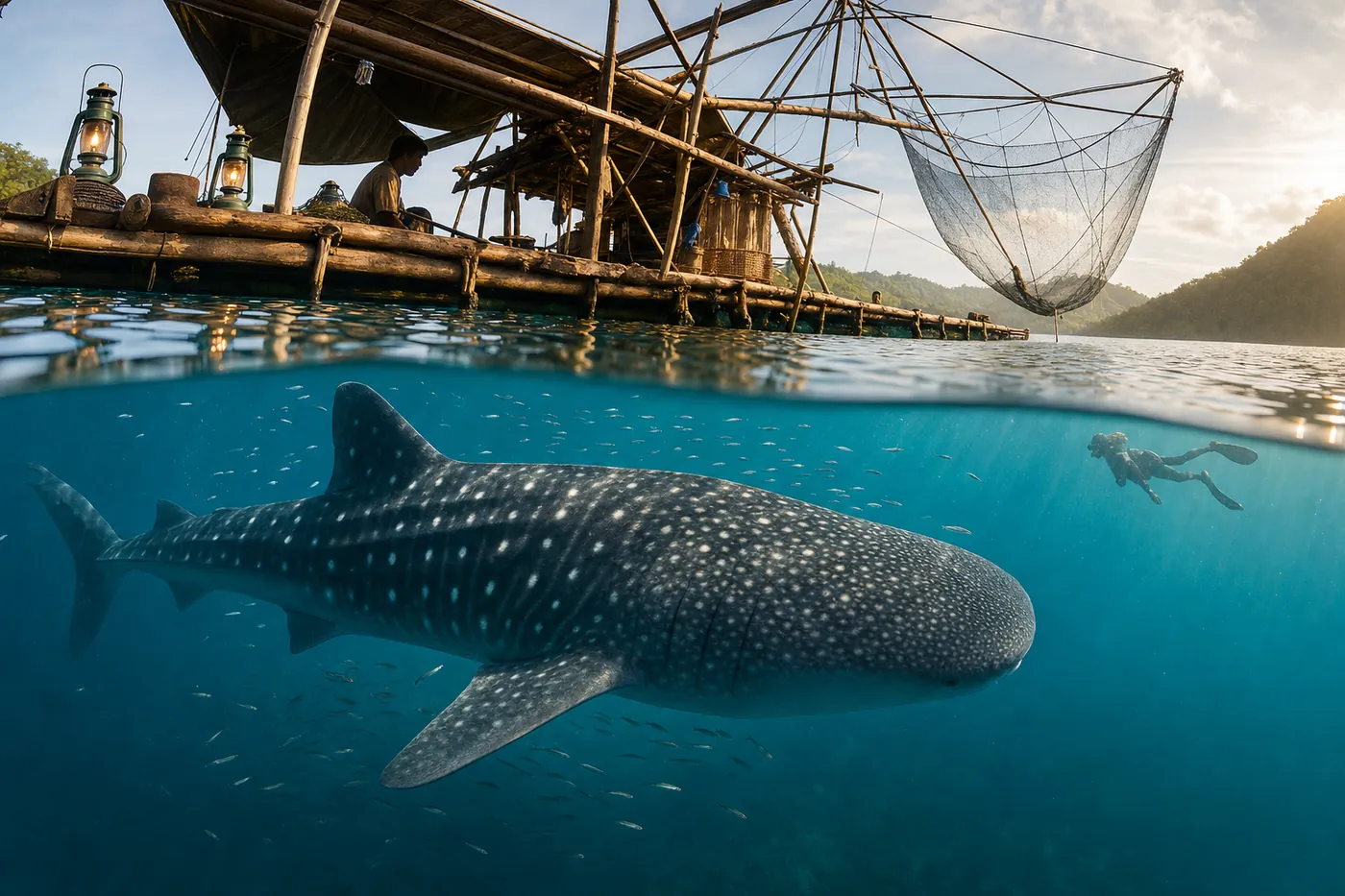
This is the encounter that sells the trip. The Namatota area, on the eastern side of the bay near Pulau Namatota, holds a handful of active bagan platforms that draw whale sharks on most mornings through the October-to-April peak, give or take the weather. The animals here run small, mostly juveniles and sub-adults in the 4-to-8-metre range, and operators and researchers have photo-identified a few dozen of them over the years rather than a precisely counted population. On the best mornings, three or four feed at the surface at once. The encounter is structured as a snorkel, with optional shallow scuba to 8 metres. Stay four metres off the shark. No flash below five. No touching, no riding. Operators who ignore the etiquette lose access to the platforms, and the fishermen who manage them enforce that hard, because whale sharks are read as harbingers of good fortune in Kaimana culture.
2. East Kaimana bagan sites
Fifteen nautical miles west of Namatota sits the secondary bagan cluster, with a smaller but steadier shark count on days when the Namatota platforms shut down for weather. The East Kaimana sites throw in a bonus that most whale shark destinations cannot: dolphins. Spinner and common bottlenose dolphins are regular companions at these platforms, and a good morning can put both whale shark and dolphin in the same session. The diving is shallow, current-free and open to every certification level. For Triton Bay specifically, the peak-season encounter probability sits behind only Cenderawasih and Saleh Bay among Indonesian sites.
The Aiduma group: soft coral walls and the Larry's Heaven complex
Pulau Aiduma is the most photographed island in Triton Bay and the strongest wide-angle reef diving on the trip. Four sites on and around it earn detailed treatment.
3. Larry's Heaven (north face)
Ask any photographer who has dived Triton Bay for their standout reef, and most name this one. Larry's Heaven on the northern face of Aiduma is a sloping reef and wall that drops from 5 metres at the surface to past 40 on the deepest edge, with the photogenic soft coral packed into the 8-to-20-metre band where the upcurrent feeds. Structurally it reads like Misool's Fiabacet pinnacles. The differences are the surface scenery (white-sand beaches, mushroom-shaped limestone islets) and the boat traffic, which here is a fraction of what southern Raja Ampat sees. The fish back it up. Fusiliers and snapper hold position on the upcurrent point, dogtooth tuna patrol the deeper edge, and a resident school of bigeye trevally turns the water dark when it passes overhead. Standard plan to 30 metres. Dry-season visibility is typically 25 to 35.
4. Larry's Heaven (south face)
The south face is the gentler twin. It slopes more easily than the north wall and carries a higher density of hard-coral plate coverage, which shifts the species mix toward reef fish and away from the pelagic schooling of the north point. Most operators run it as the second dive of the Aiduma day, often after the north face, because the relaxed profile suits a mid-trip surface interval. It is the dive where new arrivals settle their buoyancy before the boat repositions to the more exposed sites.
5. Black Forest
Round the western flank of Aiduma and the reef changes character entirely. Black Forest takes its name from the dense black coral (Antipathes) that drapes the volcanic boulders between 15 and 28 metres. This is the trip's best wide-angle-and-macro combination: pygmy seahorses on the deeper Muricella fans, leaf scorpionfish wedged on the boulders, the occasional wobbegong asleep on a sand patch. An attentive photographer racks up 25-plus species on a 70-minute dive. Come back after dark and Black Forest becomes the most reliable place in the bay to find the Triton epaulette walking shark, with four to six sightings on a typical night dive in season.
The Dramai group: volcanic macro and the inner-bay sites
Pulau Dramai sits on the sheltered inner side of the Bomberai Peninsula, and its sites are the easiest diving of the trip. Three names matter here.
6. Batu Jeruk (Pulau Dramai)
Batu Jeruk takes its name from the citrus-coloured soft corals on the upper reef, and it usually serves as the check-out dive on the first morning of a Triton Bay visit. The profile is shallow and forgiving. The payoff comes at dusk: Batu Jeruk produces some of the most photogenic flasher wrasse displays in the Bird's Head Seascape, with several species documented only from these waters, the males flaring their dorsal fins and pulsing colour in the last light. If your operator schedules the dusk dives well, this is where you spend them.
7. Tim Rock and Goby Gully
Two more Dramai sites earn their own mention. Tim Rock is a submerged bommie that holds the densest fish biomass of the inner bay, a tight column of schooling baitfish and the predators that work them. Goby Gully is its opposite number: a shallow rubble slope that logs the highest nudibranch count in Triton Bay, slow diving for people who like to hover over a square metre of substrate for ten minutes. Together they show the range Dramai covers, from schooling action to pure muck, on sites a few minutes apart.
The outer Bomberai group: pelagic action and the sites still being charted
Three sites on the seaward side reward divers on longer itineraries or cross-region routes that bank extra days in the bay.
8. 7th Heaven
Save this one for a strong tide. 7th Heaven is the deepest and most current-prone of the Dramai-side sites, a submerged ridge that tops out at 18 metres and falls to 45 on the outer flank, with the schooling action stacked on the upcurrent corner. Grey reef sharks show on a good share of dives in the strong window, and the site delivers the most dependable dogtooth tuna of the trip. Operators typically gate it behind 50 logged dives and recent current experience. It is not a check-out dive, and a careful skipper will run it only when the tide cooperates.
9. The Namatota outer reefs
Beyond the bagan platforms, the seaward reefs off Pulau Namatota hold the strongest pelagic reef diving in the bay. The outer wall drops from 8 metres at the surface to past 60 on the deepest edge, with continuous soft coral up top and schooling barracuda and trevally on the upcurrent point. You dive it as a slow drift along the wall, in whatever direction the water is moving that day. Standard plan to 30 metres. Grey reef and whitetip sharks turn up on roughly half the dives in season; if sharks are the draw, we round up the best spots in our piece on shark diving in Indonesia.
10. Undiscovered pinnacles (outer Bomberai)
Then there are the sites without names. Triton Bay was first surveyed properly in 2006, and expedition boats still find new structure on the seaward side of the Bomberai Peninsula on most visits. These unnamed pinnacles sit in open water between 14 and 35 metres and pull in schooling pelagics, the occasional grey reef shark, and big-eye and bigtail jacks moving through on the tide. Do not come expecting hammerheads; that is a Banda Sea story, not a Triton Bay one. This is the dive operators reserve for the cleanest tide of the trip, and the briefing leans hard on current management and deep-diving discipline. Standard plan to 30 metres.
Marine life beyond the named sites
Past the ten named sites, four species or species groups turn up reliably enough across Triton Bay to deserve their own mention.
The Triton epaulette walking shark
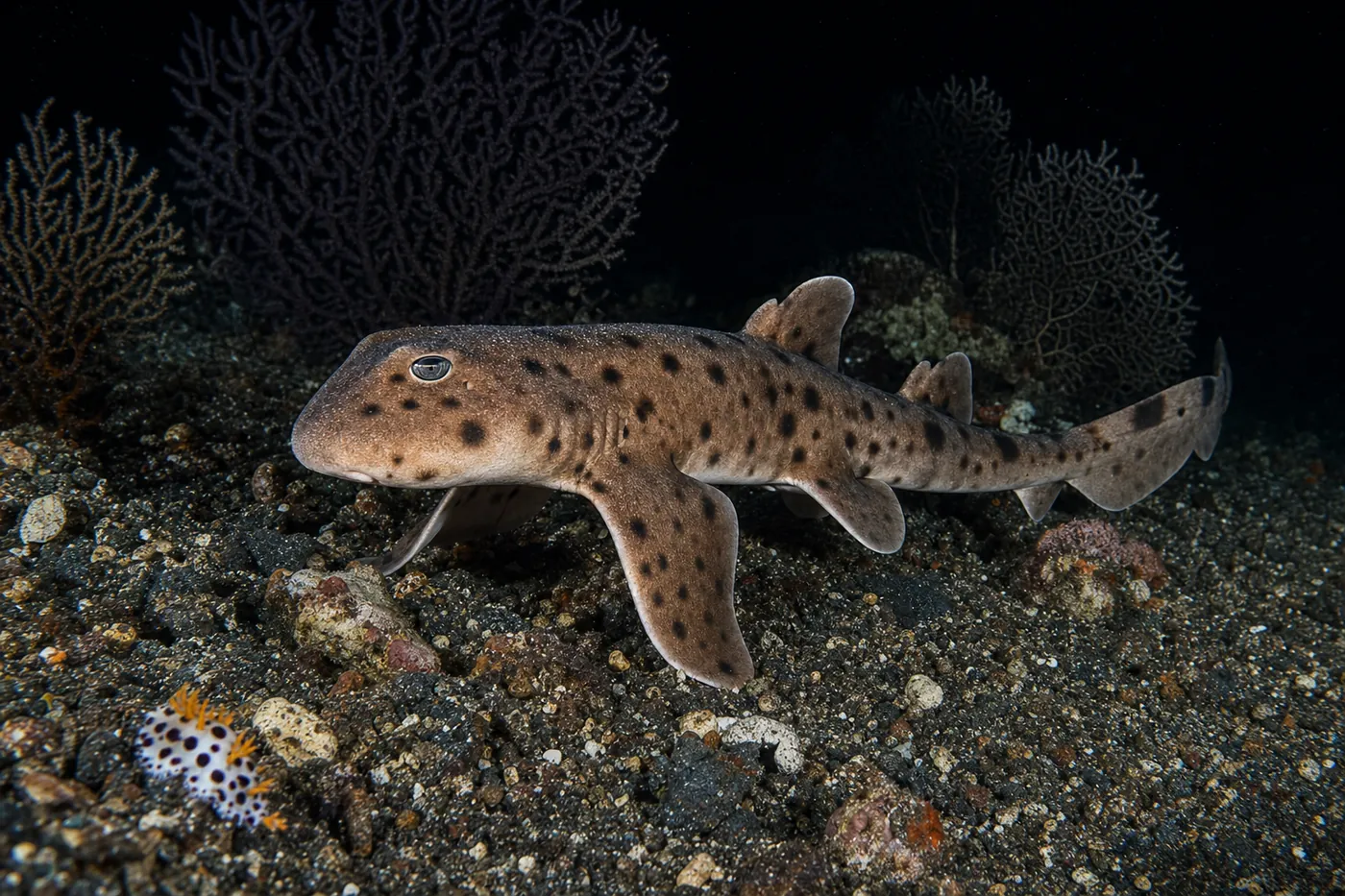
Triton Bay is one of only three Indonesian sub-regions where Hemiscyllium walking sharks appear in numbers, the others being Halmahera and parts of Raja Ampat. Hemiscyllium trispeculare, the Triton epaulette, is the species you will see most, documented mainly from these waters and the adjacent Bomberai coastline. A 60-minute night dive at Black Forest or Batu Jeruk routinely turns up three to five of them, and the shallow rubble makes them easy to photograph once you find one. The etiquette is simple: do not handle, do not chase, give space and let the shark keep hunting.
The whale sharks of the bagan platforms
Whale sharks are why most first-timers book. A meaningful share of those bookings come from divers who have already done Cenderawasih and want the same encounter somewhere quieter. The Triton Bay aggregation is less studied than Cenderawasih's, but many of the same individuals turn up year after year, which tells you the sharks treat the bagan as a fixed stop rather than a chance visit. Their behaviour is habituated, not wild: they have learned the bagan schedule and feed on the released bycatch in a predictable pattern from October through April, peaking November to February. We put all three of Indonesia's major aggregation sites side by side in our guide to where to see whale sharks in Indonesia.
The flasher wrasse endemics
Triton Bay sits inside the Bird's Head Seascape, which holds several flasher wrasse species found only here or with their strongest populations in these waters. The dusk dives at Batu Jeruk and Larry's Heaven are where they perform, the males throwing up their dorsal fins and strobing colour in the last light. Macro photographers rank these displays among the best in Indonesia. A typical 7-night itinerary delivers two or three dusk sessions if the operator schedules them properly, which is reason enough to ask about the dive plan before you book.
The soft coral density
The survey teams that first documented Triton Bay in 2006 recorded soft coral coverage that beat their Raja Ampat reference sites at several Aiduma locations. It feels different from Komodo or the Banda Sea, and there is a reason. The inner-bay geography shelters the reefs from the worst open-ocean swell, and the upwelling that wraps the Bomberai Peninsula feeds the soft coral gardens more or less continuously. For the critter side of the country, our guide to macro diving in Indonesia goes deeper; at Triton Bay, the standout is the wide-angle-and-macro combination you can shoot on a single Aiduma dive.
Triton Bay vs Misool vs Cenderawasih: how the three Bird's Head destinations compare
Divers planning a West Papua trip often ask how Triton Bay stacks up against Misool, in southern Raja Ampat, and Cenderawasih Bay, on the northern Bird's Head coast. The honest answer is that all three are excellent and pull in different directions.
Misool has the strongest manta cleaning stations and the most established operator infrastructure in West Papua. Triton Bay matches its soft-coral density at Aiduma with far fewer boats in the water, and adds the bagan whale shark aggregation that Misool simply does not have. Cenderawasih owns the most reliable whale shark encounter rate in Indonesia and the WWII wreck diving off Manokwari, but the reef diving is generally easier and the species count lower than Aiduma's. So the recommendation tends to write itself: we point divers toward Triton Bay once they have already done northern Raja Ampat or Cenderawasih and want new ground without leaving West Papua. We cover the other two in detail in our pieces on diving Misool and diving Cenderawasih Bay.
When to dive Triton Bay: the operating windows in 2026
Triton Bay runs one primary window and one extended shoulder, narrower than Komodo's but close to Raja Ampat's southern season.
The strong window: October through April. The northwest monsoon has eased, the southeast trades have not yet reasserted, and the open-water crossings between the four sub-regions are usually calm. Visibility peaks at 25 to 35 metres, the bagan whale shark probability hits its annual high, and the soft coral at Aiduma pulses at its strongest. Water sits at 28 to 30 degrees. Most operators run Triton Bay legs only inside this window.
The peak window: November through February. This is the sweet spot for whale sharks. The platforms operate most consistently, the shark count is highest, and the dolphin companions at Namatota are most regular. It is the window we steer first-time guests toward when the bagan is the priority.
The shoulder window: May through September. The southeast trades make the outer Bomberai crossings unreliable, and most operators do not run dedicated Triton Bay trips. Some Sorong cross-region routes squeeze in a shortened leg (Aiduma and Dramai only, skipping the bagan and outer sites) in May or September, but the full four-sub-region itinerary is rarely on the table. We steer first-timers away from this window.
We break the timing down region by region in our guide to Indonesia's liveaboard seasons.
How to put a Triton Bay itinerary together
Triton Bay liveaboard itineraries are built around one of three departure configurations, and the choice meaningfully shapes the trip.
Kaimana round-trip (7 to 10 nights). Kaimana (KNG) is the regional airport, served by flights from Sorong, Ambon or Jakarta via Makassar. The standard 7-night round-trip covers all four sub-regions: the bagan aggregation (2 mornings), Aiduma (2 days for Larry's Heaven and Black Forest), Dramai (2 days for Batu Jeruk, Tim Rock and Goby Gully), and the outer Bomberai sites (1 day). This is the route we recommend most often for first-time Triton Bay guests.
Ambon-to-Kaimana cross-region (14 nights). The most ambitious option, and the cleanest answer for divers who want Triton Bay paired with the Banda Sea. The 14-night Ambon-to-Kaimana itinerary works through the central Banda Islands, Pulau Manuk, the Forgotten Islands chain, and finishes in Triton Bay with the full four-sub-region tour. One route, two very different regions, and the most efficient way to dive both on a single trip. We walk through the western half of this combination in our rundown of the best dive sites in the Banda Sea.
Sorong cross-region with Raja Ampat (14 nights). Sorong is the gateway to Raja Ampat and the most efficient departure port for divers combining Triton Bay with the north or south of the archipelago. The 14-night Sorong-to-Kaimana route covers Raja Ampat on the eastern leg (Wayag, Dampier Strait, Misool optional) and Triton Bay on the western leg. If Raja Ampat and Triton Bay on one trip is the goal, this is the route. We cover the eastern leg in our rundown of the best dive sites in Raja Ampat.
Permits, fees and the Kaimana MPA framework
Triton Bay diving requires two distinct permits in 2026, both handled by the operator at embarkation:
- Kaimana Marine Protected Area entry tag (500,000 Indonesian rupiah per person per trip, roughly 33 USD), which covers every site inside the MPA boundary.
- Bagan community fee (150,000 rupiah per person per encounter, roughly 10 USD), paid directly to the local fishermen's cooperative that maintains the platforms and the whale shark aggregation.
The total permit cost for a full 7-night trip runs to roughly 45 USD per person. By comparison, entering Raja Ampat costs a foreign visitor about 105 USD per person since the regency levy rose in January 2026, so Triton Bay is considerably cheaper to enter despite sitting in the same province.
Common mistakes Triton Bay divers make
Five mistakes recur often enough that we cover them on the welcome briefing of every itinerary.
Booking only for the whale sharks and skipping Aiduma. The bagan is the headline, but the Aiduma walls are what bring people back. Divers who arrive single-minded about whale sharks tend to compress the Aiduma leg and leave feeling they saw half the destination.
Underestimating the current on 7th Heaven. The site runs 1 to 2 knots on the wrong tide, and operators typically require 50 logged dives and recent advanced certification. Treat it like a Komodo current dive.
Skipping the night dives. The walking sharks, the dusk flasher wrasse displays, and the nudibranchs that built the Triton Bay macro reputation all show up after the sun drops. Treat these as optional and you miss a large slice of the species action.
Choosing the shoulder season without understanding the trade-off. A May or September leg on a cross-region route is valid, but the bagan whale shark probability falls sharply and the outer Bomberai sites turn weather-dependent. Both windows can work; they just deliver different trips.
Not reading the bagan etiquette briefing. The bagan encounter rules are the strictest of any species encounter we run. Operators who ignore them lose platform access, and divers who lean on their guides to bend the rules ruin the morning for everyone on the boat.
Give Aiduma enough days
The mistake we see most often on the cross-region routes is treating Triton Bay as the western appendix to a Banda Sea trip. Divers book the fourteen-night Ambon to Kaimana itinerary for the hammerheads, expect Manuk and Lucipara to be the highlight, and mentally write off the final few days. Then the first morning at the Namatota bagan goes flat calm, with several whale sharks counted before the tender has even left the mother ship and a pod of spinner dolphins working the platforms, and the trip reorders itself. This is not luck. The bagan is reliable in a way the seamounts are not, and the Aiduma sites deliver exactly what they are known for when you give them enough days: Larry’s Heaven in thirty-metre visibility, with schools of bigeye trevally thick enough to darken the water as they pass overhead. Treat the bagan as one experience among several, budget real days for Aiduma, and Triton Bay has a habit of outperforming the region you actually came for.
How to book and what to ask
Triton Bay liveaboards book further ahead than they did two years ago, because the window is narrow and cross-region inventory is genuinely scarce. For 2026 November-to-February peak departures, book by March 2026 if you can; for the October or March shoulder, book by June 2026. Charter and small-group bookings are often easier to slot in at short notice than scheduled cross-region departures.
Beyond the usual cabin and food questions, the things worth pinning down before you book are:
- How many days this departure allocates to Aiduma versus the bagan versus Dramai.
- Whether the boat holds the Kaimana MPA permit and has a working relationship with the bagan fishermen's cooperative.
- Whether nitrox is carried at no surcharge for the deeper Aiduma and 7th Heaven days.
- What the contingency plan is for the outer Bomberai crossing if the southerly wind comes up.
- Whether the boat schedules the dusk flasher wrasse dives at Batu Jeruk.
A good operator answers all five without hedging. When you are ready to talk dates, get in touch with our reservations team, and take a look at King Neptune, Neptune One and Komodo Sea Dragon to see the boats themselves. If you are still weighing up where to go, our Indonesia liveaboard diving guide works through the cross-regional decision, and Raja Ampat vs Komodo helps if you are torn between Triton Bay and the more popular destinations.