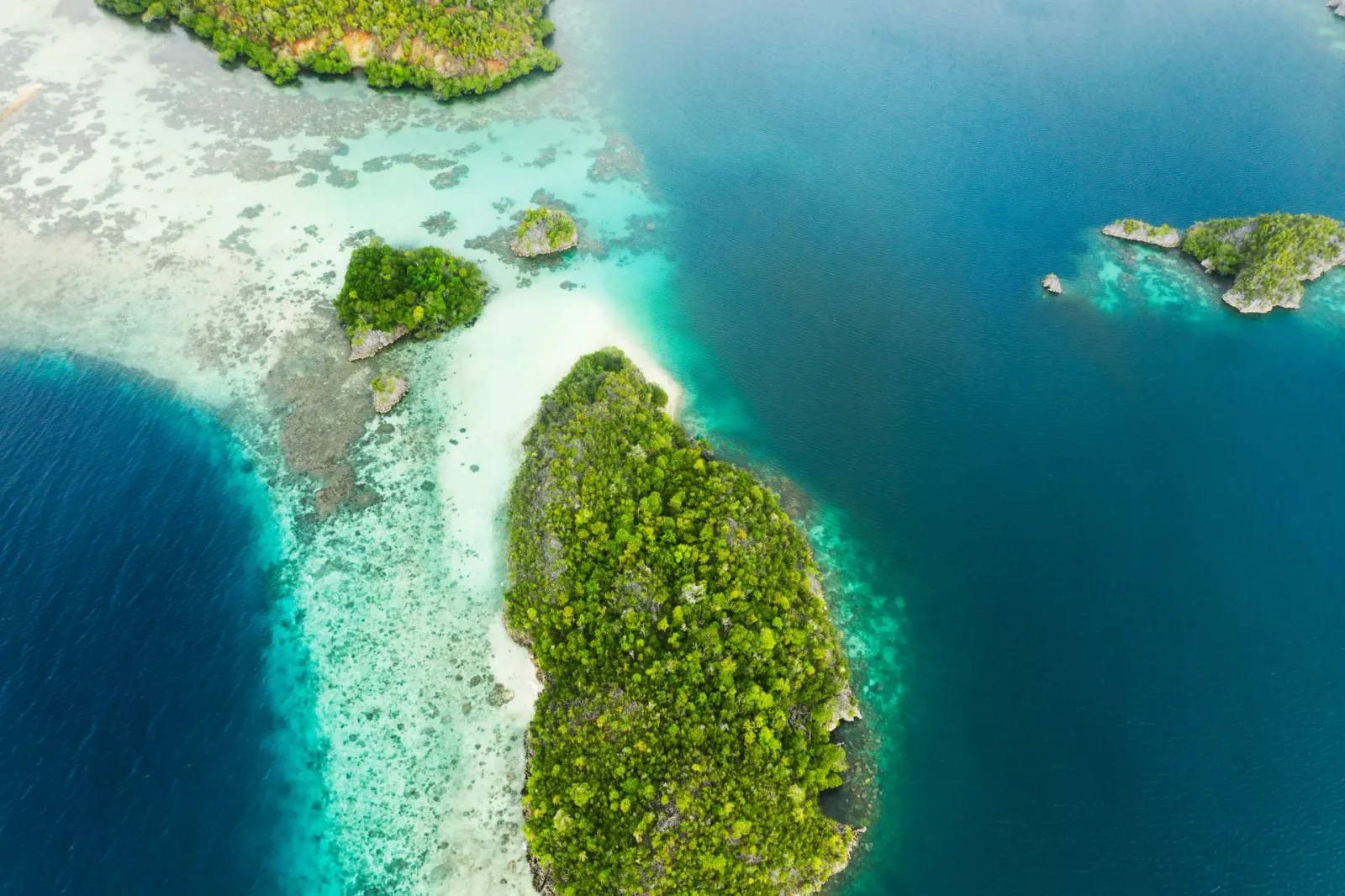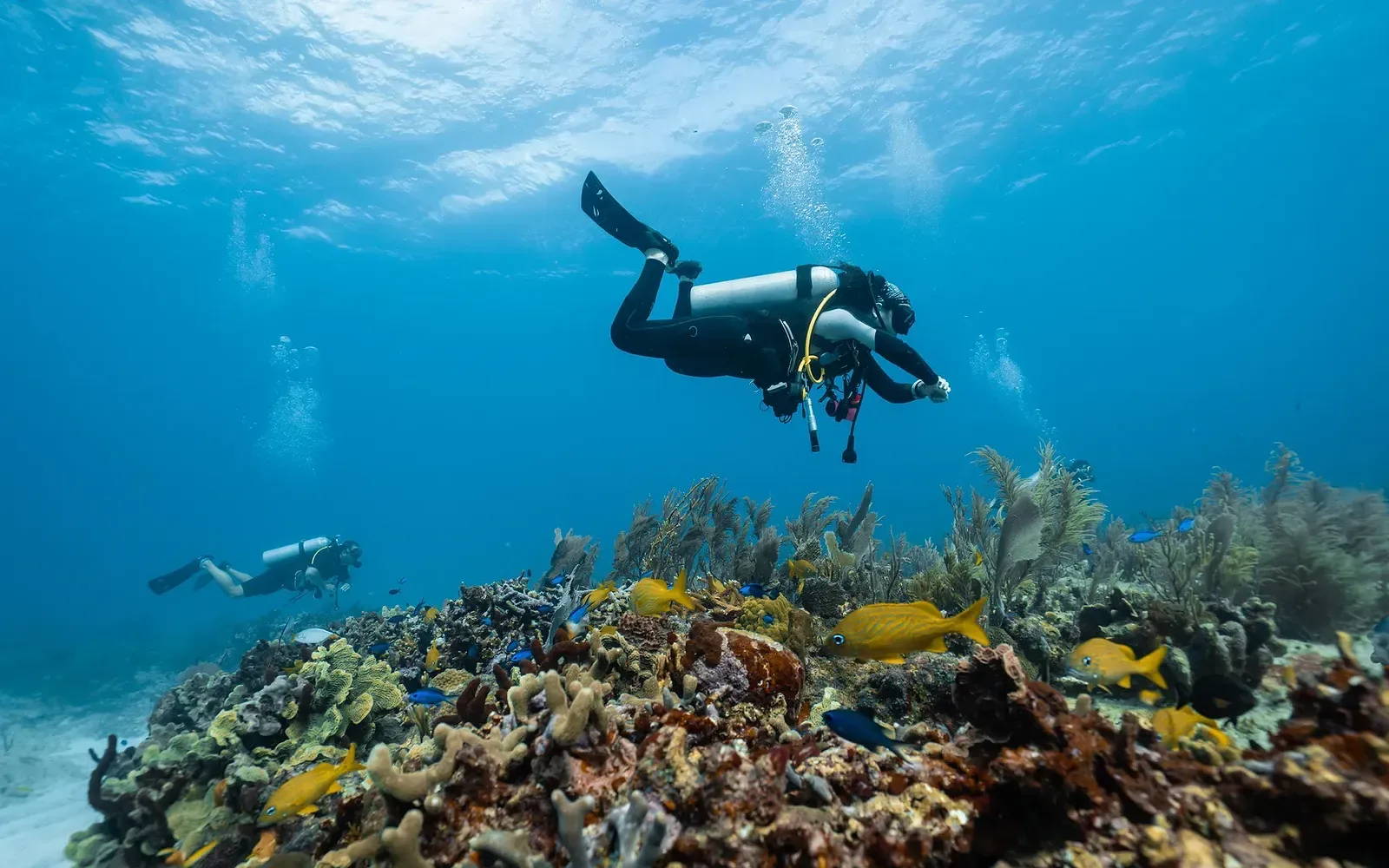
In 1667 the Dutch and the English sat down at Breda and swapped islands. The Dutch handed over a swampy trading post called New Amsterdam, which the English renamed New York. In return they took permanent possession of Run, a speck of land in the Banda Sea less than two miles long. Both sides walked away convinced they had won, and for a while the Dutch were arguably right, because Run grew nutmeg and nutmeg was worth more by weight than gold. Those same islands are the ones you sail past on a Banda Sea diving itinerary, and most divers have no idea what they are looking at.
That is the gap this guide is meant to fill. We run boats through this region every season, and the pattern is consistent: guests board obsessed with hammerheads and sea snakes, then spend the crossing back asking about the forts. The topside history here is not a filler activity for a surface interval. It is one of the strangest colonial stories in the world, it happened on islands you can walk across in an afternoon, and a well-run Banda Sea liveaboard will build in enough time ashore to actually see it. What follows covers the trade that changed two continents, what survives on the ground in Banda Neira and Banda Besar, how to get to Run, and the two signature dives that sit directly underneath the history.
The swap that sounds invented
Start with the geography, because it explains everything else. The Banda Islands are ten or eleven specks of volcanic rock, depending on how generously you count, with a combined land area of roughly 172 square kilometres. They sit about 140 kilometres south of Seram and something like 2,000 kilometres east of Java. Crucially, they rise straight out of water four to six kilometres deep. There is no continental shelf here, no gentle shallows, nothing to soften the drop. That isolation is why the location stayed a secret for centuries, and it is also why the diving works the way it does.
Until the middle of the nineteenth century these islands were the only place on earth producing nutmeg and mace at commercial scale. Not the main source. The only one. Arab and Malay traders had been carrying the spice west for generations while carefully declining to say where it came from, and European merchants paid enormous sums to Venetian middlemen without knowing they were buying the produce of a few square miles of Maluku. Columbus was looking for these islands, in a roundabout way, when he ran into the Caribbean instead.
The Portuguese got here first, in 1512. Then the Spanish, the English and the Dutch, and the competition turned vicious quickly. In 1616 the English East India Company took control of Run and declared it their first overseas colony, which is a decent claim to being the seed of the British Empire. They held it for about four years before the Dutch pushed them off, but they never formally surrendered the claim. That unresolved paperwork mattered fifty years later.
In 1664 an English squadron crossed the Atlantic and took New Amsterdam, at the southern tip of Manhattan, from the Dutch. The colony had roughly 2,000 residents and gave up without much of a fight. By 1667 both nations held territory the other insisted was theirs, so the Treaty of Breda simply formalised the exchange. England dropped its claim to Run. The Netherlands dropped its claim to Manhattan. On Run today there is a footpath called Jalan Manhattan, and islanders refer to the whole business as the Manhattan Transfer, which is a fairly dry joke to be still making after three and a half centuries.
Why a seed outpriced gold
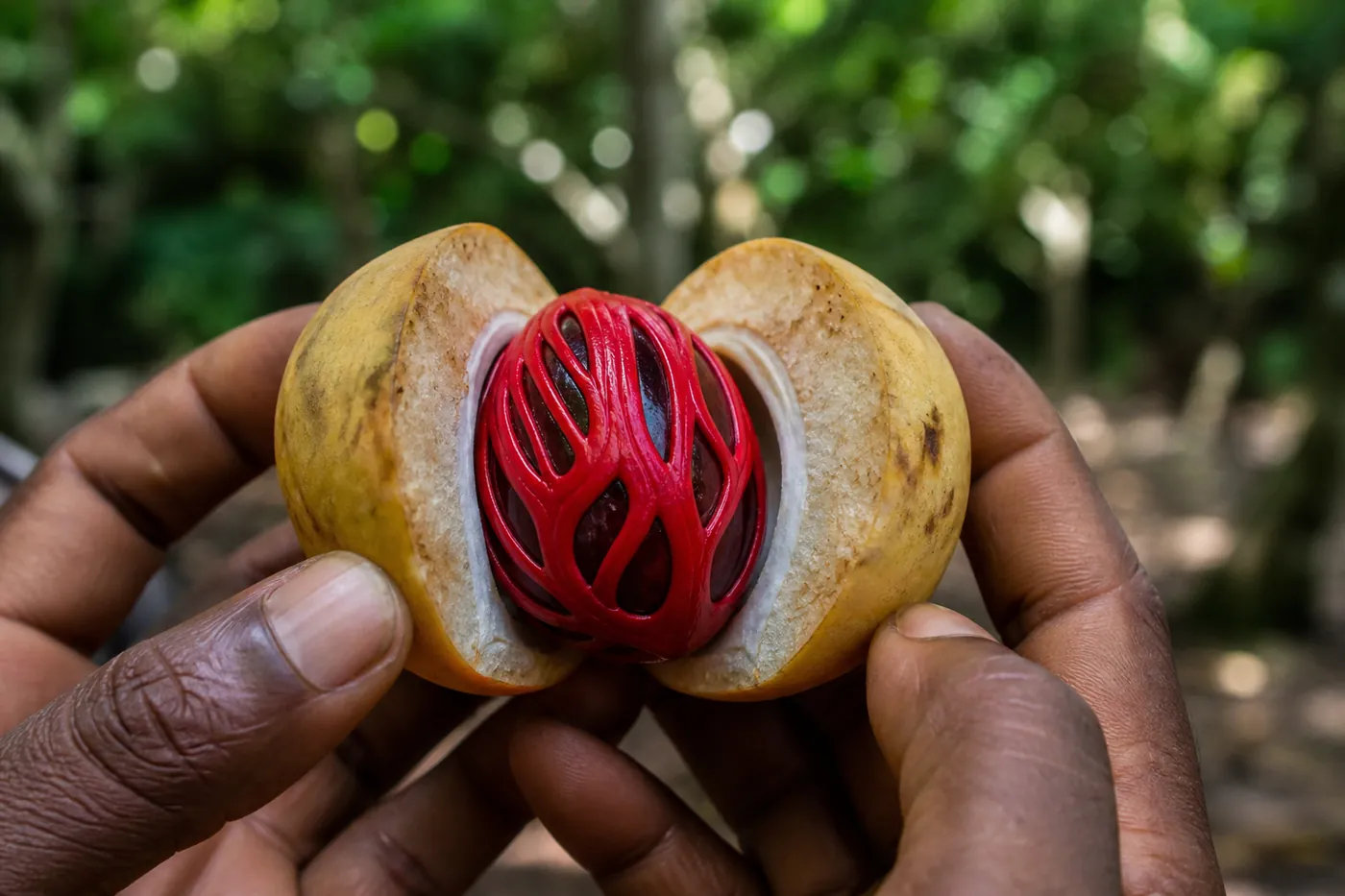
Modern visitors find the valuation baffling, so it is worth being concrete about what nutmeg actually was. The fruit of Myristica fragrans splits to reveal a dark seed wrapped in a bright scarlet lace. The seed, dried, is nutmeg. The lace is mace. Two separate commodities from one fruit, which is a detail almost every guide on Banda Besar will make you handle before they explain it, and the colour genuinely does surprise people.
Europe wanted it for flavour, but the real driver was medicine. Nutmeg was widely believed to prevent or cure plague. That belief was wrong, but in a century of recurring epidemics it made the spice something closer to a pharmaceutical than a seasoning, and the price behaved accordingly. Contemporary accounts describe cargoes returning profits of several thousand per cent. A sack carried home by a sailor could set him up for life, which is why smuggling was punished so savagely.
The Dutch response to that arithmetic was to eliminate every other supplier and then control the trees themselves. The Dutch East India Company, the VOC, was formed partly to protect this specific investment. What followed on Banda in 1621, under Jan Pieterszoon Coen, is not a footnote you can politely skip. The most commonly cited estimates put the pre-conquest Bandanese population at roughly 15,000, and the number remaining a few years later at well under a thousand. The orang kaya, the island elders who had negotiated as independent traders for generations, were executed. The rest were killed, starved, deported to Batavia, or enslaved. The plantations were then reallocated to Dutch settlers, called perkeniers, and worked by enslaved people brought in from elsewhere in the archipelago.
We mention this to guests before they go ashore, not to spoil the afternoon, but because the forts read completely differently once you know. Fort Belgica is a beautiful building. It is also the machinery of a monopoly that was enforced by killing almost everybody who lived there. Both things are true, and the guides on the islands are generally direct about it if you ask.
Banda Neira, the town you actually step into
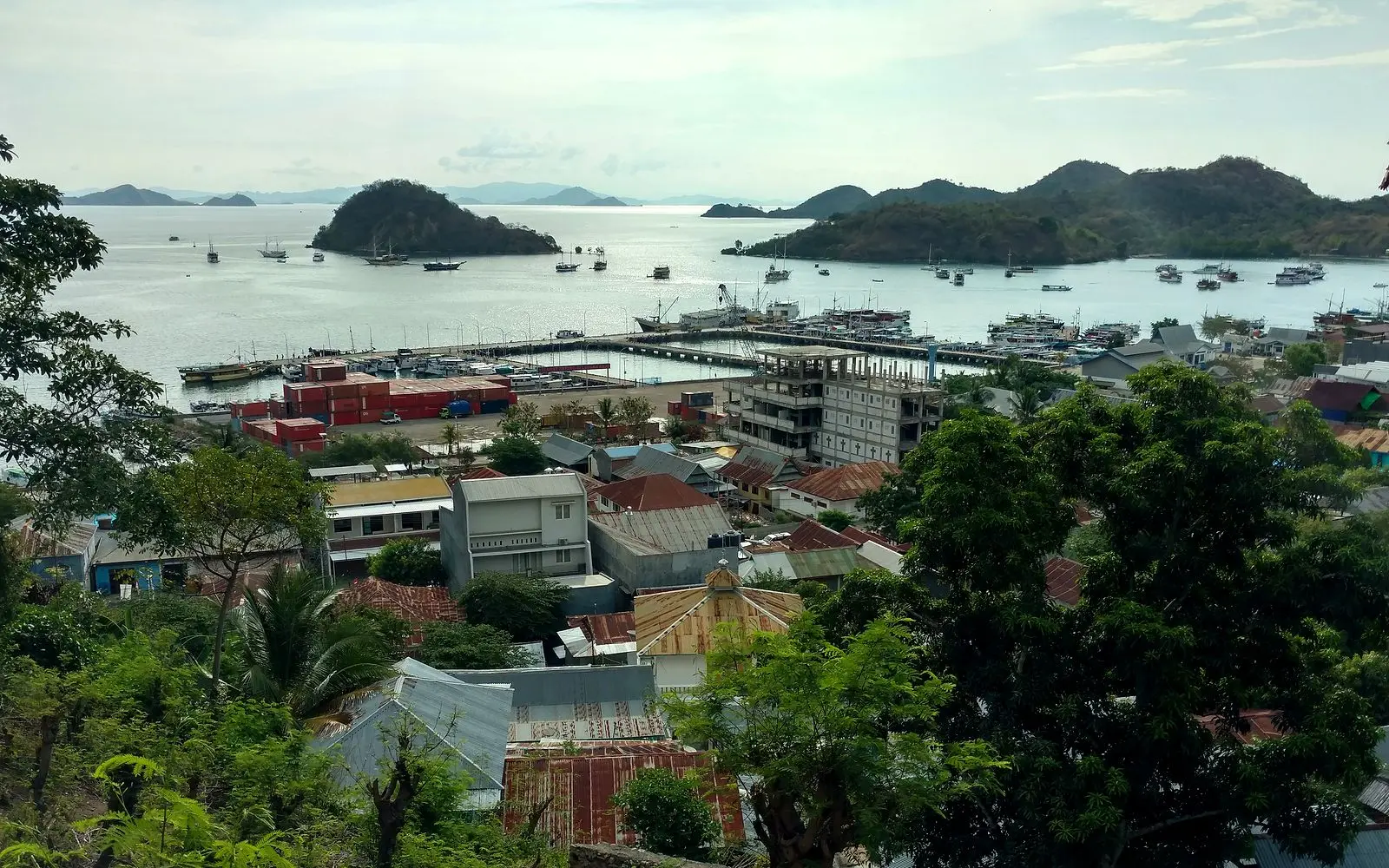
Banda Neira is the administrative centre and the island where boats tie up. It is small. You can walk from one end of the old town to the other in about half an hour, and the main historical sites sit within twenty minutes of each other on foot. What makes it memorable is not any single monument but the density: Dutch colonial houses with deep verandahs, a church with cannonballs still lodged in the walls, a cracked harbour road, and above all of it the cone of Gunung Api sitting across a narrow trench of water.
The town has a particular atmosphere that guests struggle to describe afterwards and usually settle on calling gentle. Nothing is restored for tourism. Chickens use the fort. Children play football on ground where the VOC held executions. It is lived in rather than curated, which is exactly why it works.
Here is what is realistically worth your time ashore, with the caveat that opening hours on Banda are best treated as intentions rather than commitments.
| Site | Where | Time needed | Rough cost |
|---|---|---|---|
| Fort Belgica | Hill above Banda Neira town | 45 to 90 minutes | Around Rp 25,000 |
| Fort Nassau | Below Belgica, near the shore | 20 to 30 minutes | Usually free |
| Hatta's house | Banda Neira town | 30 minutes | Small donation |
| Spice plantation walk | Banda Besar, short boat hop | 2 to 3 hours | Guide fee, negotiated |
| Gunung Api summit climb | Across the Sonnegat channel | 3 to 5 hours, pre-dawn start | Guide fee, negotiated |
| Run island day trip | Boat, roughly 2 hours each way | Full day | Boat charter, split between guests |
Fort Belgica at first light
If you only do one thing on land, do this one, and do it early. Fort Belgica was built by the Dutch in 1611 and enlarged after the conquest. It is pentagonal, five-pointed, which is an odd piece of European military fashion to find in eastern Indonesia, and it survives in genuinely solid condition. The climb up from town takes ten minutes and is steeper than it looks.
From the upper ramparts at sunrise you get the whole story arranged in front of you in a single view. The harbour, where the spice ships loaded. The town, laid out on a colonial grid. The channel the locals call the Sonnegat. And Gunung Api directly opposite, 656 metres of near-perfect cone, usually with a thread of vapour coming off it. Old cannons still point out to sea. The light at that hour turns the whole thing orange and the frangipani in the gardens below is doing most of the work on the smell.
Most liveaboard schedules make this awkward, because dawn is also when the first dive of the day happens. Our own compromise, and the one we would suggest asking your operator about directly, is to swap the order for that one morning: fort at first light, breakfast late, then two dives after. Guests who have done both have never once told us they regretted trading a house-reef dive for the ramparts.
Banda Besar and the plantations that never stopped
A short boat hop from Neira lies Banda Besar, the largest island of the group and the agricultural heart of the whole story. The perken, the old plantation estates, are still being worked. This is not a heritage display. Families harvest, split and dry nutmeg using a process that has changed very little in four centuries, minus the enslaved labour that originally made it profitable.
A guided walk takes two to three hours and is shaded almost the whole way, which matters more than you think at that latitude. You pass under nutmeg alongside kanari, clove, cinnamon and mango, some of the nutmeg trees old enough to have been planted while the VOC still ran the islands. The smell is heavy and slightly sweet. Guides will crack a fruit open in front of you to demonstrate the seed and mace arrangement, explain the drying sheds, and usually sell you nutmeg, mace or nutmeg oil at prices that will feel almost embarrassing compared with a European delicatessen.
There are also old stone stairways climbing the hillsides, cut for hauling harvest down to the boats, and a few crumbling colonial ruins swallowed by the groves. It is the part of the trip that guests most often say they would have skipped and were glad they did not. Combining a plantation morning with an afternoon dive on the Hatta island reefs is the standard way to sequence it, since both sit on the same side of the group.
Getting to Run, the island that was traded
Run sits about twenty kilometres west of Banda Neira, past Pulau Ai. You get there by hiring a local wooden boat, and the crossing takes roughly two hours each way depending on the swell and the engine. It is not a casual outing. Liveaboard itineraries that include it usually do so because a guest asked, which is worth knowing: if you want Run, say so at the booking stage rather than on board.
What is actually there is almost nothing, and that is the appeal. No cars. No roads worth the name. Something in the region of twenty motorbikes for the whole island. People walk on paved footpaths and up flights of steps, carrying water from the wells or a tuna up from the beach. There is a footpath signposted Jalan Manhattan. There are nutmeg trees, obviously, and the descendants of the people who were fought over. There is no monument to the treaty and no visitor centre, which somehow makes standing there more effective than any museum would.
Pulau Ai, twelve kilometres from Neira and on the way, holds the remains of Fort Revenge. The name is not subtle. The Dutch built it after retaking the island and the English had held it before them. Ai also has one of the better wall dives in the central group, so it makes an easy combined stop: fort ruin in the morning, drop onto the wall in the afternoon.
Be realistic about weather. These crossings are in open water between islands that rise from very deep sea, and a boat that is fine at eight in the morning can be unpleasant by two in the afternoon. In our experience roughly one Run trip in four gets moved or cancelled across a season, usually for swell rather than wind. Build the flexibility in and treat the day as a bonus rather than the reason you came.
The lava flow at Gunung Api, and why biologists still argue about it
This is where the history and the diving become the same subject, and it is the single most interesting thing in the Banda Islands that almost nobody outside diving has heard of.
Gunung Api had been quiet for 97 years. In May 1988 it erupted violently, throwing an ash column around three kilometres into the air with tremors coming every few minutes. Roughly 10,000 people of a total population near 16,000 were evacuated off the islands. The eruption ran on until August. Lava poured down the northern and northeastern slopes into the sea and buried the reef there completely, setting into what divers now describe as a concrete ramp about 200 metres wide running down into the blue.
By every reasonable expectation that reef should have taken most of a century to come back. Estimates for coral recovery on new volcanic substrate elsewhere run to twenty years in exposed conditions and over fifty in sheltered ones. What happened at Banda was different enough that it produced a well-cited paper: Tomascik and colleagues surveyed the flow and published the results in Coral Reefs in 1996. Five years after the eruption, the sheltered section of the lava flow already supported 124 coral species, with mean coral cover measured at 61.6 per cent. Tabulate acroporids dominated, some colonies already over 90 centimetres across.
The detail that made people sit up was the comparison. Coral diversity, abundance and cover on the five-year-old lava were all higher than on the adjacent carbonate reef that the lava had never touched. New ground outperforming established reef. The suggested explanation is that fresh andesitic lava offers a structurally complex, stable and effectively predator-free surface for larvae to settle on, so in a place already surrounded by an enormous larval supply it becomes a local hotspot rather than a dead zone. Some of the popular accounts stretch this into claims about the fastest-growing coral in the world, which goes further than the science does. The measured finding is remarkable enough without the embellishment.
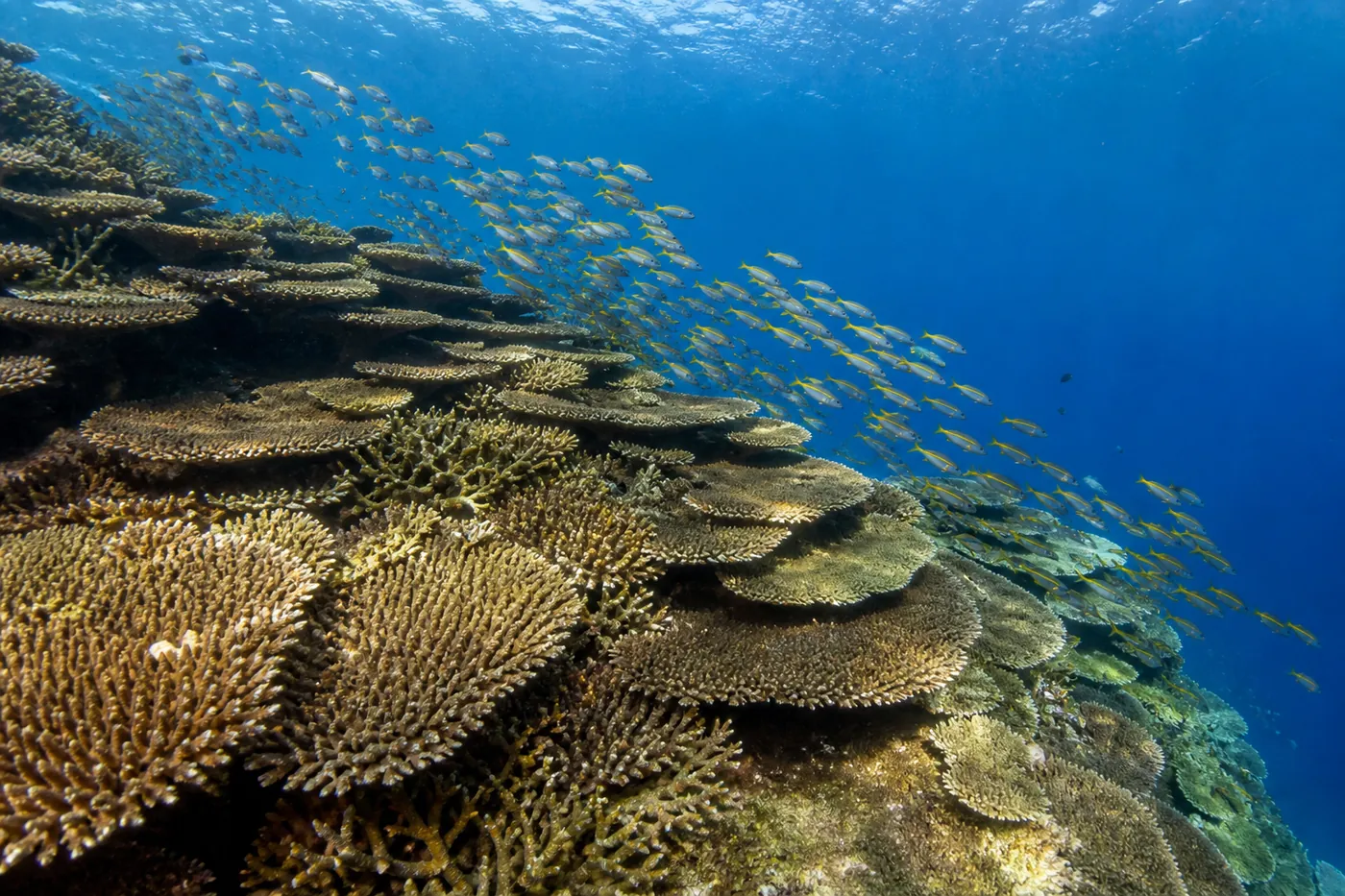
Diving it is straightforward and shallow enough for almost anyone. The usual entry is off the northeastern flow. Currents are gentle, visibility is typically good, and the topography does the work: tiers of table coral in the shallows, some of them genuinely the size of small rooms, giving way to fields of plate and cabbage coral from about twenty metres down. The corals are packed so tightly there is barely bare rock between them. Schools of fusiliers and sweetlips move over the top of it.
What guests react to is the context rather than the coral itself. You are finning over ground that was molten rock inside living memory, with the volcano that produced it directly above you. If you want the full site-by-site picture of the region, our guide to the best dive sites in the Banda Sea covers the walls and seamounts in detail, and the Indonesia Coral Triangle piece explains why the larval supply around here is so unusually rich in the first place.
The mandarinfish dive nobody expects to be the highlight
Directly off the main pier at Banda Neira, in front of the old Maulana Hotel, there is a dusk dive that has no business being as good as it is. Mandarinfish live in the rubble here in numbers, and every evening around a quarter to six they come up out of the coral to spawn. Depth is shallow, often no more than six metres. You kneel in the sand and wait.
Mandarinfish are absurd animals. They are small, no longer than your thumb, patterned in orange and electric blue like something drawn for a children's book, and they are frustratingly difficult to photograph because they hold still for roughly one second at a time. The spawning behaviour is the point: a pair rises together off the bottom, hangs briefly in open water, releases, and drops back into the rubble. The whole event lasts a few seconds and happens repeatedly for maybe twenty minutes as the light goes.
We had a guest two seasons ago, a very experienced photographer who had come specifically for hammerheads and had spent four days being politely disappointed by them. He almost skipped the pier dive on the grounds that it was, in his words, a car park. He shot 600 frames, kept about nine, and told us at dinner it was the best dive of the trip. That happens more often than the hammerhead marketing would suggest.
The pier itself is worth the tank regardless. The pilings are covered in ascidians, sponges and soft coral, and hold juvenile batfish, crocodilefish, several species of scorpionfish, pipefish in real numbers, and large morays. It is a proper muck site in the middle of a historic harbour. Anyone whose main interest is small subjects should read our macro diving in Indonesia guide alongside this, and photographers will get more out of the dive after the underwater photography in Indonesia notes on lighting shy subjects at dusk.
Fitting the history into a diving itinerary
Here is the practical problem. Banda Sea itineraries are long, usually ten to twelve nights, and they are built around getting to remote water. The seamounts of the Forgotten Islands, the sea snake aggregations, the deep walls: those are the reason the trip costs what it does, and they need sailing time. Land time competes directly with that.
In practice most well-planned routes give you between half a day and a day and a half in the Banda Islands themselves, usually positioned near the middle or the end when the boat needs to reprovision. That is enough for Fort Belgica, a plantation walk, the lava flow dive and the mandarinfish dusk dive. It is not enough for Run as well, and it is not enough to climb Gunung Api unless the schedule has been built around it deliberately.
So decide what you want before you book, and say it out loud. The questions worth asking an operator are specific ones: how many nights are spent at anchor in the Banda group, is the Gunung Api summit climb offered, is Run on the route or only on request, and will the schedule allow a dawn shore excursion in place of a dive. Vague answers to those tend to mean the answer is no.
It is also worth understanding what you are trading against. The Manuk Island sea snake stop and the seamounts of the Forgotten Islands chain are the wildlife headlines of this region, and the hammerhead sites need to be dived on the days the conditions allow rather than the days the schedule prefers. Our honest advice is to treat the history as the thing that makes this trip different from every other liveaboard you will do, and the hammerheads as the thing that might or might not happen. Guests who arrive with that ordering come home happier.
When to come, and how long you need
Maluku runs on a different rhythm to the rest of Indonesia, which catches people out. The good window here is broadly September into early December, with a shorter secondary window around March and April. October and November are when the cool upwellings bring schooling scalloped hammerheads into depths recreational divers can actually work, so those two months carry a premium and sell out furthest ahead. The wider picture across regions is set out in our Indonesia liveaboard seasons comparison.
For the topside, the season matters less. The forts and plantations are fine in any weather that lets a boat reach the islands, though the Gunung Api climb is miserable in rain and the Run crossing needs a calm morning. Visibility for the diving generally sits in the twenty to thirty metre range and often better, because there is no shelf and no river run-off to spoil it.
On duration, be honest with yourself about what you are here for. A liveaboard of ten to twelve nights is the right instrument for the Banda Sea as a whole. If the history is your actual priority, the better structure is to add three to five land-based nights on Banda Neira before or after the boat, flying in through Ambon, which also opens up the Ambon muck diving sites while you wait for connections. Five days ashore gets you Neira, Banda Besar, Run, Ai, the climb and several dives without rushing any of it.
Pack for two trips rather than one, because you will need shore clothes and walking shoes that most divers leave at home. Our liveaboard packing list for Indonesia covers the diving side, and for the Banda Islands specifically add a torch for the pier dive, long sleeves for the plantations and something respectable enough for a village.
Flights into Ambon go through Jakarta or Makassar, then a short hop or a fast ferry onward to Banda Neira, and delays are routine rather than exceptional. Leave a buffer day at each end. It is a long way to come to miss a boat over a cancelled domestic connection, and this is one of the few destinations where the reason for the journey is as much what happened on the islands as what lives around them.