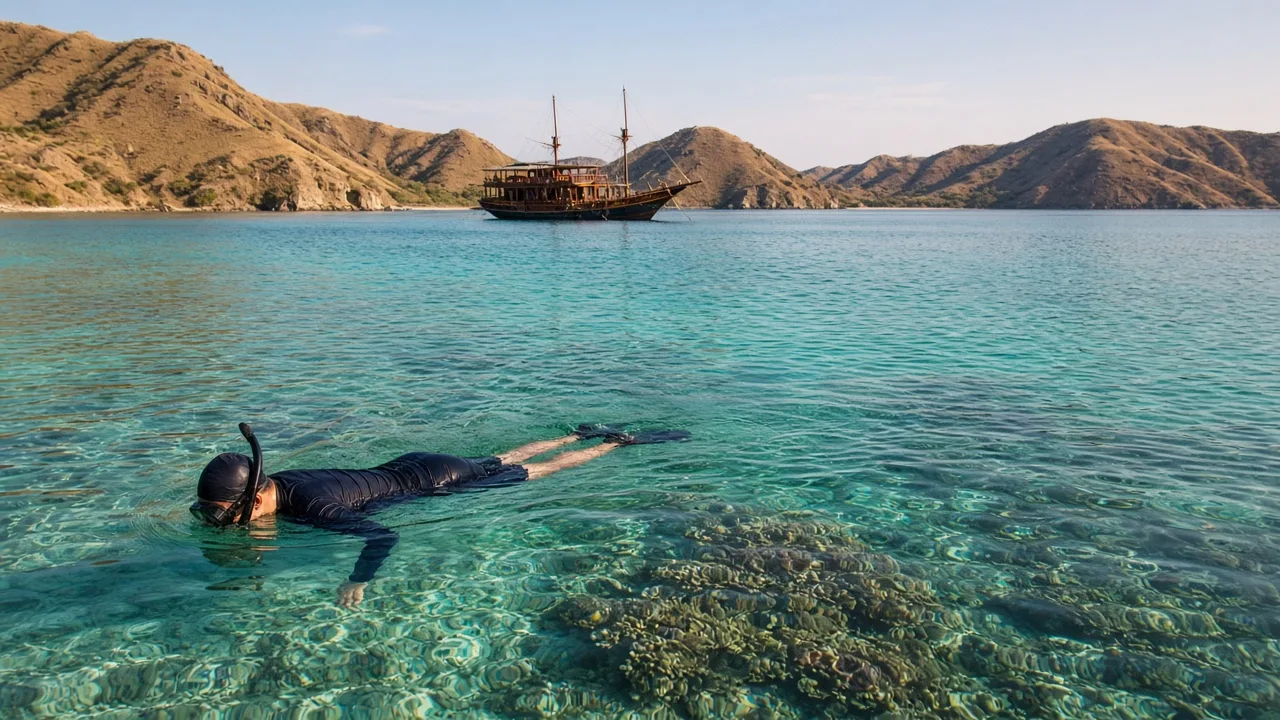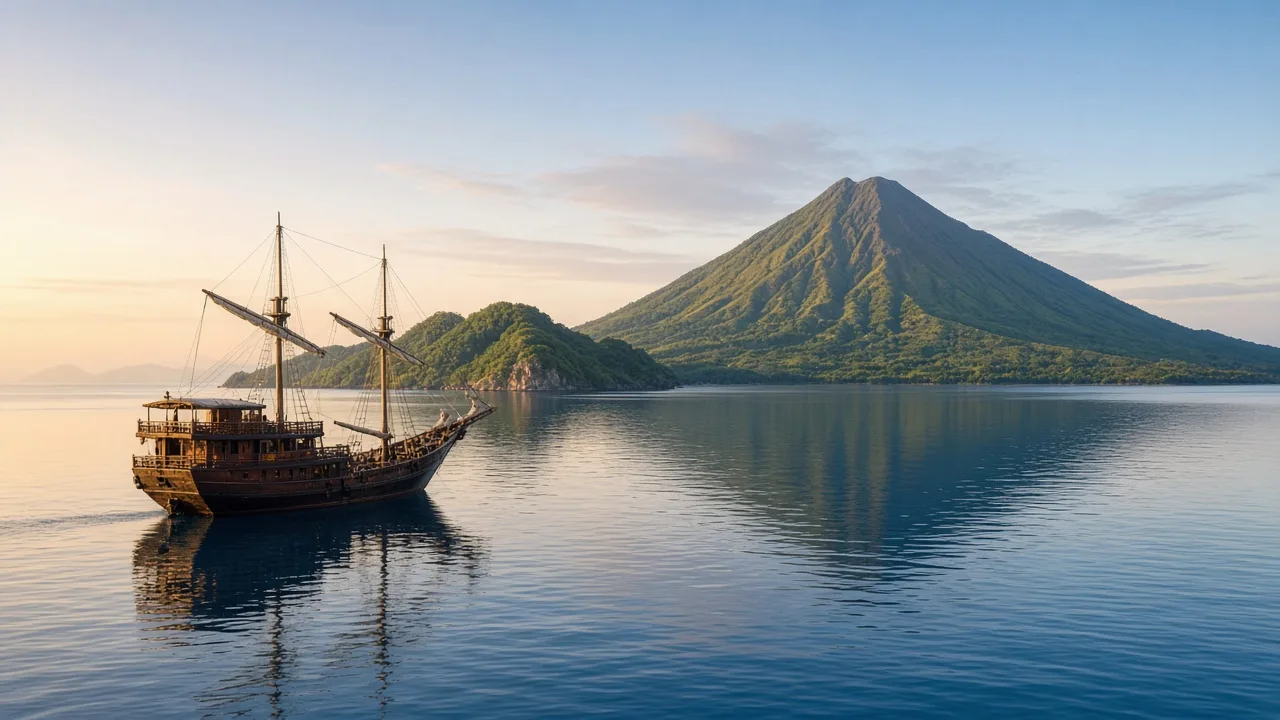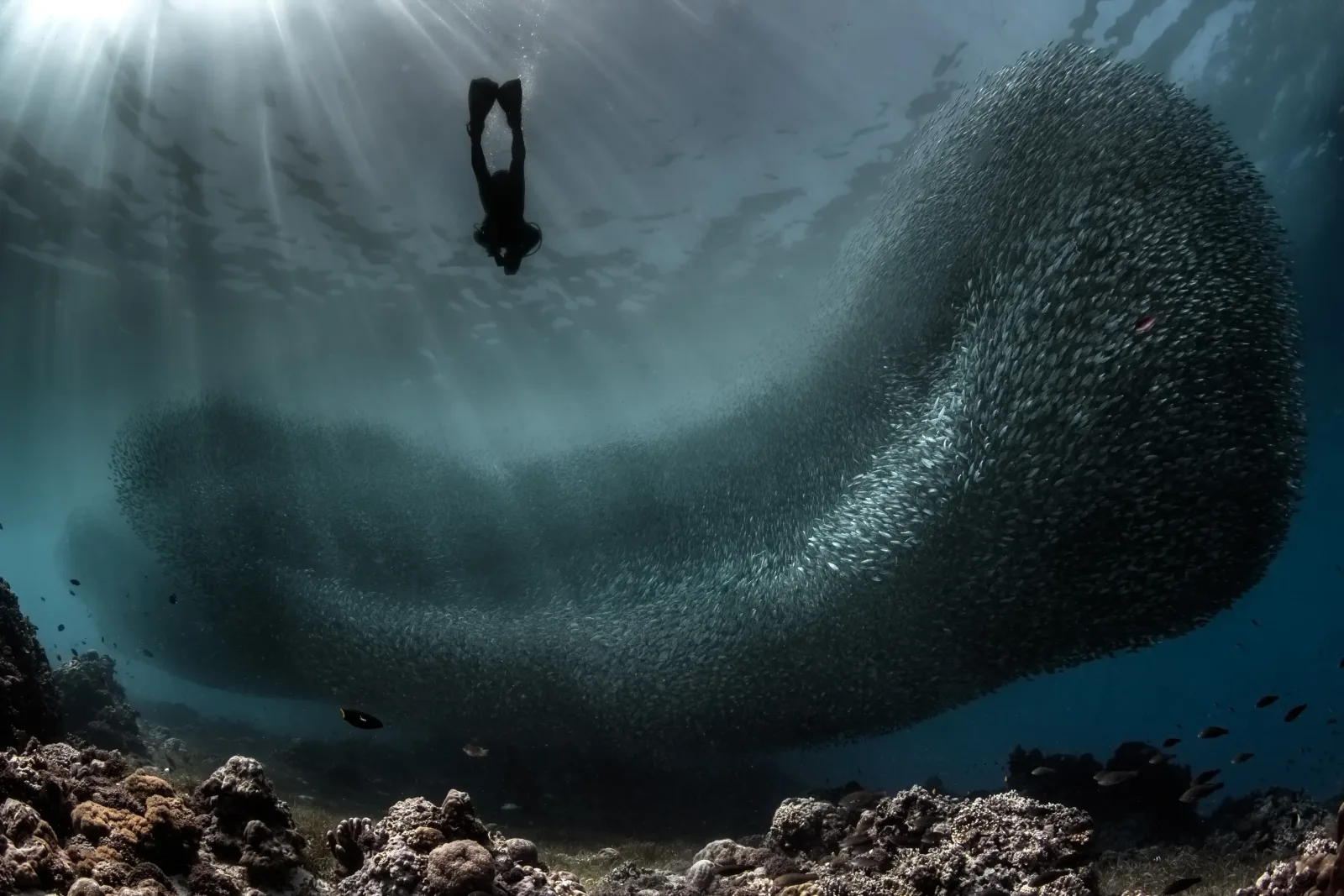
"When should we come?" is the first question in most Komodo booking conversations, and the honest answer is longer than people expect. Komodo National Park is a year-round destination in a way that few dive regions genuinely are, but the park you get in February is not the park you get in August. The wind swings around, whole groups of dive sites open and close, the water temperature in the south drops by five degrees, and the manta rays move. None of this makes any month bad. It does mean the right month depends entirely on what you want the trip to be, which is why our reservations team at Komodo spends more time on timing than on any other planning question.
This guide is the long version of that conversation: the two monsoon seasons and what each does to the park, a month-by-month breakdown, the manta seasonality question (which is really two questions, as we will get to), the new park quota system, and what we would pick for a first trip versus a photography trip versus a family trip. It is written from the operator's side, based on running Komodo liveaboard trips across every month of the season for years. Where the honest answer is "it varies," we say so rather than pretending the calendar is tidier than it is.
The two seasons that actually matter
Everything about Komodo timing comes down to the monsoon. The park sits in the Flores Sea between two weather systems, and the wind direction flips roughly twice a year. From about April or May to October or November, the southeast trade winds blow: this is the dry season, the sky is clear for months at a stretch, and the seas inside the park are calm in the north and centre while the south coast takes the swell. From roughly December to March the wind swings northwest: this is the wet season, with rain arriving in short, heavy afternoon bursts rather than all-day greyness, rougher water on the northern edge of the park, and calm, warm conditions in the centre and south.
The crucial point that most first-time visitors miss: the monsoon does not decide whether you can dive Komodo. It decides where in Komodo you dive. The park is compact, a liveaboard repositions overnight, and there is always a sheltered side. What the season changes is which of the marquee sites are on the menu. The northern pinnacles (Castle Rock, Crystal Rock) and the Cauldron channel are dry-season sites; in the wet season the swell makes them unreliable and boats often skip them entirely. The southern bays (Manta Alley, the Horseshoe Bay sites around Cannibal Rock) are at their strange, cold, plankton-rich best during the dry-season upwelling, and remain reachable in the wet season when the north is not. Central Komodo, including the manta aggregation at Karang Makassar, works essentially all year.
One more structural fact shapes everything below. During the dry season, deep cold water wells up along Komodo's south coast. Water temperature at the southern sites drops to roughly 22 to 26 degrees Celsius, occasionally lower, while the north stays at a tropical 26 to 29. That cold water is green with plankton, the visibility drops, and the reef life explodes; it is the engine that feeds the mantas and the famous invertebrate cover of the south. Divers who expect gin-clear warm water everywhere are surprised by it. Divers who know what it is ask for more of it.
The dry season, April to November: the classic Komodo
If there is a "default" Komodo season, this is it. The northern and central park is at its calmest and clearest, visibility on the north pinnacles runs 20 to 30 metres on good days, and the full standard itinerary, from Castle Rock in the north to Manta Alley in the south, is usually on the table in a single week. Our complete Komodo dive sites guide covers the sites themselves; the seasonal shorthand is that the dry season is the only window in which more or less all of them are in play.
Within the dry season there are real differences worth knowing. May, June and July are, in most years, the sweet spot for conditions: settled weather, strong visibility, the southern upwelling building and with it the southern manta activity. July and August bring the strongest southeast trades; the diving inside the park stays good, but the open crossings get choppy, the Padar ridge wind-blasted at sunrise, and the south coast swell heavier. August is also, together with July, the busiest month in the park by visitor numbers, which matters more than it used to now that daily entry is capped (more on the quota system below). September and October ease off on all fronts: the wind drops, the water in the south starts to warm, the crowds thin, and prices soften. October and November are transition months, warm and calm and quieter, with the southern upwelling fading and the manta action shifting toward the central sites.
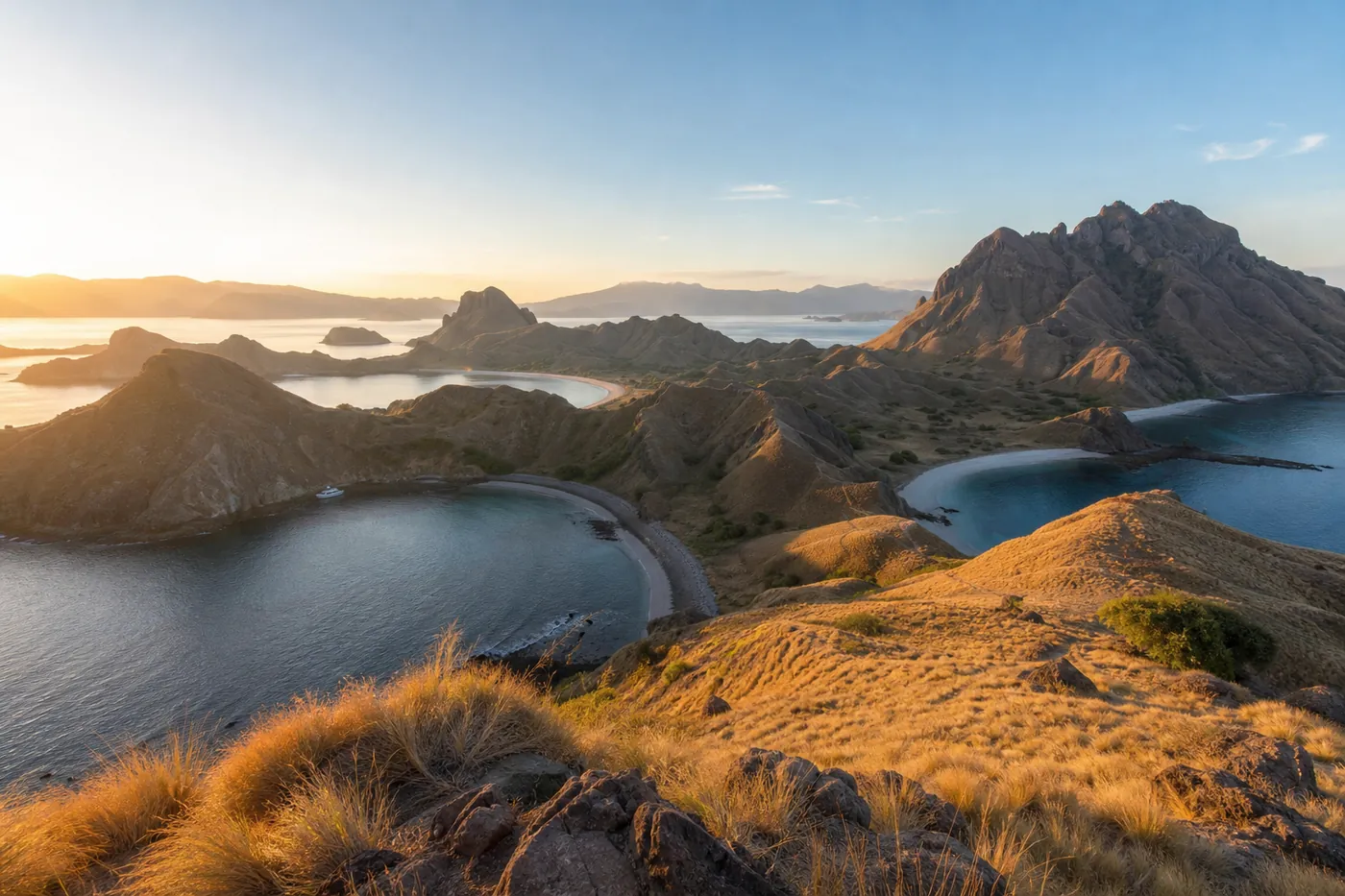
Topside, the dry season is dramatic in a way photographs undersell: the islands turn from green to a burnt amber-gold, which is exactly the savannah look on every famous Padar photo. The dragon walks at Rinca and Komodo Island run year-round, but the dry months make for easier trails and better light. The trade-off is that by September the hills are bone-dry and the landscape can look scorched rather than lush; whether that is a feature or a bug depends on your photography taste.
The wet season, December to March: the manta season nobody books
The wet season has a reputation problem it does not deserve. "Rainy season" reads as ruined holiday, and most international visitors simply avoid it. What actually happens from December to March: rain falls in short tropical bursts, usually in the afternoon or overnight, with plenty of blue sky between; the islands turn green; the north-facing sites drop off the itinerary because of the northwest swell; and central Komodo becomes the stage for the biggest manta aggregations of the year. The cleaning and feeding drift at Karang Makassar in December, January and February routinely produces the largest counts we see all year. We have had guests log more mantas in a single January dive than in a week of peak-summer diving.
The honest trade-offs: visibility in the wet months is more variable, some crossings are sloppier, and a small number of weeks around the peak of the northwest monsoon (late January and February in most years, though it moves) can be genuinely windy, with itineraries adjusted day by day. Some operators wind down their Komodo schedules in December and January. The boats that stay, ours included, run the central-and-south pattern and plan around the weather windows. For a diver whose priority is mantas, warm water (27 to 30 degrees everywhere, no upwelling), uncrowded sites and lower prices, the wet season is arguably the best-value Komodo there is. For a first-timer who wants the full north-to-south classic itinerary, it is the wrong window; better to come between April and November.
One planning note for this season: the Christmas to New Year fortnight and Chinese New Year are exceptions to the "quiet" rule. Both fill boats and hotels in Labuan Bajo well in advance, at high-season prices, despite being meteorologically mid-wet-season. If you want the quiet version of wet-season Komodo, aim for mid-January or March. The wet months also change the land side of the trip, since the inland gorges run higher and the road trips get slower, which our guide to things to do in Labuan Bajo goes through season by season.
Komodo month by month
The compressed version, with the caveat that seasons drift by a few weeks from year to year and no table survives contact with an actual weather system:
| Month | Season | Water (N / S) | What it's like |
|---|---|---|---|
| January | Wet | 28-30 / 27-29°C | Peak central manta season; north sites mostly off; quiet after New Year; afternoon rain bursts |
| February | Wet | 28-30 / 27-29°C | Similar to January; windiest wet-season weeks often land here; big Karang Makassar days |
| March | Transition | 28-29 / 27-28°C | Wind easing, north reopening in windows; green islands; underrated month |
| April | Early dry | 27-29 / 26-28°C | Full park access returns; upwelling beginning in the south; Easter bump in visitors |
| May | Dry | 27-29 / 24-26°C | One of the best all-round months; everything open, crowds moderate |
| June | Dry | 27-29 / 23-26°C | Prime conditions; southern upwelling strengthening; Manta Alley waking up |
| July | Dry (peak) | 26-28 / 22-25°C | Peak season and peak wind; superb diving, busiest park, choppy crossings, cold green south |
| August | Dry (peak) | 26-28 / 22-25°C | As July; book many months ahead; Manta Alley at its coldest and fishiest |
| September | Dry | 27-29 / 23-26°C | Wind easing, crowds thinning; excellent month that deserves more attention |
| October | Late dry | 27-29 / 25-27°C | Calm, warm, quieter; upwelling fading; great for newer divers |
| November | Transition | 28-29 / 26-28°C | Warm and calm; manta action shifting central; low-season value before the holidays |
| December | Wet | 28-30 / 27-29°C | Central mantas building; quiet early month, then the Christmas crush |
Two patterns worth pulling out of that table. First, the months most people book (July, August) and the months we would quietly pick for ourselves (May, June, September, and January for mantas) barely overlap. The difference is driven by northern-hemisphere school holidays, not by conditions. Second, the water temperature columns tell the upwelling story at a glance: the south is coldest exactly when the season is driest, which is the opposite of what intuition suggests and the single most common surprise among guests who did their research on generic Indonesia weather pages rather than diving-specific ones. Our broader Indonesia liveaboard seasons guide puts Komodo alongside Raja Ampat and the Banda Sea if you are weighing regions against each other.
The manta question is really two questions
"When is manta season in Komodo?" has no single answer because Komodo has two manta zones with different engines, and conflating them is the most common error in the generic season guides. It is worth being precise, because the answer changes which months you should book.
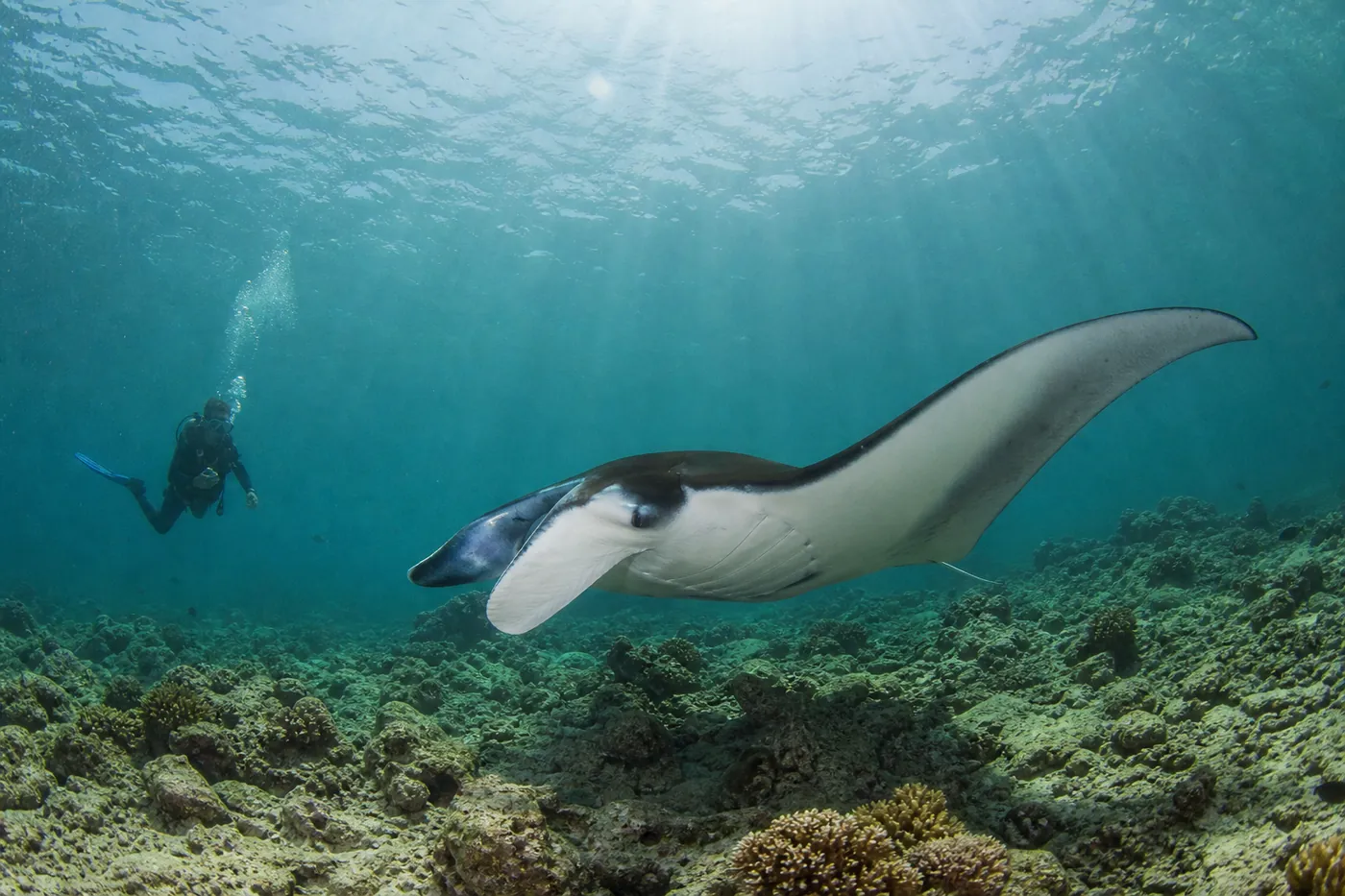
Karang Makassar (central Komodo, often just called Manta Point) is a long, shallow rubble drift where reef mantas gather to be cleaned and to feed. It produces sightings essentially all year, which is why we tell guests that no month writes mantas off. Its biggest aggregations, though, come in the wet season, roughly December to February, when plankton-rich water moves through the centre of the park. Counts of a dozen or more animals on a single drift are normal in a good January week. The site is shallow and current-swept rather than deep and technical, and it works for snorkelers as well as divers, which we covered in detail in our guide to diving with manta rays in Indonesia.
Manta Alley (south Komodo) runs on the opposite clock. It sits on the park's south coast, where the dry-season upwelling delivers cold, green, nutrient-loaded water from roughly June to September. That is when Manta Alley earns its name, with feeding trains and cleaning activity in 22 to 25 degree water while the north of the park sits in the high twenties. It is a wilder, colder, moodier dive than Karang Makassar, and reaching it depends on the south-coast swell cooperating.
Put the two together and the practical answer looks like this: for the highest probability of big manta days, come in December to February (central) or July to September (south). For a decent chance plus the full classic itinerary, May, June and September thread the needle. And for the record, we have blanked on mantas in peak weeks and had seventeen-manta mornings in "wrong" months; these are wild animals following food, and anyone quoting you a percentage is reading from a brochure, not a logbook.
Crowds, the visitor quota, and the SiOra system
Komodo's popularity has consequences, and since April 2026 the park has enforced them formally: entry is booked through the SiOra online system with a daily visitor cap (a thousand people a day at the time of writing), passport details registered in advance, and daily fees that have run to roughly IDR 300,000 per day for divers, subject to the periodic revisions the park authority is fond of. What this means in practice: walk-up entry is no longer a safe assumption in busy months, and your operator, not you, should be handling the registration. We fold the park paperwork into every booking; if you are comparing operators and one of them is vague about who books the park entry, treat that as a red flag. Fee levels and rules have changed several times in recent years, so treat any specific number, including ours, as a snapshot, and see our Komodo Island facts guide for the wider park background.
Crowding itself is more localised than people fear. The park is large and liveaboards mostly feel spacious even in August; where you notice peak season is at the ranger stations, on the Padar summit trail at sunrise, and occasionally as a queue of dinghies at Karang Makassar. A good cruise director schedules around all three, hitting Padar at first light before the day boats arrive from Labuan Bajo, which is one of the quiet structural advantages a liveaboard has over land-based day trips. The Padar Island guide covers that morning in detail.
Water temperature and what to pack, month by month
Komodo is the one major Indonesian destination where wetsuit choice genuinely depends on your itinerary and month, because of the southern upwelling. The north and centre are steady tropical water, 26 to 30 degrees depending on season: a 3mm full suit covers most people, and warm-blooded divers manage in a shorty or rashguard in the wet months. The south in upwelling season is a different animal: 22 to 26 degrees, occasionally dipping lower at depth at sites like Manta Alley and around Horseshoe Bay. For a dry-season trip that includes the south, we recommend a 5mm, or a 3mm layered with a hooded vest, and nobody has ever regretted bringing the hood. Repetitive diving in 23-degree water with four dives a day is colder than a single holiday dive at the same temperature; plan for the fourth dive, not the first. The full kit checklist lives in our Indonesia liveaboard packing list.
Everything else in the bag is season-independent apart from two items. In the wet months, a light rain shell earns its space for dinghy rides and the Padar climb. In July and August, add a windproof layer for early mornings on deck; twenty-six degrees of air in a twenty-knot trade wind before sunrise feels genuinely cold, and the crew's coffee only does so much.
Best month by interest
Different trips want different calendars. Our short answers, the same ones we give over email:
- First Komodo trip, want the classic everything-week: May, June or September. Full park access, settled weather, manageable crowds. October is the gentler runner-up.
- Mantas above all: December to February for Karang Makassar volume, July to September for the cold southern spectacle at Manta Alley. January is our pick if warm water matters to you.
- Underwater photography: June to September for the south (soft coral walls, green-water moodiness, manta trains); December to February for clean central manta passes in warm blue water. Wide-angle shooters should read the upwelling notes above before choosing.
- Newer divers and families: October and November, or March and April. Calm seas, warm water everywhere, quieter sites, and the currents at their most forgiving on the sheltered itineraries. (On families: children are welcome and priced as adults; the park's child fee discount, where applied, is passed on.)
- Dragons, Padar and the topside: any month works; April to June gets you green-going-gold hills, dry trails and softer light than late dry season.
- Value and quiet: mid-January, March, and November. Lower prices, empty sites, and the park to yourself on good days, in exchange for accepting some itinerary flexibility.
If you are weighing Komodo against Raja Ampat for the same dates, the two parks run on nearly opposite calendars: Raja Ampat's prime window is October to April, Komodo's classic season is April to November. That inversion is a gift for planning; whichever half of the year you have holiday in, one of Indonesia's two best parks is in season. Our Raja Ampat vs Komodo comparison and the matching Raja Ampat best-time guide cover that decision properly.
Booking lead times, month by month
Komodo lead times are driven by the school-holiday months and, since the quota, by the daily cap. July and August departures on the well-known boats sell out five to nine months ahead in most years; if those are your dates, book in the northern winter. Christmas and New Year weeks behave the same way. May, June and September want three to six months of lead. The wet-season months outside the holidays can often be booked six to ten weeks out, sometimes closer, and they are where late planners should look first rather than trying to squeeze into a August cancellation. Cabin type tightens before the boat does: the couples cabins and the singles-friendly cabins go first, a dynamic we unpacked in our solo liveaboard guide.
The clearest way to see the trade-off is to compare the two trips a manta-focused guest could book. Take August, the obvious school-holiday choice: beautiful hard-blue northern diving, a good chance of a wind-hammered sunrise on Padar, and, in a poor week, two mantas in seven days. Now take January on the same boat: warm water at around twenty-nine degrees, forty-plus manta encounters over five days at Karang Makassar, rain that mostly arrives at lunchtime, and a price roughly fifteen per cent lower. Neither trip is wrong. They are simply answers to different questions, and guests who book the calendar rather than the objective are the ones who come home politely unconvinced. Decide what the trip is actually for, then pick the month.
Putting it together
If we had to compress this whole guide into four sentences: Komodo works all year, but the itinerary follows the monsoon. April to November is the classic season, with everything open, the north at its clearest and the south at its coldest and most alive; May, June and September are its best-kept weeks. December to March trades the northern sites for warm water, empty moorings and the biggest central-Komodo manta days of the year. Decide what you want the trip to be, then let the calendar follow, and if you want a second opinion on specific dates, get in touch and we will tell you what the park is actually like in your window rather than what the brochure says.
For the practical next steps: our Komodo liveaboard itineraries guide explains how the routes differ, the Labuan Bajo travel guide covers flights and transfers into the gateway town, and the Komodo Sea Dragon page shows the boat we run in the park year-round, including through the manta-heavy wet season that most of the fleet skips.