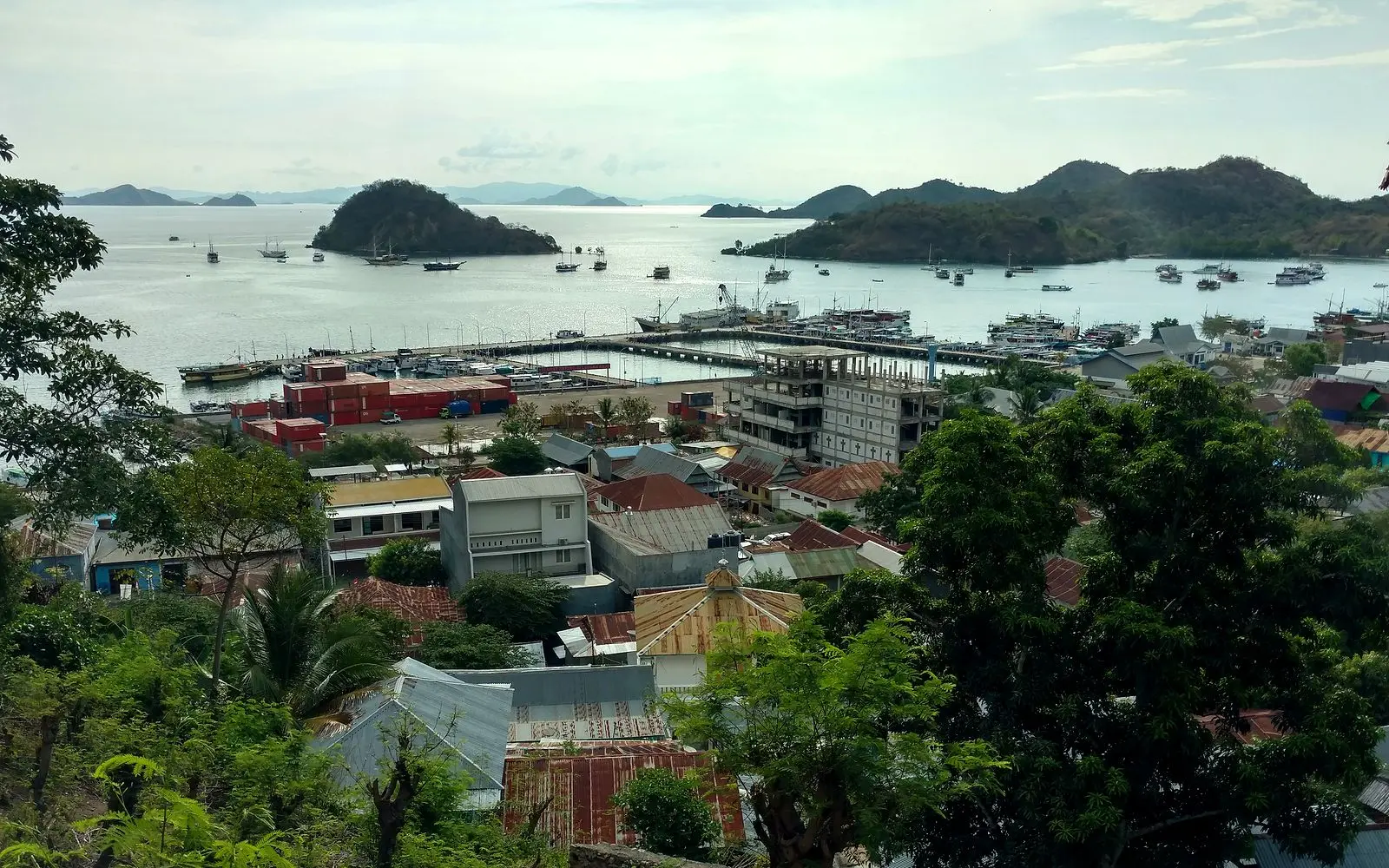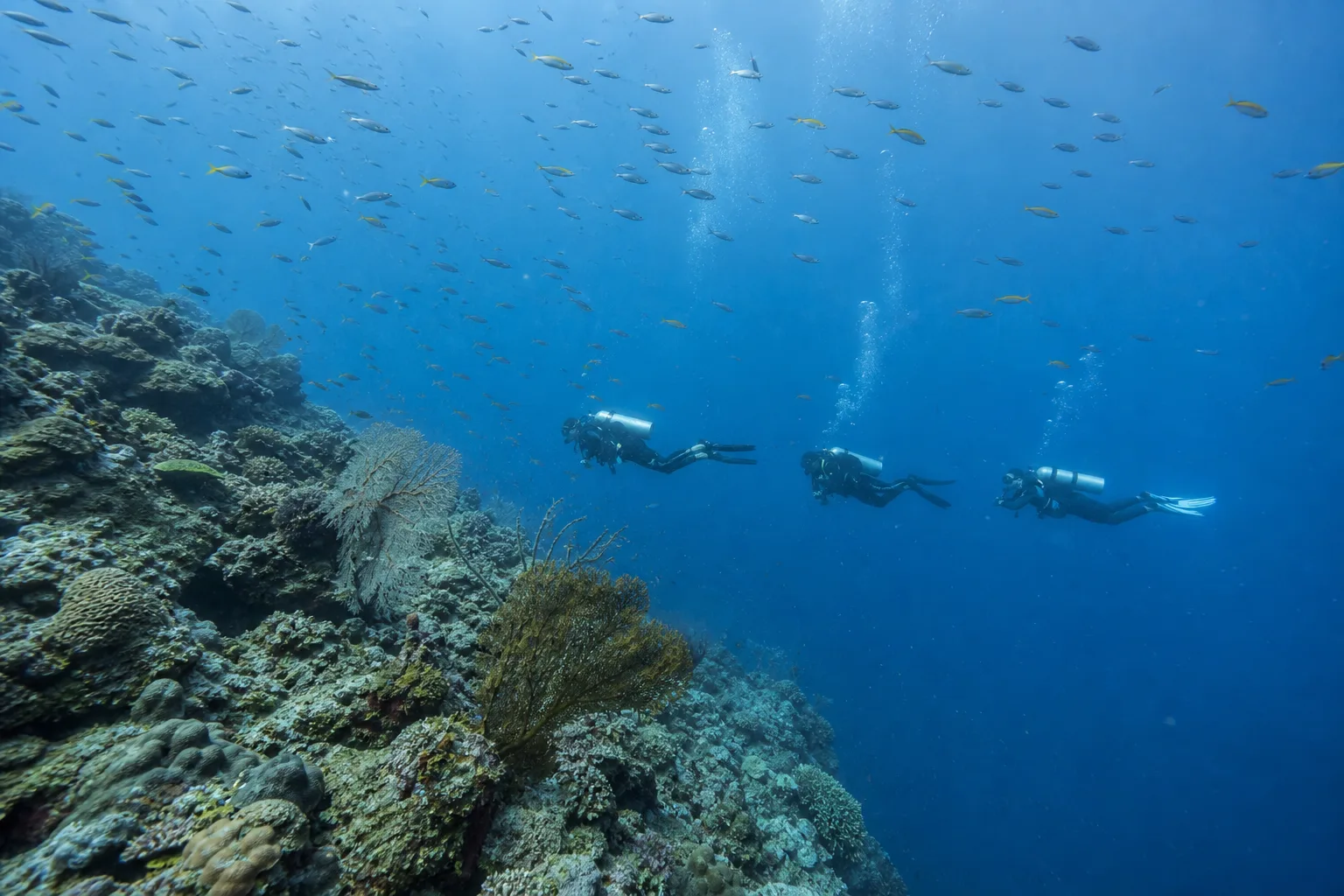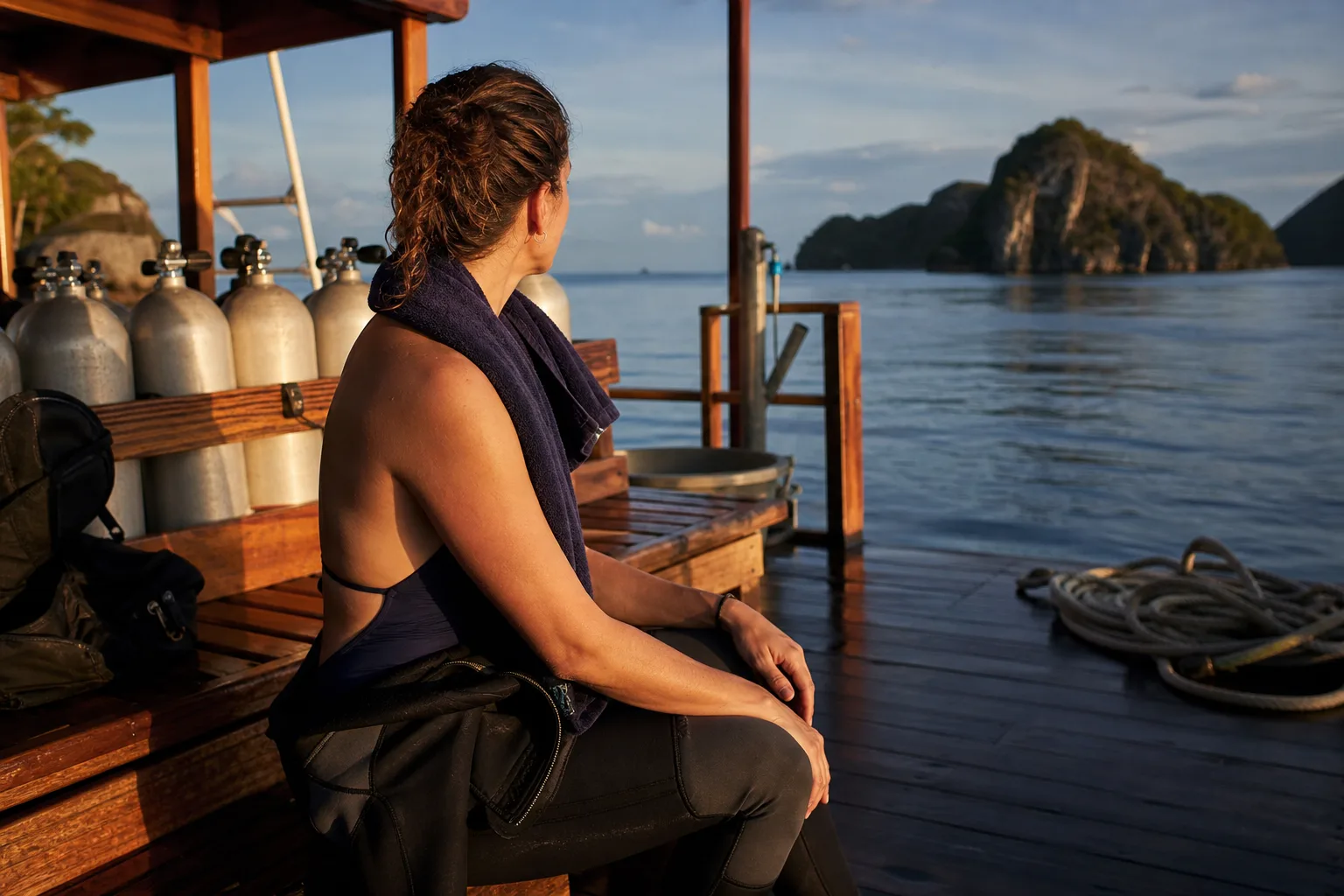
If you have read anything at all about Raja Ampat, you have read about the Dampier Strait, even if the name did not stick. It is the stretch of water where Cape Kri, Blue Magic, Sardine Reef, Manta Sandy and Arborek all sit, which means it is where most divers spend most of their time in the region without ever thinking of it as a single place. Operators call it the engine room. Marine biologists call it one of the richest pieces of reef on the planet. Guests mostly call it "the bit with all the fish".
This guide treats the strait as what it actually is: a corridor with its own logic, where the tide decides almost everything and the difference between a good dive and an extraordinary one is usually two hours of timing. If you are choosing between itineraries, or working out whether a Raja Ampat liveaboard or a week in a homestay on Kri is the better fit, understanding the strait is more useful than memorising a list of site names. We cover the individual sites in depth in our rundown of the best dive sites in Raja Ampat; what follows is the layer above that, the part that explains why any of it works.
What the Dampier Strait is, and why it holds so much life
The Dampier Strait is the channel separating Waigeo, the large island to the north, from Batanta to the south. Scattered through it are the smaller islands that give the sites their names: Kri, Mansuar, Arborek, Gam. It is named after William Dampier, the English buccaneer and navigator who passed through in 1700, which is the last interesting thing that happened here above the waterline.
Below it, the strait is a bottleneck. Water moving between the Pacific and the Indian Ocean as part of the vast system known as the Indonesian Throughflow has to squeeze through this gap, and every time the tide turns it accelerates through the narrows carrying cold, nutrient-dense water up from depth. That nutrient load feeds plankton. Plankton feeds fish. Fish feed bigger fish. The result is a food web so dense that at the peak of a running tide the schooling fish at some sites genuinely reduce the visibility, which is a complaint we are always happy to hear.
The numbers attached to this are not marketing. In 2012 the marine biologist Dr Gerald Allen recorded 374 fish species on a single dive at Cape Kri, beating his own previous record, and no dive anywhere on earth has topped it since. Raja Ampat as a whole holds something in the order of 75 per cent of the world's known coral species. Most of that diversity is concentrated in and around this one channel, which is why itineraries that spend three or four days here are not being lazy. They are being sensible.
| Where | Channel between Waigeo and Batanta, central Raja Ampat, West Papua |
|---|---|
| Main islands | Kri, Mansuar, Arborek, Gam |
| Water temperature | 27 to 30 degrees Celsius year-round |
| Visibility | 15 to 30 metres, best October to April |
| Currents | The defining feature: moderate to strong, tide-dependent, reef hooks routine |
| Depth | Most sites 5 to 30 metres |
| Wetsuit | 3mm is standard, 5mm if you feel the cold over four dives a day |
| Level | Advanced with around 30 dives for the headline sites, gentler options for everyone else |
| Best season | October to April, with manta activity peaking December to February |
| Access | Liveaboard from Sorong, or ferry to Waisai for homestays and resorts |
Why the strait rewards repeat dives more than new sites
The single most common planning mistake we see is treating Raja Ampat like a checklist, where a good trip means ticking off as many different names as possible. The strait does not work that way. Cape Kri on an incoming tide at dawn and Cape Kri on a slack afternoon are, in practical terms, two different dive sites: one is a wall of predatory chaos you watch from behind a reef hook, the other is a gentle drift where you notice the nudibranchs. Guests who dive the same three or four sites repeatedly across different tidal states almost always come home with better stories than guests who insisted on maximum variety.
This is also the argument for a liveaboard over a fixed base, and it is a genuine one rather than a sales pitch. A boat can be on the site at the tide the guide wants rather than the tide the day schedule allows. On a week from a homestay you dive when the boat goes out, which is usually mid-morning, which is not always when the site is at its best.
The sites, and what actually separates them
There are perhaps twenty named sites in the strait and around eight that appear on nearly every itinerary. Rather than repeat the site-by-site descriptions from our Raja Ampat dive site guide, it is more useful to group them by how they behave, because that is what determines where your guide takes you on any given morning.
The current sites: Cape Kri, Sardine Reef, Chicken Reef, Blue Magic
These are the reason people come. Cape Kri sits off the eastern tip of Kri Island, where the strait pinches and the tidal flow concentrates over a ridge that drops from about five metres down past forty. On a running tide you hook in near the corner and watch: cyclones of fusiliers, big schools of snapper and batfish, giant trevally punching through them, blacktip and grey reef sharks working the edges, Napoleon wrasse and dogtooth tuna cruising past at the periphery. It is loud, in the way that only a reef with too much life on it can be.
Sardine Reef and Chicken Reef sit nearby and behave similarly, though with a caveat worth stating plainly: they are temperamental. On slack water they can feel flat, even disappointing, and divers who happen to catch them at the wrong hour sometimes leave puzzled about the fuss. When the water moves they transform. Sardine Reef in particular is prone to shifting direction mid-dive, easing off and then accelerating without much warning, so it is not a site to wander away from your guide on.
Blue Magic is different in shape. It is a submerged seamount rather than a fringing reef, rising from deep water with nothing around it, and that isolation is exactly why it attracts what it attracts: schooling barracuda and jacks, wobbegong sharks tucked under table corals, and, in season, oceanic manta rays coming in to be cleaned. It is a site where the current can genuinely surprise people, and where a reef hook is not optional equipment.
The manta sites: Manta Sandy and Manta Ridge
Manta Sandy sits in the shallows off Mansuar, near Arborek, and is the best-known reef manta cleaning station in the region. It is a sandy channel with a few coral bommies acting as cleaning stations, sitting at ten to fifteen metres, and the diving itself is easy. What is not easy, for a lot of people, is the discipline it demands.
There is a marked line of stones and a rope at Manta Sandy, and divers are expected to settle behind it and stay there. Not drift over it for a better angle. Not swim towards an animal that is approaching. The whole system works because the mantas trust that the row of noisy strangers stays where it is, and it collapses the moment somebody decides their photograph matters more. Groups are limited and rotated, so if another boat is on the site you may wait your turn on the surface. We have watched a settled group of six mantas leave inside ninety seconds because one diver finned forward, and everybody else on that dive paid for it.
Manta Ridge, a little further along, is the deeper and more current-exposed version of the same idea, generally reserved for groups with the buoyancy to hold station in moving water. The animals here are reef mantas, present year-round with a clear peak between December and February. The oceanic mantas are the Blue Magic and Magic Mountain story rather than the Manta Sandy one, though the boundary is not absolute.
The gentle sites: the jetties, Mioskon, Friwen Wall
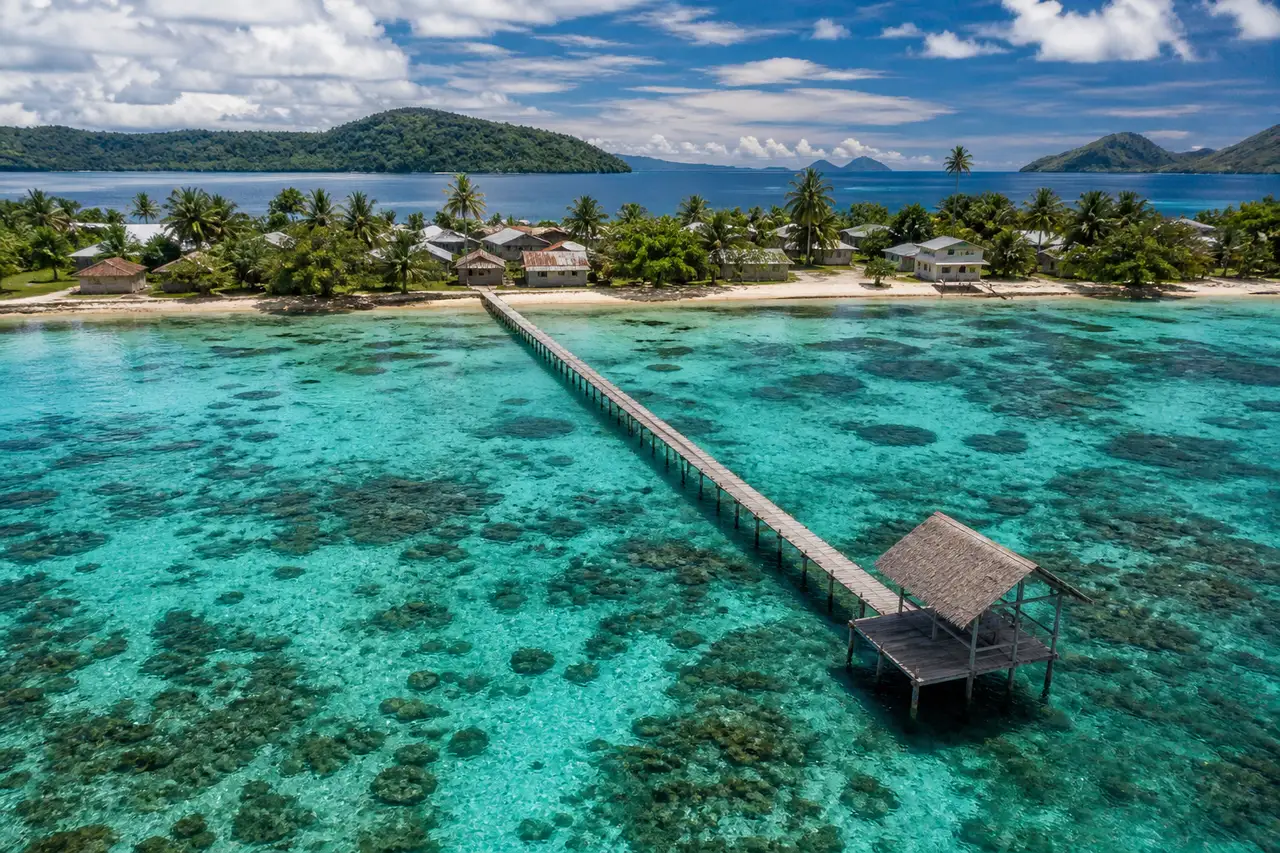
The jetty dives at Arborek, Yenbuba and Sawandarek are the strait's secret weapon, and they are consistently the sites that non-divers, nervous divers and photographers rate highest. Pilings covered in soft coral, enormous schools of sweetlips and batfish holding in the shade, wobbegongs on the sand beneath, and light coming through in shafts. Depth rarely exceeds fifteen metres, current is usually mild, and you can spend an hour under a single structure without getting bored. Arborek in particular doubles as one of the better snorkelling stops in Raja Ampat, since most of the interest sits within five metres of the surface.
Mioskon is a small island close to Kri with a reputation among guides as the reliable one: wobbegongs almost every dive, often several, plus a large fruit bat colony in the trees that makes the surface interval worth staying awake for. If you want to understand why Raja Ampat is the best place in the world to see wobbegong sharks, this is where it clicks. Friwen Wall is similarly forgiving, a soft-coral wall dive with minimal current that works well as a checkout dive or a late-afternoon fourth dive when everyone is tired.
The existence of this second tier matters more than it sounds. It means a group with mixed experience does not have to split up or compromise, because there is nearly always a benign site within twenty minutes of a demanding one.
Conditions: currents, tides, and when to go
Nothing about the Dampier Strait makes sense until you accept that the current is the point. Divers sometimes arrive hoping for the fish without the water movement, which is a bit like hoping for the concert without the noise. The nutrient flow that produces the biomass is the same flow that will push you off a reef if you approach it carelessly.
How guides read the tide
Every decent operator in the region plans the day around the tide table rather than the clock. Slack water, the pause either side of the turn, is when the demanding sites become accessible to less experienced groups. The middle of a running tide is when they perform. An incoming tide generally brings cleaner, cooler water in from the open ocean and produces the best visibility and the heaviest fish action, which is why so many of the memorable Cape Kri dives happen early in the morning on a rising tide.
The practical consequence for you is a question worth asking before you book anything: how does the operator plan dives around tides? A boat that answers with specifics is a boat that knows the strait. A boat that treats the schedule as fixed at eight, eleven, two and six regardless of the water is going to show you the same sites in a duller state.
Reef hooks, and using one properly
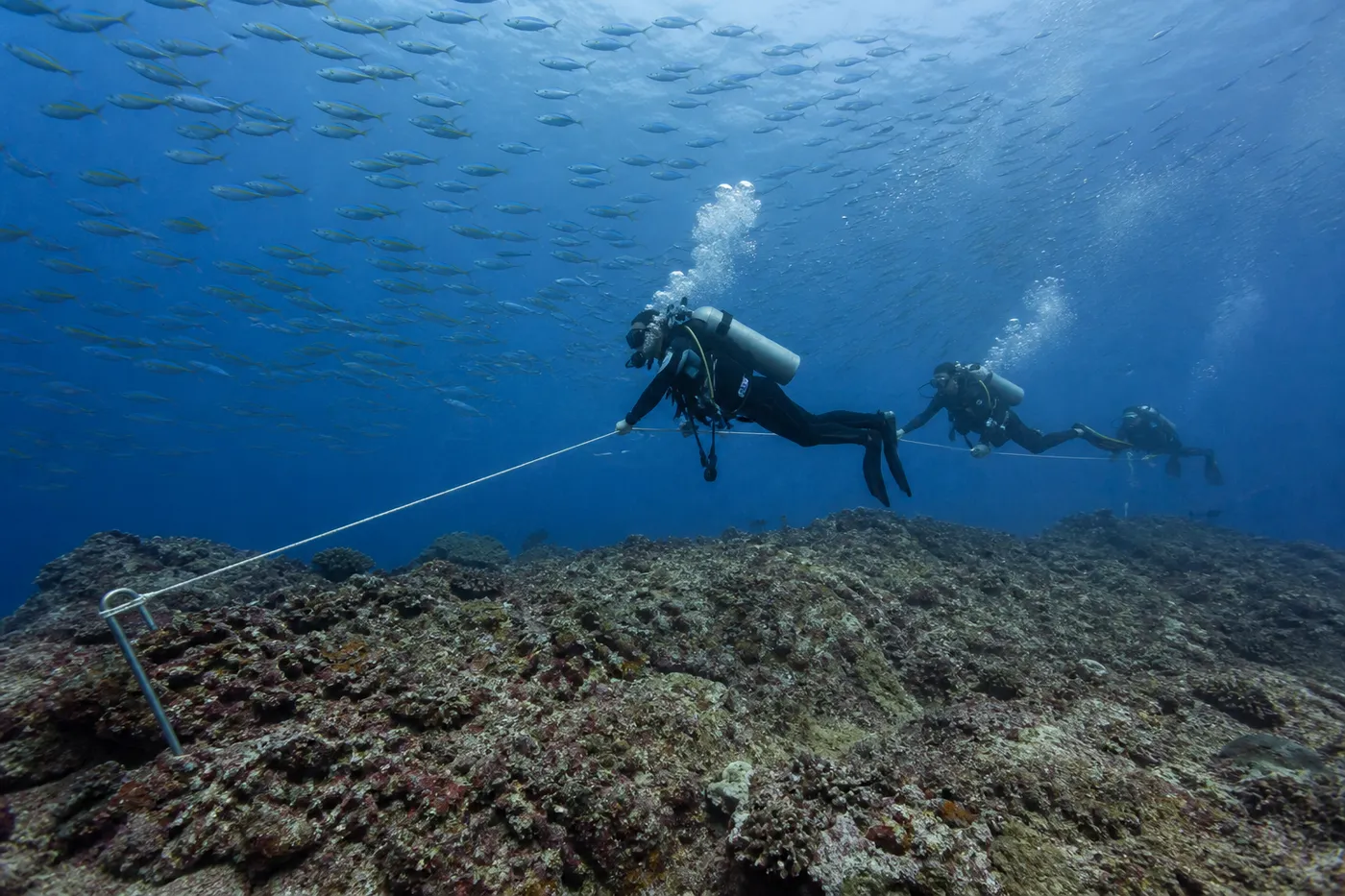
A reef hook is a stainless hook on a short line that clips to your BCD, and in the Dampier Strait it is standard equipment rather than a specialist toy. The technique matters. You place the hook on bare rock or dead coral, never on live coral or a sea fan, let out enough line to sit comfortably a metre or two off the reef, then add a small amount of air to your BCD so you hang like a kite rather than being pinned flat. Unhooking is the part people get wrong: you release before you fully deflate, and you go with the current rather than fighting back across it.
If you have never used one, say so at the briefing. Guides would far rather spend two minutes showing you on the boat than retrieve you from open water. It is also worth being honest with yourself about your buoyancy control, because a hooked diver with unstable trim is the one who ends up bouncing, burning gas and ending the dive early while the rest of the group is still watching sharks.
Can beginners dive the Dampier Strait?
Yes, with the right expectations and the right operator. The realistic floor for the headline current sites is an Advanced Open Water certification and roughly thirty logged dives, and that is a guideline about comfort in moving water rather than a formal rule. Open Water divers with genuinely good buoyancy dive Cape Kri regularly, on slack tide, with a guide who is watching them.
What a newer diver should not do is book the strait expecting every dive to be the postcard version. Ask the boat directly whether they will site-match to your level. Most will, because the second tier of sites is good enough that nobody is being fobbed off. Our guide to a first Indonesia liveaboard covers the wider question of how many dives you want before committing to a trip like this. Nitrox is worth considering here too, given the dive profiles are repetitive and the fourth dive of the day is common.
The season, month by month
Raja Ampat is diveable all year, and boats do run outside the main window, but the strait has a clear season and it is worth planning around.
| Period | Conditions | What stands out |
|---|---|---|
| October to April | North-west monsoon, generally light winds of 5 to 15 knots, calm inside the strait, visibility typically 20 to 30 metres | The main season. Everything is running, all sites accessible |
| December to February | Calmest and clearest, with more rain topside | Peak reef manta activity at Manta Sandy; peak prices and the busiest boats |
| Late November to April | Within the main season | Best window for oceanic mantas at Blue Magic |
| May and September | Shoulder months, conditions variable | Fewer boats, decent diving, some risk of a rough crossing |
| June to August | South-east monsoon, often 20 to 30 knots for weeks, exposed crossings become uncomfortable | Most liveaboards relocate. Land-based diving continues with site restrictions |
The strait itself is relatively sheltered, which is why land-based operations on Kri and Mansuar keep working through the southerly season when the open-water crossings to Misool and the north have become unpleasant. If your dates are locked into July or August, a fixed base in the Dampier Strait is a far better plan than a long liveaboard itinerary. Our full breakdown of the best time to visit Raja Ampat goes through this month by month.
What about visibility?
Expect 15 to 30 metres and understand why it varies. The plankton that makes the strait rich is also what limits the water clarity, so the greenest, most soup-like days are frequently the ones with the most animals in the water. The clearest window runs from roughly mid-November to mid-March. If crystal water is your priority above all else, the strait is the wrong destination and we would point you somewhere with less life in it.
Getting there, what it costs, and liveaboard versus a fixed base
Every route into the Dampier Strait starts at Sorong, on the western tip of the New Guinea mainland. Flights come in from Jakarta, Makassar and Manado, usually overnight or very early, and almost nobody arrives feeling fresh. From Sorong the paths diverge, and the choice shapes the whole trip.
Liveaboard
Boats board in Sorong harbour and the first Dampier sites are within a few hours of leaving, which means you can be diving the afternoon you arrive. The advantage is not luxury, it is tide access: the boat moves overnight, sits on the site at the hour the guide wants, and can run a dawn dive on a rising tide at Cape Kri without anyone having to get into a speedboat for forty minutes first. A typical itinerary spends three or four days in the strait and uses the remaining nights to reach Misool in the south or the northern groups around Wayag and Kawe. Our overview of how to get to Raja Ampat covers the flight routing and the buffer day we insist on.
Homestays and resorts
The land-based scene is concentrated on Kri and Mansuar, and it is genuinely good. A public ferry runs from Sorong to Waisai in around two hours, followed by a local boat transfer to your island. Homestays on Kri run roughly IDR 500,000 to 1,200,000 per person per night including three meals, and the standard is basic in the way that a plywood room on stilts over turquoise water is basic, which is to say most people stop caring by the second day. Resorts sit well above that. What you give up is tide flexibility and reach: the central sites are accessible from a fixed base, Misool and the far north are not.
Park fees changed in 2026, and the old numbers are still circulating
This trips people up, so it is worth being precise. As of the 2026 season there are two separate mandatory charges for international visitors, not one:
- Marine Park Entry Card (the environmental services fee, locally the TLPJL card): IDR 700,000 per person, valid twelve months from issue. Children under twelve are exempt. This funds the marine protected area management, patrols and monitoring.
- Visitor Entry Ticket (the regency tourist levy): IDR 1,000,000 per person per visit for foreign visitors, raised from IDR 300,000 in January 2026. Indonesian citizens pay IDR 300,000.
That is IDR 1,700,000 per foreign visitor in total, roughly USD 105 at current rates. A great many older guides, and a few of our own older articles until we corrected them, still quote around USD 65, which was the figure before the regency levy rose. Budget for the new number. Bring it in cash rupiah, because although online payment for the marine park card exists, in-person card payment is unreliable and there is no cash machine once you leave Sorong or Waisai. Liveaboard guests will usually find the fees added to the final onboard bill, and there may be additional harbour and customary community contributions depending on the itinerary, so ask your operator for the full list before you travel rather than discovering it at settlement.
Crowding, and how to avoid the worst of it
The Dampier Strait is not a secret and has not been one for fifteen years. It is the most visited part of Raja Ampat, and in late December, January and around Easter the popular sites can have several boats waiting their turn, particularly at Manta Sandy where the rotation is enforced. This is not the horror story it sounds like, because the strait is large and the rotation works, but two things help. First, dive early: the first slot of the day is quieter as well as usually better. Second, consider the shoulder months of October, November and April, when the diving is nearly identical and the water has noticeably fewer people in it.
Diving it well, and leaving it intact
The Dampier Strait has been under formal protection since 2007, when the regency declared a network of marine protected areas, and the shark and manta populations here have recovered in a way that is genuinely rare in Southeast Asia. That recovery is the direct result of local enforcement, patrol boats funded by the fees you pay, and village communities who chose tourism over fishing rights. It is worth understanding that when a guide is firm with you about the rope at Manta Sandy, they are protecting an arrangement that took two decades to build.
The practical rules are short. Keep your hands and fins off the reef, and if the current makes that difficult, use the hook rather than grabbing coral. Stay behind the marked line at the manta stations, and never pursue an animal. Do not use flash on cleaning mantas or on wobbegongs at rest. Secure your gauges and octopus so nothing drags. Reef-safe sunscreen, or better still a rash guard, since a good deal of the sunscreen in the water here comes off during surface intervals.
None of this is onerous and most of it is what a decent diver does anyway. The reason to spell it out is that the strait's density of life is not an accident of geography alone. It is geography plus twenty years of restraint, and the diving stays this good only if the restraint continues.
Is it worth building a trip around?
If it is your first time in Raja Ampat and you have a week, we would build the whole trip around the Dampier Strait without hesitation. The concentration of sharks, schooling fish and manta encounters in one compact area is unmatched, the second-tier sites are strong enough to absorb bad weather and mixed groups, and the jetty dives give you something completely different without a long transit. Add Misool if you have ten nights and the season is right, since the southern atoll is a different experience rather than a better one. If you want to see how operators actually sequence these regions across a week or more, our guide to Raja Ampat liveaboard diving lays out the common routes and what each one trades away.
The strait rewards people who slow down. Dive the same corner three times in different water, learn to read what the tide is doing, and by the end of the week you will understand why the guides who have worked here for a decade still get slightly excited on the way to Cape Kri.