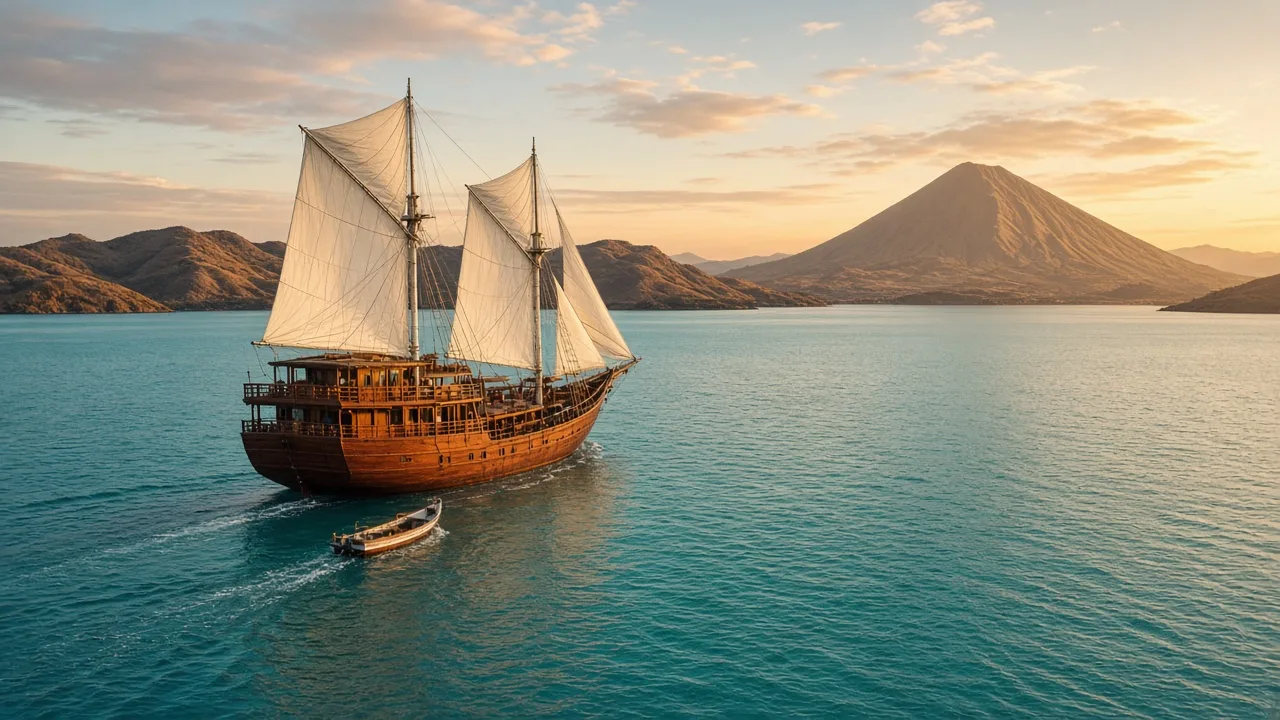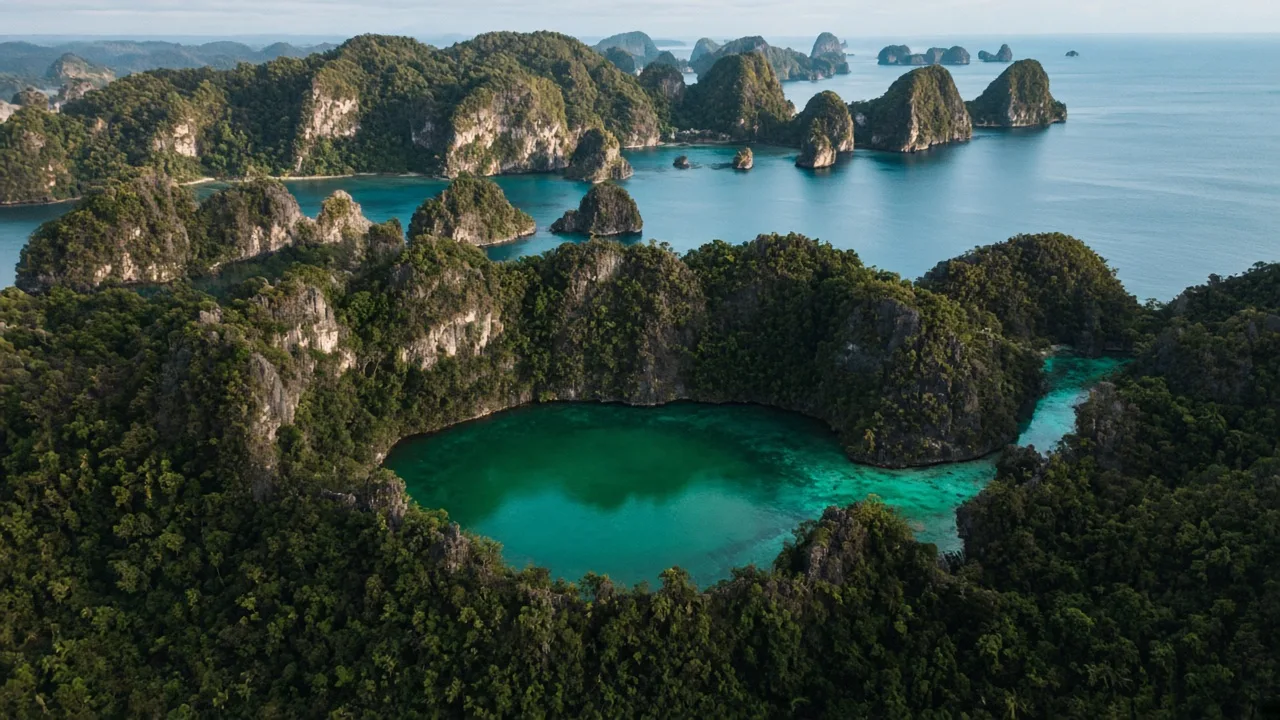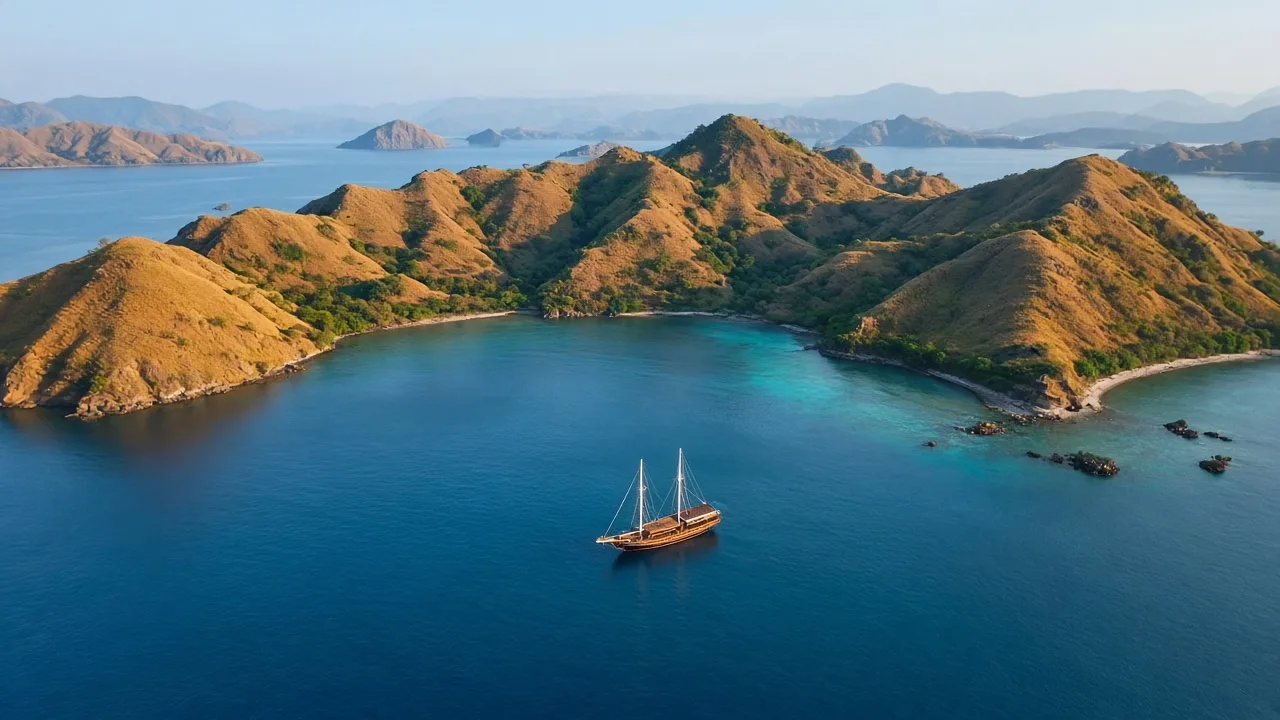
Wakatobi is one of the few places in Indonesia where the reef itself is the headline. There are no dragons and no manta circus, and boat traffic is light by Indonesian standards. What you get instead is hard coral in a condition that is getting rare across the Coral Triangle, walls that drop into water clear enough to see 30 metres or more on a normal day, and a long list of small, strange animals living in the sea fans. The archipelago sits off the southeast tip of Sulawesi, a long way from the usual dive circuit, and a liveaboard is the practical way to see more than one corner of it.
We run Wakatobi in two ways. King Neptune sails eight-night round trips from Bau-Bau on Buton island in May and September 2028, and both King Neptune and Neptune One pass through on longer crossings that link Wakatobi with Alor, Ambon and the Banda Sea. Those crossings are the reason many divers first hear of the place, because Wakatobi is the natural stop between Komodo's currents in the south and the open water of a Banda Sea liveaboard to the northeast.
This guide is built on our own published schedule and prices. Where we describe the dive areas, read it as the typical shape of a Wakatobi trip: the captain and cruise director choose the exact sites each day from tide, wind and what they find.
What is a Wakatobi liveaboard?
A Wakatobi liveaboard is a dive boat that sails Indonesia's Wakatobi National Park for several nights, diving the reefs of Wangi-Wangi, Kaledupa, Tomia and Binongko from one floating base.
- Seven to eleven nights on board
- Walls, pinnacles and coral gardens
- Mostly gentle current
- Strong macro life
It sits between a single-island dive resort and a full Banda Sea expedition: wider in reach than the first, calmer and shorter than the second.
You will find it as:
- Eight-night round trips on King Neptune from Bau-Bau
- Crossings to Alor and the Banda Sea
- One leg of a longer Indonesia liveaboard season
In short: it is how you dive the whole park, not just the reef outside one resort.
Wakatobi liveaboard vs a Wakatobi dive resort: what is the difference?
Wakatobi's reputation was built partly by its resorts, so most people researching the park meet the resort option first. Both are good. They are different trips.
The liveaboard
You board in Bau-Bau, sleep on the boat and move between the island groups overnight, so the dives on day five can be 100 kilometres from the dives on day one. You see Wangi-Wangi, Kaledupa, Tomia and, weather permitting, the far reefs of Binongko on the same trip.
The dive resort
You fly in, unpack once and dive the reefs within reach of the resort's day boats, usually from a house reef and sites within an hour or so of the jetty. You get more comfort ashore and a fixed base, and you see one part of the park in depth rather than all of it.
Key distinction:
- The liveaboard trades a fixed base for range across all four main islands and the reefs between them.
- The resort trades that range for a bed on land, a spa and time for non-divers ashore.
Cost works out closer than people expect, but the comparison is hard to make fairly because resorts price room, diving and flights separately. Our longer guide to Wakatobi describes the resort side in more detail; this article stays on the boat.
Where Wakatobi is, and why boats start in Bau-Bau
The name is an acronym. Take the first two letters of each main island, Wangi-Wangi, Kaledupa, Tomia and Binongko, and you get Wa-Ka-To-Bi. The older name was the Tukang Besi Islands, from the Indonesian for blacksmith, a nod to the metalworking tradition that still survives on Binongko. The islands run in a rough line southeast of Buton, between the Flores Sea and the Banda Sea, and the whole area has been a national park since 1996 and a UNESCO Biosphere Reserve since 2012. At around 1.39 million hectares it is one of the largest marine parks in the country.
Bau-Bau is the old sultanate town on the southwest coast of Buton and the gateway most liveaboards use. It has an airport with connections through Makassar, a deep harbour and a hilltop fortress, the Keraton of the Buton Sultanate, with walls running for roughly three kilometres. Wangi-Wangi has its own small airport, Matahora, which resort guests and independent travellers use. For a boat, though, Bau-Bau is simply the easier place to meet a group, provision and refuel.
From Bau-Bau to the first Wakatobi reefs is an overnight sail of about 100 kilometres. That first night is usually the longest run of a round trip. After it, the distances between island groups are short, and much of the moving happens in the hours between the last dive and breakfast.
What the diving is like, island by island
Wakatobi's diving is mostly walls, slopes, pinnacles and coral gardens, with gentle to moderate current on most sites and a few ridges and channels where it runs harder. Visibility is the constant. The islands have no big rivers, so rain does little to the water, and the local tourism board puts the average around 35 metres, within a range of roughly 20 to 50.
Wangi-Wangi
The northernmost island and the administrative centre. Its reefs are usually the first or last of a round trip, and they are a good place for a check dive: sloping coral, plenty of reef fish and conditions that let the guides see how everyone is weighted before the walls further south.
Kaledupa and Hoga
Kaledupa's long outer reef system gives some of the best wall drifts in the park, past big sea fans and schools of fusiliers. Hoga, the small island off its coast, has hosted a marine research station since the 1990s, and its reefs are a macro photographer's ground, with pygmy seahorses on the fans, leaf scorpionfish and a long list of nudibranchs. Near Kaledupa, the Bajau village of Sampela stands on stilts over the shallows, and it is one of the best-known Bajau communities in Indonesia.
Tomia
Tomia holds the sites people tend to name first. Roma is a broad coral pinnacle fringed with large hard corals, schooling fish overhead and banded sea kraits working the crevices. Mari Mabok is a long ridge that drops from a few metres to well past recreational depth, covered in gorgonians and soft coral, and it can run with real current on a big tide. Not every Tomia site appears on every trip; the captain chooses them from the tide and the conditions on the day.
Binongko
The most remote of the four main islands, at the southeast end of the chain. Its walls are steep and see very few divers, and the chance of bigger fish is better here than further north. Binongko is also the most exposed part of the route, so it is the first area to come off the plan when the wind picks up.
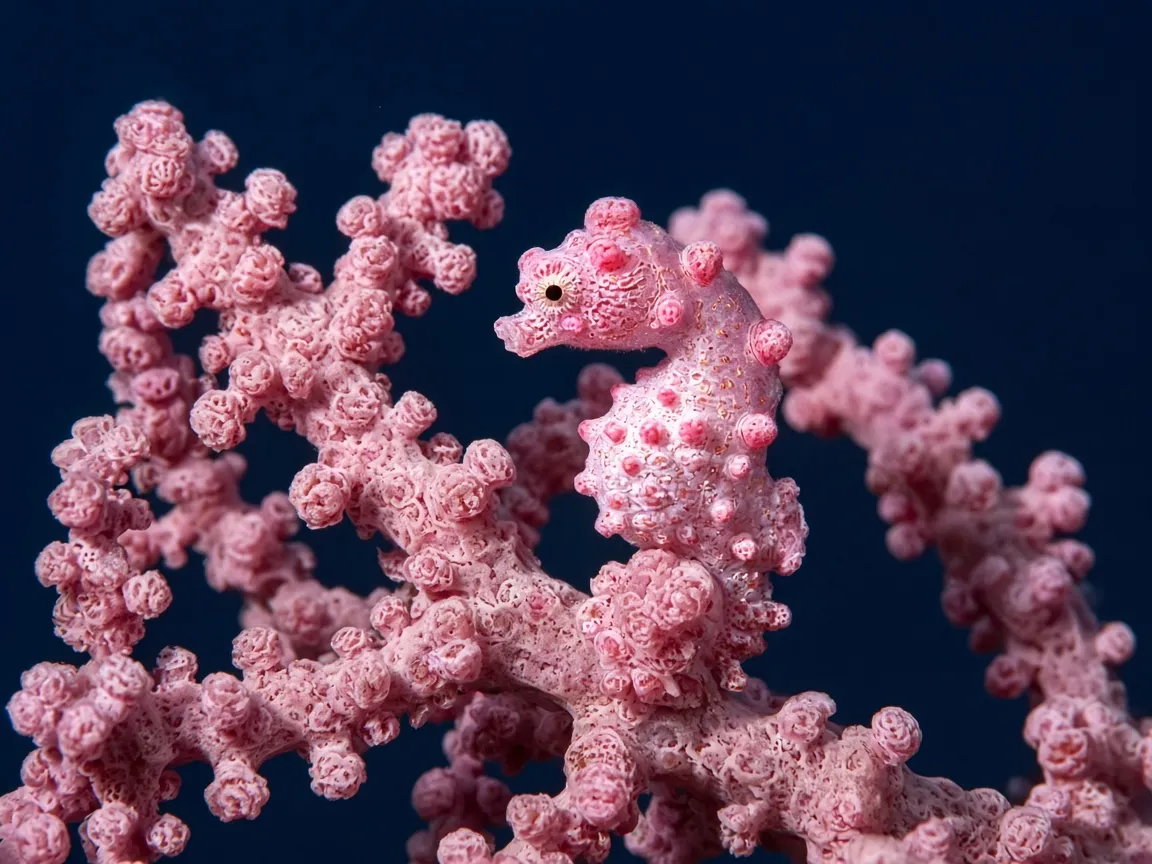
What you will not usually get is the big-animal action of Komodo. Turtles are common, reef sharks and Napoleon wrasse turn up, and schooling fish gather on the points, but mantas and other large pelagics are not what Wakatobi is about. Divers who measure a trip by sharks per dive tend to be happier on a Banda Sea crossing, while those who love coral and macro rate Wakatobi near the top of anything in Indonesia. Our guide to macro diving in Indonesia puts its critter life in context with Lembeh, Ambon and Alor.
How a Wakatobi liveaboard works
A round trip follows the usual liveaboard rhythm of up to four dives a day, with one long sail at each end. The crossings work differently, and we cover those further down.
1. Meeting the boat in Bau-Bau
You fly into Bau-Bau and are collected from the airport or your hotel as part of the group transfer. The afternoon goes to cabins, the safety briefing and kit set-up.
2. The overnight run
The boat sails overnight to the first Wakatobi reefs, roughly 100 kilometres. It is usually the longest run of the trip, and the only one most guests notice.
3. Working north to south, or south to north
The captain plans the order of the island groups from wind and tide, and adjusts it day by day. On calm weeks the boat reaches Binongko; on windier ones it spends longer around Tomia and Kaledupa.
4. Up to four dives a day
Each full dive day can include up to four guided dives, often three by day and one at night. On King Neptune, nitrox refills are included, which matters on a week of deep walls and repeat dives.
5. Back to Bau-Bau
The last dives fall on the penultimate day, leaving the 18 to 24 hours before flying that dive medicine guidance recommends. The boat sails back overnight and you disembark in the morning.
A worked example: King Neptune, 12 to 20 September 2028
Here is a real departure. King Neptune boards in Bau-Bau on 12 September 2028 and returns there on 20 September: eight nights. The fare is USD 6,200 per person in a Sea View Cabin on the main deck, USD 6,400 on the upper deck and USD 4,100 in a Sea View Single Cabin, and most of the boat was still open when we checked the schedule in October 2026. The fare includes up to four guided dives a day with tanks, weights, a guide and nitrox, every meal, soft drinks, daily housekeeping and the group transfers. Wakatobi park, port and environment fees, a fuel surcharge where it applies, rental gear, alcohol and crew tips are extra, and we confirm the fees for your departure when you book. The boat is 46 metres long, carries 20 guests at most in ten cabins, and has a crew of 22.
When to go: Wakatobi liveaboard seasons
Wakatobi can be dived in most months, but the sea between the islands is not equally kind all year. Two windows stand out: roughly March to May and September to November, the calm gaps between the monsoons. That is why our round trips sit in May and September. From about June to August the southeast trade winds blow across the Banda Sea, bringing swell to the exposed sites, cooler water and some uncomfortable crossings; July is usually the hardest month for a boat. December to February is the wet season with westerly winds, though Wakatobi is one of the driest parts of Indonesia and the rain rarely touches the visibility.
| Period | Sea state | Water | Our boats |
|---|---|---|---|
| March to May | Usually calm | About 28 to 29°C | King Neptune round trip, May 2028 |
| June to August | Trade winds, swell on exposed sites | Cooling to about 26°C | Alor crossings either side |
| September to November | Usually calm | 26 to 27°C, warming to 30°C | Two round trips, September 2028 |
| December to February | Westerlies, more rain | About 28 to 29°C | None scheduled |
The water figures come from the local tourism board's published averages, and any single week can differ. One practical note on September: the water is at its coolest in late August and early September, so a 5 mm suit, or a 3 mm with a hood or vest to layer, is the safer choice for four dives a day, even though the surface feels warm. In May a 3 mm full suit is enough for most people. Seasons in eastern Indonesia have become less predictable in recent years, and the tourism board says as much; we plan for the usual pattern and let the captain adjust the route around the actual weather.
Wakatobi liveaboard routes and prices, 2027 and 2028
Every Wakatobi departure on our schedule is below, with the lowest published fare per person. On King Neptune the lowest fare belongs to the Sea View Single Cabin, which is built for one person; two people sharing start from the main-deck Sea View Cabin, so we show both. Neptune One has no single cabin, and its entry fare is the lower-deck Deluxe Suite.
| Departure | Route | Nights | Fare per person |
|---|---|---|---|
| King Neptune, 7 April 2027 | Ambon to Bau-Bau | 10 | USD 7,000 shared, 4,900 single |
| Neptune One, 28 August 2027 | Alor to Wakatobi | 9 | USD 3,750 to 4,350 |
| Neptune One, 8 September 2027 | Wakatobi to Alor | 9 | USD 3,750 to 4,350 |
| King Neptune, 16 May 2028 | Bau-Bau round trip | 8 | USD 6,200 shared, 4,100 single |
| King Neptune, 26 May 2028 | Bau-Bau to Labuan Bajo, via Alor | 9 | USD 6,640 shared, 4,500 single |
| King Neptune, 20 August 2028 | Kalabahi (Alor) to Bau-Bau | 11 | USD 7,700 shared, 5,390 single |
| King Neptune, 2 and 12 September 2028 | Bau-Bau round trips | 8 | USD 6,200 shared, 4,100 single |
| King Neptune, 22 September 2028 | Bau-Bau to Ambon, via the Banda Sea | 11 | USD 7,700 shared, 5,390 single |
The gap between the two boats is large, and it is worth understanding rather than just noticing. Per night, an eight-night King Neptune round trip costs about USD 775 per person in a shared main-deck cabin, while Neptune One's nine-night crossings work out at about USD 417 in its entry cabin. King Neptune is the newer and bigger boat, launched in 2026 at 46 metres with a crew of 22 for 20 guests, and it includes nitrox, which Neptune One charges extra for. Neptune One is a 39-metre phinisi with eight cabins for 16 guests. Both carry up to four guided dives a day in the fare. The honest summary is that Neptune One is the value route into Wakatobi, and King Neptune is the more comfortable one with more time in the park itself.
The fares in the table were the published prices in October 2026, and availability moves quickly on the September departures. On top of every fare sit Wakatobi park, port and environment fees, charged at cost, a fuel surcharge on some departures, rental gear, alcohol and crew tips. We confirm the fee total for your departure at booking. Solo travellers should note that every King Neptune cabin can also be booked for single occupancy with an 85 per cent supplement, and our guide to solo liveaboard diving in Indonesia explains how single cabins and sharing work across our boats.
What to check before you book a Wakatobi liveaboard
Most of the questions below apply to any Indonesian liveaboard. A few are specific to Wakatobi's geography and its flights, and those are the ones people tend to miss.
1. Where the trip starts and ends
Our Wakatobi trips use Bau-Bau on Buton, while resorts use Wangi-Wangi or their own airstrips. A crossing can start in Ambon or Kalabahi and end in Labuan Bajo. Book flights only once you have the port in writing.
2. How many nights are inside the park
On a round trip almost every dive day is in Wakatobi. On a crossing, a share of the trip goes to Alor, the Banda Sea or the open water between. Ask how many days the plan spends among the four main islands.
3. Whether Binongko is on the plan
The far southeast is the least visited part of the park and the first to drop off in wind. If it matters to you, ask whether it is planned and what the fallback is.
4. Nitrox and the deep walls
Wakatobi's walls invite repeat dives at 20 to 30 metres, which is where nitrox pays off. It is included on King Neptune and extra on Neptune One. Our piece on whether nitrox is worth it on a liveaboard runs the numbers.
5. Current on the ridges
Most sites are gentle, but ridges like Mari Mabok can run hard on a big tide. We recommend Advanced Open Water or equivalent on King Neptune, and the guides group divers by experience.
6. What the fees cover
Ask for the park, port and environment fees per person and whether they cover the whole route, including any Alor or Banda Sea days on a crossing.
7. Your flight buffer
Flights into Bau-Bau connect through Makassar, and domestic schedules in eastern Indonesia change more often than travellers expect. Arriving the day before is the sensible minimum, and it is what we advise for every departure.
Round trip or crossing: how to choose
The round trips are for people who want Wakatobi itself. Eight nights from Bau-Bau gives you every main island group in decent weather, the time to dive Tomia's best sites more than once, and short sails once the first night is done. If this is the destination you came for, book a round trip.
The crossings suit a different diver. They give you Wakatobi as one chapter of a longer story: the volcanic walls and cold-water critters of Alor on one side, the deep blue of the Banda Sea on the other. You get fewer days in the park, more days at sea and a trip that very few divers have done. Our Alor liveaboard guide and Banda Sea diving guide cover the other halves of those routes.
Budget points in its own direction. The Neptune One crossings between Alor and Wakatobi in August and September 2027 are the least expensive way onto these reefs on our schedule, at USD 3,750 for nine nights in the entry cabin. They are crossings, though, so plan on fewer Wakatobi days than a round trip gives you.
Who a Wakatobi liveaboard is for, and who it is not for
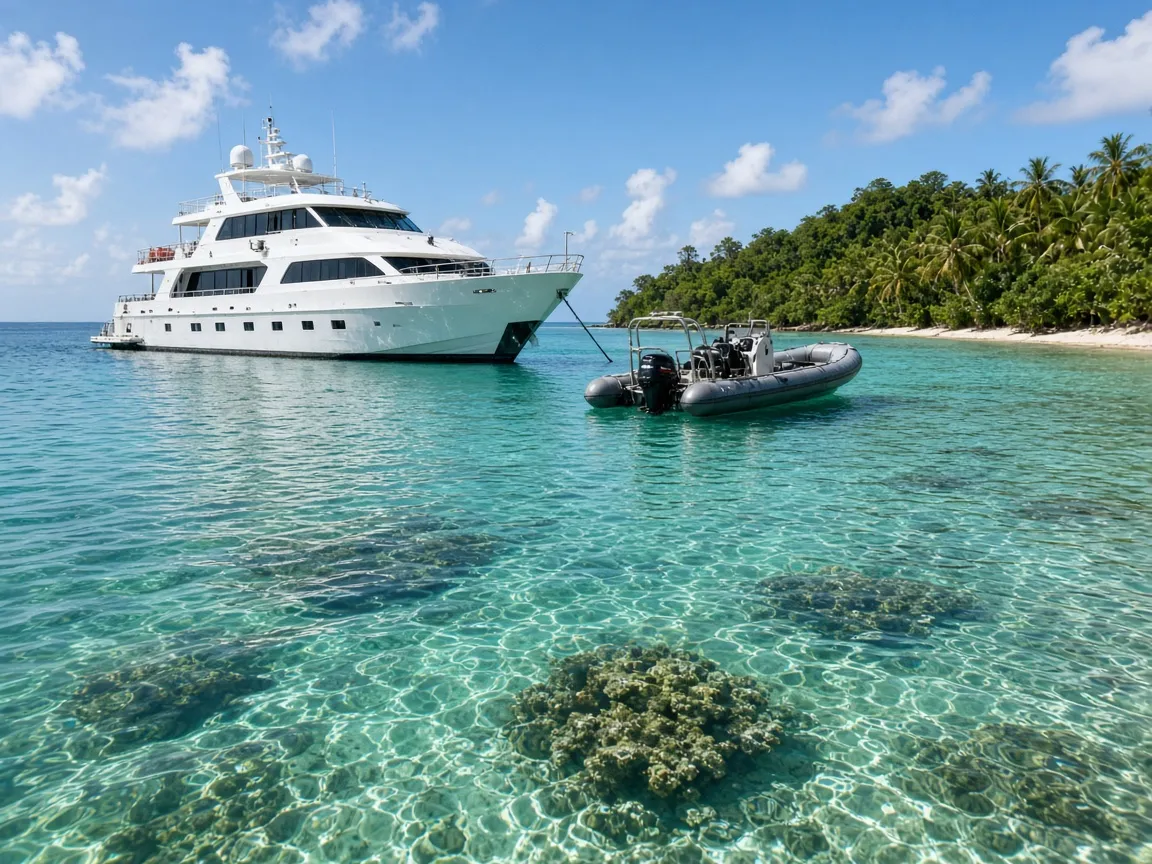
The King Neptune liveaboard runs our Wakatobi round trips, and it is the obvious choice for most people booking the park on its own. It suits:
- Divers who care more about healthy coral and clear water than about big animals.
- Macro photographers, especially anyone hunting pygmy seahorses and nudibranchs on the fans.
- People who have done Komodo and Raja Ampat and want somewhere quieter.
- Couples who want long, easy wall dives rather than hard drift diving every day.
It is the wrong trip for a few readers, and we would rather say so. If you want mantas and sharks on most dives, Komodo or the Banda Sea will give you more of them. If you are new to diving and nervous about depth, the walls are forgiving but they are still walls, and a few sites run with real current. A non-diving partner will find the days long, because the trip is built around four dives a day and the islands have little in the way of tourist infrastructure. And if your time is tight, the flights to Bau-Bau add a travel day at each end that a trip from Bali or Labuan Bajo does not.
Getting to Bau-Bau
Bau-Bau's Betoambari airport (BUW) has no direct flights from Bali or Jakarta. The usual route is an international arrival in Bali or Jakarta, a flight to Makassar in South Sulawesi, and a short hop from Makassar to Bau-Bau; some itineraries run through Kendari instead. In practice that means a full travel day from Bali, and we would not plan it on the morning of boarding. Fly in the day before, stay in town, and use the spare hours to walk the walls of the Buton fortress above the harbour.
Going home works the same way in reverse. The boat is back in Bau-Bau in the morning, the airport is roughly half an hour from the harbour, and an afternoon flight to Makassar is usually feasible, but connections in eastern Indonesia are thin and a missed one can cost a day. A night in Makassar or Bali before a long-haul flight is cheap insurance.
For crossings, the logistics change at one end. Trips from or to Alor use Kalabahi, reached through Kupang. The Banda Sea crossing ends in Ambon, which has direct flights to Jakarta and Makassar. Whichever route you choose, make sure your travel insurance covers diving at the depths you plan and evacuation from a remote area, because Wakatobi is a long way from a recompression chamber.
Key takeaways
- A Wakatobi liveaboard dives the whole national park, all four main islands and the reefs between them, from one boat.
- King Neptune runs eight-night round trips from Bau-Bau in May and September 2028, from USD 6,200 per person shared.
- Neptune One's Alor crossings in August and September 2027 are the value option, at USD 3,750 for nine nights.
- The calm windows are roughly March to May and September to November; July is usually the roughest month at sea.
- Expect clear water, healthy coral and strong macro life rather than mantas and big pelagics.
- Flights reach Bau-Bau through Makassar, so arrive a day early; park, port and environment fees are confirmed at booking.