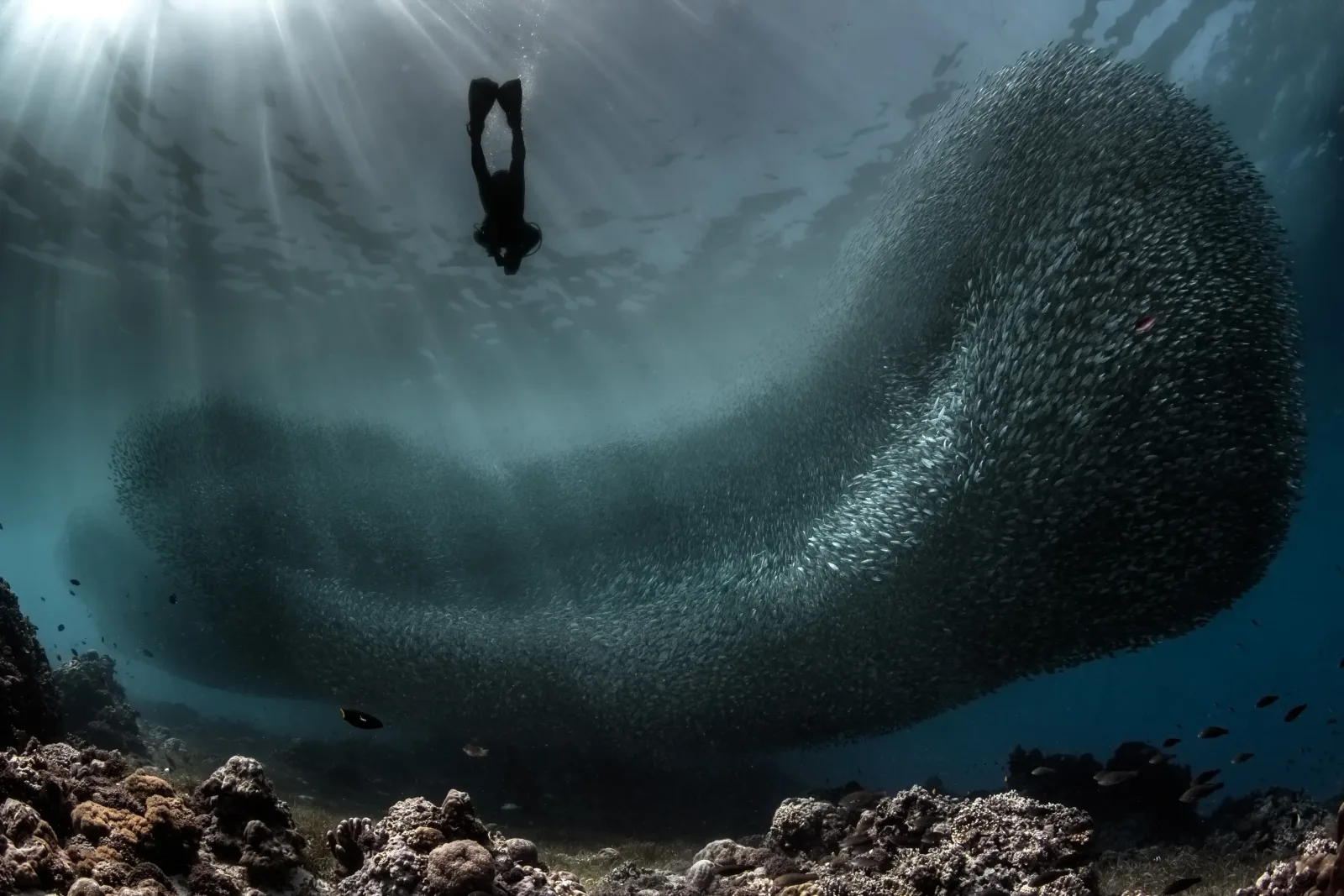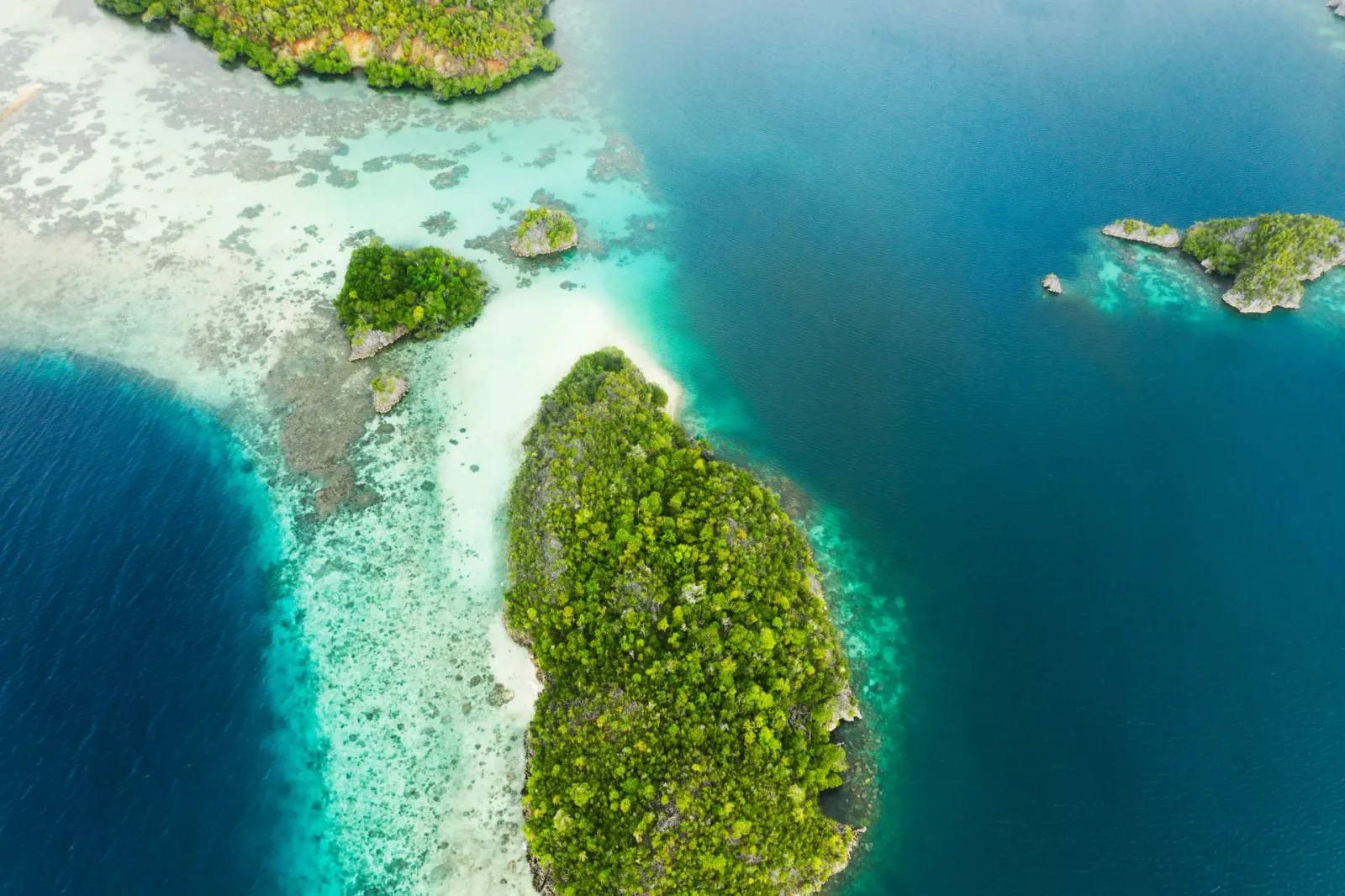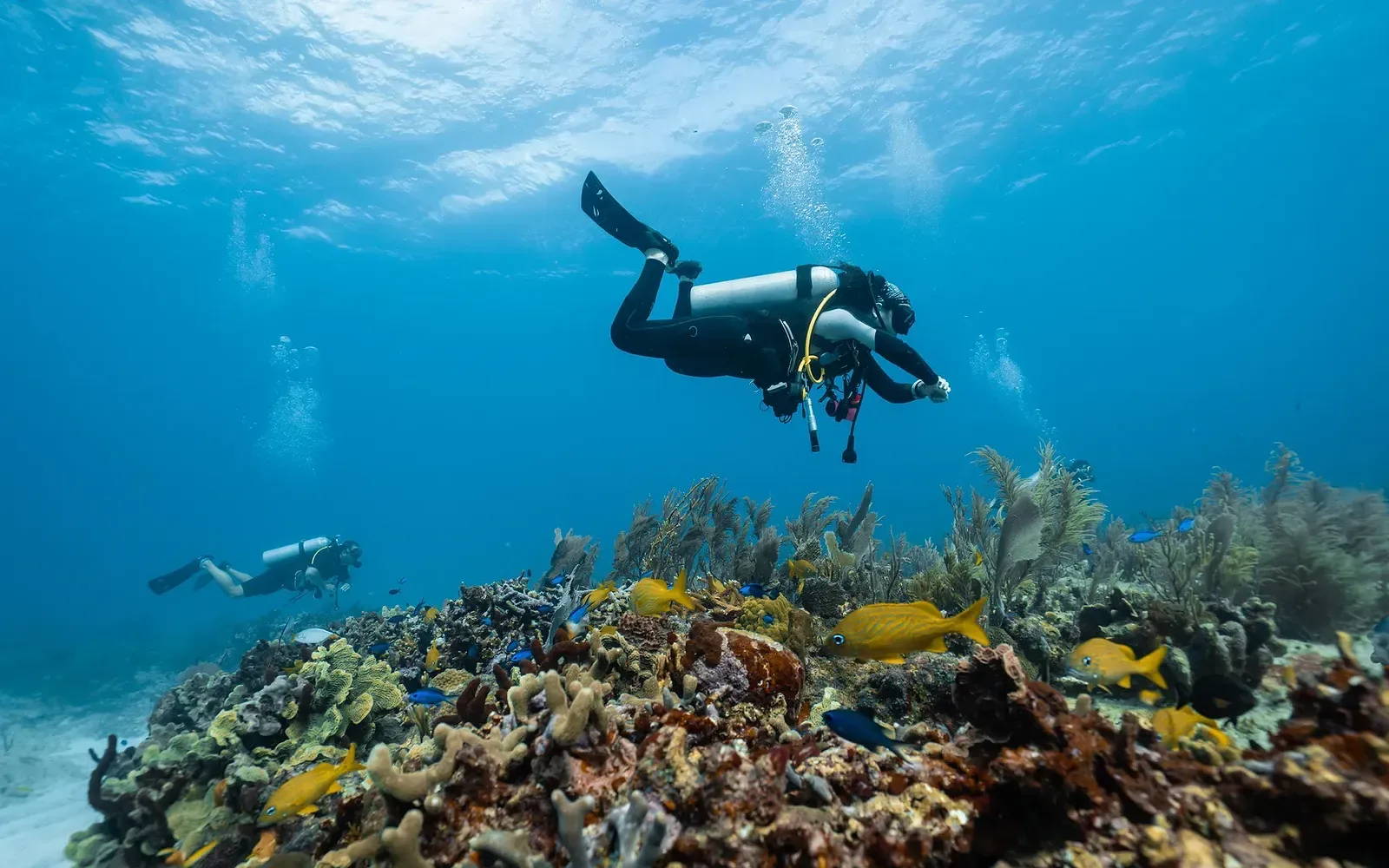
In 2012 an Australian ichthyologist spent 90 minutes underwater at a single reef corner in Raja Ampat and counted 374 species of fish. Not individuals. Species. The record has stood ever since, and nobody has come close to it anywhere else on the planet.
The corner is Cape Kri, at the eastern end of Kri Island in the Dampier Strait, and it is the site most Raja Ampat liveaboard itineraries are quietly built around. It is also badly served by most of what is written about it. Half the guides online put it on the wrong island, most repeat the record without explaining what it measures, and almost none of them tell you the thing that actually decides whether your dive is extraordinary or merely nice, which is the state of the tide when you roll in. This is what the site is, why the fish are there in those numbers, and how to dive it properly.
The record, and what it actually means
The count was made by Dr Gerald Allen, usually known as Gerry, an ichthyologist with more than 12,000 logged dives and co-author of the reef fish identification books that half the dive guides in Asia have on a shelf somewhere. He had dived Cape Kri long before Raja Ampat became fashionable, and on one of those earlier dives he had counted 327 species, which was already remarkable. In 2012 he was asked to go back and quantify the site properly. He surfaced with 374.
His own account of it is worth repeating, because it says something about the site that a number cannot. He described not having to chase a single species for the whole 90 minutes, and being mobbed by fish that had grown so accustomed to divers that they came to him. That is not normal. On most reefs the work of a fish survey is finding things.
Some context for the number
374 species on one dive is hard to feel until you put it beside something. The entire Caribbean Sea holds roughly 1,500 species of fish. Allen found about a quarter of that total on one submerged point in eastern Indonesia, in an hour and a half.
The wider picture is the same shape. Surveys by Conservation International and The Nature Conservancy put Raja Ampat at more than 1,700 species of reef fish and over 550 species of coral, the latter being roughly three quarters of all the hard coral species known to science, packed into an archipelago you could sail across in a couple of days. This is the most biodiverse marine environment ever measured, and Cape Kri is one of its densest single points.
What you will not do
You will not see 374 species. It is worth being blunt about this, because a certain amount of marketing copy implies that a normal diver turns up and swims through the record.
What Allen did was a scientific survey by someone who has spent a career learning to identify small brown fish at a glance, using a methodology he developed himself, on a long dive with no other purpose. A good recreational diver on a normal 60 minute dive might consciously register 40 or 50 species and photograph a dozen. The record is not a target. It is a measure of what the reef contains, and the practical consequence for you is subtler and better: whatever you look at, there is something in the frame you have not seen before, and the reef never resolves into a pattern you have finished reading.
We have had guests dive it four times in a week and come up describing four different dives. That is the honest selling point, and it is a more interesting one than the number.
Why the fish are there
Biodiversity on that scale is not luck, and it is not really about the coral. It is about water, and specifically about a very large quantity of water being forced through a gap.
The Pacific sits marginally higher than the Indian Ocean, and the difference drives the Indonesian Throughflow, the largest movement of seawater on earth. It runs south and west through the Indonesian archipelago more or less permanently, carrying nutrients lifted from deep basins along with the eggs and larvae of everything spawning upstream. It is the supply chain of the Coral Triangle, and the Dampier Strait sits directly in its path.
The strait is about 150 kilometres long, up to 35 kilometres wide in places, and only around 50 metres deep. A shallow channel of that shape does what a narrowing pipe does: the same volume of water has to get through a smaller cross section, so it speeds up. Drop seamounts and rises into the floor of that channel and the flow accelerates again as it deforms around them.
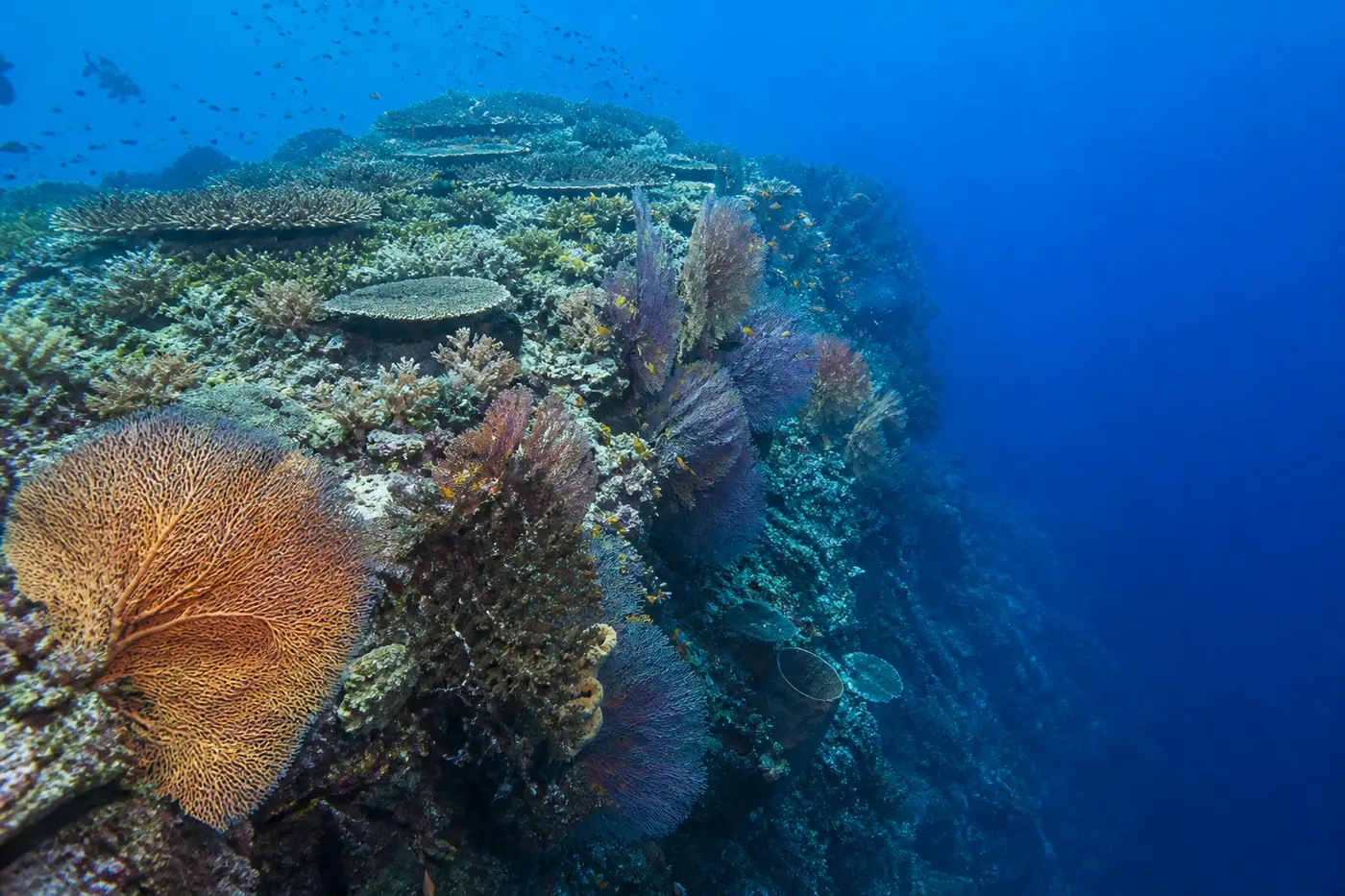
Cape Kri is the point of Kri Island that sticks out into exactly that. The reef runs out from the island as a ridge, shallow enough on top to snorkel over and falling away on its flanks past forty metres into the strait. Nutrient-rich water hits the corner, is pushed up the slope, and delivers a continuous supply of food to anything positioned to intercept it. Small fish gather to feed on what arrives. Larger fish gather to feed on the small fish. It is an unusually efficient arrangement, and it runs twice a day, every day, driven by the tide.
Kri Island, not Mansuar
Worth settling, because a surprising number of published guides get it wrong and it makes planning confusing. Cape Kri is on Kri Island. Mansuar is the separate, larger island lying just across the channel to the south west, and the two are routinely swapped in site descriptions, sometimes within the same article.
The distinction is not pedantry if you are choosing where to stay, since the resorts a few minutes from the site sit on Kri rather than Mansuar. It also helps to know that Blue Magic, the submerged seamount that shares Cape Kri's food supply and much of its cast, lies in the water between the two islands, which is why the pair are so often dived on the same day.
The site at a glance
| Location | Eastern end of Kri Island, Dampier Strait, North Raja Ampat |
|---|---|
| Depth | Reef top around 5 metres, slope and wall past 40 |
| Typical working depth | 15 to 30 metres |
| Visibility | Usually 15 to 30 metres, occasionally more on a clean incoming tide |
| Water temperature | 27 to 30 degrees, 3mm is plenty |
| Current | Anything from slack to well over two knots, tide dependent |
| Level | Advanced with current experience for the running tide, competent Open Water on slack |
| Season | October to April, with the most settled conditions around November and December |
What is actually on it
The headline is schooling fish in quantity: fusiliers in the thousands, big schools of snapper, sweetlips stacked under overhangs, bannerfish, surgeonfish, and the swirling columns of jacks and barracuda that everyone photographs and nobody photographs well. Working the edges of all that are giant trevally, dogtooth tuna and Spanish mackerel, which arrive fast and leave faster.
Sharks are close to a given rather than an event. Blacktips and whitetips on most dives, grey reef sharks deeper on the slope, and wobbegongs lying flat under table corals where people walk their eyes straight past them. Napoleon wrasse and bumphead parrotfish patrol the reef, hawksbill turtles are common, and eagle rays cross the blue often enough to be worth watching for.
And then, if you can persuade yourself to stop staring into open water, there is the macro. Pygmy seahorses on the sea fans, nudibranchs in the current shadows behind coral heads, shrimps and juveniles tucked into staghorn thickets. This is the part of Cape Kri most divers never look at, which is a little absurd on a reef that holds the fish diversity record largely because of the small things.
Diving it: the tide decides everything
Cape Kri on a running tide and Cape Kri on slack water are, for practical purposes, two different dive sites that happen to share a map reference. One is a wall of predatory activity you watch from a fixed position. The other is a gentle drift over a pretty reef where you notice the nudibranchs. Both are worth doing. Only one of them is what the site is famous for, and the difference between them is not skill or luck but timing.
This is why every competent operator in the Dampier Strait plans the day around the tide table rather than the clock, and why a guide will happily move breakfast by an hour. Slack water, the pause either side of the turn, is when the demanding sites open up to less experienced groups. The middle of a running tide is when they perform.
Why dawn on a rising tide is the one
An incoming tide pulls cleaner, cooler, nutrient-heavy water in from the deeper basins to the north, which usually means the best visibility and the heaviest fish activity of the day. Layer dawn on top of that and you get something better again.
At first light the reef is emptying out. Fish that spent the night wedged into the structure come out hungry, the incoming tide arrives with breakfast, and over the following hour the whole thing escalates. Schools tighten and become agitated, predators start making runs, and by the end of the dive the corner is genuinely chaotic. Divers who have done both will tell you a mid-morning dive on the same site in the same week is a different and much quieter animal.
Moon phases, and the days to avoid
Tidal range tracks the moon, so the current at Cape Kri does too. Around the new and full moon the springs run hard, and the site can move from exciting to genuinely unmanageable. Around the quarter moons the neaps are softer, and you generally get the best compromise: enough flow to switch the reef on, not so much that you spend the dive hanging on and seeing nothing.
If you are travelling specifically for this and have any flexibility in your dates, aim your week at the quarter moons rather than the full. Photographers in particular should. A ferocious spring tide produces spectacular fish behaviour and almost no usable images, because you cannot hold position, frame, and keep the camera steady while being pushed sideways.
What you need to be able to do
The honest answer is not a certification level, it is a set of habits. But since people book on certifications, here is both.
- Advanced Open Water with roughly 30 dives is the sensible minimum for the running-tide version, and current experience matters far more than the card.
- Competent Open Water divers dive it regularly on slack water, with a guide who is watching them. Buoyancy is the gate, not the certification.
- A reef hook is standard kit here, hooked into dead substrate or bare rock and never into coral. It lets you stop and watch instead of finning flat out and breathing your tank down in twenty minutes.
- A decent DSMB and the ability to deploy it without drama, because a surface current can move you a long way from the boat quickly.
- Nitrox is worth having, given repeated dives in the 15 to 30 metre band across a week.
- Negative entries are common: you go in with no air in the BCD and get down fast before the current takes the group off the site.
The other habit, and the one that separates people who love this site from people who find it stressful, is staying low and close to the structure. Current is always weaker in the lee of the reef than out in open water. Divers who swim up and out into the blue to get a better view of the schooling fish immediately discover how strong the flow is, and spend the rest of the dive working. Divers who stay tucked in behind the contour drift along comfortably and watch the same thing.
Use the guides
Cape Kri rewards local knowledge more than almost any site we visit. The Papuan guides in the Dampier Strait grew up in villages whose entire way of life depends on reading how water moves through these channels, and many of them can tell you what the reef will be doing before anyone gets wet. They know which side of the corner to start on for a given tide, where the fish will stack, and when to move.
The practical version of that advice: ask what the tide is doing at the briefing, say honestly what you are comfortable with, and then follow the guide rather than your own idea of where the good bit is.
Getting there, seasons and what it costs in 2026
Cape Kri sits in North Raja Ampat, which means Sorong first. Most people fly into Sorong via Jakarta, Makassar or Manado, and from there you either board a liveaboard in the harbour or take the public ferry across to Waisai, which takes roughly two to two and a half hours, and continue to a resort or homestay by small boat.
Liveaboard or land
Both work, and the choice comes down to one thing at this particular site: whether you can be on the corner at the hour the tide is right.
Kri Island itself has resorts that are minutes from the site, which is about as good as land-based access gets anywhere. Their history is also, more or less, the history of diving in Raja Ampat. A Dutchman named Max Ammer came here in 1989 looking for the wreckage of Second World War aircraft, hauled in scuba gear and a compressor to search for them underwater, and dived largely alone from an outrigger canoe while villagers on the surface tracked his bubbles and picked him up. What he found instead of aeroplanes was the richest reef system anyone had measured. He set up a beach camp on the north coast of Kri that became a resort, then a second one in the bay by the cape, and trained Papuan villagers as dive guides on the reasonable theory that people who had spent their lives reading these currents from the surface would be very good at it once they could breathe underwater. He was right.
A liveaboard buys you something different. The boat moves overnight and is simply sitting on the site when the guide wants it, so a dawn dive on a rising tide costs you nothing more than an alarm, rather than a forty minute speedboat run in the dark. It also means Cape Kri is one stop among Blue Magic, Sardine Reef, Chicken Reef, Manta Sandy, Mioskon and the jetty dives, without a transfer between each.
Season
October to April is the window most operators work, and it is when the strait is generally calmest and visibility best, with November and December often giving the most predictable currents. Manta activity in the wider Dampier Strait peaks from around December to February. The middle of the year brings more wind and rougher surface conditions through this stretch of water, and many boats reposition elsewhere, so the practical question is usually not whether Cape Kri is diveable in August but whether anything you would want to be on is running.
Park fees
Raja Ampat charges an entry fee, and it went up in January 2026. A foreign visitor now pays IDR 1,700,000, roughly 105 US dollars, made up of the marine park tag plus the regency's visitor levy. The tag is valid for a calendar year rather than per trip, so a second visit in the same year does not pay twice.
Most liveaboards handle this on your behalf and either include it in the fare or collect it on board, but the practice genuinely varies between operators, so ask what your price already covers rather than assuming. Bring the fee in cash if you are travelling independently.
Is it worth building a trip around?
Cape Kri is not a site you tick. Divers who log it once, on whatever tide happened to be running the morning their boat was there, quite often come away slightly puzzled by the reputation, and we understand why. On slack water in flat light it is a nice reef with a lot of fish on it, and there are nice reefs with a lot of fish on them all over the region.
The site earns its name when you dive it repeatedly and start to read it. The same corner on a rising tide at dawn, on a slack afternoon, and mid-flood on a neap tide gives you three genuinely different dives, and somewhere in that sequence you stop trying to look at everything at once and start watching how the reef works. That is also the point at which the fish diversity record stops being a marketing number and starts being something you can feel, because you notice how much is in every square metre once you slow down enough to look.
How it compares with the sites next door
| Site | Current | Best for | Level |
|---|---|---|---|
| Cape Kri | Slack to very strong | Fish density, schooling action, the record | Advanced on a run, Open Water on slack |
| Blue Magic | Moderate to strong | Barracuda, wobbegongs, seasonal oceanic mantas | Advanced |
| Sardine Reef | Strong on a run, flat on slack | Bait ball density without the technical demand | Intermediate |
| Chicken Reef | Strong on a run | Schooling fish, sharks on the edges | Intermediate to advanced |
| Manta Sandy | Usually mild | Reef manta cleaning station | All levels |
| Arborek and Yenbuba jetties | Mild | Easy diving, macro, superb snorkelling | All levels |
A well-built week in the Dampier Strait uses that spread deliberately rather than chasing the famous name every day. The demanding corners go on the tides that suit them, the jetties and the manta station fill the slack windows, and nobody spends four days being quietly intimidated.
So build in more than one dive on it. Ask your guide to put you there on the best tide of the week rather than the most convenient one. Bring a hook, stay low, and accept that the blue water is going to be busier than anything you can point a camera at. Then spend the rest of the week on the sites around it, because the reason to come to this part of the world is not one corner of one island, it is that diving in Raja Ampat puts a dozen sites of that quality within an hour of each other.