There are no jellyfish in Waba, one of the marine lakes of Misool, this season. Our crew confirmed it on our recent southern trips in 2026, and on the same trips they reported noticeably fewer jellyfish at Lenmakana, the better-known lake that most photographs of "Jellyfish Lake" in Raja Ampat actually show. Nobody can yet say why Waba has emptied, or for how long. We are not going to guess.
What we can tell you is what it changes. Waba is off our itineraries for now, and the jellyfish lake stop at Lenmakana is decided trip by trip rather than promised in advance. On a southern Raja Ampat liveaboard the time that used to go to the lake now goes to an extra dive, which most divers on a Misool trip will happily take. If the lake swim was the reason you booked, though, you deserve to hear this from us before you fly to Sorong, not from a guide at the water's edge.
Plenty of pages that rank for this subject still describe a lake packed with golden jellyfish, including our own guide to Lenmakana jellyfish lake, which we have now updated. Below is the current picture: which lake is which, what researchers have documented in Misool's lakes before, whether the jellyfish can come back, and how a southern Raja Ampat trip runs now.
Are there still jellyfish in Raja Ampat's jellyfish lakes?
Raja Ampat's jellyfish lakes are enclosed marine lakes in Misool where stingless jellyfish live; in 2026 Waba has none, and Lenmakana holds noticeably fewer than before.
- Waba: no jellyfish seen this season
- Lenmakana: smaller population, still present
- Cause: not yet known
- Our trips: Waba dropped, Lenmakana decided per trip
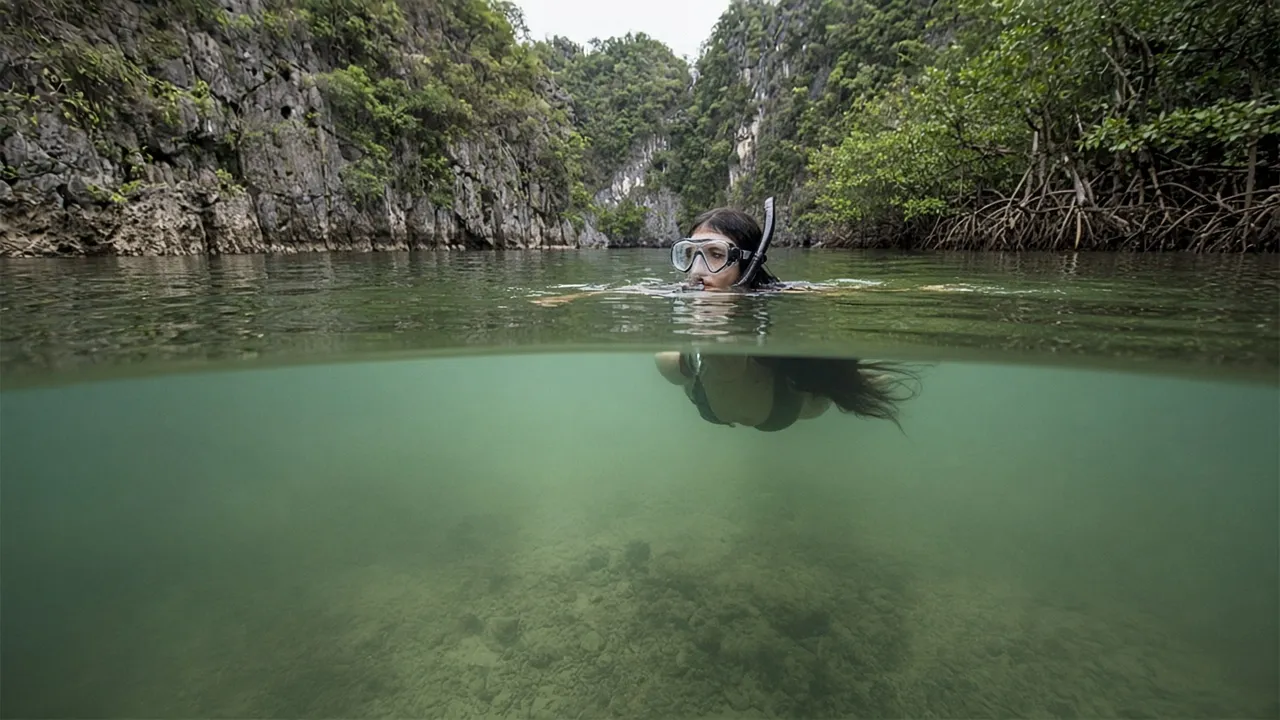
They sit among Misool's karst islands, a short climb or walk from the sea, and have been a snorkelling side trip between dives.
You reach Misool's lakes on:
- Southern Raja Ampat liveaboard trips from Sorong
- Itineraries built around scuba diving in Raja Ampat's far south
- Private yacht charters in Raja Ampat
In short: one lake is empty, one is thinning, and no trip can promise a jellyfish swim right now.
Waba vs Lenmakana: which jellyfish lake is which?
Waba
Waba is a marine lake in East Misool, near the village of Usaha Jaya, visited as a jellyfish snorkelling stop by local tours and some liveaboards, with an entry fee paid on site. It is the lake our crew found with no jellyfish this season.
Lenmakana
Lenmakana is the marine lake in southern Misool that the Raja Ampat Geopark lists as its "Jellyfish Lake" geosite, reached by a short, steep climb over a karst ridge with ladders. It still holds jellyfish, but fewer than in previous seasons.
Key distinction:
- Waba is empty this season; Lenmakana is reduced but not empty.
- Most online photos and reviews of "Raja Ampat jellyfish lake" show Lenmakana, so a report about one lake is easily read as news about the other.
What our crew has seen at Waba this season
The plain report is short. On our recent 2026 trips through East Misool, the crew found Waba without jellyfish. Not fewer. None that anyone could find at the surface, where the golden jellyfish normally gather in the light.
That is the whole of what we know first-hand, and it is worth being clear about the limits. We have not measured the lake's temperature or salinity, we do not know exactly when the jellyfish went, and we cannot tell you whether the lake is officially closed or simply quiet. Visitor reviews from early 2026 still describe swimming with jellyfish at Waba and paying an entry ticket of around Rp 100,000, so whatever happened, it appears to have happened recently. That fits a pattern researchers have described elsewhere in Misool, where lakes have emptied within a single season.
We have also not seen any official statement or scientific report about Waba this year. If one appears, we will update this article with it. Until then, the honest description is the one at the top of this page: the lake is there, the water is there, and the jellyfish are not.
One practical consequence follows directly. A stop that produces nothing for guests is not a stop worth the time on a trip where every hour of daylight competes with world-class reefs, so Waba has come off our itineraries. If it recovers, it can go back on.
Lenmakana: fewer jellyfish, decided trip by trip
Lenmakana is the lake people usually mean when they say "Jellyfish Lake Raja Ampat". It is small, about 1.25 hectares with a maximum depth of a little over 18 metres according to the published survey, and it sits roughly 56 metres from the sea, sealed off by limestone but connected through cracks in the rock, so its level rises and falls with the tide an hour or two behind the open water. Researchers have recorded golden jellyfish (Mastigias papua) and moon jellyfish (Aurelia) there.
The swarm has not gone, but it is thinner than it was. Our crew's recent reports describe noticeably fewer jellyfish than in earlier seasons, and that is enough for us to stop treating the swim as a fixed part of the programme. It is not, at the moment, the dense golden cloud that the photographs promise.
So Lenmakana is now a judgement call made on each trip. The cruise director looks at the most recent reports from our own boats, the weather and the dive plan for the day, and decides whether the lake is worth the morning. Sometimes it will be. Sometimes the extra dive will win. Guests who have the lake on their personal wish list should say so when they book, and again on board, because that is part of the decision, but nobody on our side will promise a swim we cannot guarantee.
The visiting rules have not changed and, if anything, matter more now. No sunscreen or insect repellent on the skin, no fins, no touching or lifting the jellyfish, no diving, slow movements at the surface only. A smaller population has less margin for careless visitors than a large one.
How a southern Raja Ampat liveaboard trip runs now
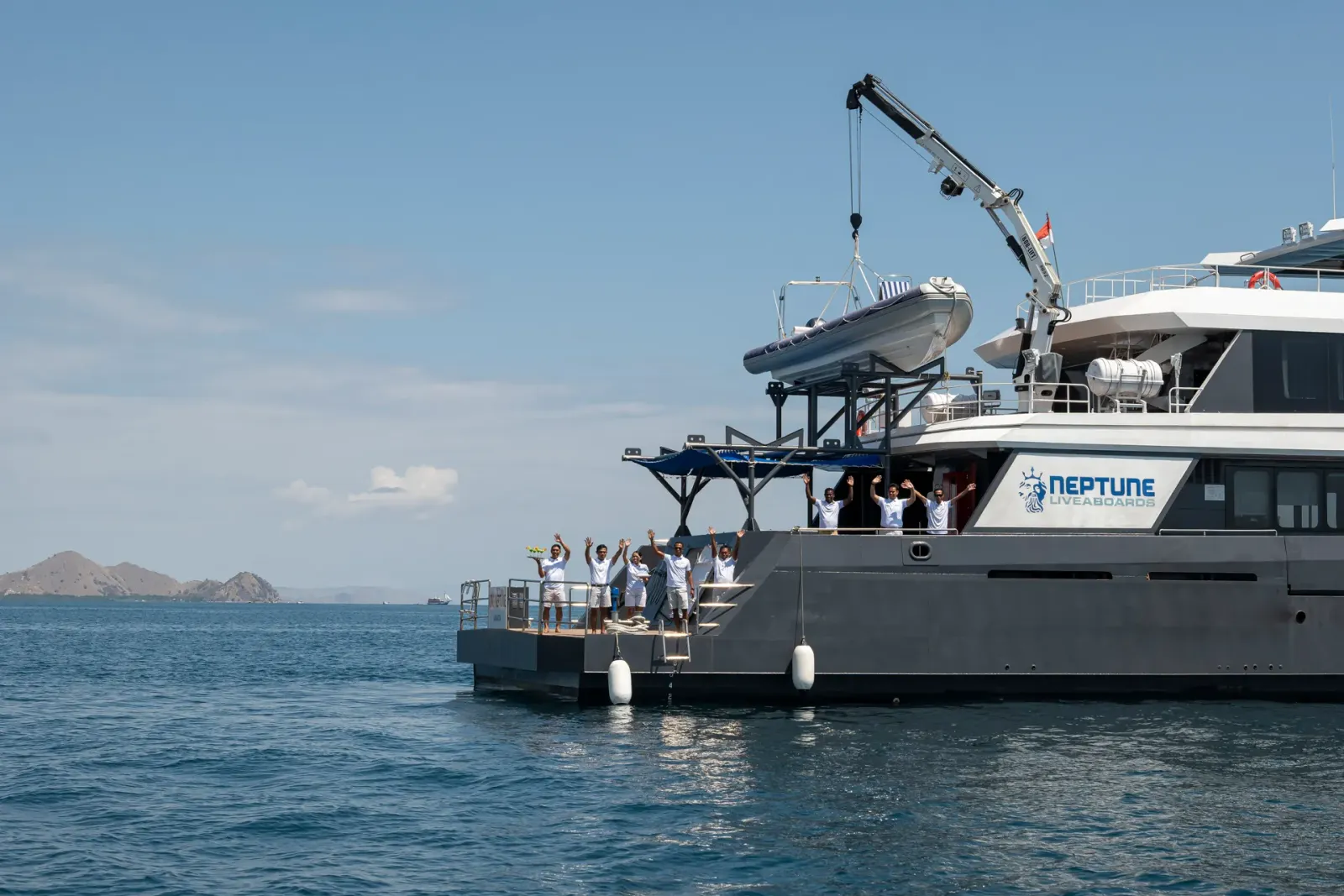
Very little about a Misool trip depended on the jellyfish lake, and the shape of the week is the same as it was. What has changed is one half-day and how it gets decided. This is how it works on our King Neptune and Neptune One departures through the southern season.
1. Boarding in Sorong and the run south
Trips start and finish in Sorong. The first afternoon is usually a check dive, so the guides can see everyone's buoyancy and weighting, and then the boat runs down to Misool, often overnight. Misool is a long way from Sorong, which is why its season is shorter than the north's: our southern departures run from November to April, the months when the crossing is comfortable.
2. The Misool dive days
Most of the trip is spent diving the southern and eastern reefs: the Fiabacet pinnacles, the Boo group with Boo Window and Tank Rock, and the Daram area with the manta cleaning station at Magic Mountain. Up to four guided dives a day, planned around the tide. None of that has changed.
3. The topside half-day
This is the part that is different. Where a jellyfish lake stop used to sit in the plan, the default is now an extra dive. Waba is not on the programme at all. Lenmakana is only added if the latest reports from our own boats are good enough to justify it, and the cruise director makes that call on the trip, not months ahead in a brochure.
4. The central reefs on the way back
South and Central itineraries then work north through the central reefs and the Dampier Strait, with its current-swept sites and manta cleaning stations, before the final night near Sorong.
5. The last morning
The last day is dive-free or ends with an early dive, so nobody flies within 24 hours of their final dive. Flights out of Sorong are booked accordingly.
Worked example: seven nights in January
Take Neptune One's Raja Ampat South and Central departure from 20 to 27 January 2027, seven nights from Sorong and back. January sits well inside the Misool window, and the seas on the crossing are usually settled. Our Raja Ampat liveaboard cost guide lists 2027 fares for a seven-night Neptune One trip at USD 3,650, 3,950 and 4,250 per person for the three cabin categories, with roughly 19 dives across the week.
On top of the fare, plan for environment, park and port fees of roughly USD 180 to 400 per guest and a fuel surcharge of about USD 150 to 200. Dropping Waba does not change the fare. What it changes is the dive count: a trip that would once have spent a morning on a lake swim may now log one more dive, although the exact total still depends on weather, currents and how the week runs.
If you are travelling with a snorkeller or a non-diving partner, the lake mattered more to them than to you. Tell us when you enquire, and we will tell you honestly what the topside options look like on that departure.
Why jellyfish lakes lose their jellyfish
We do not know what happened at Waba. What we do know is that marine lakes lose their jellyfish more often than the travel brochures suggest, and that the causes researchers have documented, in Misool and elsewhere, fall into a short list. Any of them could be relevant at Waba. None has been shown to be.
The golden jellyfish in these lakes are not ordinary jellyfish. They carry symbiotic algae, zooxanthellae, in their tissues, much as reef-building corals do, and they spend the day migrating across the lake to keep those algae in the sun. That partnership makes them sensitive to heat in the same way corals are. When the water gets too warm, the algae suffer, and the jellyfish go with them.
Warming is the best-documented cause in Misool itself. A study of Lenmakana by Gandi Purba of the University of Papua, published in 2020, recorded golden jellyfish disappearing from the lake surface from around mid-September 2017 and again being absent on a visit in January 2019, after lake temperatures rose about 2.5 degrees above the days before. The lake normally sits around 28.9 to 29.3 degrees; the study estimated that the jellyfish run into trouble somewhere around 31.4 degrees, a margin of only two degrees. In the 2019 to 2020 northwest monsoon season, when the rains arrived early and kept the water cooler, the jellyfish were present again. You can read the Lenmakana temperature study in full (in Indonesian).
A small enclosed basin heats faster than the open sea. That is the uncomfortable part. A lake of a hectare or so, sheltered from wind by limestone walls, has nowhere to shed heat on a still, sunny week, and a dry season that starts early or a wet season that arrives late can push it over the edge without any headline El Niño year.
El Niño does the same thing on a larger scale. A 2018 survey of three Misool lakes, Lenmakana, Karawapop and Keramat, found no jellyfish at the surface of Karawapop during fieldwork in October 2015, which the authors linked to the El Niño conditions of that year, and recorded golden jellyfish at Keramat turning white in May 2016, a sign of the algae being lost. The Misool jellyfish lakes survey is the baseline most later work refers to. Palau's famous Jellyfish Lake went through the same cycle on a bigger stage, losing almost its entire golden jellyfish population in the 2016 drought before recovering over the following years.
Introduced fish are the third documented cause, and the most avoidable. In 2023 researchers from IPB University working with communities in Misool reported that jellyfish numbers at Tip Kapas lake, owned by a clan of Tomolol village, had fallen after large predatory fish, giant trevally and barracuda, were put into the lake in the hope of attracting visitors. The fish ate the jellyfish. The IPB University report on the Misool marine lakes describes the problem and the community work since.
And then there are visitors. Sunscreen is the cause most often named, and with reason: when the stingless jellyfish of Kakaban's jellyfish lake in East Kalimantan collapsed at the end of 2023, the laboratory work that followed singled out chemical contamination, sunscreen residue in particular, as a driver. A lake has no outflow to dilute what swimmers bring in. Fins and careless hands do the rest, tearing tissue that is about as strong as wet paper.
Which of these, if any, explains Waba is a question for the scientists and the lake's owners. A heat event would fit the speed. So would a predator. We would rather leave the question open than add one more confident and unfounded claim to the internet.
Misool's jellyfish lakes at a glance
Misool has dozens of marine lakes, and only a handful have held jellyfish in any number. The table below sticks to what has actually been reported. Where we have no first-hand information, it says so rather than filling the gap.
| Lake | Where | What has been documented | Status in 2026 |
|---|---|---|---|
| Waba | East Misool, near Usaha Jaya | Jellyfish snorkelling stop with an entry fee | No jellyfish seen by our crew this season |
| Lenmakana | Southern Misool | Golden and moon jellyfish; absences in 2017 and 2019 linked to warming | Present, noticeably fewer, per our crew |
| Karawapop | Misool | No jellyfish at the surface in October 2015, linked to El Niño | Not visited by us; no current report |
| Keramat | Misool | Three species; golden jellyfish turned white in May 2016 | Not visited by us; no current report |
| Tip Kapas | Near Tomolol village | Decline after giant trevally and barracuda were introduced | Reported in decline since at least 2023 |
Two things stand out. First, emptying is not new in Misool; jellyfish have disappeared from three of these five lakes at some point since 2015. Second, at Lenmakana the jellyfish came back after each recorded absence. That does not guarantee the same at Waba, but it is the most useful piece of evidence anyone has.
Can the jellyfish come back?
Sometimes, yes. The jellyfish do not simply vanish as adults; golden jellyfish have a life stage as tiny polyps attached to the lake bed and the mangrove roots, and when conditions improve those polyps can bud off new jellyfish and rebuild a population. That is how Lenmakana recovered after its warm-season absences, and how Palau's lake came back after 2016, over a period of a couple of years rather than weeks.
Whether it happens depends on the cause. A heat event passes, and if the polyps survive it the lake can refill once the water cools. An introduced predator does not pass; a lake stocked with trevally stays a lake full of trevally until someone removes them. Chemical contamination sits somewhere in between, depending on how long it lingers in water that barely exchanges with the sea.
So the honest forecast for Waba is that nobody knows yet. If the lake recovers, we will hear about it from our own crew on the next southern trips, and we will put it back on the itinerary and update this page. We would rather wait a season and be right than send guests over the hill to an empty lake.
For Lenmakana the situation is better and still worth watching. A thinner population is not an empty one. It is, in a small sealed basin, a reason for more care rather than less, and a reason to keep group sizes small and the visits short.
Where you can still swim with stingless jellyfish
The list is shorter than it was. Lenmakana remains the most realistic place in Indonesia to swim among stingless jellyfish, with the caveats above: smaller numbers, no guarantee, and a decision made on the day.
Kakaban, in the Derawan islands of East Kalimantan, is the lake most people think of next, and the news there is mixed. The island reopened in February 2025 after its own collapse and closure, and monitoring since has found the jellyfish recovering, but swimming in the lake is still banned. You can walk the boardwalk and look; you cannot get in. Our guide to Kakaban and Derawan covers the current rules.
Palau's Jellyfish Lake, outside Indonesia, has reopened to snorkellers after its own recovery, under strict rules. It is a separate trip altogether.
The common thread in all three is that the lakes that still offer a swim are the ones where access is controlled and the rules are enforced. That is not a coincidence, and it is the strongest argument for following every rule at Lenmakana to the letter.
What Misool still offers above and below the water
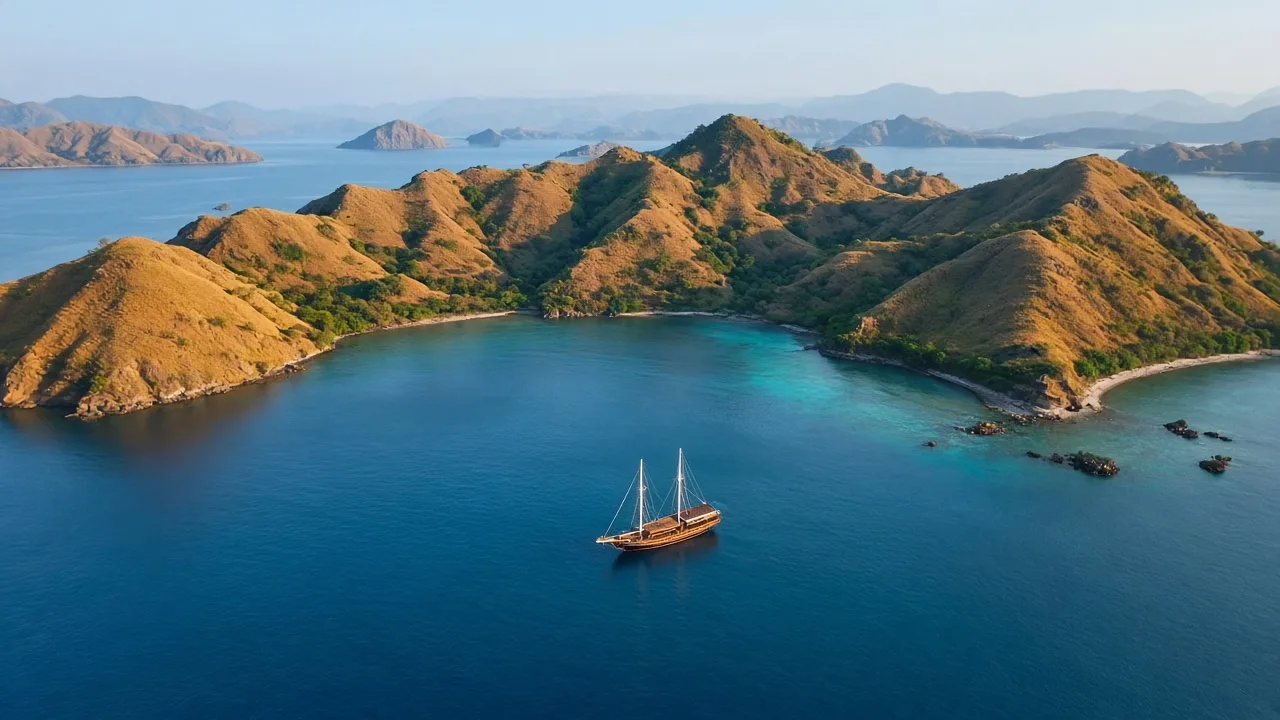
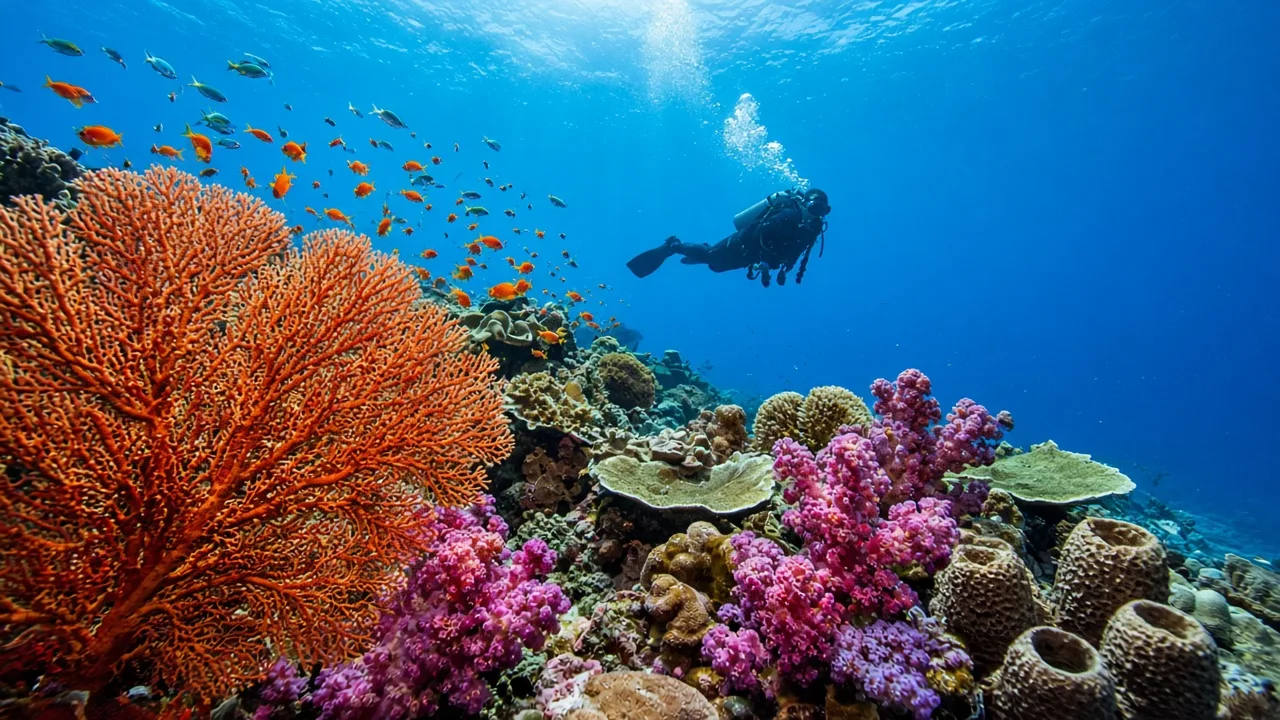
Losing a lake swim takes away very little from Misool, because the lakes were never what made it famous. The reefs were. The southern quarter of Raja Ampat has some of the richest soft coral walls in the world, pinnacles that drop into deep water, and manta cleaning stations, and our Misool diving guide goes through the sites one by one.
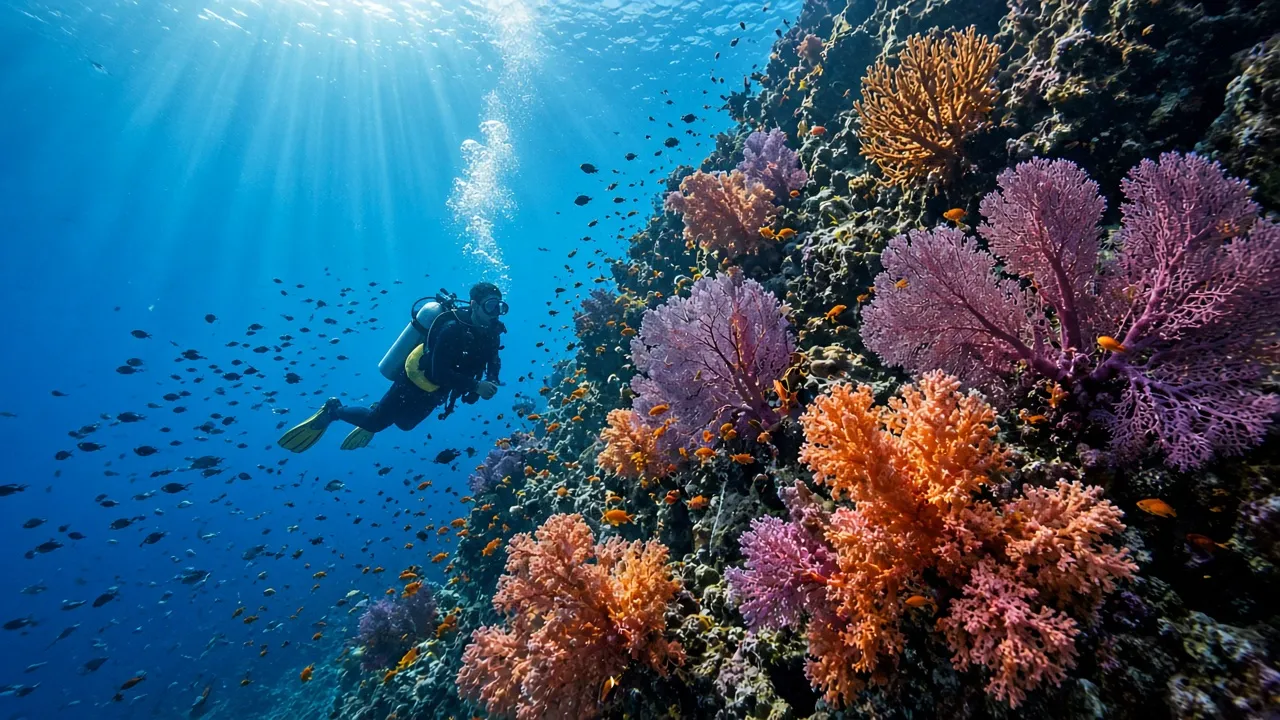
That is where the extra time goes. In practice the extra dive is planned around the tide and wherever the boat is anchored that day, so it might be a second look at a site that was too busy or too fast the first time, or a site the group has not dived yet. For most divers on a Misool trip, one more dive on these reefs is a better use of a morning than a lake swim was, even in the lake's best years.
The landscape has not gone anywhere either. The karst islands, the lagoons and the ancient rock paintings on the cliffs are all still there, seen from the tender between dives, and on calm evenings the views across the islands are as good as anything in the archipelago. If you are coming mainly for those, the time of year matters more than the lakes, and our guide to the best time to visit Raja Ampat explains why the southern season runs from November to April.
Snorkellers and non-divers lose the most from this change, and it is fair to say so. The lake swim was one of the few activities in Misool designed around them rather than around divers. They still get shallow reef snorkelling from the tender, often over coral as good as many dive sites elsewhere, but a non-diving partner choosing between regions should weigh this. Our article on liveaboards for non-divers and snorkellers compares the options.
How to choose a southern Raja Ampat trip now
For most people the news changes nothing about whether to go south. It changes what to expect, and for a few it changes the decision entirely.
If you are a diver
Book Misool for the reefs, as you always should have. The southern and eastern sites are the reason the region has its reputation, the lake was a half-day side trip, and the replacement is another dive on those same reefs. Choose your dates inside the November to April window and the trip length that gives you enough days in the south: seven nights works, eight to ten gives you more room.
If the jellyfish swim was the reason you were going
Then wait, or go knowing it is a maybe. No operator can honestly promise a jellyfish swim in Misool at the moment, and any listing that still does is working from old information. If you go anyway, tell us at booking that the lake matters to you, check the latest situation with us shortly before departure, and treat a good Lenmakana morning as a bonus rather than the point.
If you are travelling with a non-diver
Ask before you book what the non-diving days look like on your specific departure. A southern itinerary still offers snorkelling, scenery and time on deck, but with the lake uncertain the programme is more dive-centred than it was, and some non-divers will be happier on a route with more land and beach time.
If you are choosing between north and south
The lakes were one of the few reasons to prefer the south for topside time. Without them, the comparison comes down to diving style and season: the south for soft coral, pinnacles and remoteness from November to April, the north and centre for current, mantas and a longer season. Our North and South itineraries cover both on one trip.
Who a southern Raja Ampat trip is for, and who it is not for
Both of our Raja Ampat boats run southern itineraries through the Misool season, and neither now includes Waba.
- King Neptune, 46 metres and 20 guests, runs Raja Ampat South and Central and North and South itineraries from November to March, as well as one-way crossings linking Raja Ampat with Triton Bay, Halmahera and the Banda Sea.
- Neptune One, 39 metres and 16 guests, alternates South and Central with North and Central seven-night loops from Sorong through the season, and from February 2028 runs a dedicated "Best of Raja Ampat-Misool" itinerary.
A southern trip suits divers who want the richest soft coral in Raja Ampat, small numbers of boats and remote anchorages, who are comfortable with some current on the pinnacles and who can travel between November and April. It suits photographers, especially wide-angle shooters, and repeat Raja Ampat visitors who have already dived the north.
It is not the right trip, right now, for anyone whose main reason for going is to swim with jellyfish. It is also a weaker choice for a non-diving partner than it used to be, and outside the November to April window it is not a choice at all, because the southeast winds make the crossing to Misool uncomfortable and our boats do not schedule it. For a private group that wants to build the route around particular sites or interests, a charter gives more control than a scheduled cabin trip.
Key takeaways
- Misool's stingless jellyfish lakes are not reliable in 2026: Waba has no jellyfish this season and Lenmakana's population is noticeably smaller.
- The cause at Waba is unknown; warming, El Niño and introduced predators have all emptied Misool lakes before.
- Waba is off our itineraries, and the Lenmakana stop is decided on each trip.
- The time goes to an extra dive, and the fare is unchanged.
- Lenmakana's jellyfish returned after earlier absences, so recovery is possible but not guaranteed.
- Book southern Raja Ampat for the reefs, from November to April, and treat any lake swim as a bonus.