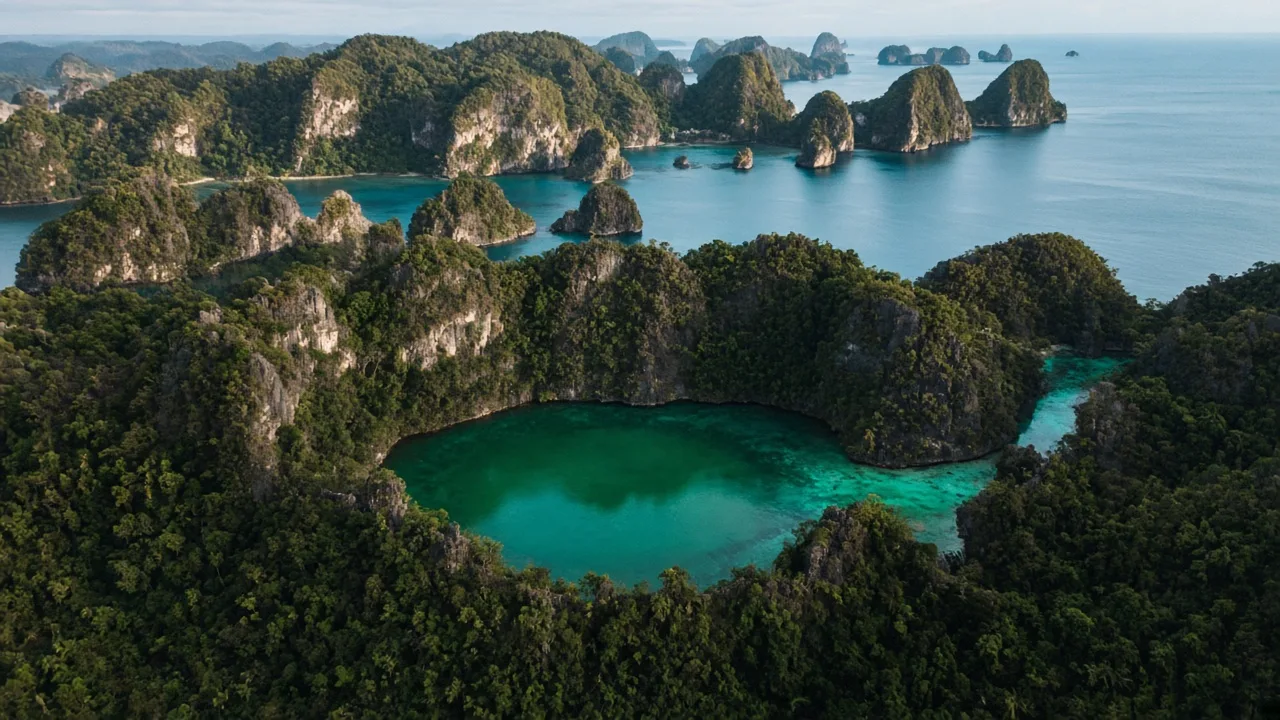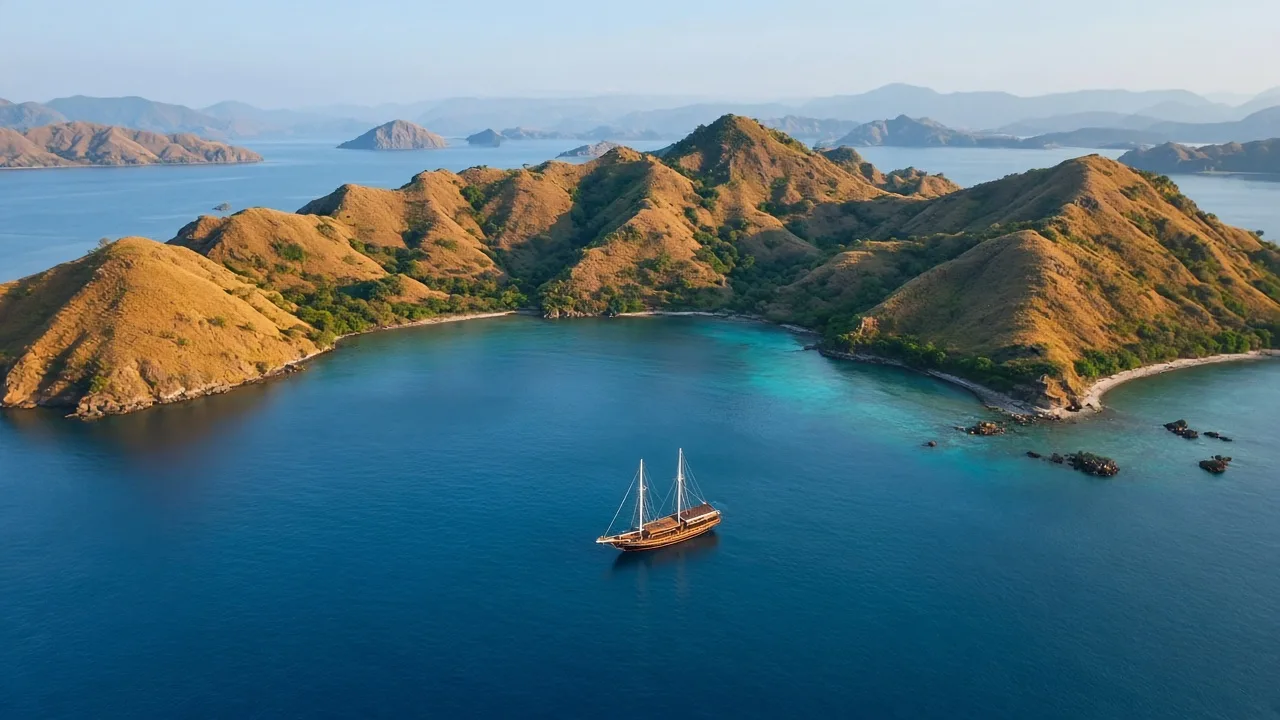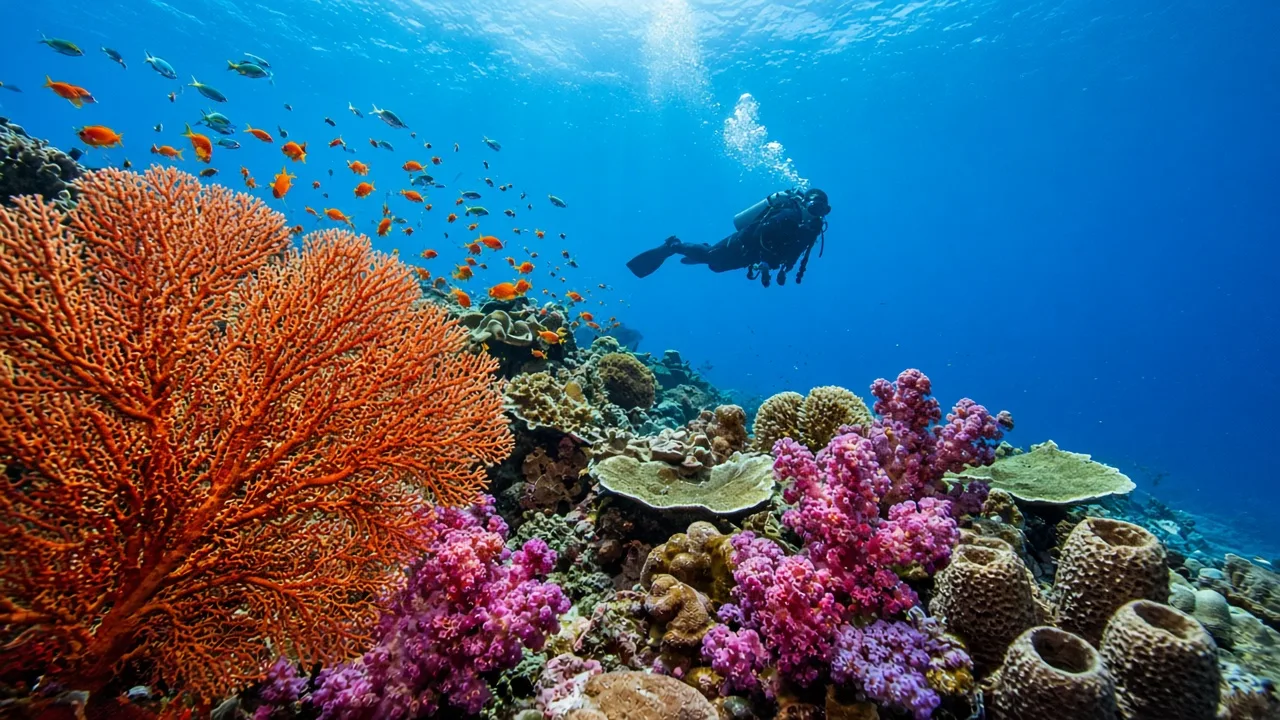
Indonesian liveaboards have a marketing problem with non-divers: the boats are sold almost exclusively in dive media, the photos are 90% underwater, and the booking process makes it look like the only way to be on the boat is to be a certified diver. The reality is different. On a typical seven-night Komodo or Raja Ampat liveaboard, between 10 and 25 per cent of the guests on board are not full divers. Some are snorkelers. Some are partners of divers who do one or two dives a day and snorkel the rest. Some are photographers without scuba certification. Some are kids. Some are recovering from a flight ear or sinus infection and have decided to do the trip surface-only.
This guide is the operator's-side answer to what an Indonesian liveaboard actually looks like for a non-diver. We cover which destinations work and which absolutely do not, what snorkelers see at the surface in Indonesia (a great deal more than they would at most other Asian reefs), how a mixed couple actually divides a dive day, what the snorkeler-rate pricing looks like, what equipment to bring, and the eight or nine questions you should ask any operator before booking. Komodo is the strongest itinerary in Indonesia for non-divers, and our Komodo liveaboard trips are built around the assumption that some guests on every departure will be on the surface for at least part of the week, so most of what you read here applies to any well-run Komodo operation, not just ours.
Who books an Indonesian liveaboard without being a full-time diver
If you split the non-diver guests on our boats by why they are there, you get five fairly clean groups. The needs are different for each group, and the question of whether a liveaboard is the right format for the trip is also different for each group. It is worth knowing where you sit before you start comparing boats.
The snorkeling partner of a diver
This is the largest non-diver group on Indonesian liveaboards by some distance. One person in a couple is a certified diver, often the one who pushed for the trip; the other has not certified, has lapsed, or has decided this trip is going to be surface-only for medical reasons. They want to be in the water with their partner during dive sites, not waiting on the boat all day. Indonesia is the right country for this because the reef tops are extraordinarily shallow (more on that later) and a strong snorkeler can see most of what the divers see, just from above. Komodo and Raja Ampat are both good. Banda Sea and Forgotten Islands are not, and we tell couples this at the booking stage even when it costs us a sale.
Family travel with kids ten and up
Most Indonesian liveaboards accept children from age 10, a small number from 8, and a small number not under 14. Families on board generally have one parent who is a certified diver and one or two kids who snorkel, sometimes alongside a non-diving second parent. Some kids on the trip get certified during the week through PADI Open Water (10+) or Junior Open Water; some do PADI Bubblemaker (8+) and Discover Scuba Diving experiences; some stay snorkel-only the entire trip and have a great time. Komodo is the strongest family itinerary because of the dragons, the beaches, and the moderate sea state inside the park.
The photographer who does not dive
A small but consistent share of our guests are professional or serious-amateur photographers who shoot topside and surface, not underwater. They are on the boat for the same reasons divers are, namely access to remote islands, daily dinghy excursions to landings divers also visit, and unbroken time in a region most non-cruise tourists never reach. They snorkel sometimes and stay on board sometimes. They almost always pay the equivalent of the snorkeler rate (or a custom non-diver rate) rather than a diver rate, because they consume less of the dive operation's resources.
The trial snorkeler considering certification
This is a smaller share, but real. The traveller is not yet a certified diver, has decided that they want to find out whether scuba diving is for them before they spend three to five days at a resort doing an Open Water course, and books a snorkeler spot on a liveaboard with the option of doing a Discover Scuba Diving session or two during the trip. We accommodate this when we have the dive-instructor capacity and the conditions are appropriate (calm bay, easy reef, no current). About half of these guests come back the following year as full divers.
The injured or recovering diver
The smallest group: certified divers who can no longer dive on this trip because of an ear issue, a flight-sinus block, a recent surgery, a pregnancy, or a doctor's order following an unrelated medical event. These guests booked the trip as divers and are doing it as snorkelers. Operators handle these as they come up; we usually pro-rate to a snorkeler rate or refund the difference, depending on when the medical issue showed up. Knowing this happens is useful: if you are coming on a trip and you get a flight ear in the airport on the way out, the trip is not over. The boat still works for you. Pregnancy is one of the more common reasons for joining a boat without a cylinder, and our guide to pregnancy and diving at sea sets out what is sensible, including how far each itinerary sits from a hospital.
Why Indonesia in particular works for non-divers
Indonesia has three structural advantages for non-divers that most other liveaboard destinations in the world do not have, and they are worth understanding because they affect what your week is going to look like.
First, the reef tops are shallow. The coral plates at most Indonesian reef sites top out at one to three metres below the surface, sometimes touching the surface at low tide. This is not true everywhere; the Banda Sea and most blue-water sites are an exception, and the open-ocean wall sites in the Forgotten Islands plunge from the surface, which is impressive but bare. But at Komodo, Raja Ampat, Alor and most of the inshore Indonesian dive geography, the corals start within a metre of the air. Snorkelers see structure, fish, and pelagic crossovers that they would have to dive in Egypt or Thailand to find.
Second, the visibility is high. Indonesian liveaboard sites average 20 to 35 metres of visibility on a normal day, and 40-plus on a good day. A snorkeler at the surface can see clearly down to recreational dive depth (18-20m) at most sites. This means a snorkeler is looking at the same site the divers are looking at, just from a different angle. In the Caribbean and the Red Sea, where viz is more variable, this is not always true.
Third, the warm water. Surface temperatures across Indonesian dive seasons run 26 to 30 degrees Celsius. A 3mm shorty or even just a rashguard is enough thermal protection for snorkeling sessions of an hour or more. This makes the water genuinely accessible to a snorkeler in a way that, say, the cold-water Pacific Northwest of Mexico's Sea of Cortez is not. Long surface intervals are a comfortable proposition, not a survival exercise.
Komodo: the strongest non-diver itinerary in Indonesia
If we had to recommend one Indonesian liveaboard region to a couple in which one person dives and the other does not, it would be Komodo every time. Komodo National Park has more topside attractions than any other dive region in the country, the inside-park sea state is calm enough for daily dinghy excursions, and the reef-top snorkeling is concentrated around half a dozen sites that even a moderate swimmer can manage. A standard six- or seven-night Komodo route stops at most of the topside highlights as a matter of routine, regardless of whether you ask for them, because they are part of the standard itinerary. We cover the dive specifics in our broader Komodo destination guide and the dive site detail in our complete guide to Komodo dive sites; what follows is the non-diver layer specifically.
Padar Island viewpoint
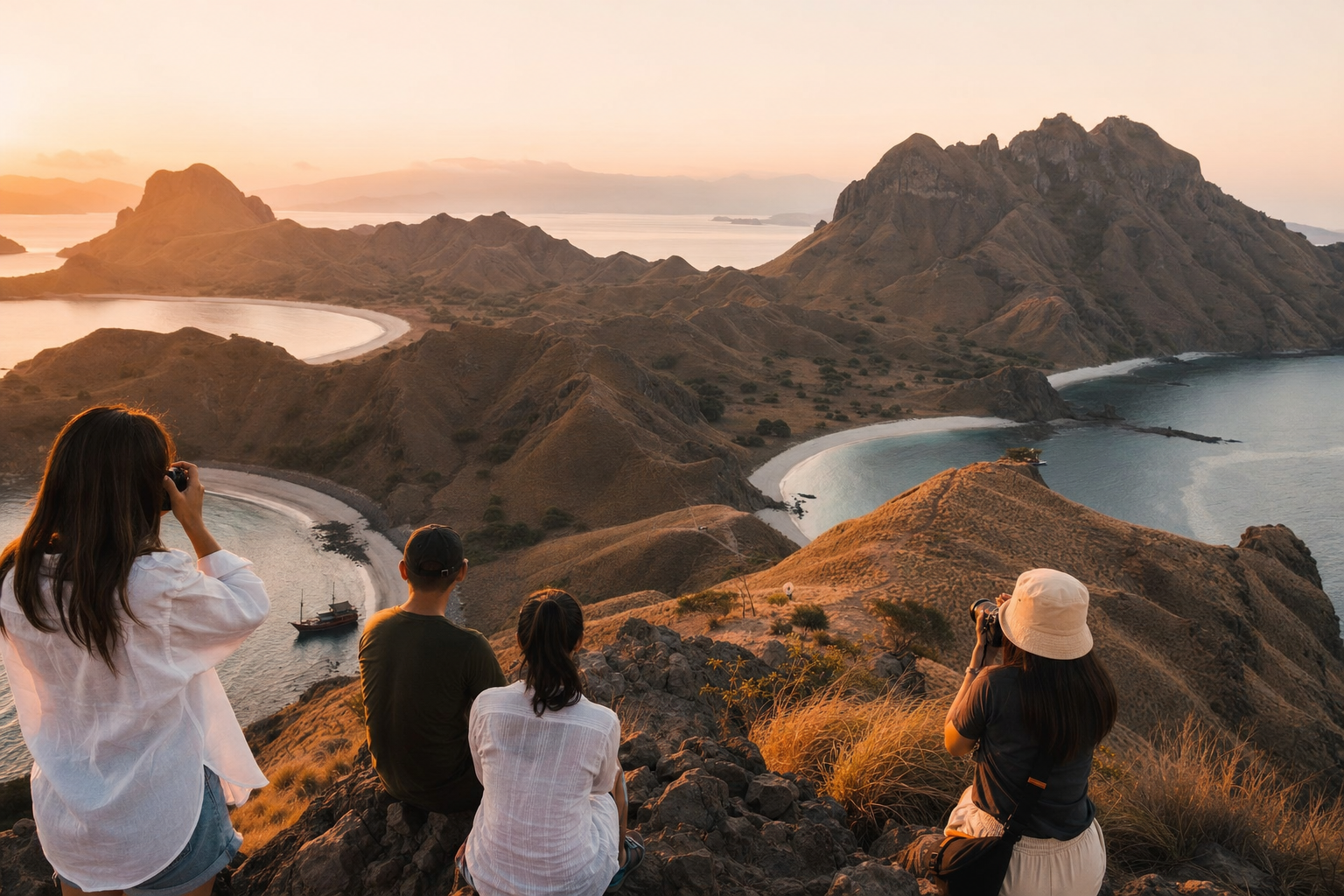
Padar is the iconic three-bay viewpoint that is on every Indonesian liveaboard brochure for a reason: the climb takes 30 to 45 minutes from the beach, the trail is moderate (steps and dirt, not technical), and the photograph at the top is one of the most distinctive in Southeast Asia. Most Komodo liveaboards stop at Padar at sunrise, around 5:30 to 6:00 AM. Non-divers wake up for this; it is one of the best uses of an early morning on the boat. We have a separate Padar Island guide that covers what to bring and what to expect on the climb.
Pink Beach
Komodo has one of the seven Pink Beaches in the world, and it is a working snorkel site as well as a photograph stop. The pink colour comes from broken red Heliopora coral fragments mixed with the white sand. The surface snorkeling at Pink Beach is genuinely good (small reef structure 5-10m off the beach, plenty of fish, easy entry, calm water), so a non-diver can do an hour-long snorkel here while their partner does a single guided dive on the same reef at depth. Our Pink Beach Komodo guide covers the photo angles, the timing, and what to bring.
Komodo dragons at Loh Buaya (Rinca) and Komodo Island
The dragon-walk experience is the single most-requested topside activity from non-divers on Komodo trips. The walks take 60 to 90 minutes, the trails are flat (not climbing), the rangers are mandatory and walk with you, and the dragons are mostly visible at the ranger station around the cooking area, with smaller ones spread along the trail. Loh Buaya on Rinca is the more accessible of the two stations and the one most liveaboards prefer because the path is shorter and the dragon density is reliable. We have a separate Rinca Island guide that covers the entry fee structure, the trail, and the best time of day. There are no diving alternatives at these sites, so divers and non-divers do the dragon walks together as a single group activity.
Manta Point: surface-snorkel mantas
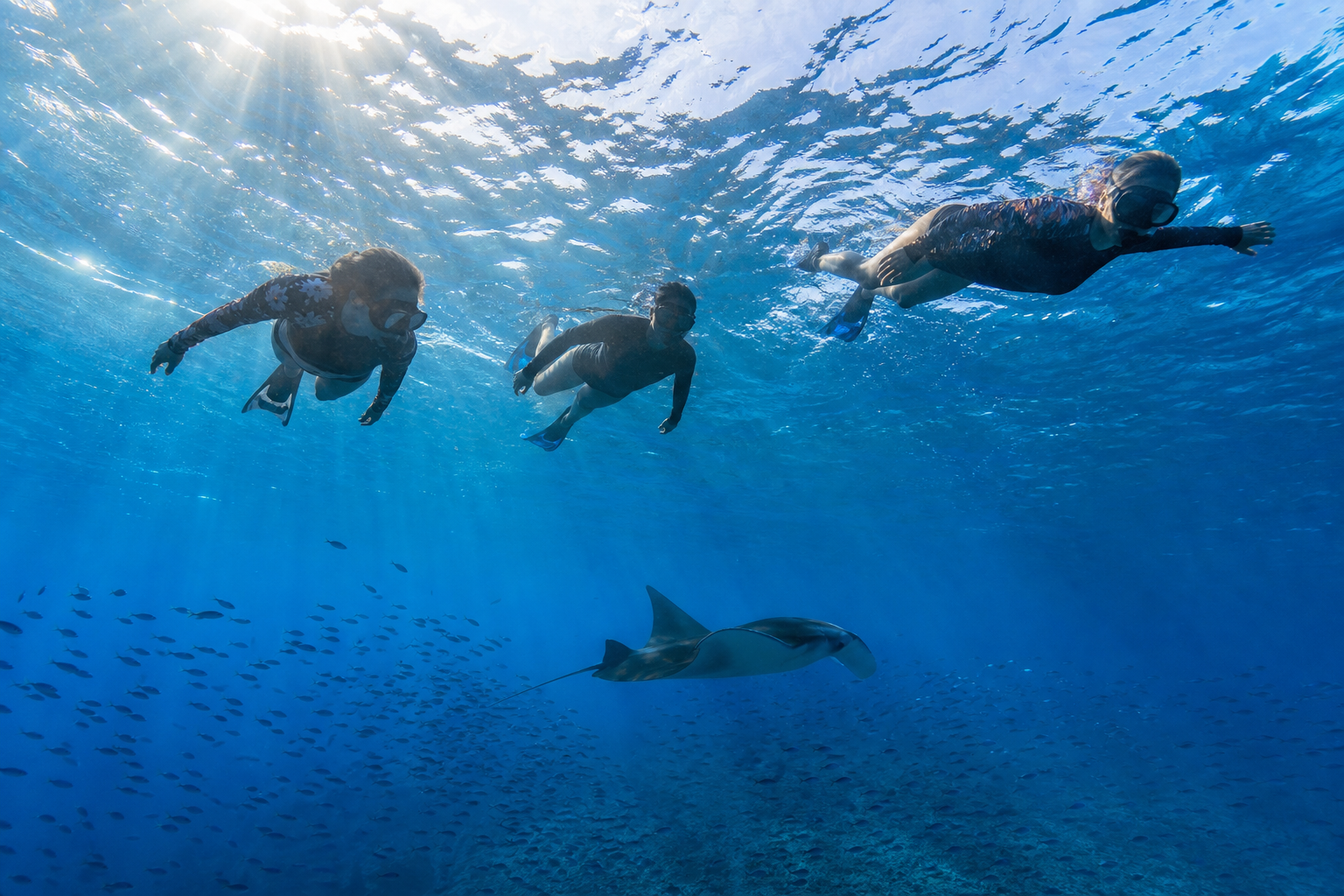
Manta Point in the Komodo park (Karang Makassar, the cleaning-station drift) is one of the few liveaboard sites in the world where a snorkeler at the surface routinely sees manta rays. The mantas at Manta Point feed at 5 to 10m depth, often coming up to within a metre of the surface during a feeding pass. Operators run snorkeler dinghy drift trips alongside the diver groups, so a non-diving partner sees the same mantas from above while their partner sees them from below. Visibility is rarely the limiting factor; current is, but the dinghy follows the drift so the snorkeler is moving with the water rather than against it. Our broader guide to diving with mantas in Indonesia covers the snorkel etiquette and the seasonality, and is worth reading before the trip even if you are not getting in the water at all.
Calm bays for casual snorkelers
Beyond the named highlights, Komodo has half a dozen calm-water bay sites that work well for a snorkeler who is not confident with current. Tatawa Kecil's east side, Mawan reef in the south of the park, and the inshore reef at Wainilu are all good for relaxed snorkeling on calm water with reasonable structure. A liveaboard captain with ten Komodo seasons knows where the calm bays are on any given day; ask the cruise director on the first night which sites would suit a snorkeler if there is no current.
Raja Ampat: the strongest snorkeler reefs in the world
Raja Ampat does not have Komodo's topside variety (no dragons, fewer landing options, and the sea state on transits is open ocean, not park-bay), but the snorkeling itself is the best in Indonesia and arguably the best in the world. Coral cover on Raja Ampat reef tops measures 70 to 85 per cent in survey data, the reefs come up shallower than in Komodo (tops at 0.5 to 2m at most sites), and the variety of reef life is the highest documented anywhere. If your non-diver loves to snorkel and is comfortable with water, a Raja Ampat liveaboard is the right destination. If they only do an occasional snorkel and want topside variety, Komodo wins.
Sawandarek and Yenbuba jetty snorkels
The two jetty sites near Mansuar and Kri are the most reliable shallow-snorkel sites in Raja Ampat. Both have wooden jetties extending 30-50m off the beach, and the reef structure underneath is visible from the surface within a metre of the boards. Bumphead parrotfish (large, 1m+, school of 20-50) are routinely sighted at Yenbuba in the early morning. Sawandarek has the better coral cover and shallower tops. The boats stop at one or both as a regular part of the itinerary, not as a special request.
Manta Sandy, surface viewing
Raja Ampat's equivalent to Komodo's Manta Point is Manta Sandy, a cleaning station near Arborek where reef mantas (Mobula alfredi) gather in numbers from 3 to 15 individuals on a good day. The cleaning station is at 8 to 10m depth, which is within visual range from the surface in good viz. Snorkelers do not get into the water on top of the cleaning station (this is bad etiquette and the rangers will stop you), but a snorkel-drift along the edge of the site has a high chance of seeing mantas commuting between cleaning passes.
Wayag and Piaynemo viewpoint climbs
The Wayag and Piaynemo karst-island viewpoints are the topside marquee of Raja Ampat. Wayag is the more dramatic and the more remote; Piaynemo is closer to most liveaboard routes and has a built wooden boardwalk to the summit, which makes it more accessible. Both are early-morning climbs (sunrise is the working light). Liveaboards visiting Northern Raja Ampat (Equator and beyond) include Wayag in the itinerary; standard Central Raja Ampat trips include Piaynemo. We cover both in our Raja Ampat islands guide.
Friwen Wall and similar drift snorkels
Drift snorkeling along a vertical reef wall is one of the standout Raja Ampat experiences for a competent snorkeler. Friwen Wall and the Mioskon channel are both accessible from the surface; the dinghy drops snorkelers at one end, the wall slides past for 200-300m, and the dinghy picks up at the other end. Soft coral cover on the Friwen Wall is dense and the wall comes up to within a metre of the surface, so a snorkeler floats over the top of a vertical reef that drops to 25-30m below. There is no equivalent to this in Egypt, the Caribbean, or Thailand at the same scale.
Banda Sea, Forgotten Islands, and Halmahera: not for non-divers
We are honest about this, including with prospective bookings: the Banda Sea, the Forgotten Islands route, and Halmahera are not appropriate trips for non-divers, and we discourage couples in which only one person dives from booking these itineraries. Three reasons.
First, the dive sites are open-ocean walls and pinnacles. The reefs drop straight from the surface to 40m+ and the coral life is concentrated at 18 to 30m depth, which is the working dive range. A snorkeler at the surface sees blue water, a thin band of structure, and pelagics if lucky. The volume of marine life visible from the surface is a fraction of what divers see at depth, in contrast with Komodo and Raja Ampat where the surface and depth see broadly the same reef.
Second, the topside is sparse. The Banda Sea route is two days' steaming between sites in many sections; the Forgotten Islands route is similar. The islands themselves (Banda Neira is the exception) are mostly small, uninhabited, with no landings and no built attractions. There is no Padar, no dragon walk, no jetty snorkel. A non-diver on these trips spends a lot of time on the boat, which is fine for a working remote photographer or a serious reader but not for someone who came to be active.
Third, the sea state is open ocean. Banda Sea swells run 1.5 to 3m on average days; surface dinghy work is uncomfortable and snorkel sessions in open water are not advisable. The trips run in the short September to early November season when the sea is calmest, but the difference between Komodo's inside-park bay water and Banda's open-ocean swell is order-of-magnitude. A non-diver booking the Banda Sea expecting calm Komodo-style snorkeling is going to be disappointed.
If your non-diver still wants to come to one of these regions, two workable approaches: book a shorter Komodo or Raja Ampat trip first (both have meaningful non-diver content), and consider the Banda Sea as a future trip when both partners are diving; or, book the Banda Sea trip with the explicit understanding that the non-diver is on the boat for the experience of being on the boat in remote water, not for the snorkeling. Some of our most contented Banda Sea non-divers have been working remote photographers and writers who treated the trip as a writer's residency with very good food.
What snorkelers actually see at the surface in Indonesia
This is the question we get most from prospective non-diver guests, and the honest answer surprises most people: at Komodo and Raja Ampat, a competent snorkeler sees somewhere between 60 and 80 per cent of what the divers see, depending on the site and the conditions. The remaining 20 to 40 per cent is the deep coral structure, the swim-throughs, and the reef-fish behaviour that only happens at depth (cleaning stations, deeper schooling fish, occasional sharks). The headline pelagics, mantas, turtles, sharks at the surface, bumphead parrotfish, schooling jacks, are seen by snorkelers regularly.
The reason this is the case is the structural geography of Indonesian inshore reefs, which we touched on earlier. Reef tops are at 1 to 3m below the surface, sometimes touching the surface at low tide; the visibility is high enough to see clearly down to 18-20m from the surface; and the warm water lets a snorkeler stay in for 60 to 90 minutes per session without thermal stress. A snorkeler at Pink Beach, at Tatawa Kecil, at Sawandarek jetty, or at Friwen Wall is looking at the same reef the divers are looking at, just from a different vertical angle.
Pelagic encounters at the surface are more common in Indonesia than in most other dive regions because the same currents that drive deep marine life also push food up the water column. Mantas surface-feed at Manta Point Komodo; oceanic blacktips and grey reef sharks pass under snorkelers at Sawandarek and at the Komodo channel sites; turtles cross from feeding to surface breath every ten or fifteen minutes; bumphead parrotfish at sunrise are working the shallow reef in 2-3m of water. None of these encounters require depth.
The site categories where snorkelers see materially less than divers are: deep walls in the Banda Sea (covered above); Komodo's Cauldron and similar high-current pinnacle sites (snorkeler should not be in the water at all); and the night dives, which are dive-only by nature. We cover the dive-side seasonality of all of these in our Indonesia liveaboard seasons guide, and the dive sites themselves in our Raja Ampat dive sites guide.
Pricing for non-divers and snorkelers
Pricing for non-divers is the area where Indonesian liveaboards are the most variable across operators. There is no industry-standard non-diver rate. The structures we see in the market, in rough order of frequency:
Snorkeler rate at 70 to 90 per cent of the diver rate
The most common structure. The non-diver pays a discounted rate that reflects the savings on tank fills, dive guide ratio, and equipment. The discount is typically 10 to 30 per cent off the published diver rate, depending on the boat. A trip that is USD 4,200 per person for a diver is USD 3,200 to USD 3,800 per person for a snorkeler. The snorkeler gets the same cabin, the same food, the same dinghy excursions to topside sites, and an equivalent number of in-water snorkel sessions led by a snorkel guide (where available) or by themselves.
Snorkeler rate equal to the diver rate
A smaller share of operators charge the same rate for a snorkeler as for a diver. The reasoning is that the cabin, food, fuel, and crew time are the same regardless of whether the guest dives, and the dive operation is a fixed cost per departure. This is more honest in some ways (no penalty for being a non-diver, no perception that snorkelers are 'cheap' guests), but worse value if you are a snorkeler comparing offers. Our own policy is now simple across the fleet: snorkelers and non-divers get 10 per cent off the trip price, and the discount is not combinable with any other discount already running on that departure.
Custom non-diver rate (photographer, supporter)
For photographers who do not snorkel, or partners who plan to be on the boat without going in the water, some operators offer a further discount in the 60-75 per cent of diver rate range. The economics are the same: less load on the dive operation, equivalent everything else. Ask explicitly for this if it applies to you; it is rarely advertised on the website.
Single supplement on a non-diver booking
If you are a non-diver booking solo, the single supplement on Indonesian liveaboards runs 50 to 100 per cent of the per-person rate, same as for solo divers. We cover the general single-supplement question in our solo liveaboard diving guide; the same structure applies to non-divers. If you are a non-diver in a couple booking together, single supplement does not apply, you share the cabin with your partner.
Kids in cabin pricing
Across the wider market, many boats price kids 10 to 12 in the parents' cabin at 50 to 60 per cent of an adult rate, with kids 13 and up at full adult rate. Our own policy is different, and it is worth understanding why: children of any age are charged as adults. The harbour master requires every passenger on the manifest and makes no distinction for children, so the berth costs the same whoever sleeps in it. Where a park applies a reduced child entrance fee (Komodo does), that saving is passed on. A child who joins as a snorkeler qualifies for the same 10 per cent non-diver discount as an adult snorkeler, though never on top of another discount. Whoever you book with, get the child pricing in writing before you commit.
Park fees: paid the same regardless of diving
Komodo National Park and Raja Ampat marine park fees are levied per person, not per diver. A snorkeler pays the same Komodo park entry as a diver. Budget for USD 200-400 per person in Komodo (depending on the season and weekend surcharge) and USD 100-150 per person in Raja Ampat for the marine park tag.
The mixed-couple rhythm: how a dive day actually works
The most useful thing for a non-diver to know before booking is what the day looks like. A typical dive day on a Komodo or Raja Ampat liveaboard runs four dives: pre-breakfast, mid-morning, mid-afternoon, and a sunset or night dive. Between dives, the boat moves to the next site or stays at anchor. The non-diver's day fits into the white space between the dives, which is more time than most non-divers expect.
A representative day, with the partner divisions:
- 06:00. Wake-up announcement on the boat speaker. Diver and non-diver both up. Coffee on the upper deck.
- 06:30 to 07:30. Diver: dive briefing and first dive of the day. Non-diver: snorkel from the dinghy at the same site (most operators run a parallel snorkel) or stay on the boat with breakfast coffee.
- 07:30 to 09:00. Both partners: full breakfast on the upper deck. Boat moves to the next site.
- 09:30 to 10:30. Diver: second dive. Non-diver: usually a topside excursion (Padar, Pink Beach, Wayag) or a long calm-water snorkel session. The dinghy runs both.
- 11:00 to 12:30. Both partners: lunch on the boat. Reading, sun deck, deck nap, photo download.
- 13:30 to 14:30. Diver: third dive. Non-diver: often the second snorkel of the day, or a topside walk if the site is by an island. This is the most variable slot in the day for non-divers; on a remote anchor, there might not be much to do, and a book on the upper deck is the right call.
- 15:00 to 16:30. Open time. Boat snacks. Both partners on the deck. Some operators run a paddleboard or kayak hour here at calm anchor sites.
- 17:00 to 18:00. Diver: sunset dive. Non-diver: sunset on the upper deck with a drink, or a sunset snorkel if conditions are right. Sunset drinks on the deck are some of the best moments of the trip; do not miss them just because your partner is in the water.
- 19:30 to 21:00. Dinner on the upper deck for everyone. Briefing for the next day. Stars and conversation. Some boats run a night dive at 21:00; non-diver goes to bed.
If you map this out, the non-diver is in the water two or three sessions a day (once or twice snorkeling, once on a topside walk), and is on the boat with their partner for breakfast, lunch, snack, sunset, and dinner. The shape of the day works. The 13:30 dive slot is the only time the non-diver might be idle; bring a book.
Equipment: what to bring as a non-diver
Snorkelers do not need much equipment, but the right equipment matters. Indonesian liveaboard rentals are workable for occasional snorkelers and not great for daily snorkelers. If you are going to be in the water two sessions a day for seven days, bring your own.
The basic kit:
- Mask and snorkel, properly fitted before the trip. A budget mask that fogs is the difference between an enjoyable trip and a frustrating one. Try the mask in a pool at home before you fly. Anti-fog drops or commercial anti-fog work; spit-and-rinse works. A dry-top snorkel is worth the small extra cost in choppy water.
- Fins: short, stiff, full-foot fins are best. Long freediving fins are overkill for casual snorkeling and a hassle on dinghies. Open-heel fins with neoprene booties are fine if you already have them.
- Rashguard or 3mm shorty. Sun protection is the larger concern, not cold. A long-sleeve UV rashguard plus board shorts is enough for most of the year. A 3mm shorty wetsuit is worth bringing if you tend to get cold or are a long-session snorkeler.
- Reef-safe sunscreen. Banned ingredients (oxybenzone, octinoxate) are restricted in some Indonesian marine parks. Mineral-based zinc-oxide sunscreen is the safe choice. The marine parks check this lightly but the reefs benefit either way.
- Polarized sunglasses. The sun reflection off the water on a dinghy at 11 AM is intense; non-polarized sunglasses are inadequate. A leash on the sunglasses if you tend to lose them.
- Reef shoes or aqua socks for beach landings (Pink Beach has rough coral fragments and Padar has loose dirt). Optional but useful.
- Dry bag, 10-20L. For dinghy excursions. The dinghy gets wet on the floor and your camera does not appreciate sea water.
- GoPro or Insta360 with a chest mount. Surface video at Manta Point, Sawandarek, or any drift site is some of the best beginner underwater video you can shoot in your life. A small action camera in the right setting beats an expensive setup in the wrong one.
The full liveaboard packing list (towels, dry-side clothing, electronics) is in our Indonesia liveaboard packing list; that guide is written for divers but most of it applies to snorkelers, and the wetsuit guidance is replaced by the rashguard or 3mm shorty above.
Topside activities on Indonesian liveaboards
Beyond the named highlights at each region, the daily topside layer of an Indonesian liveaboard is what sustains a non-diver across a six- or seven-night trip. Some of these are written into the itinerary, some happen by quiet request from the cruise director:
- Beach landings. Pink Beach and Padar are the marquee landings; smaller named beaches in Komodo (Loh Liang, Wainilu) and Raja Ampat (Yenbuba village) are less photographed but worth doing. Most landings are 30 to 90 minutes.
- Komodo dragon walks at Loh Buaya (Rinca) and Komodo Island. 60 to 90 minutes, included in the Komodo park fee, mandatory ranger escort. The trail is flat. The dragon viewing is reliable.
- Sunset hikes at Padar, Wayag, and Piaynemo. Padar and Piaynemo are climbs of 30 to 45 minutes; Wayag is the more demanding at 60 to 90 minutes. All three are sunrise activities for the photo light.
- Paddleboarding at calm anchor sites. Some boats carry paddleboards or kayaks; ours do. The afternoon hour at a calm anchor is one of the best windows for a paddle. Ask the cruise director on day one whether the boat has them.
- Kayaking through mangrove channels. Raja Ampat has mangrove channels around Mansuar and Kri that are kayak-friendly. Some operators carry kayaks; some have a small wooden dinghy that works similarly.
- Star-gazing at remote anchorages. Komodo's south side and most of Raja Ampat are far enough from light pollution that the Milky Way is naked-eye visible most nights. Bring a star app on your phone.
- Photography on deck. The deck of an Indonesian liveaboard at golden hour is one of the better photo positions in Asia. A good photographer non-diver gets through a lot of memory cards in a week.
- Reading and writing time. Genuinely. Some of the best reviews we get from non-divers are from writers and academics who used the trip as a quiet productive week. The Wi-Fi is intermittent, the deck is comfortable, and the days have rhythm.
The kid question: minimum ages and what works
Families with kids are one of the largest non-diver booking sources in Indonesia. The age policies vary across the fleet; the patterns we have seen across the broader market:
- Age 8 or 9 minimum. A small number of operators (us included on selected trips) accept kids from 8 with a parent on board. The kids snorkel only, never night-dinghy, and parents take responsibility for them at landings. PADI Bubblemaker (8+) is technically possible but most boats do not run it on liveaboard departures because the pool requirement is logistically awkward.
- Age 10 minimum. The most common policy. Kids 10+ can do PADI Open Water on board (sometimes called the Junior Open Water for under-15s) and can do Discover Scuba Diving sessions. Snorkeling without diving is also fine.
- Age 12 minimum. Some boats prefer 12 and up because of the lower-deck cabin sizing or because of an operator preference for older travellers. These trips work for tween or teen kids who are independent in the water; less suited to younger kids.
- Age 14 or 15 minimum. The Banda Sea, Forgotten Islands, and longer remote routes are not suited to younger kids. Operators generally set 14 or 15 as the floor on these. We do not run kids' departures on the Banda Sea at all.
What works for kids in practice: Komodo is the strongest itinerary because of the dragons (kids are fascinated, not frightened), the beach landings, and the calm bay snorkeling. Central Raja Ampat (Mansuar and Kri area) works well because of the jetty snorkels at Sawandarek and Yenbuba, both of which are short, shallow, and easy. The PADI Bubblemaker and Discover Scuba programs are realistically for confident swimmers; kids who are not yet comfortable in deep water with goggles should snorkel for the trip and consider certification later. We are happy to talk through the family-trip side of this; get in touch if you have a specific family booking in mind.
Younger kids on calm-water Komodo days
The southern Komodo bay sites and the Wainilu/Tatawa Kecil areas are calm enough that kids 6 and 7 can snorkel with a parent in 1-2m of water at the back of the dinghy. We do not officially accept kids that young as paying guests on most departures, but on private charters or family departures it is workable, with parental supervision and a flotation device. Open-ocean Raja Ampat passages are not appropriate for kids under 8.
The certification-on-board plan
If you have a 10+ kid who is enthusiastic about the water and you are thinking about doing the Open Water on board, the right approach is to plan the e-learning component (PADI eLearning takes 8 to 12 hours of online study) before the trip so the on-board time is purely water work. Most boats can run a Junior Open Water across four to five days of a trip; the kid graduates at the end of the week. Confirm before booking that the trip you are looking at has the instructor capacity for this. Not every departure does.
What to ask the operator before booking
The non-diver part of any liveaboard inquiry is rarely covered well on operator websites. The question list below covers the gaps. If the operator cannot answer most of these clearly in writing, you are taking on more risk than you should.
- What is the snorkeler rate, and what does the diver-vs-snorkeler price structure look like for this trip? Ask in writing. Some operators only quote diver rates by default and will discount on request; others publish both rates clearly.
- Do you run a parallel snorkel programme on dive sites where snorkeling makes sense, with a dedicated snorkel guide and a dinghy? The yes/no answer to this is a binary indicator of whether the operator takes non-divers seriously.
- What is the policy on dinghy access between dives for non-divers? Some operators run the dinghy as a divers-only resource between sites; some allow non-divers to use it for short solo snorkels. The latter is what you want.
- How many non-divers are typically on a trip? If the answer is 'one or two if any,' the operator is set up for divers and the snorkel itinerary is going to be improvised. If the answer is 'three to six is normal,' the operator has a working snorkel-side programme.
- What equipment is included for snorkelers? Mask, snorkel, fins, rashguard? Or does the snorkeler bring everything? Indonesian rental gear is usually adequate for occasional use; bring your own if you are in the water daily.
- What is the kid age policy on this specific trip, and what is the under-13 cabin pricing? Get this in writing. Generic operator policies are sometimes overridden on specific departures.
- Can the boat run a Discover Scuba Diving or Open Water course during the trip? Useful for the snorkeler-considering-certification or the family-with-kids cases. Confirm instructor capacity.
- Is there a cancellation provision if a diver becomes a snorkeler mid-trip due to medical reasons (e.g. flight ear)? This is more important than people realise; insurance covers some of it, but operators handle the rest with widely varying policies.
- What is the daily topside excursion programme and is it the same for divers and non-divers? Most reputable operators run the topside excursions as group activities for everyone on the boat, with divers and non-divers together. A few run topside as a divers-only programme, which is bad practice.
- What is the meal and drinks policy? Important for everyone, but particularly for non-divers who are spending more time at the bar than the divers are. Confirm whether soft drinks, beer, and wine are included or charged separately.
Common mistakes non-divers make
The non-diver guests who have a poor trip in our experience generally made one of the following mistakes at the booking or planning stage. Most are easy to avoid if you know about them in advance.
Booking the wrong itinerary
The most common mistake. A non-diver couple books the Banda Sea or the Forgotten Islands because the photography is dramatic, and the non-diver spends seven days on the boat with very little to do. We covered the destination question above; the rule of thumb is Komodo first, Raja Ampat second, Banda Sea only if both partners are diving or only one partner is on the trip.
Underestimating sun exposure
Non-divers are on the boat surface for the entire dive day, not 60 minutes underwater. The cumulative UV exposure on a tropical liveaboard for a non-diver is significantly higher than for a diver. Bring SPF 50 mineral sunscreen (not the cheap chemical kind), a long-sleeve rashguard, a wide-brim hat, and reapply every 90 minutes. The cost of getting sunburned on day two and being miserable for the remaining five days is large.
Not bringing motion-sickness pills
Liveaboards move between sites several times a day, and some passages (the Komodo south transit, the Raja Ampat northern crossing, anything in the Banda Sea) involve open-ocean swell. Non-divers are surface-side during these passages, which is the worst position for motion sickness. Bring Bonine (Meclizine) or scopolamine patches, take them an hour before transit, not after. Most boats have a small first-aid stock but not a week's supply of motion-sickness medication for a sensitive guest.
Expecting Wi-Fi for working remotely
Indonesian liveaboards have variable satellite Internet, ranging from 'good for messaging' to 'completely absent.' A non-diver who plans to work remotely from the boat is probably going to be frustrated. The honest framing is: bring downloaded books, downloaded films, and a journal. Wi-Fi when it works is a bonus, not a baseline. We have seen the Starlink rollout improve this on some boats over the last twelve months, but the situation is uneven.
Treating snorkeling as a passive activity
Snorkeling for an hour at Sawandarek or Manta Point is not a passive activity; it is a 60 to 90 minute physical exercise in moving water, with current and surface swell. Non-divers who underestimate this and do not pace themselves end up exhausted by day three. Treat snorkel sessions like swims. Hydrate. Take rest days. Do not feel obliged to do every snorkel session every day; sitting out a session and reading on the deck is a legitimate use of the trip.
Not telling the cruise director about constraints
The most fixable mistake. A non-diver with a knee that does not love long climbs, or a partner with a recent illness, or a kid who is nervous in current, should tell the cruise director on day one. The crew will adjust the day-by-day to accommodate the constraint, often without telling the guest because they do not want to make it a big deal. The crew cannot adjust if they do not know.
Bringing it together: the right Indonesian liveaboard for a non-diver
If we had to summarise the operator advice in three sentences: book a Komodo or Raja Ampat trip, not a Banda Sea trip; choose an operator that publishes a snorkeler rate clearly and runs a parallel snorkel programme; and have a real conversation with the cruise director on day one about the rhythm you want. The Indonesian liveaboard format is genuinely workable for non-divers, and the country is the right country for it. The only requirement is honesty at the planning stage about what the trip is going to involve. Marketing materials make liveaboards look like they are exclusively for divers; the reality is more interesting.
If you are a couple in which one person dives and the other is at the surface, look at our honeymoon liveaboard guide for the couples-side angle. If you are a solo non-diver weighing the trip without a partner, our solo liveaboard guide covers the cabin-sharing and single-supplement question that applies equally to non-divers. If you have not been on a liveaboard before, read our first-time liveaboard guide for the broader rhythm. And if you want to compare the two strongest non-diver destinations, our Raja Ampat vs Komodo comparison goes deeper on the dive-side questions, but the topside differences map almost exactly onto the non-diver question.
For a Komodo trip, our Komodo Sea Dragon works well for couples and small groups; the bay-water itinerary is structured around the topside highlights as much as around the dive sites. For Raja Ampat, our King Neptune and Neptune One both run the Mansuar and Kri snorkel-friendly sites as a regular part of their itineraries. If you have a specific question on a non-diver booking, contact us directly and we will talk through the trip rather than send a brochure.