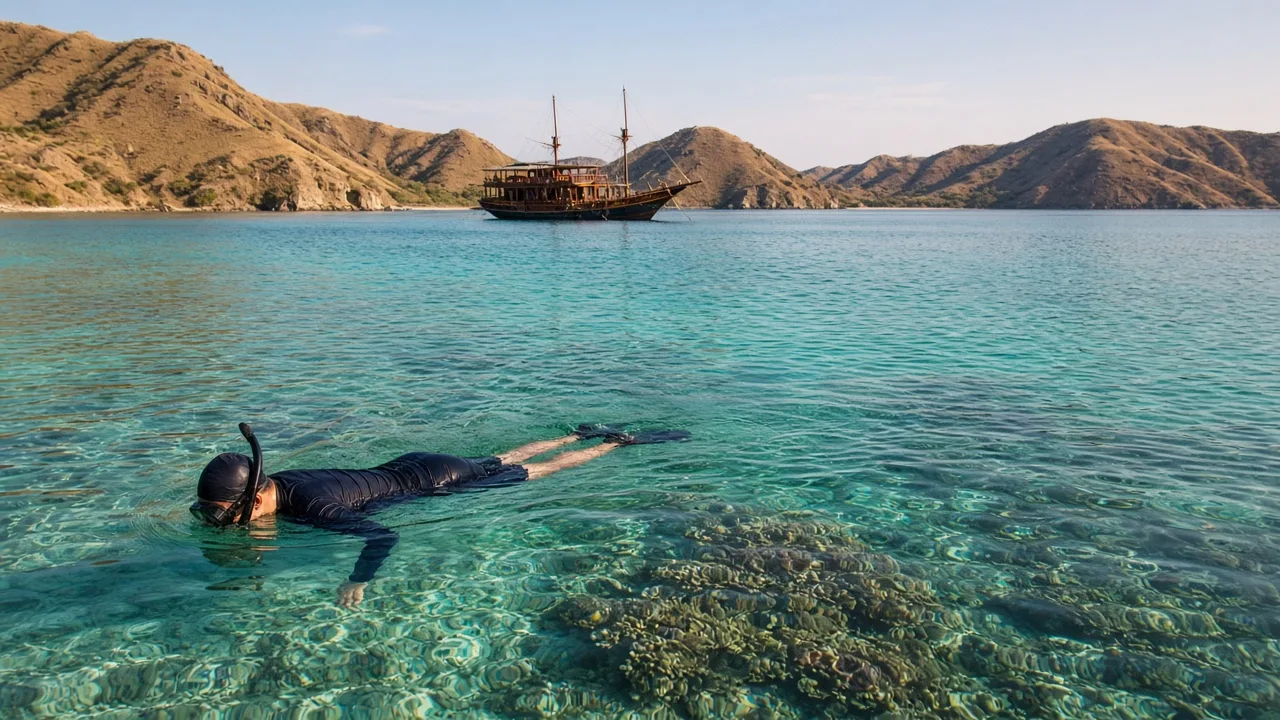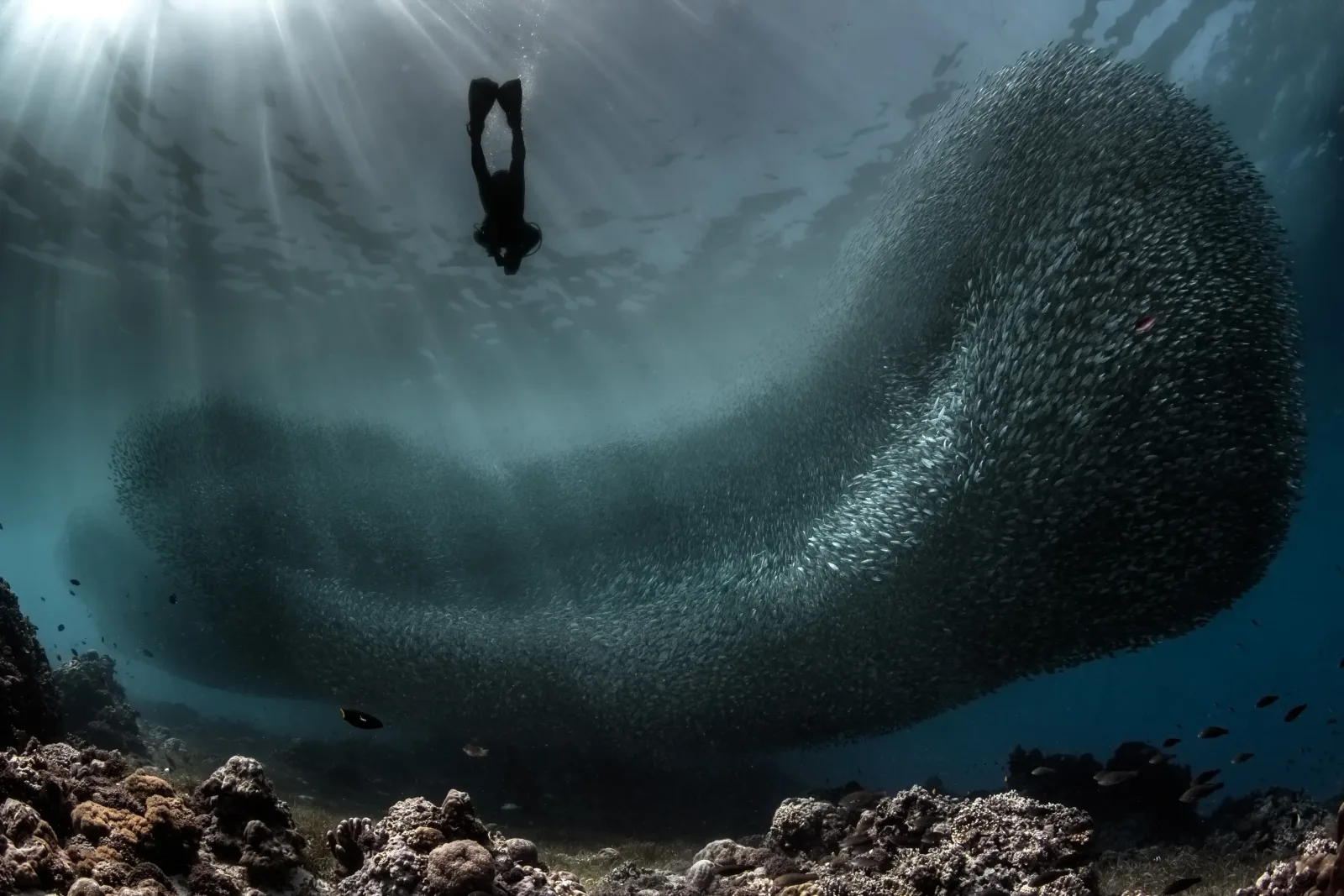
A Raja Ampat liveaboard is one of the more expensive ways to dive in Indonesia, and also one of the better-value ones once you divide the fare by what it actually buys. The trouble is that most people searching for a price find a single "from" figure, book around it, and only meet the park fees, the fuel surcharge and the flight to Sorong later. This guide works the other way round. It starts with the fare and keeps adding until it reaches the number that really leaves your account.
We run a Raja Ampat liveaboard season out of Sorong on two of our three boats, so the prices below are our own published fares for the 2026 to 2028 seasons rather than an average scraped from other sites. Where we quote market figures for comparison, we say so. US dollar prices are converted at IDR 18,100, the rate our booking pages use, and every amount is per person unless we say otherwise.
How much does a Raja Ampat liveaboard cost?
On our boats, a Raja Ampat liveaboard costs from about USD 3,600 (Rp 64,942,800) per person for seven nights. The top of the range is roughly USD 7,200 (Rp 130,320,000) for ten nights in the best cabin on our largest yacht. Then the extras arrive. Fees, the fuel surcharge, crew tips, the domestic flight and a night in Sorong usually add somewhere between USD 700 and 1,400, which puts a realistic all-in budget for a week at roughly USD 4,300 to 7,800.
That is a wide band, and three things explain nearly all of it: which boat, which cabin and how many nights. The season matters far less than people assume. Raja Ampat has one main liveaboard season, running from about October to April on our schedule, and within it we charge the same fare for a December departure as for a March one.
| Trip length | Fare range on our boats | Typical all-in per person |
|---|---|---|
| 7 nights (8 days) | USD 3,588 to 5,600 | About USD 4,300 to 7,000 |
| 8 nights (9 days) | USD 4,100 to 6,400 | About USD 4,800 to 7,800 |
| 10 nights (11 days) | USD 4,900 to 7,200 | About USD 5,650 to 8,700 |
The all-in column assumes you fly from Jakarta, tip within the normal band and bring your own dive gear. International flights are not in it, because they depend entirely on where you start. If you are coming from Europe or North America, that ticket will often be the single biggest line in the whole budget.
Raja Ampat liveaboard prices on our boats
Two of our boats sail Raja Ampat. Neptune One is a 39-metre liveaboard with eight cabins for sixteen guests, and it runs the bulk of our Sorong departures, mostly eight-day loops of either the north and centre or the south and centre of the archipelago. King Neptune is our 46-metre flagship, with ten cabins for twenty guests, and it runs longer nine and eleven-day trips that usually take in both the north and Misool.
These are the fares currently on our schedule for the 2026 to 2027 season. They are the full per-person price for the cabin category, before any promotion.
| Boat and trip | Dives (approx.) | Entry cabin | Middle cabin | Top cabin |
|---|---|---|---|---|
| Neptune One, 8 days / 7 nights | 19 | USD 3,650 (Rp 66,065,000) | USD 3,950 (Rp 71,495,000) | USD 4,250 (Rp 76,925,000) |
| Neptune One, 9 days / 8 nights | 22 | USD 4,100 (Rp 74,210,000) | USD 4,450 (Rp 80,545,000) | USD 4,600 (Rp 83,260,000) |
| Neptune One, 11 days / 10 nights | 27 | USD 4,900 (Rp 88,690,000) | USD 5,350 (Rp 96,835,000) | USD 5,800 (Rp 104,980,000) |
| King Neptune, 8 days / 7 nights | 19 | USD 3,588 (Rp 64,942,800) | USD 5,425 (Rp 98,192,500) | USD 5,600 (Rp 101,360,000) |
| King Neptune, 9 days / 8 nights | 23 | USD 4,100 (Rp 74,210,000) | USD 6,200 (Rp 112,220,000) | USD 6,400 (Rp 115,840,000) |
| King Neptune, 11 days / 10 nights | 27 | USD 4,900 (Rp 88,690,000) | USD 7,000 (Rp 126,700,000) | USD 7,200 (Rp 130,320,000) |
Read the King Neptune row carefully, because the entry price is a different kind of cabin. It is the Sea View Single cabin on the upper deck, built for solo travellers, with one bed and its own bathroom (it converts to bunks for two friends who do not mind sharing a small space). The main-deck and upper-deck sea view cabins are the doubles and twins, and that is where most couples end up. So for two people travelling together, King Neptune's real starting point on a nine-day trip is USD 6,200 each, not 4,100.
On Neptune One the gap between cabins is narrower, about USD 300 between each step on a seven-night trip. The Deluxe Suite is the lowest category, the Deluxe Sea View sits in the middle, and the Deluxe Sea View with Balcony is the top. If you are choosing between the bottom two, the extra money mostly buys a window view and a little light, not more space or better diving. The dive programme is identical whichever cabin you sleep in.
Fares for departures from January 2028 onwards are already on the schedule, and they are slightly higher. Neptune One's seven-night loop moves from USD 3,650 to 3,760 for the entry cabin, a rise of about 3 per cent. That is a normal annual adjustment rather than anything dramatic, but it does mean that booking a year ahead usually locks in the lower fare.
Why Raja Ampat costs more than Komodo
It is the most common pricing question we get, and the honest answer is that the gap is smaller than it looks.
Take Neptune One, because it sails both regions with the same crew, the same cabins and the same menu. In Komodo, its seven-night Best of Komodo trip starts at USD 3,250, about USD 464 per night. In Raja Ampat, the seven-night loop starts at USD 3,650, or about USD 521 per night. Same boat, same number of nights, and Raja Ampat costs roughly 12 per cent more. The headline fares people compare online usually look much further apart, mostly because the typical Komodo trip is shorter (five or six nights) and the typical Raja Ampat trip is longer, since the run from the Dampier Strait down to Misool is an overnight steam rather than a short hop between neighbouring islands.
Where Raja Ampat really costs more is everything around the boat. Fuel bills are higher in a region where the dive sites are spread across tens of thousands of square kilometres of sea. Supplies come in through Sorong, which is a long way from Indonesia's main distribution hubs. The government charges are higher, and the domestic flight is longer and dearer. If you compare Raja Ampat vs Komodo on the full budget rather than the fare, a week in Raja Ampat on the same boat usually comes out somewhere around 15 to 25 per cent more expensive. On the fare alone, the difference is modest.
Per dive, the gap is a little wider. The seven-night Komodo trip schedules about 20 dives, so it comes to roughly USD 163 a dive, while the Raja Ampat loop schedules about 19 and comes to roughly USD 192. The one dive of difference is the long transit south, which is the price of reaching Misool's soft coral at all.
What the liveaboard fare includes
A liveaboard fare covers far more than a hotel room, which is why comparing it with a resort night rate tends to mislead. On both of our Raja Ampat boats the fare includes:
- Your cabin with its own en-suite bathroom, towels and linen for the whole trip.
- All meals and snacks, plus unlimited tea, coffee, soft drinks and drinking water.
- Up to four guided dives a day, with tanks, weights and a dive guide (on King Neptune, nitrox refills are included too).
- Snorkelling gear for anyone who wants it, and the tender trips to viewpoints, beaches and villages.
- Group transfers between Sorong airport or your hotel and the boat, and VAT.
So once you are on board, the only things you pay for are the extras covered further down: alcohol, equipment rental, nitrox on Neptune One, and any courses or private guiding. If you settle those in advance where possible, the bill on the last evening is usually short.
Raja Ampat park fees in 2026
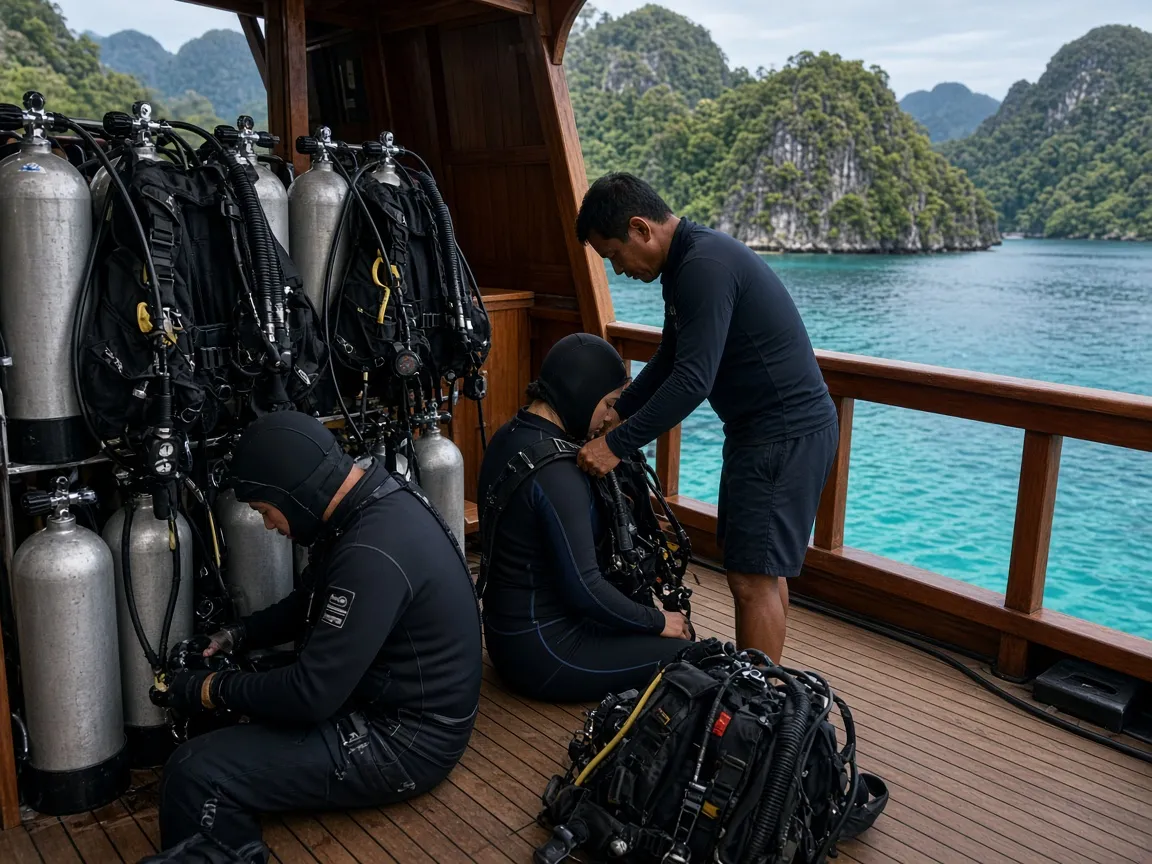
Raja Ampat charges foreign visitors twice, and both charges are set by the government rather than by the boat.
The first is the marine park entry card, known locally as the PIN or the TLPJL card. It costs IDR 700,000 (about USD 39) and stays valid for twelve months from the day it is issued, so if you come back within the year you do not pay it again. The second is the regency visitor levy, which rose in January 2026 from IDR 300,000 to IDR 1,000,000 (about USD 55) per foreign visitor, and is charged per visit. Together that is IDR 1,700,000, or roughly USD 94, per adult. Children under twelve are exempt from the regency levy.
On our booking pages these government charges are part of a single line for environment, park and port fees, which runs from about Rp 3,258,000 to Rp 7,240,000 (roughly USD 180 to 400) depending on the route and its length. We confirm the exact amount for your departure in writing before you travel, and it is paid separately from the fare. Our guide to Indonesia liveaboard park fees and visas covers the history of the 2026 increase and the paperwork in more detail.
One practical point. Older articles still quote "about USD 65" or "one million rupiah" for Raja Ampat entry. Those figures describe the position before January 2026, and guests who budgeted on them have arrived short.
The extras that are not in the fare
This is where a USD 3,650 trip turns into a USD 4,500 one. None of these is unusual, and all of them appear on our trip pages, but they add up.
- Fuel surcharge. Rp 2,715,000 to Rp 3,620,000 per person (about USD 150 to 200), depending on the route. It covers fuel price movements that the fare cannot absorb on long Raja Ampat distances.
- Nitrox on Neptune One. Available for a supplement on Neptune One and included on King Neptune. Across the market, a nitrox package for a week usually runs USD 100 to 150. Our article on whether nitrox is worth it on a liveaboard explains when it pays off.
- Equipment rental. If you do not bring your own BCD, regulator and wetsuit, expect market rates of roughly USD 25 to 40 a day for a full set, which is about USD 175 to 280 over a week.
- Alcohol. Beer and wine are charged on board. Soft drinks, tea and coffee are not.
- Insurance. Dive insurance typically costs USD 50 to 120 a year, and travel insurance is extra on top. On a trip this remote, we strongly recommend both.
Private dive guiding and PADI courses are also extra on Neptune One, though most guests never need either. If you are a photographer who wants a guide to yourself for a week of macro, ask us for the rate when you book rather than on board, because private guides are limited and allocated in advance.
Getting to Sorong: flights and a night in town
Every Raja Ampat liveaboard starts in Sorong, on the western tip of New Guinea, and there are no international flights into it at the time of writing. That means two tickets: one to an Indonesian hub, usually Jakarta, Bali or Makassar, and a domestic flight onwards.
The domestic leg is the one to budget properly. Jakarta to Sorong covers roughly 2,900 kilometres and takes about four and a half hours. In recent seasons it has cost somewhere between Rp 2,000,000 and Rp 4,500,000 one way (around USD 110 to 250), depending on airline, season and how late you book, so a return ticket usually lands between USD 220 and 500. Flights from Makassar are shorter and often cheaper. Over Christmas and New Year, which falls right in the middle of the Raja Ampat season, fares climb and seats go early.
Most overnight flights from Jakarta land in Sorong between about 06:00 and 09:00 local time, and our departures board in the afternoon of the first day. That timing lets a lot of guests fly in on the morning of departure, which saves a hotel night. We still suggest arriving the day before if your international connection is tight, because a missed domestic flight in eastern Indonesia can mean a missed boat, and the boat cannot wait. A decent business hotel in Sorong typically costs somewhere around USD 40 to 120 a night. The return works the same way in reverse, with one more constraint: you need a gap of 18 to 24 hours between your last dive and the flight home, which our itineraries are built around.
Our step-by-step guide to getting to Raja Ampat covers the airlines, the airport and the transfer in more detail, and there are separate versions for travellers routing via Singapore or from the United States.
Tipping the crew
Crew tips are not in the fare, they are not compulsory, and nearly everyone gives one. The usual range on an Indonesia liveaboard is USD 15 to 25 per guest per day, pooled among the whole crew and handed over at the end of the trip. On a seven-night Raja Ampat trip that comes to roughly USD 105 to 175 per person, and on a ten-night trip about USD 150 to 250.
Those figures are per person, not per cabin. A couple on a week-long trip should be thinking of USD 210 to 350 between them. Cash works best, in rupiah or clean US dollar notes, and it is worth drawing it before you reach Sorong, since cash machines there cap single withdrawals and the park fees also want cash. Our liveaboard tipping guide explains how the pool is shared and why percentage-based rules work badly on expensive trips.
Three Raja Ampat budgets, added up
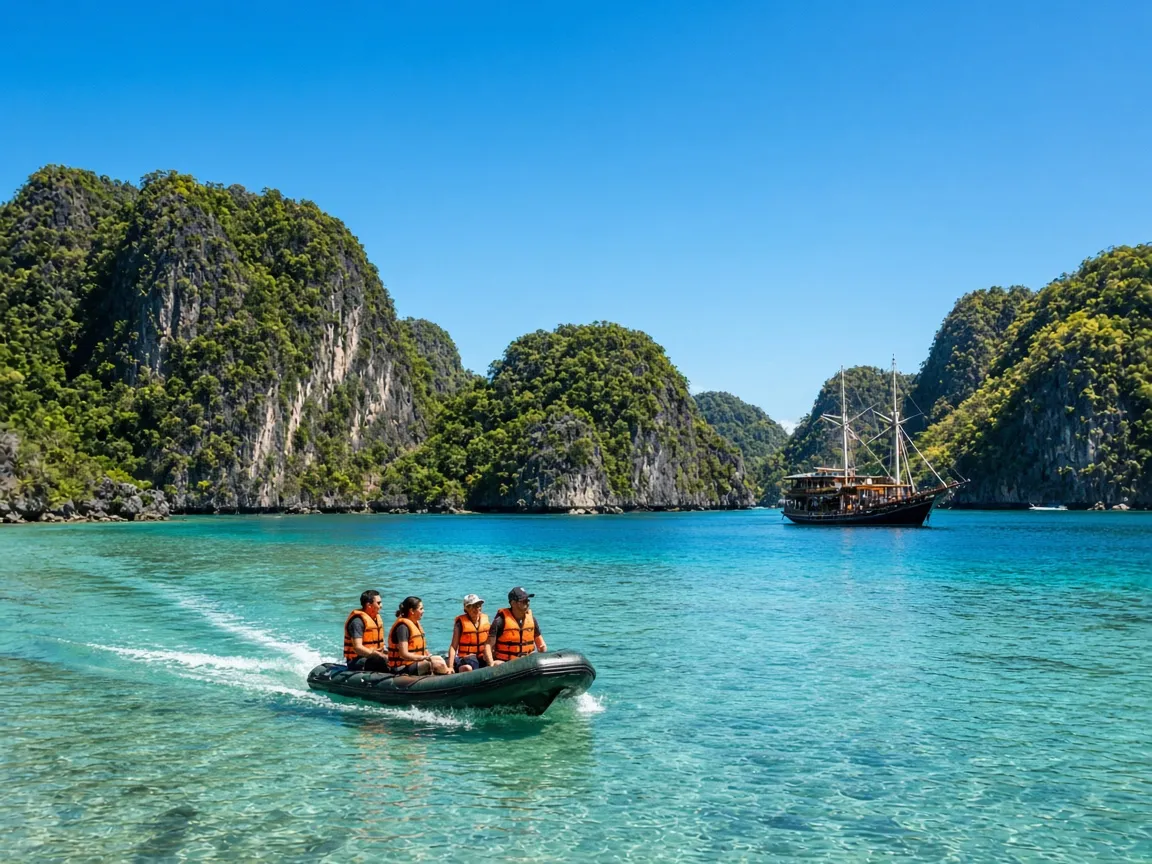
Fares on their own do not answer the real question, which is what the trip costs from Jakarta and back. Below are three common choices, with every line we can price. The ranges reflect where flights, fees and tips usually fall, and none of the totals includes international flights.
| Line | Couple's choice: Neptune One, 7 nights, Deluxe Suite | Comfort: King Neptune, 8 nights, main-deck sea view | Solo: King Neptune, 8 nights, Sea View Single |
|---|---|---|---|
| Fare | USD 3,650 | USD 6,200 | USD 4,100 |
| Fuel surcharge | USD 150 to 200 | USD 150 to 200 | USD 150 to 200 |
| Environment, park and port fees | USD 180 to 400 | USD 180 to 400 | USD 180 to 400 |
| Nitrox | Supplement, if wanted | Included | Included |
| Crew tip | USD 105 to 175 | USD 120 to 200 | USD 120 to 200 |
| Jakarta to Sorong return | USD 220 to 500 | USD 220 to 500 | USD 220 to 500 |
| One hotel night in Sorong | USD 20 to 60 (half a shared room) | USD 20 to 60 (half a shared room) | USD 40 to 120 |
| Total per person | About USD 4,325 to 4,985 | About USD 6,890 to 7,560 | About USD 4,810 to 5,520 |
In rupiah, the first budget comes to roughly Rp 78 million to Rp 90 million per person, the second roughly Rp 125 million to Rp 137 million, and the solo option roughly Rp 87 million to Rp 100 million.
Two things stand out. The first is how little the extras vary between a modest and a premium trip: on all three, they add something between USD 700 and 1,400, so the cabin choice drives almost the whole difference. The second is the solo column. Travelling alone usually means paying a supplement for a cabin to yourself, often a large one, but King Neptune's single cabin was designed for exactly this, so a solo diver pays USD 4,100 for a private cabin on an eight-night trip. Our guide to solo liveaboard diving in Indonesia goes into the other options.
Add equipment rental if you need it, roughly USD 200 to 320 for an eight-night trip at market rates, and whatever you spend at the bar. Everything else is in the fare.
How trip length changes the price
Longer trips cost more in total and less per night, and on Raja Ampat the per-night saving is real enough to change the decision for some people.
On Neptune One, the entry cabin works out at about USD 521 a night on the seven-night loop, USD 512 on the eight-night trip and USD 490 on the ten-night trip. Per dive, the ten-night trip is cheaper still, at roughly USD 181 against USD 192 for the week, because the boat spends a smaller share of the trip in transit. And the longer trip reaches more of the archipelago. A seven-night loop covers either the north and centre (Wayag, the Dampier Strait, Cape Kri) or the south and centre (Misool and its soft coral walls) but not both, while the ten-night trips usually do the full north-and-south circuit. If you have flown from the other side of the world, three extra nights for about USD 1,250 more is often the best value on the whole schedule.
The other long option is a crossing. Twice a year our boats reposition between Raja Ampat and the Banda Sea or Triton Bay, and those one-way trips, usually ten nights from Sorong to Ambon or from Kaimana to Sorong, cost from about USD 4,900 to 5,000 on Neptune One. They suit divers who have already done the classic Raja Ampat loop, or who want hammerheads in the Banda Sea and Misool on the same trip. The catch is the flights: you arrive in one city and leave from another, which adds a little to the airfare. Our Misool diving guide is a good place to start if the southern reefs are what draw you.
When prices move, and when they do not
Raja Ampat fares are steadier than most people expect. On Neptune One, a seven-night loop in early November costs exactly the same as one in late March, and the same pattern holds across most of our schedule. What does move the price:
- The year. Fares rise a little each season. Neptune One's 2028 departures are about 3 per cent higher than the 2027 ones.
- Promotions. Some departures carry a discount, usually when a trip is close and still has space. Several of King Neptune's late-2026 Raja Ampat trips are currently 10 per cent off, for instance. These appear on the schedule as they happen and are not predictable months ahead.
- Cabin availability. The cheapest categories sell first. On a lot of King Neptune departures a year out, the single cabin is already gone, which leaves only the doubles.
- Diving or not. Snorkellers and non-divers get 10 per cent off the trip price on our boats, which cannot be combined with other discounts.
The season itself barely enters into it. Raja Ampat is usually at its calmest from October to April, which is when our boats are there, and our month-by-month guide to the best time to visit Raja Ampat explains why we leave in the middle of the year. The Christmas and New Year departures carry no premium on the fare, but they are often ten-night trips and they fill early, so the effect on your budget is through length and flight prices rather than the rate.
How to spend less without getting a worse trip
The cheapest Raja Ampat liveaboard is rarely the best value, and the most expensive one is rarely necessary. These are the levers that save real money without cutting into the diving:
- Pick the entry cabin on Neptune One. The dives, the guides, the food and the sites are identical to the top category; you lose a window, not a reef.
- Book nine to twelve months ahead. You lock in the current year's fare, you get a choice of cabins, and domestic flights to Sorong are cheaper.
- Bring your own mask, computer and, if you can, your own regulator and BCD. A week of full rental costs nearly as much as a good regulator.
- Think about ten nights rather than seven if you are flying long-haul. The per-night and per-dive cost both drop.
- If you return within twelve months, keep your marine park card. It is still valid, and only the regency levy is charged again.
The false economies run the other way. Skipping insurance, booking a domestic flight with no buffer, or choosing a cheaper boat with larger dive groups to save a few hundred dollars on a trip that costs several thousand rarely ends well. In our experience, the most common mistake is simply underestimating the extras and arriving in Sorong without enough cash for the park fees and the tip.
Booking a Raja Ampat liveaboard with Neptune Liveaboards
Every departure on our schedule shows the live price and the cabins still available, so the number you see is the number you pay for the cabin, with any current promotion already applied. A deposit secures the cabin when you book, and the balance is due before departure. The fuel surcharge and the environment, park and port fees are confirmed in writing for your specific trip, so there is nothing to discover on board.
If you are deciding between the two boats, the simplest rule is this. Neptune One is the better value for couples and friends sharing a cabin, with the lowest fares in Raja Ampat on our fleet and the widest choice of seven-night dates. King Neptune is our flagship, with more space, nitrox included and longer itineraries, and its single cabin makes it the obvious choice for a solo diver. You can compare both on the Neptune One and King Neptune pages, and if you want a quote for a particular date, a group or a private charter, contact us and we will price the whole trip, fees and surcharges included.