There is a narrow channel on the southern coast of Komodo island, between two rocky islets, where reef mantas gather in numbers that make experienced divers behave like beginners. Twenty animals circulating one cleaning station is an ordinary afternoon. On the best days the channel fills with them, wings overlapping, bodies stacked at three levels, and the sensible instinct to stay low behind your boulder and simply watch is the hardest thing your guide will ask of you all week. This is Manta Alley, and it is the reason a six-night Komodo itinerary costs more than a four-night one.
It is also the least accessible marquee site in the park, and the coldest, and the one most often quietly dropped from itineraries when weather turns. Getting there means crossing to the exposed southern coast, where the Indian Ocean sends swell and cold water north into the park, and no day boat from Labuan Bajo does it. This guide covers the site as it actually is: the channel and how the cleaning stations work, the etiquette that decides whether the mantas stay or leave, the genuinely cold water and what to wear in it, how to read what the animals are doing, the honest picture on seasons where published sources contradict each other, and why Komodo liveaboard itineraries are the only realistic way to be in that channel on the right tide.
The Channel and the Cleaning Stations
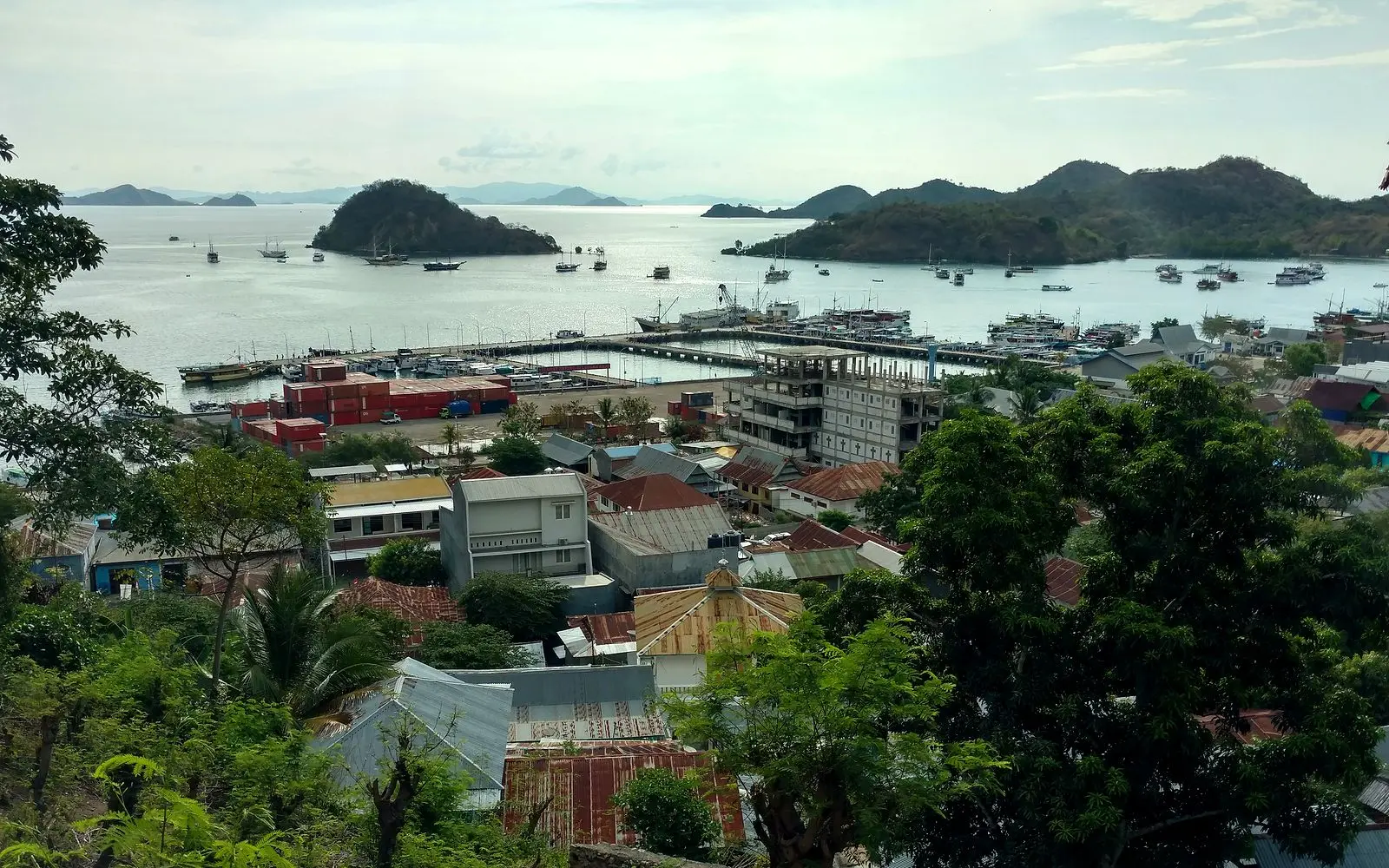
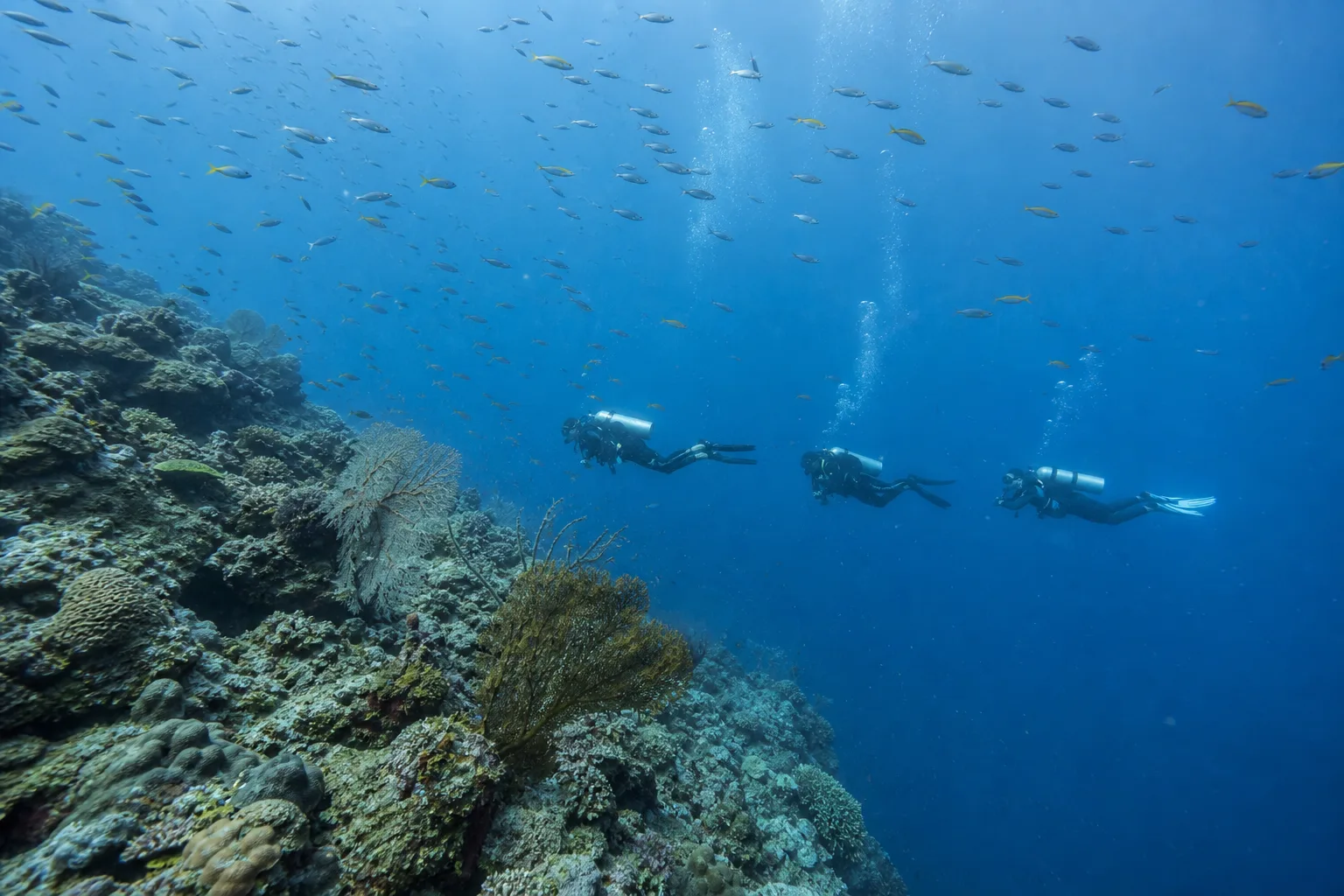
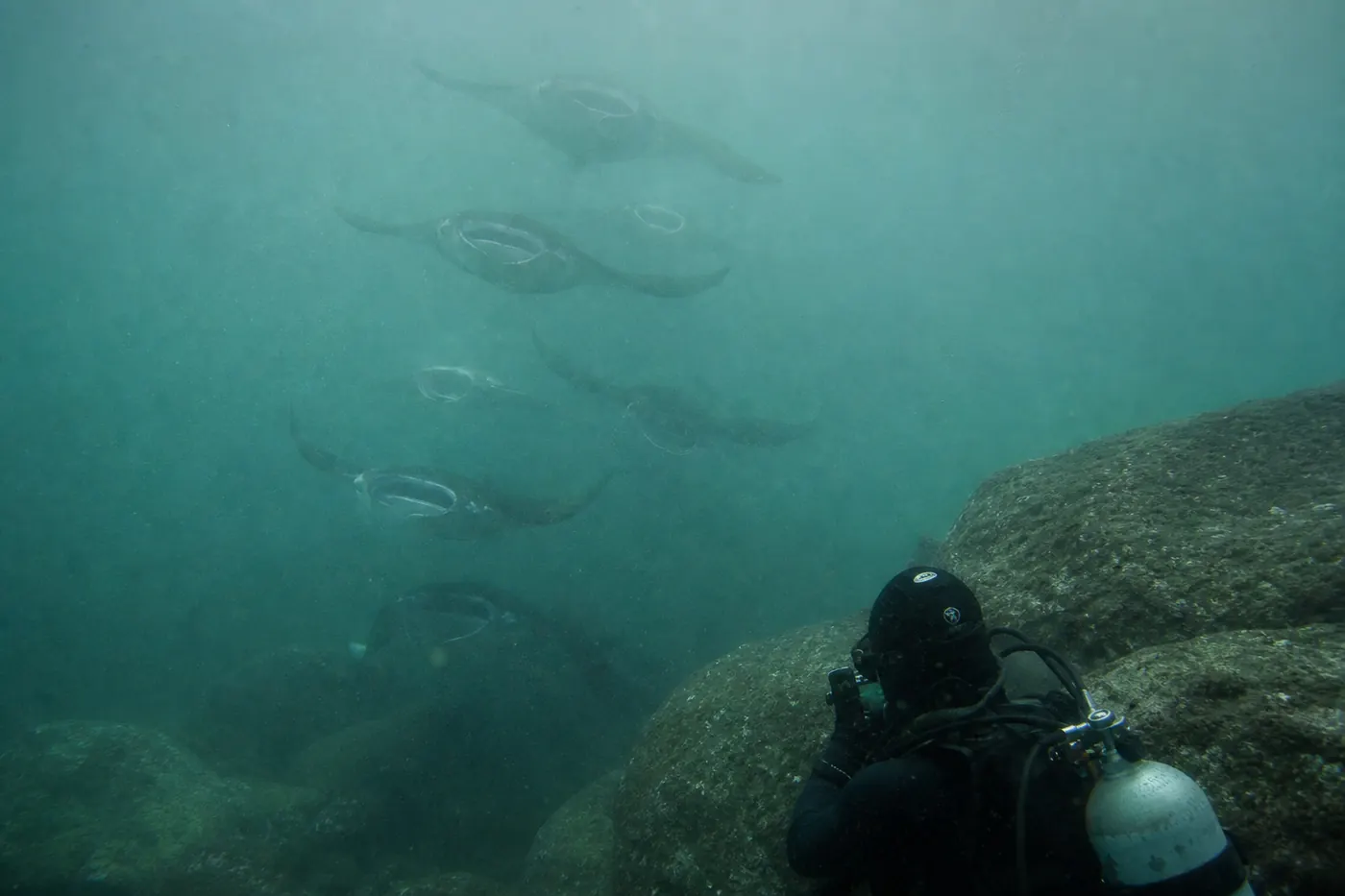
Manta Alley sits in the far south of the national park, off the southern coast of Komodo island near Toro Liang, roughly 38 kilometres from Labuan Bajo but a great deal further in practical terms. The site is a channel, an alley in the literal sense, running between rocky outcrops and small islets, with boulder-strewn slopes falling from the surface to around 25 metres. Most of what matters happens between five and eighteen metres. There is no pretty coral garden here and no sweeping wall; the topography is rugged, grey and primal, more Scottish sea loch than tropical postcard, and the mantas are entirely the point.
The channel works because of its shape. Water driven north from the Indian Ocean is squeezed through the gap, and that acceleration concentrates plankton into a reliable, predictable stream. Sitting in that stream are several cleaning stations, which is a grander term than the reality deserves: they are simply particular rocky outcrops, chosen by generations of mantas, where cleaner wrasse and other small fish have set up shop. A manta arrives, slows, and hovers over the station with its wings tipped slightly upward and its mouth open, and the wrasse go to work on its gill plates, its skin, the trailing edges of its wings, picking off parasites. The manta holds nearly motionless for a minute, or five, or fifteen. Then it banks away, loops the channel, and comes back for another pass.
Understanding that this is a service appointment rather than a sightseeing route changes how you dive the site. The mantas are not passing through; they are queuing. They will tolerate an enormous amount of human presence provided the queue is not blocked and the station is not occupied by something large and bubbling. Get that right and the animals will keep returning for your entire dive, close enough that you will run out of wide-angle frame before they run out of patience. Get it wrong, and a channel that held twenty mantas empties in four minutes. We have watched both outcomes, and the difference was never the mantas.
The supporting cast is decent without being the draw: whitetip reef sharks on the boulder slopes, giant trevally working through, eagle rays passing, bumphead parrotfish crunching along the rocks, and the channel walls carry enough soft coral and reef fish to keep a safety stop interesting. But nobody crosses to south Komodo for the reef fish. Manta Alley is a single-species pilgrimage, and it is one of the very few dives in Indonesia where that focus is entirely justified.
How to Dive Manta Alley Without Emptying It
Manta etiquette: the part that decides your dive
Reef mantas have no defensive anatomy to speak of. No sting, no teeth worth mentioning, nothing to fight with. What they have instead is a highly developed instinct to leave, and a brain large enough to remember where being harassed happened. Everything in the etiquette below exists because the animals vote with their wings.
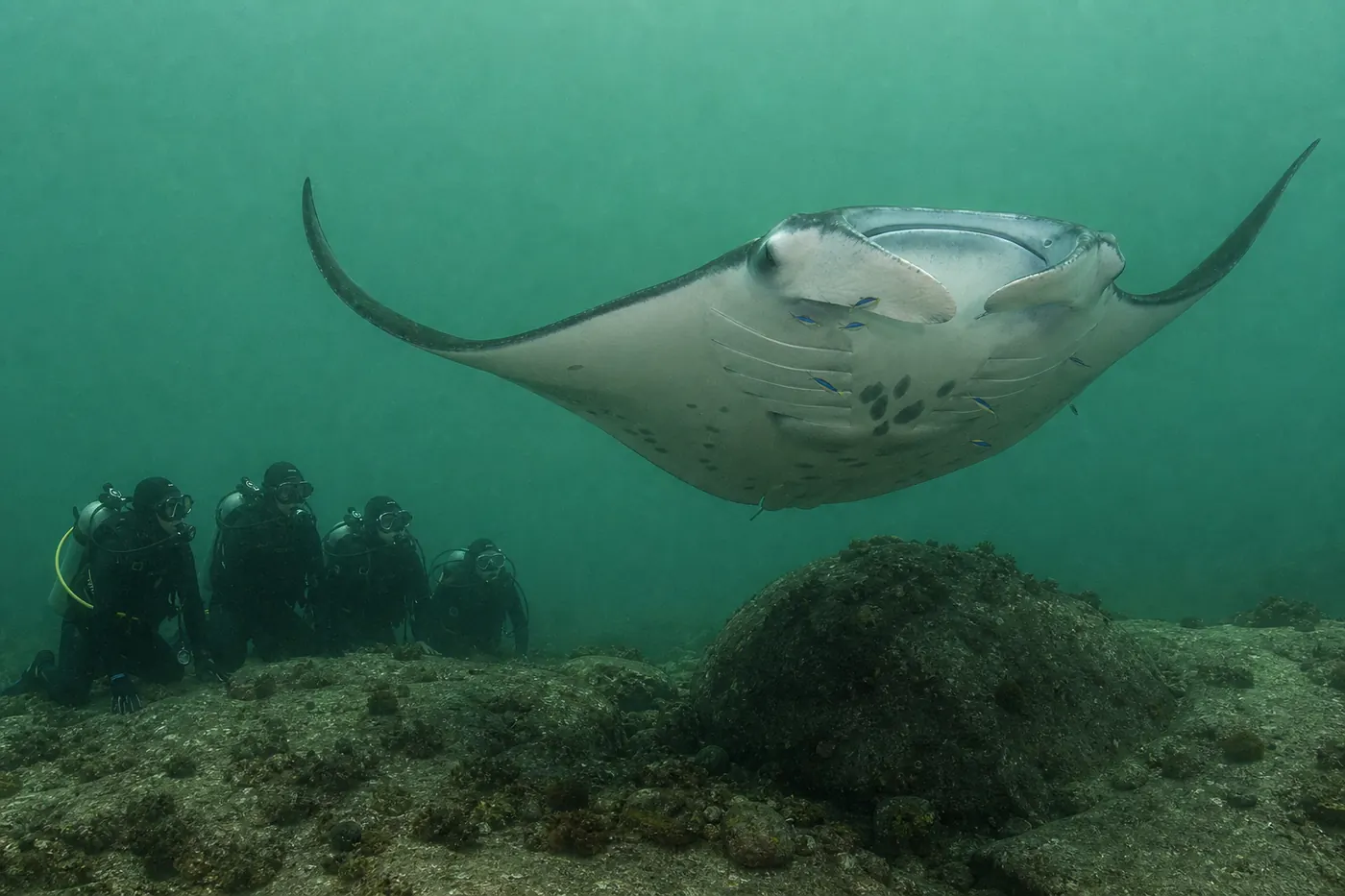
Stay low, stay still, stay put. Pick a spot on the sand or rock three to five metres back from the cleaning station and settle onto it. Not above it, not on it, and not drifting slowly towards it while telling yourself you are holding position. Mantas read anything approaching from above as a threat, which is reasonable given that the things that historically approached them from above were large sharks. A row of divers kneeling low on the bottom, motionless, is functionally furniture. The same divers hovering at mid-water in a loose cloud of bubbles is a wall.
Never swim at a manta. This is the single most common mistake and it is almost always well-intentioned. The animal is beautiful, it is fifteen metres away, and the urge to close the distance is enormous. Resist it completely. If you hold your position, the manta will very often come to you, and it will come closer than you would ever have dared to swim. If you chase it, you will get one distant photograph of a manta leaving and you will have taken the encounter from everyone behind you.
Keep your bubbles out from underneath them. Exhaust bubbles rising into a hovering manta's belly will move it off the station reliably, and this is the mechanism by which photographers who know all the other rules still ruin things. If a manta is directly above you, the polite move is to hold your breath briefly on the exhale, or better, not to be directly underneath it in the first place. Position yourself off to the side of the station rather than beneath the flight path.
No touching, ever, for any reason. Mantas carry a mucus layer that protects them against infection, and a hand on a wing strips it. It also ends any chance that the animal comes back. Guides in Komodo will end a dive over this, and they are right to.
Do not block the alley. The channel is narrow and the mantas use it as a circuit. Twelve divers spread in a line across the gap is a roadblock even when each individual diver is behaving well. Cluster on one side, leave the water column open, and let them fly.
Reading what the mantas are doing
Divers who can distinguish the three main behaviours get far more from Manta Alley than divers who see a generic large ray, because each behaviour rewards a different response from you.
Cleaning is the slow one. A single manta, or two or three in loose rotation, hovering nearly stationary above a specific outcrop, wings angled up, gill plates flared, mouth partly open. This is the behaviour that gives you time: time to compose, time to change settings, time to simply look at an animal four metres wide holding still in front of you. Cleaning mantas are the most sensitive to disturbance because they have chosen to be vulnerable. Settle in and do nothing.
Feeding is the fast one, and in south Komodo it is the spectacular one. Mantas feeding on a dense plankton stream open their mouths fully, unroll their cephalic fins into forward-pointing scoops, and drive along the current line. When several do this in the same water they fall into a rotating column, each animal looping back to the top of the stack, which the dive industry has taken to calling a manta vortex or a manta train. Genuinely large aggregations of fifteen to twenty-five animals in a single dive happen here in the right conditions, and a vortex is one of the great sights in Indonesian diving. Feeding mantas are much less bothered by divers than cleaning mantas; food outranks caution. You still stay out of the current line rather than in it.
Courtship is the chaotic one and the least predictable. One female leads and a string of males follows in her exact path, matching every turn, sometimes for twenty minutes or more, occasionally with a lead male close enough to be touching her wingtips. Courtship trains ignore divers almost entirely and will pass within a metre of a motionless diver without any apparent registration. Hold absolutely still and let it happen around you.
Individual mantas are identifiable from the spot pattern on the belly, which is unique and stable for life, like a fingerprint. If you get a clean ventral shot, it is worth submitting to a manta ID database; south Komodo's population is less thoroughly catalogued than Raja Ampat's and resightings genuinely contribute. Manta Alley also has resident black morphs, animals that are melanistic and solid black above and below, and if you want the full picture on why they occur and where else in Indonesia you will find them, our guide to manta rays in Indonesia covers the genetics and the site-by-site odds.
Cold Water, Surge and Season
Thermal protection and the green water
South Komodo is not the Komodo most divers picture, and the temperature is the thing people are least prepared for. The southern coast faces the Indian Ocean, and cold nutrient-rich water upwells through the channels here, which is precisely why the plankton and therefore the mantas are present. That productivity has a price and you pay it in thermal protection. Expect somewhere in the range of 22 to 26 degrees on a normal southern dive, and around 22 degrees in August when the upwelling is strongest. We have logged colder. A 5mm wetsuit is the practical minimum, most of our regulars on southern itineraries carry a 5mm plus a hooded vest, and a fair number of people who dive south Komodo repeatedly have simply bought a 7mm for the purpose.
This matters more than it sounds. Being cold is the most common reason a Manta Alley dive ends early, and it is a genuinely painful way to lose a dive, because you are usually surfacing while the mantas are still there. Bring a hood. Bring more neoprene than the tropical-Indonesia brochures suggest. On a liveaboard doing four dives a day in 22-degree water, the cumulative chill builds across the day and by dive three an underinsulated diver is finished regardless of how tough they were on dive one.
The water is also greener and less clear than the rest of the park, for the same reason it is cold. Visibility at Manta Alley commonly runs ten to fifteen metres when the plankton is thick, against thirty or more at northern sites. There is no way around this trade-off and it is worth internalising before you arrive: the water that makes the mantas show up is the water that limits how far you can see them. Divers arriving expecting gin-clear blue and getting nutrient soup sometimes feel short-changed for the first ten minutes, until the first four-metre animal materialises out of the green at three metres' range, at which point the complaint tends to evaporate.
Surge, current and the skills that matter
Currents in the channel run moderate to strong depending on tide, and there is often significant surge near the rocks, which is the more awkward of the two. Surge means you are being pushed back and forth rather than steadily along, and near boulders it demands real attention to avoid being put into something hard. The standard technique is to find shelter behind a large boulder out of the main flow, settle, and let the mantas come past you, which conveniently is also the correct etiquette. Buoyancy control is the skill that matters most here: the ability to hold a position a few metres off a cleaning station, in surge, without sculling, finning or drifting.
Formally, Advanced Open Water is the sensible certification level, and published site guides range from calling Manta Alley intermediate to calling it advanced, which reflects how much the conditions vary rather than any disagreement about the site. On a calm slack-tide day it is a benign dive that a careful Open Water diver would handle. On a big tide with swell running it is unambiguously an advanced dive. Since you cannot know which you are getting until the morning, the honest answer is that you want twenty-five or more logged dives, recent cold-water comfort, and no anxiety about lower visibility. Good group awareness matters too, because the whole encounter depends on twelve people behaving like one.
Seasons: what we actually see, and where sources disagree
This deserves a straight answer, because the published information on Manta Alley's peak season is contradictory and confidently stated on both sides. Some site guides put the peak in the wet season, December to March, on the reasoning that rainfall drives plankton blooms. Others, and our own experience across many southern itineraries, put it in the dry-season upwelling months.
What we see: mantas are at Manta Alley year-round, and there is no month in which a southern itinerary is pointless. The most reliable windows for good numbers are April to June and September to November. December to February still produces good encounters, but conditions in the south are less consistent then and the crossing is more often uncomfortable or cancelled outright. The single most dramatic feeding event of the year is the cold August upwelling, when temperatures drop, plankton density spikes, and the largest aggregations we see all year turn up to exploit it. If someone asked us to pick one month for a manta vortex and accepted that they would be cold, we would say August.
The mechanism behind our version is straightforward and specific to this coast: south Komodo's productivity is driven by Indian Ocean upwelling, which peaks mid-year with the southeast monsoon, not by rainfall runoff. That is a different engine from the one operating at sites inside sheltered northern waters, which is probably how the two accounts diverged in the first place. We would rather tell you that the sources disagree than pretend to a precision nobody has, and mantas are wild animals with no obligation to any calendar. Roughly speaking, come between April and November for the best combination of numbers and workable sea conditions, accept that August will be cold, and treat anything in December to February as a genuine possibility rather than a plan.
One weather caveat that applies in every month: the southern coast is exposed, and the decision to run south is made on the day by the captain reading the swell. Even in the best season a boat will sometimes turn back. That is not an operator failing, it is the correct call on an exposed coast in a national park a long way from help, and any operator who never cancels a southern crossing is one you should think carefully about.
Why Manta Alley Is a Liveaboard Dive, and What Else the South Gives You
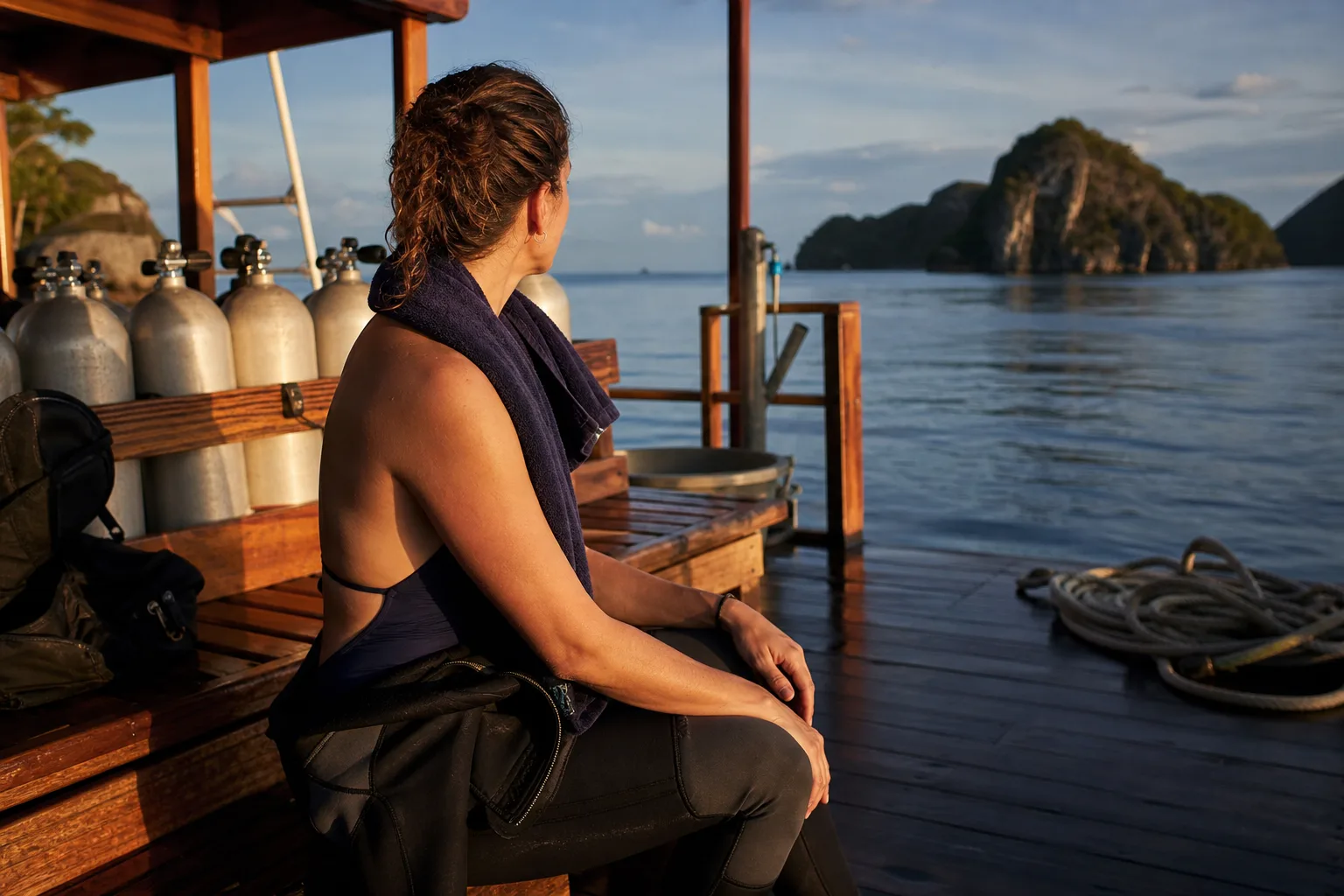
The access problem is simple arithmetic. Manta Alley is at the southern end of the park; Labuan Bajo is at the northern end of the approach. A day boat cannot get there and back with useful bottom time on the good tide, and the standard four-night Komodo itinerary that covers the north and a slice of the centre cannot reach it either. Including south Komodo reliably adds roughly half a day of crossing in each direction, which means a six or seven-night trip. This is the clearest example in the park of the longer itinerary buying something the shorter one simply cannot deliver, and it is why we are direct with guests about it at the enquiry stage: if Manta Alley is the reason you are coming to Komodo, do not book four nights and hope.
What a liveaboard adds beyond mere reach is tide selection. The encounter quality at Manta Alley depends heavily on being in the channel when the current is running the right way, and a boat that is already anchored in the south overnight can put you in the water at the correct hour rather than the convenient one. It also allows repeat dives on the same site across two days, which is what turns a good manta trip into a great one, because the animals move and one dive is a single sample. Guests who get three cracks at the channel almost always report that the second or third was the best.
The south is not a single-site region, either, and the rest of it is a genuinely different park. Horseshoe Bay at the southern tip of Rinca, the usual overnight anchorage for southern itineraries, holds Cannibal Rock and Yellow Wall, which are among the finest macro and soft-coral dives in Indonesia. Cold water again, and the same green cast, but the colour density on those walls is extraordinary and the critter list is long: frogfish, several species of pygmy seahorse, nudibranchs in volume, Coleman shrimp on fire urchins. Pairing a morning manta vortex with an afternoon of high-end macro is a strange and excellent combination that no four-night itinerary offers. Our broader survey of the park, region by region, is in our guide to the best dive sites in Komodo, and the northern pinnacles that make up the other half of a long itinerary are covered in detail in our pieces on Batu Bolong and Castle Rock and Crystal Rock.
Manta Alley or Manta Point? A straight comparison
These two sites get conflated constantly, including by booking agents, and the difference matters enough to be worth a table.
| Manta Alley (south Komodo) | Manta Point / Karang Makassar (central) | |
|---|---|---|
| Character | Narrow rocky channel, rugged, dramatic | Broad shallow sandy reef flat |
| Depth | 5 to 25 m, action at 5 to 18 m | 5 to 15 m |
| Water | 22 to 26 C, green, 10 to 15 m visibility | 26 to 29 C, clearer |
| Difficulty | Intermediate to advanced, surge and current | All levels, snorkellers possible |
| Numbers | Bigger aggregations, up to 20 to 25 | Steadier, usually smaller groups |
| Access | Liveaboard only, 6 nights or more | Day boats and all itineraries |
Neither is better in the abstract. Manta Point is more reliable, warmer, easier and available on any trip, and for a nervous diver or a snorkelling partner it is the right answer. Manta Alley is the bigger experience, and the one people describe years later. Many of our guests dive both on the same itinerary and are glad of the contrast.
Planning Your Manta Alley Dive
How one diver can end the encounter for everyone
This is the failure mode we brief hardest against, because it happens quickly and it is almost always well intentioned. Picture a good afternoon tide with perhaps eighteen mantas working the cleaning stations and the first few minutes going exactly as well as the site can go.
Then one diver, entirely without malice, fins gently towards a hovering animal for a better phone-housing shot. The manta moves off its station. The diver follows. Two photographers, seeing a manta now out in open water, reposition to intercept it. Within about three minutes the channel is empty, and it can stay empty for the remaining thirty-five minutes of the dive. Eighteen animals gone, on a tide the boat crossed half the park to reach.
The lesson is not about any individual guest, it is about what a briefing has to contain. Explaining the rules is not the same as explaining the stakes, so we brief Manta Alley plainly: the group has one shared encounter rather than eight individual ones, any single person can end it for everyone in under a minute, and the divers who see the most mantas are reliably the ones who move the least. We also put a guide low beside each cleaning station as a visible anchor for people to settle near. Briefed that way, the aggregation tends to stay put for the whole dive, which is the version everybody wants.
Kit, cameras, fees and booking
Bring more neoprene than you think, and a hood; this is the recommendation guests thank us for most. A 5mm minimum, 7mm or a hooded vest if you feel the cold, and if you are doing four dives a day, consider that the fourth dive is colder than the first regardless of the thermometer.
For cameras, wide angle is the only sensible choice, and ambient light beats strobes for most of what happens here. The water is green and full of particulate, so strobes light the plankton as enthusiastically as they light the manta and you get a snowstorm. Shoot upward against the surface for silhouettes, get low, and let the animal fill the frame rather than trying to reach it. Do not fire a strobe into a cleaning manta's face at close range; it is the photographic equivalent of the mistake above.
Mantas have been fully protected in Indonesian waters since 2014, when the country declared the world's largest manta sanctuary, on the straightforward economic logic that a living manta is worth vastly more in tourism revenue over its life than a dead one is once. Diving the site well is part of what keeps that arithmetic true. Komodo National Park charges entrance and activity fees on top of your trip cost, which vary by nationality and day, and your operator will normally collect these; budget for them separately and check the current rates when you book, as they have been revised more than once in recent years.
If you want Manta Alley, the booking rule is short: six nights minimum, aim for April to November, expect cold, and accept that the sea gets a vote. We are happy to talk through which of our Indonesia liveaboard departures include the southern loop and which months on our schedule have historically produced the best channel conditions, so get in touch and we will be honest about the odds rather than optimistic about them.