Last updated: May 2026.
Most honeymoon advice you read online treats the liveaboard option as an afterthought. The conventional list goes resort, villa, overwater bungalow, beach safari, and then somewhere near the bottom, if it appears at all, "for adventurous couples, consider a dive boat." That ordering makes a kind of sense if you think of a honeymoon as a place to lie down for a week. It makes very little sense if you think of one as ten days of being genuinely undistracted with the person you just married, in a part of the world that almost no other tourists are visiting, with food, dives, sunsets, and quiet nights pre-arranged for you and a small group of like-minded people.
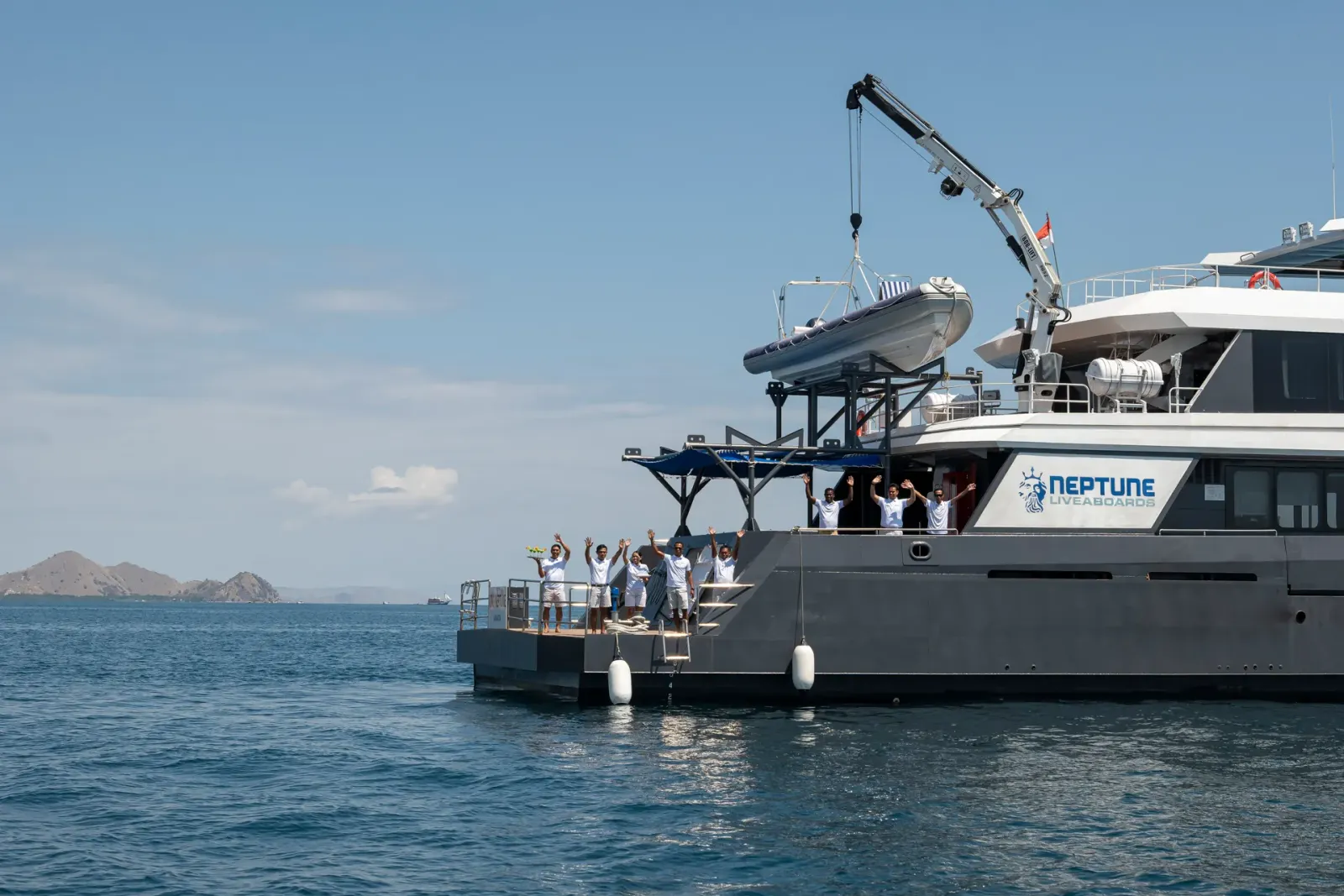
We've watched roughly two dozen honeymoon couples come through Neptune One and Komodo Sea Dragon over the past few seasons. The pattern is consistent. People book it slightly nervously, is a dive boat really romantic? Is it luxury enough? What does the non-diving partner do?, and then, on the last morning, they ask whether they can rebook for their first anniversary. Once you've experienced a phinisi anchored in a quiet bay at sunset with a private chef-cooked dinner laid out on a cloth-covered teak deck, with the rest of the boat (which is usually four or five other couples) keeping politely to their own space, the words "luxury resort" stop sounding particularly luxurious.
This is a guide to honeymooning on a liveaboard in Indonesia. We're going to walk through why the format actually fits a honeymoon better than most people expect, which Indonesian regions and seasons make sense for couples, what a non-diving partner does during the day (because that question comes up on every booking call), what each of our three vessels offers couples specifically, the special touches we add when we know a trip is a honeymoon, and the practical logistics of planning the right one. We'll also be honest about what a liveaboard honeymoon isn't suited for, there are couples for whom a Maldivian overwater villa is a better answer, and we'll say so.
Why a Liveaboard Actually Suits a Honeymoon
Start with what you're trying to achieve on a honeymoon. The two things almost every couple says they want from the trip are time together, concentrated, undistracted, off-grid, and a sense of having done something memorable that's specific to them as a pair. The standard resort honeymoon delivers the first one only if you're disciplined about phones, only if your room hits the privacy mark, and only if the resort isn't packed with bachelor parties or families. The "memorable thing" is usually a single excursion bolted onto a week of poolside reading.
A liveaboard inverts that ratio. The boat itself is the trip, not a base for excursions. You wake up somewhere different every morning. The dives, the islands, the snorkel sites, the sunsets are arranged for you and the small group of guests on board, with no further planning required from your end. Phones get spotty signal, occasionally none, and that's part of why people book it. The other couples on board are a deliberately small number, fourteen on Neptune One, twelve on Komodo Sea Dragon, twenty on King Neptune, and they're there because they care about diving, not nightlife. The atmosphere is closer to a small hotel run by a single chef than to a resort.
Privacy is the part that surprises new couples most. A traditional phinisi cabin with en-suite bathroom and a real bed is not the bunk-room many divers expect. The Deluxe Sea View cabins on Neptune One have private balconies, actual outside deck space attached to the cabin where two people can sit with coffee at six in the morning without being in anyone else's eyeline. The Sangsaka cabins on King Neptune have similar arrangements. If you want, you can spend half the trip on your private balcony and the other half in the dining lounge talking to the rest of the guests. The boat is small enough that this is genuinely your choice, not a function of social obligation.
Then there's the food. Every Indonesian liveaboard worth booking has a chef cooking three meals a day plus snacks, on a small galley designed for ten to twenty guests. You're not eating buffet. You're eating something that was thought about, with the dietary preferences you specified at booking factored in, and you're eating it at a single shared table or, if you prefer, on a private corner of the deck. The crew know the difference. We've laid out plenty of dinners for two on the upper deck while the rest of the guests ate inside.
Why Indonesia, Specifically
You can liveaboard in the Maldives, the Galápagos, the Red Sea, French Polynesia, Belize, or half a dozen other countries. We're biased, we operate in Indonesia, but we'll say honestly why we think the country fits a honeymoon better than most of the alternatives.
The first answer is variety. Indonesia is not one destination. It's an archipelago of seventeen thousand islands across three time zones, and a single liveaboard cruise can carry you through five distinct ecosystems, black volcanic beaches, pink coral sand, deep walls, current-fed pinnacles, mangrove fjords, without you ever changing boats. A Maldivian honeymoon is, structurally, atoll diving plus white sand. That's a beautiful single-note experience. An Indonesian honeymoon is a whole album. We go into the comparison in more depth here if you want the side-by-side, but the honeymoon-specific argument is that Indonesia gives you more terrain to explore together.
The second answer is uncrowded. Komodo National Park on a typical day in July sees maybe forty boats spread across two thousand square kilometres of marine park. The Maldives has more than a hundred resort boats running daily out of central atolls. Raja Ampat has a hard cap on liveaboard permits that keeps the area protected; on most cruises you won't see another dive boat for days at a time. The privacy that resorts struggle to deliver, the geography of Indonesian liveaboard cruising delivers automatically.
The third answer is calendar. The Maldives has one peak season; you book against weather. Indonesia has multiple regional seasons that effectively offer year-round honeymoon options. Komodo is the dry-season choice for July through September. Raja Ampat covers October through April. Bali is dive-able most of the year. The Banda Sea has a tight September to early November window for the more adventurous. The full seasons guide is here; for honeymoon-planning, this means you can book around the wedding date rather than around weather.
The fourth answer is hospitality. Indonesian boat crews are the best in the world at small-group hospitality. We say that as something we hear from our guests, not just as a sales line. The cabin steward who notices your wife is missing her sun cream and quietly leaves a fresh tube on the dressing table. The deck crew who set up the lounge for sunset on the night they know it's your one-month anniversary. The chef who, the moment a flight delay puts you on the boat hungry, has a plate of nasi goreng on the deck before you've finished unpacking. This isn't hotel-school choreography. It's a smaller country's older idea of how to host guests.
The Three Neptune Vessels, Honeymoon Comparison
We operate three boats, and they fit different couples. Here's the honest comparison.
Neptune One, The Quiet Luxury Pick
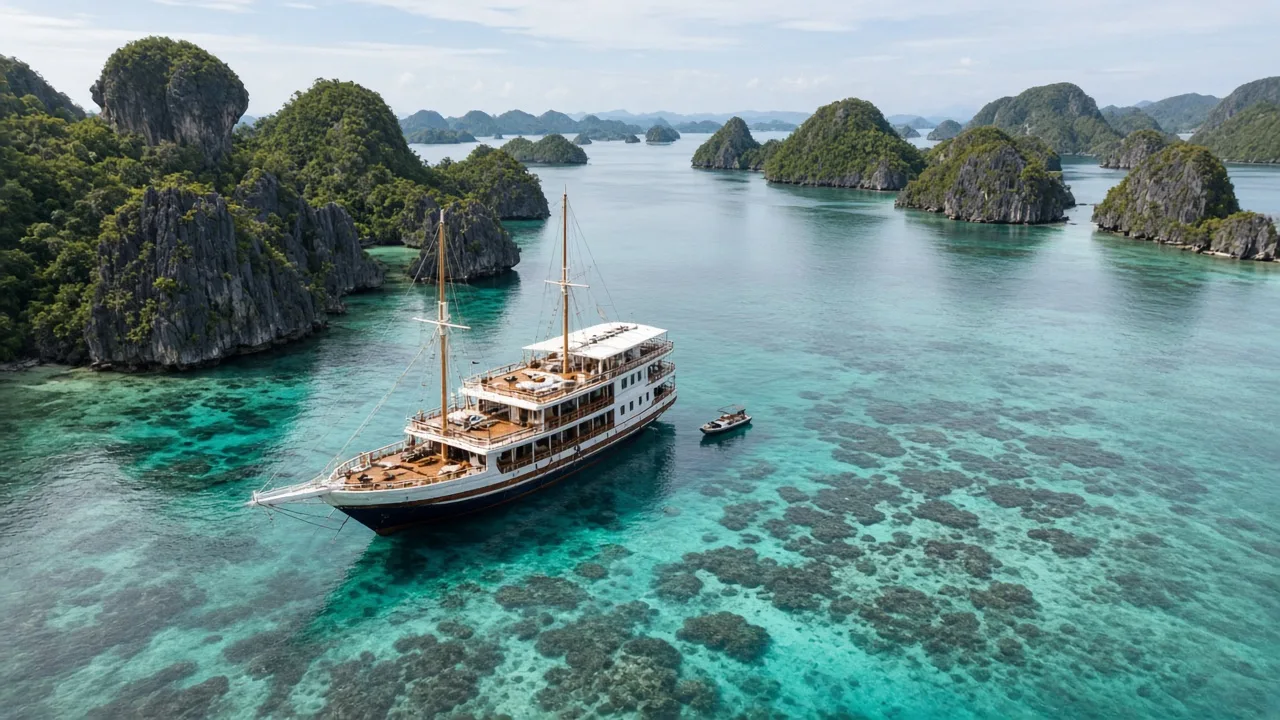
Neptune One is a 39-metre traditional phinisi with eight cabins and a sixteen-guest cap. For honeymooners, the headline feature is the two Deluxe Sea View cabins with private balconies on the upper deck, large king-bed cabins with their own attached outdoor space, en-suite bathroom, and the option to convert beds to twin if needed. These are the cabins we book for couples ninety percent of the time, and we typically have one or two honeymoons on board per cruise during the December-to-February peak.
The vibe is closer to small-boutique-hotel than to expedition vessel. The lounge has couches, books, a curated spirits selection. The aft deck has loungers and a low table where dinners get served on quiet nights. The crew is sixteen, which is roughly one staff member per guest. Diving is small-group; you'll be in groups of four to six divers per dive guide. Full vessel details and current schedule are on the vessel page.
Komodo Sea Dragon, The Komodo Specialist
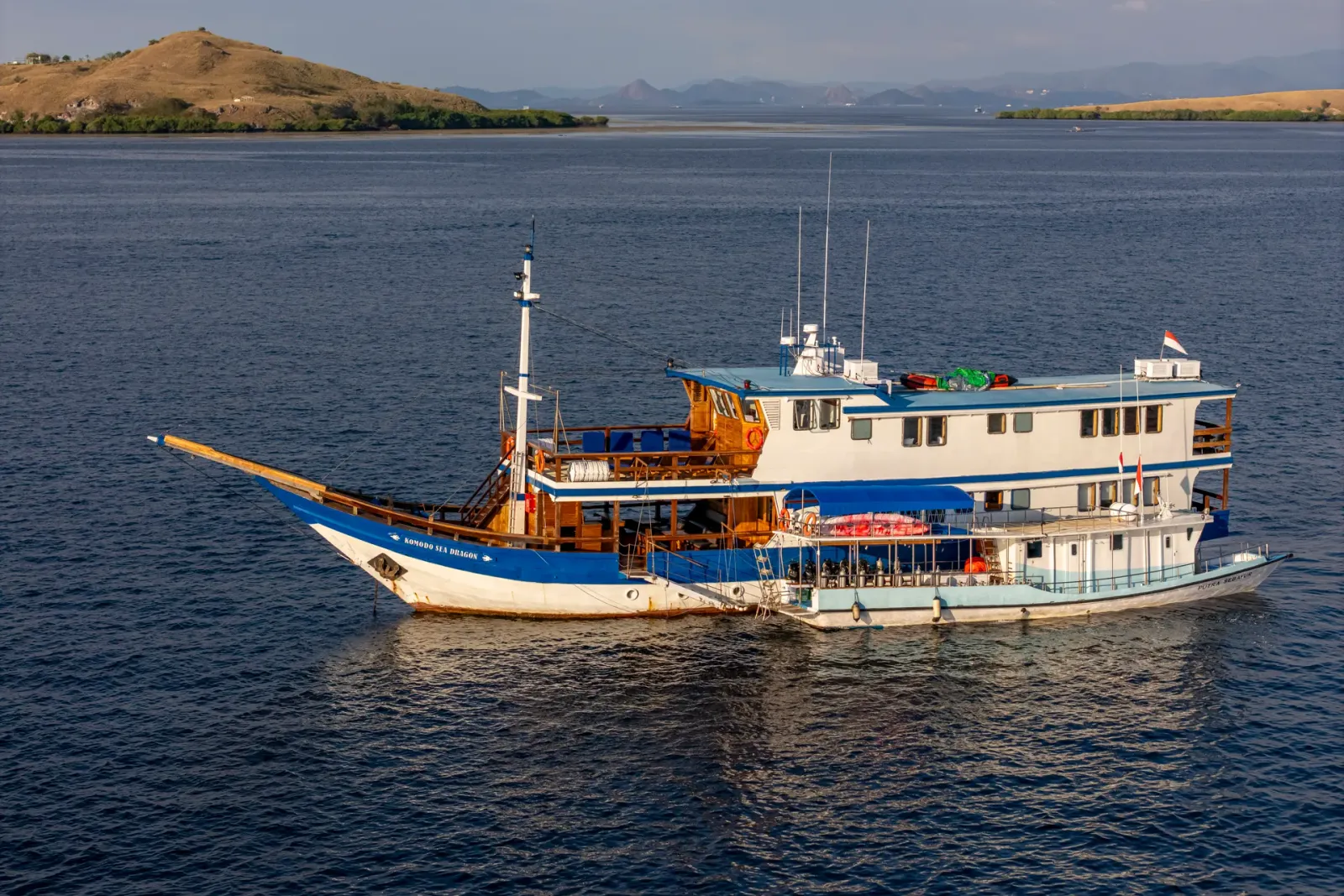
Komodo Sea Dragon is a 35-metre wooden phinisi with six cabins and a twelve-guest cap. It's the smallest of our three boats, which means it's the most intimate and the most flexible, twelve guests is small enough that the crew can essentially run a private trip on request, and a honeymoon couple booking the master cabin will spend the cruise in something close to a private-charter experience.
It's also our most Komodo-specialised vessel. If your honeymoon dates fall in the Komodo season (April to early November) and you want the dragons, the Padar Island sunset hike, the pink beach swim, plus the headline dives, this is the boat. The cabins are smaller than Neptune One's but very well finished, with full bathrooms and air conditioning. Vessel details and schedule here.
King Neptune, The Long-Range Expedition Boat
King Neptune is a 46-metre luxury yacht with ten cabins, twenty-guest cap, and the longest legs of any of our boats, it's the vessel we use for the Halmahera, Banda Sea, and Forgotten Islands itineraries that other operators can't realistically run. For honeymooners, King Neptune fits couples who want a longer, more adventurous trip, eleven to fourteen nights, into eastern Indonesia regions that very few other tourists ever reach.
The cabins are bigger than the other two boats and the on-board amenities, small spa area, larger lounge, two dive tenders, are scaled up. It's the most "yacht" of our three vessels. Vessel details and schedule here.
The Best Regions for an Indonesian Honeymoon, by Month
Indonesia's diving regions run on different seasonal calendars, and the honeymoon-suitability of each region depends on what you want from the trip. Here's the breakdown.
Komodo (April to November), The Iconic Pick
Komodo is the region most international honeymooners pick when they're new to Indonesia, and there's a reason. The combination of legitimate world-class diving (Castle Rock, Manta Alley, Crystal Rock), surface attractions (the dragons on Rinca, the Padar Island sunset hike, the Pink Beach), and reliable dry-season weather makes it the most polished honeymoon product in the country. The cruises run six to eight nights typically, ex-Labuan Bajo, with direct flights from Bali. Full Komodo itinerary details here; site-by-site guide here.
The honeymoon angle: Komodo has the best balance of diving variety, surface excursions, and short travel logistics. A wedding-week honeymoon in late July or August is the lowest-stress entry into Indonesian liveaboard cruising. The downside, if it is one, is that Komodo is the busiest of the regions; you'll occasionally see another liveaboard at popular sites.
Raja Ampat (October to April), The Photographer's Pick
Raja Ampat is for honeymoons that lean a bit further from the standard tourist track. The region is the global epicentre of marine biodiversity, the dive sites are technically stunning, and the topside scenery, karst islands, hidden lagoons, the Wayag viewpoint, beach picnics on uninhabited cays, is spectacular in a way Komodo isn't. Sites and seasonality covered here.
The honeymoon angle: Raja Ampat suits couples who're willing to spend a longer travel day (Sorong is a three-segment flight from most international gateways) in exchange for a markedly more remote experience. The cruises are typically eleven nights, which is a longer commitment than Komodo's six-to-eight, but the per-day cost works out lower and the experience-per-dollar tilts heavily in favour. We'd recommend Raja Ampat for second-time Indonesia couples or for first-timers with a long travel window.
Bali, The Add-On, Not the Main Event
Bali on its own isn't really a liveaboard destination, it's a resort and day-boat island. But Bali fits perfectly as a one-or-two-night bookend either side of a Komodo cruise, and many of our honeymoon couples spend three days at an Ubud villa before the trip and one night in Sanur or Seminyak after. If you want a couple of dive days from Bali, the sites are covered here. The Bali pre/post is logistically convenient (your cruise flight to Labuan Bajo connects via Bali anyway) and the contrast between Ubud's rice paddies and the boat's open-water cruising makes for a strong emotional shape to the trip.
The Banda Sea (September to early November), For the Adventurous Couple
The Banda Sea is the eastern, harder-to-reach region, historic spice islands, smoking volcanoes, deep-water hammerhead pinnacles, and three or four sites of genuine pelagic spectacle. The cruises are eleven to fourteen nights ex-Ambon. Region details here.
The honeymoon angle: this is for couples for whom "adventure" matters more than "comfort", who want the trip to feel like it's somewhere genuinely few people have been. The diving is the most demanding of any of our regions, but the surface experience, anchoring off an active volcano, hiking up to the Gunung Api caldera, drifting through old Dutch trading harbours that are now near-empty, is uniquely affecting. Best suited to couples where both partners dive at Advanced level or higher.
The Forgotten Islands (October to early November), For the Genuinely Remote Honeymoon
The Forgotten Islands cruise crosses the south-eastern Indonesian frontier, Maluku Tenggara, Tanimbar, the route that few liveaboards run because the distances are long and the logistics demanding. Detail here. We mention it for one specific kind of honeymoon couple: experienced liveaboard divers, second-or-third Indonesia trip, who want the most untouched diving and the most "we're the only ones here" feeling possible. It's not a starter trip. It's the trip you book after you've done Komodo and Raja Ampat and the standard playbook isn't enough anymore.
Dive Sites That Actually Suit Honeymoon Couples
Not every Indonesian dive site is honeymoon-friendly. The big-current Komodo sites, the deep Banda hammerhead pinnacles, the exposed Halmahera offshore seamounts, those are technical dives, and they don't tend to make for the soft, photogenic, "let's both come up smiling" experience that defines a great honeymoon dive day. Here's the curated honeymoon-suitable list.
Manta Alley, Komodo
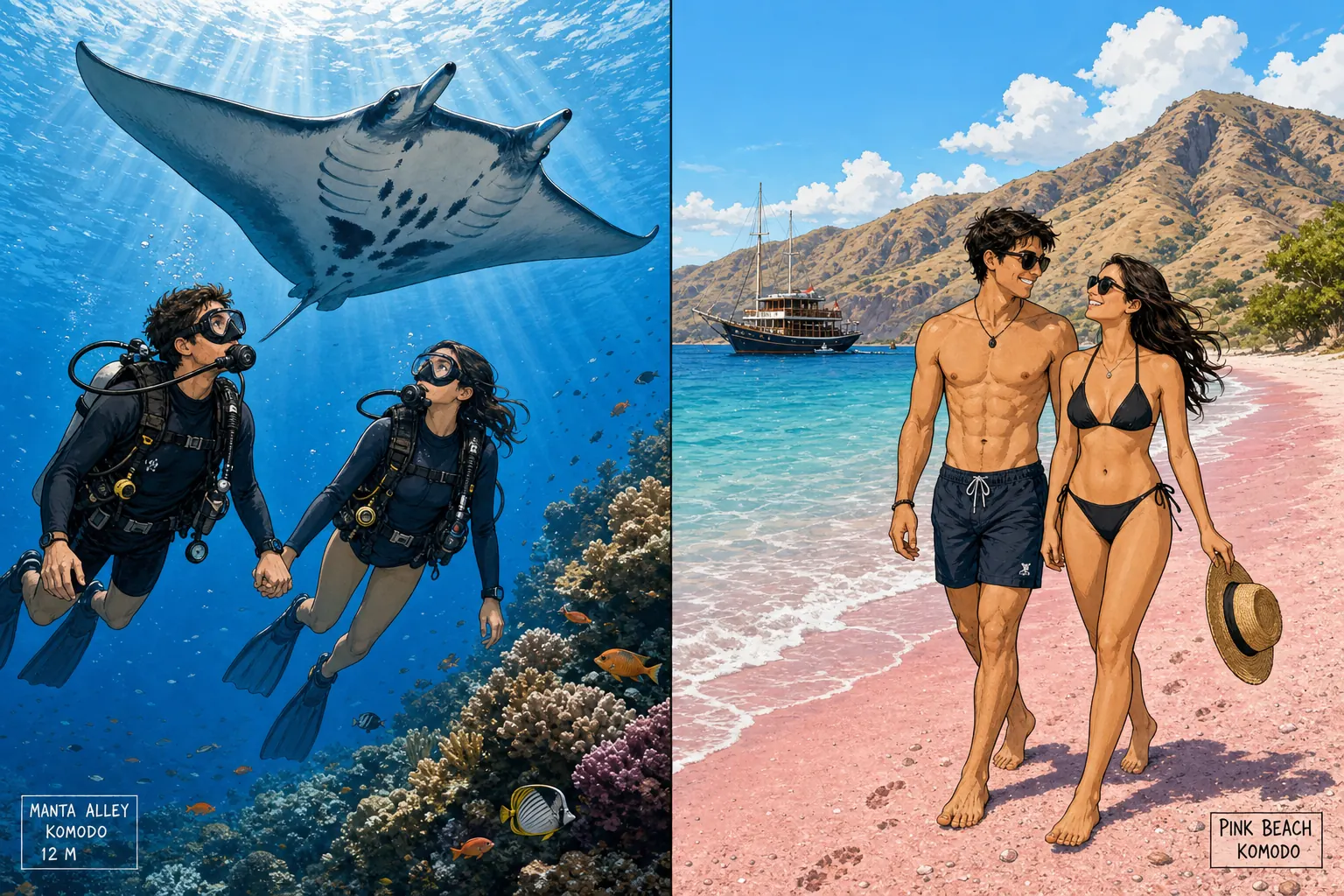
The shallow, gentle Komodo manta cleaning station, ten to fifteen metres deep, where reef mantas come in to be groomed by wrasses and you hover at respectful distance and watch. The dive is slow, photogenic, suitable for any cert level above Open Water, and arguably the single most romantic dive in the country, being two metres apart from your partner with a four-metre manta passing overhead at twelve metres depth produces the kind of memory that doesn't fade. More on Indonesia's manta dives here.
Pink Beach, Komodo (Snorkel and Beach)
Indonesia's most photographed beach. The pink-tinted sand comes from a microscopic red foraminifera that lives in the surrounding reef. The snorkel is shallow, calm, and the beach is the kind of postcard surface that honeymoon photography essentially demands. We typically anchor offshore for a half-day, and couples spend the morning snorkelling and the afternoon walking the dry hills behind the beach. More on Pink Beach here.
Cape Kri and the Mansuar Channel, Raja Ampat
Raja Ampat's most reliable reef-fish dives, vast schools of fusiliers and trevally over a healthy reef in twelve to twenty metres of water, with reef sharks and turtles passing through. Buoyancy-friendly, current-friendly with proper briefing, and visually overwhelming in the best way. The shallow safety stops over the coral garden are some of the best you'll do anywhere in your diving life.
Wayag Viewpoint, Raja Ampat
Not a dive, a hike up to a karst-island lookout for the iconic green-island-on-blue-water photograph. We typically schedule it as a sunset surface excursion, with a small picnic on the boat after. Honeymoon couples ask for this one specifically, and we route it into most Raja Ampat cruises that go far enough north.
The Crystal Bay Mola Dive, Nusa Penida
If your honeymoon dates fall in the September-to-November mola season and you can spend a couple of days from Bali, the Crystal Bay sunfish dive is a memory-making experience. Mola mola at three to seven metres long drift through the cleaning station; you watch from twenty metres depth. Mola guide and seasonality here.
What the Non-Diving Partner Actually Does All Day
This is the question every honeymoon-booking call includes, because plenty of couples have one diver and one non-diver. The short answer is: a non-diving partner has a great time on every one of our cruises, with one caveat we'll explain at the end.
The on-board reality. While four or five divers do their three-or-four daily dives, the non-diving partner has, in order: full breakfast in the dining lounge, a relaxed morning on the deck with coffee and books, a snorkel at the surface site if the geography supports it (Komodo's Pink Beach, Raja Ampat's reef-flats, most lagoon stops), lunch back on the boat, an island walk or photographic trip with the cruise director in the early afternoon, the spa or massage option on King Neptune in mid-afternoon, sunset on the upper deck, dinner together with the rest of the group, and a cocktail nightcap. The day is full enough that nobody's bored, and uncrowded enough that nobody's exhausted.
The snorkel piece in particular is worth understanding. Most of our dive sites have shallow reef-flat sections that are excellent for snorkellers, often with the same big animals, mantas, turtles, sharks at distance, that the divers are seeing at depth. Our Indonesian liveaboard tradition is that snorkellers go in with the dive group, on the same tender, with their own guide who knows the surface geography. They're not stuck on the boat; they're in the water on most dives. The first-time liveaboard guide covers the broader rhythm of life on board.
The caveat: a non-diving partner should still be comfortable on a boat for seven to eleven days. People who get sea-sick easily and don't already know how their bodies handle it should think carefully before booking a long cruise. Indonesian seas are mostly calm, the cruise tracks deliberately avoid open ocean, but there are open-water transit segments on the longer itineraries, and a non-diver who can't manage a ten-to-twelve knot crossing in moderate swell is going to have a hard time. We always discuss this on the booking call honestly. For couples where one partner is genuinely sea-sensitive, we sometimes recommend a shorter Komodo cruise (six nights) over a longer Raja Ampat one.
The Special Touches, What We Actually Do for Honeymoon Couples
This is the section where most operators get vague. We'd rather be specific. When you tell us at booking that the trip is a honeymoon, here's what changes.
Cabin assignment. You'll be assigned the best cabin available on the trip. On Neptune One that's normally one of the two Deluxe Sea View Balcony cabins. On King Neptune it's a Sangsaka master suite. On Komodo Sea Dragon it's the upper-deck master cabin. We move the booking around if needed to get you there, even on a smaller deposit.
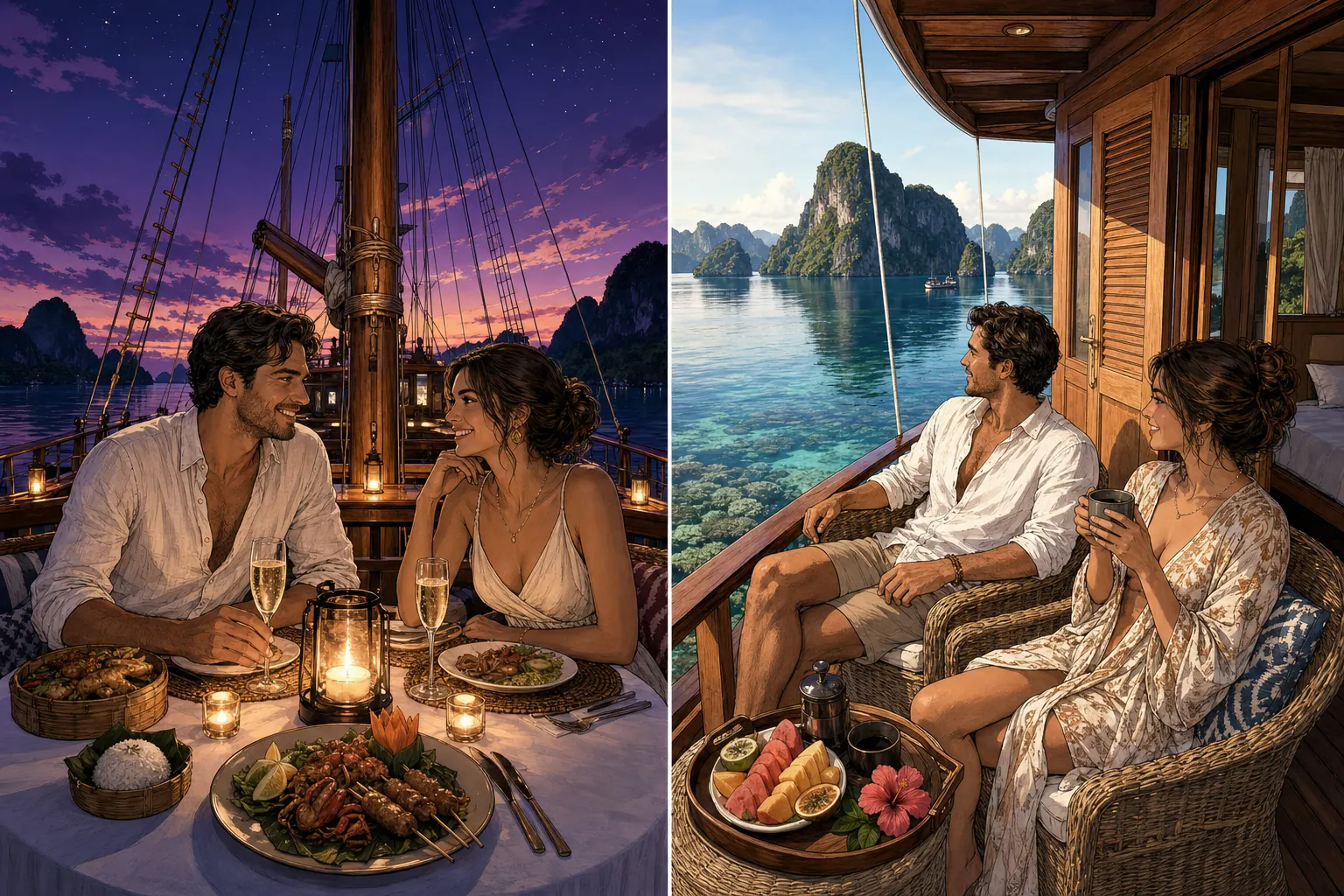
Welcome dinner setup. The first evening on board, the cruise director arranges a private table for two on the upper deck, with a slightly extended menu and a bottle of sparkling wine that's part of the honeymoon programme. The rest of the guests eat in the lounge. We don't make a public announcement about your honeymoon unless you specifically want one, many couples don't.
Sunset moment. Once during the cruise, on a night the captain picks for the calmest anchor and best light, the deck is set up for the two of you with a sunset cocktail service. The other guests are politely steered indoors for that evening's pre-dinner round.
Cake on a quiet night. The chef bakes a cake at some point in the cruise. It's an Indonesian-style chiffon, light and not too sweet, served on a single deck table with the cruise director and a candle. Again, only if you want it; some couples prefer no fuss, and we respect that.
Private dive option. On any dive in the cruise, the head dive guide can take you and your partner as a private two-up group, separated from the rest of the divers, with dedicated guide attention. This adds a small additional cost on most cruises but is included free on dedicated honeymoon bookings.
Photography. The cruise director has a decent underwater camera and is comfortable using it. We typically take a sequence of dive photos of the two of you together, Manta Alley and the Pink Beach are the standard backdrops, and email them to you in the week after the cruise. There's no commercial photography fee. We do it because it's the kind of thing a honeymoon trip should produce.
Dietary surprises. The chef will work with any dietary preferences you specify at booking. If one of you mentions an allergy to a particular protein or a love of a specific Indonesian dish during the booking call, that often shows up on the menu mid-cruise without it being announced.
None of this is hotel-school choreography. It's the small things a small operator can do with a small group of guests when the boat knows it's a honeymoon. Bigger operators with sixty-plus guests on board can't do most of it.
How to Plan a Honeymoon Liveaboard Trip
The practical bit. Here's how the planning typically goes.
Booking Timeline
Six to nine months ahead is normal. The peak honeymoon months in Indonesia (July, August, December, January) book out faster than the rest, and the best cabins on the smaller boats, the balcony cabins on Neptune One, the master suite on Komodo Sea Dragon, go first. We've had honeymoons book three months out and we've had them book a full year out; the longer lead time gets you cabin choice. For a wedding-week trip, build the ten-day cruise plus three days of either-end transit into your post-wedding window and book the cruise before you've nailed down the wedding venue, because the cruise calendar has less flex.
Length of Trip
A first-time-liveaboard honeymoon is best at six to seven nights for Komodo, eight to ten for Raja Ampat. Two-week-plus cruises are doable but they require both partners to be reasonably-experienced sea travellers. The combined "few days resort + liveaboard week + few days resort" shape works well for honeymoons that need a softer entry and exit; we recommend that pattern for couples where one partner is new to boats.
Certification Requirements
Open Water minimum for both diving partners on Komodo, Raja Ampat, and Bali. Advanced Open Water strongly preferred for Komodo's bigger-current sites and for any Banda Sea cruise. Non-diving partners need no certification, the snorkel program is open to anyone who can swim. If either of you is doing your first liveaboard, the first-time guide here is worth reading before you book.
Budget Range
Honeymoon liveaboard pricing varies by region, vessel, and cabin choice. As a rough guide, a Komodo cruise on Komodo Sea Dragon in a master cabin sits in the entry-level range; an eight-night Raja Ampat cruise on Neptune One in a Deluxe Sea View Balcony is in the mid range; an eleven-night Banda Sea cruise on King Neptune in a master suite is the premium tier. Add park fees, the optional honeymoon programme upgrade (modest), and flights. Contact us for an exact quote on your dates; the cabin and itinerary mix changes the number considerably, and we'd rather give you a real figure than a misleading range.
Travel Insurance
We recommend dive-specific travel insurance for any liveaboard trip, DAN World, World Nomads, or Diveassure are the standard options. The non-diving partner needs standard travel insurance. Both should cover trip cancellation in case of medical, weather, or wedding-adjacent disruption.
The Mixed-Skill Couple, Different Cert Levels, Same Trip
One question we get often: can the trip work if one partner is much more experienced than the other? The answer is yes, with caveats.
The standard mixed-skill arrangement is straightforward. The more experienced partner dives the harder sites with the main dive group; the less experienced partner dives the gentler sites or skips a dive in favour of the surface programme. On most days the two of you are reunited on the boat for surface intervals and the social parts of the day. We organise the dive schedule around couples deliberately, nobody's stranded on board while their partner is gone for half a day.
If one partner is new enough that they want to take an Open Water course mid-cruise, that's also workable on a couple of our itineraries. Both Komodo Sea Dragon and Neptune One can run an SDI Open Water course over a six-day cruise window with a dedicated instructor. We don't run the course on the bigger boats, too disruptive, but on a smaller honeymoon-leaning cruise, it's a viable plan, and it gets you to two-of-you-diving by the end of the trip.
The skill gap that doesn't work as well: an experienced diver paired with a true non-swimmer. The non-swimmer can still come, but they'll miss the snorkel programme entirely, which is a meaningful chunk of the surface-time fun for non-divers. In that case, we'd recommend a Bali-villa pre-trip with surface island-hopping by day-boat, because that gives the non-swimmer a less water-focused experience than a liveaboard offers.
What a Liveaboard Honeymoon Isn't Suited For
To be honest about it, the format doesn't fit every couple. We turn away (politely) at least one or two booking inquiries a year because we don't think the trip will deliver what the couple is hoping for.
Couples who genuinely don't dive or snorkel and want a beach-and-cocktail honeymoon are better served by a Lombok or Bali resort. The boat life is built around the water; a couple uninterested in the water will be bored by day three.
Couples where one or both partners is significantly sea-sick-prone and hasn't tested it on a longer crossing should think carefully about an eleven-night cruise. We'd recommend a shorter Komodo trip as a test or a short day-boat trial in Bali before committing to a long Indonesian liveaboard.
Couples who want their honeymoon to be a constantly-changing series of activities and venues (city, jungle, mountain, beach in one trip) should pick something different. A liveaboard is the opposite shape: it's slow, repetitive in rhythm, and the variety comes from the daily geography rather than from the activity menu. Some couples love that, most who book us fall in this category. Some don't, and a liveaboard is wrong for them.
Bringing It Together
If you take one thing from this guide, take this: a liveaboard honeymoon in Indonesia is a quieter, more concentrated, more memorable trip than the standard resort-and-villa option, and the country is genuinely one of the great places to do it. The combination of small boat, small group, world-class diving, near-empty waters, the right kind of luxury, and the genuine warmth of Indonesian boat hospitality, there's no real Western parallel.
The shape we'd actually book for a couple who said "we want a great honeymoon, we both dive at Open Water level, we have ten days, we want it photogenic": a Komodo cruise in late August on Komodo Sea Dragon (six nights, master cabin, full honeymoon programme), with two days at an Ubud villa beforehand and one night in Sanur after. Manta Alley, Pink Beach, Padar sunset, the dragons, plus Crystal Rock and Castle Rock for the more dramatic dive days. That's the trip we'd recommend without hesitation for a first-time Indonesia honeymoon.
For the second-best ten-day plan, switch the boat to Neptune One and the cruise to Raja Ampat in November (Misool rotation, eight nights, Deluxe Sea View Balcony, full honeymoon programme), with three days in Ubud beforehand. Higher per-day cost but a more remote and less crowded cruise, and the Wayag photograph plus the Magic Mountain manta dive are honeymoon memories of a higher order than even the Komodo headline experiences.
If you want help putting that itinerary together, the right cabin, the right calendar, the right pre/post Bali days, we book the trip. Contact us with your wedding date and what you're hoping for, and we'll put a proper plan together. The right Indonesian liveaboard honeymoon is a quietly extraordinary thing, and we'd rather build it carefully than sell you the wrong one.