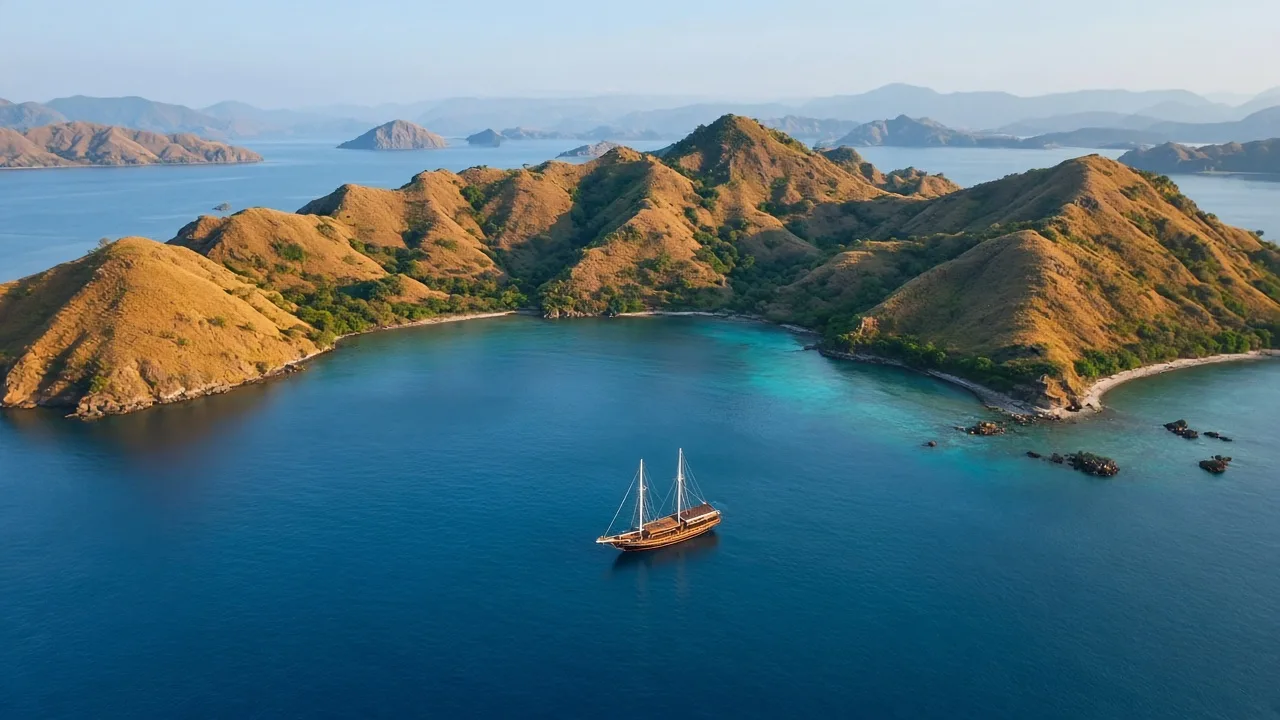
There is a moment, about two minutes after you slide into the warm green water of Lenmakana, when your brain finally accepts what your eyes are reporting: thousands of golden jellyfish, pulsing around your hands, brushing your arms, and none of them stinging. Guests come up the ladder afterwards using the same word, over and over: unreal. The jellyfish lake hidden in the karst of Misool is one of the strangest swims in Raja Ampat, and one of only a handful of places on the planet where it is possible at all. This guide covers everything we brief our own guests on: what the lake actually is, how to reach it, the climb (which is harder than the photos suggest), the strict conservation rules, and when to go.
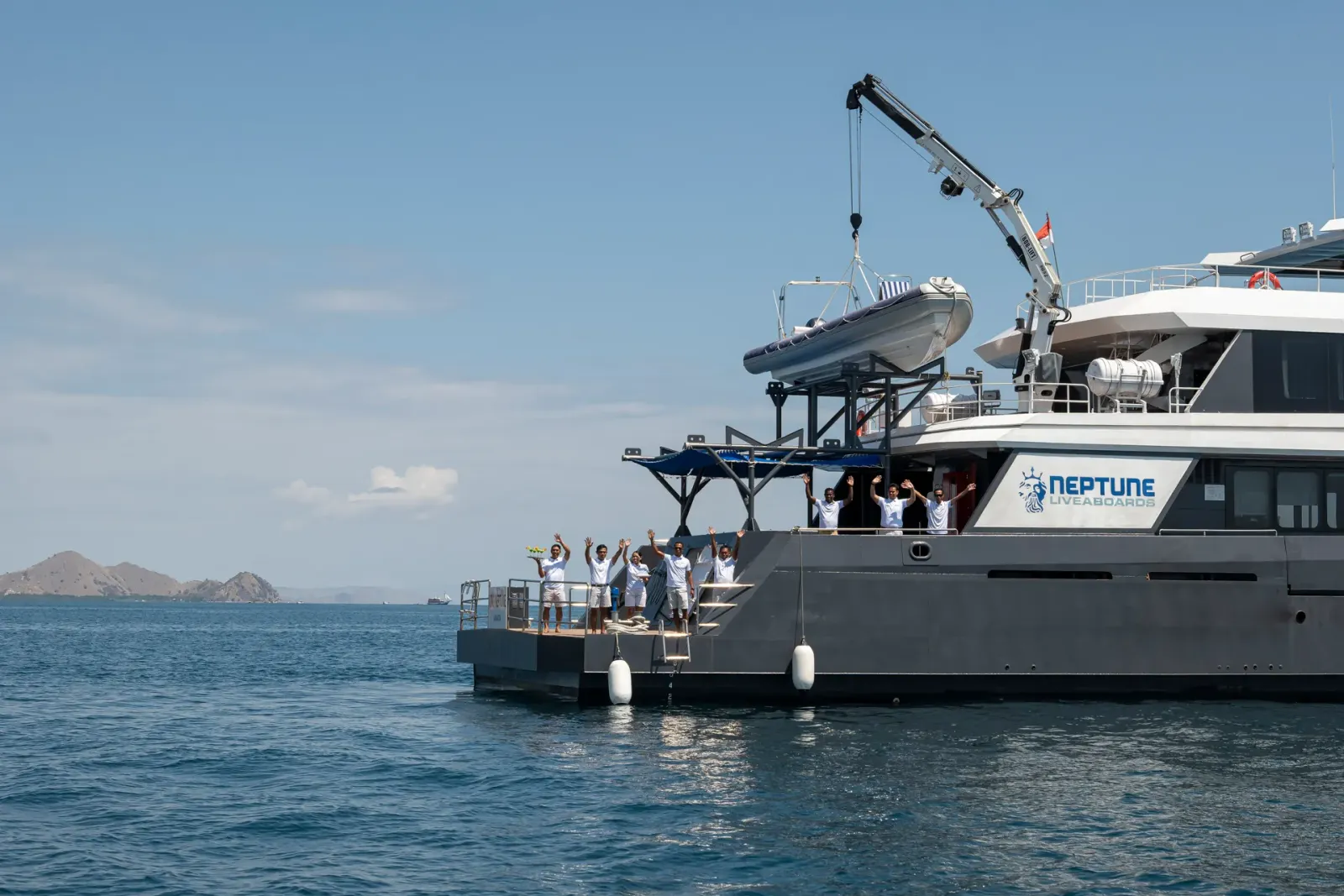
A word on access before anything else, because it shapes every other decision. Lenmakana sits in South Misool, the remote southern quarter of the archipelago, five to six hours by sea from Sorong on a fast boat and much longer on anything slower. There are no roads, no airstrips, and no resorts at the lake; day-tripping from Waisai is not realistic. In practice, almost everyone who swims with these jellyfish arrives the same way: on a Raja Ampat liveaboard working a southern itinerary, where the lake slots into a morning between dives. That is not a sales line; it is simply the geography of the place.
What Jellyfish Lake actually is
Lenmakana is a marine lake: a bowl of saltwater trapped inside a limestone islet, connected to the surrounding sea only through fissures and tunnels in the porous karst. Seawater seeps in and out with the tide, but nothing bigger than a larva makes the journey. Over thousands of years, the jellyfish population sealed inside evolved in a world without their usual predators, and with nothing to defend against, their sting withered to the point that human skin cannot feel it. Touch one (gently, and ideally not at all, for reasons we will get to) and you feel only a soft, slightly firm curtain of jelly.
Three species share the lake: the golden jellyfish that make up most of the swarm, translucent moon jellies drifting like slow parachutes, and Cassiopeia, the odd upside-down jellyfish that lies on the bottom with its frilly arms waving upward, farming sunlight through symbiotic algae in its tissues. The golden jellies do something similar, which explains their daily rhythm: they migrate horizontally across the lake through the day, tracking the sun the way a field of sunflowers does, feeding the algae inside their bodies. Swim out around midday and you meet the swarm at its densest, hanging in the bright centre of the lake like a slow-motion snow globe.
Marine lakes with stingless jellyfish are genuinely rare. Palau's famous lake in Micronesia is the celebrity example, there are a few in Kakaban off Borneo, and Misool holds a small cluster, of which Lenmakana is the best known and the one with managed access. Raja Ampat's version has one advantage over its rivals that we will happily lean on: you reach it from a dive boat in the middle of the richest reef system on earth, rather than as a standalone excursion. The lake is a morning; the reefs of Misool are the week.
Where Lenmakana is, and why you cannot just show up
The lake hides inside an uninhabited karst islet in the Misool area of South Raja Ampat, within the Southeast Misool marine conservation area. From the water, the islet looks like every other jagged, jungle-topped rock in the region; there is no sign, no jetty worth the name, and no hint that a lake full of jellyfish sits eight metres or so above the sea behind the cliff. Boats anchor or hold station off a small landing, and from there everything proceeds on foot and by ladder.
Access is managed. Visitors are required to check in with the officer at the tourist area management post before climbing, pay the local visitor fee, and take on a guide where one is assigned; the fee changes from time to time, as these things do in eastern Indonesia, so treat whatever number you read online (commonly quoted around IDR 75,000 to 100,000 per person, give or take) as indicative rather than gospel. On a liveaboard, the crew handles all of it before you have finished your second coffee, which is one of several reasons the boats make this easy. Independent travellers coming by longboat from the South Misool homestays can absolutely do it too; they just need to build in the hour-plus crossing, the post check-in, and a weather margin.
The climb: short, sharp, and not for flip-flops
Here is the part the dreamy drone photos skip. Between the sea and the lake stands a karst ridge, and the trail over it is about 80 metres long: roughly 39 metres of climbing to a saddle about 25 metres above sea level, then 41 metres of descent to the water on the far side. Written down, that sounds like nothing. Underfoot it is honeycombed limestone, sharp enough to open skin, with sections steep enough that ladders of wood and the occasional rope have been fixed to the rock. It takes a reasonably fit adult ten to fifteen careful minutes each way. Nobody needs to be an athlete, but this is not a boardwalk, and we have watched more than one guest in flip-flops reconsider their life choices halfway up.
The kit list is short and specific. Closed shoes with proper soles, or at minimum sturdy sandals with grip; reef booties work well. One hand free at all times, so pack the camera and towel in a small dry bag on your back. Water shoes or booties can stay on for the swim, which helps on the rough entry. And gloves are overkill, but the advice we give every group is the same: treat the rock like broken glass and put your hands only where your eyes have been first. Guests with knee trouble or shaky balance should be honest with themselves; the crew can talk anyone through it, but the karst does not negotiate.
The reward for the scramble arrives all at once. You crest the saddle, and below you sits a bowl of impossibly green water ringed by jungle, silent except for birds. On a sunny morning you can see golden smudges drifting below the surface from twenty metres up. The descent to the water's edge is the slipperier half, so the guides go first and spot the awkward steps. Then mask on, and in.
Swimming with the jellyfish: what it feels like
First, the ground rule that surprises arriving divers: scuba diving in the jellyfish lake is not allowed. This is a snorkel-only site, and a gentle one; tanks, fins and duck-dives all stay on the boat, and the whole visit happens quietly at the surface. The water runs warm, usually 28 to 30 degrees, with a green tint and visibility of five to eight metres; this is algae soup, not gin-clear reef water, and that is precisely why the jellies thrive. Near the entry the jellyfish come in ones and twos. Swim slowly toward the sunlit centre of the lake and the density climbs until you are inside the swarm proper, hundreds visible in every direction, from thumbnail-sized juveniles to dinner-plate adults, all pulsing at their own unhurried tempo. They bump into you. You do not need to chase anything; stay still and the lake comes to you.
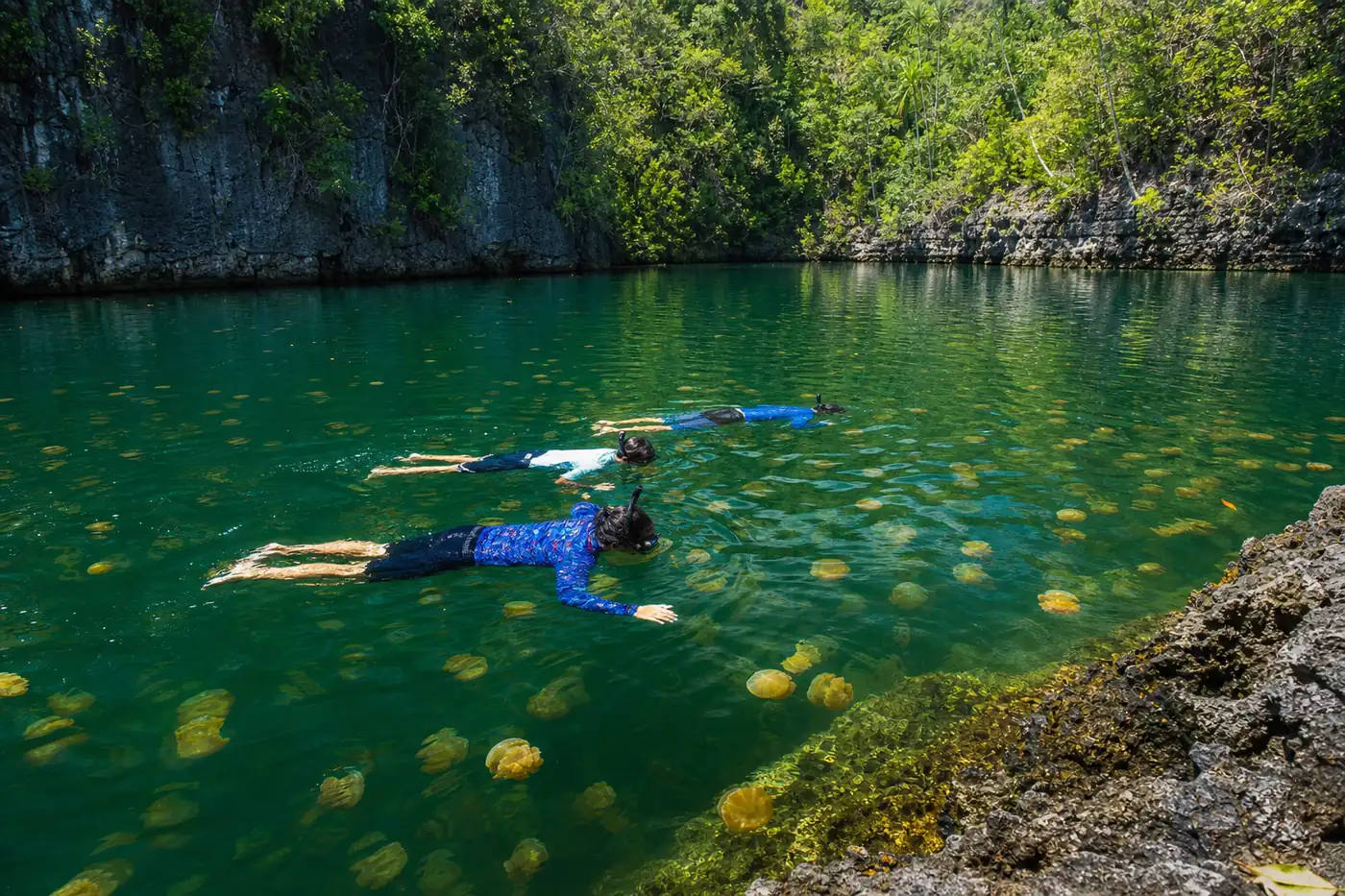
It is worth saying plainly: the sensation is strange, and a few people need a minute. Soft bodies nudging your arms, your legs, occasionally your face. One guest on a trip last February, a woman who had dived with hammerheads the previous day without blinking, surfaced after thirty seconds with her eyes wide, said "nope", floated quietly for a moment, and then put her face back in and stayed until the guides called time. A rash guard helps anyone squeamish about the contact; it also happens to be the correct sun protection for a lake where sunscreen is banned. Which brings us to the rules.
The rules, and why they are absolute
Lenmakana runs under an official code of conduct published by the Raja Ampat conservation authorities, and the local management enforces it. None of it is bureaucratic decoration; every rule maps to a real fragility in a closed ecosystem that has no way to replenish itself from outside. The ones that matter:
- No scuba diving, full stop. Diving in the jellyfish lake is not allowed; the only permitted activity is snorkelling, slowly and gently, at the surface. Vertical diving is prohibited; exhaled bubbles and deep disturbance stress the colony, and the lake's depths hold a lifeless, sulphurous layer nobody should be stirring anyway.
- No fins. A single kick can shred dozens of jellies; their tissue tears like wet paper. Mask and snorkel only.
- No sunscreen, no insect repellent, no deodorant-slathered entries. The lake has no outflow to dilute chemicals. Rinse off before you climb, cover up with fabric instead.
- Do not touch or lift the jellyfish. They will touch you; that is different. A jellyfish held up for a photo is usually a jellyfish that dies of its injuries.
- Enter slowly, swim slowly, horizontally. Splashing drives the swarm downward and stirs sediment that takes hours to settle.
- Time in the water is capped, commonly around 30 minutes per group, so the lake gets quiet spells between visits.
We brief this on the boat the evening before, and in most years we never need to say it twice. The lake does something to people; even the guests who arrived treating it as a photo stop tend to leave speaking quietly. If Palau's history teaches anything, it is that these ecosystems can crash: its famous lake lost almost its entire golden jellyfish population during the 2016 El Niño drought and took years to recover. Lenmakana's swarm is healthy precisely because access is managed and the rules hold. We would like to keep writing that sentence for decades.
When to go: seasons, light, and the midday sweet spot
Two clocks matter at Lenmakana: the season and the hour. The season question is really the South Misool question. The regional calm window runs roughly October through April, which is also prime Raja Ampat season generally; the local management specifically recommends October to February for the lake. From June through August the southeast trades push swell into South Misool, most liveaboards migrate their itineraries elsewhere, and the crossing to the islet becomes the limiting factor. If swimming the lake is a priority, book a southern itinerary inside the calm window and it will almost always be on the plan; outside it, no honest operator will promise the stop.
The hour matters more than people expect. The golden jellyfish follow the sun, so the swarm is most concentrated and shallowest in the bright middle of the day, roughly 10:00 to 14:00. Early morning has cooler climbing temperatures but a sleepier, deeper swarm; late afternoon brings shadow across the bowl and the jellies begin to sink. On our own southern trips we usually schedule Lenmakana as the late-morning activity between dive one and lunch, which catches the swarm near its peak and puts the sweaty climb before the meal rather than after it. Overcast days still work, the swarm just spreads deeper and looser, and the photographs lose that lit-from-within glow.
Photographing the lake without being a menace
The good news: this is one of the easiest spectacular subjects in Indonesia. The jellies are slow, the water is warm, and you are snorkelling, not managing depth and deco. A phone in a decent housing or any action camera does the job. The technique that works is patience: float still, let the swarm thicken around you, shoot upward toward the sun with jellies stacked in the frame at different depths. The upward angle turns the green murk into layered golden light, and it keeps your fins-free feet safely away from the animals below you.
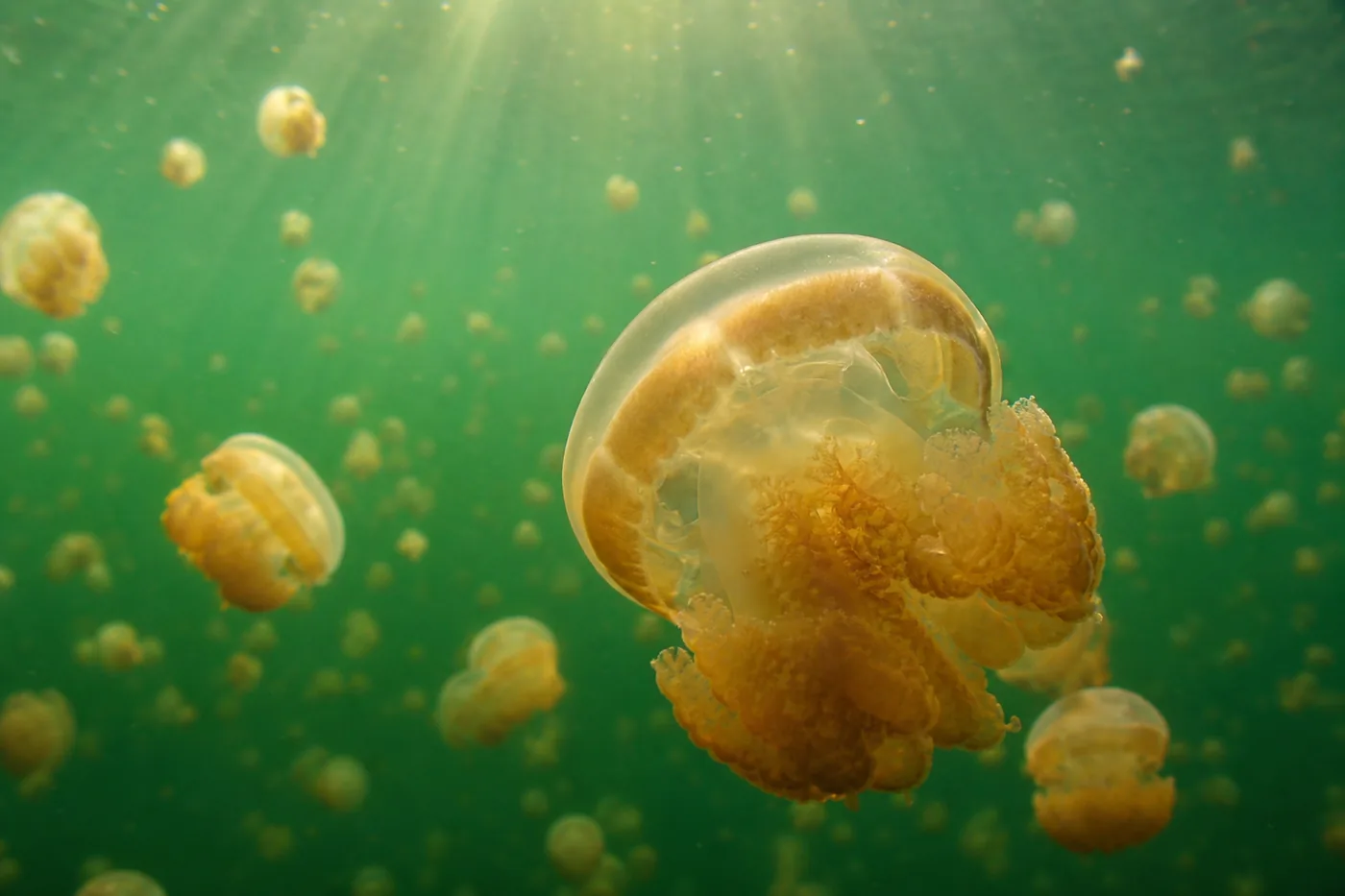
The etiquette side is simple and non-negotiable: no lifting jellies toward the lens, no handing the camera between swimmers over the swarm, and no duck-diving into the mass for a lower angle. The best images from the lake are taken by the calmest people in it, which is a rule that generalises to most of underwater photography; our Indonesia underwater photography guide makes the same point at length. One more practical note: condensation is the enemy on the climb, since the camera goes from air-conditioned boat to rainforest humidity to warm lake. Leave the housing sealed from the boat and let it acclimatise in the dry bag rather than opening it at the lakeside.
What else is in the neighbourhood
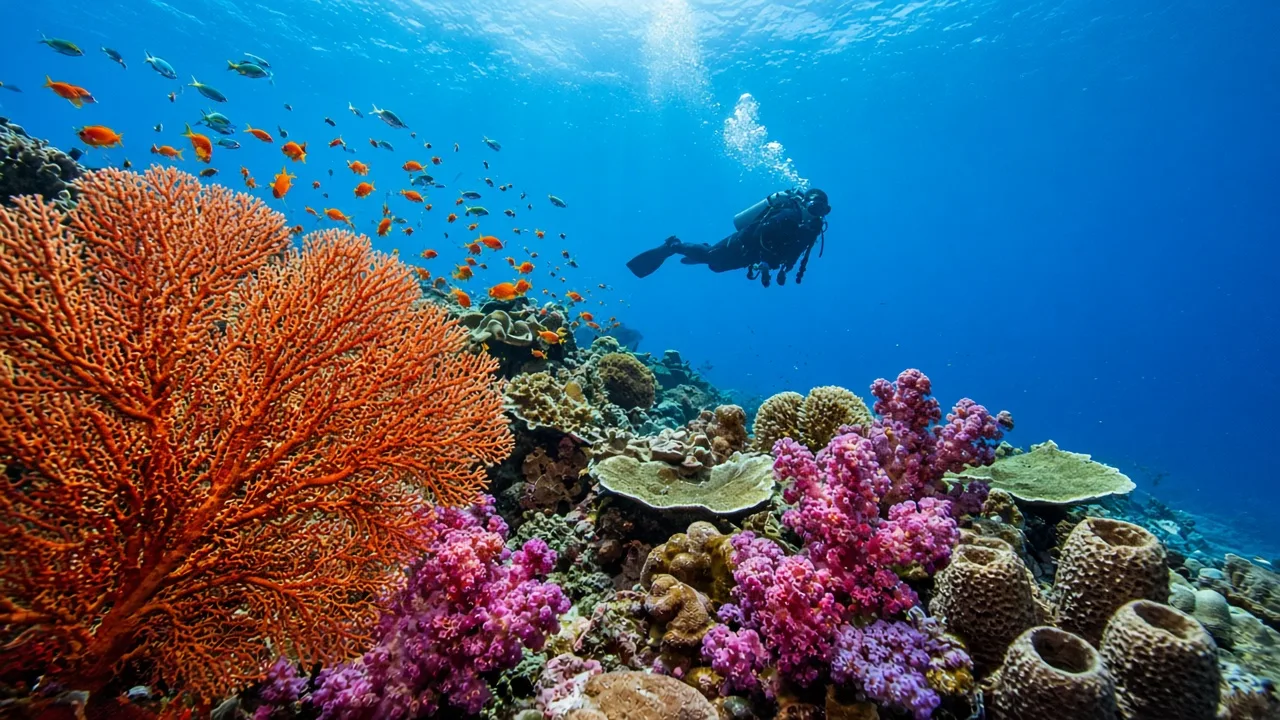
Part of what makes Lenmakana work as a trip highlight is everything wrapped around it. The same karst labyrinth of South Misool holds the heart-shaped Karawapop lagoon (locally Telaga Cinta, the "Love Lake" that appears on half the region's postcards, viewable from its own short cliff climb), the Balbulol pinnacles, hidden channels like the passage at Wayilbatan, and cave systems where ancient hand stencils mark the rock above the waterline. And beneath all of it runs the diving that made Misool's name: soft-coral walls at Boo and Fiabacet, fish tornadoes at Shadow Reef, reef systems protected by one of the most successful no-take zones in the Coral Triangle. A southern itinerary threads the lake into that fabric as one bright, strange morning among many.
A quick disambiguation, because the names get tangled online: the heart-shaped Karawapop is a lagoon you look at from a viewpoint, not a jellyfish lake you swim in, and Lenmakana is a jellyfish lake you swim in with no heart shape to photograph from above. More than one arriving guest has conflated the two into a single mythical heart-shaped jellyfish lake, which does not exist, in Misool or anywhere else. There are also several other, smaller marine lakes scattered through the Misool karst, some with jellyfish populations of their own; they are mostly unmanaged, and the responsible ones stay off itineraries until the local authorities decide otherwise.
That context is also the honest answer to the question we get asked in enquiries: "Is the jellyfish lake worth it on its own?" As a single destination requiring a five-hour crossing, probably not. As a ninety-minute interlude on a week where the boat is already anchored among the best reefs on the planet, it is one of the moments guests still mention in emails a year later. Trip reports from our own departures back this up: the manta dives get the whoops on the dive deck, but the jellyfish lake gets the long silences at dinner.
Practicalities: fees, fitness, kids, and what to bring
The checklist for the morning is mercifully short. Wear swimwear under quick-dry clothes, bring closed shoes or grippy booties for the karst, a rash guard instead of sunscreen, a mask and snorkel (no fins, remember), and a small dry bag with water and the camera. Check in at the management post, pay the fee in cash if your operator has not already handled it, listen to the guide, and give yourself about ninety minutes door to door from the boat: fifteen minutes up, a half-hour cap in the water, fifteen back, and buffer for the queue of humanity on the ladders if another group is on the islet.
Fitness and age: the climb is the filter, not the swim. Kids who are confident snorkellers and steady on their feet manage it well, and we have taken guests in their seventies over the ridge without drama, but everyone goes at the rock's pace, not their own. Anyone with serious mobility limits, recent knee or hip surgery, or a fear of exposed scrambles should sit this one out and take the tender around the islet instead; the karst scenery from the water is its own consolation prize. Non-swimmers should not attempt the lake, as there are no shallows to stand in and the entry is straight into deep water.
One diving-specific note, since most visitors arrive on a dive boat: the lake is a snorkel, so it adds no nitrogen and needs no surface-interval arithmetic. Doing it between dives is fine. The climb is the only exertion worth respecting on a repetitive-dive day, and the usual advice applies: hydrate, take the ladders slowly, and let the crew carry the camera bag if the morning's dive was a big one. Our nitrox guide covers the broader energy-management question on liveaboard weeks.
Lenmakana versus Palau: the comparison everyone asks about
Palau's Jellyfish Lake is the famous one, the lake that made the phenomenon a bucket-list item, and it deserves its reputation. But the comparison lands differently than most people expect. Palau is a dedicated destination: you fly to Koror, buy a permit that runs to about a hundred US dollars, and join a stream of visitors that in peak years ran to hundreds per day. Lenmakana sees a tiny fraction of that traffic, costs a fraction of the fee, and comes bundled with world-class diving instead of standing alone. Palau's lake holds one stinging-capable species in vast numbers when the population is healthy; Lenmakana holds three species in a smaller, denser, more intimate bowl. Palau's history also carries the warning: the 2016 drought crash showed how fast a closed marine lake can fail. There is no loser in the comparison; there is simply a quieter, wilder, harder-to-reach version of the experience in Indonesia, and it belongs to the boats.
How to actually book this
The practical route is a Raja Ampat liveaboard itinerary that includes South Misool, inside the October-to-April window, ideally October to February if the lake is your priority. Ask the operator two questions before booking: does this specific departure route through South Misool (northern-only itineraries do not pass the lake), and is the jellyfish lake on the plan, conditions permitting? Any operator running the south knows the stop; if the answer is vague, the itinerary probably is too. On our own southern departures the lake is a standing fixture, weather willing, and the crew handles the post check-in, fees, and briefing end to end. Guests just need shoes with grip and a working sense of wonder.
If your dates fall outside the southern season, take the honest advice: do the northern itinerary for the diving it does brilliantly, and save Misool, the lake included, for a trip built around it. Chasing a closed-season crossing to a karst islet in swell is nobody's idea of a holiday, and the jellyfish, sealed in their bowl for the last few thousand years, will still be there pulsing when the calm returns.