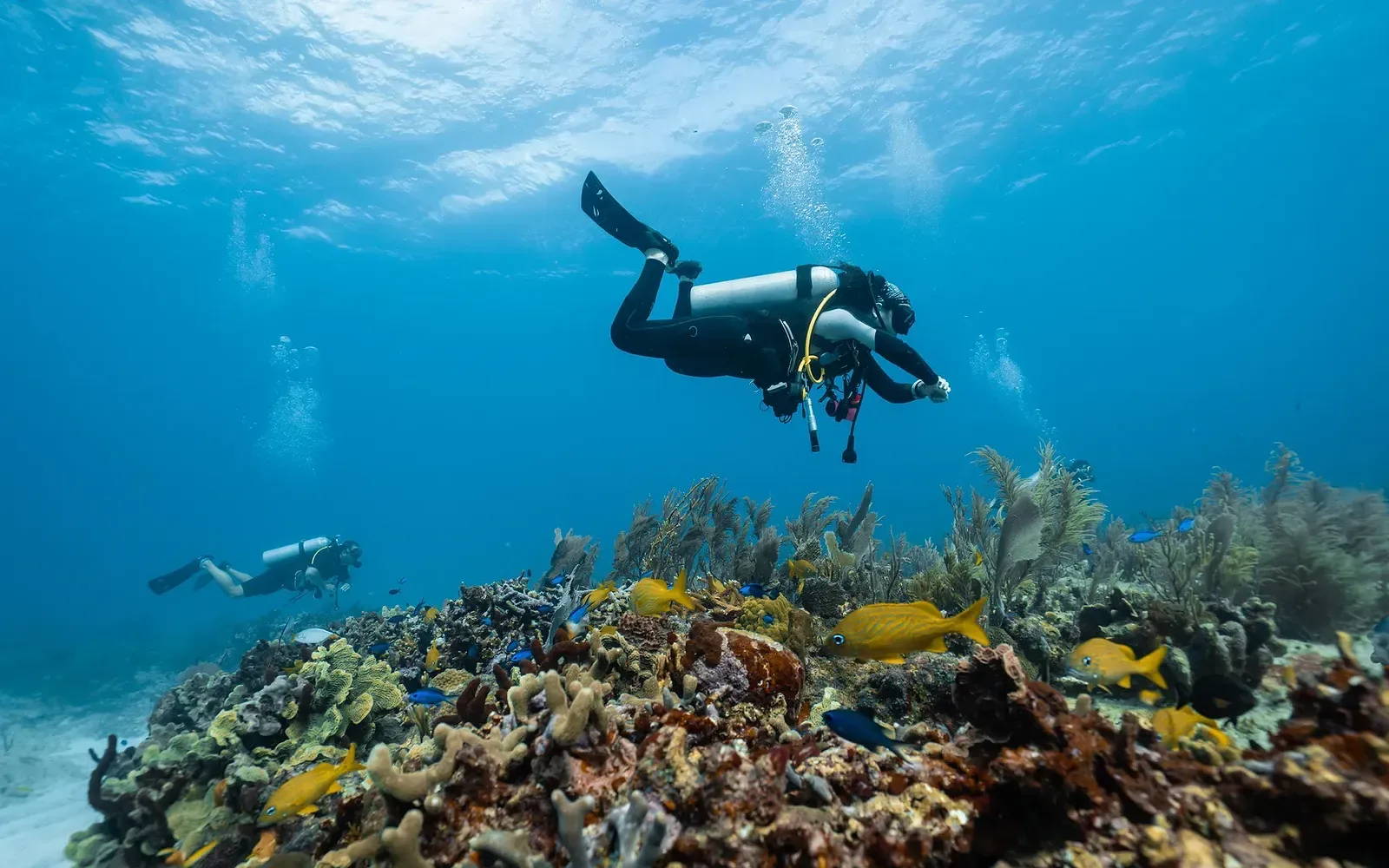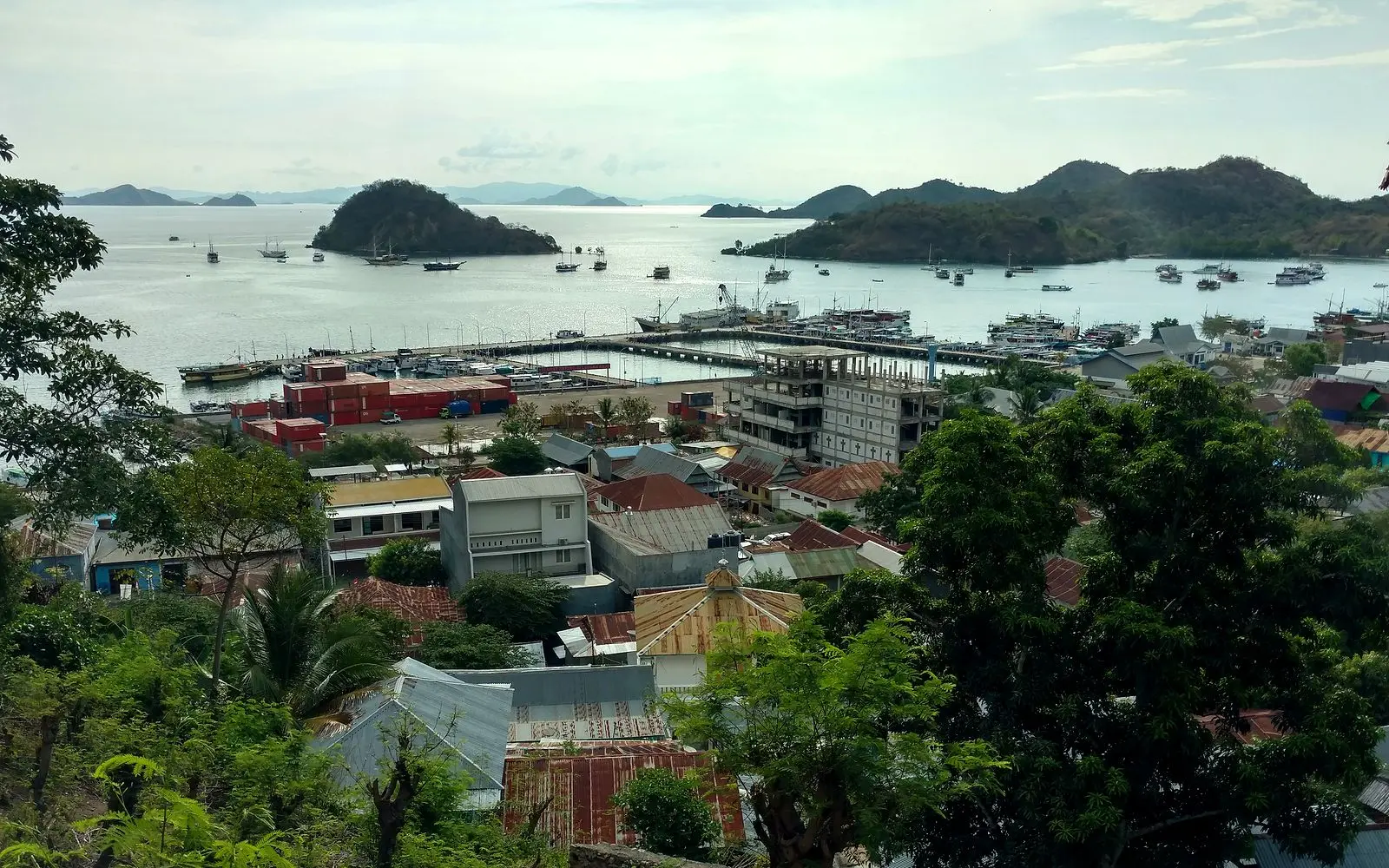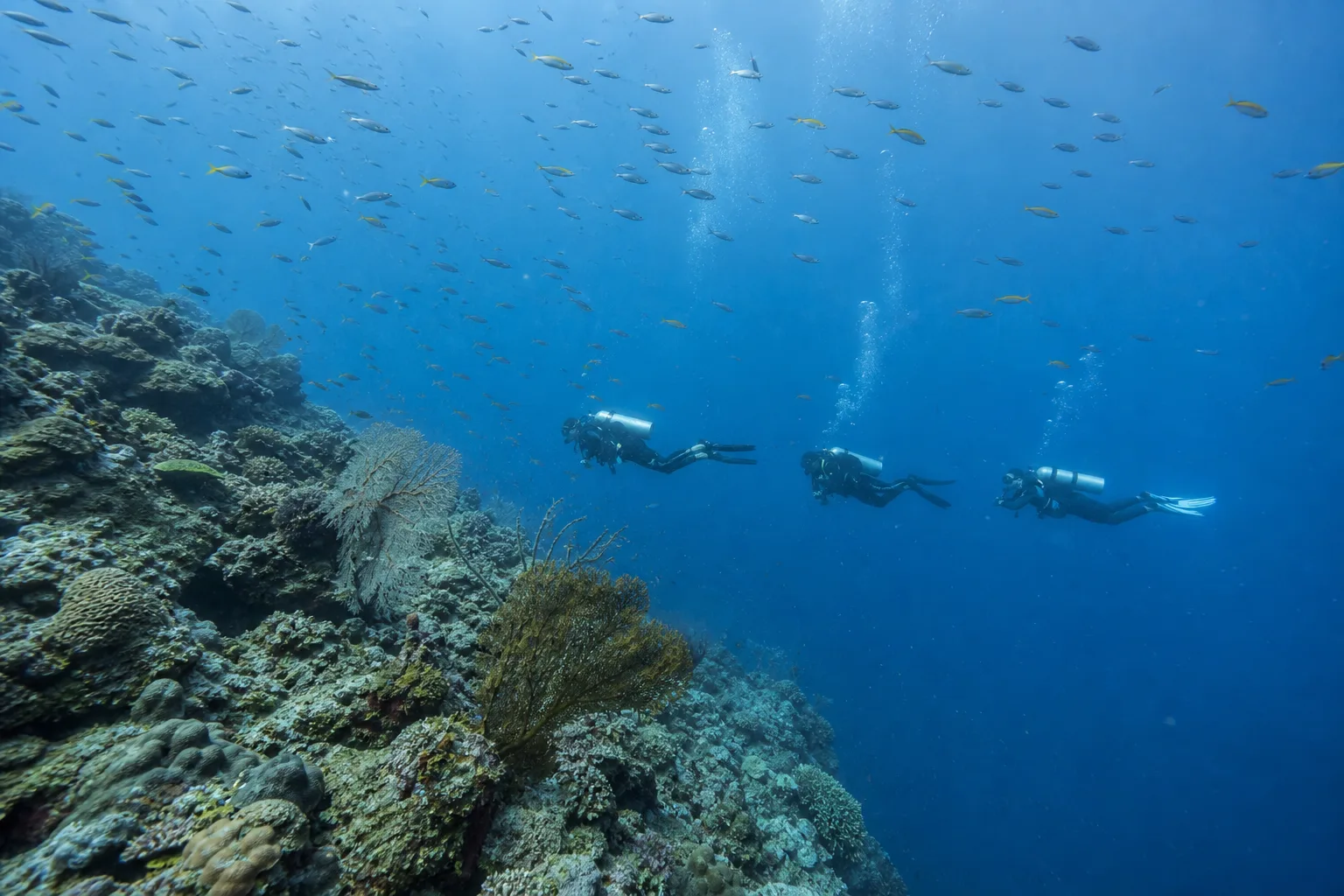
Most divers passing through Indonesia treat Sumbawa as the long bus ride between Bali and Komodo. The island sits exactly in the middle of the Lesser Sunda chain, four hundred kilometres of mountain spine between two of the world's most photographed dive destinations, and almost every Komodo liveaboard route either steams past Sumbawa overnight or stops in for a single check-out dive at Banta on the way east. The pattern made sense for a long time. Komodo had the marketing, Bali had the airport, and Sumbawa had two surf beaches and a very long road. What changed, and what this guide is essentially about, is that the diving in Sumbawa quietly became as interesting as anything on the wider Komodo itinerary while almost no one was paying attention. The whale shark aggregation at Saleh Bay is now reliable enough that we count it among Indonesia's three best whale-shark sites. The volcanic muck reefs off Sangeang produce a species list comparable to Lembeh's. The reefs and pinnacles around Moyo Island are a quiet manta-and-shark destination operating under a marine conservation area framework that pre-dates the Raja Ampat marine park by almost a decade. The full Sumbawa destination guide covers the surface logistics; this article is the operator-side answer to which 10 dive sites actually make Sumbawa worth treating as a destination in its own right, not just a transit corridor.
The short summary, before we move into the regional breakdown, is that Sumbawa offers four genuinely distinct diving experiences on the same week-long itinerary: the world-class whale shark aggregation at Saleh Bay, the volcanic muck reefs at Sangeang, the manta and shark sites at the Banta Island channel, and the coral-and-pelagic reefs around Pulau Moyo and Pulau Satonda. The cross-regional positioning is the key. Sumbawa sits between two destinations that already do specific things very well (Bali for muck and macro, Komodo for current diving and mantas), and the Sumbawa itinerary takes the best of both and adds the whale shark aggregation as the headline feature. We have started routing more Komodo-extended itineraries through Sumbawa in 2026 specifically because the diving rewards the extra two or three days, and the cost of including Sumbawa in a Komodo trip is significantly lower than booking a separate Lembeh or Sulawesi trip to get the same macro experience. The wider Indonesia scuba diving authority page gives the cross-regional context; for Sumbawa specifically, the rest of this article walks the geography, the four sub-regions and the 10 strongest dive sites in the order most liveaboards visit them.
Sumbawa was, until very recently, a destination that operators talked about adding to itineraries without actually adding it. The reasons were partly logistical (the Bima port infrastructure was thin until 2019, and the road across the island from Sumbawa Besar to Bima was a six-hour grind), partly commercial (Komodo had stronger demand and operators preferred the higher-margin routes), and partly knowledge (the Saleh Bay whale shark aggregation was a regional secret kept by local fishermen well into the 2010s). The diving in 2026 is what Komodo diving was in 2005: an established quality benchmark with fewer than 30 dedicated boat operators, a small number of resort-based dive shops on Moyo Island, and a marine park entry fee structure that is still genuinely modest compared to Raja Ampat or the Komodo National Park. Inventory is not yet scarce in the peak months, but the strongest weeks (June through October) are starting to fill earlier each year, and we have begun recommending guests book Sumbawa-extended Komodo trips at least 8 months out for the high-season dates. The upside of the relative obscurity is the diving itself, which is consistently quieter than the comparable Komodo sites and rewards divers willing to break the standard Bali-Komodo-Raja Ampat circuit.
Sumbawa geography: four sub-regions and what each one delivers
Sumbawa is roughly 280 kilometres long and 80 kilometres across at the widest point, with two distinct lobes separated by Saleh Bay, the large central bay that cuts deep into the island from the north coast. The diving divides naturally into four sub-regions, and the typical 7-night Sumbawa-dedicated route hits all four in sequence. A brief look at each makes the rest of this article easier to follow.
The Saleh Bay group centres on the whale shark bagan aggregation in the central waters of the bay. Saleh Bay is geographically the most unusual marine ecosystem in Sumbawa: an enclosed, shallow bay (mostly 30 to 50 metres deep) with a narrow opening to the Flores Sea on its eastern side and freshwater inputs from the Sumbawa interior rivers. The combination produces a productive plankton-rich water column that supports the bagan fishing platforms (lift-net rafts that local fishermen operate at night to catch baitfish) and, by extension, the whale sharks that have learned the bagan schedule and now visit the platforms daily for the bycatch the fishermen release into the water at dawn. The diving and snorkelling here is the cluster's headline draw, and the surrounding bay shoreline produces seahorse and frogfish encounters on the deeper sand patches.
The Moyo Island group centres on Pulau Moyo, a 350 square kilometre island off the northern coast that has been a Marine Conservation Area since 1986. The Moyo group is the wide-angle and pelagic core of a Sumbawa trip: Angel Reef on the north side with its huge anemone city and resident green turtles, Stone Wall on the eastern face with the strongest reef-shark probability in Sumbawa, and the smaller reefs off the north-eastern peninsula that host manta cleaning stations on the right tide. Moyo also offers an entirely different surface experience from the rest of Sumbawa: the interior of the island is rainforest with waterfalls (Mata Jitu is the most photographed), and the luxury resort on the southern coast has historically attracted high-end guests including, famously, Princess Diana in 1993.
The Sangeang volcano group sits in the channel between eastern Sumbawa and Pulau Komodo, with the active Sangeang Api volcano as the dominant feature. The diving here is the macro-and-muck side of Sumbawa, and the part that draws macro photographers from across the region. The volcanic substrate (black sand, lava rubble, occasional fumaroles emitting volcanic gas through the seabed) is the species-density backdrop for the cluster's named sites: Hot Rocks with its bubbling underwater fumaroles, Bontoh with its mimic octopus and ghost pipefish populations, and Techno Reef with its mandarin fish dusk gathering. The diving here is technically easy (shallow, no significant current, sandy bottom), and the night dives produce a higher species count than any other part of Sumbawa.
The Banta Island group sits at the eastern edge of Sumbawa province, in the channel between Pulau Sangeang and Pulau Komodo. Banta is administratively part of West Manggarai Regency (which makes the island geographically a transition between Sumbawa and Komodo), but the diving culturally and operationally belongs to the Sumbawa cluster because most Sumbawa-dedicated routes finish here before crossing into the Komodo National Park proper. The named sites (GPS Point, K-Boy, Tanjung K, North Banta Pinnacle) are the cluster's strongest current-diving and pelagic sites: schooling fusiliers, dogtooth tuna, occasional grey reef shark aggregations, and the best probability of a mola mola encounter outside the Bali Nusa Penida window. Some operators substitute Banta for the more crowded northern Komodo sites; we generally recommend including Banta on every Sumbawa itinerary.
One operating-side note before the site list. The four sub-regions are connected by overnight crossings of 3 to 6 hours each. The standard 7-night Sumbawa-dedicated itinerary starts at Bima (the small commercial airport on the eastern coast, served by daily Wings Air and Citilink flights from Denpasar), runs west to Saleh Bay, then loops back east through Moyo, Sangeang and Banta. A more common variant is the 11-night Bali-to-Bima extended itinerary that adds the Gili Islands and the Lombok Strait on the western end and finishes in Sumbawa proper. For divers combining Sumbawa with Komodo, the 14-night Bali-to-Labuan-Bajo route is the cleanest answer and includes all four Sumbawa sub-regions plus the headline Komodo sites. The wider Indonesia liveaboard seasons guide covers the cross-regional timing in detail.
Saleh Bay: the whale shark aggregation and how it actually works
Saleh Bay is the headline draw of Sumbawa diving and one of the three reliable whale shark aggregation sites in Indonesia (the other two being Cenderawasih Bay in West Papua and the Triton Bay region off Kaimana). The aggregation works through a specific human-and-shark relationship that took decades to develop and is worth understanding before the dive itself, because the etiquette around the bagan platforms is what determines whether the experience runs well or runs poorly for both the sharks and the divers.
The bagan are floating fishing platforms, roughly 12 by 15 metres in surface area, with a large square net suspended below the deck and a small crew of two or three fishermen aboard. The fishermen work at night, lowering the net through the water column and using kerosene lanterns above the surface to attract baitfish (small anchovy, scad and silverside species). At dawn the net is raised, and the small percentage of bycatch that has no commercial value is released back into the water. The whale sharks have, over the course of two or three decades, learned the bagan schedule and now position themselves near the platforms during the morning haul to feed on the released bycatch. The aggregation is year-round but most reliable from April to November, with the peak months being June, July and August. The standard count is 5 to 12 individual sharks visiting the active bagan cluster on any given morning; the verified Saleh Bay population is currently around 110 individuals, most of them juvenile males in the 4 to 7 metre length range.
1. The bagan aggregation site (central Saleh Bay)
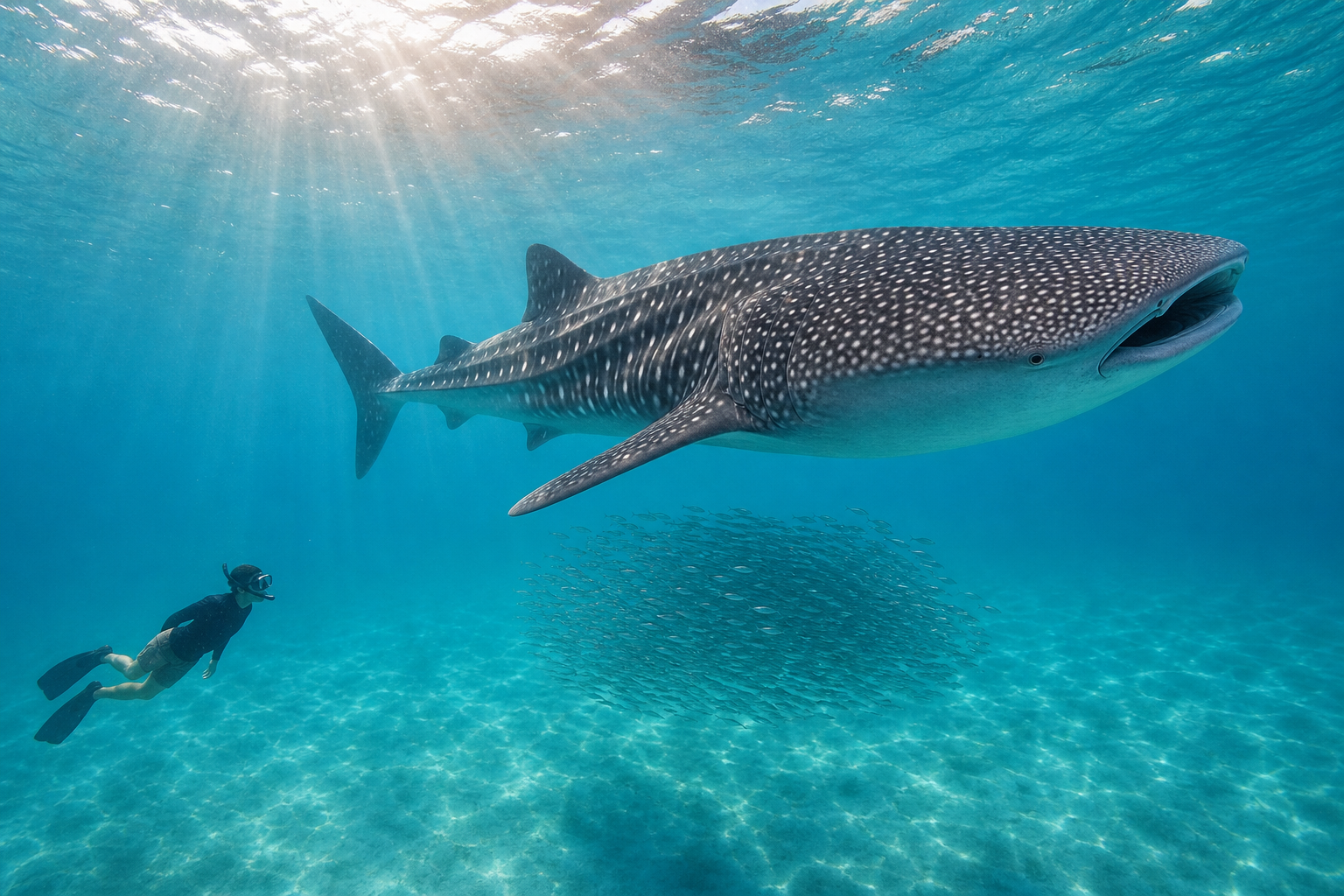
The most photographed dive in Sumbawa. The encounter operates as a structured snorkel with optional shallow scuba (5 to 8 metres maximum depth, on safety grounds). Divers approach the active bagan in a small dive tender at first light, the captain identifies which platforms have whale sharks in attendance (the local boatmen know the regular individuals by sight), and the briefing covers the strict etiquette: minimum distance four metres from the shark, no flash photography below five metres, no touching, no riding (any operator that allows touching or riding is unsafe and should be reported), and full understanding that the sharks are wild animals that may choose to leave at any time. The encounter typically runs 60 to 90 minutes in the water, with multiple individuals visible simultaneously on the best mornings. The wider Indonesia whale shark guide covers the species side; for Saleh Bay specifically, the encounter probability in the peak months is roughly 95 per cent of mornings, dropping to 60 per cent in the secondary April-May and October-November windows.
2. The Saleh Bay south coast muck dives (Pulau Liang, Pulau Rakit)
Less famous but technically excellent. The southern shoreline of Saleh Bay has a series of shallow black-sand muck sites that produce the bay's secondary attraction: the highest density of seahorse, frogfish and pygmy seahorse sightings of any Sumbawa sub-region. The diving is shallow (8 to 18 metres typically), current-free, and is often run as the afternoon dive after the morning whale shark encounter. The standout species sightings include the resident population of common seahorses at Pulau Liang, the consistent giant frogfish encounters at the eastern point of Pulau Rakit, and the occasional Bargibanti pygmy seahorse on the deeper Muricella fans at the bay edge. The diving is technically easy and accessible to open-water divers with good buoyancy.
The Moyo Island group: wide-angle scenery in a 1986 Marine Conservation Area
Pulau Moyo has been protected as a Marine Conservation Area since 1986, which makes it one of the oldest formally protected dive destinations in Indonesia. The protection is not at the Raja Ampat marine park standard (enforcement is variable, and the resort-led conservation initiatives carry more of the load than the formal park structure), but the diving has clearly benefited from the lack of commercial fishing pressure on the east and north sides. Three sites in the Moyo group deserve detailed treatment.
3. Angel Reef
The most photographed reef of the Moyo group and the cluster's strongest wide-angle reef dive. Angel Reef is a sloping coral garden on the north side of Pulau Moyo, with the reef starting at 5 metres at the surface and dropping in a series of terraces to 30 metres. The site is named for the dense anemone city in the 10 to 15 metre band, which hosts at least four different anemonefish species (pink, false clown, Clark's, tomato) on the same dive. The resident population of green turtles is roughly 8 to 12 individuals counted on a typical morning dive, and the deeper edge of the slope produces the most reliable reef shark encounters in Moyo (a small resident population of whitetip reef sharks and the occasional grey reef visitor). The diving is technically easy: shallow profile, minimal current, exceptional visibility (typically 25 to 35 metres in the dry season).
4. Stone Wall
The deeper, more current-prone counterpart to Angel Reef. Stone Wall is a vertical coral wall on the eastern face of Pulau Moyo that drops from 3 metres at the surface to over 60 metres on the deepest visible edge. The wall hosts the cluster's strongest soft-coral coverage (large Muricella fans, pulsing Dendronephthya in the upper reef, and a continuous band of Tubastraea cup corals on the overhangs) and the most reliable reef shark probability in Sumbawa. The dive runs as a slow drift along the wall in whatever direction the tidal current is moving on the day. Maximum recreational depth 30 metres. The wider Indonesia shark diving guide covers the species side; for Moyo specifically, the grey reef shark encounters are roughly 50 per cent of dives in the strong window.
5. Panjang Island / Pulau Satonda
Pulau Satonda is a small island just east of Pulau Moyo, technically administered by the Bima Regency. Satonda is geologically the most unusual surface feature of Sumbawa: a roughly circular crater lake (the original volcanic caldera that collapsed thousands of years ago and now holds slightly brackish water) occupies the entire centre of the island, surrounded by a thin ring of coral reef on the outside. The diving here is the cluster's most varied: the western face hosts a dense soft-coral wall, the southern face produces the cluster's most reliable manta cleaning encounter (one in three dives in the peak window produces a reef manta sighting), and the surface scenery of the crater lake is one of the most distinctive in Indonesia. Maximum recreational depth 25 metres. The wider Indonesian manta ray guide covers a species that appears at Satonda on roughly the third of dives mentioned, with multi-individual encounters on roughly one dive in eight.
The Sangeang volcano group: the macro side of Sumbawa
Sangeang Api is the active volcano off the eastern coast of Sumbawa, with the latest significant eruption in 2014 and continuous low-level activity in the years since. The diving around the volcano sits on a substrate of black sand, volcanic rubble and the occasional active fumarole (a vent where volcanic gas escapes through the seabed and produces a stream of bubbles rising through the water column). The combination produces a macro-and-muck environment that is genuinely different from Lembeh or Ambon: the substrate is harder and more structured, the visibility is consistently better (typically 20 to 25 metres), and the underwater fumaroles add a piece of geological theatre that no other Indonesian dive destination offers. Three sites in the Sangeang cluster deserve detailed treatment.
6. Hot Rocks
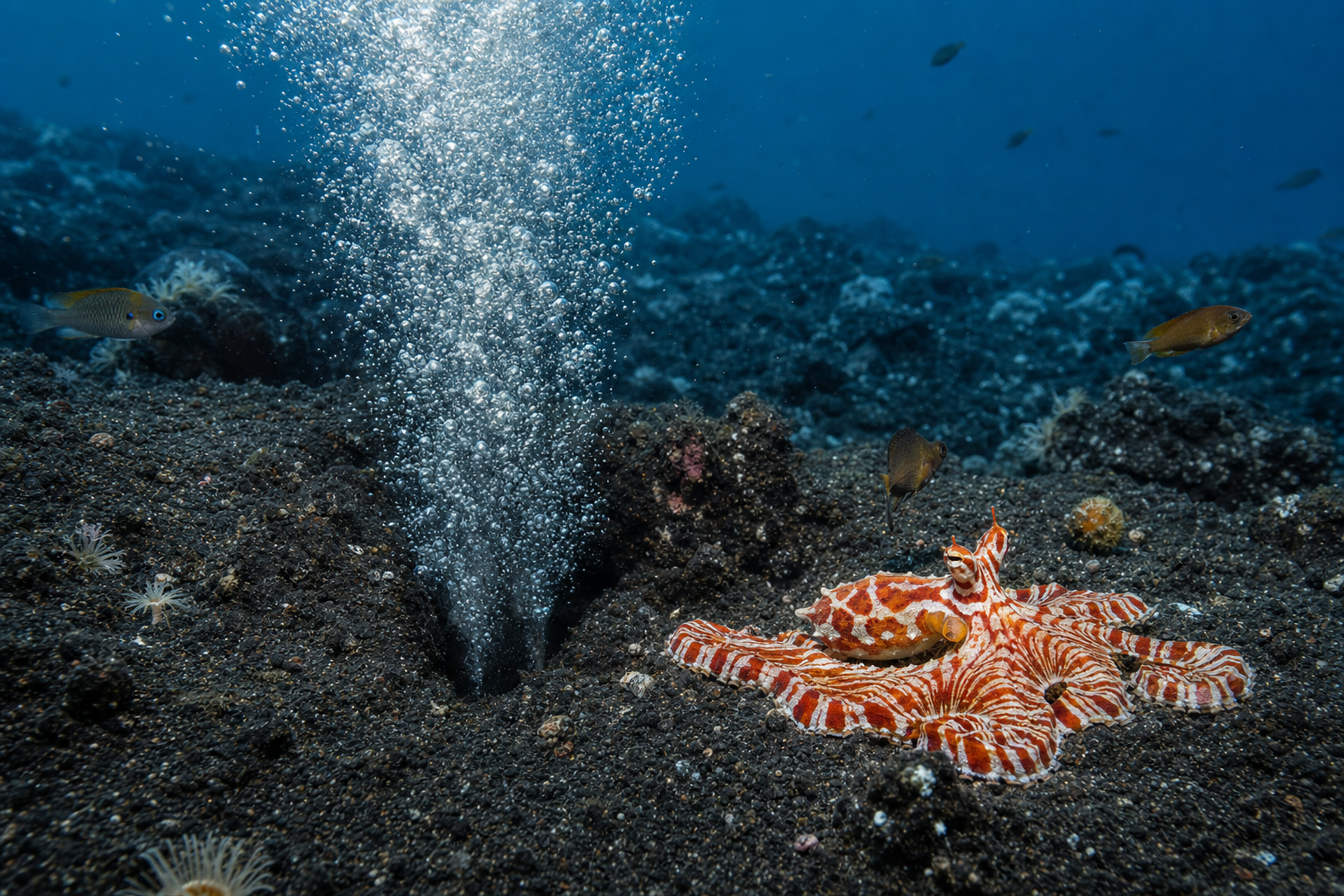
The most distinctive single dive in Sumbawa, and the site that converts macro photographers into Sangeang repeat customers. Hot Rocks is a shallow black-sand slope on the southern face of Pulau Sangeang, with several active fumaroles in the 8 to 15 metre depth band producing continuous streams of volcanic gas bubbles through the seabed. The bubbles themselves are warm to the touch (the seabed temperature near the vents reads 28 to 30 degrees while the surrounding water is 26 to 27 degrees), and the surrounding rubble hosts a high density of macro species that have apparently adapted to the slightly elevated water temperature. The standout species sightings include resident populations of mimic octopus, mandarin fish at dusk, ghost pipefish (Halimeda and ornate species both logged in the same week), and the most reliable blue-ring octopus encounters of the Sumbawa trip. The dive is technically easy and accessible to all certification levels with good buoyancy.
7. Bontoh
The macro-photography flagship of the Sangeang cluster. Bontoh is a shallow black-sand bay on the western face of Sangeang, with a gradual slope from the shoreline to 25 metres depth. The substrate is the species-density backdrop for what may be Sumbawa's strongest macro dive: a 70-minute night dive at Bontoh routinely produces 35-plus species sightings for an attentive macro photographer, including the various ghost pipefish, multiple frogfish species (giant, painted, hairy all logged in the same season), nudibranch species in numbers that match Lembeh's reputation, and the cluster's most reliable mandarin fish dusk gathering. The wider Indonesia macro diving guide covers the gear and lens choices in detail; for Bontoh specifically, a 60mm macro lens on a full-frame camera, or a 90mm equivalent on a crop sensor, covers most of the species at the typical working distances.
8. Techno Reef
The structural counterpart to the muck dives at Hot Rocks and Bontoh. Techno Reef is a small coral reef bommie on the eastern side of Sangeang, with the bommie sitting at 12 metres depth in a sand flat. The diving is the cluster's strongest reef-fish-and-pelagic site: a resident school of bigeye trevally, occasional dogtooth tuna passing offshore, and the most reliable batfish sightings of the trip. The structural diving at Techno Reef provides a useful counterbalance to the macro-heavy Hot Rocks and Bontoh dives, and the site often runs as the final morning dive of a Sangeang day before the boat repositions east to Banta.
The Banta Island group: pelagic and current diving
Banta is the gateway dive between Sumbawa and Komodo and the cluster's strongest current-diving site. The administrative classification places Banta in West Manggarai Regency (which is technically Komodo), but the diving culturally and operationally belongs to the Sumbawa cluster because the dives are run from Sumbawa-based operators on the same itinerary. Two sites in the Banta group deserve detailed treatment.
9. GPS Point (and K-Boy)
The headline pelagic dive of the Banta cluster. GPS Point is a submerged pinnacle off the northern tip of Banta Island, topping out at 14 metres and dropping to over 50 metres on the outer flank. The dive site name refers to the fact that the pinnacle was originally located only by GPS coordinates because the surface marker was unreliable in the strong current. The diving is the cluster's strongest schooling-fish site: the upcurrent face hosts a school of bigeye trevally that has held position for at least three seasons, the deeper edge produces occasional grey reef shark encounters and the most reliable mola mola sightings outside Bali Nusa Penida (one in twelve dives in the September-October window produces a confirmed sighting), and the surrounding water column is thick with fusiliers and snapper. Adjacent K-Boy is a smaller pinnacle that runs as the second-half dive of the same morning, with similar species composition at lower intensity. Both sites require advanced certification, recent current experience and disciplined buoyancy.
10. Tanjung K (and North Banta Pinnacle)
The strongest reef shark site of the Banta cluster and the dive most operators use as the final stop of a Sumbawa-dedicated trip before crossing into the Komodo National Park proper. Tanjung K is a coral promontory on the eastern face of Banta, with a horseshoe-shaped channel cutting back into the island that funnels the current and concentrates the predator activity. The diving here is the cluster's most consistent for grey reef shark encounters (roughly 70 per cent of dives in the strong window produce a sighting), the schooling fusiliers on the upcurrent point are at their densest in the Sumbawa region, and the adjacent North Banta Pinnacle offers a structurally similar but smaller-scale dive that is often run as the matched pair. Maximum recreational depth 30 metres for both sites.
Marine life beyond the named sites
Beyond the 10 named sites, four species or species groups are reliable enough across Sumbawa that they deserve individual mention.
The Saleh Bay whale sharks
The headline species of Sumbawa and the reason a meaningful share of our Sumbawa bookings come from divers who have never been to Indonesia before. The Saleh Bay aggregation is a well-studied population: Conservation International and the Indonesian Institute of Sciences have been tagging and photo-identifying individual sharks since 2017, the database currently includes around 110 verified individuals (95 per cent of them juvenile males), and the resighting rate within a single season exceeds 80 per cent. The aggregation is most reliable from April to November with the peak in June, July and August. The shark behaviour at the bagan platforms is essentially habituated rather than wild: the sharks have learned the bagan schedule, position themselves near the platforms at first light, and feed on the released bycatch in a predictable pattern. The wider Indonesia whale shark guide covers the cross-regional comparison; for Saleh Bay specifically, the encounter probability in the peak months is the highest of any Indonesian whale shark site.
The Moyo and Satonda reef mantas
Sumbawa hosts two confirmed reef manta cleaning stations: the southern Pulau Satonda station and a smaller seasonal station on the northern reef of Pulau Moyo. The reef manta (Mobula alfredi) is the resident species at both sites. Encounter rates are below the Komodo Manta Point peak (Satonda is the stronger of the two at roughly one in three dives in the peak window) but the diving is consistently quieter than the comparable Komodo sites, and a typical 7-night Sumbawa itinerary produces 3 to 6 manta sightings.
The Banta mola mola
The most distinctive single pelagic encounter of Sumbawa. The southern Banta channel produces the most reliable mola mola (Mola alexandrini) sightings outside Bali Nusa Penida, with the September-to-October window producing roughly one confirmed sighting in twelve dives. The encounters are typically at the deeper recreational limit (28 to 30 metres depth) and last only a few seconds; the mola appears, briefly tolerates the divers' presence, and moves on. The species is the trip's most photogenic single sighting on the lucky days.
The Sangeang volcanic macro
The species count in the Sangeang cluster is genuinely competitive with Lembeh's but the substrate is structurally different (Sangeang is volcanic rubble and black sand, Lembeh is finer black sand with more organic debris), which means the species community is slightly shifted. Sangeang produces a higher density of cephalopods (mimic, blue-ring, wonderpus all logged in the same week is normal) than Lembeh, and a slightly lower density of the smaller crustaceans (Periclimenes shrimp, harlequin shrimp, and the like) that Lembeh is most famous for. The wider Indonesian underwater photography guide covers gear choices.
When to dive Sumbawa: the operating windows in 2026
Sumbawa has a long operating window and one extended monsoon shoulder. The standard recommendation is that you can dive Sumbawa for roughly nine months of the year with confidence and a tenth month with route adjustments, which is significantly longer than Halmahera or the Banda Sea and gives the destination genuine flexibility for travellers fitting it around work calendars.
The strong window: April through November. The dry season and the cleanest operating window of the year. The southeast trade winds are predictable, the open-water crossings between the four sub-regions are typically calm, visibility peaks at 25 to 35 metres, and the Saleh Bay whale shark probability is at its annual peak (95 per cent of mornings in June-August). Water temperature is 26 to 28 degrees, slightly cooler than the rest of Indonesia, which is the one factor that affects the comfort of long bottom times on the Banta current dives. Most divers wear a 3 mm full-length wetsuit on the Banta dives and a 5 mm vest underneath if they feel the cold; the Saleh Bay snorkel is comfortable in a 2 mm shorty.
The peak window: June through October. Within the strong window, the absolute peak is June through October, when the southeast trade winds are at their steadiest, the Saleh Bay whale shark probability is at its highest, and the Banta current dives are most reliable. This is the window we steer first-time Sumbawa guests toward. Boat traffic is moderately high in this window (the Komodo operators that route through Sumbawa are running their main season), but the Saleh Bay aggregation site is run on a strict daily quota that keeps the per-bagan diver count manageable, and the Moyo and Sangeang sites are quieter than the comparable Komodo locations.
The shoulder window: December and March. The transition months between the northwest monsoon and the southeast trades. Visibility drops to 20 to 25 metres, the open-water crossings are intermittently rougher, and the Saleh Bay whale shark probability drops to roughly 60 per cent of mornings. Some operators run scheduled Sumbawa trips in this window with route adjustments (a Saleh-and-Moyo-only northern route that avoids the eastern Sangeang and Banta exposure), but the full four-sub-region itinerary is less reliable. We recommend booking the shoulder window only if you have specific date constraints and accept the lower whale shark probability.
The low window: January and February. The northwest monsoon brings rain, cloud cover and intermittently rough seas to the Sumbawa region. Most operators do not run scheduled Sumbawa trips in these two months. The Saleh Bay whale shark aggregation continues (the sharks are not seasonal in the same way as the trade winds), but accessing the bay requires patient weather windows. The wider Indonesia liveaboard seasons guide covers the cross-region timing in more detail; the short version is that Sumbawa's operating window is longer than Halmahera's or Raja Ampat's southern season but shorter than Bali's.
How to put a Sumbawa itinerary together
Sumbawa liveaboard itineraries are typically structured around one of three departure ports, and the choice meaningfully affects the trip experience.
Bima departure (most common, 7 to 10 nights). Bima is the small commercial airport on the eastern coast of Sumbawa, served by daily Wings Air and Citilink flights from Denpasar (Bali) with a 1-hour flight time. The standard 7-night Bima round-trip covers all four Sumbawa sub-regions: Saleh Bay (2 nights for the whale shark aggregation plus the south coast muck), Moyo (2 nights for Angel Reef, Stone Wall, Satonda), Sangeang (2 nights for Hot Rocks, Bontoh, Techno), and Banta (1 night for GPS Point, K-Boy, Tanjung K). This is the route we recommend most often for first-time Sumbawa guests.
Labuan Bajo departure (cross-region with Komodo, 10 to 14 nights). Labuan Bajo is the gateway to Komodo and the most efficient departure port for divers combining Sumbawa with the Komodo National Park sites. The standard 14-night Labuan-Bajo round-trip covers Komodo on the eastern leg (Manta Point, Castle Rock, Crystal Rock, Batu Bolong, Pink Beach) and Sumbawa on the western leg (Banta, Sangeang, Moyo, Saleh Bay). The diving is genuinely different from a single-region Sumbawa or Komodo route, and the route is the most efficient way to dive both regions on a single trip. The wider Komodo liveaboard itinerary guide covers the Komodo half of this combination; the best dive sites Komodo guide covers the eastern leg in detail.
Bali departure (cross-region with Lombok and the Gilis, 11 to 14 nights). The most ambitious Sumbawa route. The 14-night Bali-to-Bima itinerary adds the Lombok Strait, the Gili Islands and the Tulamben wreck to the western end of the trip, before crossing into Sumbawa for the four-sub-region tour. The route is the cleanest answer for divers who want to dive Bali and Sumbawa on a single trip without flying internally, and the surface scenery on the crossing through the Lombok Strait is among Indonesia's most distinctive. The wider best dive sites Bali guide covers the western leg of this combination.
Permits, fees and the marine park framework
Sumbawa diving requires a small set of permits in 2026, all of which are handled by the operator at embarkation.
First, the Pulau Moyo Marine Conservation Area permit (100,000 Indonesian rupiah per person per day, roughly 7 USD), which covers all sites in the Moyo Island group. The fee structure is on a per-day basis rather than a per-trip basis, which matters for divers spending multiple days in the Moyo cluster. Second, the Saleh Bay whale shark community fee (150,000 Indonesian rupiah per person per encounter, roughly 10 USD), which is paid directly to the local fishermen's cooperative and supports the bagan operators who maintain the aggregation. Third, the Sangeang regional dive permit (50,000 Indonesian rupiah per person per trip, roughly 3 USD), which covers the Sangeang volcano cluster. Fourth, the Banta administrative permit (technically a Komodo National Park fee on the boundary days, 250,000 Indonesian rupiah per person per day on the days the boat is inside the park boundary).
The total permit cost for a full 7-night Sumbawa trip is roughly 35 USD per person. By comparison, the Komodo National Park entry fee alone for the same dive count is roughly 90 USD per person, and Raja Ampat now costs about 105 USD per person after the regency raised its visitor levy in January 2026. Sumbawa's permit costs are the lowest of any major Indonesian dive destination, which is one of the secondary attractions of the trip.
Common mistakes Sumbawa divers make
Five mistakes recur on Sumbawa trips, often enough that we cover them on the welcome briefing of every itinerary.
Booking Sumbawa only for the whale sharks. The Saleh Bay aggregation is the headline draw and the reason a meaningful share of divers book the trip, but the trip becomes meaningfully better when you treat the whale shark encounter as one of four major experiences rather than the only one. Divers who book Sumbawa with a single-objective mindset often skip the Banta current dives (too tiring after the early whale shark mornings) or the Sangeang muck dives (not photogenic enough for their photography goals) and come away with a less complete picture of the destination than the trip actually delivers.
Underestimating the Banta current. GPS Point runs 1 to 2.5 knots on the wrong tide, and the descent in open water demands recent advanced certification and disciplined buoyancy. Operators typically require 30 logged dives and a recent advanced or current-experienced rating; some will not schedule GPS Point for guests who do not meet the threshold, which is the right call. Banta is technically the most demanding diving in the Sumbawa region, and divers without recent current experience should request a current-management practice dive at Tanjung K before the GPS Point attempt.
Treating the bagan encounter as a photo opportunity rather than a wildlife encounter. The Saleh Bay whale sharks are habituated but not tame, and the etiquette around the bagan platforms (minimum four-metre distance, no flash photography below five metres, no touching, no riding) is enforced strictly by the local fishermen who manage the aggregation. Operators that ignore the etiquette get banned from the bagan cluster, and divers who pressure their photographers to break the rules can ruin the morning for the rest of the boat. The standard etiquette is the strictest of any species encounter we run, and divers who respect it consistently come away with stronger images than divers who push the limits.
Skipping the Sangeang night dives. The mandarin fish dusk gathering at Bontoh, the resident mimic octopus at Hot Rocks, and the various nudibranch species that drive the Sangeang macro reputation all appear primarily on the night dives. Divers who treat the night dives as optional miss roughly 40 per cent of the species action of the cluster, and the night diving at Bontoh is genuinely competitive with Lembeh's.
Choosing the wrong itinerary length. The 7-night Bima round-trip is the minimum useful length for a Sumbawa-dedicated trip; anything shorter compresses the four sub-regions to the point where the diving becomes a tasting menu rather than a destination. The 14-night Labuan-Bajo round-trip is the optimal cross-region route for first-time Indonesian guests. The 10-night Bima trip is the awkward middle: too short to add Komodo, too long for a Sumbawa-only destination. We typically recommend either the 7-night dedicated route or the 14-night cross-region route, with the middle lengths as a fallback for divers with specific date constraints.
Treat the whale sharks as one experience, not the whole trip
Sumbawa rewards flexibility about the itinerary, and the divers who get the most out of the region are the ones who arrive without a single fixed objective. The Saleh Bay bagan encounter is reliable enough that one good morning, glassy water, a cloud bank keeping the light soft, several individuals feeding calmly, can deliver everything a photographer came for before breakfast on the first attempt. What happens next is the interesting part. If the whale sharks were the entire reason for the trip, the remaining days turn into a long wait for a repeat. If they are one experience among several, the captain has room to propose something better: skip the second scheduled bagan morning, route directly to Sangeang for an extra dive on the Hot Rocks, add a second day at Banta where the mola encounters are. Trips built that way routinely finish with more good diving in the logbook, and the flexibility costs nothing beyond a willingness to let the plan change.
How to book and what to ask
Sumbawa liveaboards book later in advance than Raja Ampat or the Banda Sea because the operating window is longer and the inventory is less constrained. For 2026 June-August peak departures, book by November 2025 if at all possible; for the shoulder April-May or October-November windows, book by January 2026. Charter and small-group bookings are often easier to fit at short notice in Sumbawa than in any other Indonesian region because the destination has not yet reached full peak-season saturation.
The questions worth asking before booking, beyond the standard cabin and food questions, are: how many of the 10 strongest sites are scheduled on this departure (operators sometimes substitute weather-dependent sites without disclosure); whether the boat has the Saleh Bay bagan permit and a working relationship with the local fishermen's cooperative; whether the boat carries nitrox at no surcharge for the deeper Banta and Stone Wall days; what the contingency plan is for the Saleh-Bima crossing if the southerly wind comes up; and whether the boat has a dedicated muck-trained dive guide for the Sangeang cluster. A good operator answers all five directly. To start that conversation, the contact page reaches our reservations team, and the King Neptune, Neptune One and Komodo Sea Dragon pages cover the boats themselves. The Indonesia liveaboard category page covers the route options across the country, and the general Sumbawa diving overview is the broader-context companion to this site-specific guide. For divers weighing Sumbawa against the more popular destinations, the Indonesia liveaboard diving guide covers the cross-regional decision factors.