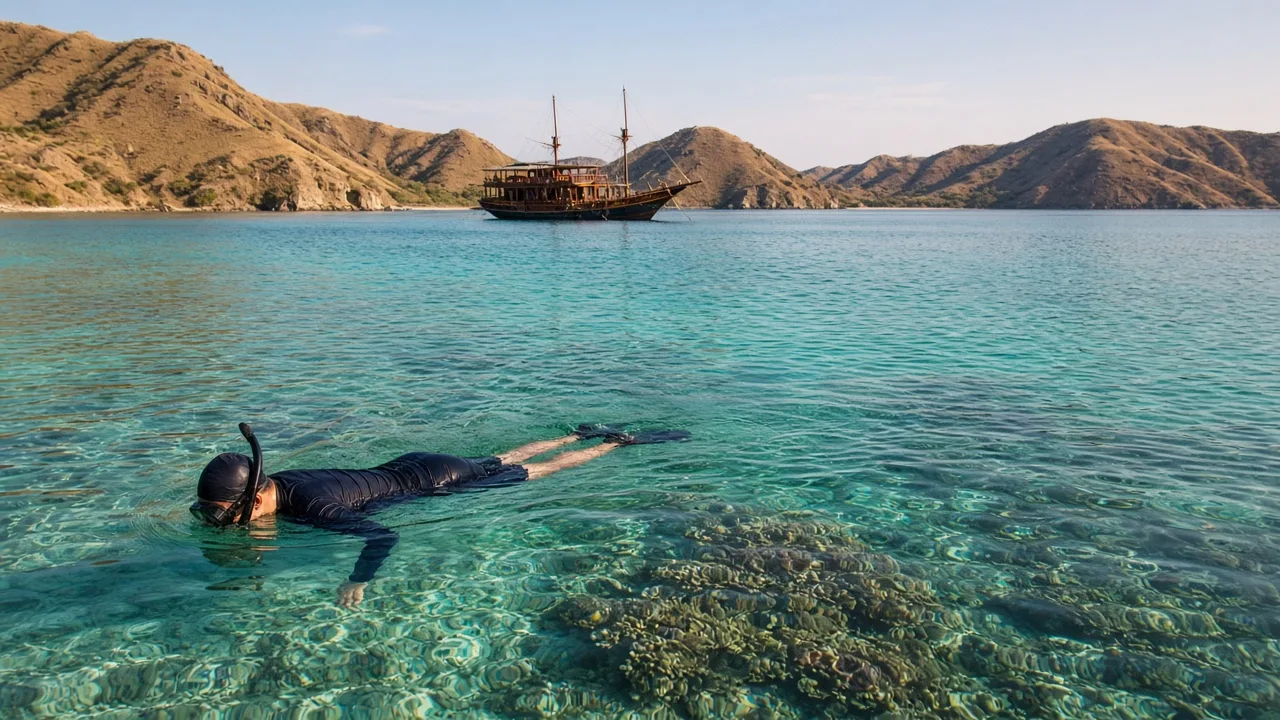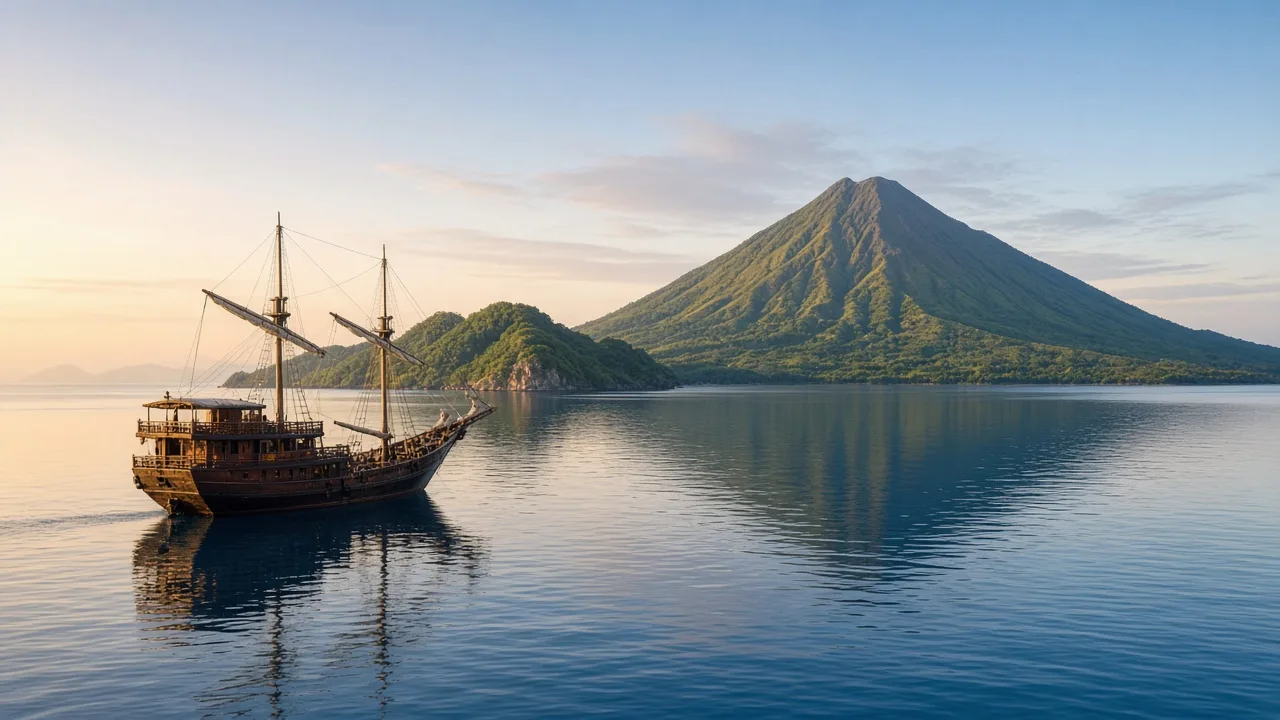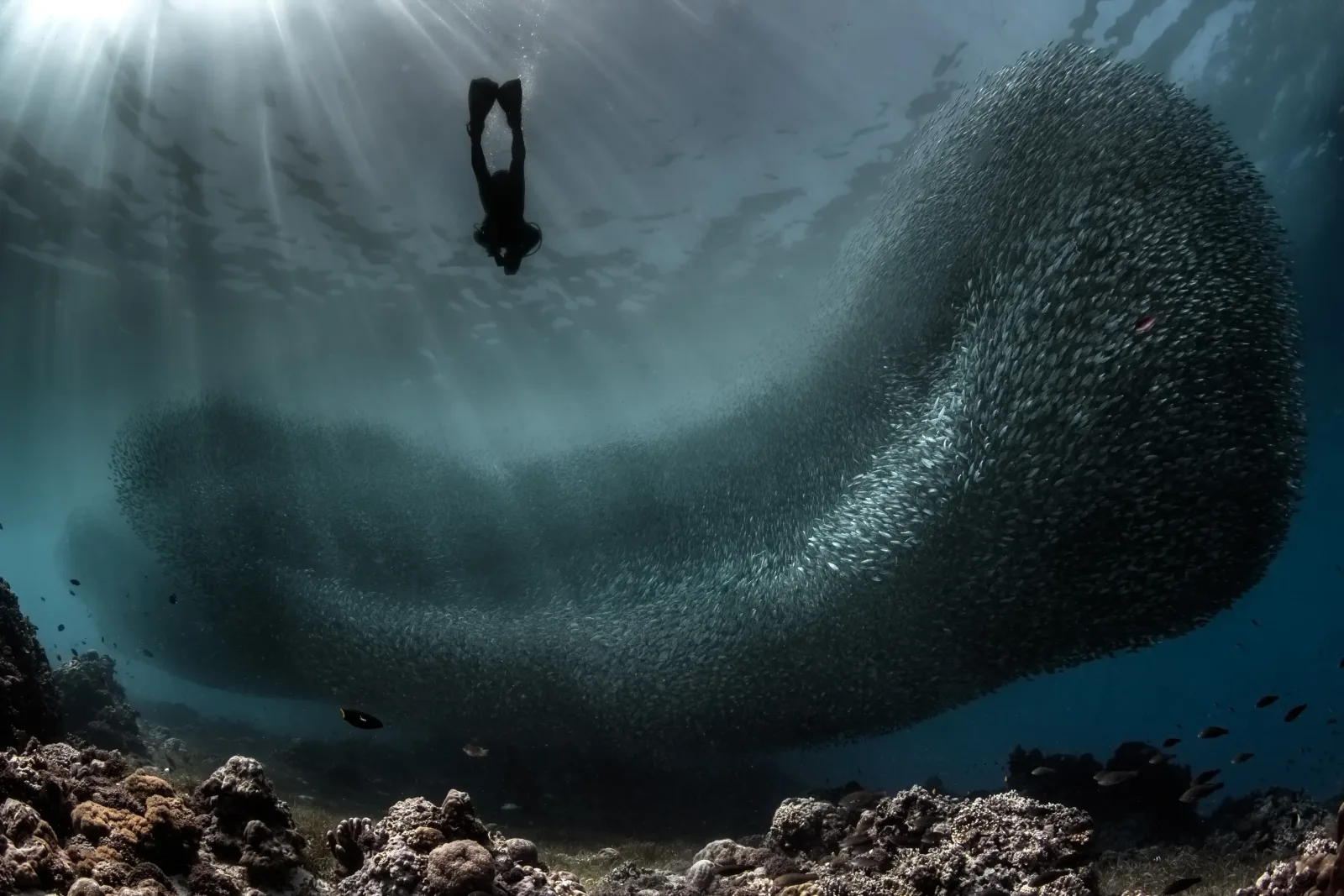
Bali is the most-dived island in Indonesia, and for good reason. Within a single small island you can dive a famous shipwreck from the shore, drop into a current-fed channel where ocean sunfish (mola mola) appear seasonally, hover at a manta cleaning station, work a sloping coral wall, and spend an entire afternoon photographing tiny critters on a black-sand slope. Few destinations on earth pack this much variety into this little geography.
The flip side of that variety is that Bali is several different dive destinations stacked on top of each other, and the right itinerary depends on what you came to see. The wrecks and macro are in East Bali. The pelagics (mola, mantas) are in the channel between Bali and the Nusa Penida group. The calm shallow walls are in the far northwest. The currents are everywhere, but they are very different currents in each region. A first-time visitor who picks the wrong base ends up missing the dive that brought them to Bali in the first place.
This guide covers eleven sites we genuinely consider the best Bali has to offer, organised by region. It is written from operator perspective, drawing on the Bali crossings our liveaboards run between Komodo and East Indonesia each season as well as our day-diving partners on the island. The aim is to be specific and honest about what each site delivers, what conditions you need for it to deliver, and which sites are realistic on which kinds of trip. Bali sits on most divers' route to or from Komodo, so we also cover whether a Bali liveaboard makes sense or whether you are better off basing on land. If you are still deciding which Indonesian destination to pick, our best diving in Indonesia overview and Indonesia vs Maldives comparison cover that question.
How Bali's Diving Is Laid Out
For diving purposes Bali divides into four practical regions, and understanding the geography determines which sites are reachable from where. Distances on Bali look small on a map but the road network is slow, especially in tourist season, so most divers commit to one region per trip rather than trying to cover all of them.
- East Bali (Tulamben and Amed): the calm, sheltered northeast coast, including the village of Tulamben (home to the USS Liberty wreck) and the bays of Amed and Seraya. Shore diving is the norm here, the water is consistently calm, and conditions suit beginners through to macro photographers. The base region for any trip focused on the Liberty wreck and East Bali macro.
- Nusa Penida belt (Penida, Lembongan, Ceningan): three islands sitting in the strait southeast of mainland Bali. This is the channel where cold upwellings bring mola mola in season and reef mantas year-round. Day boats run from Padangbai or Sanur, or you can stay on Lembongan to be at the dive sites first thing in the morning. Strong currents are the norm.
- Northwest Bali (Menjangan and West Bali National Park): a small protected island inside West Bali National Park, plus the surrounding park waters. Calm, clear, and current-free. The region most suitable for new divers, training, and family trips, but with serious wall diving for those who want it.
- South of Padangbai (Mimpang, Tepekong, Biaha): three small islets just off the southeast coast. Strong currents, sometimes cold water, and the second-most-reliable mola mola sightings in Bali after Crystal Bay. Day-diveable from Padangbai, often combined with Nusa Penida days.
A standard Bali dive trip is land-based and typically dedicates two to three days per region. A focused 5-day trip can comfortably cover East Bali plus the Nusa Penida belt. A week lets you add Menjangan and the South-of-Padangbai sites. A liveaboard departing Bali for Komodo or East Indonesia almost always dives Tulamben on the first day and Nusa Penida on the second before crossing east, which means a single liveaboard week often gives you a strong sample of Bali plus a full Komodo or Banda Sea itinerary on top. We come back to that liveaboard-versus-day-trip question in the practical section at the end.
East Bali: Wrecks, Macro, and Easy Shore Diving
The east coast around Tulamben and Amed is the part of Bali most divers come for. The water is calm almost year-round, sheltered from the prevailing currents that hammer the rest of the island, and the coastline drops away into deep water within a few metres of the beach. The result is a stretch of about ten kilometres that contains Bali's single most famous dive site, two of its best wall and macro sites, and the easiest entry-level conditions on the island.
1. USS Liberty Wreck (Tulamben)
The single most-dived dive site in Indonesia. The Liberty was a US Army cargo ship torpedoed by a Japanese submarine in 1942 and beached on the Bali coast at Tulamben to be salvaged. It sat on the beach for twenty years until the 1963 eruption of nearby Mount Agung pushed it back into the water, where it now lies on a sand slope between 5 and 30 metres, parallel to the shore and only twenty-five metres from the beach.
What you see: a 120-metre-long wreck encrusted with hard and soft coral, gorgonian fans, and sponges. The structure is heavily broken and partially collapsed which makes it photogenic from every angle and easy to navigate without penetration. Resident schooling fish include sweetlips, bumphead parrotfish (most reliably at dawn), big-eye trevally, and the occasional whitetip reef shark. Macro on the wreck itself is excellent: ghost pipefish, leaf scorpionfish, frogfish, pygmy seahorses on the gorgonians at the deep end, and dozens of nudibranch species. Garden eels rise from the sand around the bow and stern.
Difficulty and conditions: easy to intermediate. The wreck sits in the most sheltered bay on the Bali coast, currents are usually mild, and the depth range works for everyone from Open Water students to technical divers. Visibility 15 to 25 metres is typical. The only real challenge is the entry from the rocky beach (slippery cobblestones, often with surge), which is awkward in dive gear; most operators carry your tanks for you.
Best time: dive at first light to beat the crowds and to catch the bumphead parrotfish on their morning patrol. By 9 AM the site fills with day-trip groups from Sanur and the wreck can have a hundred divers on it at once. We schedule our Liberty dives for 6 to 7 AM whenever guest fitness allows.
Operator note: the Liberty is the dive almost everyone in Bali wants to tick off, but it rewards repeat visits. The first dive is the wide-angle wreck experience; the second is when you start noticing the macro. Plan for two or three dives on the wreck across different times of day rather than one and done. It is the rare site where night diving is genuinely worth doing too: octopus, decorator crabs, and sleeping bumpheads transform the experience.
2. Tulamben Drop-off
A vertical wall a few hundred metres east of the Liberty wreck, dropping from the surface to about 70 metres on a near-vertical face. The Drop-off is the deeper, more dramatic counterpoint to the Liberty's gentle slope, and it is the site East Bali divers most often pick when they want a serious wall dive without leaving Tulamben.
What you see: dense soft coral and gorgonian growth on the wall, with sea fans up to two metres across at depth. Schooling fusiliers, jacks, and snapper hold position above the wall in light current. Whitetip reef sharks rest on ledges, and grey reefs occasionally cruise out from the deep blue. Macro highlights include pygmy seahorses on the larger fans, leaf scorpionfish in the cracks, and orangutan crabs in the bubble corals. The wall is also one of the more reliable Tulamben sites for mola mola sightings during the August-to-October window, when cold water occasionally pushes them up from depth.
Difficulty and conditions: intermediate. The shore entry is the same as the Liberty (rocky beach with surge), and currents are usually mild, but the wall encourages divers to go deeper than they planned. Watch your computer and your gas. Typical dive depth 15 to 30 metres, with Advanced divers comfortably going deeper.
Operator note: the Drop-off is our default afternoon dive after a morning Liberty trip. The shore entry and exit are right next door, the depth profile is conservatively different from the Liberty, and the dive almost always delivers something the wreck does not (most often, a clean shot at the schooling fish in mid-water).
3. Coral Garden (Tulamben)
A shallow reef garden between the Liberty wreck and the Drop-off, sitting in 5 to 12 metres of water on a gentle sand slope. The Coral Garden is the most beginner-friendly site in Tulamben and the one most often used for entry-level training, refresher dives, and night diving. It is also the site visiting underwater photographers spend the most time on, because the variety of macro subjects in a small, easily-navigable area is exceptional.
What you see: a series of small artificial structures (stupas, statues, reef-restoration frames) interspersed with natural coral and sponge growth. Dense schools of glassfish hold position around the structures. Macro highlights include juvenile rockmover wrasse, harlequin shrimp, ribbon eels, mantis shrimp, peacock razor wrasse, and an abundance of nudibranchs across multiple species per dive. The night dive here delivers reliably: Spanish dancer nudibranchs, sleeping parrotfish in their mucus cocoons, hunting decorator crabs, and bobtail squid on the sand.
Difficulty and conditions: easy. Shallow, calm, and forgiving of buoyancy mistakes. Open Water divers and discovery-dive customers do this site as their first dive. Typical depth 8 to 15 metres.
Operator note: Coral Garden is an underrated site for experienced divers. Skipping it because it sounds beginner is a mistake we see often; an hour with a slow camera and a careful guide produces a longer subject list here than at most "advanced" sites in the region. We frequently use it as the third dive of a Tulamben day, after the Liberty and the Drop-off, when guests are looking to wind down with macro before sunset.
4. Seraya Secrets
A black-sand slope two kilometres south of Tulamben, on the coast near Seraya village. Seraya is to East Bali what Lembeh is to North Sulawesi: a muck-diving site whose entire point is finding rare critters on what looks like an empty volcanic sand bottom. There are no schooling fish, no sharks, no big structure. There is, however, a longer macro subject list than at any other site on Bali.
What you see: harlequin shrimp, hairy frogfish, mimic and wonderpus octopus, blue-ringed octopus, multiple ghost pipefish species, hairy and warty frogfish, dragon sea moths, juvenile sweetlips doing their characteristic dance, several pygmy seahorse species, ribbon eels, snake eels, mandarinfish at dusk. The site rewards local guides who know specific subject locations: a good Seraya guide can show you ten muck-classic species in a single 60-minute dive.
Difficulty and conditions: easy in dive technique, hard in finding things. The site is a flat black-sand slope from the shore to 25 metres with no current and no surge. The challenge is buoyancy control over sand (one fin kick blows the visibility for everyone behind you) and patience to find subjects that are deliberately camouflaged. Beginners with reasonable buoyancy can dive Seraya; the question is whether they will see most of the subjects without an experienced guide pointing them out.
Operator note: pair Seraya with the Liberty and Coral Garden if you have three days in East Bali, or pair it with a Lembeh extension if you are macro-focused. Bring a magnifying lens for the camera if you have one. We rate Seraya as the strongest single argument for staying in East Bali for an extra night rather than rushing across to Penida.
Nusa Penida and Lembongan: Mola Mola and Mantas
The strait between mainland Bali and the Nusa Penida island group is the part of Bali where the diving stops being gentle and starts being dramatic. Cold upwellings from the Indonesian Throughflow drive the current pattern here, the temperature is often eight to ten degrees colder than at Tulamben on the same day, and the megafauna list is the longest on the island. The signature animal is the Mola alexandrini ocean sunfish, which appears at cleaning stations along the Penida coast during the August-to-October cold-water window. The supporting cast is reef mantas at the dedicated cleaning station on the south coast, plus everything else the cold water brings up: schooling pelagics, eagle rays, cetaceans on the surface during the boat ride.
5. Manta Point (Nusa Penida)
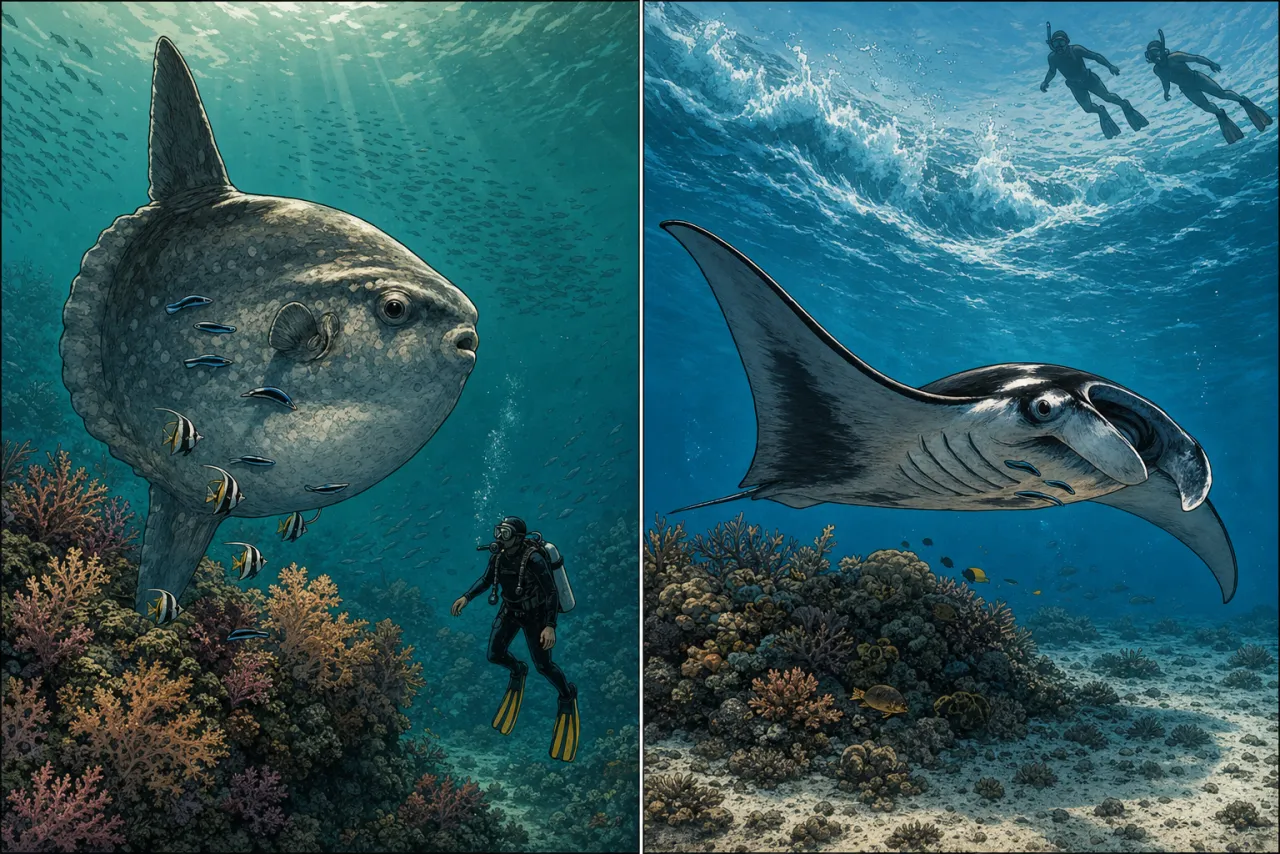
A shallow bay on the south coast of Nusa Penida island, with an inshore reef that hosts a permanent reef manta cleaning station. Manta Point is the most reliable place in Bali to dive with mantas, and unlike most cleaning stations the action happens in 5 to 12 metres of water, which means snorkellers and divers can share the site comfortably.
What you see: reef mantas (Mobula alfredi), sometimes oceanic mantas (Mobula birostris) on the deeper edge of the bay. The cleaning station is a coral bommie surrounded by sand, and mantas circle in over the bommie, hover for the cleaner wrasse to work, and circle out. On a good day five to ten different individuals pass through across an hour. The site is exposed to ocean swell, which means surge is the defining condition, and it is also exposed to cool upwellings, so water temperature can be anywhere from 22 to 28 degrees.
Difficulty and conditions: intermediate. Shallow depth makes the dive itself simple, but the surge can be substantial, and managing buoyancy in surge while not crowding the mantas takes some skill. Visibility ranges from clear to milky depending on swell. Open Water divers can dive Manta Point on calm days; we recommend Advanced or strong Open Water in normal swell.
Best time: mantas are present year-round but most active in the cold-water months (June to October), when feeding aggregations sometimes form. Boat access is conditions-dependent and the site is occasionally cancelled by big swell.
Operator note: a single trip to Manta Point is sometimes a no-show. Plan for two attempts if the dive is your priority, ideally on different days with different weather. The mantas are reliable but the conditions to actually get on the site are not, and a five-day Bali trip with one Manta Point attempt and a single day's bad weather is the most common version of the "I came for the mantas and didn't see them" story we hear.
6. Crystal Bay (Nusa Penida)
A protected bay on the northwest coast of Nusa Penida, with a sandy bottom in 10 to 20 metres surrounded by a reef wall. Crystal Bay is the dive every Bali visitor with mola mola on their wishlist comes here for. The cold water that pulses into the bay during August to October brings sunfish up from the deep, and the cleaning stations on the bay's reef walls are one of the most reliable places in the world to encounter Mola alexandrini.
What you see: in mola season (broadly mid-July to early November, peaking August to October), three- to four-metre Mola alexandrini hover over cleaning stations in 25 to 35 metres of water as cleaner wrasse and bannerfish remove parasites from their flanks. A successful mola encounter typically lasts 10 to 20 minutes before the fish drifts off into the deep. Outside of mola season, Crystal Bay is a healthy hard coral reef dive with the same supporting fauna as Manta Point: jacks, eagle rays, the occasional whitetip reef shark, dense small reef fish.
Difficulty and conditions: advanced for mola dives, intermediate otherwise. The bay name is misleading; conditions can be anything but crystal. Strong currents pull through the bay on certain tides, and the down-currents along the wall require Advanced certification and current management experience. Water in mola season can be 18 to 22 degrees, which feels arctic in a 3mm wetsuit; we strongly recommend a 5mm or full-length 3/5mm wetsuit and a hood.
Best time: mid-July to early November for mola, with August and September the highest-probability months. Outside this window the dive is still good but the headline animal is gone.
Operator note: Crystal Bay is the Bali dive most often hyped beyond what it can deliver. The mola encounter is real and reliable in season, but it requires the right tide window, the right water temperature on the day, and patience to wait for the fish at the cleaning station rather than chasing them. We allocate two dives per Crystal Bay morning rather than one for exactly this reason.
7. Toya Pakeh
A drift dive along the south side of the channel between Nusa Penida and Nusa Ceningan. Toya Pakeh is the site Penida day boats use most often when conditions on the south coast are too rough for Manta Point. It is also one of the strongest current-fed reef dives on Bali.
What you see: a long stretch of healthy hard coral reef on a gentle slope from 5 to 30 metres, with the current doing all the swimming for you. Schooling fusiliers, jacks, sweetlips, and the occasional eagle ray. Bumphead parrotfish in the morning. The reef itself is some of the most intact hard coral on the island, dominated by table corals and staghorn fields.
Difficulty and conditions: intermediate to advanced. The current is the defining condition. On a strong tide the drift is fast and continuous; on a weak tide the dive can become tedious. Water temperature is typically 24 to 27 degrees, milder than Crystal Bay but still cooler than Tulamben. Open Water divers in good current confidence can dive Toya Pakeh on lighter tides.
Operator note: Toya Pakeh is the dive we use to teach guests current management before taking them to Crystal Bay. The drift is predictable, the topography is forgiving, and the reef is healthy enough to be interesting even when the fish action is light.
8. Blue Corner (Nusa Lembongan)
A pinnacle and wall on the northeast coast of Nusa Lembongan, with a corner that catches strong tidal flow. Blue Corner is the most aggressive current dive in the Penida belt and a favourite among experienced divers who want adrenaline-grade drifts without leaving Bali.
What you see: schooling jacks and barracuda holding position in the current, eagle rays cruising past, the occasional grey reef shark, dense pelagic activity along the corner. The wall itself is encrusted with soft corals and sea fans. On strong tides Blue Corner is the only Bali site that genuinely compares to a Komodo pinnacle dive in terms of fish density and current strength.
Difficulty and conditions: advanced. The current at the corner can be dive-aborting strong, with significant down-currents along the wall. Reef hooks are sometimes necessary. Visibility ranges from 15 to 30-plus metres. We require Advanced certification with reef-hook experience for Blue Corner; we will not take Open Water divers here regardless of dive count.
Operator note: Blue Corner is a polarising dive. Done in the right tide window with the right preparation, it is one of the most exciting dives in Bali. Done on the wrong tide it is a fight against current that delivers nothing more than your own exhaustion. We dive it sparingly and only when the local skipper confirms the tide window is right.
Northwest Bali: Menjangan Island
The far northwest of Bali is a different country from the rest of the island. The coastline forms part of West Bali National Park, road traffic largely disappears beyond Lovina, and just offshore sits Menjangan, a small uninhabited island whose surrounding waters are protected and consistently calm. Menjangan is the antidote to Penida: shallow, current-free, sheltered, with visibility that often exceeds 30 metres. It is the part of Bali we send divers to when they want walls and clear water without the demands of cold-water current diving.
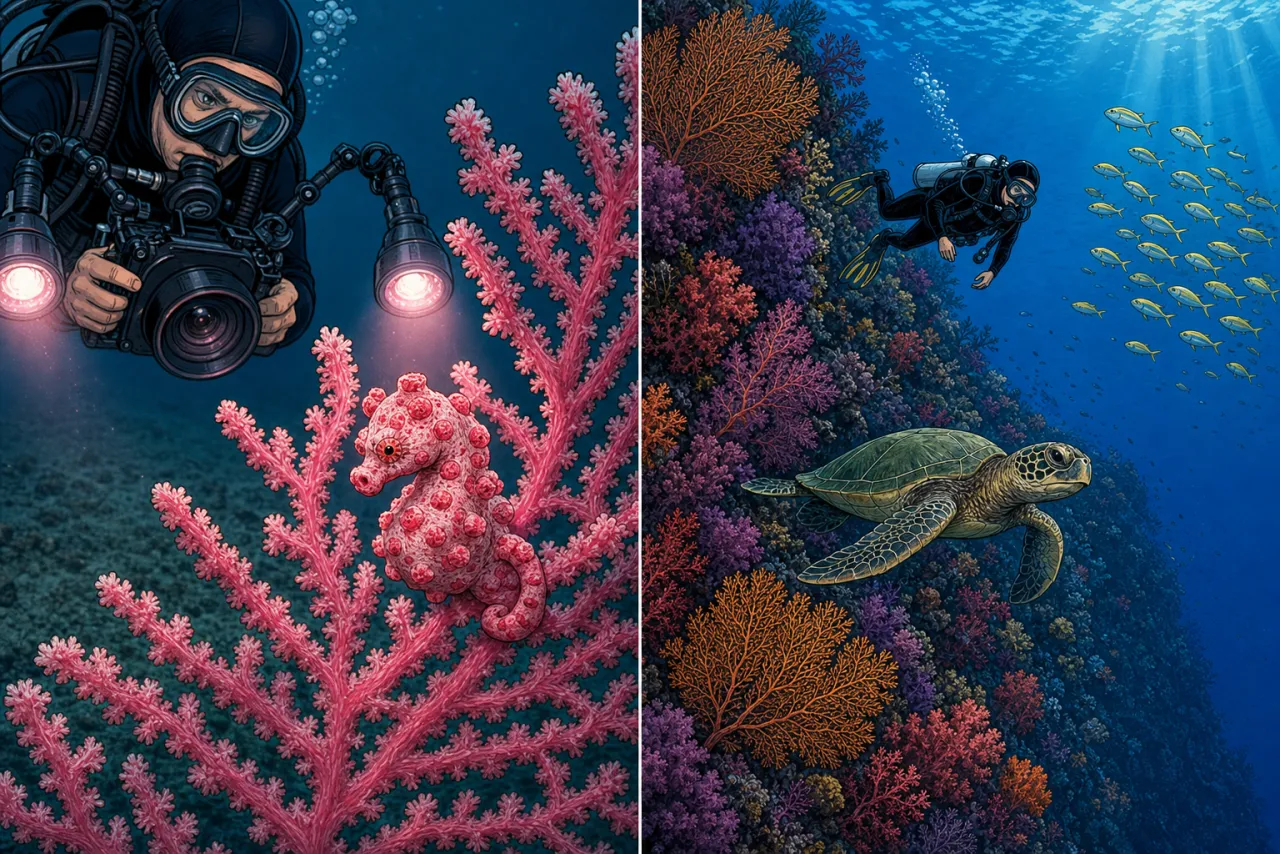
9. Menjangan Walls (Pos 1, Pos 2, Eel Garden)
A series of dive sites distributed around the perimeter of Menjangan island. The three named sites are essentially three sections of the same continuous wall and reef system, dived in sequence along the island. We list them as a single entry because most operators dive two of the three in a single morning, switching site by repositioning the boat.
What you see: a near-vertical wall dropping from the surface to 40-plus metres, encrusted with hard coral, gorgonian fans, barrel sponges, and dense soft coral on the lower sections. Eel Garden delivers exactly what its name promises: a sand patch at 12 metres home to several hundred garden eels swaying in formation. Resident reef life includes turtles (very common), schooling fusiliers and snapper, banded sea snakes, octopus, and the full Indo-Pacific reef fish list. The sites are also Bali's most reliable for napoleon wrasse encounters. Macro is good but secondary; Menjangan is primarily a wide-angle wall dive.
Difficulty and conditions: easy to intermediate. Currents are usually negligible, visibility is the best on the island, and depths are flexible because the wall starts at the surface. The site is forgiving enough for new Open Water divers and engaging enough for experienced divers looking for clear water. Typical depth range 5 to 25 metres for recreational dives, with deeper Advanced and tech profiles available on the wall.
Operator note: Menjangan is the right answer for trips that include non-divers and beginners alongside experienced divers. The shallow entry, the protected anchorage, and the calm conditions make it logistically simple, and the reef is healthy enough to satisfy advanced divers as long as they are not expecting pelagic action. The two-and-a-half hour drive from Tulamben or three hours from Sanur is the main cost; once you are there, it is the easiest diving in Bali.
South of Padangbai: Mimpang, Tepekong, Biaha
Three small islets on the southeast coast, just south of the village of Padangbai. The water here is colder than at Tulamben and the currents stronger, but the upwellings that bring mola mola to Crystal Bay also bring them here, often earlier in the season and with less crowd pressure. Local divers consider Mimpang and Tepekong to be the South Bali alternatives to Penida, and during peak mola season they can deliver as well as Crystal Bay with a fraction of the boats on site.
10. Mimpang (Shark Point)
The northernmost of the three islets, also known as Batu Tiga. Mimpang is a series of submerged pinnacles surrounded by reef wall, sitting in current-fed water just outside Padangbai harbour.
What you see: white-tip reef sharks resting on the sand and ledges (giving the site its English nickname), schooling jacks and fusiliers in the current, eagle rays passing through, mola mola during the August-to-October cold-water window. The pinnacles are encrusted with soft coral and the topography includes several small swim-throughs. Macro on the wall sections is decent but not the reason most divers come.
Difficulty and conditions: intermediate to advanced. The current is unpredictable and changes with the tide, sometimes rapidly within a single dive. Water temperature drops sharply in mola season (sometimes to 20 degrees). We require Advanced certification on strong-current days and recent reef-hook experience for the pinnacles.
Operator note: Mimpang is our preferred mola dive when Crystal Bay is overcrowded. The encounter rate is comparable in peak season, the boat ride from Padangbai is shorter than from Sanur, and the dive itself is more interesting topographically. The catch is that current and weather conditions cancel the site more often than Crystal Bay.
11. Tepekong Canyon
A submerged channel between Tepekong island and an adjacent rock, cut into the reef and creating a defined current-fed canyon. Tepekong is one of the most experience-restricted dives on Bali, dived less often than the other Padangbai sites because conditions cooperate less reliably. When they do, it is one of the most distinctive sites on the island.
What you see: the canyon walls are densely covered in soft coral and gorgonian fans. Schooling jacks and barracuda fill the channel on a running tide. Whitetip and grey reef sharks patrol the deeper end of the canyon. The site is also one of the more reliable spots for ocean sunfish in season, and the sometimes-strong down-current at the canyon mouth has produced more than one inadvertent deep dive over the years.
Difficulty and conditions: advanced only. The currents include reliable down-currents at the canyon mouth that can pull divers significantly deeper than planned. Negative entries and dive-plan discipline are essential. Water temperature drops in cold-water season. We will not take divers without Advanced certification, recent current-diving experience, and reasonable physical fitness on Tepekong regardless of how senior their certification card looks.
Operator note: Tepekong is the kind of dive that makes the trip for experienced divers who get the right conditions, and the kind that quietly disappoints if conditions push you to a backup site. We treat it as a bonus dive rather than a guaranteed item on any itinerary, and we are conservative about cancelling it. If you want to maximise your chance of diving Tepekong, allow at least three days in the Padangbai region and let the operator pick the day.
Practical: Season, Currents, Certification, and Day-trip vs Liveaboard
Bali is a year-round dive destination, but conditions and the species list change significantly with the season. The wet season (December to March) brings rain, occasional reduced visibility from runoff at the river mouths, and warmer water across all sites. The dry season (April to November) brings clearer water, less weather disruption, and the cold upwellings that drive the mola mola season.
When to come for what:
- Mola mola: mid-July to early November, peaking August to October. If sunfish are your priority, do not come outside this window.
- Reef mantas: year-round at Manta Point, with feeding aggregations more common in the cold-water months (June to October).
- Liberty wreck and Tulamben: any time of year. Visibility is best in the dry season but the wreck is a strong dive 12 months out of 12.
- Menjangan: best April to November when the seas are calmer for the boat crossing. Wet season trips are still possible but more weather-dependent.
- Macro at Seraya and Coral Garden: year-round, with subject density slightly higher in the wet season when the warm water brings additional larval recruitment.
For an Indonesia-wide season guide and how Bali fits into a multi-region trip, see our Indonesia liveaboard seasons overview.
Currents and certification: Bali is split between two extremes. East Bali (Tulamben, Amed) and Menjangan have negligible currents and suit Open Water divers fine. The Nusa Penida belt and the South-of-Padangbai sites can have very strong currents, including down-currents along the walls, and we genuinely require Advanced certification for many of them. The middle ground (Toya Pakeh, Manta Point on calm days) is doable with Open Water and a good dive guide. If you are coming with an Open Water card and your priority is the megafauna in Penida, plan to get your Advanced certification on the trip; most Bali operators run weekend Advanced courses that combine theory with the reef sites that count toward the certification.
For divers new to liveaboards generally, our first-time liveaboard guide covers the practical questions that most often come up.
Day-trip versus liveaboard: this is the question that matters most for trip planning, because Bali is the rare Indonesian destination where land-based diving is genuinely competitive with liveaboard diving on price, convenience, and dive variety. The honest answer:
- Choose land-based if Bali is your only destination and you want flexibility on timing and rest days. East Bali and Menjangan day-diving from Pemuteran are excellent. Nusa Penida day-trips from Sanur or staying overnight on Lembongan work well. Land-based costs are lower per night, and you keep your evenings free for the topside Bali experience.
- Choose liveaboard if Bali is one stop on a multi-region itinerary, especially Bali to Komodo (very common) or Bali to the Banda Sea (less common but on the rise). A liveaboard departing Bali typically dives Tulamben on the first day, Nusa Penida on the second, then crosses east. You get a strong Bali sample without the time overhead of moving between hotels and dive shops, and you go to bed each night where the next dive starts.
For details on the liveaboard side, our Komodo liveaboard itineraries guide covers the trips that include Bali days. Our Komodo dive sites pillar covers what comes next on those crossings.
The Verdict: Choosing Your Bali Sites
If you have three to four days in Bali, base in Tulamben, dive the Liberty twice (once at dawn), the Drop-off, and Coral Garden, and add Seraya for a macro morning. Skip Menjangan and Penida unless you are already certain you have time for them.
If you have five to seven days, do East Bali for two and a half days as above, then move to Lembongan or Sanur for two days of Penida diving (one day at Manta Point and Toya Pakeh, one day at Crystal Bay if mola is in season). Optionally add a Mimpang day from Padangbai on the way.
If you have a full week or more, add Menjangan as a separate two-day trip. The Tulamben-to-Menjangan drive is long enough that day-tripping is impractical, so plan to stay one or two nights in Pemuteran and dive Menjangan in the morning, then drive back the same day.
If you are combining Bali with Komodo or East Indonesia on a liveaboard, the natural pattern is a Bali land stay first (East Bali, two to three days, with a Penida day-trip from Padangbai or a Sanur shuttle) followed by a 7-day Komodo or 12-day Banda Sea crossing departing from Benoa Harbour. This combination delivers more variety in two weeks than any single-destination trip we know of in Indonesia.