Every Indonesia liveaboard comes with a small stack of government charges that sit outside the boat fare, and most of the confusion we deal with before departure is about them rather than the diving. Guests arrive with figures copied from a blog post written three tariff changes ago. Some bring too little cash. A few pay a copycat visa site double the real price. None of this is difficult once you know what the charges are, who sets them and when they are paid, so this guide sets out the numbers as they stand in September 2026, region by region, along with the entry paperwork every foreign diver needs.
The two parks that matter most are Komodo National Park and the Raja Ampat marine park, and they could hardly work more differently. Komodo charges by the day and, since April 2026, requires every visitor to be booked through an online quota system. Raja Ampat charges twice, once for a twelve-month marine park card and again for a per-visit regency levy that nearly quadrupled in January 2026. Get those two straight and the rest of the country is easy.
The short answer: what a foreign diver pays in 2026
If you only read one part of this page, read this table. The figures are the official rates for foreign visitors, converted at roughly IDR 17,500 to 18,000 to the US dollar, which is where the rupiah has been sitting through September 2026. Treat the dollar amounts as approximate; the rupiah figures are the ones that get charged.
| Charge | Amount (foreign visitor) | How often | Who sets it |
|---|---|---|---|
| Komodo National Park entry | IDR 250,000 (about USD 14) | Per person, per day inside the park | National park authority, under PP 36/2024 |
| Komodo diving surcharge | IDR 25,000 (about USD 1.40) | Per diver, per diving day | National park authority |
| Raja Ampat marine park card | IDR 700,000 (about USD 40) | Once, valid twelve months | Raja Ampat marine park authority |
| Raja Ampat regency visitor levy | IDR 1,000,000 (about USD 56) | Once per visit | Raja Ampat regency government |
| Visa on Arrival / e-VOA | IDR 500,000 (about USD 28) | Once per entry, 30 days | Directorate General of Immigration |
| All Indonesia Arrival Card | Free | Once per entry | Directorate General of Immigration |
| Bali tourist levy | IDR 150,000 (about USD 8.50) | Once per trip, only if you visit Bali | Bali provincial government |
On Neptune Liveaboards trips the park charges in that table are not part of the cruise price. You pay them in cash, in rupiah or US dollars, on board or at embarkation, at the rate the authorities are charging on your dates. The visa, the arrival card and the Bali levy are yours to arrange before you fly, and we cover how further down.
One more thing before the detail. Government fees in Indonesia change often and sometimes with very little notice, and in the last two years alone Komodo has restructured its tariff and introduced a daily quota, Raja Ampat has raised its regency levy, and immigration has announced a visa price rise that has not yet taken effect. We update this page when the rules move. If a number here disagrees with something you read elsewhere, check the date on the other source first; it is usually older.
Komodo National Park fees in 2026
Komodo is where the most out-of-date numbers circulate, largely because the park has changed its fee structure several times since 2022 and every version is still sitting somewhere on the internet. The current system is simpler than most of the old ones.
The entry ticket, and what it now covers
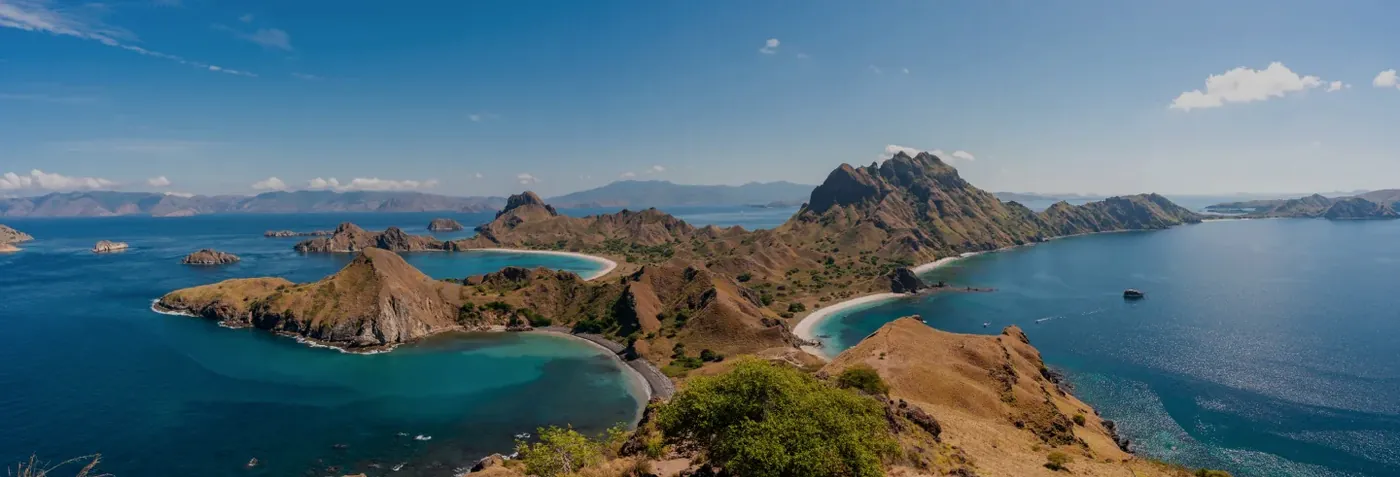
Since 30 October 2024, foreign visitors to Komodo National Park pay a flat IDR 250,000 per person per day. The rate is set nationally under Government Regulation 36 of 2024, the tariff schedule for the Ministry of Environment and Forestry, and it is the same on a Tuesday as it is on a public holiday. That flat rate is the change most people miss. The previous structure charged foreigners IDR 150,000 on weekdays and IDR 225,000 on holidays, and then added separate small tickets for trekking, wildlife observation and snorkelling on top. Those activity tickets have now been folded into the single entry fee, so walking with a ranger on Rinca, standing at the Padar viewpoint and snorkelling at Pink Beach are all covered by the IDR 250,000.
Indonesian citizens pay IDR 50,000 on weekdays and IDR 75,000 on holidays. That difference is deliberate policy, not a mistake on anyone's price list, and it is the same two-tier approach used across Indonesia's national parks.
The diving surcharge
Diving is the one activity that still carries its own charge: IDR 25,000 per diver per day, unchanged by the 2024 reform. It is a small number, and on a diving day inside the park a foreign diver's total park bill is therefore IDR 275,000, or roughly USD 15.50. Snorkellers and non-divers pay the entry fee only. On the days a boat is inside the park boundary but you choose not to dive, you still pay entry but not the surcharge, although in practice almost everyone on a Komodo liveaboard dives every day they can.
Why you keep seeing 290,000 and 370,000
If you have been researching for a while you will have come across figures of around IDR 290,000 on weekdays and IDR 370,000 at weekends, sometimes attributed to 2025 or even 2026. Those numbers reflect how the old separate tickets used to stack up (entry plus trekking plus snorkelling plus diving plus various local contributions) rather than anything in the current tariff. A couple of our own older articles quoted them too, and we are correcting those. The honest way to budget in 2026 is IDR 275,000 per diving day, plus whatever the boat itself is charged, which is covered below.
SiOra and the 1,000-visitor daily cap
The bigger change in 2026 is not the price but the booking. Since 1 April 2026 every visitor to Komodo National Park has to be registered in advance through SiOra, the park's online reservation system, and the park admits a maximum of 1,000 people a day across its main sites. There are no walk-in tickets any more. Liveaboard guests, day trippers from Labuan Bajo and snorkel boats all draw from the same daily allocation.
For a liveaboard guest this is mostly invisible, because licensed operators register their passengers in SiOra on their behalf. We do it using the passport details you give us on the guest form, which is why we ask for that form well ahead of departure rather than on the day. Two practical consequences follow. The name you enter has to match your passport exactly, middle names and all, because the record is checked. And a late change of passenger, or a passport renewed after you filled in the form, needs to reach us quickly so the registration can be corrected.
The quota also changes how early you should book in peak season. From June to September the park can genuinely fill on some dates, and a confirmed cabin on a boat is only useful if the boat's passengers can be registered for those days. Operators plan their SiOra allocations around their departure schedules, so the earlier your booking, the less anyone has to scramble. Our Komodo best time to visit guide covers which months are busiest and why.
What a Komodo trip actually adds up to
Because the fee is daily, your total depends on how many days the route spends inside the park boundary, and that varies by itinerary. Most Komodo liveaboard routes spend nearly every day inside the park, with the first afternoon and final morning sometimes falling partly outside it. Routes that start or finish further afield, such as crossings from Bali or Sumbawa, only incur the Komodo fee on the days they are actually within the boundary. As a rough guide for a diver:
| Days inside the park | Diver (IDR 275,000/day) | Snorkeller or non-diver (IDR 250,000/day) |
|---|---|---|
| 3 days | IDR 825,000 (about USD 47) | IDR 750,000 (about USD 42) |
| 5 days | IDR 1,375,000 (about USD 78) | IDR 1,250,000 (about USD 70) |
| 6 days | IDR 1,650,000 (about USD 93) | IDR 1,500,000 (about USD 85) |
| 7 days | IDR 1,925,000 (about USD 109) | IDR 1,750,000 (about USD 99) |
We confirm the exact number of park days for your departure before you travel, so the cash you bring matches the bill. Where the park applies a reduced fee for children, as Komodo does, the lower figure is what a child pays.
Charges on the boat that you will not see
There is a further layer of Komodo charges that land on the vessel rather than the passenger. Boats pay a daily vessel entry ticket to the park, scaled by engine size, and the harbour authority levies a per-trip charge based on the vessel's gross tonnage. Since June 2026 the West Manggarai regency has also made settlement of its regional taxes, including a 10 per cent tax on accommodation and food served on board, a condition of every tourist boat's sailing clearance. These are the operator's costs and they are reflected in the fare. You may still see a "harbour fee" line quoted per person by some day-trip sellers in Labuan Bajo; that is how some operators choose to pass on their own vessel charges, not a separate government ticket issued to you.
Raja Ampat fees in 2026
Raja Ampat is the opposite of Komodo. There is no daily charge. Instead a foreign visitor pays two separate fees, collected by two separate authorities, and the second of them rose sharply at the start of 2026. Most of the confusion comes from people assuming the two are one fee, or that the famous "PIN card" covers everything.
The marine park card: IDR 700,000, valid twelve months
The first charge is the marine park entry card, formally the environmental services maintenance fee and known locally as the TLPJL card or simply the PIN. For foreign visitors it costs IDR 700,000 (roughly USD 40) and for Indonesian citizens IDR 425,000. It is administered by the Raja Ampat marine park authority, it funds ranger patrols, reef monitoring and community conservation programmes across the protected area network, and it is valid for twelve months from the date of issue. That validity is worth knowing. If you do a Raja Ampat trip in November and come back the following March, the card you bought first time still covers you, provided you keep the card or the digital record.
You may see reports that the card has risen to IDR 1,000,000. As of September 2026 we have not seen that confirmed by the park authority, and the figure appears to come from pages that have merged the card with the regency levy. If the card price changes, we will tell you before departure.
The regency visitor levy: IDR 1,000,000 per visit
The second charge is the one that changed. Under Regent Regulation 34 of 2025, the Raja Ampat regency government raised its tourism levy in January 2026 from IDR 300,000 to IDR 1,000,000 per foreign visitor (roughly USD 56), and from IDR 75,000 to IDR 300,000 for Indonesians. Children under twelve are exempt. Unlike the marine park card, the levy is charged once per visit rather than once a year, so a second trip within twelve months means paying the levy again even though your card is still valid.
Together the two charges come to IDR 1,700,000 per foreign adult, which works out at roughly USD 95 at current rates. Older guides quoting "around USD 65" or "about 1,000,000 rupiah" are describing the position before January 2026.
Where and how Raja Ampat fees are paid
Both charges are collected in and around Sorong and Waisai: at counters in Sorong airport, at Sorong's marina port and at Waisai harbour, and through the authorities' online registration systems. Payment at the counters is typically in cash. After paying the regency levy you receive a physical or digital PIN as proof, and you are expected to keep it for the whole of your stay, since checks can take place at ports and at popular sites. On our boats the fees are settled in cash on board or at embarkation, as with Komodo, and the proofs are issued against the passport details on your guest form.
Village and site fees are separate again. A number of the most visited spots, the Piaynemo viewpoint being the obvious example, are managed by the local community, which charges a small per-visit contribution towards the staircases, jetties and patrols that keep the site in shape. These are modest and itinerary-dependent. Some sites also change their access rules from season to season, and Wayag's current status is a good illustration of why we confirm the route for each departure rather than promising a fixed list of stops.
A worked Raja Ampat example
Take a single diver on a ten-night Raja Ampat liveaboard. The park charges come to IDR 1,700,000, regardless of whether the trip is seven nights or twelve, because nothing in Raja Ampat is charged by the day. Add a small amount for village contributions at the sites on the route. Compare that with Komodo, where a seven-day route inside the park costs a diver about IDR 1,925,000. The totals end up surprisingly close; they are simply structured in opposite ways.
Banda Sea, Alor and the quieter parks
Outside Komodo and Raja Ampat the picture is more varied and, in general, cheaper. Much of Indonesia's best remote diving happens in places that have either a modest local conservation charge or no park ticket at all, and the charges that do exist tend to be collected locally and to change without much publicity. This is exactly why we quote them per itinerary rather than publishing a single national figure.
The Banda Islands sit inside a marine tourism park, but the Banda Sea routes we run do not have a Komodo-style daily ticket collected across every day of the trip. What you do meet in Banda Neira are small local charges for the heritage sites ashore. Fort Belgica, for example, usually costs somewhere around IDR 25,000 to walk, and a few other historic buildings run on donations. Our Banda Sea departures list the park charges that apply before you book.
Among the other regions, a few reference points are useful. Bunaken National Marine Park in North Sulawesi charges foreign visitors IDR 150,000 per person per day under the 2024 tariff regulation. Wakatobi National Park has historically charged foreigners IDR 150,000 per day on weekdays and IDR 225,000 on holidays, plus IDR 25,000 per diving day, though national park rates were revised under the same 2024 regulation and figures quoted locally have not always kept pace. Triton Bay, Alor and Halmahera have comparatively low entry charges next to Raja Ampat, even where they sit in the same province. On routes that cross Sumbawa or pass Banta Island on the way into Komodo, the Komodo daily fee applies on the days the boat is inside the park boundary and not before.
The honest summary is that the long-range expedition routes are rarely where your park budget goes. Komodo and Raja Ampat account for most of it.
Visa and entry paperwork for divers
The park fees are the operator's business to collect. The entry paperwork is yours. There are up to three separate things to arrange, and they are often confused with each other because they all appear on government websites with similar names.
The Visa on Arrival and e-VOA
Most Western passport holders, including those from the United States, the United Kingdom, the European Union, Australia, New Zealand and Canada, enter Indonesia for tourism on a Visa on Arrival. It costs IDR 500,000 (roughly USD 28), allows a stay of 30 days, and can be extended once for a further 30 days from inside the country. You can buy it at the airport on landing or apply online beforehand as an e-VOA through the Directorate General of Immigration's official e-visa site at evisa.imigrasi.go.id. The price is the same either way, but the online route lets you skip a queue that at Jakarta and Bali can run long after an evening wave of international arrivals.
Citizens of ASEAN member states generally enter visa-free for up to 30 days. A smaller set of nationalities need a visa arranged in advance. Whatever your passport, it needs at least six months of validity beyond your arrival date and at least one blank page.
There is a price change on the horizon. On 12 August 2026 the Director General of Immigration announced a proposal to raise the fee to IDR 750,000 for an e-VOA obtained online before travel and IDR 1,000,000 for a visa bought on arrival. At the time of writing that proposal has no effective date and the official fee remains IDR 500,000. If it goes ahead, applying online before you fly becomes the cheaper option by a clear margin, which is a good habit to get into now regardless.
For a typical seven to twelve night liveaboard, 30 days is ample. It gets tight only if you combine a trip with a long stay elsewhere in Indonesia, in which case you need the extension, which is handled at an immigration office and takes a few working days.
The All Indonesia Arrival Card
Since October 2025 every arriving traveller, foreign or Indonesian, has had to complete the All Indonesia electronic arrival card. It replaces the old paper customs declaration and the SatuSehat health pass, combining immigration details, a customs declaration and a short health declaration into one online form at allindonesia.imigrasi.go.id. It is free. It is also not a visa: you still need your VOA or e-VOA as well.
Timing is the only trap. The form is submitted within the 72 hours before you arrive, not weeks in advance, and you receive a QR code by email that is scanned at the airport. A day or two before your international flight is the sensible moment. One person can usually submit for a small family group travelling together.
The Bali tourist levy
If your trip includes any time in Bali, whether a couple of nights before flying on to Labuan Bajo or a stopover after a Komodo cruise, the Bali provincial government charges a one-off foreign tourist levy of IDR 150,000 (roughly USD 8.50). It is paid once per trip, not per entry, it is cashless, and the only official channel is the Love Bali website at lovebali.baliprov.go.id or its app. You can also pay at counters at Ngurah Rai airport and at registered hotels. The regulation targets tourists visiting Bali and exempts transit passengers and several visa categories, so a diver flying straight through without leaving the airport is in a different position from one spending a night in Seminyak. If you are staying even one night, you owe it.
Copycat sites
This is the mistake that costs guests real money. Search for "Indonesia e-visa" or "Bali levy" and the top results include commercial sites that look official, use government-style colours and charge two or three times the real fee as a "service". Some are simply agencies; others are outright scams. The rule is short. The e-VOA comes from evisa.imigrasi.go.id, the arrival card from allindonesia.imigrasi.go.id, and the Bali levy from lovebali.baliprov.go.id. All three end in .go.id. Anything ending in .com, .org or .net, or arriving as a sponsored advert, is not the government.
How park fees are handled on our boats
On Neptune Liveaboards trips, national and marine park fees are not included in the cruise price. You pay them in cash, in Indonesian rupiah or US dollars, on board or at embarkation, and the amount is whatever the relevant authority charges for your specific dates and route. It is set out in our terms and conditions.
The practical reason for keeping the fees outside the fare is that they are set by government, they change without much warning, and the Komodo figure depends on the exact number of park days, which is only fixed once the route for your departure is finalised. Paying the actual charge at the time means nobody has to issue surcharges or refunds when a regulation moves between your booking and your trip, and it keeps the fare you are quoted stable. If you want the figure for your own dates, contact us and we will give you the current number.
A few details that come up often:
- Registration uses your guest form. Your SiOra registration in Komodo and your fee proofs in Raja Ampat are issued against the passport details you submit, so the form needs to be complete and accurate before departure.
- Children. Children are charged the full trip price, because harbour authorities require every passenger to be reported and make no distinction by age. Where a park applies a reduced child fee, as Komodo does, the lower park fee is what your child pays. Children under twelve are exempt from the Raja Ampat regency levy.
- Snorkellers and non-divers. Park entry is charged per person, not per diver, so non-divers pay the entry fee. They do not pay the Komodo diving surcharge.
- Other items settled the same way. Nitrox, equipment rental and bar drinks are also settled at the end of the trip, and the crew tip lands at the same moment.
Bring enough cash, in the right form
Cash is where the arithmetic catches people out. Indonesian ATMs usually cap a single withdrawal somewhere between IDR 1,250,000 and 2,500,000, depending on whether the machine stocks 50,000 or 100,000 rupiah notes, and banks add their own daily limits on top. A diver on a week in Komodo may want park fees of around IDR 1,900,000 plus a crew tip, plus any extras, all in cash, and that can mean several withdrawals over two days in Labuan Bajo or Sorong. Plan for it rather than discovering it the evening before boarding. Our guide to liveaboard tipping in Indonesia has the numbers on the tip side, and our Indonesia liveaboard cost breakdown puts every line item of a trip together.
If you bring US dollars, bring clean, recent-series notes. Money changers and many businesses in Indonesia routinely refuse notes that are torn, marked, heavily creased or from older print series, and there is nobody at sea to change them for you. Large denominations usually attract a better rate than small ones.
The mistakes we see most often
Most problems with fees and paperwork come down to a handful of repeat patterns, and nearly all of them are avoidable with ten minutes of preparation.
- Budgeting from old numbers. Komodo's tariff changed in October 2024 and its quota arrived in April 2026; Raja Ampat's levy rose in January 2026. Anything written before those dates is out by a meaningful margin in one direction or the other.
- Treating the Raja Ampat card as the whole fee. The IDR 700,000 card and the IDR 1,000,000 levy are separate charges from separate authorities. You need both.
- Assuming a valid card means no levy on a return trip. The card lasts twelve months; the levy is per visit.
- Filing the arrival card too early. It only opens within the 72 hours before arrival. Submitting it a week ahead is not possible, and doing it at the gate is stressful.
- Paying a copycat site. If the address does not end in .go.id, it is not the government.
There is one mistake that is not about money. Guests sometimes fill in the guest form with the name they use day to day rather than the name printed in their passport. With Komodo registrations now checked against passports, that mismatch has to be fixed before you board, and it is far easier to fix a fortnight out than at the harbour.
None of this should put you off. The fees themselves are modest next to the cost of the trip, they fund the rangers and patrols that keep these reefs in the condition you are travelling to see, and once they are paid you do not have to think about them again. For everything else you need before departure, from flights to transfers, our guides on how to get to Labuan Bajo and how to get to Raja Ampat pick up where this one leaves off.