Safety on an Indonesia liveaboard is mostly invisible until the one moment it matters, and by then it is too late to check. The equipment is either on board or it is not. The crew have either drilled for a diver missing at the surface or they have not. That is why the checking has to happen before you book, from home, with a list.
Indonesia raises the stakes. The best scuba diving in Indonesia happens far from hospitals, in strong currents, on routes where the nearest recompression chamber can be hours away by sea. A boat that would be perfectly adequate for a day trip off Bali is not necessarily ready for a week in the Banda Sea, and the difference is all in the details below.
We run three boats, and we have written this the way we would want a guest to check us: by asking for the equipment list, the procedures and the numbers, and comparing them with what any well-run liveaboard should have.
How to check a liveaboard is safe
To check a liveaboard is safe, ask the operator for its safety equipment list, emergency plan and dive procedures, then confirm each against a standard checklist before paying.
- Get the equipment list in writing
- Ask how an emergency is handled
- Check guides, ratios and diver locators
- Find the nearest chamber on your route
- Confirm your own insurance covers evacuation
It takes about half an hour and replaces trust in a brochure with answers you can compare.
You can see published safety lists for:
- The twelve-guest Komodo Sea Dragon
- Our 46-metre King Neptune
- The eight-cabin Neptune One
In short: a safe liveaboard is one that can show you its kit, its plan and its people before you sail.
Boat safety vs dive safety: what is the difference?
People ask "is this liveaboard safe?" as if it were one question. It is really two, and an operator can be strong on one and weak on the other.
Boat safety
This is the vessel as a ship: navigation, communication, fire protection and the means to abandon it. Radar, radios, an EPIRB distress beacon, life rafts with enough places for everyone, fire detection and drills all sit here.
Dive safety
This is what happens around the dives: briefings, guide ratios, tender cover, diver locators, oxygen and the plan for a diving injury. Most incidents on dive boats are diving incidents, not ship incidents.
Key distinction:
- Boat safety keeps the vessel and everyone on it afloat and reachable.
- Dive safety keeps each diver found, supervised and treated quickly.
Ask about both. A beautifully equipped yacht with a slack approach to tender cover is not a safe dive boat, and a well-run dive operation on a boat with no life rafts is not a safe ship.
The safety equipment a liveaboard should carry
Every reputable liveaboard should be able to send you its safety equipment list without hesitation. If it takes three emails to get one, that tells you something. This is what the list should contain, and what each item is actually for.
| Equipment | What it does | What to ask |
|---|---|---|
| EPIRB distress beacon | Sends the boat's position to rescue services by satellite | Is it registered and in date? |
| Radar, GPS and AIS | Navigation at night and in poor visibility; AIS shows the boat to other ships | Does the boat transmit on AIS? |
| VHF and long-range radio, satellite phone | Calls for help beyond mobile coverage | Who on board can use them? |
| Life rafts and life vests | Abandoning the vessel | Do raft places exceed guests plus crew? |
| Fire alarm, detectors, extinguishers | Early warning and first response to fire | Are there smoke detectors in cabins? |
| Emergency oxygen and first aid | First treatment for a diving injury | How many hours of oxygen are carried? |
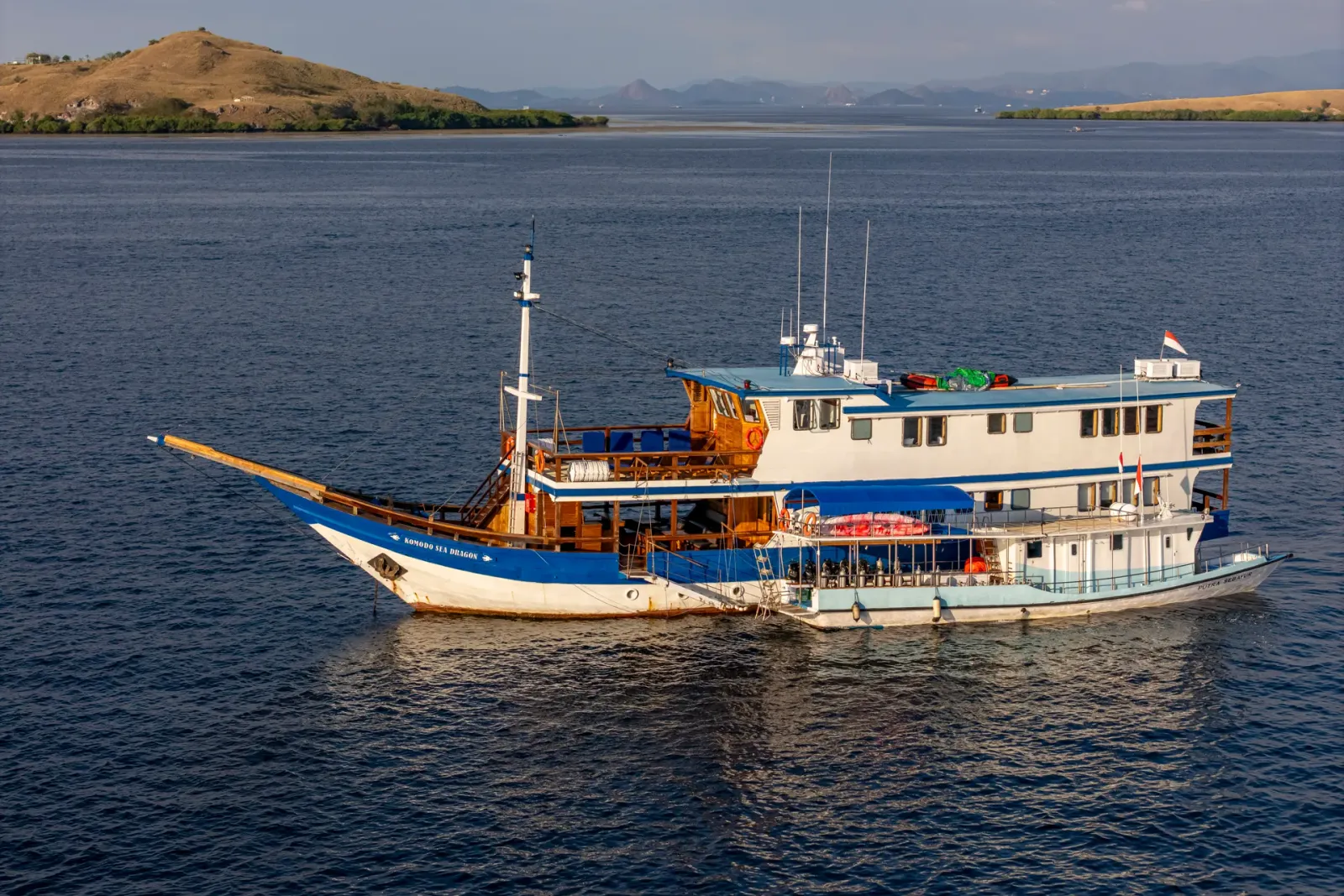
On our boats these lists are published on each vessel page rather than sent on request. Komodo Sea Dragon, for example, lists a Garmin radar and GPS, a Class B AIS transponder, two marine radios, an EPIRB, two 16-person life rafts, satellite and mobile phones, flares and smoke signals, smoke detectors, fire extinguishers and hoses, life vests and rings, oxygen kits, first aid kits and a searchlight.
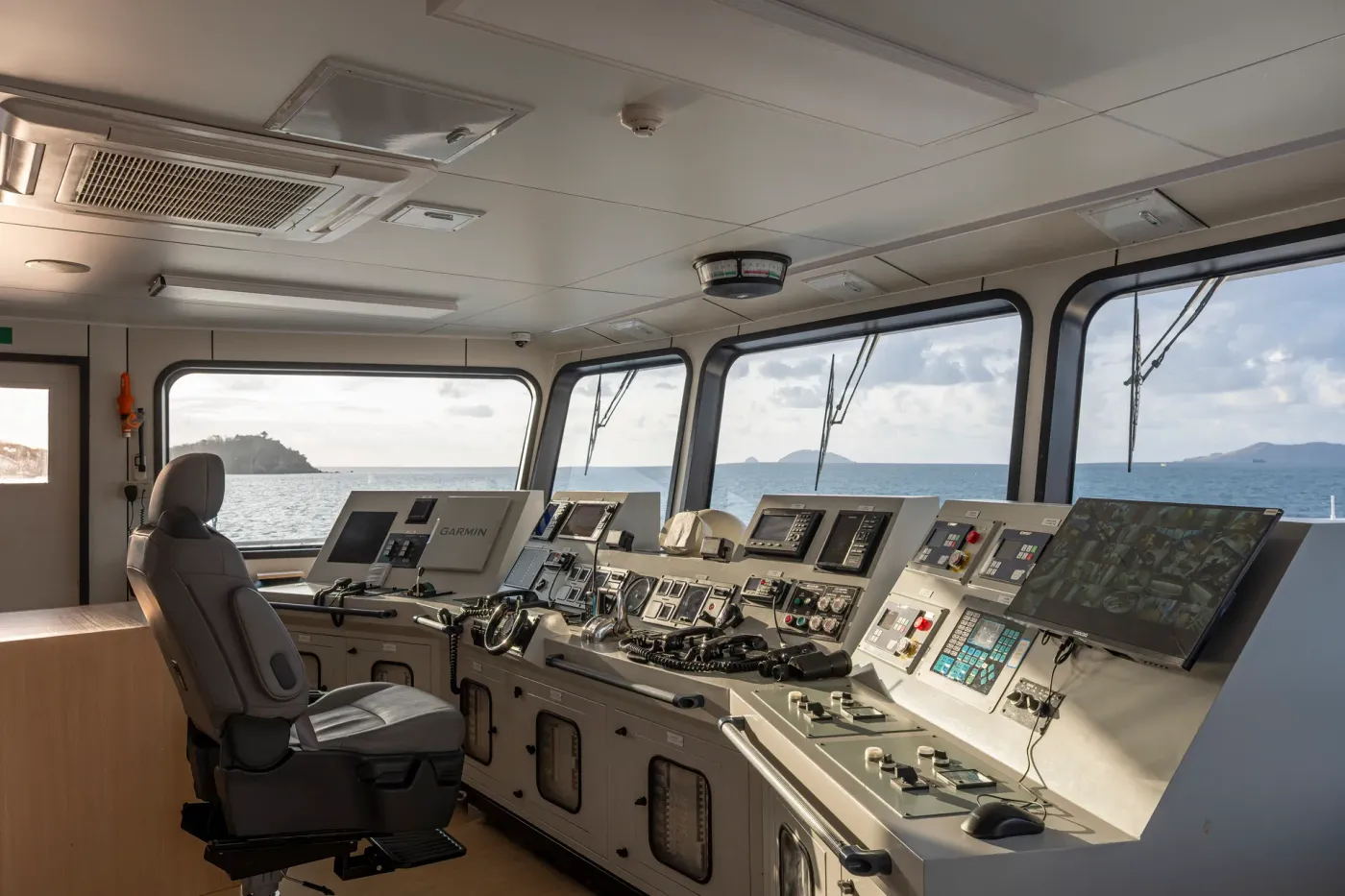
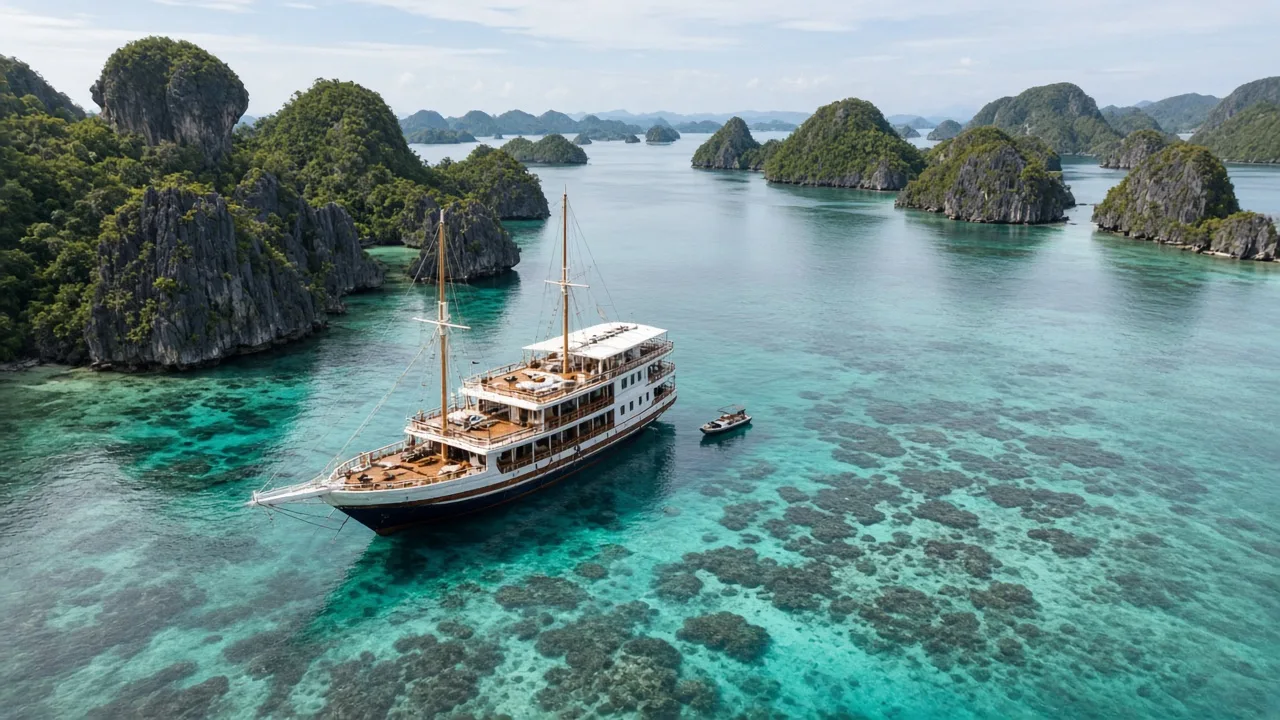
King Neptune, built in 2025, lists radar, a depth sounder, GPS, VHF, DSC and SSB radio, an EPIRB, life rafts, life vests, flares, a fire alarm and extinguishers, satellite and mobile phones, oxygen first aid kits, CCTV and first aid trained crew. It also runs on two 600-horsepower engines rather than one, which matters more than it sounds: a boat with twin engines can still manoeuvre and make way if one fails. Neptune One's list covers the same ground on a single engine.
The detail worth noticing in any list is capacity. Raft places should exceed guests plus crew, with room to spare. Sea Dragon's list states its rafts as two 16-person units, which you can set against its crew and twelve guests; a list that just says "life rafts", with no number, is one to ask about.
How a liveaboard handles a diving emergency
Equipment lists are easy to compare. Procedures are harder, and they matter more, because the right kit used late is worth far less than adequate kit used at once. This is how the response should run on any well-run liveaboard, and how it runs on ours.
1. Recognise it early
Most diving injuries announce themselves quietly: unusual tiredness, a joint that aches after the second dive, tingling in a hand. The single most important thing a diver can do is say so straight away. A good guide asks how you feel after every dive, but can only act on what you say, and the early hours are the ones that decide outcomes.
2. Oxygen, flat, fluids
The first response is high-concentration oxygen with the diver lying down, and fluids if they can drink. Oxygen does not cure decompression illness, but it speeds off-gassing and buys time, which is the scarcest thing on a remote route. All three of our boats carry oxygen kits and crew trained to use them, and emergency oxygen provision is one of the drills our management runs regularly alongside man overboard, fire, first aid and secondary care.
3. Call for specialist advice
There is no doctor on our boats, and on most liveaboards there is not one either. What replaces one is a phone call. The crew use the satellite phone to reach the shore office and the diver's insurer or the DAN emergency line, where dive medicine specialists advise on treatment and decide whether, and where, the diver needs a chamber.
4. Move the diver
If evacuation is needed, the boat heads for the nearest port with onward transport, and the tender may run ahead with the diver. From there it is a road or air transfer to the chamber the insurer has confirmed is operating. Chambers do go out of service for maintenance, which is why that call comes before the destination is chosen.
5. Insurance takes over
Evacuation and chamber treatment are where the bills become serious. A dedicated air ambulance from Bali to Singapore is generally quoted at USD 25,000 to 80,000. Guests who book directly with us receive complimentary diving insurance for the duration of the trip, and we still recommend your own dive accident cover and travel insurance on top, because the complimentary policy does not cover cancellation, lost luggage or non-diving medical emergencies.
A worked example: a diving injury on a Komodo trip
To make the chain concrete, take a hypothetical case on a real route. A diver on a six-night Komodo Sea Dragon trip in August reports aching in one shoulder an hour after a dive at Castle Rock, in the north of the park, where the profile runs at roughly 15 to 25 metres in current. The crew put the diver on oxygen within minutes, lying flat, with water to drink. The guide calls the shore office and the diver's insurer by satellite phone, and the dive medicine specialist on the line advises evacuation. The nearest chamber to Komodo is at Siloam Hospitals in Labuan Bajo, usually a few hours by sea from the northern sites, so the boat turns for Labuan Bajo while the insurer confirms the chamber is staffed. If the case is complex, the next step is Bali.
Every link in that chain is something you can check before you book: the oxygen, the trained crew, the satellite phone, the distance to the chamber, and your own insurance. Our guide to decompression sickness on a liveaboard covers the medicine in more detail, and the guide to dive insurance for an Indonesia liveaboard covers what the policies pay for.
What to check before you book a liveaboard
These are the questions we would put to any operator, in roughly the order they matter. None of them is awkward to ask. A good operator answers them quickly and specifically; vague answers are an answer too.
1. How much oxygen is on board?
Not "do you carry oxygen", because everyone says yes. Ask how many hours of continuous oxygen the boat can give one diver, and how far that is from the furthest point of the route to the nearest chamber. On a remote route, the oxygen has to last the journey, not just the first hour.
2. How does the boat call for help?
Mobile coverage disappears for days on most Indonesian routes. Look for a satellite phone, VHF radio and an EPIRB as a minimum, and ask who on board is trained to use them. On our boats the satellite phones sit alongside the radios on every published list, and the satellite internet that guests use for messages is a backup channel to the shore office.
3. How is a diver found at the surface?
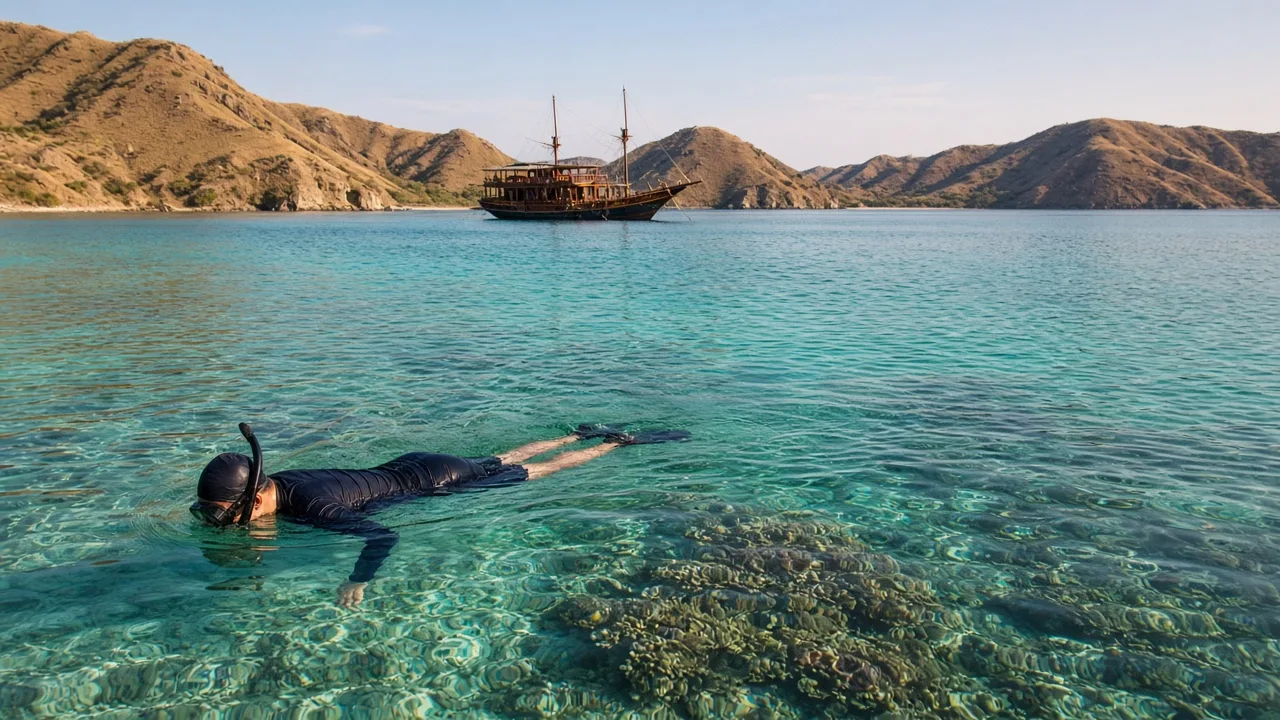
In current, a diver can surface a long way from where the group went in. Every diver should carry a surface marker buoy, and the better boats add an electronic locator. On all three of our boats each diver is issued a Nautilus Lifeline marine rescue GPS, which can transmit a surfaced diver's position to the boat.
4. How many divers per guide, and who are the guides?
Ratios of six divers to one guide are common. Four to one is better, especially in current, because the guide can keep the whole group in sight. On our boats the ratio is four divers per guide, and every guide is a PADI Divemaster or Instructor. Ask how groups are formed too: by experience, ideally, not by cabin.
5. How many tenders cover the dives?
Drift diving means the pickup boat follows the bubbles, and one tender for two groups in different directions is a weak point. King Neptune and Neptune One each list two tenders; Komodo Sea Dragon lists a detached dive boat and a tender. Ask whether a tender stays on the surface for the whole dive.
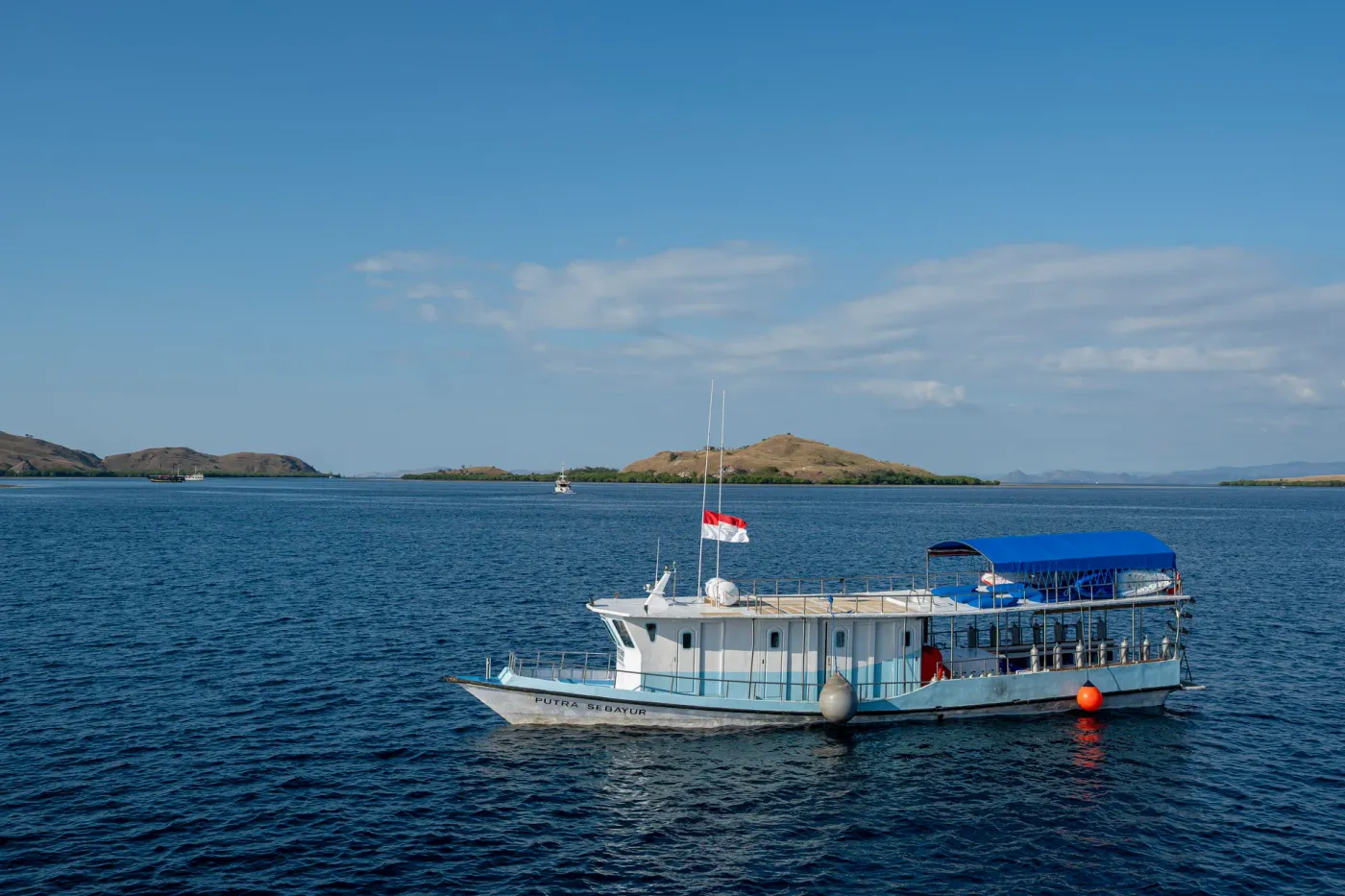
6. What happens in the safety briefing?
On the first day you should be shown the life vests, the muster point, the rafts and the fire exits, and told the signals for abandoning ship and for a diver missing. If the first briefing is about the menu and the bar, ask for the other one.
7. Does the crew drill?
Equipment is only as good as the speed with which it is used. Ask what the crew practise and how often. Our management runs regular drills for man overboard, fire on board, emergency oxygen provision, first aid and secondary care.
8. What does the boat ask about your health?
A boat that asks nothing about your medical history before departure is not looking after you. We ask ten medical questions in the guest form, and our guide to fitness to dive and the medical form explains what a declared condition triggers and why it is never worth hiding one.
9. Is there fire detection in the cabins?
Fire is the ship emergency that develops fastest, and most of it happens at night. Look for smoke detectors and a fire alarm, not just extinguishers. Komodo Sea Dragon lists smoke detectors and fire hoses; King Neptune and Neptune One list a fire alarm with extinguishers.
Why the distance to a chamber changes the checklist
The same boat is a different safety proposition in different places. In Komodo the nearest chamber is in Labuan Bajo, where the trips start and finish. In the Banda Sea it can be most of a day by sea to Ambon. The further the route runs from help, the more the oxygen supply, the communication equipment and your evacuation cover matter.
| Cruising area | Nearest chamber | What it means |
|---|---|---|
| Komodo | Siloam Hospitals, Labuan Bajo | Usually a few hours by sea |
| Raja Ampat | Sorong (in service since 2024) | Hours from the north, longer from Misool |
| Banda Sea | Ambon | Most of a day by sea from the Banda Islands |
| Alor | None on the island | Air evacuation via Kupang, usually six to ten hours |
| Bali | Several hospital chambers | Takes the complex cases from elsewhere |
None of this is a reason to avoid the remote routes, which hold some of the best diving in the country. It is a reason to dive them conservatively. Longer surface intervals, no decompression dives and an honest conversation with the guide about how you feel all count for more when the chamber is a day away.
It also affects which insurance you need. A policy with a low evacuation limit is adequate in Komodo and inadequate in the Banda Sea, and the time to find that out is at home, not on the boat.
Your part in staying safe on board
A safe boat still needs safe guests. Most of what goes wrong on a liveaboard starts with a diver, not a ship, and the habits that prevent it are simple.
Dive your own computer, and do not follow a guide's profile when yours says stop. Carry your surface marker buoy on every dive and know how to deploy it from depth. Say something the first time a joint aches or a hand tingles, not after the next dive. Keep to the briefing, especially the turn-around point and the planned exit in current. And complete the medical form honestly, weeks before you fly, so that any question about a condition is settled at home rather than on the dock.
Fatigue and dehydration matter more than people expect. Four dives a day for six days is a heavy load on the body, and skipping a dive when you are tired is a safety decision, not a failure. No good guide will think less of you for it. Alcohol and diving do not mix on the same day either.
Finally, give the boat your insurer's emergency number in the guest form before departure. In a real emergency the call to the insurer is one of the first, and it goes faster when the number is already on board.
How to choose a safe liveaboard for your experience
Safety is not only the boat. It is the match between the route, the conditions and you. A boat with an excellent safety record is still the wrong choice if its route needs more experience than you have.
If you are newly certified, or have fewer than about 30 logged dives, choose a route with gentler conditions and a chamber close by. Komodo's sheltered central sites, dived with a 4:1 guide ratio, suit many newer divers, but the northern pinnacles in strong current do not, and a good operator will tell you so. Our guide to diving in currents in Indonesia explains what to expect and how to handle a strong drift, and the first-time liveaboard guide covers the rest of the week.
If you hold an Advanced certification and have dived in current before, most routes are open to you, including the remote ones. The checklist matters more there, because the distances are longer.
If you are an experienced diver heading for the Banda Sea or Alor, the questions about oxygen, communications and evacuation insurance are the ones to press. Our guide to the dive certifications you need for an Indonesia liveaboard sets out which routes ask for what.
Red flags that should make you walk away
Some answers end the conversation. An operator that will not share its safety equipment list, or sends one with no numbers on it. A boat with no satellite phone on a route without mobile coverage. Dive groups of eight or more per guide in current. No question at all about your medical history or certification. A single tender covering several groups on drift dives. And a price that is far below every comparable boat on the same route, because something has to give, and it is rarely the bar.
None of these is proof that a boat is dangerous. Together, or in combination, they are reason enough to book elsewhere.
Who this checklist is for, and who it is not for
This checklist is for anyone booking a liveaboard in Indonesia, and it matters most for first-timers, for divers going to remote routes and for anyone booking for a family or group who will ask them afterwards whether they checked.
On our own boats the published lists are a starting point. The Komodo Sea Dragon liveaboard takes twelve guests at most, with a detached dive boat and a tender. The King Neptune liveaboard is the newest of the three, built in 2025, with twin engines, two tenders and twenty guests. The Neptune One liveaboard carries sixteen guests with two tenders. All three issue every diver a Nautilus Lifeline, dive four guests per guide, and run the same drill programme.
It is not a substitute for your own judgement in the water, or for proper training. A checklist cannot make the northern Komodo drifts suitable for a diver below Advanced level, and it cannot replace dive accident insurance. It is also not a guarantee: the best-prepared boat still depends on the crew acting quickly and the diver speaking up early.
Key takeaways
- Checking a liveaboard's safety means getting its equipment list, emergency plan and dive procedures in writing before you pay.
- Boat safety and dive safety are separate questions; ask about both.
- Look for oxygen for hours, a satellite phone, an EPIRB and life raft places above guests plus crew.
- Diver locators, a 4:1 guide ratio and a tender per group matter most in current.
- The further the route is from a chamber, the more evacuation insurance and conservative diving matter.
- Your own habits count: say something early, carry an SMB and declare medical conditions.