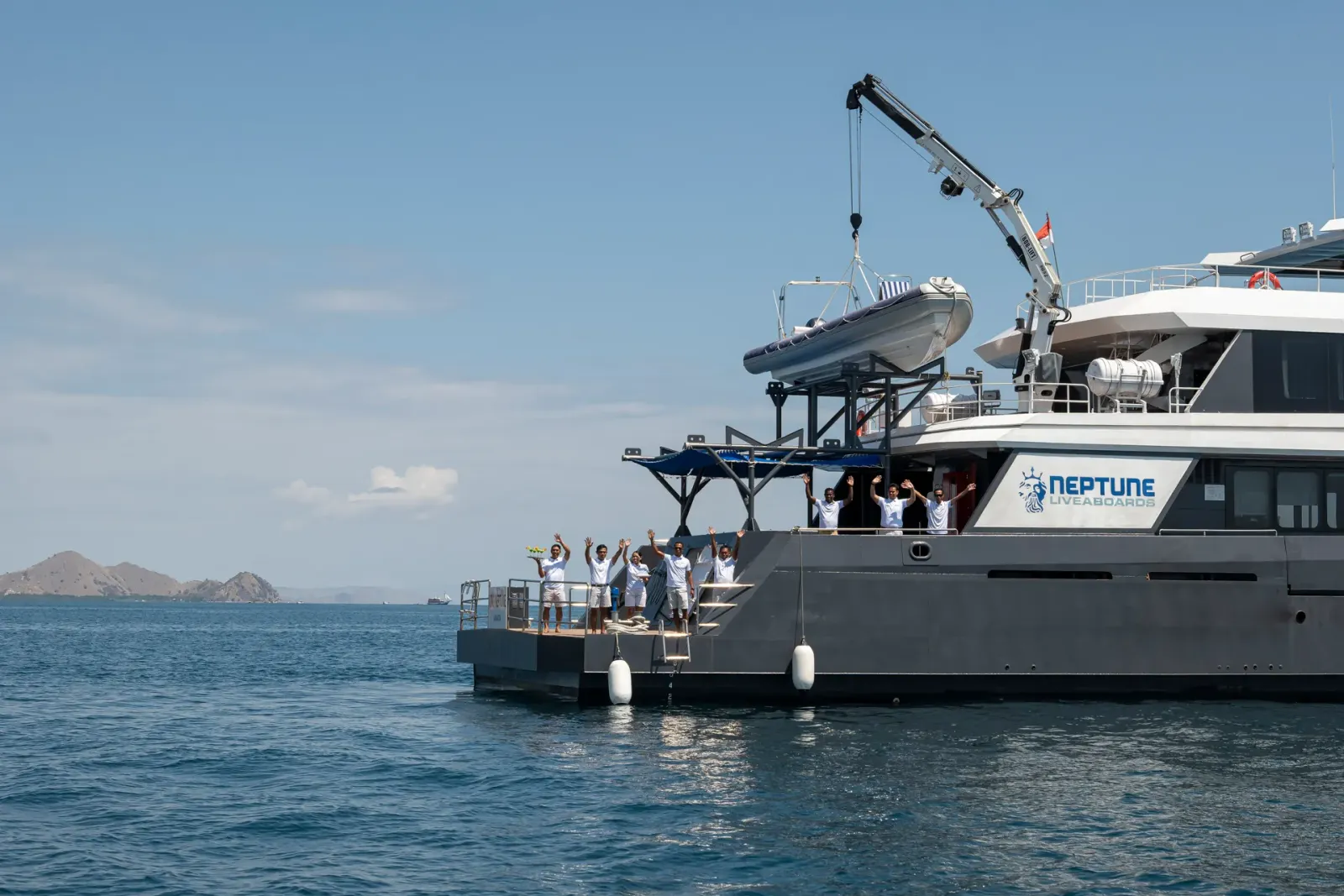
Every dive group has one: the diver who surfaces with 110 bar while everyone else is scraping 50. New divers tend to assume this person has bigger lungs, or some secret, or simply got a fuller tank. They almost never do. Low air consumption is a collection of small, learnable habits, and nowhere do those habits pay off faster than on a dive trip in Indonesia, where the reefs are deep enough, current-swept enough and interesting enough that every extra minute underwater counts. The good news, and we say this to nervous guests at almost every welcome briefing: air consumption improves more in one focused week of diving in Indonesia than in a year of occasional weekend dives, because repetition is the whole trick.
This guide collects what actually works. Not folklore, not "just relax" repeated ten ways, but the specific mechanical and behavioural changes our guides teach on board, roughly in the order we would fix them. It is written with liveaboard diving in mind, three to four dives a day for a week, because that rhythm both demands better consumption and builds it. But everything here applies to any diver anywhere who is tired of being the reason the group turns the dive.
Why your air consumption matters more than you think
On a guided reef dive, the group's bottom time is set by its thirstiest pair of lungs. When you burn through gas, you are not just shortening your own dive; you are shortening everyone's, or forcing the guide to send you up early with a buddy while the rest carry on. Neither feels good. On a liveaboard the effect compounds: over a 20-dive week, a diver who averages 45 minutes instead of 60 loses roughly five hours of underwater time. Five hours, in Raja Ampat terms, is an entire day of mantas you did not see.
There is a safety dimension too, and it is worth stating plainly. High consumption usually signals something else being wrong: overweighting, poor trim, anxiety, fighting current. Fix the consumption and you have usually fixed a stack of other problems underneath it. The reverse is also true, which is why "breathe less" as direct advice is nearly useless. Air consumption is an output, not an input. You lower it by changing the things that drive it.
First, know your number
You cannot improve what you have never measured. The measure that matters is your surface air consumption rate, or SAC: how much gas you breathe per minute, normalised to the surface. The rough calculation is simple enough to do on a paper napkin after any dive. Take the bar you used, multiply by the tank size in litres, divide by dive time in minutes, then divide by the average pressure in atmospheres (average depth in metres divided by 10, plus 1).
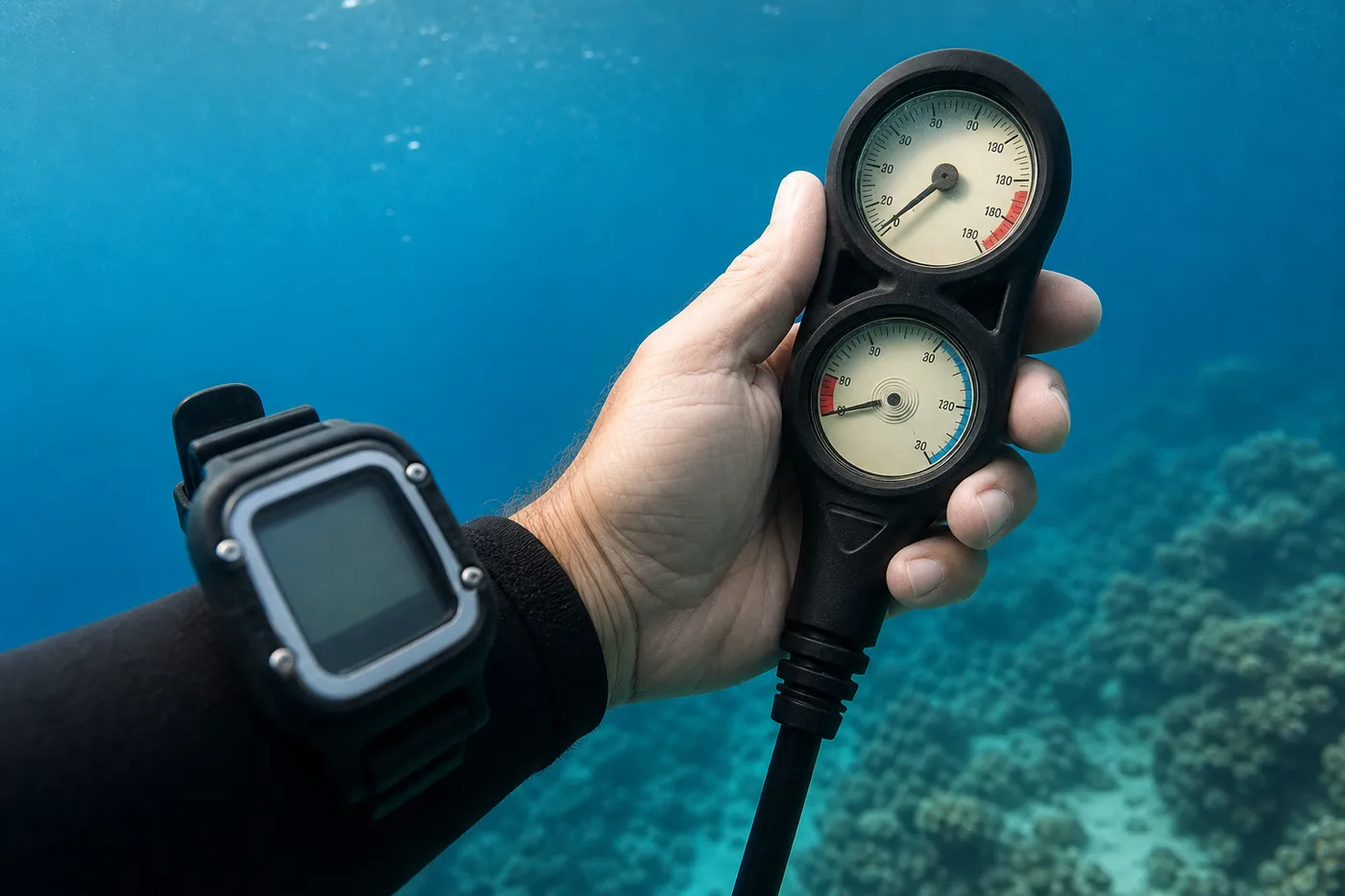
Say you used 160 bar from a 12-litre tank over 50 minutes at an average of 15 metres. That is 160 x 12 = 1,920 litres, over 50 minutes = 38.4 litres per minute at depth, divided by 2.5 atmospheres = a SAC of about 15.4 litres per minute. For context: brand-new divers commonly sit somewhere around 20 to 25; a relaxed, experienced recreational diver is usually in the 12 to 16 range; the calmest divers we see get under 10. These bands are approximate, and body size shifts them, but they give you a target. Work out your number on your next two or three dives, write it in your logbook, and check it again at the end of your next trip. The habits below routinely take a diver from the low 20s into the mid-teens within a week, which in practice means 15 extra minutes on every single dive.
Habit 1: get your weighting right, then get it right again
Overweighting is the single biggest air thief in recreational diving, and it is epidemic. A diver carrying two or three unnecessary kilos has to inflate the BCD to compensate, which creates drag; the extra lead pulls the legs down, which wrecks trim; the bad trim means every fin kick pushes water down instead of back; and all that wasted work shows up on the pressure gauge. We have seen consumption drop by a quarter from a weight check alone. Nothing else on this list comes close.
The check itself takes two minutes. At the surface with a normal breath held and an empty BCD, you should float at eye level, then sink slowly as you exhale. Do it at the end of a dive with 50 bar in the tank, not the start, because the gas you breathe out of a tank over a dive weighs close to 2.5 kilos and your buoyancy shifts accordingly. Most divers who have never done a proper end-of-dive check are carrying at least 2 kilos too much. Some are carrying 6.
One anecdote, because this exact conversation happens most seasons. A guest on a Komodo trip a couple of years back, maybe 80 dives, was turning every dive at 45 minutes while his wife cruised past 60, and he was convinced the crew were giving him short fills. Our guide watched him descend once: feet-down, BCD half inflated, sculling constantly with both hands. Weight check at the stern that afternoon: 4 kilos over. We stripped the lead off in stages across the next three dives, his trim flattened out, the sculling stopped on its own, and by day four he was surfacing with 70 bar and pretending he had never blamed the compressor. Roughly a fifth of his gas had been going into carrying lead he did not need.
Habit 2: breathe slow and deep, never shallow, never skipped
The breathing pattern that conserves gas is the opposite of what instinct suggests. Long, slow, full inhalations, and even longer relaxed exhalations, with no pause of any consequence in between. A useful rhythm to start with is four seconds in, six to eight seconds out. Deep breaths ventilate the parts of your lungs where gas exchange actually happens; rapid shallow breathing mostly flushes the dead space in your airways, wastes gas, lets carbon dioxide build up, and then the CO2 makes you feel breathless so you breathe faster still. That spiral is the classic new-diver panic loop, and slowing the exhalation is what breaks it.
What you must not do is skip-breathe: inhaling, holding for seconds at a time, then exhaling, in the belief that gas held in your lungs is gas saved. It is not. Breath-holding retains CO2, gives you a pounding headache by dive two, and violates the first rule every diver was ever taught. The gains on this list come from relaxation and efficiency, never from rationing. If a technique feels like suffocating slowly, it is the wrong technique.
Habit 3: fix your trim and stop swimming with your hands
A flat, horizontal diver slips through the water like a dart. A diver angled 30 degrees feet-down is a barn door, pushing a wall of water with their chest on every kick and burning gas to do it. Trim is partly weighting (see Habit 1), partly weight placement (moving lead from the belt to trim pockets or the tank band changes your pivot), and partly body awareness that takes a few dives to build. Ask a buddy to film you mid-dive; most divers are genuinely shocked at their own angle. We wrote a full guide to this in our article on buoyancy control techniques, and buoyancy and consumption are so tightly linked that fixing one nearly always fixes the other.
Hands deserve their own sentence. Sculling, waving and finning with the arms does almost nothing to move you and a surprising amount to raise your heart rate. Clasp them loosely in front of you, tuck them under your chest, hold your gauge. Divers who quiet their hands typically calm the rest of their body within a dive or two, in our experience. It is the cheapest fix on this list.
Habit 4: kick less, and kick better
Most divers kick far too much. A well-trimmed diver needs a couple of unhurried fin strokes, then a long glide; the flutter-kick metronome many of us learned in the pool is aerobic exercise, and aerobic exercise is exactly what empties tanks. Learn the frog kick if you can. It is slower per stroke, it glides between strokes, it keeps your fins up and away from the reef, and it uses the big muscles efficiently rather than the hip flexors frantically. On sites with no current, try this exercise on your next easy dive: halve your kick count and see whether you actually fall behind the group. You almost never will.
Pace is part of the same habit. The diver who is always ten metres ahead, darting to every pygmy seahorse, is doing interval training. Reef diving rewards the opposite behaviour: pick a line, move steadily, let the reef come to you. The slowest divers see the most anyway; ask any macro photographer.
Habit 5: use depth deliberately
Gas use scales with absolute pressure: at 30 metres you breathe four times the surface rate, at 10 metres only twice. That does not mean skipping the deep part of a dive, but it does mean not loitering at depth out of inattention. Do the deep objective early, then work shallow across the rest of the dive, and spend the final third of it above 12 metres where your tank drains at half the rate it did at 25. On a wall dive, two metres shallower along the same wall often shows you the same reef for meaningfully less gas. Multilevel profiles like this are how 60 and 70 minute dives happen on a single 12-litre tank; they are not a trick, just arithmetic taken seriously.
Habit 6: stay warm, stay rested, stay streamlined
Three smaller habits, one paragraph each of honesty. Cold divers burn gas; shivering is muscular work, and Indonesian water is not uniformly warm, whatever the brochure says. Southern Komodo upwellings can drop to 22 degrees Celsius, and four dives a day in a thin suit leaves you cold by the afternoon dive even in 27-degree water. Bring the 5mm, or add a hooded vest; the gas savings are real and so is the comfort.
Fatigue works the same way. The diver who slept four hours and skipped breakfast breathes measurably harder by the third dive. Liveaboard rhythm helps here (eat, dive, nap, repeat is practically the daily programme), but guard your sleep on travel days especially.
Streamlining, finally: every dangling octopus, clipped-on torch, loose gauge and oversized camera rig is drag, and drag is gas. Clip things close, route hoses cleanly, and think twice before taking the full photo rig on a ripping drift dive. A tidy diver is a cheaper diver to run.
Habit 7: let your equipment help you
Gear will not rescue bad habits, but it can quietly tax good ones. A regulator overdue for service breathes noticeably harder, and "harder" means your breathing muscles work more and demand more gas; if the last service was years ago, that is money better spent than almost any new accessory. Fins matter more than divers admit: a stiff, heavy pair that suited a drysuit course is wasted effort in a 3mm tropical setup, and an overly floppy travel fin makes you kick twice for every stroke. Mid-stiffness, well fitted, is the boring correct answer. A wetsuit that fits snugly keeps its insulating water still instead of flushing cold through the neck every kick cycle, which loops back to the warmth point above.
And weight distribution counts as equipment too: integrated pockets versus belt versus trim pockets change your natural angle in the water. Ten minutes at the stern with a guide, moving a kilo here and there, is one of the highest-return conversations you can have on any dive boat. Ours run these checks free and unprompted, and most decent operators will.
Habit 8: settle in before you descend
The first five minutes of a dive set the tone for the remaining fifty. Divers who hit the water flustered (mask fogged, computer not set, weights uneven) spend half the dive catching up with their own heart rate. Build a slow pre-dive routine and defend it: gear checked before the briefing ends, a full minute floating on the surface getting the breathing long and low, then an unhurried, feet-stationary descent with an equalisation rhythm rather than a race to the reef. On the descent, exhale fully and let the water take you down instead of dumping and plummeting. Divers who arrive at 15 metres calm stay calm; divers who arrive breathless spend ten expensive minutes recovering. Guides can spot which kind of dive you are about to have before your fins are wet.
Habit 9: dive more, and dive relaxed
The least satisfying advice is also the most reliable: consumption falls with experience, and it falls fastest when the dives come close together. Familiarity is most of it. The twentieth backward roll is not an event; your body has stopped treating descent as a mild emergency, your heart rate stays low, and the gauge shows it. This is why a liveaboard week improves consumption more than a year of scattered quarry dives: by day three the routine is automatic and your SAC is usually already two or three litres per minute lower than on day one. In most years we can pick out the day-three effect on guests' logged air without asking a single question.
Anxiety, the flip side, is the hidden multiplier on everything above. A stressed diver breathes shallow and fast no matter how good their trim is. If currents worry you, say so at the briefing; if a site sounds beyond you, sit it out without shame. And if diving into blue water with nothing visible below still spikes your pulse after fifty dives, you are normal. Calm is a skill with a learning curve like any other.
Indonesia-specific: currents, and why fighting them is the fastest way to empty a tank
Indonesian diving has one gas-consumption factor most training environments never prepare you for: moving water. Komodo, the Banda Sea crossings, the Dampier Strait, all of them run with current, and current is where consumption habits either hold or collapse. The rule our guides repeat until guests can recite it: you will not win a swimming contest against the ocean, so stop entering it. Drift with the water and steer, rather than swimming against it. Get close to the reef where friction slows the flow, tuck behind bommies and ridges the way the fish do, and cross current on a diagonal rather than head-on. A reef hook, where permitted and briefed, turns a leg-burning hover at a cleaning station into a flag-in-the-wind rest with a near-surface breathing rate.
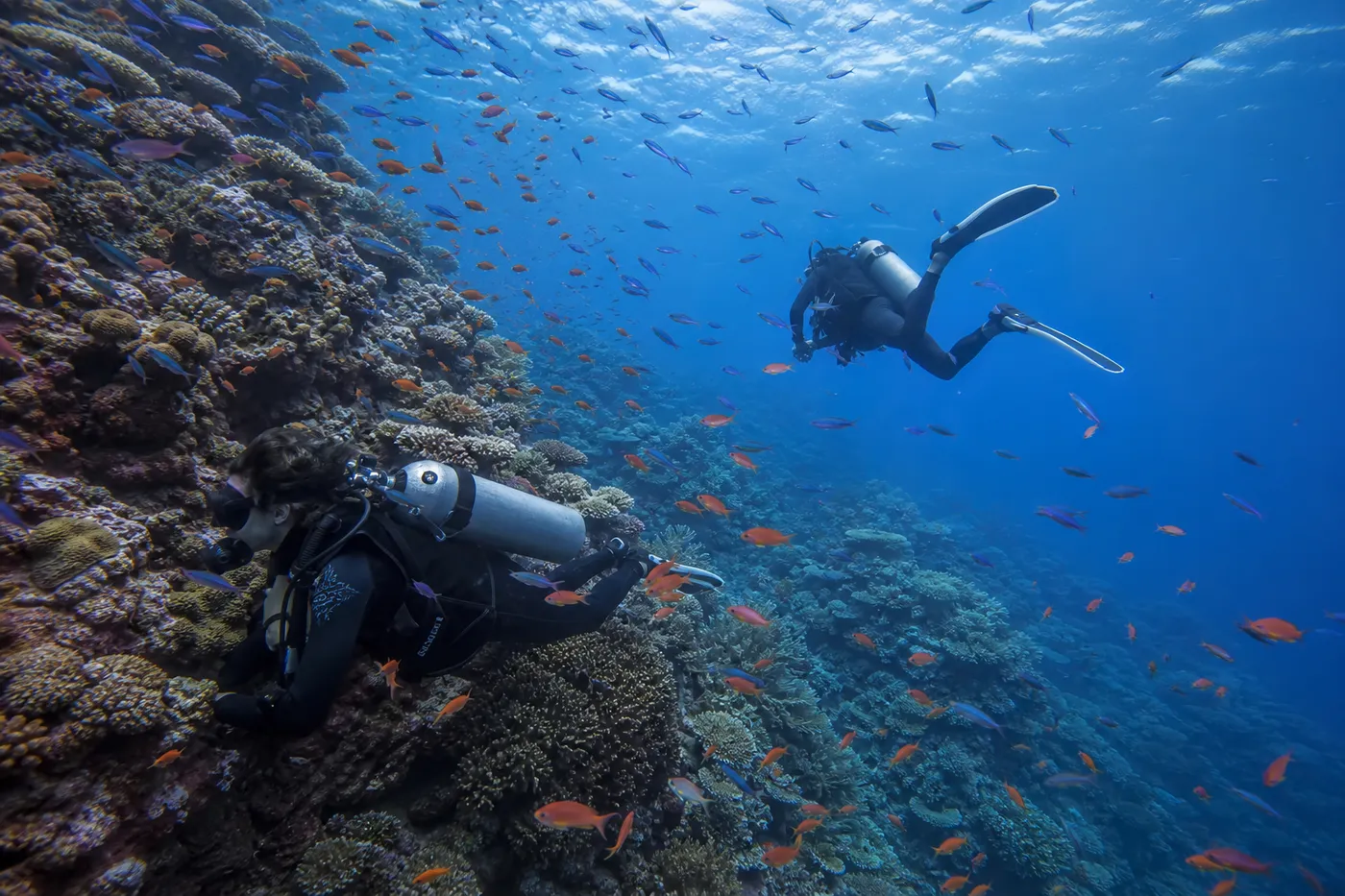
The difference is not subtle. The same diver at the same site can use 90 bar fighting up-current for ten stubborn minutes, or 25 bar hooked in and watching the sharks do the work. When a guide signals to hold position or abandon a heading, that instruction is usually about your gas, not your safety, though the two are never far apart.
What a realistic improvement looks like
Numbers help set expectations, so here is the pattern we typically see across a seven-day trip when a mid-20s-SAC diver applies the habits above, give or take the usual individual spread:
| Stage | Typical SAC (L/min) | What changed |
|---|---|---|
| Day 1, arrival dives | 22-25 | Baseline: travel fatigue, new gear, mild nerves |
| Day 2-3 | 18-20 | Weight check done, trim flattening, routine setting in |
| Day 4-5 | 15-17 | Hands quiet, kick count down, depth discipline |
| Day 6-7 | 14-16 | Relaxation compounding; 60+ minute dives normal |
Progress is rarely linear, and a cold, current-heavy site will bump any diver's numbers for a day. The direction of travel is what matters. Divers who track their SAC across the week improve faster than those who do not, probably for the same reason people who weigh themselves lose more weight: the feedback loop does the coaching.
What does not work
For completeness, the popular non-solutions. Skip breathing we have covered: dangerous, headache-inducing, counterproductive. Nitrox does not lower your consumption; it changes the nitrogen maths and extends no-decompression limits, which is valuable on repetitive liveaboard days, but you draw breaths of it at exactly the same rate. Requesting a 15-litre tank treats the symptom, and there is no shame in it (larger divers often should, and we carry them), but it adds weight and drag and postpones the fixes that would actually help. And "getting fit" helps less than people hope in the short term; general fitness matters over months, but a fit, tense diver still out-breathes an unfit, relaxed one. We have watched marathon runners empty tanks in 35 minutes while their sixty-something parents cruised to the hour mark.
Where to practise all of this
Habits need repetition, and repetition needs dives. A liveaboard is close to a purpose-built air-consumption clinic: three to four dives a day, a guide who watches your trim and will happily run a weight check between dives, warm water, and enough variety (walls, drifts, muck, pinnacles) that every habit on this list gets tested somewhere. By the last day the improvement is usually visible on the gauge and in the logbook both. If your last dives were a while ago, our guide to liveaboard diving for beginners covers how to arrive prepared, and the no-fly window at the end of the trip is explained in our article on flying after diving.
One last reframe, because it is the one that sticks with guests long after the trip. Air consumption is not a fitness score or a virility contest, whatever the banter on the dive deck suggests on any given afternoon. It is a relaxation score. The divers with the lowest numbers are not the strongest people on the boat; they are the calmest, the flattest in the water and the most economical with movement. Chase calm, and the gauge follows.