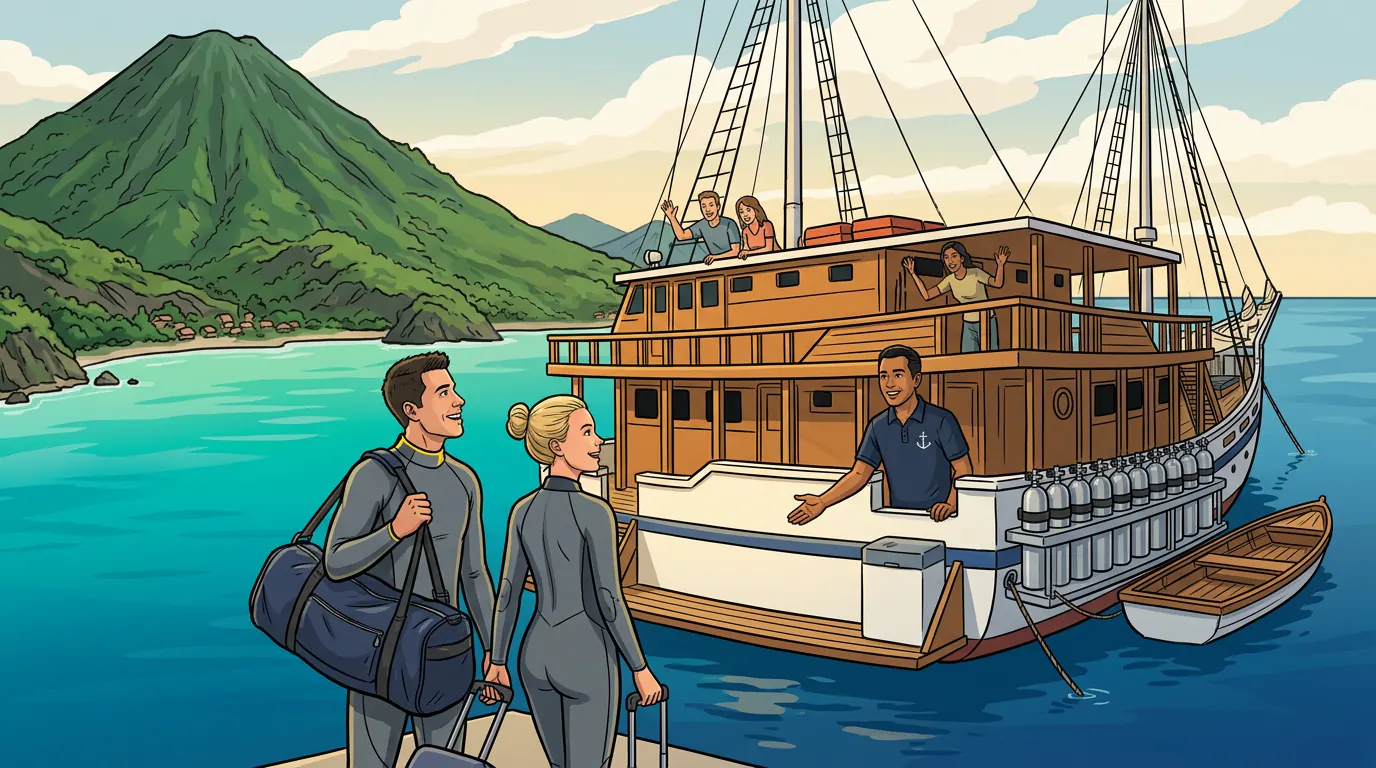
If you look at a map of marine biodiversity, one region dominates everything else. It stretches from the Philippines in the north to Papua New Guinea in the east and the Lesser Sunda Islands in the south, forming a rough triangle across Southeast Asia's tropical seas. Scientists call it the Coral Triangle, and Indonesia sits right at its heart.
This is not a marketing label. The Coral Triangle is a formally recognized biogeographic region that contains more coral reef species, more fish species, and more marine biodiversity per square kilometer than any other place on the planet. For divers, it is the reason Indonesia keeps appearing at the top of every "best diving in the world" list, and it is the reason a single dive site in Raja Ampat can hold more species than the entire Caribbean Sea.
What Is the Coral Triangle?
The Coral Triangle is a roughly 6-million-square-kilometer area of tropical ocean that spans six countries: Indonesia, the Philippines, Malaysia, Papua New Guinea, Timor-Leste, and the Solomon Islands. The term was coined by marine scientists in the early 2000s, though the region's extraordinary biodiversity had been documented since the 19th century when naturalist Alfred Russel Wallace first described the striking biological boundary between Asian and Australasian species in what is now eastern Indonesia.
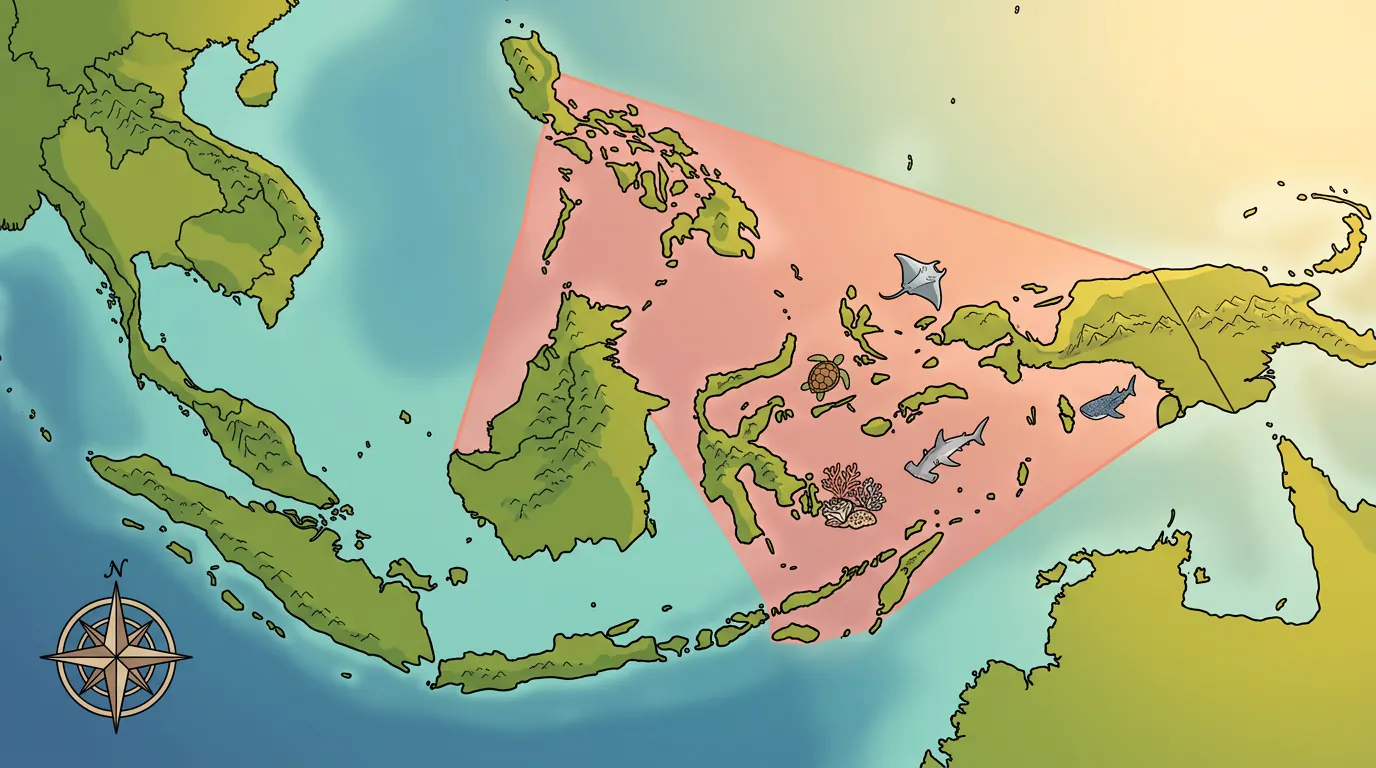
The numbers are staggering. The Coral Triangle contains:
- 76% of all known coral species on Earth, roughly 600 out of approximately 800 species
- Over 3,000 species of reef fish, more than any other marine region
- 6 of the world's 7 marine turtle species
- The highest density of coral reef area globally, with Indonesia alone holding about 18% of the world's total coral reef area
To put this in perspective, the Great Barrier Reef, which most people think of as the world's premier coral ecosystem, has around 400 coral species and 1,500 fish species. The Coral Triangle has roughly double those numbers in a comparable area. The difference is not marginal, it is overwhelming.
Why Indonesia Is the Epicenter
Indonesia occupies the largest share of the Coral Triangle, and its geography explains why biodiversity concentrates here more intensely than anywhere else.
The crossroads effect
Indonesia straddles two oceans (Pacific and Indian) and two continental shelves (Sunda and Sahul). Ocean currents from the Pacific flow through the narrow straits between Indonesian islands on their way to the Indian Ocean, creating what oceanographers call the Indonesian Throughflow. This massive current system acts as a conveyor belt, carrying larvae, nutrients, and warm water through the archipelago. Species from the Pacific, the Indian Ocean, and the deep Banda Sea all converge in Indonesian waters.
Island isolation and speciation
Indonesia's 17,000+ islands create thousands of isolated marine habitats. Reefs separated by deep water channels evolve slightly different populations over time, driving speciation. This is the same mechanism that led Wallace to develop his theory of evolution by natural selection while studying the region's terrestrial species. The underwater equivalent is equally dramatic: a reef on one side of a strait may host species that are subtly different from the reef on the other side, separated by only a few kilometers of deep water.
Volcanic nutrient input
Indonesia sits on the Ring of Fire, with over 130 active volcanoes. Volcanic ash and mineral runoff fertilize the surrounding seas, boosting plankton productivity at the base of the food chain. This nutrient richness supports larger populations of filter feeders (manta rays, whale sharks), schooling fish, and the predators that feed on them. It is no coincidence that some of Indonesia's best big-animal diving, like the Banda Sea and Sumbawa, surrounds active or recently active volcanic islands.
Where Divers Experience the Coral Triangle
For divers, the Coral Triangle is not an abstract concept. It is something you see on every single dive in Indonesia. Here are the key regions where the biodiversity is most concentrated and most accessible by liveaboard.
Raja Ampat
Raja Ampat, off the northwest tip of Papua, is the undisputed crown jewel of the Coral Triangle. Marine surveys have recorded over 1,700 fish species and 550+ coral species within the archipelago, making it the most biodiverse marine environment ever measured. A single dive at Cape Kri famously recorded 374 fish species in a single 60-minute dive, a world record that still stands.
What makes Raja Ampat exceptional is not just the species count but the density. Reefs here are so alive with color and movement that first-time visitors often describe the experience as overwhelming. Soft corals in pink, purple, orange, and yellow cover every surface. Schools of fusiliers, surgeonfish, and sweetlips fill the water column. Wobbegong sharks rest on ledges, pygmy seahorses cling to gorgonian fans, and manta rays cruise through cleaning stations.
Access is via Raja Ampat liveaboard or dive resort. The liveaboard advantage here is significant, since the best dive sites are spread across a vast area and a boat lets you cover far more ground than a stationary resort.
Komodo National Park
Komodo sits at the meeting point of warm Flores Sea water from the north and cooler Indian Ocean upwellings from the south. This temperature mixing creates nutrient-rich conditions that fuel an extraordinary food chain. The dive sites here are famous for strong currents that attract pelagic species: reef manta rays at Manta Alley, white-tip reef sharks at Crystal Rock, massive schools of trevally and barracuda at Castle Rock, and dense coral gardens at Batu Bolong where every centimeter of rock is alive.
Komodo is also where the Coral Triangle's diversity feels most accessible. A Komodo liveaboard covers 15 to 20 dive sites in a typical 4 to 6 night itinerary, each one distinctly different from the last. And between dives, you can go ashore to see the Komodo dragons, the world's largest lizards, on their home islands.
Banda Sea
The Banda Sea is the deep-water heart of the Coral Triangle. Surrounded by volcanic islands and plunging to depths of over 7,000 meters, it is a migration corridor for pelagic species that rarely come close to shore elsewhere. Schooling hammerhead sharks at Hatta Island, sea snakes in staggering numbers at Manuk Island, sperm whale encounters in the open channel, and pristine walls dropping into the abyss make this one of the most exhilarating dive regions in the world.
Because of the distances involved and the remote location, the Banda Sea is accessible almost exclusively by liveaboard. Expeditions typically run 10 to 12 nights during a narrow weather window from September to November.
Cenderawasih Bay
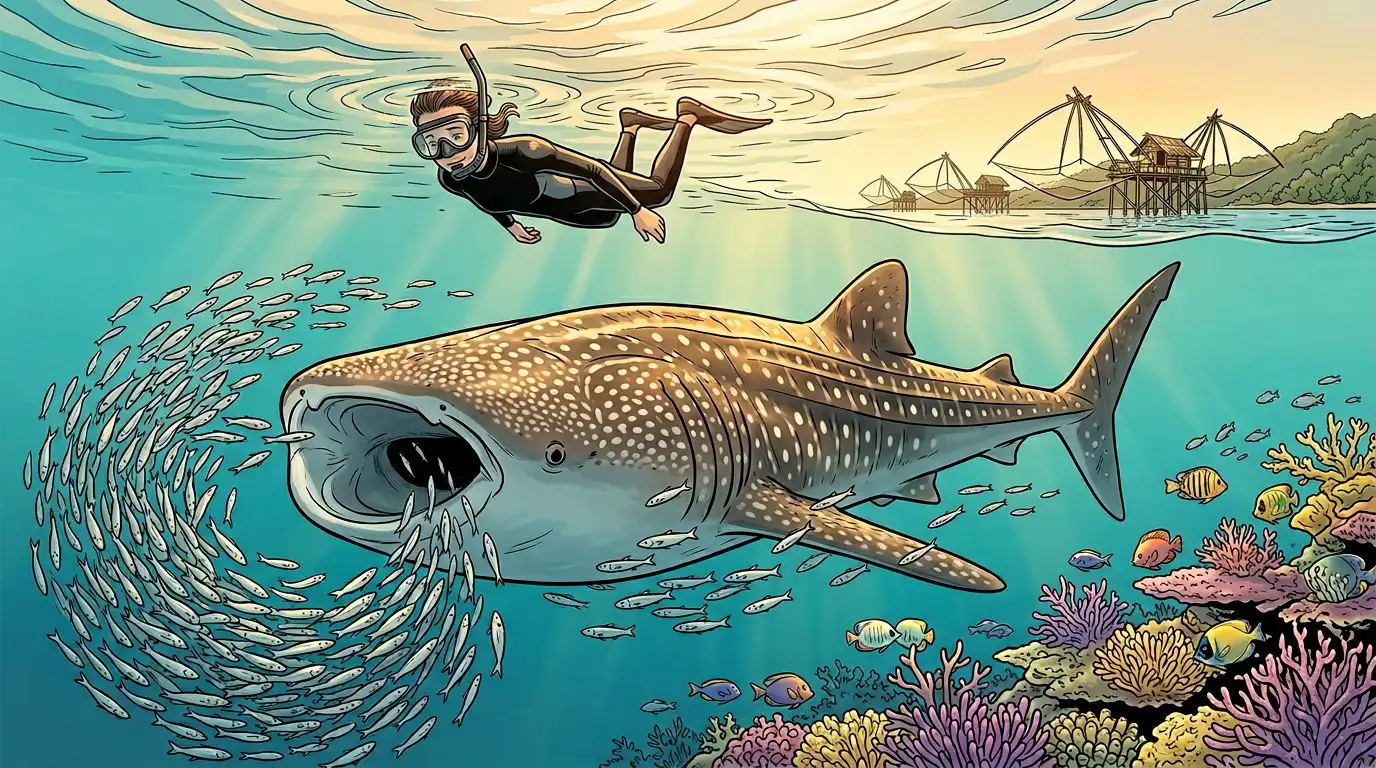
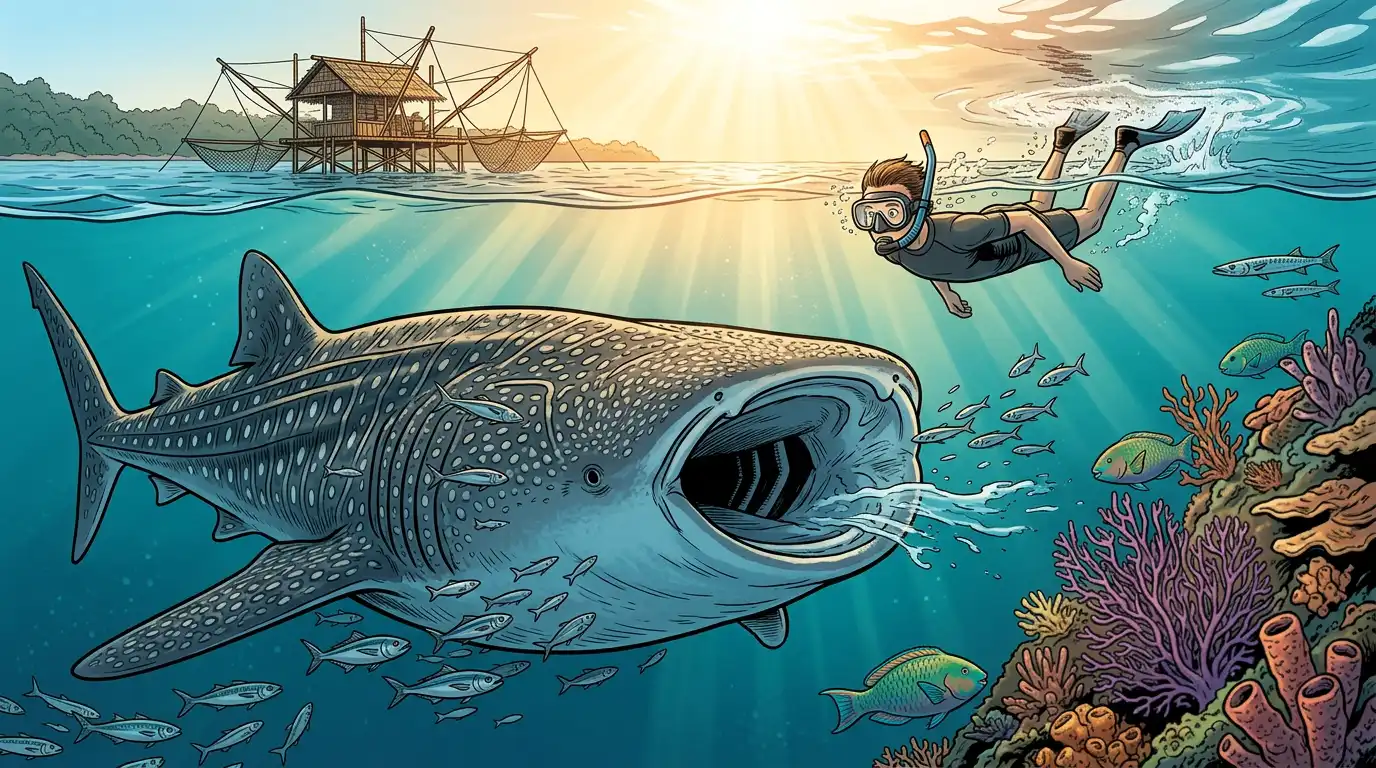
Near the western coast of Papua, Cenderawasih Bay is home to one of the Coral Triangle's most remarkable wildlife encounters: resident whale sharks that gather year-round around traditional fishing platforms called bagans. Unlike seasonal whale shark aggregations elsewhere in the world, Cenderawasih's population stays in the bay permanently, feeding on the small baitfish that gather under the fishermen's nets. Divers and snorkelers can swim alongside these gentle giants in calm, shallow water, often with multiple whale sharks visible at the same time. The bay also hosts healthy coral reefs, mandarin fish, and rare walking sharks (epaulette sharks) that are found only in this part of the world.
Wakatobi and Sulawesi
Wakatobi, in Southeast Sulawesi, is one of the best-preserved reef systems in Indonesia. The Wakatobi Marine National Park covers over 13,000 square kilometers and protects some of the healthiest hard coral reefs in the Coral Triangle. Visibility regularly exceeds 30 meters, and the reef structures are textbook examples of what a thriving coral ecosystem looks like when human impact is minimal.
Alor and Halmahera
Alor and Halmahera are the off-the-beaten-path destinations that showcase the Coral Triangle's depth of diversity. Alor's underwater terrain features black volcanic sand slopes covered in bizarre critters: flamboyant cuttlefish, mimic octopus, rhinopias scorpionfish, and dozens of nudibranch species. Halmahera, in the Maluku Islands, bridges the Pacific and Banda Sea ecosystems, hosting species from both regions on a single reef.
Why the Coral Triangle Matters Beyond Diving
The Coral Triangle is not just a playground for scuba divers. It is a critical life-support system for over 120 million people who depend on its fisheries and coastal ecosystems for food, income, and coastal protection.
Food security
The Coral Triangle's fisheries produce a substantial share of the world's tuna catch and feed millions of coastal communities across six nations. Healthy coral reefs are the nurseries where commercially important fish species breed and grow before moving to open water. When reefs decline, fish stocks decline with them, directly threatening food security for some of the world's most vulnerable coastal populations.
Coastal protection
Coral reefs act as natural breakwaters, absorbing up to 97% of wave energy before it reaches the shore. In a region increasingly affected by typhoons and rising sea levels, intact reef systems are the first line of defense for coastal communities. Losing these reefs would leave millions of people exposed to storm surges and erosion that concrete seawalls cannot fully replace.
Economic value
Marine tourism in the Coral Triangle generates billions of dollars annually. Indonesia's dive tourism industry alone contributes significantly to local economies in Bali, Komodo, Raja Ampat, and beyond. Each healthy reef is an economic engine that provides livelihoods for boat operators, dive guides, resort workers, and the supply chains that support them.
Threats Facing the Coral Triangle
Despite its biological richness, the Coral Triangle faces real and accelerating threats.
Climate change and coral bleaching are the most pressing concerns. Rising ocean temperatures trigger mass bleaching events that kill coral when water stays too warm for too long. The 2016 global bleaching event damaged reefs across Indonesia, though recovery has been strong in well-managed areas like Raja Ampat and Wakatobi.
Destructive fishing practices, including blast fishing (using homemade explosives) and cyanide fishing (stunning fish with poison for the live aquarium trade), have devastated reefs in parts of the Philippines and Eastern Indonesia. Enforcement is improving, but remote areas remain vulnerable.
Plastic pollution is a visible and growing problem. Indonesia is one of the world's largest sources of ocean plastic waste, and marine debris is increasingly found on remote reefs far from major population centers.
Overfishing depletes key species that maintain reef health. Herbivorous fish like parrotfish and surgeonfish graze algae that would otherwise smother coral. When these species are overharvested, algae take over and the reef shifts from a coral-dominated to an algae-dominated ecosystem, a change that is extremely difficult to reverse.
How Divers and Liveaboard Guests Can Help
Diving tourism, when done responsibly, is one of the most effective conservation tools in the Coral Triangle. Here is how you contribute simply by showing up.
Marine park fees fund conservation directly. The Raja Ampat Marine Protected Area charges an entry fee that funds patrol boats, ranger salaries, community development, and reef monitoring. Komodo National Park fees support similar programs. Every diver who pays these fees is funding the protection of the reefs they came to see.
Liveaboard tourism creates economic incentive to protect reefs. When a healthy reef generates more income from dive tourism than it would from fishing or coral mining, local communities have a financial reason to protect it. This is not theoretical. In Raja Ampat, communities that switched from shark fishing to managing marine tourism homestays now earn more and have healthier reefs.
Practice responsible diving habits. Maintain neutral buoyancy to avoid touching or breaking coral. Do not chase, touch, or ride marine animals. Use reef-safe sunscreen. Do not take anything from the reef, including shells, coral fragments, or sand. Report any damage or illegal fishing you observe to your dive operator or the local marine park authority.
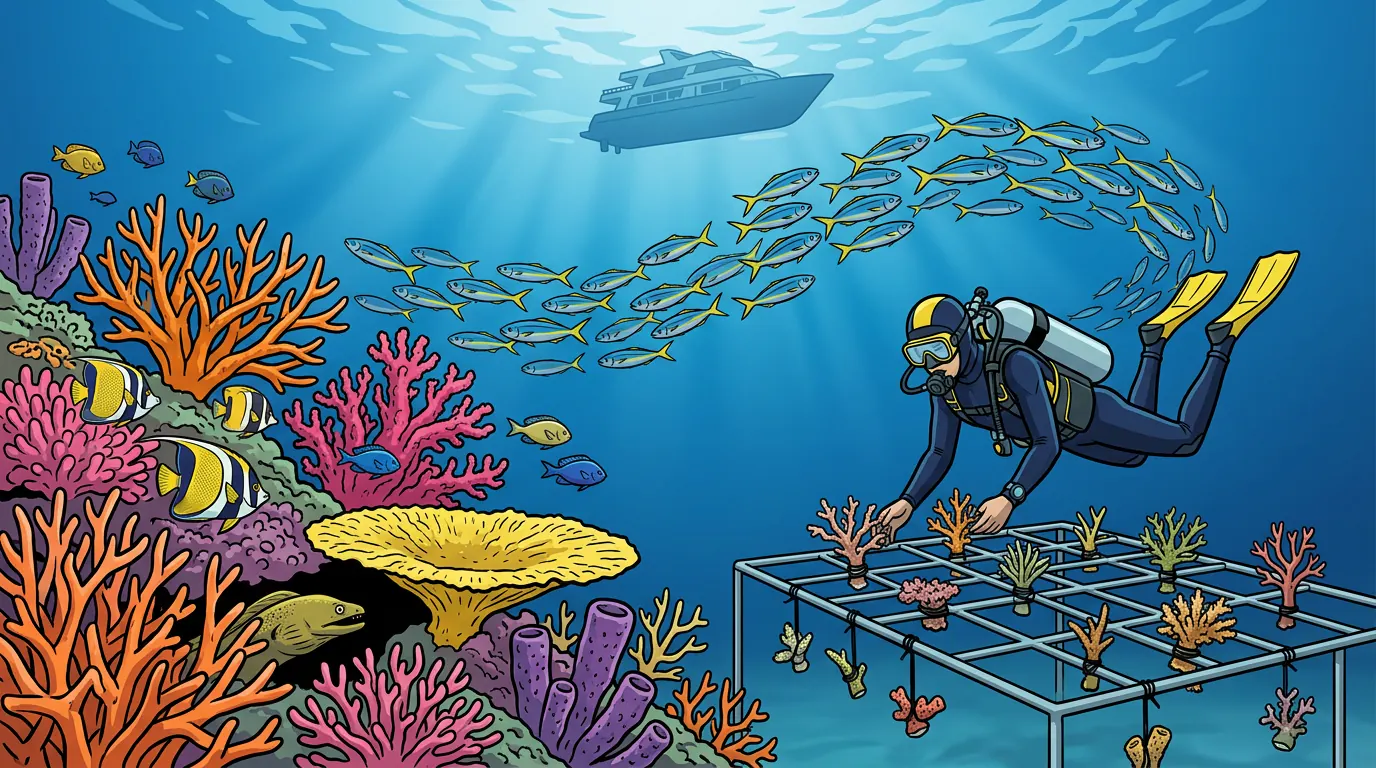
Choose operators who give back. Ask whether the liveaboard operator participates in reef monitoring, coral restoration, or community conservation programs. The best operators treat conservation as part of their business model, not just a marketing claim. Our Indonesia liveaboard fleet partners with local marine conservation programs across every destination we visit.
The Coral Triangle is the reason Indonesia offers diving that no other country can match. Protecting it is not just an environmental issue, it is the only way to ensure that future generations of divers get to experience what you experience on your next trip. Explore our liveaboard routes through the heart of the Coral Triangle, from Komodo to Raja Ampat to the Banda Sea, and see the world's richest marine ecosystem for yourself.