
The best way to see the world's most biodiverse marine ecosystem is on a Raja Ampat liveaboard. West Papua, Indonesia, has more than 1,500 islands spread out over 40,000 square kilometers. Day boats can't get to the distant pinnacles, walls, and passages that make diving in Raja Ampat famous. A liveaboard enables you visit multiple dive sites in one trip, from Misool to Wayag, giving you more time to explore places that are hard to get to and hence stay pristine.
The Raja Ampat diving liveaboard season is mostly from October to April, when the seas are calmest and all areas such as north, central, and south Misool are open. Some operators still conduct central and northern circuits all year, but crossing southern Misool becomes harder when the southeast trade winds pick up from June to September.
Why pick a liveaboard over a resort?
- You can dive multiple regions in one Raja Ampat Liveaboard trip, covering north, central, and south Raja Ampat without wasting days on transfers
- Night dives and sunrise dives happen directly at iconic sites like Cape Kri, Blue Magic, and Manta Ridge
- Less transit time on tenders means more time underwater and more rest between dives
- Access remote sites like Misool’s lagoons and Magic Mountain that no day boat can reach
This article is a great place to start when planning your Raja Ampat diving liveaboard trip. It tells you how to get there, what dive sites are in each region, what the weather is like at different times of year, what liveaboard options are available, and everything else you need to know to book with confidence.

Raja Ampat Overview & Liveaboard Regions (North, Central, South)
The Raja Ampat archipelago is in the northwest corner of West Papua, Indonesia. It is the core of the Coral Triangle. The name means "Four Kings" since it refers to the four main islands: Waigeo, Batanta, Salawati, and Misool. These big islands, along with more than 1,500 smaller islands, cays, and shoals, make up one of the most biodiverse areas on Earth. It is home to more than 1,500 reef fish species and 500 coral species, which is almost 75% of all known coral species in the world.
Liveaboards split Raja Ampat into three different diving areas, each with its own personality and unique experiences.
North Raja Ampat (Waigeo, Gam, Kawe, Wayag)
- Remote reefs with steep walls and black coral gardens dropping beyond 40 meters
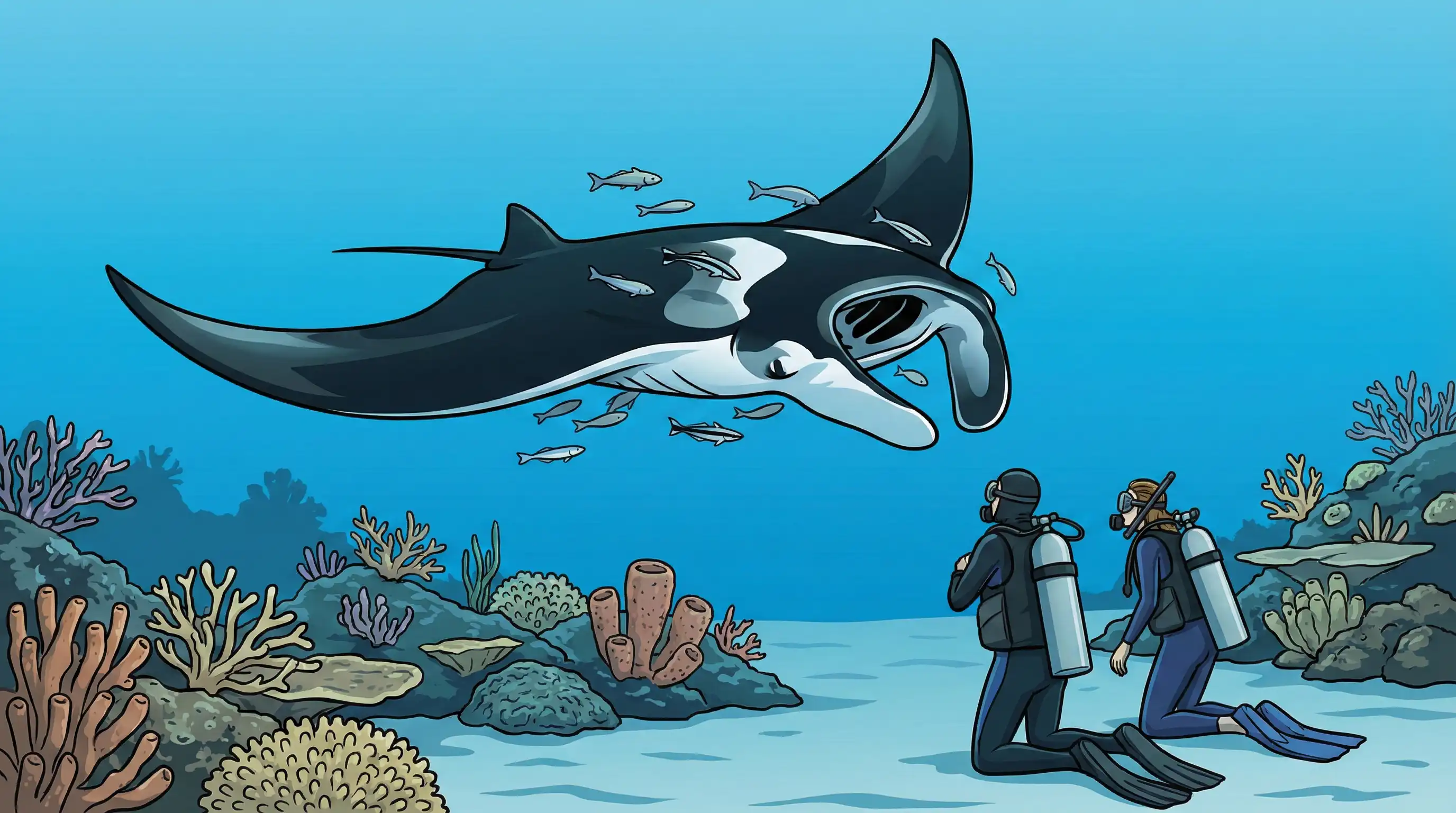
- Manta cleaning stations and mobula ray encounters
- Macro-rich sites with pygmy seahorses, frogfish, and nudibranchs
- Scenic highlights include the famous Wayag and Piaynemo limestone peaks
Central Raja Ampat (Dampier Strait, Arborek, Kri)
- Nutrient-rich currents supporting the highest fish biomass in Raja Ampat
- World-famous sites like Cape Kri, Blue Magic, and Sardine Reef
- Regular encounters with reef sharks, oceanic mantas, and schooling pelagics
- Most accessible region with the densest concentration of dive sites
South Raja Ampat (Misool)
- Protected by the Misool Marine Reserve with pristine reefs and lush soft corals
- Signature sites like Magic Mountain, Boo Windows, and Nudi Rock
- Endemic walking sharks (epaulette sharks) on night dives
- Best accessed November through March when swells subside
Typical liveaboard itineraries are built around these regions based on trip length:
- 7–8 nights: Central focus with Dampier Strait and sometimes Penemu
- 9–12 nights: Central plus South Misool for the full Raja Ampat experience
- 12–14 nights: “Grand Raja Ampat” combining North, Central, and Misool
Raja Ampat liveaboard trips are mostly based on the weather and the water. From November to June, it's usually easiest to go to the north and center zones. From November to March, when seasonal swells go down, southern Misool opens up.
How to Get to Raja Ampat for a Liveaboard
Sorong, the gateway city in West Papua, is where almost all Raja Ampat liveaboards start and end their trips. Your last stop before boarding is Sorong Airport (SOQ).
Flight routes to Sorong:
- Jakarta (CGK) to Sorong (SOQ): Direct flights available on Garuda Indonesia, Batik Air, and Lion Air (approximately 4.5 hours)
- Bali/Denpasar (DPS) to Sorong: Requires one stop, typically through Makassar (UPG) or Manado (MDC)
- Alternative connections via Surabaya (SUB) or Makassar (UPG) for regional travelers
Get to Sorong at least one day before your liveaboard leaves. Flight schedules to this faraway place might change at any time, and the weather can cause delays all season long. Many divers schedule a night at a hotel in Sorong or an arrival package at a nearby dive resort. Some companies provide packages for around $499–579 that include airport pickup, lodging, check dives, and gear rental.
Typical boarding process:
- Crew meets guests at Sorong Airport or designated hotel in the morning
- Short ground transfer (included by most operators) to Sorong Harbor
- Boarding window typically between 10:00–13:00
- Safety briefing and check dive in Dampier Strait on day one
- Some boats pick up directly from nearby resorts like Meridian Dive Adventures
Raja Ampat Marine Park entry fees:
- Approximately IDR 1,000,000 (around $80–100 USD) per person
- Cash only in most cases—bring Indonesian Rupiah
- Some operators include this in the trip price; confirm when booking
Entry requirements for Indonesia (verify current rules before travel):
- eVOA (electronic Visa on Arrival) available for many nationalities
- Passport validity of 6+ months required
- Check Indonesia immigration updates for your specific departure year
Carefully plan your logistics. Because Raja Ampat is so far away, there aren't many backup options if you miss a connection.
Diving Conditions & Best Time to Visit Raja Ampat
Raja Ampat liveaboards offer diving all year long, although seasonal trends have a big effect on which areas you can get to and what conditions you'll find.
Seasonal overview:
- Prime liveaboard season (October–April): Calmer seas, excellent access to all regions including Misool, peak manta activity at cleaning stations
- Shoulder months (May, early June): Transitional conditions, often excellent visibility in north and central, Misool crossings becoming less reliable
- Off-season (mid-June to mid-September): Stronger southeast trade winds, rougher seas especially in the south, many liveaboards reposition to Komodo National Park or Cenderawasih Bay
Environmental conditions:
| Factor | Typical Range | Notes |
|---|---|---|
| Water temperatures | 27–30°C (80–86°F) | Slightly cooler in Misool and during upwellings |
| Visibility | 20–30 meters | Can exceed 30m at sites like Cape Kri; drops during plankton blooms |
| Currents | Mild to strong | Dampier Strait sites often have the strongest drift |
| Recommended exposure | 3mm wetsuit or skinsuit | Primarily for abrasion protection |
Dive style and currents:
Most dives in Raja Ampat are drift dives that are done from specialized hard-bottom tenders. Currents can be weak or strong, especially in Dampier Strait places like Cape Kri, Sardine Reef, and Chicken Reef. These currents cause upwellings that provide nutrients that help the amazing fish biomass, but they need to be respected.
All divers must use surface marker buoys (SMBs). Most itineraries will be easy for experienced divers with at least 50 logged dives or an Advanced Open Water certification. Some boats will take Open Water divers who have already been in the water, but you should talk to the operators about this before you book.
How seasons affect routes:
- October–December: Excellent conditions across central and Misool, vibrant reefs, consistent manta rays at cleaning stations
- January–March: Peak manta sightings at Manta Sandy and Manta Ridge, occasional heavier rain but still prime diving season
- April–May: Transitional period with often the best visibility and calmest seas in north and central
- June–September: Only select liveaboards operate, focusing on central and north; Misool crossings become unreliable
Plan your dive trip around these patterns. If Misool is a priority, book between November and March.
Banda Sea Season and Transition to Raja Ampat (September - October)
There is a special time in the Banda Sea, usually from September to October, between the Komodo diving season and the commencement of the Raja Ampat liveaboard season. This short but amazing season gives divers a unique chance to see the amazing migration of hammerhead sharks, which is one of the most popular pelagic phenomena in Indonesia.
The Banda Sea area, which includes Ambon and the islands around it, has clear reefs and strong currents that draw in big schools of hammerheads and other pelagic animals like manta rays and reef sharks. During this time of year, visibility can be great, and the variety of marine life is almost as good as Raja Ampat, making it an amazing place to dive.
Many liveaboards offer crossing voyages that start in the Banda Sea (Ambon), go through the southern Raja Ampat region of Misool, and then head north to Sorong. These longer trips let divers see the best of both worlds: the exciting pelagic encounters in the Banda Sea and the colorful, biodiverse reefs in Raja Ampat. The Banda Sea season is short, but it makes a great supplement or alternative to the usual Raja Ampat liveaboard tour, especially for divers who want to make the most of their diving trip to Indonesia.
Raja Ampat Dive Areas & Signature Sites (North, Central, South)
This part talks about the greatest Raja Ampat dive sites by area so you may find them on Raja Ampat diving liveaboard tours. The names and order of dives vary by operator and conditions, but serious Raja Ampat liveaboards try to include these famous spots when the weather is good.
Central Raja Ampat & Dampier Strait Highlights
The Dampier Strait is the "engine room" of Raja Ampat diving. It is between Waigeo and Batanta. This channel lets in nutrient-rich currents that support what many people think is the most diverse marine life and fish biomass on Earth.
Signature central dive sites:
- Cape Kri: Holds the world record of 374 fish species counted in a single dive. Sloping reef and plateau with strong currents, massive schools of fusiliers, barracuda, and reef sharks. The site that defines Raja Ampat’s reputation.
- Sardine Reef: Seamount packed with schooling fish creating swirling “fish tornadoes.” Jacks, snappers, and bumphead parrotfish congregate here. Often involves fast drift dives.
- Blue Magic: Small seamount famous for oceanic manta rays (especially November–March), grey reef sharks, and schooling trevallies. One of the best sites on earth for wide-angle photography.
- Mioskon: More sheltered site with sweetlips, wobbegong sharks resting on reef ledges, and good conditions for check dives and night dives.
- Chicken Reef: Lively reef domes with dense schooling fish, occasional manta and reef shark encounters. Excellent for photographers seeking action-packed frames.
- Arborek Jetty: Iconic wooden jetty draped in soft corals, with schooling batfish, giant clams, and excellent macro life. Works for both wide-angle and macro photography.
Most normal 7–10 night diving trips to Raja Ampat spend 3–4 days around Dampier Strait because the conditions change with the tides and each location looks different on each dive.
North Raja Ampat: Waigeo, Gam, Kawe & Wayag
North Raja Ampat has beautiful islands, mangrove forests, and distant reefs that are usually only seen on lengthy trips of 9 to 12 nights or more. This area is the best place to see pelagic animals and amazing macro life, especially when the seas are calm from October to May.
Northern dive sites and areas:
- Kawe: Equatorial reefs with rich hard and soft corals. Potential encounters with mobula rays, reef sharks, and large schools of colorful fish.
- Eagle Rock: Cleaning stations attract manta rays, with schooling fusiliers, sweetlips, and frequent pelagic sightings. Strong currents bring nutrients and action.
- Aljui Bay: Macro heaven featuring night dives under pearl farm jetties. Pygmy seahorses, frogfish, ghost pipefish, blue ring octopus, and nudibranchs thrive here. A must for underwater photographers focused on small subjects.
- Mayhem: Aptly named seamount with big schools of fish, occasional grey reef sharks and barracuda in strong currents. Lives up to its name.
- Melissa’s Garden (near Penemu): Spectacular hard coral garden with dense fish life. Often combined on north/central routes and considered one of the most photogenic shallow reef sites in Indonesia.
Most Raja Ampat diving liveaboards that go to the north also take you on a beautiful trip to the Wayag or Piaynemo views. There, a short climb takes you to limestone peaks that look out over blue lagoons, which are among of the most famous sceneries on Earth.
South Raja Ampat: Misool & Its Reefs
Some of the most beautiful coral reefs in the world may be found in Misool, which lies in the far south. The Misool Marine Reserve protects this area, and because it is so far away, it is mostly pristine. The best time to dive here is from November to March, when the seasonal swells go down.
Famous Misool dive sites:
- Boo Windows / Boo Rocks: Signature site featuring swim-through “windows” in the reef structure. Fantastic soft corals, schooling batfish, and reef sharks patrolling the perimeter. Unforgettable memories guaranteed.
- Magic Mountain: Offshore seamount with cleaning stations for both reef and oceanic mantas. Frequent shark sightings, bumphead parrotfish, and huge schools of fusiliers. One of the best sites in Raja Ampat for big animal encounters.
- Nudi Rock: Rock formation shaped like a nudibranch from above. Walls covered with soft corals, sea fans, and exceptional macro life including nudibranchs, sea dragons, and crustaceans.
- Fiabacet / Tank Rocks chain: Several adjacent sites with steep walls, dramatic overhangs, and dense fish life. Strong healthy reefs with vibrant reefs throughout.
- Goa Farondi area: Combination of caverns, tunnels, and coral gardens. Excellent for both wide-angle compositions and macro hunting.
Because it takes longer to get to Misool from Dampier Strait often 10 to 12 hours dive liveaboard cruises are more better than resort-based diving for combining Misool with north or central Raja Ampat in a single trip.
Marine Life & Photography Opportunities by Region
Raja Ampat is in the middle of the Coral Triangle and is thought to be the most biodiverse place in the world's waters. There are more than 1,500 species of reef fish and 500 kinds of scleractinian coral here, which is more than any other reef system on Earth. This means that scuba divers and underwater photographers can have experiences that they can't have anywhere else.
The balance between macro life and big animal interactions is different in different places:
- Central and North: High-energy drift dives with big schools, sharks, and mantas
- South Misool: Equally fishy but with especially lush soft corals and outstanding macro opportunities in protected bays
Key species by region:
| Region | Headline Species | Best For |
|---|---|---|
| Central (Dampier Strait) | Reef sharks, oceanic and reef mantas at Blue Magic, wobbegong sharks, schooling fusiliers, jacks, barracuda, turtles, occasional dolphins | Wide-angle action, fish schools |
| North | Mobula rays, reef sharks, massive schools of fusiliers and scads, pygmy seahorses, crustaceans at Aljui Bay | Mixed wide-angle and macro |
| South/Misool | Dense soft coral gardens, abundant anthias, pygmy seahorses on gorgonians, epaulette sharks (endemic walking sharks on night dives), non stinging jellyfish lakes, mantas at Magic Mountain | Soft coral photography, endemic species |
Whale sharks don't live here all the time, although they do show up from time to time during plankton blooms. Whales travel by during migratory seasons, and fisherman in the area sometimes see them in the open ocean.
Photography guidance:
- Bring both wide-angle and macro setups if possible—you’ll want both
- Liveaboards typically provide rinse tanks, camera tables, and dedicated charging stations
- Wide-angle excels at Magic Mountain, Cape Kri, and Melissa’s Garden
- Macro shines at Aljui Bay piers, Arborek Jetty, and certain Misool walls
- The colorful corals and colorful fish of Misool create publication-grade tableaus
Because of conservation efforts and its remote position, Raja Ampat's pristine and healthy reefs are still in great shape. This means that underwater photographers need subjects that are willing to work with them and settings that look great in photos.
Typical Raja Ampat Liveaboard Itineraries (Durations & Routes)
The length of your Raja Ampat liveaboard excursion will decide which areas you can visit and how deep you can go. Here are some things you might expect from standard itinerary forms.
Common trip durations:
- 6–7 nights (“Central Raja Ampat”): Focuses on Dampier Strait with sites like Cape Kri, Sardine Reef, Blue Magic, Arborek, and Mioskon. May include a Penemu or Piaynemo excursion. Ideal for first-time visitors or those with limited time.
- 9–10 nights (“Central + Misool” or “Best of Raja”): Combines several days in Dampier with 3–4 days around Misool. Covers signature sites from both regions. The most popular raja ampat itinerary format.
- 11–14 nights (“Grand Raja Ampat”): Comprehensive routing through north (Kawe, Aljui Bay), central (Dampier Strait), and Misool when weather permits. For experienced divers wanting the complete experience.
Daily routine on most liveaboards:
- 3–4 dives per day (typically 3 day dives plus 1 optional night dive)
- First day: 1–2 check dives after boarding
- Final day: 1–2 morning dives, then long transit back to Sorong
- Disembarkation day: No diving, usually morning departure
Which itinerary suits which diver?
| Diver Profile | Recommended Itinerary | Why |
|---|---|---|
| First-time Raja Ampat visitor | 7–8 night central | Maximum dives in the most accessible sites |
| Experienced diver, 2+ weeks available | 10–12 night central + Misool | Both manta action and soft coral walls |
| Returning visitor, seen central | 9–10 night Misool-focused | Deep exploration of southern reefs |
| Photographer seeking variety | 12–14 night full Raja | All three regions, maximum subject diversity |
Cruise directors on high-quality ships change the itinerary dependent on conditions, so you can dive at the greatest spots no matter what the initial plan was.
Experience Level, Safety & What to Expect Onboard
When diving at Raja Ampat, you need to observe the conditions. The rewards are great, but you need to be ready.
Recommended diver profile:
- Ideal: Advanced Open Water with 50+ logged dives and prior current experience
- Minimum for most trips: Open Water certification with recent dives and willingness to follow dive masters closely
- Some operators require deep and drift specialties for certain itineraries
- Deep dives to 30+ meters occur at several sites; Nitrox certification is valuable
Safety practices on quality liveaboards:
- Mandatory use of delayed SMB (surface marker buoy) per buddy team
- Detailed dive briefings covering currents, negative entries, and drift procedures
- Dive guides scout conditions before deploying divers
- Small group ratios (typically 4 divers per guide on eco-conscious vessels)
- Nitrox often available and recommended for repetitive multi-day diving
- Oxygen and first aid kits onboard; satellite communication for emergencies
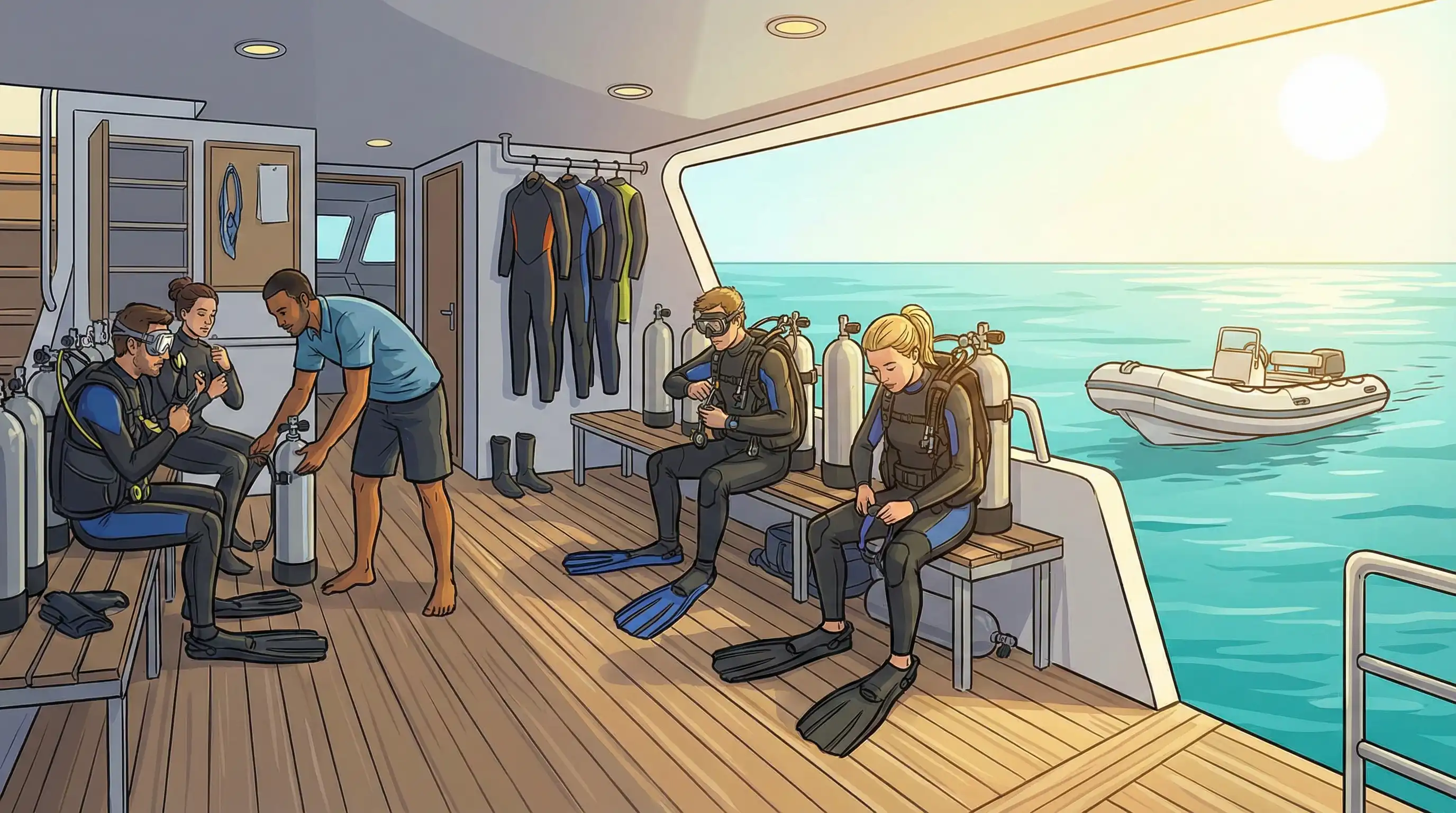
Typical onboard experience:
- Cabins range from bunk-style budget rooms to ensuite luxury suites depending on vessel class
- Shared indoor saloon, outdoor shaded decks, camera tables, and charging stations
- Soft drinks and water typically included; alcohol available for purchase on most boats
- Daily rhythm: Early breakfast, first dive around 7–8 am, second dive late morning, third dive afternoon, optional night dive, with meals and briefings between
Seasickness considerations:
- Dampier-only routes: Generally smoother sailing with minimal open-water crossings
- Misool and full Raja routes: Involve at least 1–2 long overnight crossings (10–12 hours)
- Bring seasickness medication regardless—even experienced divers can be affected
- Most crossings occur at night while you sleep
There are a wide selection of liveaboards in Raja Ampat, from cheap wooden Phinisi boats to high-end yachts. The crew and boat you choose will have a big impact on the quality of your dive experience, so do your research.
Conservation, Marine Park Fees & Responsible Diving
Raja Ampat is in such great shape because people are working to protect it. As a diver, you help keep these healthy reefs safe for future generations.
Marine Park fees (2025–2026 estimates):
- Approximately IDR 1,000,000–1,500,000 per diver (roughly $80–100 USD)
- Valid for one year from purchase
- Funds support ranger patrols, enforcement, and community programs
- Usually paid in cash upon arrival in Sorong or at park checkpoints
Conservation initiatives protecting Raja Ampat:
- No-take zones and ranger patrols around Misool and other sensitive areas
- Mooring buoy systems to prevent anchor damage on reefs
- Local community involvement in marine patrols and sustainable tourism
- Partnerships between liveaboard operators and conservation NGOs
Responsible diving practices:
- Strict no-touch, no-collect, no-feed policy on all dives
- Maintain excellent buoyancy to protect fragile soft corals and sea fans
- Use reef-safe sunscreen—chemical sunscreens damage coral
- Avoid single-use plastics where possible
- Follow liveaboard briefings on snorkeling and kayaking to avoid damaging shallow reefs
- Stay with your guide and respect current safety protocols
Check to see if the Raja Ampat diving liveaboard you choose is committed to conservation. Find operators that hire Papuan workers, pay all park fees, work with local conservation groups, and use local cuisine to help the economies of the areas they visit. People have praised operators like Scuba Republic for being environmentally friendly and keeping groups small.

Planning & Booking Tips for Raja Ampat Liveaboards
Raja Ampat is getting more and more popular, and the best boats fill up months in advance. Here's how to make sure you get a spot.
Booking timeline recommendations:
- High season (November–February): Book 9–12 months in advance for popular vessels and preferred cabins
- Shoulder months (October, March, April): 6–9 months typically sufficient, with occasional last-minute deals
- Summer months (June–September): Fewer boats operate, but those that do often have availability
Factors to compare when choosing a liveaboard:
- Trip length and route (central only vs. central + Misool vs. full Raja)
- Diver capacity and guide ratio (4–6 divers per guide is ideal)
- Nitrox availability and cost
- Camera facilities: rinse tanks, charging stations, dedicated camera room
- Rental gear quality if you’re not bringing your own
- Safety standards: oxygen, medical kits, emergency plans, satellite communication
- Crew experience and languages spoken
Typical price ranges (2025–2026):
| Vessel Class | Trip Length | Approximate Cost |
|---|---|---|
| Budget Phinisi | 6–7 nights | $1,500–2,000 |
| Mid-range steel/Phinisi | 8–10 nights | $2,500–3,500 |
| Premium operators (Raja Ampat Aggressor, similar) | 9–10 nights | $3,500–4,500 |
| Luxury yachts | 10–12 nights | $4,000–6,000+ |
Prices usually don't include fees for marine parks, renting equipment, or Nitrox. Some high-end boats come with wine, Wi-Fi, and spa services.
Packing checklist for Raja Ampat liveaboards:
- 3mm wetsuit or 5mm if you run cold (primarily for abrasion protection)
- SMB, dive computer, safety whistle
- Reef hook if permitted by operator (useful at high-current sites)
- Seasickness medication (essential for Misool crossings)
- Reef-safe sunscreen
- Light rain jacket for tender rides and deck time
- Dry bag for camera gear on tenders
- Cash in Indonesian Rupiah for park fees and tips
- Multiple memory cards and backup batteries for cameras
Fly to Sorong the day before you leave. If your flight is delayed, make sure you book a place to stay that you can cancel. At least two weeks before you leave, double-check all the details, like where to pick you up, when to board, and what's included.
A liveaboard vacation to Raja Ampat is the best way to go scuba diving. You can spend a week in Dampier Strait or a complete two-week trip that covers all the areas. Either way, you'll see marine species and reef health that you won't find anywhere else on Earth.
The mix of clear water, beautiful reefs, and a wide range of marine life, from pygmy seahorses to manta rays, makes diving that you'll never forget. Raja Ampat keeps every promise it makes to divers who are ready to travel to this faraway part of West Papua.
Now is the time to start organizing your liveaboard diving trip to Raja Ampat. The best cabins on popular liveaboards fill up quickly, and you need to book ahead for the diving season. Check out your logistics and do your research on the operators. Get ready for what many scuba divers think is the best diving spot in the world.