
When travelers think of seeing Komodo dragons in the wild, most picture Komodo Island, the famous namesake that has dominated travel brochures and documentary footage for decades. But experienced adventurers and seasoned liveaboard guests know a different truth: Rinca Island is where the raw, unfiltered magic of Indonesia's dragon country truly comes alive. Less crowded, equally dramatic, and home to a thriving population of the world's largest living lizards, Komodo Rinca Island offers an experience that many visitors describe as more authentic, more intimate, and more memorable than its more famous neighbor.
This blog guide covers everything you need to know about visiting Rinca Island, from its geography and wildlife to practical logistics, what to expect on a trek, and why a liveaboard voyage through Komodo National Park is the best way to experience this extraordinary corner of East Nusa Tenggara.
Where Is Rinca Island?
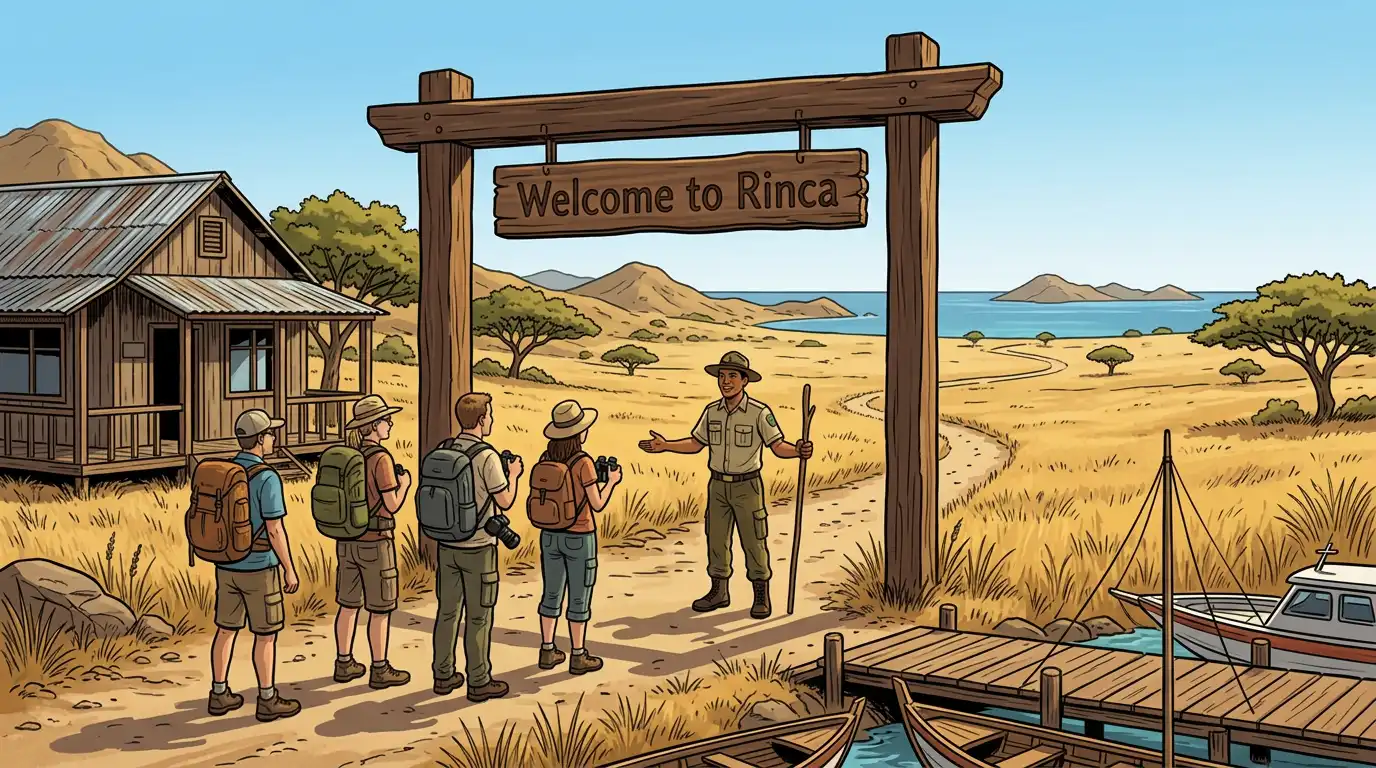
Rinca Island sits in the heart of Komodo National Park, nestled between the larger Flores Island to the east and Komodo Island to the west. Administratively, it belongs to the East Nusa Tenggara province of Indonesia, with the nearest mainland gateway being the bustling harbor town of Labuan Bajo on the western tip of Flores.
The island covers roughly 198 square kilometers, making it the second-largest island in the national park after Komodo. Despite its size, Rinca feels wild and remote. Its landscape is a striking mosaic of dry savannah grasslands, rugged hills, pockets of monsoon forest, mangrove-fringed coastlines, and rocky shorelines that plunge into some of the richest marine waters on the planet. The terrain is more open and undulating than Komodo Island, which gives visitors sweeping panoramic views across the surrounding strait, and makes for excellent wildlife spotting conditions.
Getting to Rinca is straightforward for anyone already in the region. From Labuan Bajo, the island is approximately a two-hour boat ride, making it the closest dragon-inhabited island to the mainland and a natural first stop for Komodo liveaboard itineraries that explore the wider national park. This proximity is one of the reasons Komodo Rinca Island has become increasingly popular with travelers who want to maximize their time with the dragons without spending hours in transit.
The Komodo Dragons of Rinca Island
The primary reason most people explore Rinca island is to see Komodo dragons in their natural habitat, and the island delivers on this promise consistently. Rinca is home to an estimated 1,300 to 1,500 Komodo dragons, a population density that is actually higher relative to the island's size than that of Komodo Island itself. This means your chances of encountering these prehistoric predators up close are excellent.
What Makes Rinca Island Komodo Dragon Encounters Special
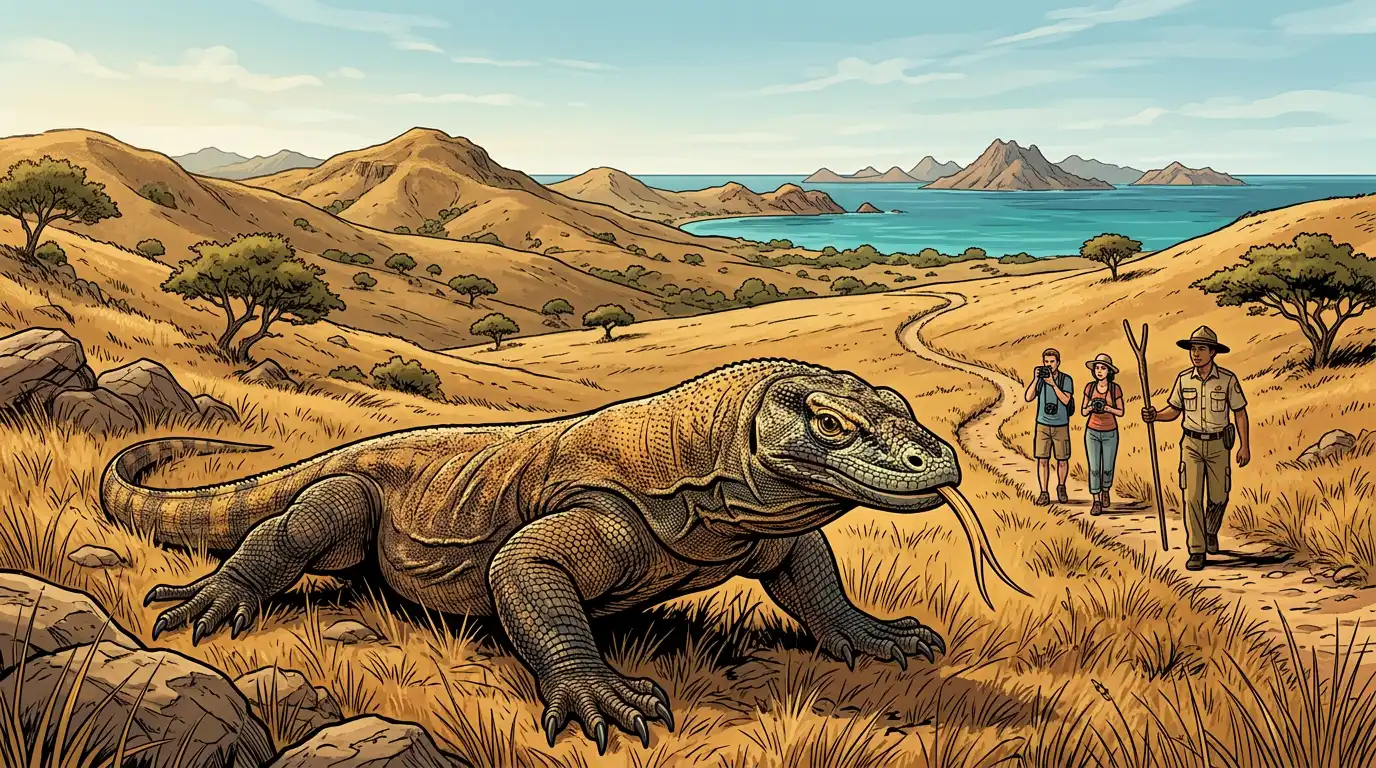
What sets the Rinca Island Komodo dragon experience apart from encounters elsewhere in the park is the combination of accessibility and atmosphere. The main trekking routes on Rinca wind through open savannah and dry woodland where dragons are frequently seen basking in clearings, resting beneath trees, or patrolling near the ranger station and kitchen area, drawn by the scent of food. It is not uncommon to spot dragons within minutes of stepping off the boat and beginning your guided walk.
The open terrain on Rinca island means you can often see Komodo dragons from a safe distance before you approach, giving you time to prepare your camera and compose your shots. Compared to the denser vegetation on parts of Komodo Island, Rinca's landscape provides better sightlines and a more dramatic visual backdrop, golden grasslands stretching toward distant volcanic hills, with a massive dragon sprawled in the foreground.
Beyond the sheer number of sightings, Rinca tends to offer more natural behavioral observations. Because the trails pass through genuine dragon territory rather than concentrated feeding zones, you are more likely to see dragons engaged in natural behaviors, territorial displays between males, females guarding nest sites during breeding season, younger dragons climbing trees to avoid being cannibalized by larger adults, or a dragon methodically stalking a water buffalo herd across the savannah.
Understanding Komodo Dragons
For those unfamiliar with these remarkable animals, Komodo dragons (Varanus komodoensis) are the largest living species of lizard on Earth. Adults typically reach two to three meters in length and can weigh up to 70 kilograms, though exceptional individuals have been recorded at over 150 kilograms. They are apex predators with no natural enemies in their island ecosystems, capable of taking down prey as large as water buffalo and deer through a combination of powerful jaws, serrated teeth, and venom that prevents blood clotting and lowers blood pressure in their victims.
Despite their fearsome reputation, Komodo dragons are fascinating rather than terrifying when observed with proper guidance. They spend much of their time resting and conserving energy, moving with a slow, deliberate gait that belies their ability to sprint at speeds of up to 20 kilometers per hour in short bursts. Their forked tongues constantly sample the air for chemical cues, allowing them to detect carrion or prey from several kilometers away.
The dragons on Rinca are wild animals in every sense. They are not fed, baited, or habituated for tourist entertainment. Every encounter is genuine, and this authenticity is what makes visiting Rinca Island such a powerful wildlife experience.
Beyond Dragons: The Wildlife of Rinca Island
While Komodo dragons are undeniably the headline attraction, Rinca's wildlife extends far beyond its most famous resident. The island supports a rich ecosystem that rewards observant visitors with a diverse array of sightings.
Land Animals
Rinca is home to large herds of Timor deer (Rusa timorensis), which serve as the primary prey species for Komodo dragons. Watching these graceful animals navigate the savannah with constant vigilance, ears rotating, eyes scanning for predators, adds a layer of tension and ecological drama to every trek. Wild water buffalo also roam the island, their massive frames seemingly impervious to all threats except the patient, venomous ambush of a determined dragon.
Wild boar forage through the undergrowth, long-tailed macaques swing through the mangroves and woodland edges, and wild horses can occasionally be spotted on the more remote stretches of the island. Each of these species plays a role in the ecological web that sustains the dragon population, and understanding these connections enriches the experience of walking through Rinca's landscape.
Birdlife
Rinca is a haven for birdwatchers. The island hosts over 40 species of birds, including the striking orange-footed scrubfowl, which builds enormous mound nests from decomposing vegetation; helmeted friarbirds; green imperial pigeons; and several raptor species including white-bellied sea eagles that soar on thermals above the coastal cliffs. During the trek, your ranger guide will often pause to point out bird species that many visitors would otherwise miss, adding depth and variety to the walk.
Marine Life
The waters surrounding Rinca are part of the Coral Triangle, the global epicenter of marine biodiversity. While the underwater world is best explored from a Komodo liveaboard, with dedicated dive and snorkel stops at nearby sites, even from the shore you can spot reef sharks patrolling the shallows, sea turtles surfacing for air, and occasionally dolphins or manta rays passing through the strait. The marine environment around Komodo Rinca Island is as spectacular below the surface as the terrestrial world is above it.
Trekking on Rinca Island: What to Expect
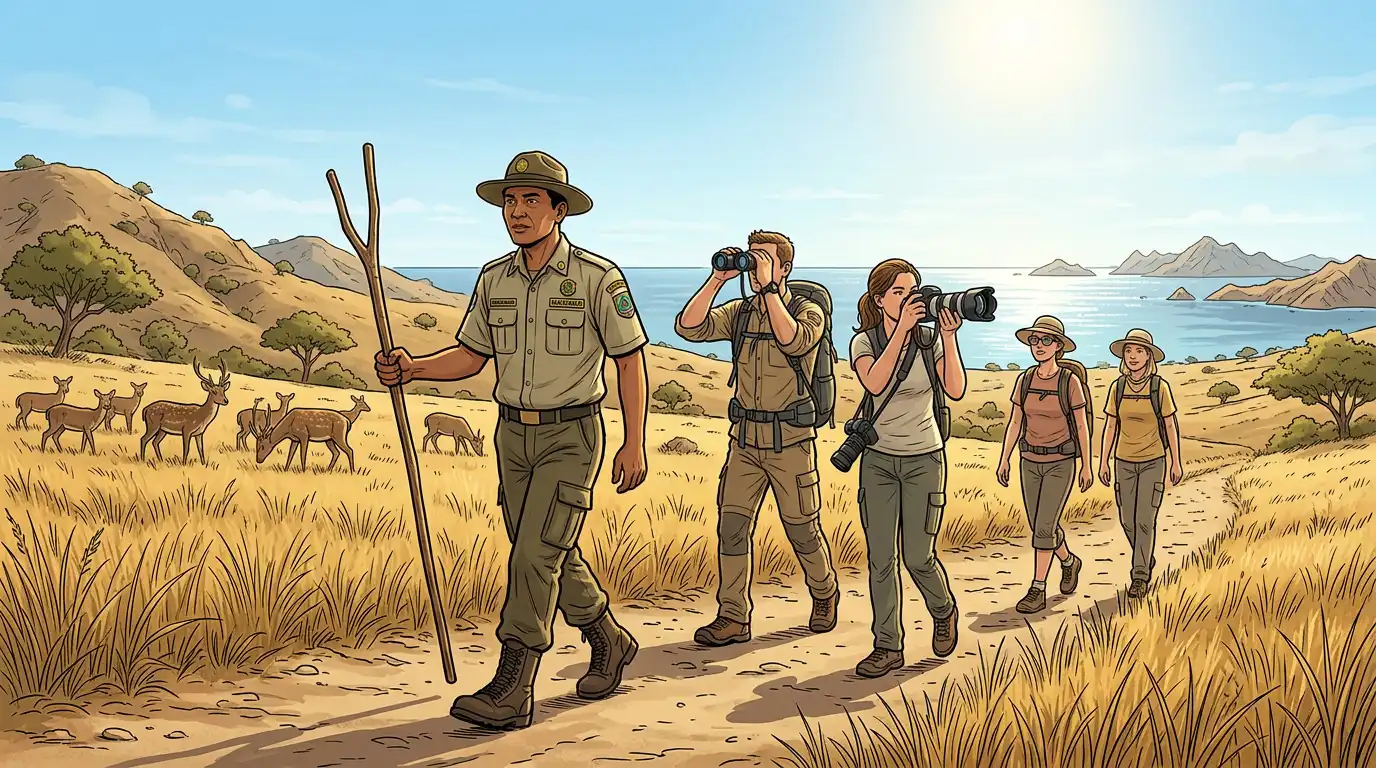
All visits to Rinca Island are guided by Komodo National Park rangers, who accompany every group for safety. The treks are well-organized and cater to a range of fitness levels, with several route options available.
The Trek Options
Upon arriving at the Loh Buaya ranger station on Rinca's northern coast, you will be briefed by a ranger and given the choice of three standard trek routes:
The short trek takes approximately 30 to 45 minutes and follows a relatively flat loop through the area immediately surrounding the ranger station. This is the most popular option and, surprisingly, often yields the most dragon sightings because the area around the station is a known dragon congregation zone. It is ideal for families with children, travelers with limited mobility, or anyone on a tight schedule.
The medium trek extends to roughly 60 to 90 minutes and ventures further into the savannah and up to a scenic viewpoint that overlooks the bay, surrounding islands, and the vast grasslands below. This route offers more varied terrain, better chances of seeing deer and buffalo herds in their natural environment, and panoramic photo opportunities that are among the best in the entire national park.
The long trek is a two-to-three-hour circuit that takes you deep into the island's interior, climbing to higher ridgelines and passing through monsoon forest patches before looping back to the ranger station. This is the route for serious hikers and wildlife enthusiasts who want maximum immersion. Dragon sightings are less guaranteed on the remote sections, but the scenery and sense of wilderness solitude are unparalleled.
What to Bring
Rinca's climate is hot and dry for most of the year, with temperatures regularly exceeding 35 degrees Celsius during the middle of the day. Bring plenty of water, wear a hat and sunscreen, and choose sturdy closed-toe shoes with good grip, the terrain includes loose gravel, dry grass, and uneven rocky sections. Lightweight, breathable clothing in neutral colors is ideal. A good camera with a zoom lens will serve you well, as rangers maintain a safe distance of several meters from the dragons at all times.
Safety on the Trek
Rangers carry long forked sticks that they use to maintain distance from dragons if one approaches too closely. While attacks on humans are extremely rare, Komodo dragons are wild predators and must be treated with respect. Rangers will instruct you to stay with the group, avoid sudden movements, and never approach a dragon from behind or attempt to touch one. Women who are menstruating are asked to inform the rangers, as dragons have a heightened sensitivity to the scent of blood. These safety protocols are well-established and effectively managed, millions of visitors have trekked on Rinca without incident.
Rinca Island vs. Komodo Island: How Do They Compare?
This is one of the most common questions asked by travelers planning a trip to Komodo National Park, and the honest answer is that both islands are worth visiting if your schedule allows. However, there are meaningful differences that may influence your priorities.
Crowd Levels
Rinca typically receives fewer visitors than Komodo Island, which means quieter trails, smaller groups, and a more personal experience with the rangers. For travelers who value solitude and an unhurried pace, visiting Rinca Islandoften feels more rewarding. Komodo Island, as the park's namesake, attracts a higher volume of day-trip boats from Labuan Bajo, particularly during peak season.
Dragon Sighting Probability
Both islands offer excellent chances of seeing Komodo dragons, but Rinca's higher dragon density relative to its size and its more open terrain give it a slight edge for consistent, high-quality sightings. On Komodo Island, dragons are sometimes found in areas with denser vegetation, which can make photography more challenging.
Landscape and Scenery
Rinca's landscape is drier and more open, with sweeping savannah views and a rugged, untamed quality. Komodo Island has more varied terrain, including pockets of cloud forest at higher elevations and a longer history of ranger infrastructure. Both are beautiful, but they offer different visual experiences.
Accessibility
Rinca is closer to Labuan Bajo, roughly two hours by boat compared to three or more for Komodo Island. This makes Rinca a more practical choice for day trips and a natural first stop on multi-day liveaboard itineraries.
For liveaboard guests, the answer is simple: visit both. A well-designed itinerary through Komodo National Park will include stops at both Komodo Rinca Island and Komodo Island, along with other highlights like Padar Island, Pink Beach, and world-class dive sites.
Exploring the Wider Komodo National Park
Rinca Island is just one piece of the extraordinary mosaic that is Komodo National Park. A liveaboard voyage through the park allows you to experience the full range of what this UNESCO World Heritage Site has to offer.
Padar Island
Padar Island is one of the most photographed locations in all of Indonesia, and for good reason. A steep but rewarding hike to the island's summit reveals a jaw-dropping panorama of three crescent-shaped bays, each with a different colored beach, white, black, and pink, separated by dramatic ridgelines that plunge into turquoise water. Padar has no permanent dragon population, but its scenery alone makes it an essential stop on any Komodo itinerary. Sunrise and sunset visits are particularly spectacular.
Pink Beach
Pink Beach (Pantai Merah) is one of only a handful of pink-sand beaches in the world. The distinctive color comes from fragments of red coral mixed with white sand, creating a soft blush tone that intensifies in certain light conditions. The snorkeling directly off the beach is outstanding, with healthy hard coral gardens and abundant reef fish just meters from shore. It is a perfect place to relax between more active excursions to Rinca and other trekking destinations.
Labuan Bajo
Labuan Bajo serves as the gateway to Komodo National Park and has grown rapidly from a quiet fishing village into a bustling tourist hub. Most liveaboard voyages depart from and return to Labuan Bajo's harbor, where you will find a range of hotels, restaurants, dive shops, and tour operators. The town itself has a vibrant atmosphere, particularly at sunset when the waterfront comes alive with dining options overlooking the harbor and its scatter of island silhouettes.
For international travelers, Labuan Bajo is accessible via domestic flights from Bali, Jakarta, and other major Indonesian cities. Komodo Airport (LBJ) is small but well-connected, and the town is compact enough to navigate on foot or by scooter.
Flores Island and East Nusa Tenggara
Beyond the national park, Flores Island offers a wealth of experiences for travelers willing to venture further. The island is part of the East Nusa Tenggara province and features a stunning interior of volcanic peaks, traditional villages, rice terraces, and the famous tri-colored crater lakes of Kelimutu. The road trip from Labuan Bajo to Ende or Kelimutu is one of the great overland adventures in Southeast Asia, passing through landscapes that shift from dry coastal savannah to lush highland rainforest.
Combining a liveaboard voyage through Komodo National Park with an overland exploration of Flores Island creates an itinerary of extraordinary variety, from underwater manta ray encounters and dragon treks to volcanic summit hikes and cultural immersion in ancient villages.
Why a Liveaboard Is the Best Way to Visit Rinca Island
While day trips to Rinca from Labuan Bajo are possible, a liveaboard voyage offers a fundamentally different and superior experience. Here is why.
Timing Advantage
Day-trip boats from Labuan Bajo typically arrive at Rinca during the middle of the day, when the sun is at its harshest and the dragons are at their least active. Liveaboard guests, already anchored nearby, can begin their trek in the cool of the early morning or the golden light of late afternoon, when dragons are more active, the light is better for photography, and the trails are less crowded.
Access to Remote Sites
A liveaboard opens up parts of Komodo National Park that day-trip boats simply cannot reach. Remote dive sites, secluded beaches, lesser-visited bays on the southern coast of Rinca, and pristine snorkeling spots far from the main tourist routes are all accessible when you have a vessel as your floating base.
Multi-Day Immersion
A single day trip gives you a snapshot. A multi-day liveaboard gives you immersion. You can visit Rinca on one day, dive with manta rays the next, hike Padar Island at sunrise, snorkel at Pink Beach in the afternoon, and return to a different part of Rinca the following morning to see a completely different stretch of coastline and habitat. This depth of experience is what transforms a good trip into an unforgettable one.
Comfort and Convenience
Modern liveaboard vessels offer comfortable cabins, excellent meals prepared by onboard chefs, dive and snorkel equipment, and knowledgeable guides and crew who handle all logistics. You wake up in a new location each morning with no packing, no transfers, and no time wasted on commuting. Everything is designed to maximize your time in the water and on the islands.
Best Time to Visit Rinca Island
Komodo National Park is a year-round destination, but conditions vary by season, and the best time to visit depends on your priorities.
The dry season from April to November offers the most reliable weather, with calm seas, clear skies, and excellent visibility for diving and snorkeling. This is also when the savannah grasslands on Rinca turn golden brown, creating a dramatic landscape that contrasts beautifully with the blue ocean. Dragon activity is high during the dry season, particularly around the nesting period from July to August when females guard their egg sites and males compete for territory.
The wet season from December to March brings higher humidity, occasional rain showers, and rougher seas, particularly in January and February. However, the rain transforms Rinca's landscape into a lush green canvas, the island is even quieter with fewer visitors, and the underwater world remains spectacular. Some liveaboard operators adjust their itineraries during the wet season to favor more sheltered anchorages and dive sites.
For manta ray encounters at nearby sites like Manta Point and Cauldron, the best months are typically November through February, when plankton blooms attract large aggregations of these gentle giants.
Conservation and the Future of Rinca Island
Komodo National Park was established in 1980 and designated a UNESCO World Heritage Site in 1991, primarily to protect the Komodo dragon population and its habitat. Rinca Island falls entirely within the park's boundaries and benefits from the conservation framework that has helped stabilize dragon numbers after decades of habitat loss and poaching pressure.
In recent years, the Indonesian government has invested significantly in upgrading park infrastructure, including a controversial new visitor center on Rinca that was designed to improve the visitor experience while minimizing environmental impact. Rangers continue to patrol for illegal fishing and poaching, and ongoing research programs monitor dragon health, population dynamics, and habitat conditions.
As a visitor, you contribute to conservation through park entrance fees, which fund ranger salaries, anti-poaching patrols, and habitat management programs. Choosing responsible operators, particularly liveaboard companies that follow sustainable practices such as proper waste management, reef-safe anchoring, and adherence to park regulations, amplifies your positive impact.
The long-term future of Rinca Island Komodo dragon populations depends on the continued balance between tourism revenue and environmental protection. Visiting responsibly, respecting park rules, and supporting operators who prioritize sustainability are the most meaningful ways travelers can contribute to preserving this irreplaceable ecosystem for future generations.
Practical Tips for Visiting Rinca Island
To make the most of your visit, keep these practical tips in mind:
Arrive early if possible. Morning treks offer cooler temperatures, more active wildlife, and better photography light. Liveaboard guests have a significant advantage here, as they can be at the ranger station before the day-trip boats arrive from Labuan Bajo.
Wear appropriate footwear. The trails include loose rock, dry grass, and uneven terrain. Flip-flops and sandals are not permitted on the treks for safety reasons.
Bring a zoom lens. Rangers maintain a safe distance from the dragons, so a telephoto lens in the 100 to 300mm range will help you capture detailed close-up images without compromising safety.
Stay hydrated. The heat on Rinca is intense, particularly between 10am and 3pm. Carry at least one liter of water per person for even the short trek.
Listen to your ranger. They know the island, the dragons, and the terrain intimately. Following their instructions is the single most important thing you can do for your safety and the quality of your experience.
Do not bring food on the trek. The scent of food can attract dragons and other wildlife, creating unnecessary risk.
Respect the wildlife and environment. Stay on marked trails, do not litter, and never attempt to touch, feed, or provoke any animal.
A Place Like Nowhere Else
Rinca Island occupies a rare space in the world of travel, a place where you can walk through genuinely wild landscape and come face to face with a creature that has survived virtually unchanged for millions of years. It is not a zoo, not a sanctuary, and not a theme park. It is a functioning ecosystem where apex predators hunt, breed, and die on their own terms, and where visitors are guests in their territory.
Whether you are drawn by the promise of seeing Komodo dragons up close, the allure of diving in some of the world's richest waters, the beauty of golden savannah meeting turquoise sea, or simply the desire to experience a part of the world that still feels genuinely wild, Komodo Rinca Island delivers in ways that few destinations can match.
Pair it with the wider wonders of Komodo National Park, the jaw-dropping viewpoints of Padar Island, the coral-pink sands of Pink Beach, the vibrant streets of Labuan Bajo, and the cultural depth of Flores Island, and you have the ingredients for one of the most complete and unforgettable adventures in Southeast Asia.
Rinca is not the island everyone talks about. It is the island everyone should.