
Imagine waking up to see volcanic peaks rising from turquoise waters, swimming in the sea before breakfast to float next to manta rays, and closing your day anchored in a quiet bay where the only noises are waves and tropical birds calling. An Indonesia cruise gives you access to a nautical paradise that includes over 17,500 islands and some of the most biodiverse waterways on earth.
Whether you're interested in the ancient appeal of Komodo dragons, the colorful reefs of Raja Ampat, or the historic spice islands of the Banda Sea, cruising Indonesia brings up opportunities that land-based tourism can't. This guide tells you about all the main cruising areas, the different types of boats you can rent, example Indonesia cruise itineraries to help you picture your trip, and all the practical information you need to feel sure about setting sail.

Why Choose an Indonesia Cruise?
Is it worth it to go on a cruise in Indonesia? Yes, the quick answer is yes. Indonesia has some of the best sailing spots in the world, including Komodo National Park, Raja Ampat in West Papua, and the culturally rich waters around Bali. The country is in the middle of the Coral Triangle, which is home to over 75% of all known coral species and an amazing amount of marine life.
This is why Indonesia is a great place to go on a cruise:
- Island density unlike anywhere else: Over 17,500 islands mean endless island hopping possibilities, from uninhabited atolls to villages where traditional cultures thrive.
- The Coral Triangle advantage: This region hosts more reef fish species, coral varieties, and marine biodiversity than any other place on earth—over 1,500 fish species in Raja Ampat alone.
- Year-round warm water: Sea temperatures generally hover between 26–29°C across most regions, making diving and snorkeling comfortable without heavy exposure suits.
- Dramatic landscapes above and below: Expect volcanoes, jungle-clad hillsides, pink beach coves, karst limestone formations, and vibrant reefs within the same voyage.
The wildlife experiences here are really one-of-a-kind. On Rinca and Komodo islands, you may hike to see Komodo dragons in their native habitat. You can also swim with manta rays at designated cleaning stations, witness whale sharks in Cenderawasih Bay, and for advanced divers, observe schooling hammerheads in the distant Banda Sea.
Cruises also make it possible to get to places that are hard to get to in other ways. You can only get to Misool's secluded lagoons, the Forgotten Islands east of Timor, Triton Bay's delicate coral gardens, and Alor's wild reefs by boat. There is no road or boat schedule; only your ship and the boundless sea.
You will see a lot of different types of cruises, such as
- Luxury small ships carrying 20–100 guests with expedition-style programming
- Traditional phinisi schooner liveaboards accommodating 8–20 guests on handcrafted wooden vessels
- Dive-focused liveaboards offering 3–4 dives per day with nitrox and camera facilities
- Snorkel and leisure cruises emphasizing relaxation, kayaking, and beach time
- Private yacht charters for fully customized itineraries
The Bali to Komodo route and the central Raja Ampat circuits are good options for first-time tourists because they are easy to get to and have great sights. More experienced expedition cruisers typically sail to the Banda Sea passage or the Forgotten Islands, which are far away and feel like real wilderness. There aren't many other boats there.
Main Indonesia Cruise Regions & What They’re Known For
Indonesia's cruising area is thousands of kilometers long, and each part has its own unique character. This part will help you choose the proper place for your interests, whether they are dragons, pristine reefs, historical landmarks, or pelagic encounters.
- Komodo National Park (between Sumbawa and Flores): People know this UNESCO World Heritage site best for being able to observe Komodo dragons up close on guided hikes with park rangers. The diving and snorkeling at places like Manta Point, Batu Bolong, and Castle Rock are also great. This area should be on everyone's bucket list because of its rough savannah landscapes, pink beach coves with red coral fragments, and strong currents that draw in big marine life. The major port for getting to Flores is Labuan Bajo. The best time to cruise is from April to November, when the waters are calmest and visibility is best around 20–40 meters.
- Bali & Nusa Islands: Bali is Indonesia's principal tourist destination and cruise ship turnaround port at Benoa Harbor. Mini-cruises from Bali that last 2 to 4 nights go to Nusa Penida and Nusa Lembongan. From May to October, mola molas (ocean sunfish) gather at places like Crystal Bay. These are great extras to a stay in Bali on land because they let you tour temples and explore paddy terraces while also spending a few days on the water.
- Raja Ampat (West Papua): Raja Ampat is known as the best place in the world for diving because its karst islet archipelago has so many different kinds of plants and animals. Some of the best things to see include the Piaynemo viewpoint, which looks out over mushroom-shaped islands, manta aggregations at Manta Sandy, and coral walls at Cape Kri, where there are usually more than 300 kinds of fish in a single dive. The primary season lasts from about October to April, and boats leave from Sorong or Waisai.
- Banda Sea & Spice Islands: The Banda Islands were formerly the only place in the globe to get nutmeg. Bandaneira still has Dutch colonial buildings from the time of the spice trade. Today, expedition ships go across this distant sea to look for schools of hammerhead sharks at deep seamounts (ideal from September to November), oceanic whitetip sharks, and volcanic islands that rise sharply from deep water. The historical context gives the place more cultural richness than just a dive destination.
- Alor & Flores Sea: Alor is east of Flores and has healthy reefs and strong currents that draw experienced divers looking for drift experiences and small creatures in the muck areas of Kalabahi Bay. Lamalera is a traditional whaling town on Lembata Island. You can visit there and learn about the people who still hunt by hand from wooden boats. Go with respect and an understanding guide.
- North Sulawesi & Togian: Bunaken Marine Park is known for its spectacular wall diving with sea fans and turtles. Lembeh Strait, on the other hand, is famous for its muck diving, which is home to strange creatures including hairy frogfish, mimic octopus, and colorful cuttlefish. The Togian Islands are less populous than other islands in the middle archipelago and Sulawesi.
- Cenderawasih Bay & Triton Bay: Cenderawasih Bay in West Papua is one of the few sites on Earth where you can swim with whale sharks on a regular basis. These gentle giants gather around traditional bagan fishing platforms. Triton Bay, which is farther south, has amazing soft coral gardens and a lot less vessels than Raja Ampat.
- Kalimantan: The Indonesian part of Borneo Island has a unique mix of lush rainforests, flowing rivers, and rich cultural experiences. Kalimantan cruises are different from other island-hopping cruises because they frequently focus on river trips that go through thick jungles and traditional fishing towns. These trips provide you a close look at the area's natural ecology and the people that live there.
Most of the time, these cruises go up the Mahakam River or the Sekonyer River, which are the main means to go to some of Borneo's most interesting places. Guests can expect to witness a wide range of animals, such as orangutans, proboscis monkeys, and many different kinds of birds, in their natural habitat. Guided jungle hikes, trips to Dayak longhouses, and night safaris are all popular things to do that give you a fascinating look at the area's biodiversity and native customs.
If you want to have an adventure and learn about a new culture at the same time, Kalimanatan river cruises are a great option. The calm rivers and white sand banks provide for a perfect place to unwind while exploring one of Southeast Asia's remaining major wildernesses. These cruises frequently use small, intimate boats that can negotiate narrow rivers and shallow waterways to get to places that bigger ships couldn't get to.
Whether you choose to go on a multi-day excursion or a shorter cultural tour, sailing Kalimantan is a great way to see Indonesia beyond its famed islands. You'll discover Borneo's hidden natural beauties and lively customs.
Many liveaboard companies move their boats around based on the season. For example, they conduct trips to Raja Ampat from November to April and then move to Komodo or Banda Sea during the summer months. This implies that regular visitors might visit completely different areas on the same ship they know and trust.
Types of Indonesia Cruises & Liveaboards
It's just as important to pick the correct ship and cruise format as it is to pick your location. This part goes over the main choices so you can find the right trip for your style, budget, and activities.
- Indonesia Dive Liveaboards: These are made just for diving underwater. Most of the time, they offer 7–12 night excursions with 3–4 dives each day and optional night dives. You can expect nitrox to be available, as well as specialized camera tables with charging stations, rinse tanks, and dive decks that make it easy to handle your gear. There are normally 10 to 20 guests, which makes the place feel cozy. A 7-night Raja Ampat central itinerary from Sorong and a 10-night Banda Sea crossing from Ambon to Sorong are two examples of journeys.
- Snorkeling & Leisure Cruises: These stress a gentler pace with more time at the beach, kayaking, stand-up paddleboarding, and daily snorkeling experiences instead of deep dives. They are great for families, groups with people of different skill levels, or vacationers who wish to see marine life without having to get certified. In Komodo or Raja Ampat, trips usually last 3 to 7 nights.
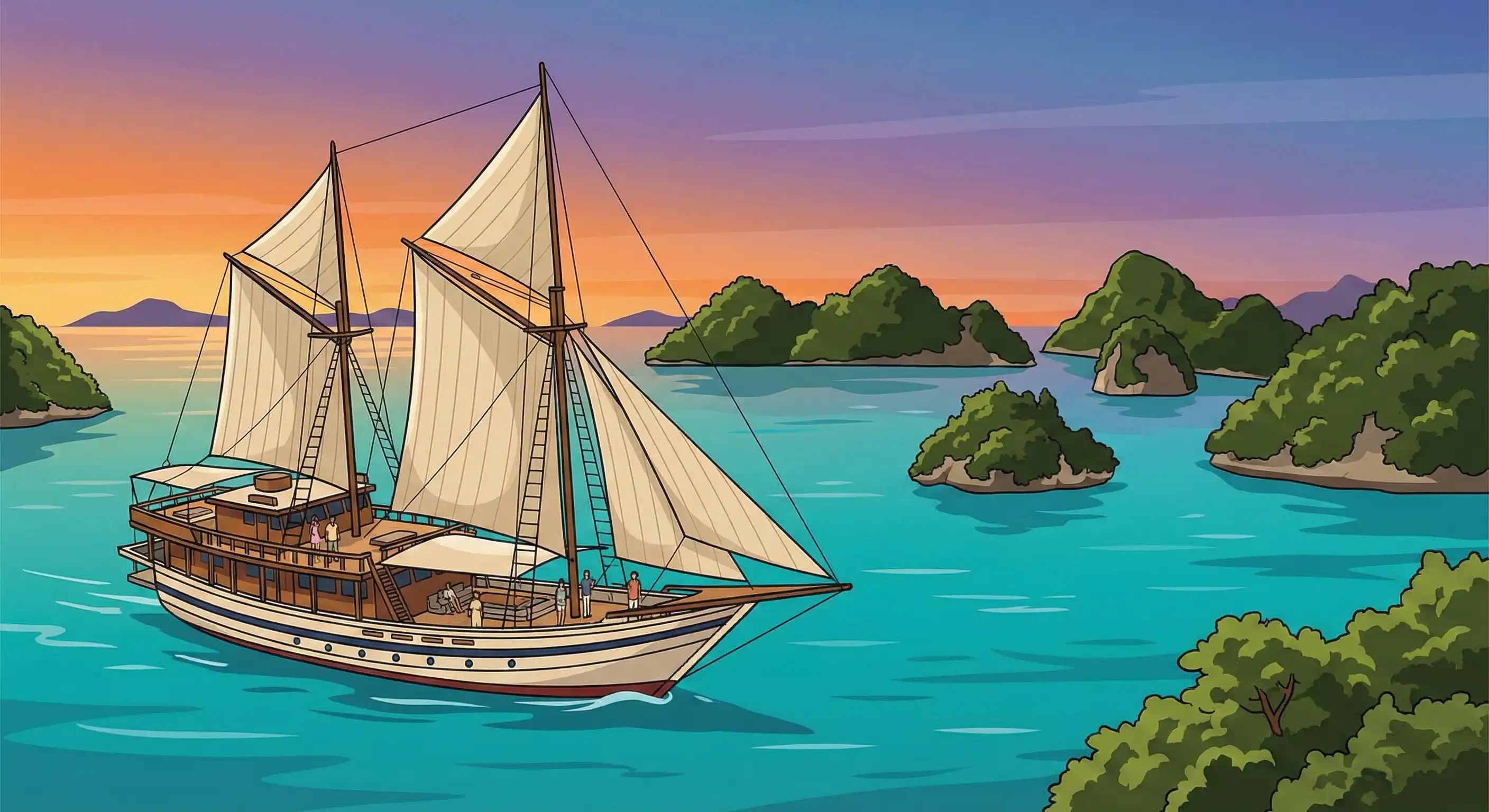
- Luxury Phinisi Schooners: The Bugis people of South Sulawesi constructed the phinisi, a traditional Indonesian sailing ship. Modern versions add air-conditioned staterooms, sun decks, and gourmet meals made by chefs on board to these beautiful wooden ships. Most of the time, they can hold 6 to 18 people, which makes them popular for private charters by families or small groups who want to be alone. Aqua Blu and other high-end boats are at the top of this category.
- Small Expedition Ships (30–120 passengers): These include more organized activities, like naturalists on board, lectures, and shore landings based on the zodiac. Instead of deep diving, the activities include cultural experiences, watching wildlife, and snorkeling. Some multinational adventure companies only go to Indonesia once a year, covering routes like Bali to the Spice Islands to Raja Ampat.
- Private Yacht Charters: Chartering an entire boat gives you the most freedom because you can make your own itinerary. For example, you might plan a 5-night trip from Bali to Komodo that fits your timetable or a 10-night trip around Raja Ampat that is perfect for your diving club. This option is popular with families with members of different generations because it lets them set the pace, food, and daily activities.
- Short Mini-Cruises (2–4 nights): These are things you can do in addition to your longer stay in Indonesia. Sailing between Bali, Lombok, and the Gili Islands is a popular choice, as are quick loops between Labuan Bajo, Komodo, and Labuan Bajo that focus on dragon treks and a few of the best snorkel spots.
When you book, make sure you know the difference between planned departures and full-boat charters. Scheduled departures leave on specified dates and you book your own cabin. You'll be among other passengers and follow the operator's planned route. With a full-boat charter, your group has the boat all to themselves and can change the routes, diving spots, lunch preferences, and activity times.
Different ships have very different cabin layouts. There are twin and double layouts, triple cabins, and family accommodations that are just for families. whether you're traveling alone, see whether there are single cabins or modest single supplements so you don't have to pay double occupancy fees.
Sample Itineraries: From Bali to Komodo, Raja Ampat & Beyond
Knowing how a cruise really works will help you pick the ideal one. These sample itineraries depict common routes, daily rhythms, and highlight progressions in Indonesia's most popular cruising areas.
- Example 1 – 7-Day Bali to Komodo Cruise (April–November): This famous itinerary usually starts in Benoa, Bali, and ends in Labuan Bajo, Flores. Some operators, however, go the other way. On the first day, you cross from Bali to Lombok overnight. On Day 2, you can go snorkeling off Gili Air with sea turtles and colorful reef fish. On Day 3, the trip goes east through Sumbawa's bays, where you might see dolphins. Days 4 and 5 are all about Komodo National Park. In the morning, you'll hike on Rinca with park rangers to observe Komodo dragons. In the afternoon, you'll snorkel at Manta Point, where manta rays clean themselves, and then swim in the beautiful water at the famed pink beach. On the sixth day, there is a climb at sunrise on Padar Island that offers views of three curved bays. On Day 7, you get off the ship in Labuan Bajo, where domestic flights link to Bali, Jakarta, or other places.
- Example 2 – 10-Night Komodo Focused Dive Liveaboard: This intense diving tour usually includes more than 30 dives at the park's greatest sites, starting and ending in Labuan Bajo. The plan calls for check dives and macro hunting in Sebayur, followed by visits to Tatawa Besar and Tatawa Kecil, where there are slope reefs full with anthias and fusiliers. The north's iconic current-swept pinnacles are the main focus of the trip: Castle Rock is known for its trevally and grey reef sharks, Crystal Rock for its fish-covered seamount, and Batu Bolong for its famous wall. Manta Alley and Horseshoe Bay are two southern places where you can be sure to see mantas. Night dives show Spanish dancers, sharks on patrol, and cuttlefish hunters. A land trip in the middle of the trip lets travelers go to Komodo or Rinca to see dragons and hike Padar to see the sunrise.
- Example 3 – 9-Day Raja Ampat Central & North (November–March): This route starts in Sorong, when passengers fly in from Jakarta or Makassar. It goes straight into the Dampier Strait. Cape Kri, where a single dive might bring up 300 or more fish species, and Mioskon's cleaning station are two famous places that are covered in the early days. A trip to the town of Arborek shows off the area's culture and traditional crafts. The trip goes on to manta cleaning stations at Manta Sandy, where these gentle giants swim in circles. The famous karst island picture may be taken from the Piaynemo viewpoint. More ambitious trips proceed north to Wayag's stunning lagoon network before heading back to Sorong. Snorkelers can explore the same spots at shallower depths the whole time, which makes this route great for groups with different skill levels.
- Example 4 – 11- or 12-Night Banda Sea & Spice Islands Crossing (Sept–Nov): This expedition-grade trip usually goes from Ambon to Sorong through the Banda Sea, which is very far away. The trip starts with a visit to the Banda Islands, where you can see Bandaneira's nutmeg farms and colonial forts that remind you of the islands' troubled past. There are healthy walls for diving here, and in deeper seamounts, you might even see hammerhead sharks. The path goes past volcanic outliers like Serua and Manuk, which are stunning cones that rise from depths of 4,000 meters. These are home to seabird populations and pelagic fish. Stops at reefs around Misool further east offer a change from the colorful coral gardens before the trip ends in Sorong. During the trip, you may expect to do 30 to 40 dives, and visibility will typically be more than 40 meters.
For people who don't have a lot of time, 3- to 4-night mini-cruises in Raja Ampat or Komodo focus on the most important sights. This is enough time to see famous places without having to spend a whole week on board.
Best Time to Cruise Indonesia & Typical Conditions
There isn't really an off-season in Indonesia because it is on the equator. However, cruise regions change with the monsoon season, and the weather changes a lot throughout the year. Knowing these patterns might help you plan your trip for the best weather, visibility, and marine life encounters.
- Komodo & Flores Sea: The main cruise season is from April to November, when the southeast trade winds are dry and quiet the seas. Visibility can reach 20 to 40 meters. The water is usually between 26 and 28 degrees Celsius, but in southern Komodo, thermoclines can drop to 22 to 24 degrees Celsius. These changes in temperature create upwellings full of nutrients that attract manta rays and big fish. From December to March, there is more rain and bigger waves, which makes crossings harder, but there are still a lot of marine animals.
- Raja Ampat & West Papua: From October to April, when the waves are calmest and rain showers are short, the weather is at its best. A lot of liveaboards move out of Raja Ampat in the middle of the year when the winds from the northwest build up and the swells get bigger. The water is warm all year around 28–30°C, and you can usually see 15–30 meters, depending on how much it has rained and how fast the currents are moving.
- Banda Sea & Spice Islands: To give the best opportunity of calm water, good visibility (typically 30–40+ meters), and hammerhead encounters at seamounts, expedition crossings are normally planned from late September to November. Outside of this time frame, heavier winds and rougher seas make the long trips less pleasant.
- Bali & Nusa Islands: You can sail these waters all year long, but July and August offer stronger swells that draw surfers to breaks that face south. From June to October, divers like to go to Bali's east coast because the visibility is better and the mola mola sightings are best around Nusa Penida.
When diving in Raja Ampat, you need know that currents in waterways like the Komodo straits and Dampier Strait can flow 2–4 knots, therefore you need to be an intermediate to advanced diver for these spots. Operators usually give guests detailed briefings and may change the sites they visit according on the weather and the guests' experience levels.
During major holidays like Christmas and New Year, July and August (the European summer vacations), and Eid in Indonesia, demand and prices go way up. For these peak times, popular routes and ships sell out 9 to 12 months in advance. Shoulder months can have similar weather, but with more availability and lower rates, if your dates are flexible.

Onboard Life, Safety & What to Pack
If you know what to expect on board and what to bring, your trip will go smoothly instead of causing you extra trouble. Liveaboards and cruise ships in Indonesia tend to have a laid-back, informal vibe, but if you plan beforehand, you'll be ready for everything from diving to visiting villages.
Onboard Atmosphere
Most phinisi liveaboards and diving boats have a laid-back feel that lets you go barefoot. You can wear casual clothes aboard all except the most formal expedition ships, and deck shoes stay in your cabin. Expect communal areas like sun decks with loungers, air-conditioned saloons for meals and briefings, and special camera tables for underwater photographers. Once you leave major cities, Wi-Fi is typically limited or not available at all. This is a chance to unplug from technology.
Daily Rhythm
A typical day on a diving liveaboard starts with a small breakfast and a briefing about 6:30 AM. The first dive is at 7:00 AM, when the water is calmest and visibility is best. After a second dive in the middle of the morning, there is a big meal and a nap during the hottest hours. In the afternoon, there is another dive or snorkel session, and after supper, there are optional night dives. If you're not a diver, you may trade underwater time for beach visits, paddling trips, animal watching from the deck, or guided walks around the village. The fun doesn't stop there.
Safety & Standards
Good dive operators make sure to give adequate briefings that cover currents, depth limitations, and site-specific rules. Boats should have oxygen and first-aid supplies, keep radio and satellite communications up and running, and use tender boats or zodiacs to safely get people to land.
Travel insurance is a must. Make sure your coverage covers diving to the depths you want to go, medical evacuation (helicopter expenses in isolated places can be more than $10,000), and connections to domestic flights. Operators usually ask for certification cards (PADI, SSI, or something similar), proof of recent dive experience, and may even do check dives before going to difficult dive sites.
What to Pack
- Lightweight, quick-dry clothing and long-sleeved rash guards with leggings for sun protection and jellyfish encounters
- Reef-safe sunscreen, a wide-brim hat, polarized sunglasses, and insect repellent for beach and village visits
- Reef shoes or sturdy sandals for wet landings and sharp coral beaches; light hiking shoes if your itinerary includes viewpoint treks like Padar or volcano visits
- Personal dive or snorkel gear if you prefer your own mask, snorkel, and fins; wetsuit thickness of 3mm suits most regions, though 5mm works better if you run cold or plan Banda Sea or south Komodo diving
- Underwater camera or action camera with waterproof housing, dry bags for shore excursions, and power adapters (220V, two-pin European-style plugs are standard)
Most boats have basic things like towels, biodegradable toiletries, and hair dryers, but check with your operator before you pack. Some rural itineraries don't have many alternatives for resupplying, so make sure to bring enough of your own medicines and any other things you can't live without.
Planning, Booking & How Prostay Helps Indonesian Cruise Operators
Planning ahead is important to get to your cruise and make sure everything goes smoothly, especially if you're boarding from a remote location. This segment talks about how travelers can plan their trips and how Prostay helps the hospitality partners that make smooth cruise experiences possible.
Practical Booking Steps for Travelers
Jakarta (Soekarno-Hatta), Bali (Ngurah Rai/Denpasar), and sometimes Makassar are international gateways for eastern Indonesia connections. Domestic flights from these hubs go to important cruise ports: Labuan Bajo for Komodo itineraries, Sorong for Raja Ampat, and Ambon for Banda Sea explorations.
Most people book cruises to Indonesia 6 to 12 months in advance for the busy season, which runs from November to February for Raja Ampat and from July to September for Komodo. Shoulder-season departures often have last-minute availability, but preparing ahead guarantees you the boat and cabin type you want.
Before you book your trip, make sure you know the visa requirements for Indonesia (many nationalities can get a visa on arrival), check that your passport is valid for at least six months after your travel dates, and remember that smaller Indonesian airlines often limit checked bags to 15–20 kg per person.
Working with Local Hotels & Transfers
It is highly suggested that you arrive at least one night before you leave. It's not good to start your trip tired because flights can be late and connections can be missed. Booking a place to stay the night you get off the ship also gives you some extra time in case the ship is late or you just want to relax before your flight.
In ports like Labuan Bajo, Sorong, Ambon, and Bali, look for hotels that can coordinate:
- Early breakfasts aligned with 6:00 AM harbor transfers
- Airport pickup even on late-night arrivals
- Luggage storage if your cruise departs mid-afternoon
- Ground transport to Benoa Harbor, Labuan Bajo marina, or other embarkation points
These logistics are important. A hotel that knows what cruise guests want makes the move from land to sea easy.
An Indonesia cruise takes you on an adventure that can't be found anywhere else on Earth, from the ancient Komodo dragons to the beautiful Raja Ampat corals. The archipelago rewards those who set sail to discover its natural treasures, whether they are planning a 3-night mini-cruise or a 12-night Banda Sea excursion.