
Komodo Island sits in the heart of the Indonesian archipelago like a place that time forgot, volcanic, wind scorched, and home to the largest living lizards on Earth. It is one of those rare destinations where the reality exceeds the legend. The dragons are bigger than you imagined, the waters more alive than any aquarium, and the landscape more dramatic than any photograph can capture.
Whether you are planning to visit Komodo Island or simply want to understand what makes this corner of the world so extraordinary, these facts about Komodo Island will take you from the geological forces that shaped it to the conservation battles being fought to protect it. Some of these Komodo facts will surprise you. A few might unsettle you. All of them will remind you why this island deserves its place among the natural wonders of the planet.
Geography and Location
1. Komodo Island Is Part of the Lesser Sunda Islands
Komodo Island lies in the eastern half of Indonesia, within the chain known as the Lesser Sunda Islands (Nusa Tenggara). Specifically, it falls within Nusa Tenggara Timur province, positioned between the much larger Flores Island to the east and Sumbawa to the west. Despite its global fame, the island itself is relatively small, roughly 390 square kilometres of rugged volcanic terrain.
2. It Sits Between Two Oceans
One of the most remarkable Komodo Island facts is its position at the boundary between the Indian Ocean to the south and the Flores Sea to the north. This geographic placement creates extraordinary marine conditions, powerful currents that bring nutrient-rich water surging through the straits, fuelling one of the most biodiverse underwater ecosystems on the planet.
3. The Landscape Is Unlike Anywhere Else in Indonesia
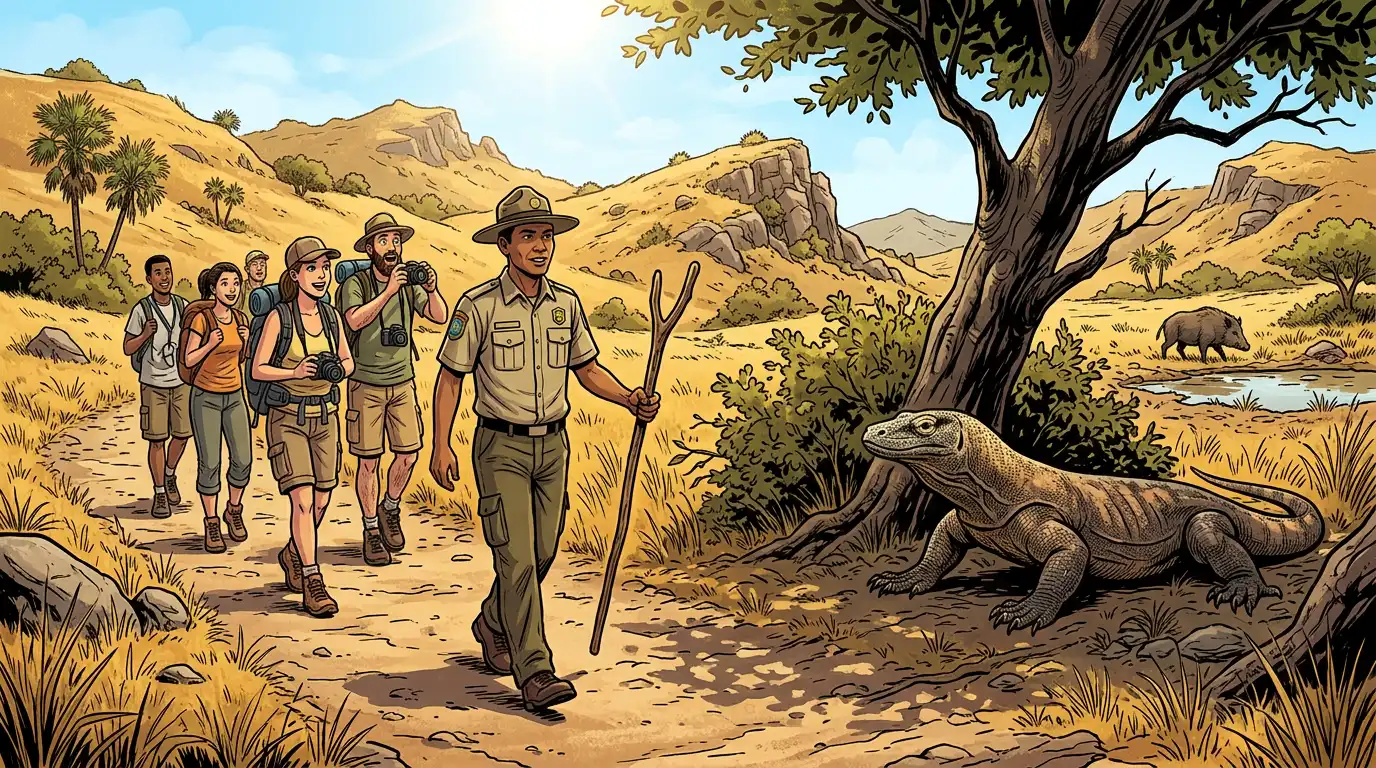
Forget the lush green jungles most people associate with Indonesia. Komodo Island is dominated by dry savannah grassland, rocky hillsides, and sparse deciduous forest. During the dry season (April to November), the hills turn golden-brown under relentless sun, giving the island an almost African appearance. Pockets of monsoon forest survive in sheltered valleys, and mangroves fringe sections of the coast, but the overall impression is arid, harsh, and ancient.
4. The Island Is Volcanic in Origin
Komodo Island owes its existence to the same tectonic forces that created the entire Indonesian archipelago, the collision of the Australian and Eurasian plates. The island is part of a volcanic arc, and while there is no active volcano on Komodo itself, the surrounding region is geologically restless. Nearby Flores Island has several active volcanoes, and the underwater terrain around Komodo is shaped by ancient lava flows and volcanic ridges.
5. It Is One of Several Islands in Komodo National Park
Komodo National Park encompasses not just Komodo Island but also Rinca Island, Padar Island, and roughly 26 smaller surrounding islands, along with the rich marine areas between them. The park covers a total area of approximately 1,733 square kilometres, of which the majority is ocean. This combination of terrestrial and marine protection makes it one of the most ecologically significant parks in Southeast Asia.
The Komodo Dragon
6. Komodo Dragons Are the Largest Living Lizards on Earth
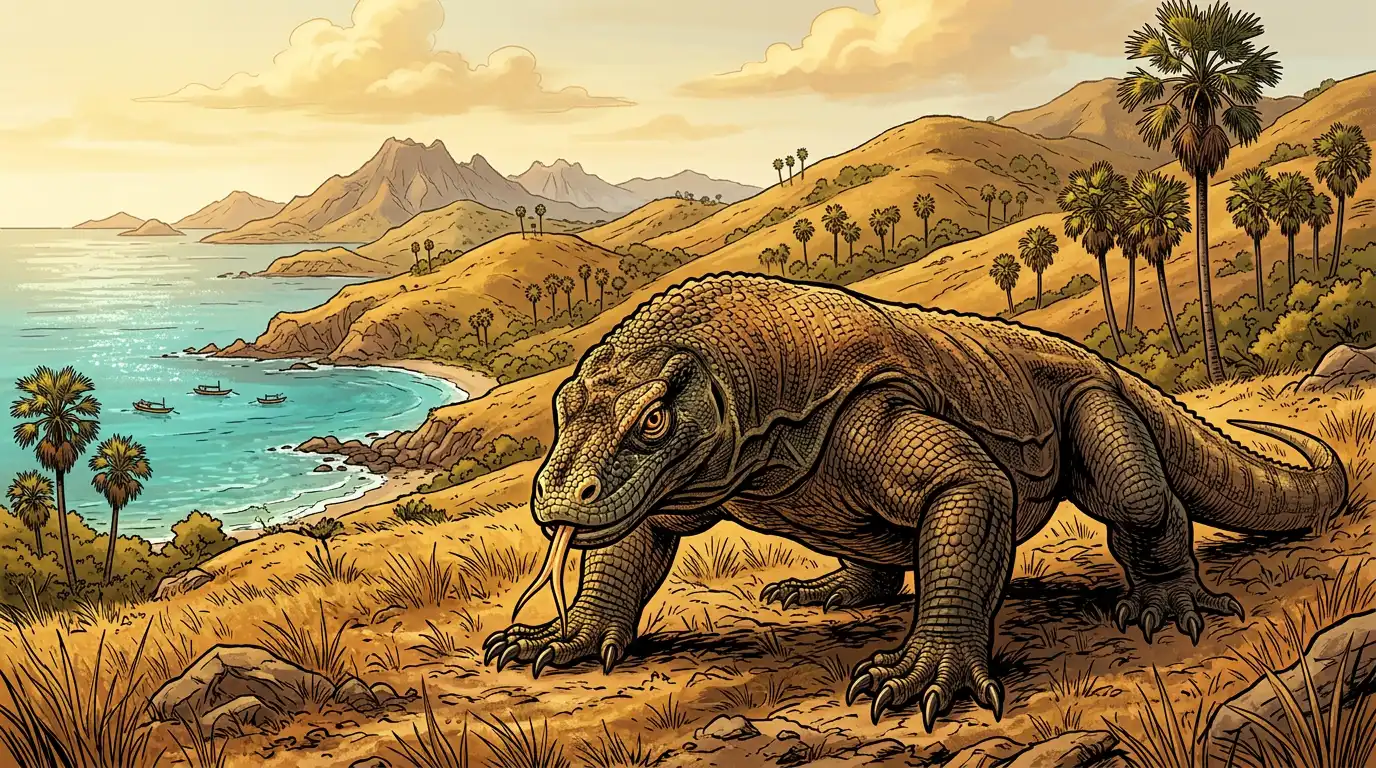
The headline fact that draws visitors from around the world: the Komodo dragon (Varanus komodoensis) is the largest species of lizard alive today. Adult males routinely reach 2.5 to 3 metres in length and can weigh up to 70 kilograms, though individuals exceeding 90 kilograms have been recorded. These are not small reptiles by any definition, they are giant lizards with the build and predatory instinct to match.
7. They Are Apex Predators
Komodo dragons sit at the top of the food chain on every island they inhabit. Their diet includes Timor deer, wild boar, water buffalo, monkeys, birds, and occasionally smaller dragons. They are ambush hunters, capable of explosive short bursts of speed up to 20 kilometres per hour. A large Komodo dragon can take down a water buffalo many times its own weight, not through brute force alone, but through a combination of tactics that scientists are still studying.
8. Their Bite Is Venomous
For decades, scientists believed that Komodo dragons killed large prey through bacterial infection, that their mouths harboured such a toxic cocktail of bacteria that a single bite would cause fatal septicaemia within days. Research published in 2009 overturned this theory. MRI scans revealed that Komodo dragons possess venom glands in their lower jaws that produce toxins causing a rapid drop in blood pressure, massive blood loss, and shock in their prey. The venomous bite, combined with razor-sharp serrated teeth, makes the Komodo dragon a far more sophisticated predator than previously understood.
9. Female Komodo Dragons Can Reproduce Without Males
One of the most astonishing Komodo facts involves reproduction. Female Komodo dragons are capable of parthenogenesis, producing viable offspring without fertilisation by a male. This was first confirmed in captivity in 2006 when a female at Chester Zoo in England laid fertile eggs despite having no contact with a male. All offspring produced through parthenogenesis are male, which means a single female dragon could theoretically colonise a new island alone and establish a breeding population once her sons mature. Female Komodo dragons typically lay 15 to 30 eggs per clutch, which incubate for approximately seven to eight months.
10. They Have Existed for Millions of Years
Fossil evidence suggests that Komodo dragons evolved in Australia approximately four million years ago and migrated to the Indonesian islands as sea levels fluctuated during the Pleistocene era. Far from being a species confined to its current tiny range, the Komodo dragon once roamed across a much wider territory. Today, their range has shrunk to just a handful of islands, a reminder of how fragile even an apex predator's hold on survival can be.
11. Young Dragons Live in Trees
Baby Komodo dragons face an immediate survival challenge: adult dragons, including their own parents, will eat them. To survive, hatchlings scramble up trees within hours of emerging from the nest and spend their first one to two years living almost entirely in the canopy. They feed on insects, geckos, bird eggs, and small reptiles until they grow large enough, roughly one metre, to descend safely to the ground.
12. They Have an Extraordinary Sense of Smell
Komodo dragons can detect carrion from up to 9.5 kilometres away using their forked tongues, which sample airborne molecules and transfer them to Jacobson's organs on the roof of the mouth. This chemical sense is their primary method of locating prey and food sources, far surpassing their eyesight, which is adapted mainly for detecting movement.
13. There Are Around 3,000 Left in the Wild
Current population estimates place the total number of Komodo dragons in the wild at approximately 3,000 individuals, distributed across Komodo Island, Rinca Island, Gili Motang, and small pockets of western Flores. This limited population, confined to a tiny geographic range, is what earned the Komodo dragon its classification as an endangered species by the International Union for Conservation of Nature (IUCN) in 2021.
Marine Life and the Underwater World
14. Komodo Sits Within the Coral Triangle
One of the most significant facts about Komodo Island has nothing to do with dragons. The park lies within the Coral Triangle, the global epicentre of marine biodiversity, spanning Indonesia, Malaysia, the Philippines, Papua New Guinea, Timor-Leste, and the Solomon Islands. The Coral Triangle contains over 75% of all known coral species and more than 3,000 species of reef fish, and Komodo's waters are among the richest within it.
15. The Coral Reefs Are Extraordinary
Komodo National Park protects approximately 25,000 hectares of coral reefs, hosting over 260 species of reef-building coral. The variety is staggering, from massive barrel sponges and table corals to dense gardens of soft corals in purples, pinks, oranges, and yellows that sway in the current like underwater forests. Sites like Batu Bolong, Crystal Rock, and Tatawa Besar are consistently ranked among the world's best dive spots.
16. Manta Rays Gather Here in Large Numbers
Komodo is one of the best places on Earth to encounter manta rays. Both oceanic manta rays and reef manta rays frequent the park's waters, with resident populations gathering at cleaning stations and feeding sites. Manta Alley and Cauldron are particularly famous for manta encounters, where divers and snorkellers can observe these graceful giants, some with wingspans exceeding five metres, gliding through nutrient-rich currents.
17. Sea Turtles Nest on the Beaches
Several species of sea turtles inhabit the waters of Komodo National Park, including green turtles and hawksbill turtles. Certain beaches within the park serve as nesting sites where females come ashore to lay eggs. The protection afforded by the national park is critical for these populations, as sea turtles face threats from fishing nets, plastic pollution, and coastal development across much of their range.
18. The Marine Life Diversity Is Staggering
Beyond mantas and turtles, the marine life in Komodo waters includes over 1,000 species of fish, 70 species of sponge, dolphins, whales, dugongs, seahorses, blue-ringed octopus, and an abundance of sharks, from reef sharks to the occasional hammerhead. The powerful currents that sweep between the islands carry plankton and nutrients that support this extraordinary food chain from microscopic organisms to apex marine predators.
19. The Currents Are Among the Strongest in the World
The straits between the islands in Komodo National Park experience some of the most powerful tidal currents in Indonesia. Speeds can exceed eight knots in narrow channels, creating underwater conditions that are simultaneously what makes the Komodo diving exceptional and what makes it demanding. These currents drive the nutrient upwelling that sustains the coral reefs and marine life, but they require experienced dive guidance to navigate safely.
Conservation
20. Komodo National Park Was Created to Protect the Dragons
Komodo National Park was established in 1980 by the Indonesian government primarily to protect Komodo dragons and their habitat. In 1991, it was designated a UNESCO World Heritage Site, recognising both its terrestrial and marine significance. The park's creation was one of the earliest examples of a national park designed around a single flagship species, though the benefits have extended to the entire ecosystem.
21. The Species Faces Real Threats
Despite national park protection, the Komodo dragon remains an endangered species. The primary threats include habitat loss from encroaching human activity, declining prey populations due to poaching, climate change affecting nesting conditions and habitat quality, and the inherent vulnerability of a species confined to a handful of small islands. Rising sea levels and increasing temperatures could reduce suitable habitat further in coming decades.
22. Conservation Efforts Are Ongoing and Complex
Conservation efforts in Komodo involve a delicate balance between protection and economic reality. The Indonesian government, international NGOs, and local communities collaborate on ranger patrols, anti-poaching operations, habitat restoration, and research programmes. In 2023, the government introduced tiered entrance fees to manage visitor numbers and generate conservation funding, a controversial but necessary step to ensure tourism revenue directly supports the park's long-term protection.
23. Local Communities Play a Central Role
Approximately 4,000 people live within the boundaries of Komodo National Park, mostly in fishing villages on Komodo and Rinca islands. Local communities have coexisted with Komodo dragons for generations, and their involvement in conservation efforts is essential. Community based programmes provide alternative livelihoods, eco-tourism guiding, handicraft production, sustainable fishing practices, that reduce pressure on the park's resources while ensuring residents benefit from conservation rather than being displaced by it.
24. The Park Generates Significant Tourism Revenue
Komodo National Park attracts hundreds of thousands of visitors annually, generating substantial revenue for the region and the national park authority. This tourism income funds ranger salaries, infrastructure maintenance, research, and community programmes. However, managing the balance between visitor numbers and ecological impact remains one of the park's greatest challenges. Overcrowding at popular sites risks damaging the very coral reefs and wildlife experiences that draw visitors in the first place.
Visiting Komodo Island
25. A Liveaboard Is the Best Way to Experience It
While day trips from Labuan Bajo (the gateway town on western Flores) are possible, a multi-day Komodo liveaboard cruise is widely regarded as the best way to visit Komodo Island and the surrounding islands. A liveaboard allows you to reach remote dive sites, anchor at pristine snorkelling spots far from day trip crowds, witness the dragon habitats at the best times of day, and experience the park's full range, from sunrise treks on Padar Island to sunset dives at Manta Alley, without the daily boat commute from Labuan Bajo.
The park's geography rewards time and patience. The best encounters, a Komodo dragon hunting in the morning light, a squadron of manta rays circling a cleaning station, a pink beach with no one else on it, come to those who stay long enough to find them. A liveaboard gives you that time.
Bonus Facts Worth Knowing
- Komodo dragons can eat up to 80% of their body weight in a single meal and then survive for weeks without eating again.
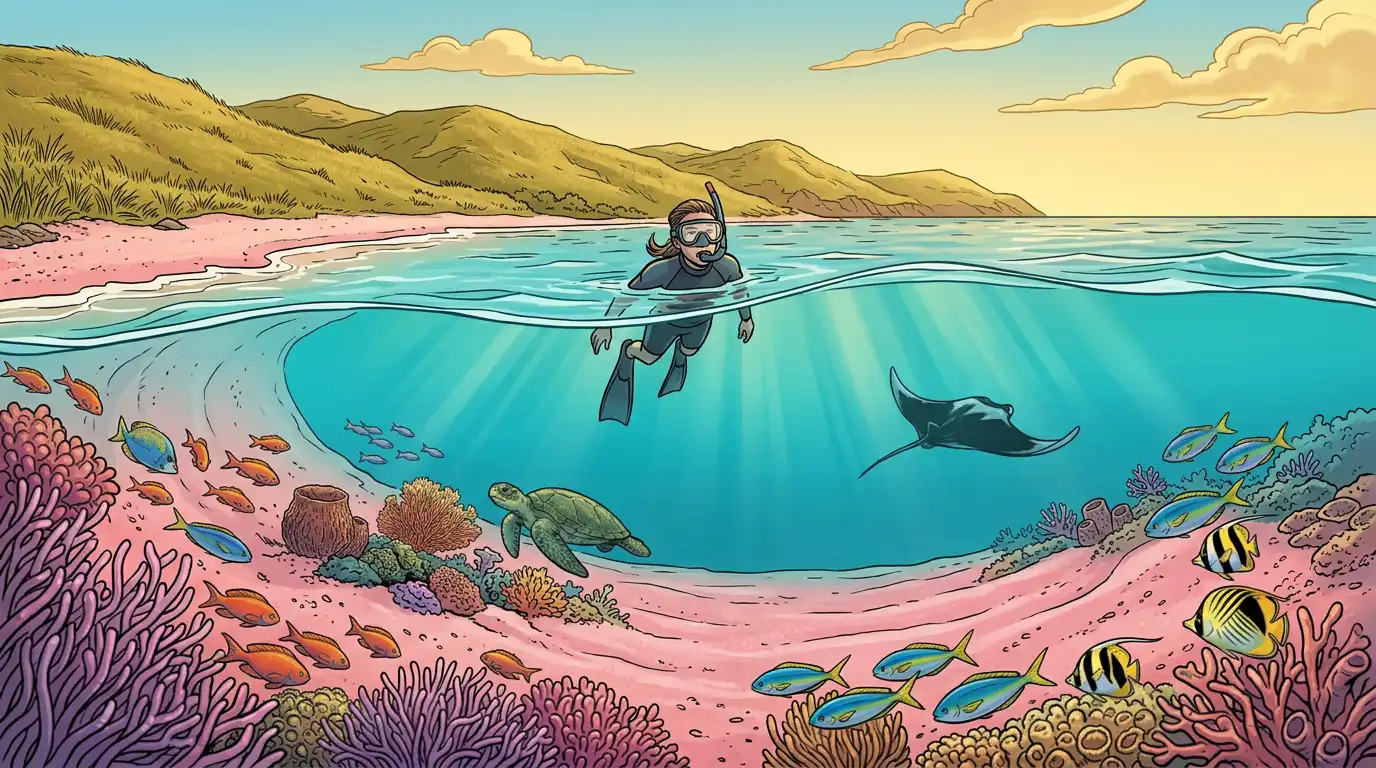
- The park's pink beaches get their colour from microscopic red organisms called Foraminifera, whose shell fragments mix with white sand to create the distinctive blush hue.
- Komodo dragons can swim between islands, covering distances of several hundred metres, which is how they historically spread across the archipelago.
- The water temperature in Komodo varies dramatically, warm on the surface but plunging to 20°C or lower at depth due to deep water upwelling, which is what makes the area so nutrient-rich.
- There are no Komodo dragons on Padar Island today, though they existed there historically. The population disappeared in the 1970s, likely due to prey depletion from poaching.
Why These Facts Matter
Every one of these Komodo Island facts points to the same truth: this is a place of extraordinary natural significance that exists in a delicate balance. The dragons that have survived for four million years now depend on a national park, a government, and local communities working together to hold back the pressures of the modern world. The coral reefsthat rank among the planet's finest are sustained by currents that no human technology can replicate. The marine lifethat draws divers from every continent thrives because the park's protections give it space to do so.
To visit Komodo Island is to witness all of this firsthand, and to understand, in a way that no list of Komodo facts can fully convey, why this place is worth protecting for generations to come.