
Introduction: Why Dive Safari Indonesia Is the Ultimate Destination
The Coral Triangle, which is the most biodiverse maritime area on Earth, is located in Indonesia. This archipelago has more than 17,000 islands in the Indo-Pacific and offers year-round scuba diving that few places in the world can match. Divers come here to view some of the finest reefs on Earth and have a memorable experience in the crystal blue waters of Raja Ampat and the nutrient-rich currents of Komodo National Park.
The country has specific attractions that draw both underwater photographers and thrill-seekers. For example, at Komodo's Manta Point, dozens of mantas glide through the water on any given dive. In Raja Ampat's Dampier Strait, there are intact hard coral gardens that support over 1,400 fish species. In Bali, there are macro hotspots like Tulamben and Seraya where mimic octopus and pygmy seahorses hide in volcanic sand. And between September and November, schooling hammerhead sharks patrol the deep walls of the Banda Sea. These gorgeous places are only a small part of what makes Indonesia a great place for divers to go for the rest of their lives.
A dive safari Indonesia usually involves a multi-day trip that includes several islands or regions, generally with liveaboard or overland transportation between coastal bases. Some tourists spend the whole trip on a traditional phinisi schooner, diving at 30 or more distant sites. Some people choose land-based dive safaris Indonesia that go from one resort to another and stay in homes, combining diving with cultural experiences. The flexibility is part of what makes it appealing; operators can plan trips for both beginners who want to explore calm reefs and professional divers who want to chase pelagics in strong currents.
Top Dive Safari Regions in Indonesia
Most dive safaris Indonesia focus on five or six main areas, and many companies arrange them in a seasonal order to follow the best weather and the movements of marine life. You can plan trips that provide tourists wonderful diving and keep them coming back if you know what each area has to offer and what kind of diver it is best for.
Raja Ampat (West Papua)
- Located in the far east of the country, Raja Ampat remains the crown jewel for biodiversity, sitting at the epicenter of the Coral Triangle with over 540 coral species and 1,300+ documented fish species.
- Key dive sites include Cape Kri (holding the world record for fish species counted on a single dive), Sardine Reef, Blue Magic, Manta Sandy, and the dramatic karst islands around Kri Island and Misool.
- Peak season runs October through April when seas are calmest and visibility reaches 20–30 meters, with water temperatures averaging 27–30°C.
- Best suited for intermediate to advanced divers comfortable with variable currents, though some protected sites work for beginners.
- Typical dive safari Indonesia length: 7–10 nights, whether on a liveaboard or based at an eco-resort with daily boat trips.
Komodo National Park (East Nusa Tenggara)
- This UNESCO World Heritage site offers world class diving with nutrient-rich upwellings that support massive biomass—surveys count 10 times more life per square meter than average tropical reefs.
- Signature dive sites include Batu Bolong (a pinnacle exploding with color), Castle Rock (grey reef sharks and giant trevally), Crystal Rock, and Manta Point where seasonal aggregations bring 20+ mantas per dive.
- Best visited May through October when southern trade winds calm the seas, though water temperatures in the south can drop to 20–23°C while northern sites stay warmer at 26–28°C.
- Strong currents up to 4 knots demand experience; most operators require a minimum of 30–50 logged dives.
- Typical dive safari Indonesia length: 5–8 nights on a liveaboard itinerary departing and returning to Labuan Bajo.
Bali
- Bali serves as the most accessible dive hub in Indonesia, with Denpasar airport (DPS) receiving direct international flights from Australia, Asia, and beyond.
- Key areas include Nusa Penida (Manta Point for resident mantas, Crystal Bay for seasonal mola mola sightings July–October), Tulamben (the famous USAT Liberty wreck at 5–30 meters), Amed (black sand macro diving), and Menjangan Island in the northwest.
- Diving is possible year-round with water temperatures of 24–29°C, making it ideal for both beginners and those seeking a relaxed holiday pace between dives.
- Overland dive safaris Indonesia connecting these sites over 5–7 nights offer a complete Bali diving experience without the commitment of a longer liveaboard expedition.
Banda Sea
- The Banda Sea and Forgotten Islands represent frontier territory for experienced divers seeking hammerhead encounters and remote exploration.
- Key sites include the volcanic Banda Islands, Manuk (a guano-covered rock swarming with sea snakes), Nila, and Suanggi, accessed during expedition-style crossings.
- Hammerhead season typically runs September through November, with some March–April windows; expect deep blue water dives along dramatic walls.
- Long open-sea crossings and occasionally rough conditions mean these trips suit only seasoned divers comfortable with 50+ logged dives and unpredictable weather.
- Typical dive safari Indonesia length: 10–14 nights on dedicated expedition liveaboards, often running one-way routes from Ambon to Sorong or vice versa.
Sulawesi
- North Sulawesi offers two contrasting experiences: Bunaken Marine Park (vertical walls dropping hundreds of meters, schooling pelagics) and Lembeh Strait (world-famous muck diving for macro photographers hunting rhinopias, hairy frogfish, and blue-ring octopus).
- Wakatobi in southeast Sulawesi provides some of Indonesia’s healthiest reefs, with 85% hard coral cover and gentle currents suitable for all levels.
- Peak season varies by area, but October through May generally offers best conditions across the region.
- Lembeh Strait draws underwater photographers from around the world, making it a smart addition to any photography-focused itinerary.
Kalimantan (Borneo)
- Kalimantan, the Indonesian portion of Borneo, offers a unique dive safari experience combining rich marine biodiversity with lush tropical rainforests and vibrant local culture.
- Dive sites around Derawan Islands, Maratua, and Kakaban are known for their pristine coral reefs, large schools of fish, and rare species such as the jellyfish lake on Kakaban Island, where divers can snorkel among harmless stingless jellyfish.
- The region features a mix of macro critters, pelagics, and healthy coral ecosystems, making it suitable for divers of all levels.
- Peak diving season runs from April to October, with water temperatures averaging 27–30°C and visibility ranging from 15 to 30 meters.
- Access typically involves flights to Balikpapan or Tarakan, followed by boat transfers to the dive sites or by liveaboard diving.
- Kalimantan dive safaris often combine underwater exploration with opportunities to experience the island’s rich biodiversity, including orangutan sanctuaries and river cruises.
- This less-crowded destination offers an authentic and adventurous alternative for divers seeking to discover Indonesia’s underwater treasures beyond the more frequented regions.
Lesser-Known Circuits
- Alor and the eastern Flores region offer cooler upwelling waters (24–28°C) with exceptional visibility exceeding 30 meters, plus cultural encounters with traditional weaving villages.
- Cenderawasih Bay in West Papua delivers year-round whale shark encounters at bagan fishing platforms, with peak sightings July through August.
- Halmahera provides dugong sightings and pristine reefs rarely visited by other boats.
- These routes suit divers seeking something beyond the well-visited regions, though remote locations mean longer travel and limited medical evacuation options.
Liveaboard vs Land-Based Dive Safaris
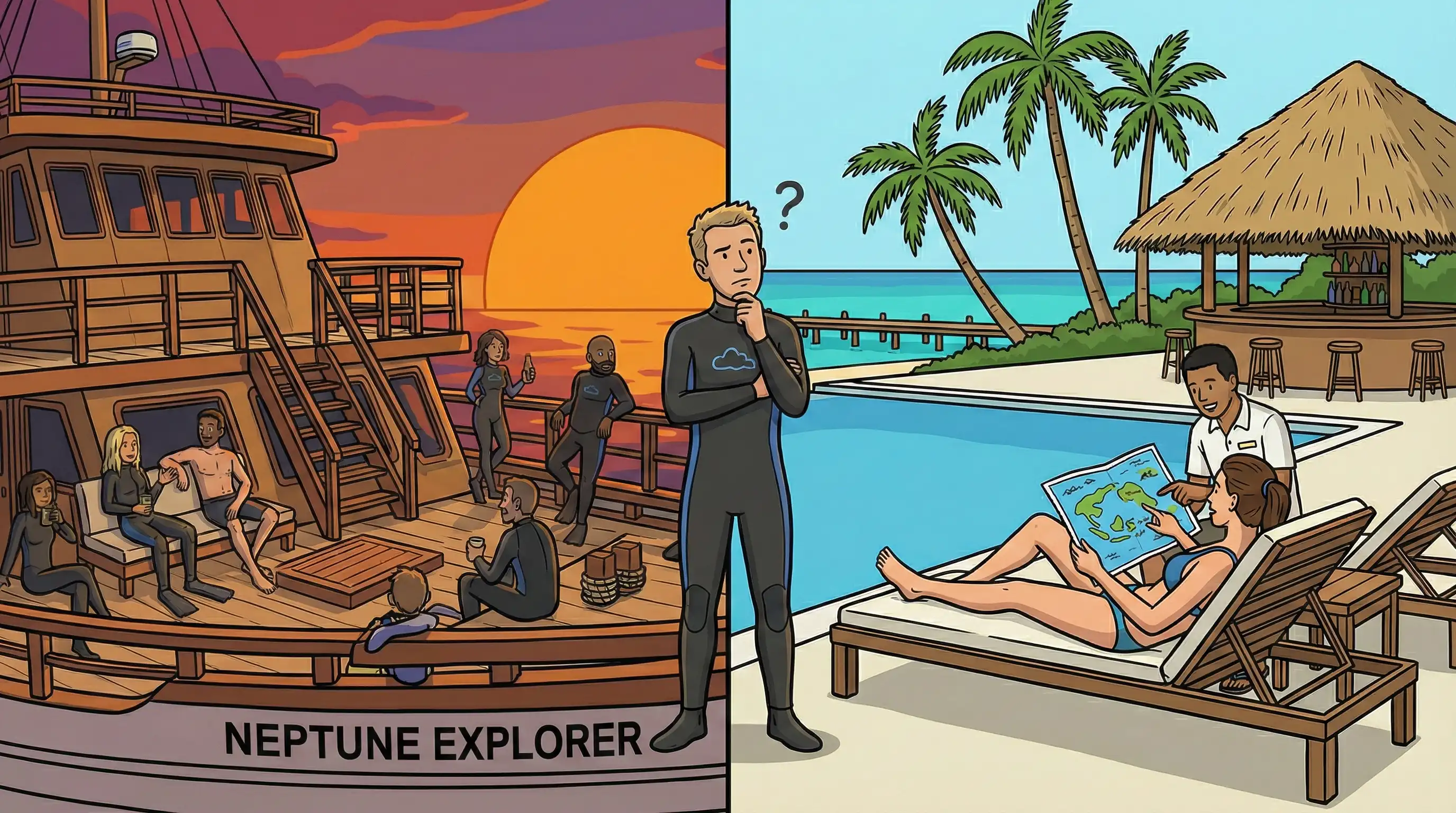
There are two primary types of Indonesia dive safaris: liveaboard itineraries, where guests stay on a boat for the whole trip, and land-based safaris, where tourists move between resorts, homestays, or beach hotels and go diving every day. A lot of operators also use hybrid models that use both methods. Knowing how the different formats work helps you choose the one—or mix of formats—that works best for your business.
Liveaboard Diving
- Classic Indonesian liveaboards range from traditional wooden phinisi schooners (8–16 guests in shared or private cabins) to modern steel-hulled vessels with luxurious suites, nitrox compressors, and dedicated camera rooms.
- Most liveaboard diving itineraries include 3–4 dives per day plus optional night dives, maximizing bottom time across remote sites that day boats cannot reach.
- Routes may run as loops (departing and returning to the same port, such as Labuan Bajo for Komodo) or as one-way expeditions (Sorong to Ambon covering Raja Ampat and Banda Sea in a single 10–14 night trip).
- Crew sizes typically run 10–15 staff for a 16-guest boat, including captain, dive guides, engineers, and galley team.
- Guests expect all-inclusive pricing covering meals, diving, tanks, weights, and often nitrox, with extras like gear rental, private guides, or alcohol charged separately.
Land-Based Dive Safaris
- Overland dive safaris Indonesia connect multiple dive destinations via private transfers, fast boats, or domestic flights, with guests staying at different properties each leg.
- A typical Bali circuit might include three nights in Tulamben (Liberty wreck, Drop-Off wall), two nights in Amed (macro and coral gardens), and three nights on Nusa Penida (mantas and mola)—all connected by 1–2 hour drives or boat crossings.
- Raja Ampat homestay-based safaris are increasingly popular, with guests moving between simple but comfortable beachfront accommodations around Dampier Strait while local boat operators run daily trips to Cape Kri, Mioskon, and Manta Sandy.
- Combinations like Bali plus Komodo work well: guests spend a few nights diving Nusa Penida, then fly to Labuan Bajo for a shorter 4–5 night liveaboard before returning home via Bali.
Hybrid Models
- Some resorts operate their own mini-safaris on speedboats, offering daily trips to top sites from a fixed base plus optional 2–3 night boat extensions to more remote areas.
- Raja Ampat eco-resorts commonly offer this format: guests stay in overwater bungalows with house reef snorkeling and day trips to Blue Magic or Melissa’s Garden, with the option to join a short liveaboard diving loop to Wayag or Misool.
- Hybrid models provide flexibility for guests with limited time or those uncomfortable spending multiple nights aboard a moving vessel.
Sample Indonesia Dive Safari Itineraries
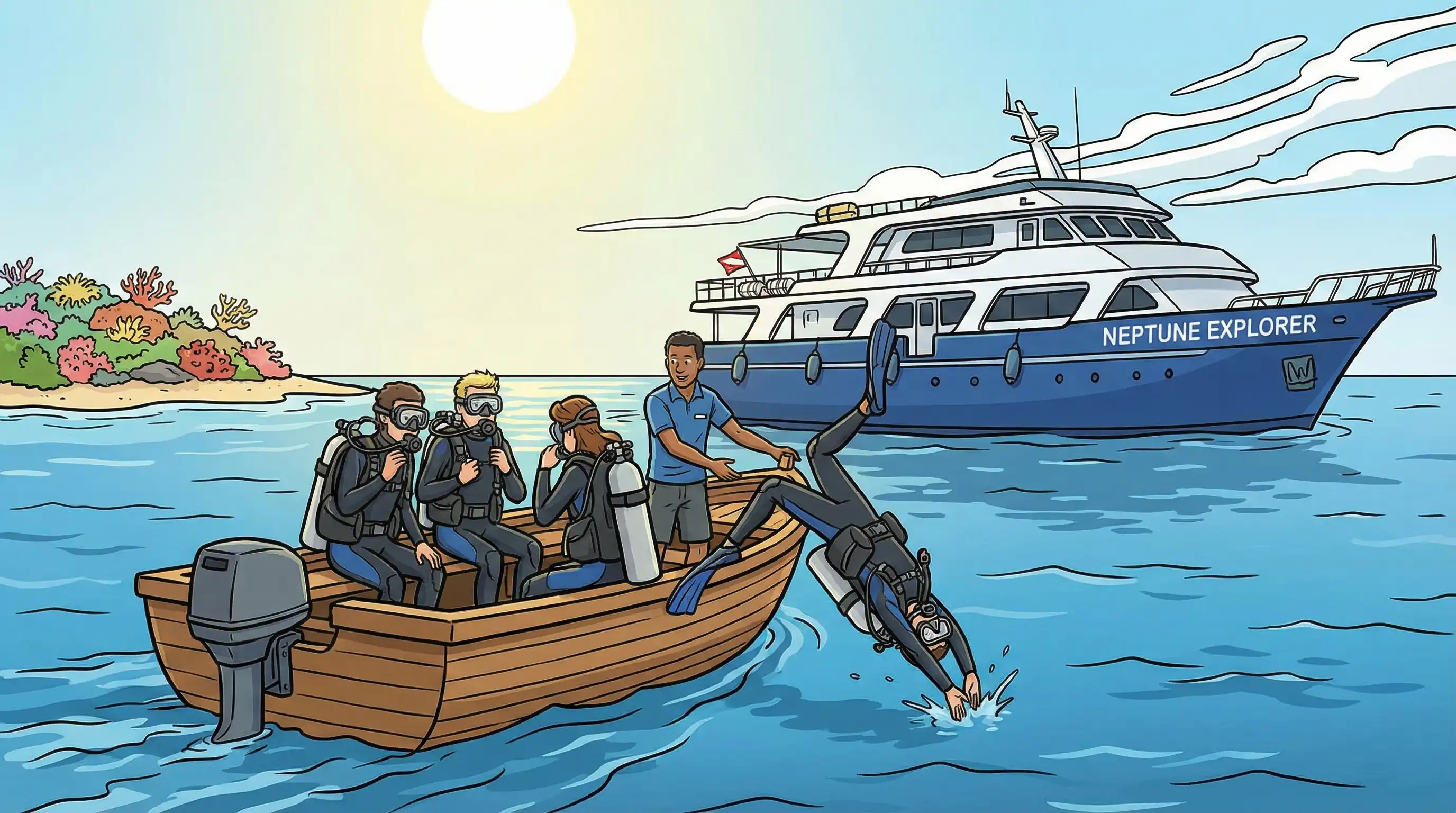
These sample safari patterns show what operators usually provide to clients, together with notes on the best times to go, how to get there, and the usual price ranges. You can change each schedule based on what the guests want, the weather, and what is available.
5D/4N Raja Ampat Dampier Strait Safari
- Guests arrive in Sorong on Monday morning via domestic flights from Jakarta or Makassar, then transfer by speedboat (2–3 hours) to a homestay or eco-resort near Kri Island.
- Daily schedule includes three boat dives at sites like Cape Kri, Sardine Reef, Blue Magic, and Manta Sandy, with optional sunrise or night dives depending on conditions.
- Evenings feature village visits on Gam Island, sunset kayaking, or simply relaxing on the beach with cold drinks.
- Best suited for December through April when seas are calmest; visibility typically ranges 15–25 meters.
- Pricing orientation: budget homestay-based safaris run approximately $150–220 per person per day including diving, meals, and basic accommodation.
8D/7N Komodo Liveaboard
- Guests embark in Labuan Bajo (accessible via direct flights from Bali or Jakarta) on Saturday afternoon, settling into cabins before a check-out dive at a nearby site.
- The route covers Sebayur Kecil, Mawan, Siaba Besar (known for sea turtles), then moves to the iconic Batu Bolong, Castle Rock, Crystal Rock, and finally Manta Point before returning to port.
- Expect 20–24 dives over seven days, with a mix of adrenaline drift dives and more relaxed reef explorations; a land visit to see Komodo dragons is often included mid-trip.
- Optimal scheduling: May through September when visibility peaks at 20+ meters and currents are more predictable.
- Pricing orientation: mid-range Indonesia liveaboards run $250–350 per person per day; luxurious vessels with private cabins and fine dining reach $400–650 per person per day.
10D Bali & Nusa Penida Overland Safari
- Day 1–3: Three nights in Tulamben diving the USAT Liberty wreck (three dives daily, including a memorable night dive on the wreck), plus the Drop-Off wall and coral gardens.
- Day 4–5: Transfer by private van to Amed (1.5 hours); two nights of macro diving at sites like Pyramids and Japanese wreck, plus a visit to local salt farms.
- Day 6–8: Fast boat crossing to Nusa Penida (1 hour from Padang Bai); three nights diving Manta Point, Crystal Bay, and Blue Corner, with mola sightings possible July through October.
- Day 9–10: Return to Bali mainland for departure or beach relaxation; optional snorkeling at Menjangan if time permits.
- This land-based dive safari Indonesia runs year-round, though July–October offers the best chance for mola mola encounters; pricing typically runs $180–280 per person per day depending on hotel category.
11D Raja Ampat + Banda Transition Trip
- These expedition-style voyages run during the brief weather windows of October–November or March–April, starting in Sorong and ending in Ambon (or reverse).
- The first 4–5 days explore Raja Ampat’s southern regions including Misool’s soft coral paradise and hidden lagoons.
- The boat then makes the open-sea crossing to the Banda Sea, stopping at Suanggi and Manuk for hammerhead encounters, sea snake dives, and dramatic volcanic walls.
- Suitable only for advanced divers with 50+ logged dives, strong buoyancy control, and comfort in variable conditions including potential 2–3 meter swells.
- Expect 35–40 dives over 11 days; high-end expedition liveaboards charge $400–550 per person per day.
Seasonality, Conditions & Travel Logistics
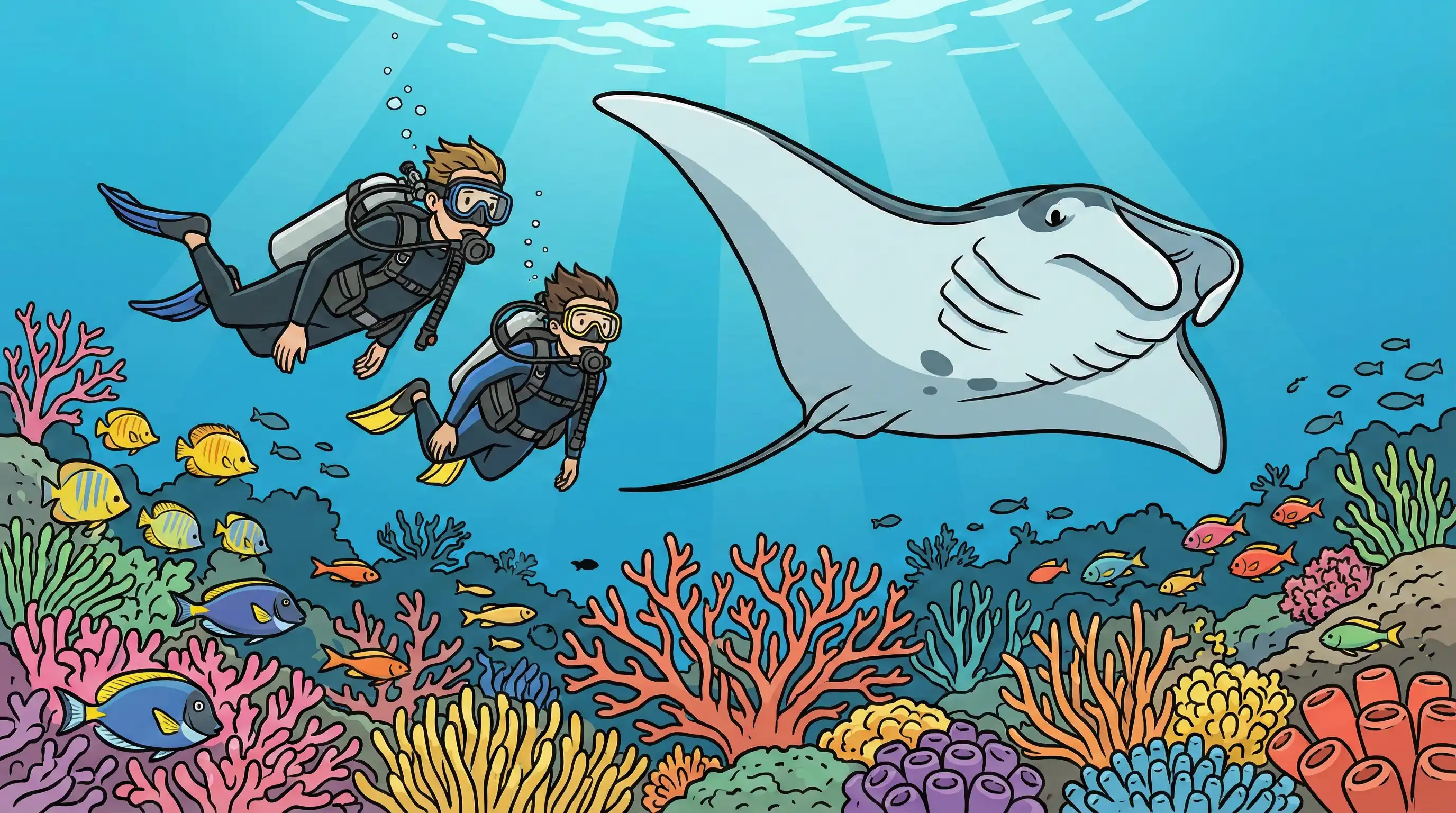
Diving in Indonesia is fantastic all year long, however the best times to dive in each area depend on the monsoon season, the temperature of the water, how clear it is, and the migration of marine life. Operators can plan departures, set prices, and tell guests what to bring by knowing these windows.
Timing by Region
- Komodo: Best May through October when southeast trade winds bring calm seas and visibility reaches 20–30 meters; south Komodo water temperatures can drop to 20–23°C due to upwellings, while north stays warmer at 26–28°C; manta aggregations peak around Manta Point during this period.
- Raja Ampat: Peak season runs October through April with calmer seas and visibility averaging 15–30 meters; water temperatures stay consistent at 27–30°C; some operators pause itineraries July–August when rougher crossings make certain routes uncomfortable.
- Banda Sea & Forgotten Islands: Hammerhead expeditions typically run September–November with occasional March–April windows; long open-sea crossings require stable weather, limiting operability to roughly 60% of calendar dates.
- Bali & Nusa Penida: Diveable year-round with water temperatures of 24–29°C; mola mola sightings at Crystal Bay and Blue Corner peak July through October when thermoclines bring cooler water and these deep-dwelling fish rise to cleaning stations.
- Sulawesi (Bunaken/Lembeh): October through May generally offers best conditions; Lembeh Strait’s muck diving remains productive year-round.
Water Conditions & Gear Recommendations
- Temperatures range widely from 20°C in Komodo’s cold upwellings to 30°C in sheltered Raja Ampat bays.
- Recommended exposure protection: 3mm wetsuit for Bali’s warmer months, 5mm with hood for Komodo’s south during June–August, and many divers bring both for transition trips.
- Most dive sites range from 18–30 meters, with some walls and pinnacles extending to 35–40 meters for advanced exploration.
- Strong currents at sites like Castle Rock and Shotgun can reach 3–4 knots; operators should verify guest experience levels and ensure proper briefings.
Travel Logistics
- International gateways: Jakarta (CGK) and Bali/Denpasar (DPS) receive most international arrivals; Bali offers the most convenient connections to eastern Indonesia.
- Domestic flights: Garuda Indonesia, Batik Air, Lion Air, and Citilink operate routes to key hubs; baggage limits typically run 20–23 kg, so advise guests to pack dive gear strategically or rent locally.
- Key ports and hubs: Labuan Bajo for Komodo departures, Sorong for Raja Ampat, Ambon for Banda Sea and Cenderawasih, Manado and Makassar for Sulawesi, Maumere and Kupang for Flores and Alor itineraries.
- Many liveaboard diving departures are fixed on specific weekdays (often Saturday or Sunday embarkation); operators need precise cut-off dates for rooming lists, dietary requirements, and transfer coordination.
Responsible & Sustainable Dive Safaris in Indonesia
Being sustainable is not only the right thing to do, but it is also good for business. Tourism has a direct impact on local communities and marine environments in places like Raja Ampat, Komodo, and Wakatobi. More and more, tourists are choosing operators who show a real dedication to conservation and community benefit.
Concrete Responsible Practices
- Respect and clearly communicate marine park permits and fees: Raja Ampat’s conservation fee (currently around $100 per person) and Komodo’s national park entrance fees directly fund patrol boats, mooring buoy installation, and community programs.
- Follow strict diving guidelines: maintain neutral buoyancy at all times, limit group sizes at sensitive pinnacles (4–6 divers per guide maximum), and enforce no-touch policies on corals and wildlife.
- Partner with local communities for homestays, boat crew, guiding, and provisioning; source fresh fish, vegetables, and supplies locally rather than importing everything from Bali or Java.
- Showcase Papuan or local island culture respectfully through village visits, traditional dance performances, and handicraft purchases that directly benefit artisans.
- Eliminate single-use plastics aboard vessels and at resorts; provide refillable water stations and encourage guests to bring reusable bottles.
Conclusion: Embark on Your Ultimate Dive Safari Indonesia Adventure
Dive safari Indonesia is the best way to experience the best diving, stunning underwater scenery, and rich cultural experiences all in one trip. Every dive safari promises unique moments under the waters, whether you want to explore Raja Ampat's colorful coral gardens, Komodo National Park's exciting currents, or the wide range of marine life around Bali and Sulawesi.
Divers of all skill levels can discover their perfect trip, from opulent liveaboard boats to real land-based safaris. The country's strategic location in Southeast Asia and good domestic flight links make it easy and quick to go to these isolated dive destinations.
If you want to get the most out of your dive safari Indonesia trip, think about working with experienced operators who put safety, sustainability, and great guest experiences first. Get your gear set, organize your trip, and get ready to dive into the colorful aquatic wonderland that only Indonesia can provide.
If you want the best experience and help that is tailored to your needs, don't be afraid to get in touch with dive centers and liveaboard operators. They can make your trip fit your needs and ability level. Explore the Coral Triangle and find out why Indonesia is still the best place for divers looking for adventure, beauty, and memories that will last a lifetime.