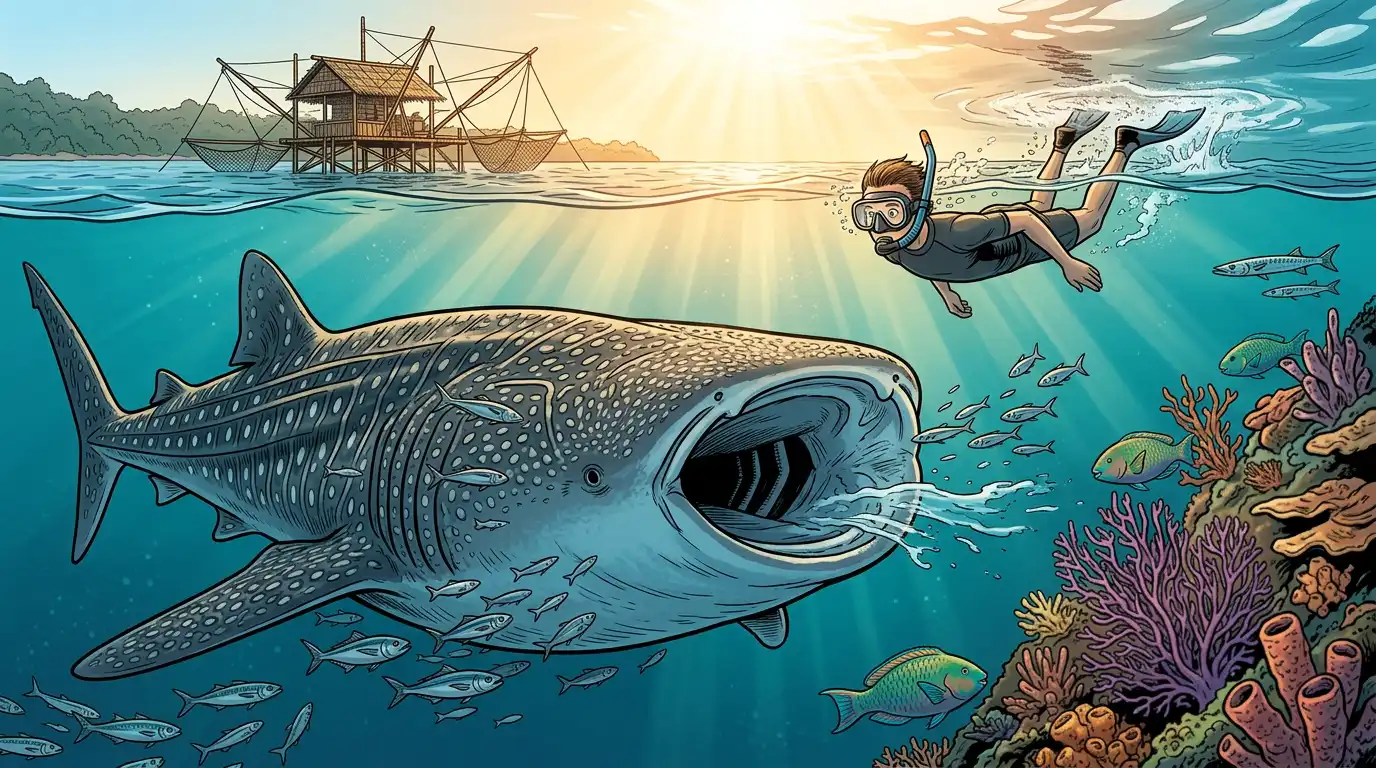
Cenderawasih Bay diving gives you something that few other places on Earth can: guaranteed whale shark sightings all year round in the middle of Indonesia's largest marine park. This faraway sanctuary in West Papua is known as the "Galápagos of the East." Every day, these gentle giants gather at traditional fishing platforms, making every visit a memorable experience.
This complete guide has everything you need to organize your diving trip to Cenderawasih Bay. It covers everything from learning about the area's unique marine biology and dive locations to figuring out how to get there, which might be tricky. This information is for both experienced scuba divers and snorkelers who want to get up close and personal with the world's largest fish. It covers all you need to know to make your trip happen. People who love diving, marine life, and adventure travel are the target audience. They are willing to take the trip to one of the remaining real underwater frontiers in the modern world.
Cenderawasih Bay diving gives you the best chance of seeing whale sharks every day of your visit. This is because of the unique link between marine species and local fisherman at their traditional fishing platforms.
You will learn the following by reading this guide:
- Understanding of why whale sharks daily frequent these waters and how to maximize your encounters
- Knowledge of pristine coral reefs, World War II wrecks, and endemic species awaiting exploration
- Practical information about King Neptune and Neptune One liveaboard options
- Seasonal timing strategies for optimal visibility and marine life activity
- Solutions to common challenges facing travelers to this remote location
Understanding Cenderawasih Bay National Park
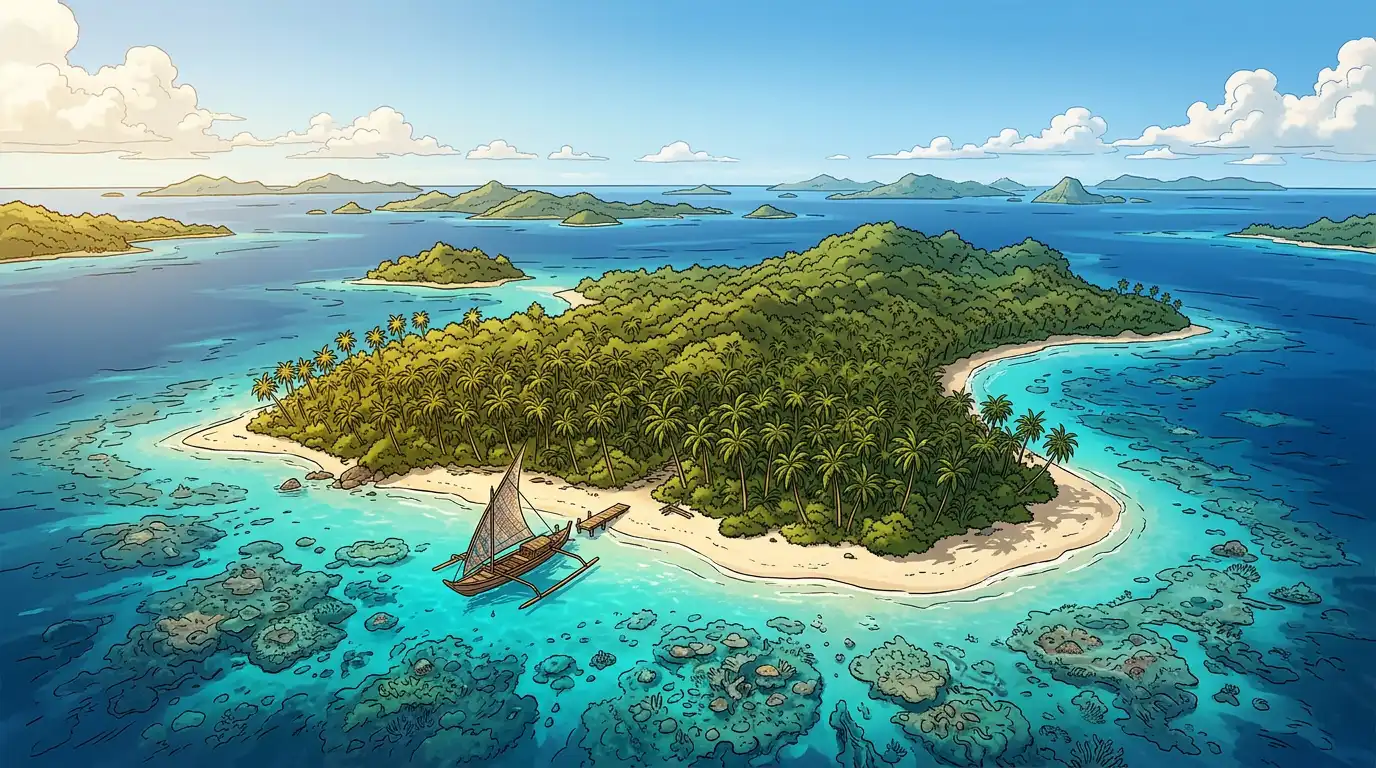
Cenderawasih Bay National Park is the biggest marine reserve in Southeast Asia. It protects around 1.5 million hectares of ocean, islands, and coastal habitats. This national park was created in 2002 and includes the huge seas of what used to be called Geelvink Bay. This bay is more than 300 kilometers wide along the northern coast of West Papua.
The park goes from Manokwari in the northwest to the mouth of the Mamberamo River, and the Wandammen Peninsula sticks out into its southern part. Cenderawasih Bay is between the Bird's Head Peninsula and the open sea. It is a semi-enclosed area where water doesn't flow freely, which has led to a lot of different kinds of life. There are islands in this area, such as Pulau Roon, Yapen, and smaller atolls. These islands give divers access to a wide range of underwater terrain, from slope walls to sandy bottoms.
Marine Biodiversity and Ecosystem
The bay is in the Coral Triangle, which is the most biodiverse maritime area in the world. This is why it has so many different kinds of creatures. These waters are home to more than 1,000 fish species and more than 500 coral species, which is much more than what most dive spots have to offer. Hard corals make up the base of colorful coral reefs that surround the islands in the bay. Soft corals add color to the deeper cliffs and overhangs.
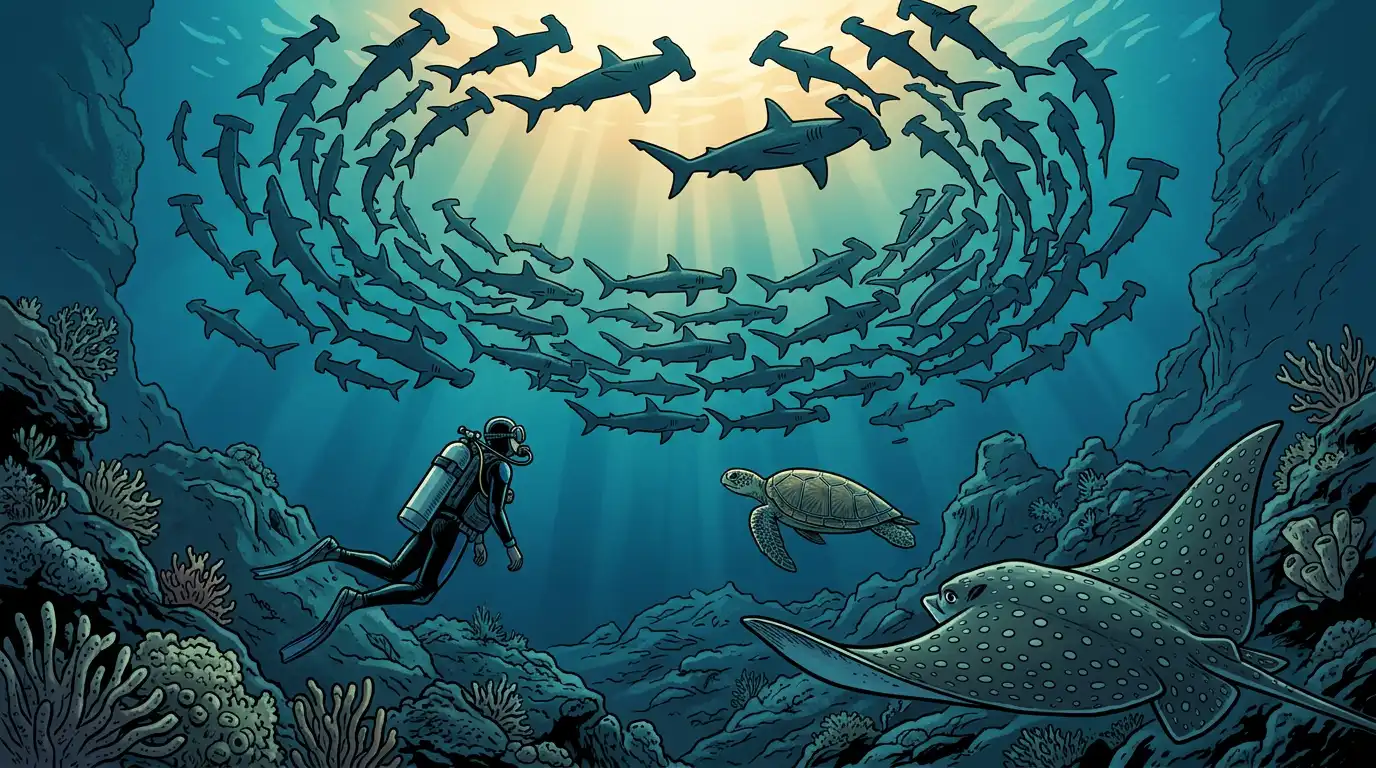
This natural beauty goes beyond corals to encompass uncommon species that can only be found here on Earth. Geological isolation between 3 and 14 million years ago blocked the bay's opening, stopping the spread of larvae and creating what ichthyologist Gerald Allen calls an evolutionary cauldron. Endemic species are marine animals that evolved in isolation when barriers closed. These include distinct shrimps, wrasses, and other marine life. Sea turtles swim around in the shallow water, reef sharks guard the edges of the reef, and other pelagics migrate through the bay's nutrient-rich currents.
The World’s Most Reliable Whale Shark Sanctuary
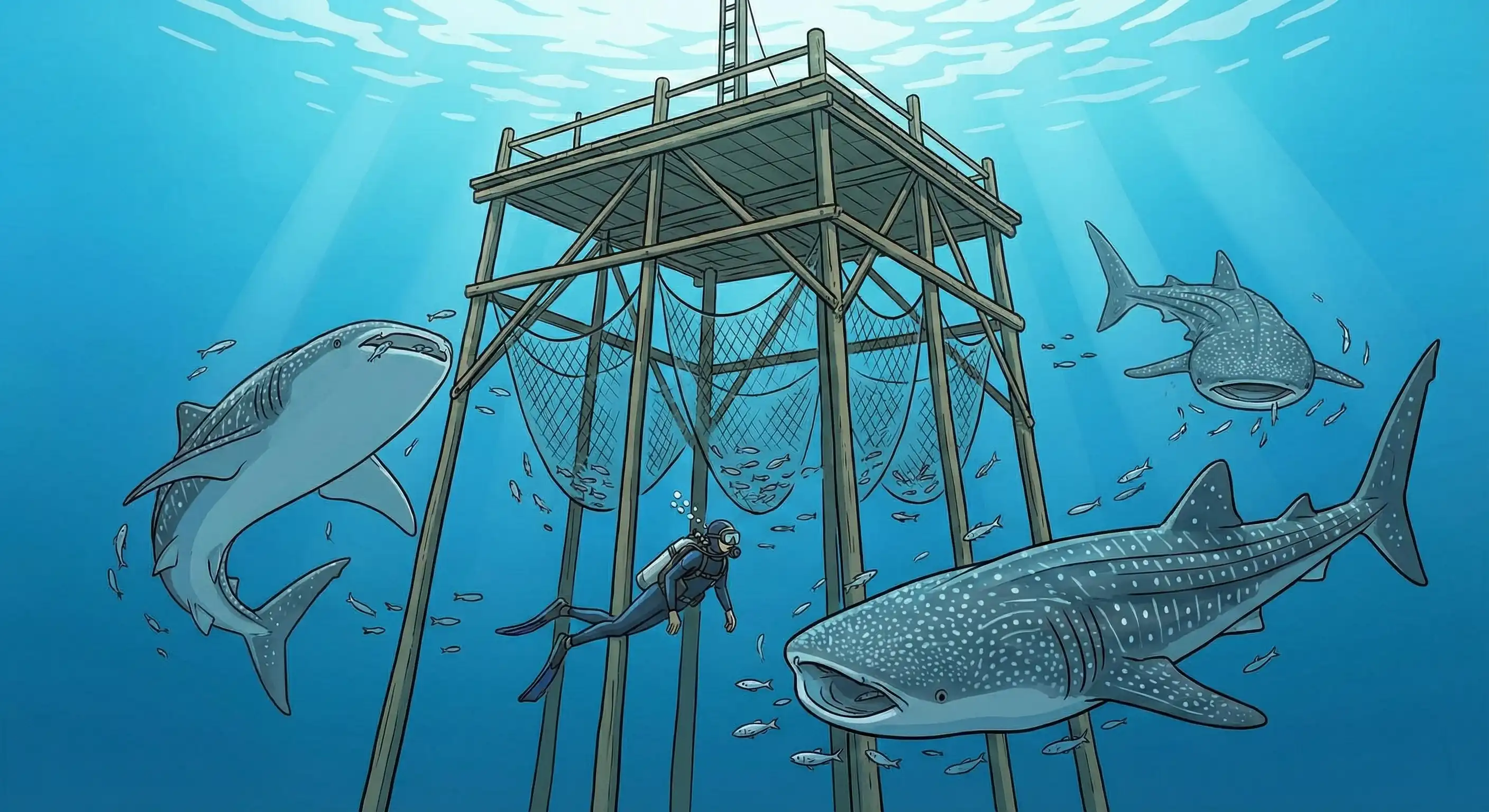
The fact that whale sharks are always present at traditional fishing platforms called bagans is what makes Cenderawasih Bay diving different from all other whale shark destinations. For generations, local fishermen have worked these waters, employing platforms that draw small fish like anchovies under bright lights at night. Whale sharks discovered that these bagans were a good place to find food, so they came to devour the schools of fish that were gathered under the wooden constructions.
Fishermen and whale sharks have a mutually advantageous relationship that leads to reliable whale shark encounters that can't be found anyplace else in the globe. Studies show that young and sub-adult fish, which are usually 4 to 5 meters long, gather around these platforms. Research has also shown that there is a strong male bias, with about 90% of the fish being male. Divers going to Cenderawasih Bay may expect to see whale sharks the whole time they are there, and they often swim with more than one whale shark at a time.
The bay's status as an Important Shark and Ray Area emphasizes how important it is for whale sharks to feed and how vulnerable they are.
Diving and Snorkeling Experiences in Cenderawasih Bay
Cenderawasih Bay diving is a great place for divers and snorkelers since it has a unique environment and is a whale shark sanctuary. They can see megafauna while exploring pristine reefs and diving on historical wrecks. The bay's beautiful waters and protected status make sure that every dive shows off the underwater life that made this area famous among marine biologists.
Whale Shark Encounters at Traditional Bagans
Many people say that swimming with whale sharks at the bagans is a life-changing experience because it is such an exciting dive. Five to fifteen whale sharks usually feed at the same platform. Their huge, spotted bodies move beautifully through the water as they filter small fish called ikan puri. These gentle giants, who are the biggest fish in the world, are quite tolerant of people and will often come within arm's reach of you while they are eating.
The experience is just as good for snorkeling as it is for scuba diving. Divers can go down to see whale sharks coming up from the depths, while snorkelers can see them on the surface in the shallow waters right below the bagans. The way sharks feed keeps them in predictable patterns, which lets people watch and take pictures for longer periods of time than they could if they were just passing through the open water.
Ethical interaction rules stress passive observation: keep a respectful distance, don't touch, move gently, and never block feeding paths. Neptune and King Neptune One crew member fully explains these rules to guests so that interactions stay safe for both people and whale sharks.
Pristine Coral Reef Diving
Cenderawasih Bay diving has some of the healthiest reef systems in the world besides whale sharks. The surrounding reefs around the bay's islands are some of the last untouched ones in the world. The coral covering and diversity are as good as the best in Raja Ampat to the west. Hard corals build complex structures from the shallows to the depths, and soft corals decorate the walls in shades of pink, orange, and purple.
Macro aficionados get a rare look at indigenous species that can't be seen anywhere else, like pygmy seahorses hiding on gorgonian fans, nudibranchs with bright patterns, and reef fish species that can only be found in these waters. Diving spots surrounding Pulau Roon and in Kwatisore Bay have depths that range from 5 meters to more than 40 meters, therefore they are good for all levels of certification. Sloping walls lead to sandy bottom areas where garden eels swing and rays rest between hunting trips.
The current that is always there supplies nutrients that let fish live in high densities. Fusiliers and anthias swim about the corals, while bigger fish like Napoleon wrasse and bumphead parrotfish come by often. Sea turtles eat sponges, while reef sharks swim around the drop-offs. This is a whole ecosystem that is prospering without the stress that reefs in other places are under.
World War II Wreck Exploration
The history of Cenderawasih Bay during World War II makes each dive cruise more interesting. There are at least six wrecks near Manokwari that are easy to get to. They are the remains of the ferocious fighting of the Pacific War for control of New Guinea. The Shinwa Maru, a Japanese supply ship, is now home to corals and lots of aquatic life. It is in a place where people may dive.
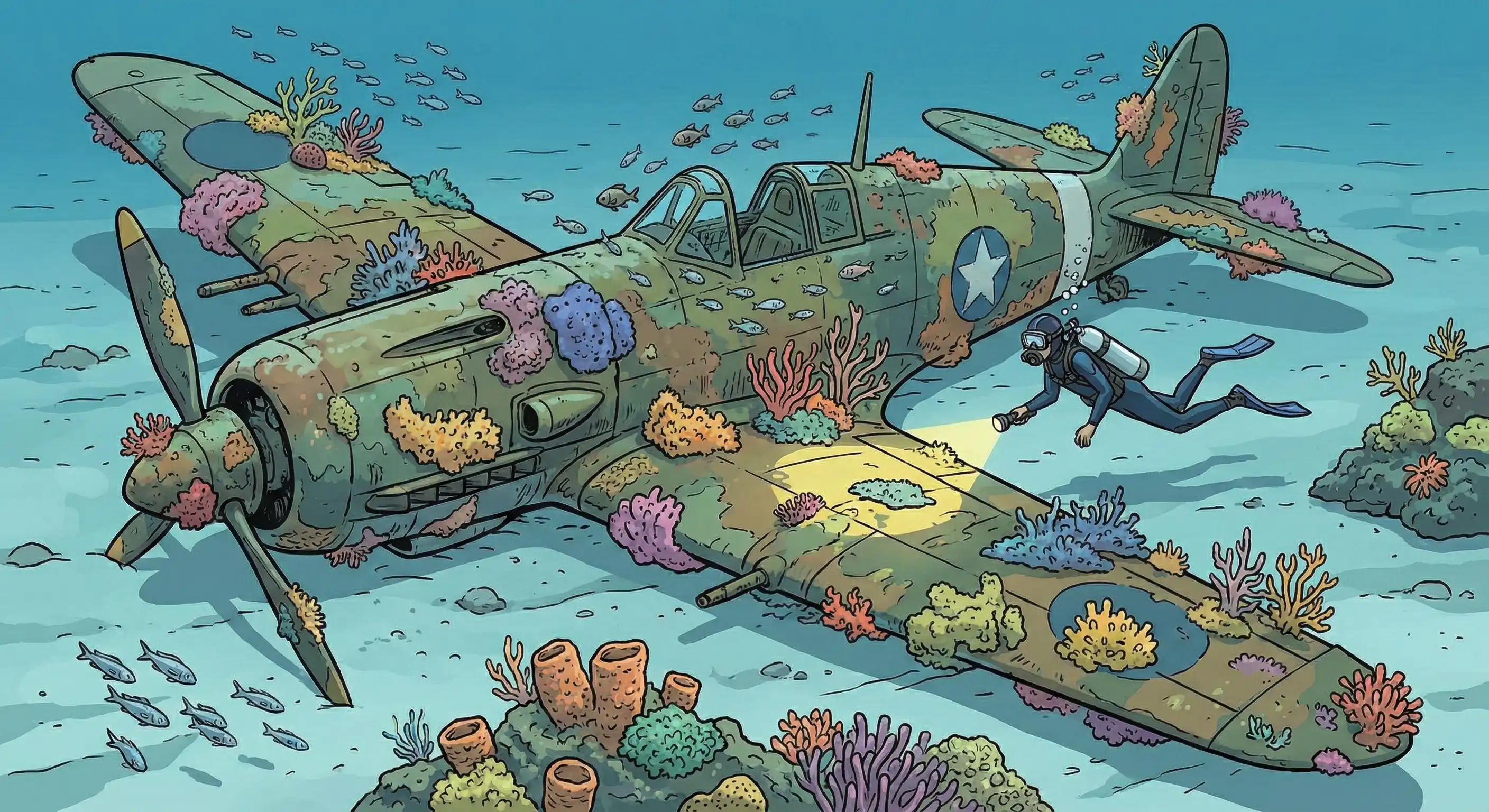
Japanese Zero fighters and American P-38 bombers are also dispersed throughout the bay's sandy bottom, where their aluminum frames make fake reefs. Landing craft and other military junk make up an underwater museum that is both historically important and great for diving. Divers with the right certifications can go deeper, whereas external exploration is open to everyone.
These wrecks are great places to take underwater photos because natural light comes through the gaps in the structure and lights up the aquatic life that has taken over the war machinery. The difference between human strife and nature's reclamation makes for a thought-provoking experience that makes people appreciate the bay's current protected position even more.
Planning Your Cenderawasih Bay Liveaboard Adventure
It takes dedication to go to Cenderawasih Bay diving. This secluded area can only be reached by liveaboard diving boats that can stay in the bay for many days. There are no resorts that provide diving, and the distances make day visits unfeasible. This exclusivity keeps the bay's unique identity while making visitors prepare carefully.
Recommended Liveaboard Operators
Choosing a reliable operator with a lot of experience is quite important for this remote location. King Neptune and Neptune One are two boats that always give great Cenderawasih Bay experiences.
King Neptune is a dive cruise ship that was developed specifically for Indonesia's isolated waterways. The liveaboard has nice cabins with air conditioning, a big dive deck with storage for each person's gear, and a crew who knows all the best spots in Cenderawasih Bay. Most itineraries last 10 to 14 days and leave from Manokwari. They include all of the bay's highlights, from whale shark bagans to immaculate coral systems and World War II wrecks. The boat's size and stability let it endure the bay's occasional severe winds while yet being comfortable to travel between diving spots.
Check the King Neptune trips
Neptune One adds its own unique personality and route choices to the fleet. This liveaboard puts the guest experience first with great food, attentive service, and diving schedules that let you spend as much time underwater as possible. The crew has a lot of experience working in West Papua seas, which gives them a lot of local expertise. Trip lengths and departure times are planned to work with foreign flights so that visitors don't have to worry about making connections. Before the trip, all guests get full instructions.
Check the Neptune One trips
Both boats provide outstanding diving experiences and safety features that are right for the bay's remote location, such as satellite communication and emergency plans.
Optimal Timing and Seasonal Considerations
Diving is possible in Cenderawasih Bay all year, however the circumstances change with the seasons. The best time to go is from June to October, when the waves are calmer and visibility is at its best (up to 30 meters). The bay's tropical rainforest climate means that it rains all year round, but the dry season months make it less frequent and less intense.
The water is warm all year long, between 27 and 30 degrees Celsius, so you only need to protect yourself from the sun. Depending on the amount of rain, the tides, and the exact position of the dive site, visibility is usually between 10 and 30 meters. After heavy rain, river mouths that flow into the bay might make the water less clear for a short time. However, experienced captains change their plans to account for this.
Whale sharks are always around the bagans, but the moon calendar may affect how active they are. During new moon phases, baitfish often become more active under the platforms, which could draw in more sharks. Booking tours that last 10 days or more gives you some extra time in case the weather changes, and it also lets you see the most whale sharks.
What to Expect on Your Journey
A typical liveaboard cruise to Cenderawasih Bay lasts between 7 and 14 days. Longer voyages let you see more of the area. Most days, there are 3 to 4 dives and whale shark snorkeling sessions at bagans. This lets you have fun below while also getting enough time on the surface to recuperate.
In addition to diving, itineraries sometimes include trips to isolated villages where people still live in traditional ways. These trips provide you a rare look at cultures that haven't altered with the times. Cultural exchanges and traditional dance performances are great ways to connect with the people who have lived in this paradise for generations. Birds of Paradise in coastal forests and dugongs in seagrass meadows are two places where you can see wildlife.
Get ready for poor internet access during your travels. Outside of Manokwari, cell phone signals stop working, and satellite internet (if you can get it) only lets you talk to people. The fact that you can't connect to the internet adds to the appeal—spending more time in nature without any digital distractions. The change in time zone from Jakarta makes it feel even more remote, but your body rapidly gets used to the early morning dives and the relaxing at sunset.
Common Challenges and Solutions
If you want to enjoy Cenderawasih Bay's isolated paradise status, you need to be ready for the logistical challenges that come with being so far away. The rewards are worth the work, but planning ahead for frequent problems will make your trip go more smoothly.
Complex Access and Flight Connections
To get to Manokwari or Biak, you have to fly to Jakarta and then connect to a domestic flight that takes 6 to 8 hours. Many airlines fly these routes, however their reliability varies.
The answer is to book through King Neptune or Neptune. One operator sets up domestic connections and gives thorough flight information. They have experience flying in Indonesia, so they can make realistic schedules with enough buffer time. Getting to Jakarta or Biak a day early takes away the burden of possible delays.
Limited Baggage Allowances on Domestic Flights
Indonesian domestic airlines have tight weight limits that make it hard for divers to fly with all of their gear.
Solution: Plan your packing carefully, putting personal items like reef-safe sunscreen, prescription drugs, and camera gear at the top of the list. Both liveaboard boats keep rental gear that is appropriate for their guests, so there is less need to move bulky diving gear. Before you leave, make sure to talk to your operator about what sizes and unique items are available.
Weather-Dependent Conditions
Whale sharks are always around the bagans, although heavy winds and rain can sometimes make it hard to get to some places or see clearly.
Solution: Plan voyages that last at least 10 days and have flexible schedules so that captains can change the route according on the weather. Trust local guides who know the bay's tendencies and keep in touch with fishermen who keep an eye on bagan activity. With good luck and enough time, bad weather rarely stops people from having nice times.
Remote Location Medical and Safety Concerns
There are still not many medical facilities in West Papua, and getting people to major hospitals is hard because of the logistics involved.
Before you leave, make sure you have full diving insurance that covers evacuation. Bring your own medicines and let your liveaboard crew know about any health issues you may have ahead of time. Both King Neptune and Neptune One can talk to each other via satellite, have emergency oxygen supply, and provide first assistance that is suited for their working environment. To lower the risk, dive carefully and stay within the limitations of your certification.
Conclusion and Next Steps
Cenderawasih Bay diving is the best place in the world to see whale sharks, and it also has beautiful coral reefs, World War II shipwrecks, and species that can't be found anywhere else on Earth. This distant sanctuary is perfect for divers and snorkelers who want to do something different than the typical places. Every day, they may view the gentle giants of the ocean and learn about the amazing biodiversity of Indonesia's largest marine park.
If you want to go to Cenderawasih Bay, follow these measures right away:
- Contact Neptune Liveaboards to confirm availability for your preferred travel dates
- Secure international flights to Jakarta with connections to Manokwari or Biak coordinated through your operator
- Arrange comprehensive dive insurance with medical evacuation coverage
- Obtain necessary permits through your liveaboard operator and gather recommended gear
Cenderawasih Bay diving is becoming more popular among serious divers, and many people combine it with Raja Ampat exploring for longer Indonesian dive trips. The Coral Triangle area has other places to visit that go well with each other. Advanced underwater photography techniques help you get the most out of whale shark encounters and endemic marine animals.
Additional Resources
Cenderawasih Bay National Park Regulations:
- Park entrance permits required and typically arranged through liveaboard operators
- Diving and snorkeling permitted only with authorized vessels
- Collection of any marine life or coral strictly prohibited
Whale Shark Interaction Guidelines:
- Maintain minimum 3-meter distance when sharks approach
- No touching, riding, or obstructing feeding behavior
- Flash photography prohibited; ambient light only
- Maximum 10 snorkelers/divers per bagan at any time
Recommended Dive Gear for Tropical Conditions:
- 3mm wetsuit or shorty sufficient for 28°C average water temperature
- Reef-safe sunscreen essential for surface intervals
- Macro lens and wide-angle options for photography
- Surface marker buoy and whistle for safety
Emergency Contacts and Medical Information:
- Nearest hospital facilities located in Manokwari
- Decompression chamber access requires evacuation to larger Indonesian cities
- International SOS and DAN memberships recommended for all travelers
- Satellite phone communication available through liveaboard vessels