
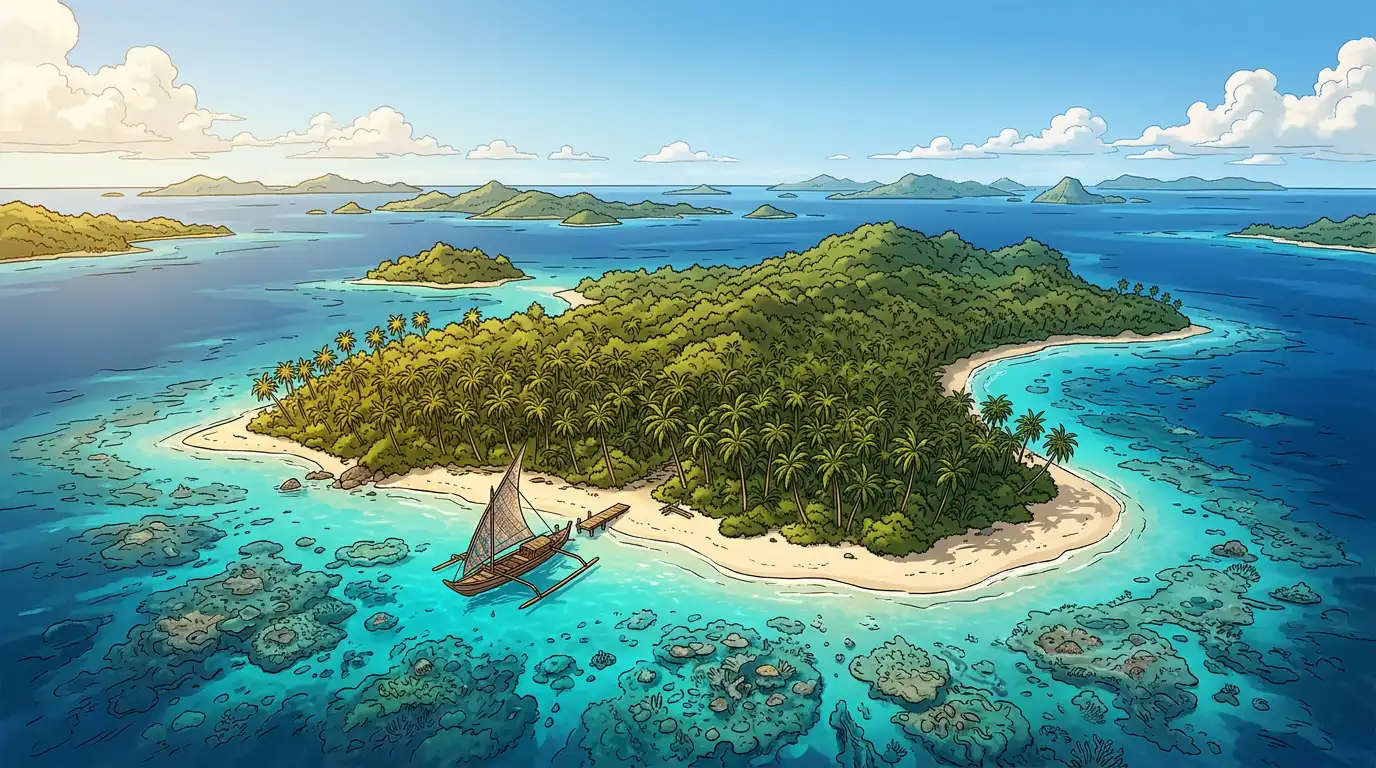
Indonesia is not a single destination. It is an entire universe of islands, 17,508 of them scattered across more than five thousand kilometres of tropical ocean between the Indian and Pacific basins. From the surf-battered cliffs of Nusa Penida to the ancient volcanic crater of Lake Toba, from the party fuelled nights of Gili Trawangan to the silent, untouched reefs of Halmahera, every island in this extraordinary archipelago offers a completely different experience. Choosing the best island of Indonesia depends entirely on what you are searching for: world class scuba diving, raw natural beauty, cultural immersion, remote adventure, or barefoot relaxation on a powder-white beach.
This article takes you on a comprehensive journey through the most remarkable Indonesian islands, region by region, so you can decide exactly which ones belong on your itinerary. Whether you are planning your first trip or your fifteenth, visiting Indonesia will always have another island waiting to astonish you.
Why Indonesia Is the World's Greatest Island Destination
Indonesia sits at the heart of the Coral Triangle, the most biodiverse marine region on earth. This positioning alone makes the Indonesian archipelago one of the most coveted destinations for divers, snorkellers, and marine biologists. But the riches extend far beyond the water. Volcanic peaks rise above dense jungle. Ancient Hindu temples perch on sea cliffs. Remote tribal cultures continue traditions that predate written history. And the food, a kaleidoscope of spice, coconut, chilli, and smoke, changes flavour every few hundred kilometres.
Visiting Indonesia means accepting that you will never see it all. The country spans three time zones. Some islands are connected by bridges and ferries; others require chartered boats or small propeller planes. The diversity is the point. Every island has its own language, its own cuisine, its own rhythm. The best islands in Indonesia are not just beautiful, they are portals into entirely different worlds.
Bali - The Gateway Island
No conversation about Indonesian islands begins without Bali. It is the most visited, the most photographed, and often the most debated island in the archipelago. But behind the Instagram clichés lies a genuinely fascinating place, a Hindu enclave in the world's largest Muslim majority nation, where daily offerings of flowers and incense line the streets and temple ceremonies halt traffic without complaint.
What Makes Bali Special
Bali earns its reputation through sheer variety. The southern coast delivers world-class surf at Uluwatu and luxurious beach clubs in Seminyak. The interior, Ubud and beyond, is a world of terraced rice paddies, sacred monkey forests, and artisan workshops where woodcarving and silver-smithing traditions stretch back centuries. The eastern coast around Amed is quieter and home to excellent shore diving, including the famous USAT Liberty shipwreck in Tulamben.
Bali also serves as the launching pad for some of Indonesia's greatest adventures. Ferries and fast boats connect the island to Nusa Penida, the Gili Islands, Lombok, and Flores. Domestic flights link Bali to Komodo, Sulawesi, Papua, and virtually every other corner of the archipelago. If you are visiting Indonesia for the first time, Bali is the natural starting point, not because it is the best island of Indonesia in every category, but because it opens the door to everything else.
Best Time to Visit Bali
The dry season runs from April to October, bringing clear skies and manageable humidity. The rainy season, from November to March, brings afternoon downpours but also lush green landscapes, smaller crowds, and lower prices. Bali is a year round destination, but divers and beach lovers will prefer the dry months.
Nusa Penida - Bali's Wild Neighbour
Just a forty-five-minute fast boat from Bali's Sanur harbour, Nusa Penida feels like a different planet. The island's southern coastline is a series of dramatic limestone cliffs plunging into turquoise water, and its most famous viewpoints have become iconic symbols of Indonesian natural beauty.
Kelingking Beach
Kelingking Beach is the image that launched a thousand Instagram accounts, a jagged cliff shaped like a Tyrannosaurus Rex head, dropping away to a sliver of white sand far below. The hike down is steep and demanding, but the reward is a secluded beach framed by towering rock walls and crashing surf. Even if you only admire it from the clifftop viewpoint, Kelingking Beach is one of the most visually stunning locations in all of Southeast Asia.
Atuh Beach and Broken Beach
On the eastern side of Nusa Penida, Atuh Beach offers a more accessible but equally beautiful experience. A crescent of sand sits beneath layered cliffs, with small rocky islets rising from the shallows offshore. Nearby, Broken Beach is a natural rock arch forming a circular cove where ocean water surges through a gap in the cliff wall. The formations here look almost architectural, as if some ancient civilisation carved them from the limestone.
Diving at Nusa Penida
Beneath the surface, Nusa Penida is famous for two things: manta rays and the elusive oceanic sunfish (mola mola). Crystal Bay and Manta Point are the headline dive sites, but the island's currents can be strong and unpredictable, making this a destination best suited for experienced divers. The reward is encounters with pelagic species that rarely appear at calmer sites.
The Gili Islands - Three Islands, Three Personalities
Lying off the northwest coast of Lombok, the three Gili Islands, Gili Trawangan, Gili Meno, and Gili Air, have been backpacker favourites for decades. No motorised vehicles are allowed on any of them, so transport is by foot, bicycle, or horse drawn cart. Each island has a distinct character, and choosing between them is one of the most enjoyable decisions you will make when planning an Indonesian trip.
Gili Trawangan - The Party Island
Gili Trawangan is the largest and liveliest of the three. Known universally as the party island, it draws a young, social crowd with its beachfront bars, night markets, and reggae infused nightlife. But Gili T is more than just parties. The western side of the island offers spectacular sunsets over Bali's Mount Agung, and the surrounding reefs are excellent for snorkelling and introductory diving. Turtles are abundant, and the famous underwater statues on the seabed between Gili Trawangan and Gili Meno have become one of Indonesia's most photographed dive sites.
Gili Meno - The Romantic Escape
Gili Meno is the smallest and quietest of the trio. Honeymooners and couples seeking solitude choose Gili Meno for its empty beaches, its turquoise lagoon, and its complete lack of nightlife. The island can be walked around in about ninety minutes, and the snorkelling just offshore is arguably the best of the three Gilis. If you want the Gili Islands experience without the noise, Gili Meno is your island.
Gili Air - The Best of Both Worlds
Gili Air strikes a balance between Gili Trawangan's energy and Gili Meno's tranquillity. The island has a relaxed but social atmosphere, with yoga studios, laid-back beach bars, and excellent local warungs serving fresh seafood. Gili Air also has the most established local community of the three, giving it an authentic village feel that the other Gilis sometimes lack. For many travellers, Gili Air is the best island of Indonesia within the Gili group, lively enough to be interesting, calm enough to be restorative.
Komodo Islands - Dragons, Dive Sites, and Pink Sand
The Komodo Islands sit in eastern Indonesia, part of the East Nusa Tenggara province, and they are home to two of the most extraordinary experiences the country offers: the Komodo dragon and some of the finest scuba diving on the planet.
Komodo National Park
Komodo National Park encompasses the major islands of Komodo, Rinca, and Padar, along with dozens of smaller islets. The park was established to protect the Komodo dragon, the world's largest living lizard, capable of growing over three metres long. Guided treks on Komodo and Rinca islands bring you face to face with these prehistoric predators in their natural habitat, an experience that feels genuinely primordial.
Padar Island
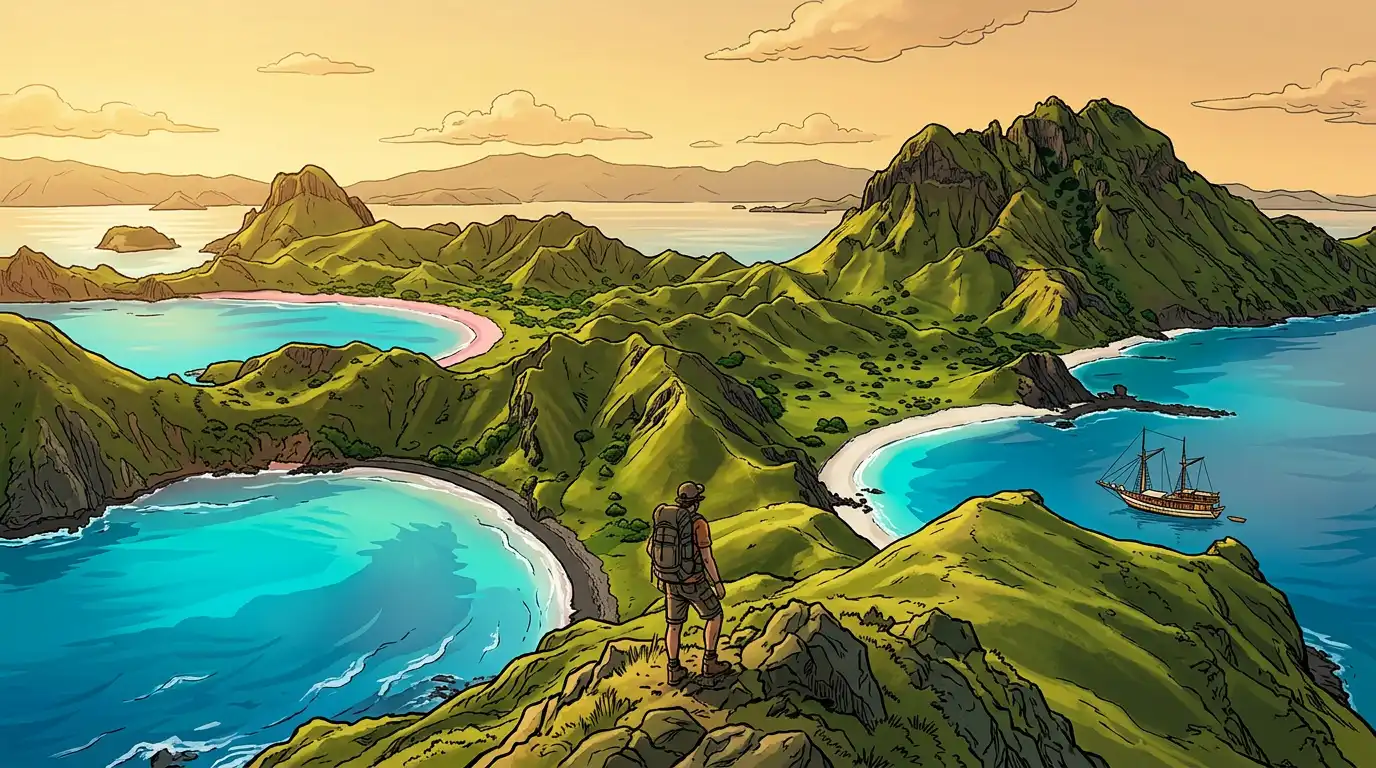
Padar Island has no permanent Komodo dragon population, but it offers what many consider the single most beautiful viewpoint in Indonesia. A short but steep hike to the island's summit reveals a panorama of three crescent bays, one with white sand, one with pink sand, and one with black volcanic sand, curving away beneath jagged green ridges. At sunrise, the scene is almost unbearably beautiful. Padar Island alone justifies the journey to the Komodo region.
Pink Beach
Pink Beach, found on several shores within Komodo National Park, gets its distinctive colour from microscopic red organisms called foraminifera, which mix with white sand to create a soft pink hue. The snorkelling directly off Pink Beach is excellent, with healthy coral starting in just a metre of water and colourful reef fish schooling in the shallows. It is one of the few pink sand beaches in the world, and experiencing it in person is far more striking than photographs suggest.
Diving in the Komodo Islands
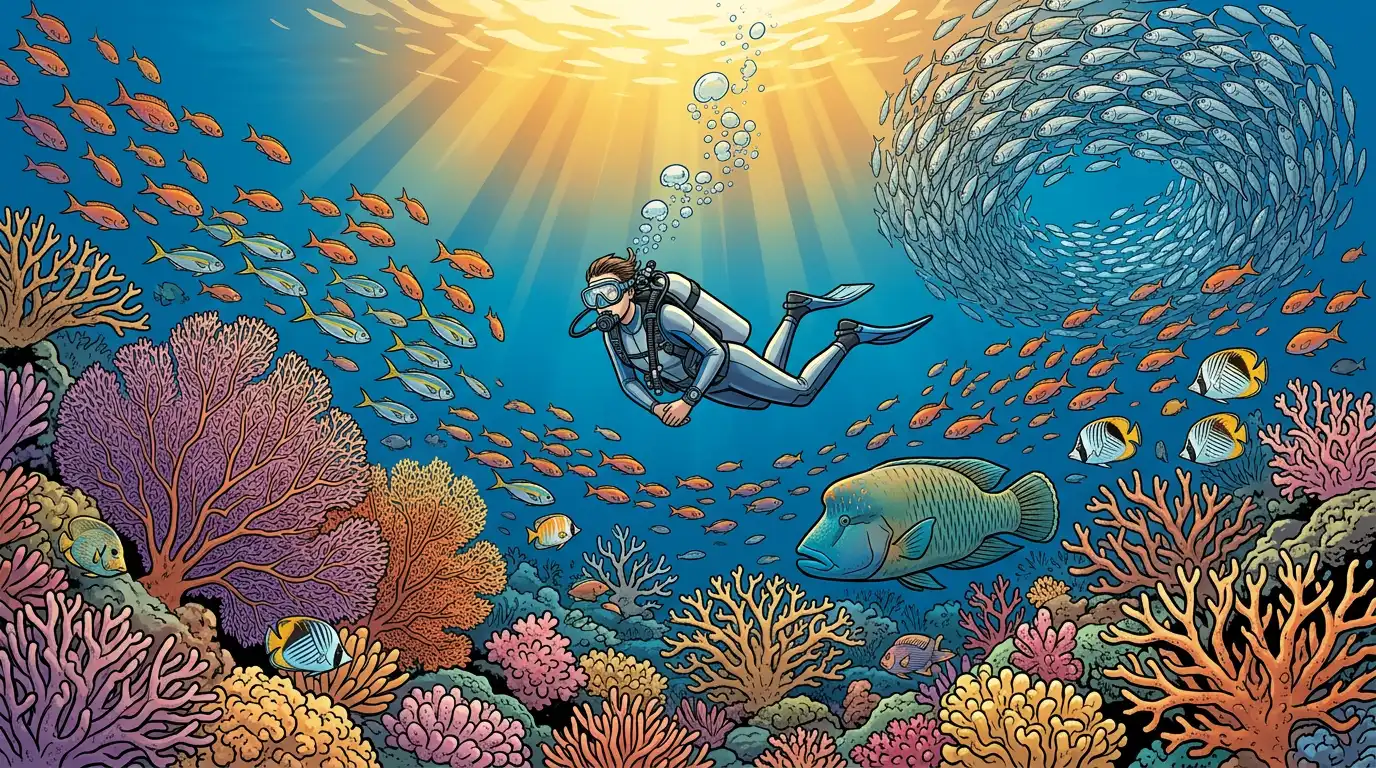
The waters surrounding the Komodo Islands are where nutrient-rich currents from the Indian Ocean and Pacific Ocean collide, creating an explosion of marine life. Dive sites like Batu Bolong, Castle Rock, Crystal Rock, and Manta Alley are legendary among divers worldwide. Expect manta rays, reef sharks, giant trevally, Napoleon wrasse, sea turtles, and coral walls so densely packed with life that the reef itself seems to breathe. The currents can be powerful, but for experienced divers, Komodo offers some of the most thrilling underwater encounters anywhere in the Coral Triangle.
Exploring the Komodo Islands by liveaboard is the ideal way to experience the region. A liveaboard lets you access remote dive sites that day boats cannot reach, dive at optimal times before the current shifts, and wake up each morning anchored at a different island. Neptune Liveaboards operates dedicated Komodo itineraries that combine world class diving with visits to Padar Island, Pink Beach, and Komodo dragon trekking, covering the highlights above and below the waterline in a single voyage.
Lake Toba - The Volcanic Heart of Sumatra
Moving away from the coast, Lake Toba in North Sumatra is one of Indonesia's most remarkable natural wonders. It is the largest volcanic lake in the world, formed roughly 75,000 years ago by a supervolcanic eruption so massive it altered the global climate. The lake stretches over 1,100 square kilometres, and at its centre sits Samosir Island, an island within a lake within a volcano.
Batak Culture on Samosir
Samosir Island is the cultural heartland of the Batak Toba people, one of Sumatra's most distinctive ethnic groups. Traditional Batak houses, with their dramatic boat shaped roofs and intricate carvings, dot the island's villages. The Batak are known for their powerful singing traditions, and music is woven into daily life. Visiting Samosir is as much a cultural experience as a natural one, a chance to stay in family-run guesthouses, eat traditional Batak cuisine, and witness ceremonies that have survived centuries of change.
The Lake Toba Experience
The lake itself is stunningly beautiful. Cool mountain air, pine-fringed shores, and water so calm it mirrors the surrounding volcanic ridges. Swimming, kayaking, and cycling around Samosir are the main activities, and the pace of life is deliberately slow. Lake Toba is the antidote to Bali's intensity, a place where time seems to stretch and the only agenda is watching the light change over the water. For travellers looking to explore beyond the beaten path, Lake Toba is one of the most rewarding destinations in all of Indonesia.
Raja Ampat - The Crown Jewel of Marine Biodiversity
If you ask a diver to name the best island of Indonesia, the answer will almost certainly be somewhere in Raja Ampat islands. Located off the northwest tip of West Papua in eastern Indonesia, Raja Ampat is the epicentre of the Coral Triangle and holds the highest recorded marine biodiversity of any area on earth. Over 1,500 fish species, 600 coral species, and an astonishing variety of invertebrates inhabit these waters.
Above and Below the Water
Raja Ampat's landscape is as dramatic above the surface as below it. Mushroom-shaped karst islands rise from impossibly clear lagoons. Hidden lagoons accessible only by swimming through narrow rock passages reveal secret worlds of calm water and dense jungle. Viewpoints like Pianemo and Wayag offer panoramas that seem digitally enhanced, except they are entirely real.
Underwater, the diving is simply without equal. Sites like Cape Kri hold the world record for the most fish species counted on a single dive. Manta rays gather at cleaning stations in their dozens. Pygmy seahorses cling to sea fans. Wobbegong sharks rest beneath coral tables. Walking sharks, a species unique to this region, patrol the shallows at night. Raja Ampat is not just a great dive destination; it is the greatest dive destination.
Getting There
Raja Ampat requires effort to reach. Most visitors fly to Sorong in West Papua and then take a ferry or speedboat to one of the main islands, Waigeo, Misool, Batanta, or Salawati. Liveaboards are a popular and practical way to explore the region, covering vast distances between dive sites that would be impossible to access from a single land based resort. Neptune Liveaboards runs Raja Ampat expeditions with King Neptune and Neptune One, that navigate through the archipelago's most biodiverse zones, combining legendary dive sites with karst island exploration and cultural visits to local Papuan villages.
Wakatobi - The Quiet Giant of Indonesian Diving
South of Sulawesi, the Wakatobi archipelago is one of Indonesia's best-kept diving secrets. The name is an acronym of its four main islands, Wangi Wangi, Kaledupa, Tomia, and Binongko, and together they form one of the largest marine protected areas in the country.
Wakatobi's reefs are in extraordinary condition. The marine park's strict protection policies have preserved coral gardens that rival anything in Raja Ampat, but with a fraction of the visitors. House reefs here are world class, you can wade into the shallows and be surrounded by pristine coral and abundant reef fish within seconds. The diving is gentle and accessible, with calm waters and excellent visibility, making Wakatobi ideal for underwater photographers and divers who prefer relaxed, current-free conditions.
Beyond diving, Wakatobi offers a glimpse into traditional maritime life. The Bajo sea nomad communities, who have lived on the water for generations, still inhabit stilt villages over the reef. Visiting these communities is a humbling and fascinating cultural experience that few tourists ever have.
Halmahera - Indonesia's Hidden Frontier
In the northern reaches of the Maluku Islands, Halmahera is one of the least visited major islands in Indonesia. Shaped like a miniature version of Sulawesi, Halmahera is wild, volcanic, and almost entirely off the tourist radar. Dense rainforest covers most of the interior, and the coastline is fringed with untouched coral reefs that see only a handful of divers each year.
Halmahera's appeal is its remoteness. There are no beach resorts, no party scenes, no crowds. What you will find is raw, unfiltered Indonesia, volcanic hot springs, traditional clove and nutmeg plantations, endemic bird species, and communities that welcome visitors with genuine curiosity rather than commercial routine. The diving around Halmahera and the nearby islands of Ternate and Tidore is exploratory in nature, with sites still being discovered and catalogued.
For adventurous travellers willing to go far off the beaten path, Halmahera represents the Indonesia that existed before tourism arrived, and it may not stay this way for long. Neptune Liveaboards includes Halmahera in its eastern Indonesia itineraries, offering a rare opportunity to dive reefs that almost no one has seen while exploring one of the last true frontiers of the Indonesian archipelago.
The Maluku Islands - The Original Spice Islands
The Maluku Islands, historically known as the Spice Islands, occupy a vast stretch of ocean between Sulawesi and Papua. These are the islands that European colonial powers fought wars over, driven by the global demand for cloves, nutmeg, and mace that grew here and nowhere else.
Today, the Maluku Islands are one of the most under-explored regions in Southeast Asia. Ambon, the provincial capital, is a lively port city with excellent muck diving in its harbour, a site famous among macro photographers for rare critters like the psychedelic frogfish, found only in Ambon Bay. The Banda Islands, once the sole source of the world's nutmeg, are hauntingly beautiful, volcanic cones rising from deep blue water, surrounded by pristine reefs and 17th century colonial ruins.
The Maluku region rewards slow travel. Island-hopping by local ferry, staying in village homestays, and eating freshly caught fish grilled over coconut husks is the rhythm here. It is about as far from a resort experience as Indonesia gets, and that is precisely its charm.
The Mentawai Islands - Surf and Indigenous Culture
Off the western coast of Sumatra, the Mentawai Islands are revered by surfers as one of the world's premier wave destinations. Consistent swells from the Indian Ocean produce powerful, perfectly shaped barrels at dozens of breaks across the island chain. Names like Macaronis, Rifles, and Hollow Trees are spoken with reverence in the global surf community.
But the Mentawai Islands are more than surf. The indigenous Mentawai people maintain one of the oldest continuous cultures in Indonesia, with traditions of tattooing, shamanism, and communal living in the rainforest longhouse that predate contact with the outside world by thousands of years. Visiting a Mentawai community, with permission and respect, is one of the most profound cultural encounters available anywhere in the Indonesian archipelago.
The Mentawai Islands are accessed by overnight ferry or charter boat from Padang in West Sumatra. Surf charters and liveaboards are the most common way to explore the breaks, moving between islands to chase the best conditions.
Eastern Indonesia - Where the Adventure Deepens
The further east you travel in Indonesia, the wilder and more remote the islands become. Eastern Indonesia, encompassing East Nusa Tenggara, Maluku, and Papua, is where the Indonesian archipelago reveals its most untouched landscapes and its most extraordinary marine environments.
Flores and the Kelimutu Crater Lakes
Flores, the long, mountainous island east of Komodo, is one of Indonesia's most scenic overland journeys. The Trans-Flores Highway winds through volcanic peaks, traditional villages, and rice paddies. The highlight is Kelimutu, a volcano whose three summit crater lakes change colour independently, shifting between turquoise, green, red, and black depending on mineral reactions. Watching sunrise over Kelimutu's multicoloured lakes is one of the most surreal experiences in Southeast Asia.
Sumba - Megalithic Traditions
South of Flores, Sumba is an island where ancient megalithic culture persists. Stone tombs weighing several tonnes sit in village centres. Traditional houses with towering thatched roofs dominate the skyline. Horse-mounted jousting festivals, the Pasola, draw hundreds of participants each year. Sumba's beaches, particularly in the west, are dramatic and empty, with turquoise lagoons backed by savannah grasslands.
Alor and the Forgotten Reefs
The Alor archipelago, east of Flores, offers some of the most pristine diving in Indonesia. Strong currents bring big pelagics, hammerhead sharks, schooling mobula rays, and thresher sharks, while the muck diving is rich with rare macro life. Alor sees almost no tourist traffic, and the cultural diversity across its small islands is remarkable, with dozens of distinct languages spoken in a region barely larger than a city.
Derawan Islands - East Kalimantan's Hidden Marine Paradise
Off the eastern coast of Kalimantan, tucked into the Celebes Sea, the Derawan archipelago is one of Indonesia's most underrated island groups. While travellers flock to Bali, Komodo, and Raja Ampat, Derawan quietly harbours some of the most extraordinary marine encounters in the entire Indonesian archipelago, including experiences that are impossible to find anywhere else on earth.
Derawan Island
Derawan Island itself is a small, palm-fringed coral island surrounded by shallow turquoise water so clear you can watch sea turtles gliding beneath your feet from the wooden jetties that line the shore. The island is home to a handful of simple guesthouses and dive operators, and the atmosphere is wonderfully unhurried. There are no beach clubs, no cocktail bars, no Instagram influencers jostling for position, just warm water, healthy reef, and an almost absurd concentration of green and hawksbill sea turtles that nest on the island's beaches year-round.
The house reef around Derawan is exceptional. Snorkellers and divers encounter turtles on virtually every outing, along with schools of barracuda, bumphead parrotfish, and dense coral gardens in excellent condition. At night, the shallow waters around the jetties come alive with bioluminescent plankton, creating an ethereal blue glow that follows every movement through the water. Few places in Southeast Asia offer such effortless access to this kind of marine richness.
Kakaban Island - The Stingless Jellyfish Lake
Kakaban Island is Derawan's most famous attraction and one of the natural wonders of Indonesia. At the island's centre lies a landlocked marine lake, one of only two in the world, where millions of jellyfish have evolved over thousands of years without predators, losing their stinging ability entirely. Swimming in Kakaban's jellyfish lake is a surreal, almost dreamlike experience. Translucent golden jellyfish pulse gently around you in every direction, brushing harmlessly against your skin as you float among them. The sensation is unlike anything else in diving or snorkelling, and the sheer density of jellyfish, sometimes so thick you can barely see through them, is mesmerising.
The outer walls of Kakaban Island are equally impressive. Sheer coral walls drop into deep blue water, covered in sea fans, sponges, and soft corals, with strong currents attracting pelagic species including grey reef sharks and eagle rays.
Maratua Island
Maratua is the largest island in the Derawan group, a long, curved atoll enclosing a shallow lagoon of luminous blue-green water. The island's outer reef walls are among the best in Kalimantan, with dramatic drop-offs, swim throughs, and overhangs populated by whitetip reef sharks, Napoleon wrasse, and vast schools of jacks that spiral in silver tornados above the reef edge.
The Big Fish Country dive site on Maratua's eastern wall is aptly named, barracuda aggregations hundreds strong, chevron barracuda in tight formation, and reef sharks patrolling the blue are regular sights. For divers who love wall diving and big marine life encounters, Maratua delivers consistently.
Above water, Maratua's long white sand beaches and coconut groves offer a castaway atmosphere. A handful of resorts and homestays cater to visitors, but the island remains blissfully quiet. The lagoon side is perfect for kayaking and stand-up paddleboarding over shallow coral patches, while the outer coast faces open ocean and dramatic wave action.
Sangalaki Island
Sangalaki is a tiny island in the Derawan group that punches far above its size for marine encounters. The island is one of the most important green sea turtle nesting sites in all of Indonesia, and during nesting season, dozens of turtles haul themselves up the beach each night to lay eggs. Conservation programmes on Sangalaki monitor and protect the nests, and watching hatchlings scramble toward the sea at dawn is one of the most moving wildlife experiences the country offers.
Sangalaki's claim to diving fame, however, is manta rays. The shallow waters around the island are a known feeding ground for reef manta rays, which gather to feed on plankton blooms in the nutrient-rich shallows. Encounters here are often in just three to five metres of water, meaning even snorkellers can observe these magnificent animals gliding directly beneath them. The combination of manta rays and mass turtle nesting on a single tiny island makes Sangalaki one of the most remarkable wildlife destinations in the Coral Triangle.
Why Derawan Deserves a Place on Your Indonesia Itinerary
The Derawan archipelago remains far off the beaten path for most international visitors, which is precisely what keeps it special. Access typically involves a flight to Berau in East Kalimantan followed by a boat transfer to the islands, and the journey requires a degree of planning and flexibility. But for travellers, and especially divers, willing to make the effort, Derawan rewards with experiences that rival the most celebrated marine destinations in Indonesia: stingless jellyfish found almost nowhere else, manta ray encounters in chest-deep water, turtle nesting beaches, bioluminescent night swims, and pristine reef walls with barely another diver in sight.

Choosing the Best Island of Indonesia for Your Trip
With so many islands to choose from, the best approach is to match your priorities with the character of each region.
For first-time visitors: Bali combined with a trip to the Gili Islands or Nusa Penida provides an accessible, well-supported introduction to Indonesia that still delivers extraordinary beauty.
For divers: Raja Ampat, Komodo, and Wakatobi are the three pillars of world-class Indonesian diving. A liveaboard trip through any of these regions will deliver marine encounters that are simply impossible to replicate elsewhere. Neptune Liveaboards offers dedicated itineraries across these top diving destinations, combining expert dive guides with comfortable voyages through the Coral Triangle.
For culture seekers: Lake Toba, the Mentawai Islands, and Sumba offer deep cultural immersion far from the tourist mainstream.
For adventurers: Halmahera, the Banda Islands, and Alor represent the frontier, remote, raw, and richly rewarding for those willing to trade comfort for discovery.
For beach lovers: The Gili Islands, Nusa Penida's Atuh Beach, Komodo's Pink Beach, and Sumba's western coast deliver some of the most beautiful beach scenery in all of Southeast Asia.
Practical Tips for Island-Hopping in Indonesia
Getting Around
Domestic flights connect major islands through carriers like Garuda Indonesia, Lion Air, and Wings Air. For more remote destinations, small propeller planes and chartered boats are often the only option. Ferries, both public and fast boat services, connect many island groups, though schedules can be unreliable. Liveaboards remain the most efficient and comfortable way to explore multi-island regions like Komodo, Raja Ampat, and Halmahera.
Best Time to Visit
Indonesia's climate varies by region. Generally, the dry season (April to October) is the most popular time for visiting Indonesia, particularly for diving and beach holidays. The rainy season (November to March) brings heavier rainfall, especially in western Indonesia, but eastern regions like Raja Ampat and Maluku have different weather patterns, Raja Ampat's best diving season, for example, runs from October to April. Always research the specific region you plan to visit.
Respect and Responsibility
Indonesia's islands are ecologically and culturally fragile. Coral reefs damaged by careless snorkellers or divers can take decades to recover. Remote communities welcoming travellers deserve respect and sensitivity. Choose operators, whether dive centres, tour companies, or liveaboards, that prioritise environmental conservation and community engagement. The best islands in Indonesia remain beautiful because responsible travellers and operators work to keep them that way.
Final Thoughts
There is no single best island of Indonesia. The question itself misses the point. Indonesia's genius lies in its multiplicity, the fact that you can watch Komodo dragons hunt on Monday, dive a pristine coral wall on Tuesday, hike a volcanic crater on Wednesday, and sip coconut water on a pink sand beach on Thursday, all within the same country.
What makes the Indonesian archipelago truly extraordinary is that even after decades of exploration, there are still islands that remain virtually unknown. Still reefs that have never been dived. Still villages where a foreign visitor is a genuine event. Indonesia does not reveal itself in a single trip. It invites you back, again and again, each time peeling away another layer.
Whether you begin with Bali's familiar comforts, head east to the dragons of Komodo, venture into the marine paradise of Raja Ampat, or push further still to the silent frontiers of Halmahera and the Maluku Islands, one thing is certain: the best island of Indonesia is always the next one you discover.