
Ambon diving is one of the most famous muck diving spots in the world. Underwater photographers and macro lovers come to Indonesia's Maluku Archipelago to see organisms that can't be found anywhere else on Earth. Ambon Island located in the middle of the Maluku Province. It has amazing sandy-bottom ecosystems where psychedelic frogfish, flamboyant cuttlefish, and hundreds of nudibranch species live among the debris and volcanic deposits of Ambon Bay.
This article has all the information you need to organize an Ambon diving trip, including information about liveaboards, dive sites, marine life, and logistics. It focuses on the bay's famous muck diving spots and the reefs that surround them. Ambon is the entryway to the larger Banda Sea region, but this article is all about what makes the island itself a world-class diving spot. The target audience is made up of expert divers, underwater photographers looking for uncommon critters, and macro divers who want to add more species to their lists beyond the usual Indo-Pacific spots.
Ambon diving has around 60 sites for muck diving that are home to the endemic psychedelic frogfish, several flamboyant cuttlefish populations, and rare nudibranchs that draw photographers from all over the world. Most dives take place at depths of 5 to 35 meters.
By reading this guide, you will:
- Understand Ambon’s unique muck diving ecosystem and what makes it different from other scuba diving Indonesia destinations
- Discover the premier dive sites and the amazing critters that inhabit them
- Learn optimal timing and seasonal conditions for planning your trip
- Compare accommodation options between resort-based diving and liveaboards
- Prepare equipment and logistics for successful underwater photography
Understanding Ambon Diving
Ambon Bay is known as one of the best places to go muck diving because of its volcanic geology, nutrient-rich waters, and years of marine debris that make it a great home for hidden and camouflaged creatures. This bay is one of the best places in the Indo-Pacific for underwater photographers and macro enthusiasts to find critters. It rivals the famed Lembeh Strait but has its own unique species and character.
Muck Diving Characteristics
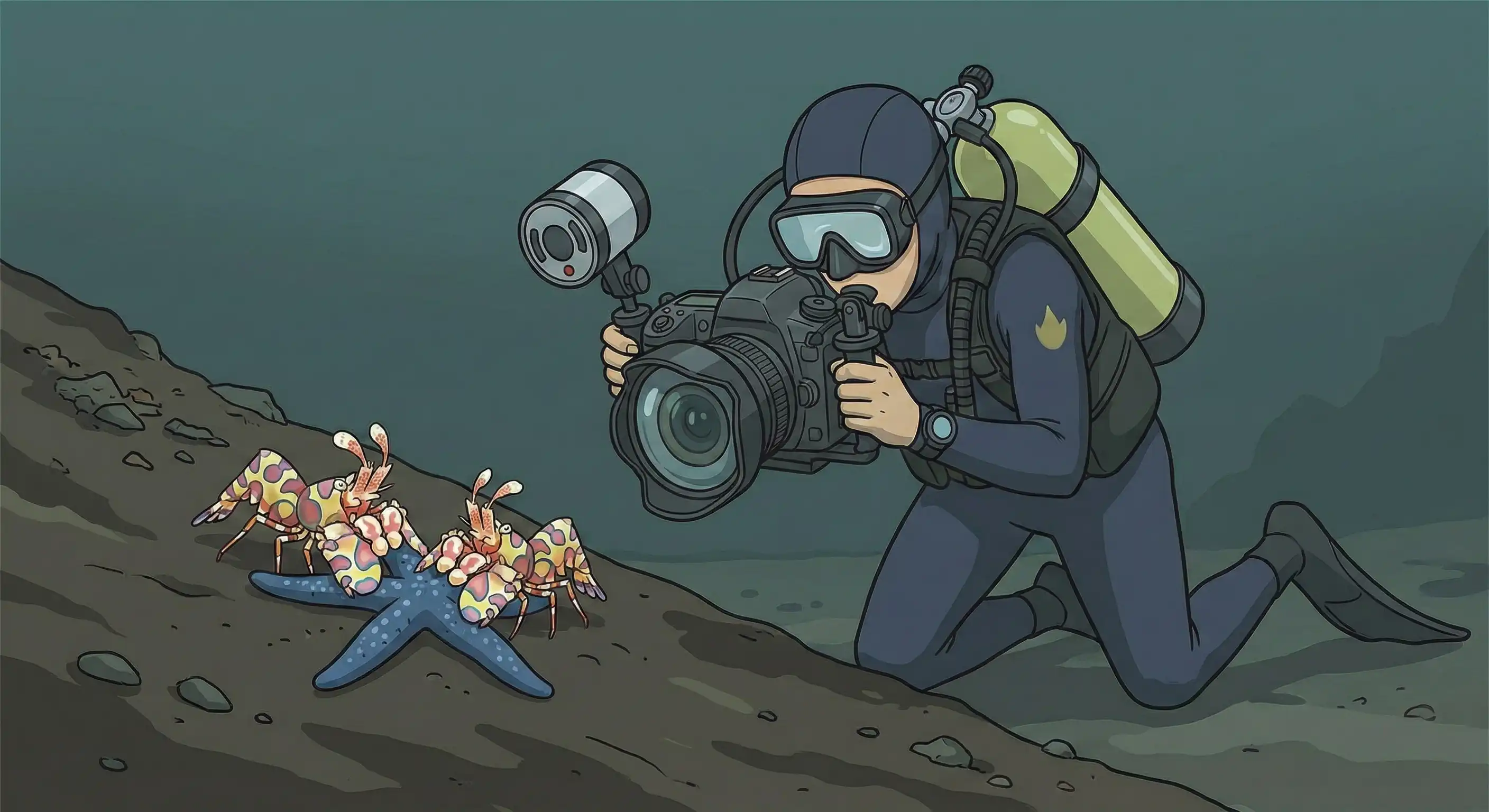
Muck diving is a specific kind of diving that focuses on investigating sandy, muddy, or debris-covered seafloors where strange and frequently hidden marine life lives in places that look empty. Muck divers, on the other hand, look through volcanic sand, broken shells, fallen palm fronds, and even human rubbish to find amazing animals that have adapted to these strange environments.
The muck diving spots in Ambon Bay have a black volcanic sand bottom that makes it easy to see animals. The trash that has built up around the area also makes fake homes for frogfish, octopuses, and many other crustaceans. The bay's protected waters are quiet all year long, and the nutrient upwelling from deeper channels helps a lot of different kinds of plants and animals live in tiny places.
Types of Diving Experiences
The Ambon area has two very different types of diving: muck diving in the sheltered bay and coral reef systems on the outer island. Divers in Ambon Bay look for slopes and flats that are 5 to 35 meters deep. Because the profiles are shallow, they can stay on the bottom for 70 to 90 minutes at a time. This gives photographers plenty of time to work with their subjects without having to worry about decompressing.
Pintu Kota and Hukurila Cave are two places beyond the bay that give a nice change of pace with their stunning coral structures, sea fans, and pelagic encounters that go well with the muck diving concentration. Most dive centers provide two dives a day on muck locations, with the opportunity to visit outer reefs. This makes for a balanced diving experience that shows off all of Ambon's underwater ecosystems.
Knowing these basics explains why certain places have become famous among divers throughout the world, which is what the next section goes into more detail about.
Ambon’s Premier Dive Sites and Marine Life
Ambon's muck diving base has grown into a number of different locations, each with its own personality based on the type of substrate, the depth profile, and the species that live there. Local operations have expert guides who know exactly where different species show up at different times of the year. When choosing a site, they usually look for certain photography subjects based on the present conditions and what divers are interested in.
Signature Muck Diving Sites
Laha is Ambon's most famous muck diving spot. It runs along the northern edge of the bay and has three different areas that divers can explore on different dives without becoming bored. Coral rubble in the shallow zone between 5 and 15 meters is home to frogfish, seahorses, and ghost pipefish. The mid-depth slope, on the other hand, is home to wonderpus, mimic octopus, and groups of flamboyant cuttlefish. The deeper parts below 25 meters turn into a twilight zone where rhinopias and unique nudibranchs can be found if you look for them.
The Air Manis pier site is a one-of-a-kind place to dive because it has human-made structures that make an artificial reef ecosystem. There are cleaning stations on the pier's pylons where moray eels and groupers wait for service. In the sand around the pier, blue-ringed octopus, devil scorpionfish, and harlequin shrimp look for starfish to eat. Night dives here are great for seeing animals because the bay's night-time denizens come out.
The Duke of Sparta wreck, which is 32 meters deep, is a great place to dive and explore the muck around its debris field. Corals and sponges grow on the hull, while the sand around the wreck is home to weedy scorpionfish and hunting lionfish. This location shows how rapidly artificial substrates become part of Ambon's maritime environment.
Iconic Marine Species
The psychedelic frogfish was first formally documented in 2009 after being found in the seas of Ambon. It is still the most sought-after indigenous species in the bay. This type of frogfish doesn't have an esca like other frogfish have. Instead, it moves along the seafloor by hopping. Sightings of this species change with the seasons, and expert guides keep track of known individuals in their favorite microhabitats. This makes it very important for photographers to choose the right guide.
Flamboyant cuttlefish can be seen at many places, and they walk across the sand instead of swimming. When you get close to them, they show off their amazing warning colors. Ghost pipefish come in ornate, robust, and halimeda types, and they are typically encountered in pairs with hydroids and crinoids. There are more over 200 known species of nudibranchs, and meticulous site exploration is continuously leading to new discoveries.
Ambon diving is very unique because of the variety of octopuses. Mimic octopuses show off their famous ability to copy other animals on sandy slopes, and wonderpus show up at dawn and dusk in their usual hunting stances. The blue-ringed octopus, the coconut octopus, and the long-arm octopus are the last three cephalopods on the list that researchers and amateur photographers are interested in.
Coral Reef Alternatives
Pintu Kota has stunning underwater arches and coral-covered rocks on Ambon's southern coast. These are very different from bay diving because you can see schools of reef fish, sea fans, and even sharks. The site's natural features make great framing for wide-angle photos, and the currents bring in nutrients that keep the hard coral healthy.
Hukurila Cave is a great place for qualified divers to explore because it has a labyrinth of caverns. The insides of caves have different kinds of plants and animals than open-water settings, and the dramatic lighting effects attract photographers looking for something new. Outer island locations show where Ambon lies in the larger, rich marine ecosystems of Wallacea, where species from Asia and Australasia mix.
These descriptions of the sites naturally lead to useful planning tips for getting the most out of your diving in Ambon.
Planning Your Ambon Diving Experience
To plan a successful trip to this remote Indonesian area, you need to know about seasonal patterns, where to stay, and the practicalities that will effect the whole diving experience.
Optimal Diving Seasons
Seasonal planning has a big effect on visibility, site accessibility, and the behavior of marine species all year long:
- Diving in the dry season (October to April) is the best since there is less rain, which makes visibility better and the surface conditions calmer for boat operations.
- In March, April, May, and October, the visibility is usually between 10 and 25 meters, with October being the best month for seeing psychedelic frogfish based on past records.
- During the months of July through September, the constraints of the wet season are worse. Some resorts close completely because the weather makes diving impossible and makes logistics more difficult.
- The behavior of critters changes a lot depending on the phase of the moon. For example, new moons are better for night diving because species come out without the light of the moon. Full moons, on the other hand, can make it harder to see through plankton blooms.
Accommodation Options Comparison
| Criterion | Ambon Dive Resort | Liveaboards |
|---|---|---|
| Dive site access | Direct bay access, 5-15 min transits | Can include Ambon with regional routes |
| Group sizes | 4-8 divers per guide typical | 10-16 guests total |
| Photography focus | Unlimited guide attention possible | Shared guide resources |
| Duration flexibility | 5-14 night packages common | Fixed itineraries 7-12 days |
| Non diving activities | Land excursions, cultural sites | Limited to vessel amenities |
Dedicated dive centers in the Ambon area offer the best muck diving experience since their guides know where each species is and can change dive plans based on how the circumstances are at the time. Diving from a resort is flexible; operators can change plans every day based on what works best.
Most of the time, Ambon liveaboards are part of bigger Indonesia itineraries that visit places all throughout the Maluku Archipelago. These tours are great for divers who wish to explore more than one area in Ambon, but they may only have 2–3 days of dedicated Ambon time on lengthier itineraries.
When it comes to choosing between choices, it depends on what is most important to you. Dedicated photographers frequently prefer resort-based operations because they can visit the same sites over and over again and get consistent guides. Divers who want variety like the multi-destination liveaboard approach.
Ambon as the Main Port for Banda Sea Liveaboards
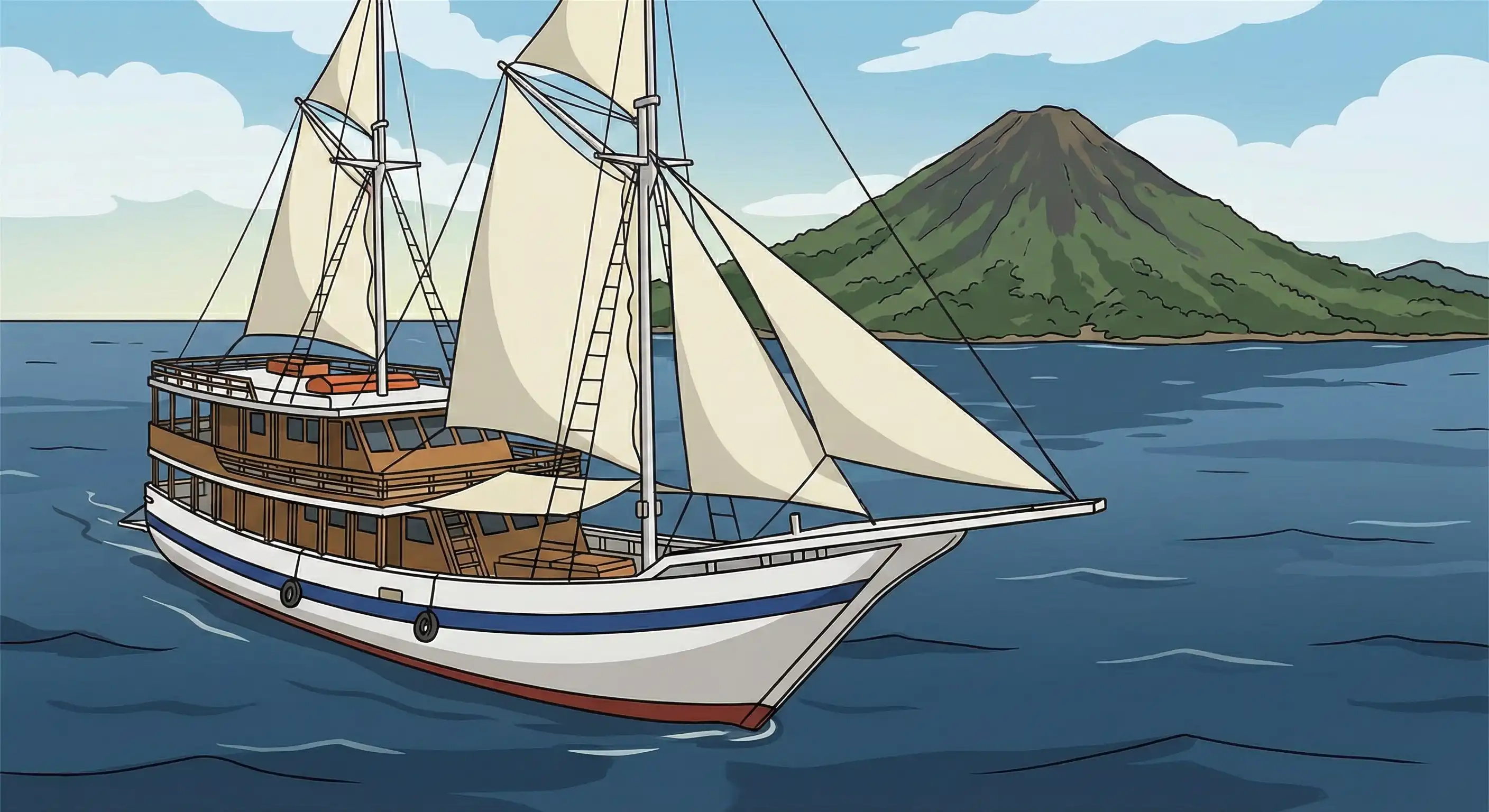
Ambon is the major port and entry point for liveaboard trips that explore the Banda Sea region, which is huge and full of life. Its strategic location in the Maluku Archipelago makes it the best place for divers to start and end their trips to Ambon Bay, where they can enjoy world-class muck diving, and the Banda Sea, where they can witness amazing pelagic and reef life.
Liveaboards that leave from Ambon go to secluded islands and beautiful dive spots, giving you access to some of Indonesia's most popular marine experiences. These trips usually run between 7 and 14 days, giving divers a chance to see a wide range of environments, from coral gardens and deep walls to open ocean pelagic hotspots.
Diving in the Banda Sea: Highlights and Experiences
The Banda Sea is a must-see for advanced divers and underwater photographers because of its amazing marine richness and one-of-a-kind underwater settings. The volcanic islands, steep drop-offs, and nutrient-rich currents in the area make it a great place for many types of marine life, including big pelagic species and unusual encounters.
Hammerhead Shark Migration
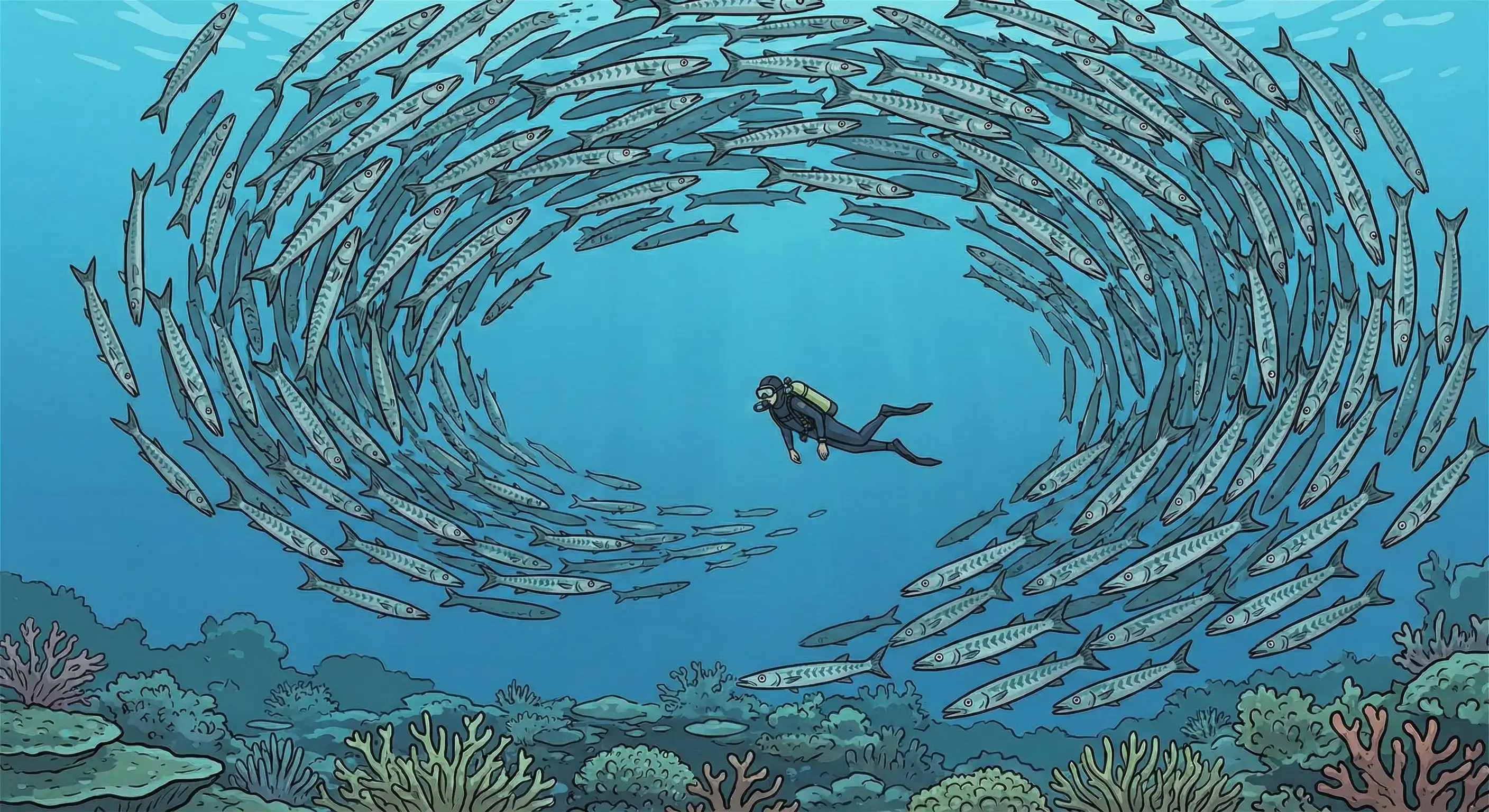
The seasonal migration of scalloped hammerhead sharks is one of the most exciting things to see in the Banda Sea. From March to May, these sharks come together in big groups near certain seamounts and underwater pinnacles. When divers go diving, they can see these beautiful animals swimming in groups of dozens or even hundreds, frequently with other big predators like trevally and barracuda. These experiences are unforgettable because of the pristine seas and stunning undersea landscape.
Several important dive locations stand out for divers who want to see the amazing hammerhead shark migration in the Banda Sea area near Ambon. Suanggi and Hatta are two of the best places where scalloped hammerhead sharks come together at certain times of the year. This makes for unforgettable experiences for underwater photographers and marine life lovers.
Suanggi: Suanggi lies in the Banda Sea and is known for its powerful currents and steep drop-offs. During their migration, hammerhead sharks come to Suanggi in enormous numbers. Diving in Suanggi is exciting because you may drift dive along volcanic walls full with pelagic species. Hammerheads often swim in large groups. The site's waters are full of nutrients, which helps a wide range of marine life thrive. This makes it a great place for sharks and other huge marine animals.
Hatta: Hatta is another great dive location in the Banda Sea. It has underwater pinnacles and seamounts where hammerhead sharks concentrate. The location has caverns and swim-throughs that make for stunning underwater landscapes. These different habitats sustain a wide range of marine species. Hammerheads and other predators are drawn to plankton and baitfish that come in with seasonal currents. This gives divers an opportunity to see these beautiful sharks in action.
The greatest time to visit Suanggi and Hatta is during the migratory season, which runs from March to May. This is when hammerhead sharks are most common. These spots are regularly on the itineraries of dive companies in Ambon and liveaboards that explore the Banda Sea. This gives divers the chance to have some of the most exciting pelagic encounters in Indonesia.
Whale Watching and Marine Megafauna
The Banda Sea is home to a lot of marine megafauna, including whales and dolphins, in addition to sharks. During surface intervals or special whale-watching trips, liveaboards often provide you the chance to see sperm whales, pilot whales, and sometimes even hard-to-find blue whales. The area's deep marine tunnels and lots of prey make it a good place for these big animals to live.
Rich Coral Reefs and Biodiversity
The Banda Sea is home to a lot of life, including pelagic species and colorful coral reefs. Divers can see thriving hard coral gardens, colorful soft corals, and huge sea fan forests that are home to many reef fish, crabs, and other large creatures. The Banda Islands and Kai Islands are great places to go reef diving, where you can see rare nudibranchs, enormous clams, and species that are only found there.
Unique Underwater Landscapes
Volcanic activity has sculpted the underwater landscapes of the Banda Sea, creating stunning walls, tunnels, and swim-throughs. These features make for interesting dive profiles and a wide range of habitats that are great for experienced divers. Pelagics are also drawn to the mix of vertical drop-offs and powerful currents, which makes for exciting drift dives.
Seasonal Considerations
The dry season, which runs from March to November, is usually the ideal time to dive in the Banda Sea. This is when visibility is highest and the water is calmer. Liveaboards organize their trips around these best months to get the most wildlife sightings and best diving conditions.
Divers may have a full and varied Indonesian diving adventure that includes some of the most unusual underwater settings on the planet by combining Ambon's famous muck diving with the Banda Sea's amazing pelagic and reef adventures.
Common Challenges and Solutions
Divers can get ready and keep their expectations realistic by knowing what problems are unique to Ambon's diving environment.
Visibility and Environmental Conditions
Visibility in Ambon Bay is usually between 5 and 15 meters, which is much lower than tropical reef destinations yet perfect for macro photography. It becomes very important to control buoyancy correctly—hovering still above the substrate without moving the sediment demands advanced expertise. If you stand with the current behind you, it will keep particles from floating into your lens field. A lot of photographers think that the limited visibility helps macro photography by getting rid of backgrounds that are too busy.
Marine Debris and Pollution
The amount of plastic pollution at a site depends on the current patterns and the area around it. Some places have a lot of plastic pollution because of the people that live there. Divers who have been doing it for a while learn to look past the trash to see the animals that live in it. For example, frogfish live in bottles, octopuses live in old coconut shells, and nudibranchs live on plastic pieces. Some photographers accept this truth and use it to send messages about conservation by showing the connection between marine life and human garbage.
Critter Spotting Difficulties
Many species in Ambon survive by hiding their colors and staying still, which makes it quite hard for even experienced divers to find them on their own. Local guides spend years knowing where different species live, how they act, and when they migrate. Their knowledge greatly increases the chances of seeing them. When seeking, modified finning tactics keep the sand from getting disturbed, and frog-kicking or bent-knee flutter versions work better than regular scissor kicks. Letting your guide find and place you instead of trying to do it yourself usually gets you much better results.
Conclusion and Next Steps
Ambon diving lets dedicated underwater photographers and animal lovers see a wide range of marine species that makes the trip to this remote part of Indonesia worth it. The psychedelic frogfish, a native species, the wide range of cephalopods, and the productive muck diving locations all make this a place that is worth visiting again and again and exploring slowly.
To plan your Ambon diving trip:
- Book during peak season months (March-May or October) when visibility and critter activity align favorably
- Select accommodation based on your priorities—dedicated resort for photography focus, or liveaboard for regional exploration
- Prepare macro photography equipment suited for low-visibility muck conditions
- Arrange flights through Jakarta connecting to Pattimura Airport on domestic Indonesian carriers
- Research species targets to communicate preferences with guides before diving begins
Divers that find Ambon's treasures typically go on to explore other Indonesian muck diving spots, such Lembeh Strait in North Sulawesi, or they go to reef systems like Raja Ampat. The Maluku region's historical importance in the spice trade also gives non-diving activities between dives a cultural background. You can see the island's Portuguese and Dutch colonial legacy all over Ambon city.
Additional Resources
Flight Routing: Direct flights from Jakarta take about three hours to get to Pattimura Airport. Garuda Indonesia and Lion Air, two domestic airlines, fly between the two cities several times a day. Some travel plans go through Makassar to go to other parts of eastern Indonesia.
Photography Gear: For Ambon subjects, macro lenses between 60 and 100 mm work best. Diopters and wet lenses make it easier for smaller nudibranchs and shrimps to see. Snoots and fiber optic arms assist separate subjects from messy backgrounds. When subjects move in an unexpected way, a waterproof housing with solid autofocus works better than a manual system.
Identifying species: Reference books on Indo-Pacific nudibranchs, cephalopods, and frogfish will help you organize your trip and figure out what species you are looking at. Digital guides make it possible to look up information while you're on the surface. When you share pictures with guides after dives, they can often tell you what species they are and where to find them again.