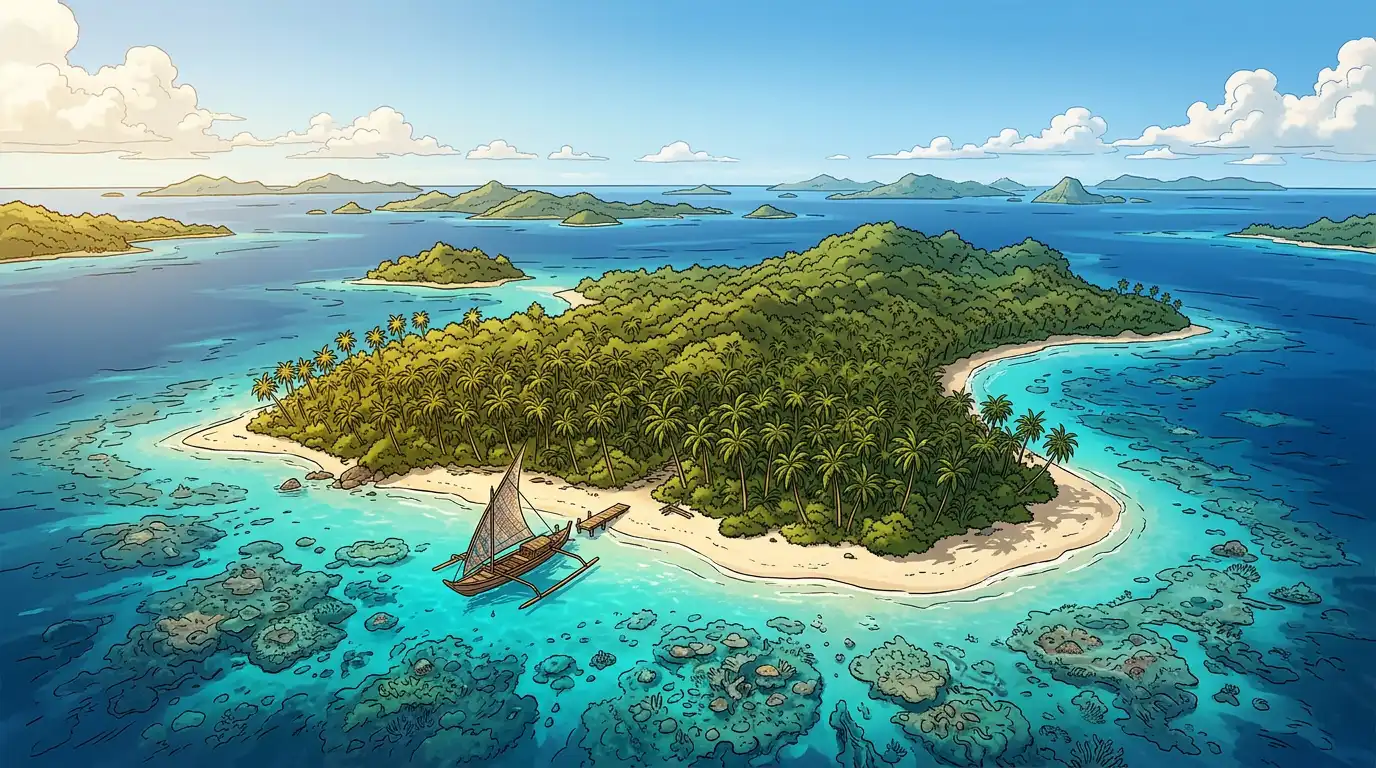
Indonesia is one of the few countries in the world where you can encounter whale sharks in multiple locations, across different seasons, and through different experiences ranging from snorkeling in shallow bays to diving alongside them at deep water fishing platforms. If you have been searching for where to see whale sharks in Indonesia, the answer is not one place. It is at least four distinct regions, each with its own rhythm, access requirements, and encounter style.
This guide covers every major whale sharks Indonesia destination in practical detail. You will learn where to find them, when to go, whether to snorkel or dive, what to expect from the experience, and how liveaboard travel opens access to the most remote and rewarding encounters. We also address the question that drives most trip planning: what is the best time to see whale sharks in Indonesia, and why the answer changes depending on which part of this vast archipelago you choose.
Whale sharks (Rhincodon typus) are the largest fish on earth, growing up to 12 metres or more, filter feeding on plankton and small fish, and moving through tropical waters with a calm, slow grace that makes every encounter feel like a privilege. Indonesia declared the whale shark a fully protected species in 2013, and the country's combination of nutrient-rich waters, traditional fishing cultures, and marine protected areas creates conditions where these animals gather in numbers that few other nations can match.
Are There Whale Sharks in Indonesia? (Yes, and More Than Most People Realise)
Are there whale sharks in Indonesia? The short answer is an emphatic yes. Indonesia sits within the Coral Triangle, the most biodiverse marine region on earth, and its waters provide feeding and migration corridors for whale sharks across a vast geographic range. Unlike destinations where whale sharks appear for a narrow seasonal window, Indonesia offers encounters in different regions at different times of year, which means planning flexibility that few other countries can match.
The main locations where whale shark encounters are well documented and accessible to visitors include:
- Cenderawasih Bay, West Papua — year-round resident population
- Triton Bay, West Papua — regular encounters at traditional fishing platforms
- Saleh Bay, Sumbawa — accessible seasonal encounters in eastern Indonesia
- Botubarani Bay, Gorontalo, North Sulawesi — seasonal coastal gatherings
Each location has a different character, different logistics, and a different relationship between whale sharks and human activity. Understanding those differences is how you choose the right trip.
Cenderawasih Bay: Indonesia's Year-Round Whale Shark Capital
If one location defines the whale sharks Indonesia story, it is Cenderawasih Bay. Located off the northern coast of Papua in eastern Indonesia, Cenderawasih Bay is the largest marine national park in the country and home to a resident population of whale sharks that can be encountered throughout the year. That year-round availability is almost unique globally and makes Cenderawasih Bay one of the most reliable whale shark destinations on the planet.
Why Whale Sharks Stay in Cenderawasih Bay
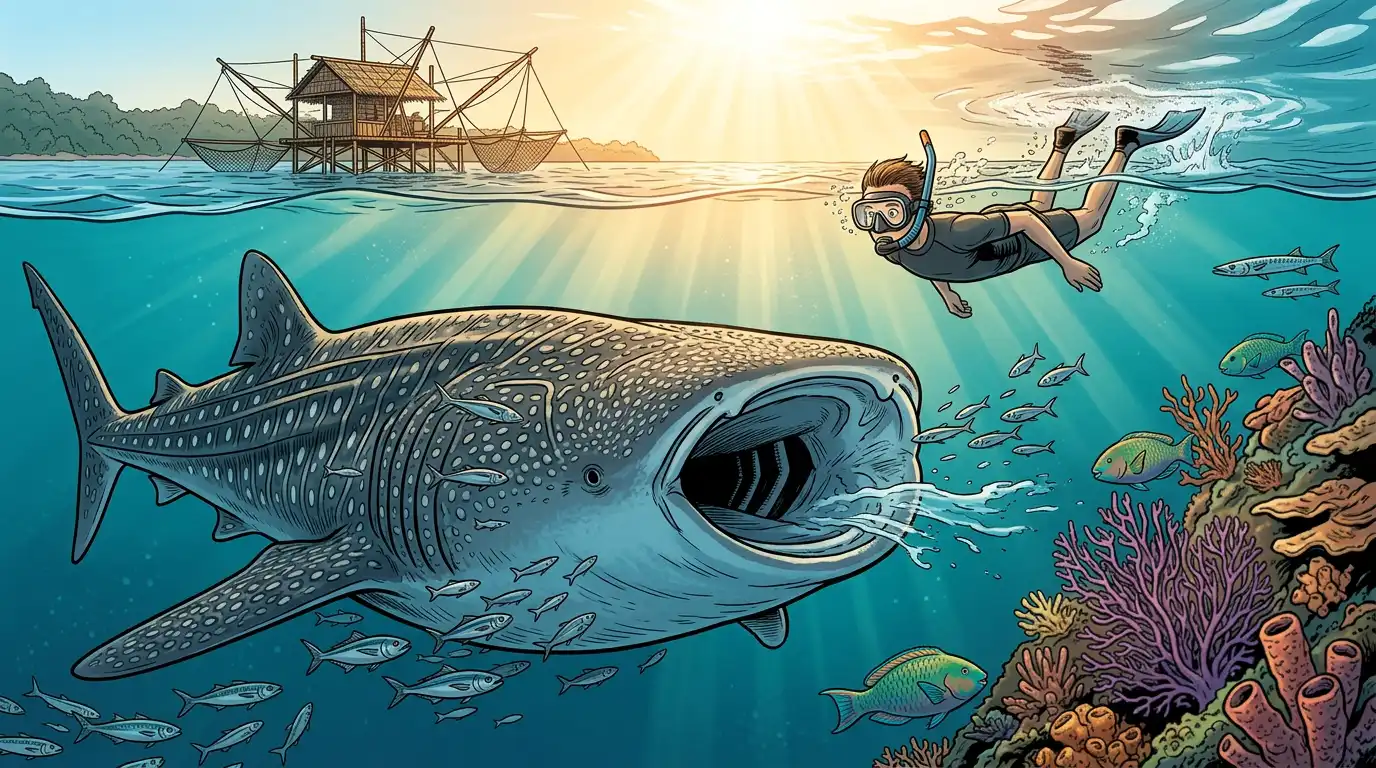
The whale sharks of Cenderawasih Bay have developed an unusual relationship with traditional Papuan fishermen. Local fishing platforms called bagans, wooden structures anchored in the bay and used for net fishing at night, attract small baitfish with lights. Whale sharks learned generations ago that the bagans mean easy food. Fishermen, in turn, regard the sharks as good luck and actively feed them scraps, tossing small fish into the water where the sharks surface to gulp them down.
This is not a theme park arrangement. It is a living cultural relationship between fishing communities and marine megafauna that has persisted for decades. Whale sharks at Cenderawasih are remarkably habituated to human presence. They surface alongside bagans, open their enormous mouths to feed, and tolerate snorkelers and divers at very close range. Encounters with three or four whale sharks at a single bagan are not unusual.
Cenderawasih Bay Indonesia Whale Sharks Season
The phrase Cenderawasih Bay Indonesia whale sharks season is slightly misleading because the whale sharks are present year-round. However, conditions for visiting vary. The dry season, roughly May through October, typically brings calmer seas, better visibility, and more comfortable boat travel. July is frequently cited as an ideal month, with stable weather and excellent snorkeling conditions.
During the wet season, seas can be rougher and access more challenging, though whale sharks are still present at the bagans. Most liveaboard operators schedule Cenderawasih Bay itineraries during the drier months for practical reasons.
How to Get to Cenderawasih Bay
Cenderawasih Bay is remote. The nearest town with air connections is Nabire in Papua, reachable by domestic flights from Jakarta or other Indonesian hubs with connections. From Nabire, the journey to the whale shark areas around Kwatisore involves several hours of boat travel deeper into the bay.
This is precisely why liveaboard travel is the most practical way to experience Cenderawasih Bay. A liveaboard eliminates the need for land-based accommodation in an area with almost no tourist infrastructure, allows multiple days of whale shark encounters, and often combines Cenderawasih with other Papuan diving destinations. Neptune Liveaboards operates itineraries that include Cenderawasih Bay, giving divers and snorkelers sustained access to the whale shark population without the logistical stress of organising independent travel to one of Indonesia's most remote marine parks.
Snorkeling Whale Sharks Indonesia at Cenderawasih
Snorkeling whale sharks Indonesia at Cenderawasih Bay is one of the most accessible big animal encounters in the world, precisely because the sharks feed at the surface. You do not need to be a certified diver. You can slip into the water from a tender boat near a bagan, float at the surface, and watch whale sharks feeding directly below you, sometimes close enough to count the spots on their skin.
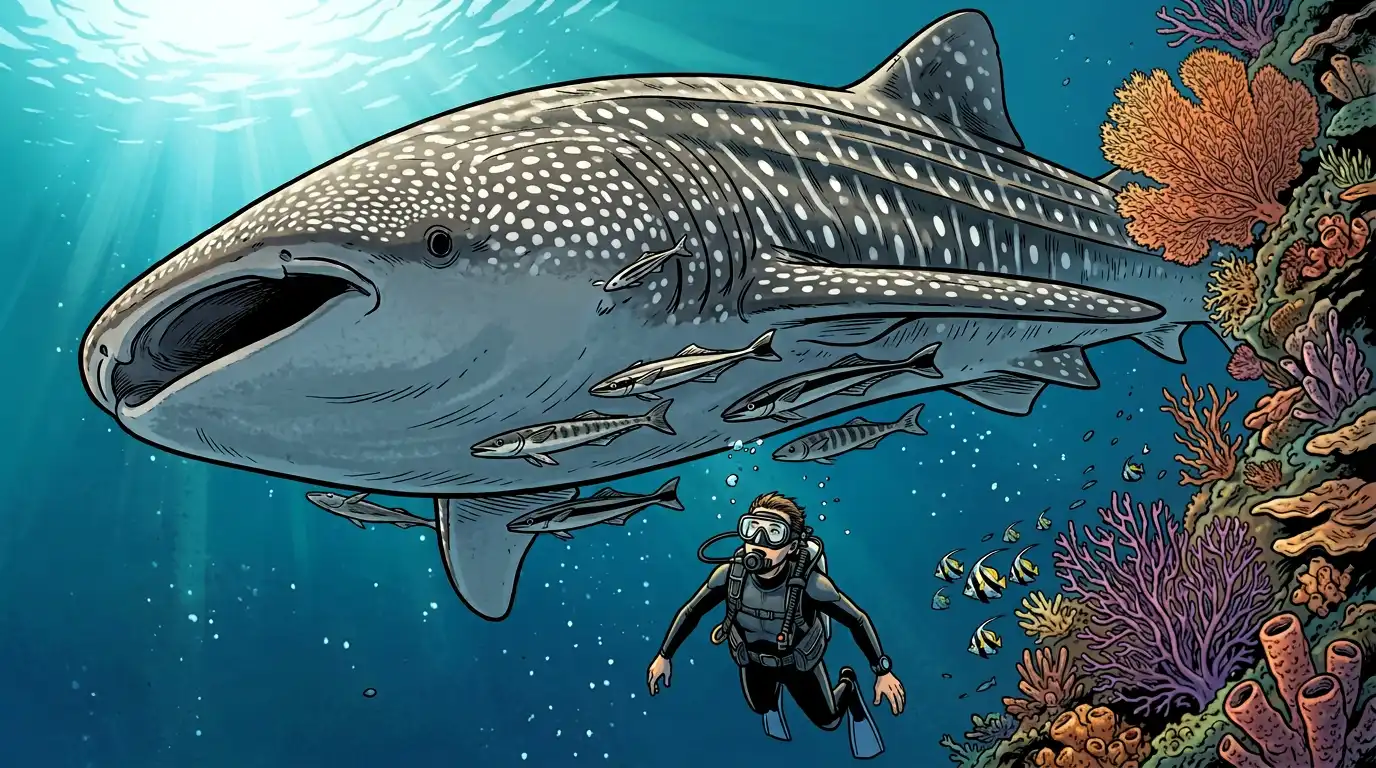
For certified divers, diving with whale sharks Indonesia at Cenderawasih adds a different perspective. Descending a few metres below the surface lets you watch the sharks from underneath as they tilt upward to feed, their massive gill slits filtering water, their tails sweeping slowly. The combination of surface snorkeling and underwater diving at the same location gives photographers and videographers multiple angles across a single session.
Triton Bay: Whale Sharks, Walking Sharks, and World-Class Reefs
Triton Bay sits on the southern side of the Bird's Head Peninsula in West Papua, within the Kaimana Marine Protected Area. Like Cenderawasih Bay, Triton Bay's whale shark encounters are linked to bagan fishing platforms. Fishermen here also maintain a relationship with whale sharks, and the animals visit the bagans regularly to feed.
What Makes Triton Bay Different
Triton Bay offers whale sharks alongside extraordinary reef diving. The bay sits within one of the most biodiverse marine regions on earth, with over 1,500 fish species and more than 500 coral species documented. Unique species include the Triton Bay walking shark (an epaulette shark that "walks" across reef flats), flasher wrasses, and dense schools of baitfish that create silvery curtains around the bagans.
The whale shark encounters here can feel more intimate than at busier global destinations because visitor numbers are tiny. Triton Bay receives a fraction of the traffic that more accessible whale shark spots attract, and the remoteness contributes to a frontier atmosphere that serious divers value.
Triton Bay Season and Access
The best conditions for Triton Bay are generally discussed as November to December and April to May, though whale sharks may appear at other times depending on bagan activity and local conditions. Like Cenderawasih, Triton Bay is best accessed by liveaboard. The nearest town is Kaimana, reachable by domestic flights, and the journey into the bay takes several hours by boat.
Neptune Liveaboards includes Triton Bay in expedition-style itineraries that often connect with Raja Ampat or other eastern Indonesian destinations, allowing divers to combine whale shark encounters with some of the finest reef diving anywhere on earth.
Saleh Bay, Sumbawa: The Most Accessible Whale Shark Encounter in Indonesia
If Cenderawasih Bay is the remote dream and Triton Bay is the expedition, Saleh Bay on the island of Sumbawa is the more accessible alternative. Sumbawa sits between Lombok and Flores in eastern Indonesia, and Saleh Bay's plankton-rich waters attract whale sharks seasonally, creating encounters that are reachable without the multi-day boat journeys required for Papua.
Where to Swim With Whale Sharks Indonesia at Saleh Bay
Where to swim with whale sharks Indonesia is a question that often leads to Saleh Bay because the logistics are simpler than Papua. Tour operators run half-day and multi-day trips from towns on Sumbawa, and the bay is also accessible from Lombok, Bima, or even as an extension from Komodo based liveaboard routes.
The encounters at Saleh Bay typically involve snorkeling with whale sharks in relatively warm, calm waters. Water temperatures range from about 26 to 29 degrees Celsius, visibility varies with conditions, and the sharks are often found near the surface feeding on plankton blooms. Local guides know the bay's patterns and can locate sharks with reasonable reliability during the season.
Best Time to See Whale Sharks at Saleh Bay
The dry season, broadly March through November, is the main window, with conditions improving during calmer weather and around new moon phases when plankton activity can influence shark behaviour. The wet season from December to March generally brings rougher seas and less reliable access.
Beyond Whale Sharks at Saleh Bay
Saleh Bay is not only about whale sharks. The surrounding waters offer reef diving, wall diving, and muck diving, and the nearby island of Moyo adds a tropical island exploration element. For divers combining Sumbawa with a broader eastern Indonesia itinerary, Saleh Bay slots naturally into routes that might also include Komodo National Park.
Botubarani Bay, Gorontalo: Whale Sharks on the Sulawesi Coast
Botubarani Bay near Gorontalo in North Sulawesi is a less well-known whale shark destination that has gained attention in recent years. The whale sharks here were initially attracted by waste from local fish processing, particularly shrimp shells and scraps discharged into the bay. Over time, more sharks discovered the food source, and a seasonal gathering became established.
The Botubarani Experience
The encounters at Botubarani are notably close to shore, sometimes within 20 metres of the beach. Local communities have established basic tourist infrastructure for snorkeling with the sharks, and the experience can feel remarkably intimate because the sharks feed in shallow water.
Botubarani is less polished than Cenderawasih or Saleh Bay in terms of tourist services, but for travellers already exploring North Sulawesi's famous diving (Bunaken, Lembeh Strait, Bangka), it offers a whale shark side trip that most visitors to the region do not know exists.
Season and Access
Whale shark presence at Botubarani is seasonal and tied to local conditions. Gorontalo is reachable by domestic flights, and the bay is a short drive from town. Check with local operators for current patterns before building a trip specifically around Botubarani, as consistency varies more here than at the bagan-based sites in Papua.
Best Time to See Whale Sharks in Indonesia: A Region-by-Region Summary
The question best time to see whale sharks in Indonesia does not have one answer because Indonesia spans thousands of kilometres and multiple climate zones. Here is the practical summary:
| Location | Best months | Year-round? |
|---|---|---|
| Cenderawasih Bay, Papua | May to October (best conditions), but year-round presence | Yes |
| Triton Bay, Papua | November to December, April to May | Seasonal, tied to bagan activity |
| Saleh Bay, Sumbawa | March to November (dry season) | Seasonal |
| Botubarani, Gorontalo | Variable, check locally | Seasonal |
If your schedule is flexible and you want the highest probability, Cenderawasih Bay during the dry season is the safest bet. If you want to combine whale sharks with other diving (Komodo, Raja Ampat), then routing through Saleh Bay or Triton Bay on a liveaboard itinerary creates a richer overall trip.
Whale Sharks Indonesia Time of Year: Planning Around Your Calendar
Whale sharks Indonesia time of year planning should start with which region matches your travel window, then build outward. If you can travel June to September, Cenderawasih Bay and Saleh Bay are both strong options. If you travel November or April, Triton Bay becomes the focus. If you are already in North Sulawesi for muck diving or reef diving, Botubarani might add a whale shark day without changing your core itinerary.
Swimming With Whale Sharks: Etiquette, Safety, and Conservation
Swimming with whale sharks is a privilege, and Indonesia's protected species status for whale sharks means responsible behaviour is both ethical and legally important.
Rules for Responsible Encounters
- Maintain a respectful distance. Do not touch, ride, or block whale sharks.
- Enter the water calmly, without splashing or jumping near the animals.
- Do not use flash photography, which can startle the sharks.
- Follow your guide's instructions on positioning and group size in the water.
- Do not chase whale sharks. Let them approach or pass on their own terms.
- Wear reef-safe sunscreen to minimise chemical impact on the water.
Conservation Context
Whale sharks are classified as Endangered by the IUCN, with global populations estimated to have declined roughly 50 percent over the past 75 years due to fishing pressure, bycatch, and habitat loss. Indonesia's 2013 protection decree was a significant step, but ongoing conservation depends on responsible tourism that supports local communities economically while minimising disturbance to the animals.
When you choose operators who follow ethical encounter guidelines, you contribute to a model where whale sharks are worth more alive and free than they would be as a fishery product. That economic argument is one of conservation's most powerful tools.
Snorkeling vs Diving With Whale Sharks Indonesia
Whale Shark Snorkeling
Whale shark snorkeling is the most accessible way to experience these animals because whale sharks often feed at or near the surface. At bagan sites in Cenderawasih Bay and Triton Bay, the sharks tilt upward to gulp food, which means snorkelers floating above them get dramatic face-to-face views.
You do not need diving certification for snorkeling encounters. You need basic swimming confidence, a well-fitting mask and snorkel, and the ability to follow guide instructions in open water.
Diving With Whale Sharks Indonesia
Diving with whale sharks Indonesia adds depth perspective. Literally. Descending a few metres allows you to watch whale sharks from below and beside, observe their feeding mechanics, and photograph them against open blue water backgrounds. At some sites, you may also encounter reef sharks, mantas, and other marine life during the same dive.
Diving requires certification, appropriate experience for the conditions, and comfort with open water encounters where the animal is significantly larger than you. Whale sharks are gentle filter feeders, but their size demands spatial awareness and good buoyancy control.
Why Liveaboards Are the Best Way to See Whale Sharks in Indonesia
The most rewarding whale shark destinations in Indonesia, Cenderawasih Bay and Triton Bay, are remote. There are no beach resorts, no taxi ranks, and minimal tourist infrastructure. A liveaboard solves every logistical problem at once:
- Access: liveaboards reach locations that are days of boat travel from the nearest airstrip.
- Time: multi-day itineraries allow repeated encounters across different bagans and conditions.
- Combination: liveaboard routes often pair whale sharks with world-class reef diving, creating trips that would be impossible to replicate from land.
- Comfort: sleeping, eating, and diving from a single vessel in remote waters is simply the most practical way to do it.
Neptune Liveaboards designs itineraries around these realities. Whether you want a focused Cenderawasih Bay whale shark expedition or a broader eastern Indonesia route that includes Triton Bay, Raja Ampat, and the Banda Sea, a liveaboard is the vessel that makes the geography work.

Other Marine Life You May Encounter
Whale shark trips in Indonesia are rarely only about whale sharks. The waters that attract these animals are nutrient-rich ecosystems teeming with life.
At Cenderawasih Bay, dolphins frequently visit bagans alongside whale sharks. Reef diving in the bay reveals healthy corals, schooling fish, and macro subjects.
At Triton Bay, the walking shark, flasher wrasses, pygmy seahorses, and enormous schools of baitfish add layers to every dive day.
At Saleh Bay, manta rays, reef sharks, and diverse reef fish share the bay, and nearby Moyo Island adds terrestrial beauty.
At Botubarani, the broader North Sulawesi region offers Bunaken's walls and Lembeh's muck diving, two of the most famous dive areas in Asia.
Planning Your Whale Shark Indonesia Trip: Practical Steps
Step 1: Choose your region based on timing
Match your travel window to the regional summary above.
Step 2: Decide between snorkeling and diving focus
If you are not a diver, Cenderawasih Bay and Saleh Bay both offer strong snorkeling-first encounters. If you are a diver, every location adds underwater dimensions.
Step 3: Book a liveaboard for Papua destinations
Cenderawasih Bay and Triton Bay are liveaboard territory. Do not attempt to organise independent travel without significant local knowledge.
Step 4: Combine wisely
A Cenderawasih Bay whale shark trip can pair with Raja Ampat diving. A Saleh Bay trip can extend into Komodo. A Botubarani visit can combine with Bunaken and Lembeh.
Step 5: Pack for conditions
Water temperatures vary by region. Cenderawasih and Saleh Bay are generally warm. Bring a rash guard for sun protection during snorkeling, and check your liveaboard's equipment list for diving gear.
Final Thoughts
Whale sharks Indonesia is not a single destination story. It is an archipelago-wide opportunity that stretches from Sumbawa in the east to Papua in the far east, across different seasons, different cultures, and different styles of encounter. Whether you want to float at the surface with a snorkel and watch a whale shark open its mouth beside a traditional bagan, or descend on scuba to photograph one gliding through blue water, Indonesia offers the encounter.
The key is matching your timing, your experience level, and your logistics to the right region. For the most remote and rewarding encounters, a liveaboard is not a luxury. It is the only way to reach the places where whale sharks gather in numbers that make Indonesia one of the most important countries on earth for these endangered, extraordinary animals.