Ask a hundred travellers heading to eastern Indonesia where they are going, and ninety-nine will say Bali, Lombok, or Komodo. Almost nobody says Sumbawa. That is exactly what makes this island so compelling for divers, adventurers, and anyone tired of sharing a beach or a reef with a crowd.
Sumbawa sits in the Lesser Sunda Islands between Lombok to the west and Flores and Komodo National Park to the east. It is the largest island in the Nusa Tenggara region, bigger than Bali and Lombok combined, yet receives a fraction of the visitor traffic. For divers, Sumbawa offers volcanic black sand muck diving, pristine coral walls, whale shark encounters in Saleh Bay, and macro critter hunting around active underwater volcanic vents. For surfers, it is home to Lakey Peak, one of the most respected reef breaks in Southeast Asia. For travellers looking for something beyond the resort circuit, it offers traditional villages, royal palaces, crater lakes, and a pace of life that Bali lost decades ago.
This guide covers everything you need to know about Sumbawa Indonesia: where it is, how to get there, what to do, the best dive sites, where to find whale sharks, and why a Sumbawa liveaboard crossing on Neptune One or King Neptune is the most rewarding way to experience this island and its surrounding waters.
Where Is Sumbawa?
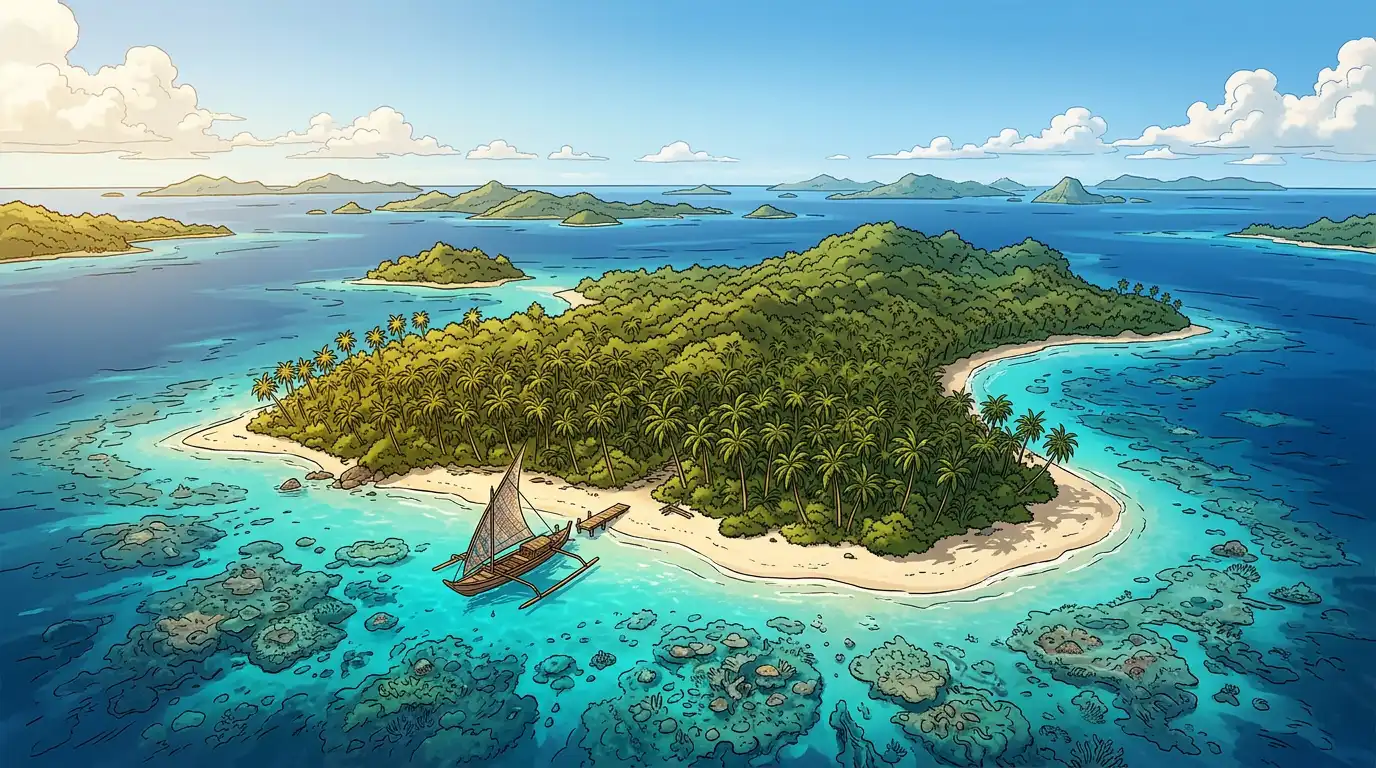
Where is Sumbawa? It is an island in the West Nusa Tenggara and Nusa Tenggara Barat provinces of Indonesia, positioned east of Lombok and west of Flores in the chain of islands that stretches from Bali toward Timor. If you draw a line from Bali to Komodo, Sumbawa sits right in the middle, a large, mountainous island flanked by smaller volcanic islands, coral-fringed bays, and some of the least-dived waters in the Indonesian archipelago.
Where is the island of Sumbawa in relation to other destinations travellers already know? It is roughly 350 kilometres east of Bali, directly east of Lombok across the Alas Strait, and about 200 kilometres west of Labuan Bajo, the gateway town for Komodo National Park. Despite this central position in one of the world's most popular diving corridors, Sumbawa remains largely bypassed by mainstream tourism, which is precisely why its reefs are healthy, its marine life abundant, and its dive sites uncrowded.
The island has two main towns: Sumbawa Besar on the western side and Bima on the eastern side, each with a small airport. Between them lies a rugged interior of mountains, dry savannah, rice paddies, and traditional villages, and a coastline that alternates between sheltered bays, volcanic headlands, and offshore islands that hold some of the most diverse diving in eastern Indonesia.
How to Get to Sumbawa
One of the most common questions about this island is simply logistics. How to get to Sumbawa depends on where you are starting and what kind of trip you are planning.
How to Get to Sumbawa from Bali
How to get to Sumbawa from Bali involves two steps. First, travel from Bali to Lombok, either by a 40-minute flight from Ngurah Rai International Airport to Lombok International Airport (airlines include Lion Air, TransNusa, Garuda, and Citilink, with fares as low as USD 18 to 45 if booked in advance), or by public ferry from Padang Bai in east Bali to Lembar in west Lombok, a crossing that takes four to five hours and runs around the clock.
Once in Lombok, continue east to Sumbawa.
How to Get from Lombok to Sumbawa
How to get from Lombok to Sumbawa is straightforward. Public ferries operate from Kayangan (also called Labuhan Lombok) on Lombok's east coast to Poto Tano harbour on Sumbawa's west coast. The crossing takes approximately 90 minutes, ferries depart roughly every hour from early morning until late evening, and fares are extremely affordable, around IDR 18,800 (less than USD 2) for adult foot passengers. Vehicles can be taken on board as well. Morning sailings tend to offer calmer seas and quicker departures.
Labuan Bajo to Sumbawa and Komodo to Sumbawa
Travelling from Labuan Bajo to Sumbawa or Komodo to Sumbawa is less conventional. There is no regular high-speed ferry service between the two, and the most practical options are either a domestic flight from Labuan Bajo to Bima (connections vary and often route through Bali) or, far more conveniently, a liveaboard crossing that includes Sumbawa's dive sites as part of a broader itinerary between Komodo and Bali or vice versa.
This is where a Sumbawa liveaboard route becomes not just the most comfortable option but the only way to efficiently access the island's best underwater sites without spending days navigating domestic transport connections.
Flying Directly
Both Sumbawa Besar (Sultan Muhammad Kaharuddin III Airport, SWQ) and Bima (Sultan Muhammad Salahuddin Airport, BMU) receive domestic flights from Bali and occasionally from other Indonesian cities. Availability and frequency vary by season, so check airline schedules well in advance.
Sumbawa Diving: Why Divers Are Starting to Pay Attention
Sumbawa diving is not one thing. It is an umbrella term for a collection of remarkably diverse underwater environments scattered across the island's coastline and its offshore islands. Within a relatively compact area, you can dive pristine coral walls, volcanic black sand slopes with active underwater vents, muck diving terrain packed with rare critters, and open water sites where pelagic life cruises through nutrient-rich currents.
What makes Sumbawa diving special is not just the quality of individual sites but the fact that almost nobody is diving them. While Komodo's famous pinnacles host multiple dive boats daily, Sumbawa's reefs see a handful of liveaboards per month. The corals are healthier, the marine life is less habituated to divers, and the sense of discovery is real.
Moyo Island
Moyo Island sits just off Sumbawa's northern coast and is one of the region's diving highlights. The southern half of the island is a designated nature reserve, and the surrounding waters host diverse reef systems ranging from gentle coral slopes to dramatic vertical walls.
Angel Reef is a sheer vertical wall plunging over 40 metres, encrusted with soft tree corals and patrolled by triggerfish, yellowtail tuna, and reef sharks. The wall diving here rivals anything in Komodo but without the boat traffic.
Panjang Reef offers a gentler experience: a sloping reef covered in vibrant hard corals with bicolour angelfish, banded angelfish, and dense schools of reef fish moving through the shallows. It is excellent for both diving and snorkeling.
Beyond the water, Moyo Island draws visitors to Mata Jitu Waterfall, a stunning cascade with turquoise jungle pools reachable by a one-hour forest walk from Labuan Aji village. For liveaboard guests, a land excursion to Mata Jitu between dives is one of the trip's memorable surface intervals.
How to get to Moyo Island from Sumbawa on your own involves a boat from Sumbawa Besar, taking roughly 45 minutes by speedboat. On a liveaboard, Moyo is simply one of the stops along the route, with the vessel anchoring in the island's sheltered bays for diving, snorkeling, and shore excursions.
Sangeang Island: Diving an Active Volcano
Sangeang is unlike any dive destination you have experienced before. This small volcanic island northeast of Sumbawa is dominated by Mount Sangeang Api, an active volcano standing nearly 2,000 metres tall. The island was evacuated after its last eruption in 1988, and today only a small fishing village remains. Smoke still rises visibly from the summit.
Underwater, the volcanic geology creates conditions found in very few places on earth.
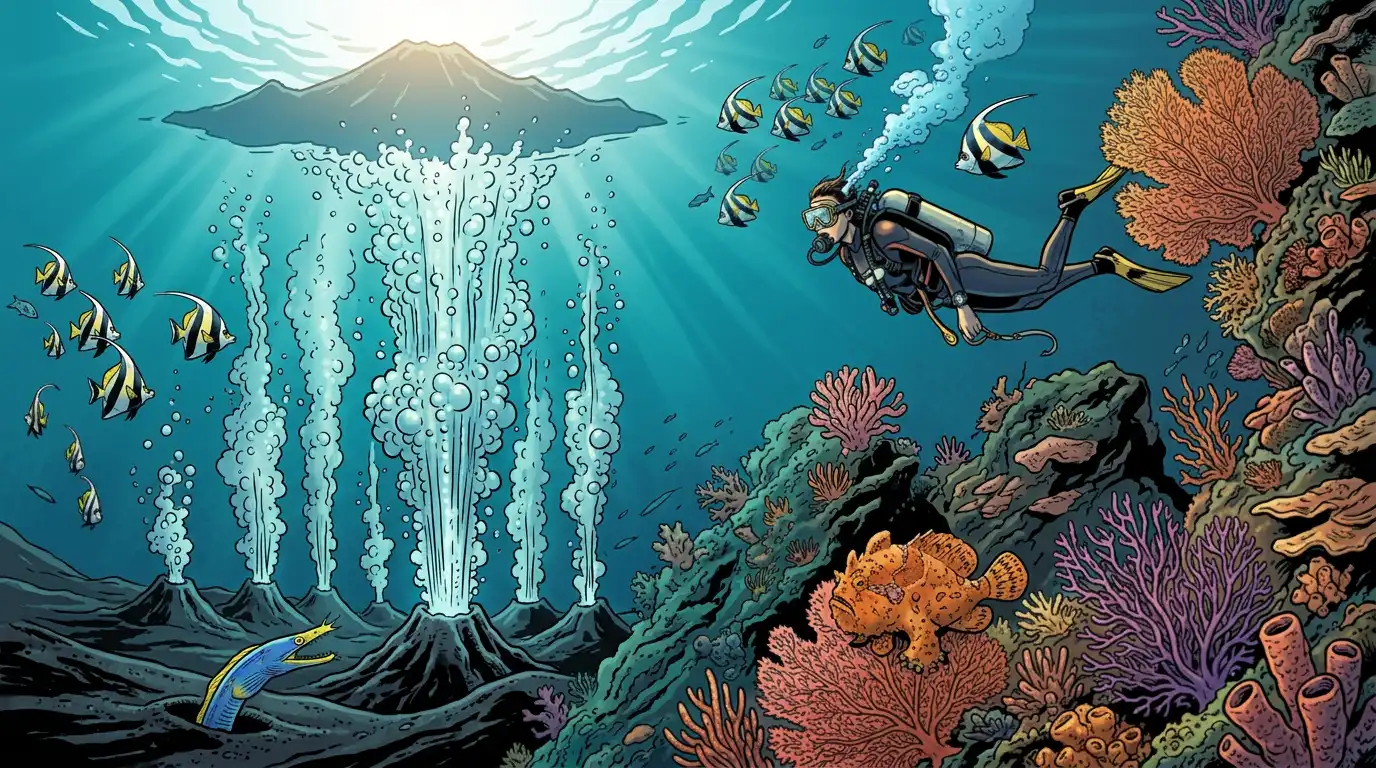
Bubble Reef is the signature dive site, where streams of gas continuously escape from underwater volcanic vents through jet-black sand, creating a surreal spectacle of rising bubbles that looks like diving inside a giant jacuzzi. The contrast between the black volcanic sand and the colourful soft corals, sea fans, and critter life clinging to the slopes is extraordinary. Macro photographers come specifically for this site.
Hot Rocks takes the volcanic theme further, with hydrothermal vents warming the sand and rocks, yellow sulphur deposits colouring the seafloor, and vibrant coral gardens growing in conditions that would seem inhospitable but clearly are not. The marine life here includes pygmy seahorses, ribbon eels, ghost pipefish, frogfish, ornate ghost pipefish, colourful nudibranchs, and luminescent flame file shells.
Bonto Reef offers a slope dive with soft coral coverage, ribbon eels, frogfish, and ghost pipefish in a more conventional reef setting, though "conventional" is relative when the volcano above you is still smoking.
Sangeang is a site that most divers will never see from a land base. It requires boat access, and a liveaboard is the only practical way to dive it across multiple days and explore its different sites.
Satonda Island: The Crater Lake and Night Diving
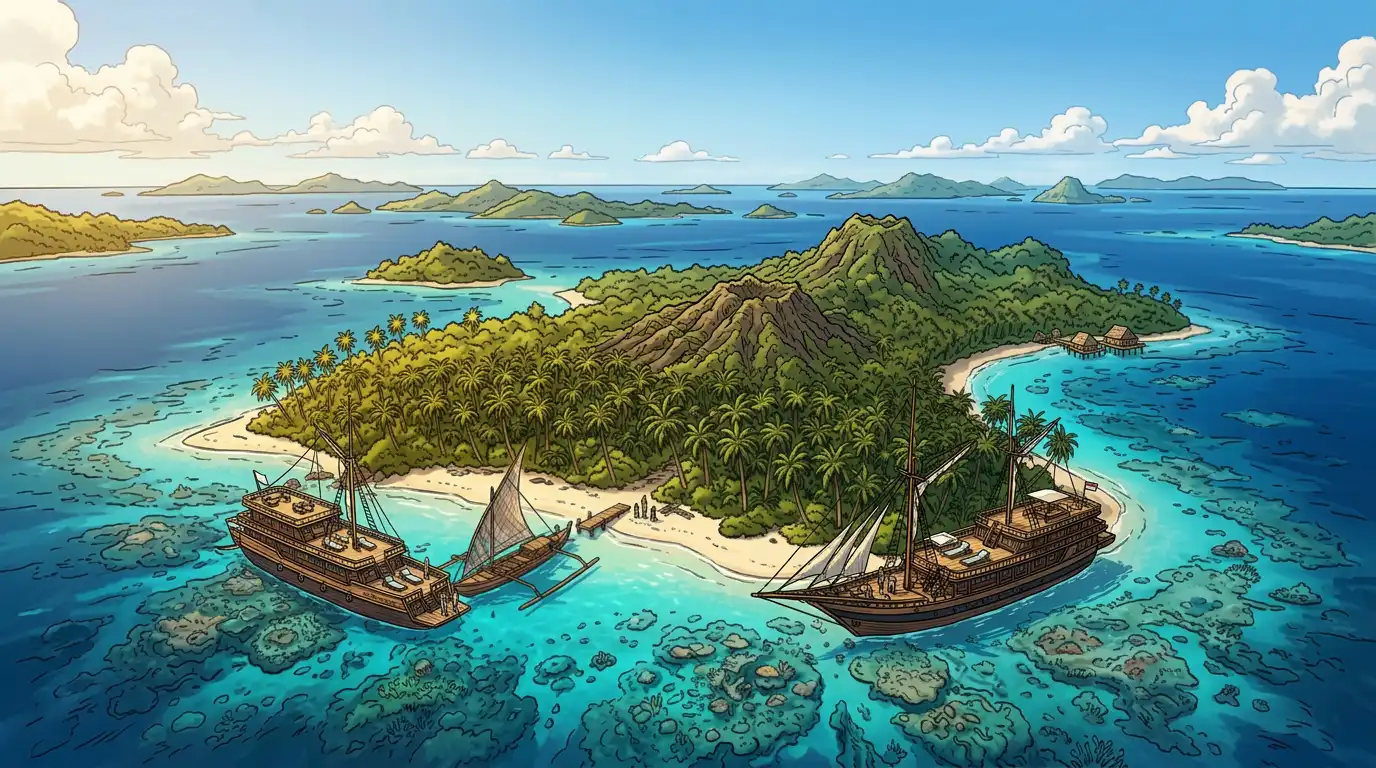
Satonda Island is a small volcanic island off Sumbawa's northern coast, designated as a Marine Nature Park in 1999. The island's centrepiece is a caldera containing a 77-hectare soda lake, reportedly filled with seawater after the catastrophic 1815 eruption of nearby Mount Tambora created a tsunami that breached the crater walls.
The island is surrounded by coral reefs that offer excellent diving and snorkeling. Pygmy seahorses are a highlight for macro enthusiasts. Shallow reefs host diverse tropical fish including chromis, sweetlips, butterflyfish, and triggerfish, with hard coral formations (pillar, table, brain corals) and soft coral gardens.
Satonda is particularly renowned for night diving, when the reef transforms. Clown frogfish, arrow crabs, banded boxer shrimp, and hunting predators emerge after dark, and the relative lack of boat traffic means the night reef is undisturbed and prolific.
Above water, a 45-minute trek to the southern crater rim offers panoramic views of the lake and, on clear days, the imposing silhouette of Mount Tambora. At sunset, thousands of flying foxes awaken from the island's trees and take flight, creating a spectacle that is worth the climb alone.
Gili Banta: Where the Currents Converge
Gili Banta sits at the far eastern edge of Sumbawa's waters, just outside Komodo National Park. The island marks the convergence of two major ocean currents, the southern current from the Sawu Sea and the northern current from the Flores Sea, and that convergence creates rich feeding grounds for large pelagic life.
Galley Rock is the primary manta ray site at Gili Banta. A gentle slope descending to 12 metres features large coral bommies that serve as cleaning stations where manta rays congregate. Multiple mantas on a single dive are common, and black manta rays are occasionally spotted.
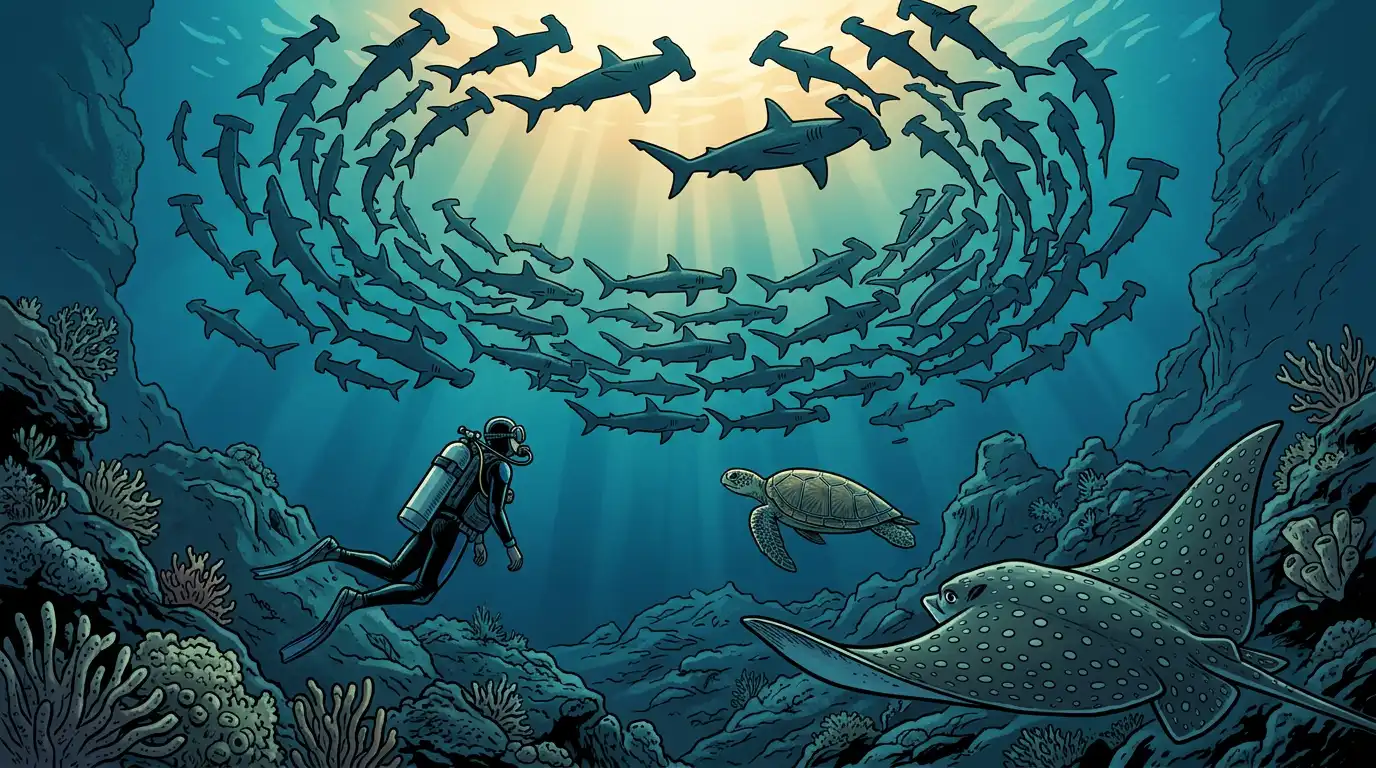
Roller Coaster is a current-swept drift dive where anthias cloud the reef and manta ray encounters are possible. The northeast side offers drift diving through coral gardens with frogfish and nudibranchs, while the northwest delivers deeper dives at 30 to 40 metres with encounters including coral trout, giant trevally, dogtooth tuna, and, on fortunate days, hammerhead sharks.
Gili Banta is a natural transition point between Sumbawa waters and Komodo National Park, making it a key stop on liveaboard crossing itineraries.
How to See Whale Sharks in Sumbawa
How to see whale sharks in Sumbawa is one of the most frequently searched questions about this island, and the answer centres on Saleh Bay, a large sheltered bay on Sumbawa's northern coast.
The Saleh Bay Whale Shark Experience
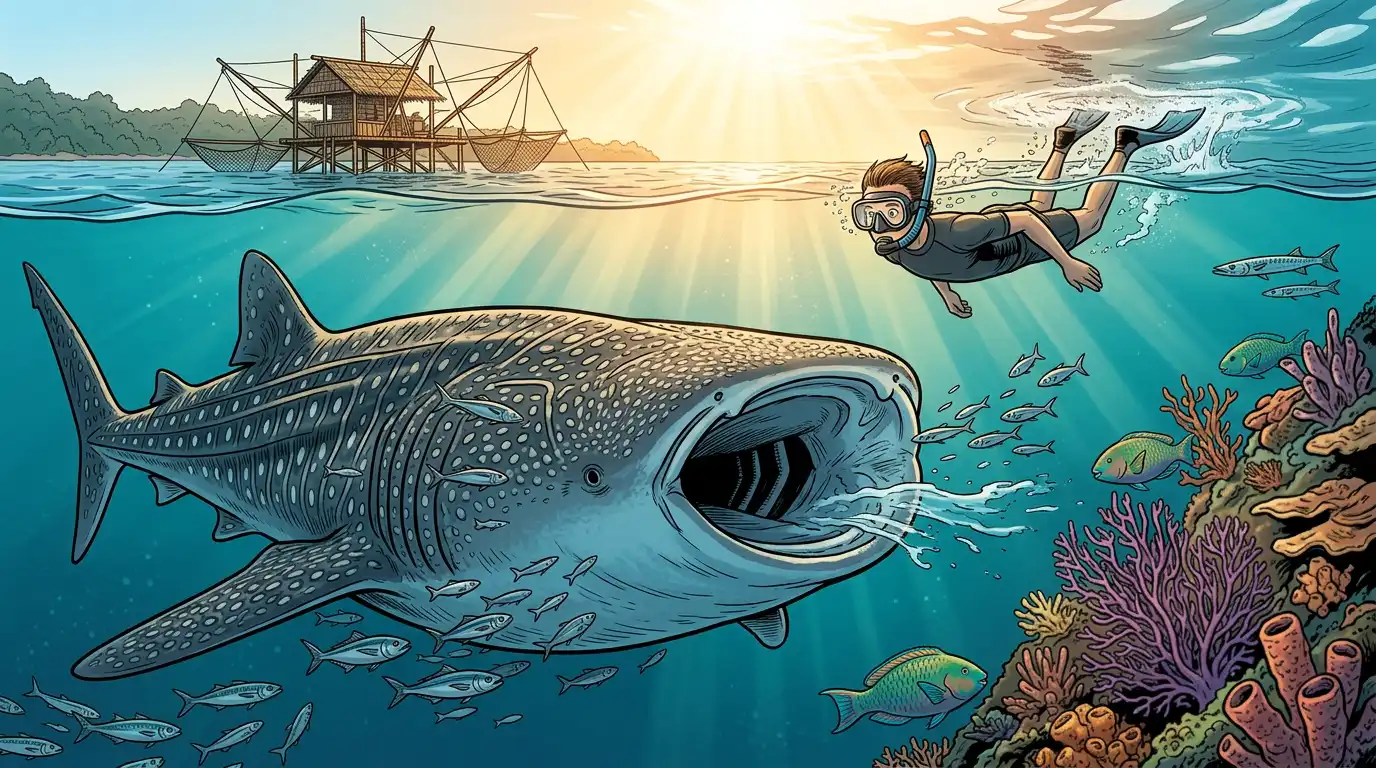
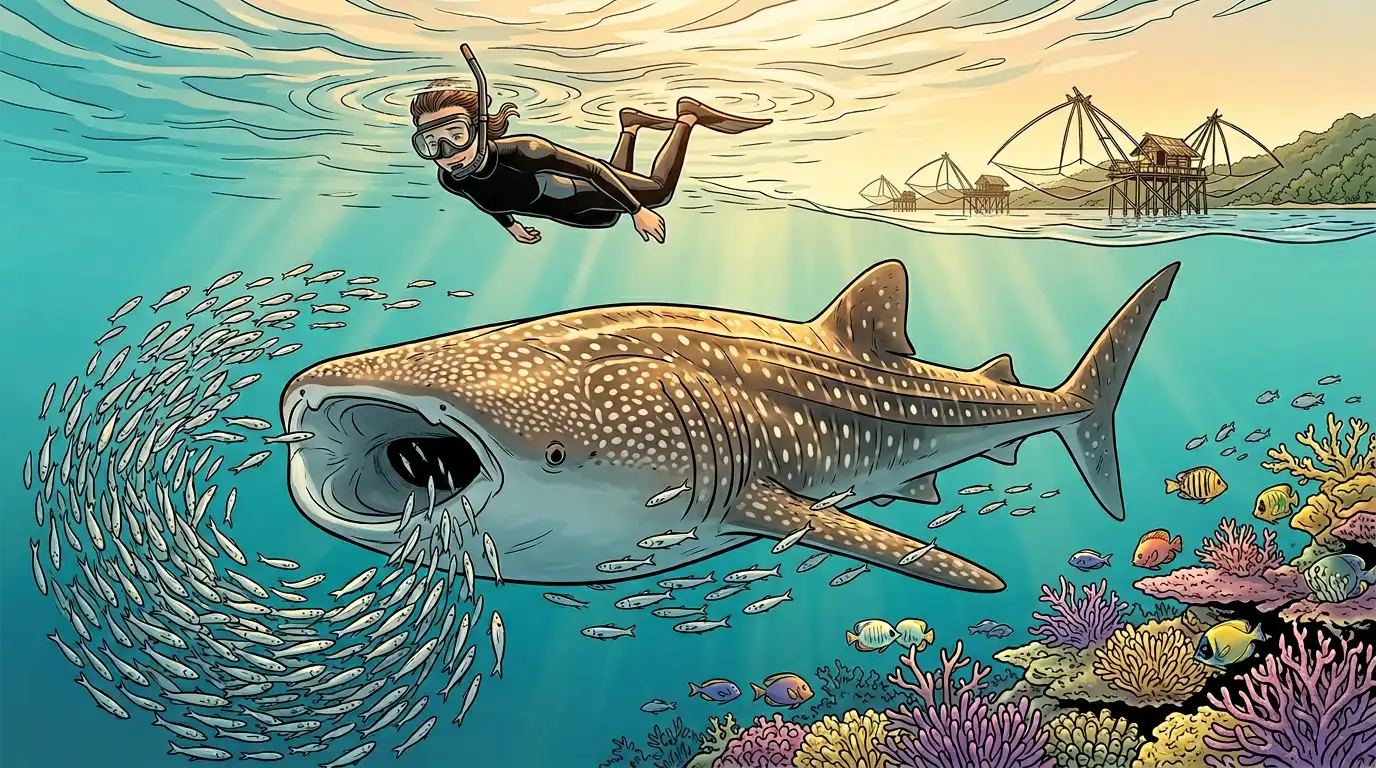
Whale sharks gather in Saleh Bay around traditional bagan fishing platforms, the same type of wooden structures that attract whale sharks in Cenderawasih Bay in Papua. Fishermen operating the bagans attract small baitfish with lights at night, and whale sharks have learned to associate the platforms with easy feeding. The result is relatively reliable whale shark encounters during the right season.
How to see whale sharks in Sumbawa Indonesia practically means getting to the bagans early. Whale sharks are most active around 6:00 AM when fishing nets are lifted and baitfish scatter. Local tour operators depart from Labuan Jambu Village as early as 4:00 AM to reach the platforms before the sharks move on. The encounter itself is a snorkeling experience, floating at the surface while whale sharks feed below and around you, mouths open, spotted backs clearly visible through the water.
Sumbawa Whale Shark Season
The Sumbawa whale shark season runs primarily from April through November, with the most reliable encounters during the dry season months of May through October. June through August are peak months when multiple whale sharks may be present at a single bagan. During full moon periods, encounter chances can decrease because fishermen typically do not operate their bagans.
January through March brings unpredictable weather, rougher seas, and reduced bagan activity, making whale shark encounters less reliable. If whale sharks are a primary motivation for your trip, plan for the dry season window.
Safety and Etiquette
Responsible whale shark encounters require maintaining a distance of three to four metres, avoiding touching or chasing the animals, entering the water calmly without splashing, and using reef-safe sunscreen. Indonesia declared whale sharks a fully protected species in 2013, and ethical behaviour around these animals is both a legal and moral responsibility.
Sumbawa Surf: Lakey Peak and the Southern Coast
Sumbawa surf is the other reason this island appears on travellers' radars. While divers gravitate toward the northern coast and offshore islands, surfers head south to Hu'u Village and its collection of world-class reef breaks.
Lakey Peak
Lakey Peak is Sumbawa's most famous wave, known in the surfing world as the "Sumbawa Machine." It is an A-frame reef break that produces both a steep, fast, barrelling left and a more open-faced right from the same takeoff zone. The left is the more sought-after wave, with backdoor tube sections that peel up to 100 metres on good days. It handles south to southwest swells in the three to eight foot range and is best surfed at mid to high tide.
The best season for surfing at Lakey Peak mirrors the diving season: May through October, when consistent swells and morning offshore winds from the north create clean, holdable conditions. June is often considered the standout month.
Beyond Lakey Peak
Hu'u Village hosts five world-class breaks within a compact stretch of coast, including Lakey Pipe (popular with bodyboarders), Cobblestones, Nungas, and Periscopes. Between breaks, a lagoon provides sheltered snorkeling at high tide. Accommodation around Hu'u ranges from basic surf homestays to mid-range guesthouses, and the village atmosphere is relaxed and uncrowded compared to Bali's surf towns.
Combining Surf and Dive on a Sumbawa Trip
A Sumbawa trip that combines diving in the north (Moyo, Sangeang, Saleh Bay) with surfing in the south (Lakey Peak) is logistically possible but requires overland travel across the island, as the two coastlines are separated by mountains and rough roads. For travellers focused on one or the other, planning is straightforward. For those who want both, allowing extra days for internal transport is essential.
What to Do in Sumbawa Beyond Diving and Surfing
What to do in Sumbawa extends well beyond the water. The island has a cultural depth and landscape variety that most visitors never discover because they are passing through too quickly.
Sumbawa Besar
Sumbawa Besar, the island's western administrative capital, is a small, friendly town that offers a window into traditional Sumbawan life. The Dalam Loka Royal Palace, a former sultan's residence built entirely from teak wood in the late 19th century, now functions as a museum showcasing the island's history, royal lineage, and cultural artefacts. It is one of the most significant historical buildings in Nusa Tenggara.
Traditional villages like Pamulung and Poto offer glimpses of authentic Sumbawan culture, including weaving, pottery, and the unique tradition of barapan kebo, water buffalo racing through flooded rice paddies that draws crowds during harvest festivals.
Local markets in Sumbawa Besar sell handicrafts, fresh produce, and street food, including ikan bakar (grilled fish) and sate pusut (minced meat wrapped in lemongrass or coconut leaves), both staples of Sumbawan cuisine that are worth seeking out.
Mount Tambora
Sumbawa's most dramatic geographical feature is Mount Tambora, whose eruption in April 1815 was the most powerful volcanic event in recorded history, ejecting roughly 160 cubic kilometres of material and causing global climate disruption that led to the "Year Without a Summer" in 1816. The caldera can be trekked, though it requires a guide, several days, and a level of fitness and preparation beyond casual hiking. For history and geology enthusiasts, the Tambora story adds a layer of significance to any Sumbawa visit.
Mata Jitu Waterfall, Moyo Island
Already mentioned in the diving section, Mata Jitu Waterfall on Moyo Island is one of eastern Indonesia's most photogenic natural attractions. Turquoise pools cascade through jungle, reachable by forest trail or motorbike from Labuan Aji. For liveaboard guests, it is a perfect land excursion between dive days.
Satonda Island Crater Lake Trek
The trek to Satonda Island's crater rim, the flying fox colony at sunset, and the surreal soda lake surrounded by forest make this island a highlight for anyone travelling by boat through the region.
Why a Sumbawa Liveaboard Is the Best Way to Experience the Island
Sumbawa's best attractions, particularly its diving, are scattered across offshore islands and remote coastlines that are difficult or impossible to reach from land-based accommodation. Moyo Island, Sangeang Island, Satonda Island, Gili Banta, and the Saleh Bay whale shark bagans are all accessible by boat, and reaching multiple sites across several days requires a vessel that can move overnight while you sleep.
A liveaboard in Sumbawa solves every logistical challenge at once:
- Access: liveaboards reach islands and dive sites that have no tourist infrastructure and no regular boat services.
- Efficiency: the vessel moves between sites overnight, so every morning starts at a new dive location without transit days.
- Combination: a single liveaboard itinerary can combine Moyo's walls, Sangeang's volcanic vents, Satonda's night diving, Saleh Bay's whale sharks, and Gili Banta's mantas into one continuous trip.
- Comfort: sleeping, eating, and diving from one vessel in remote waters is simply more practical and more enjoyable than attempting to piece together the same route using local boats, ferries, and guesthouses.
The practical reality is that Sumbawa's diving infrastructure is minimal. There are very few dive centres on the island, and those that exist are small operations with limited boat range. A liveaboard is not just the better option for experiencing Sumbawa diving at its best, for many of the island's top sites, it is the only option.
Neptune Liveaboards: Crossing Trips Through Sumbawa on Neptune One and King Neptune
Both Neptune One and King Neptune operate crossing itineraries that pass through Sumbawa's waters, connecting Bali and Komodo along a route that treats the island and its surrounding sites as integral diving destinations rather than empty kilometres to cover.
Neptune One
Neptune One is a 38-metre luxury liveaboard accommodating 16 passengers in eight cabins, including deluxe suites and sea-view cabins with private balconies, air conditioning, and en-suite bathrooms. The vessel offers a Bali to Komodo crossing itinerary lasting 10 days and 9 nights, a route that passes directly through Sumbawa's best diving territory.
The crossing route includes stops at Moyo Island for wall diving and waterfall excursions, Sangeang Island for volcanic vent diving and muck critter hunting, Satonda Island for reef diving and the crater lake trek, and Saleh Bay for whale shark encounters when conditions and season align. The itinerary then continues east through Gili Banta and into Komodo National Park, where the crossing finishes in Labuan Bajo.
This is not a transit trip that treats Sumbawa as empty water between two better-known destinations. It is an expedition that gives Sumbawa's dive sites the same attention and dive time as Komodo's famous pinnacles, and for many guests, the Sumbawa portion of the crossing becomes the unexpected highlight.
King Neptune
King Neptune is Neptune Liveaboards' newest and largest vessel, a 46-metre steel and aluminium-hulled yacht built to expedition standards with a 3,000 nautical mile range. She accommodates up to 20 guests in 10 en-suite cabins with flexible bed configurations and is crewed by 20 professionals.
King Neptune also operates crossing itineraries that include Sumbawa, bringing a larger, more capable vessel to the same waters. The combination of extended range, greater stability in open water crossings, and larger guest capacity makes King Neptune particularly well-suited for the kind of multi-destination expedition that a Bali-to-Komodo or Komodo-to-Bali crossing represents.
What Both Vessels Share
Both Neptune One and King Neptune maintain a strict 4-divers-to-1-guide ratio, ensuring personalised attention on every dive, whether you are navigating Sangeang's volcanic vents or drifting along Gili Banta's manta cleaning stations. Both vessels provide complimentary diving accident insurance through DiveAssure for direct bookings, free satellite internet, full-board meals with dietary accommodations, and the kind of service that turns a diving trip into a genuine holiday.
The crossing format is the key. A standard Komodo liveaboard trip starts and ends in Labuan Bajo, covering the park's dive sites over five to eight days. A crossing trip starts in Bali (or ends in Bali, depending on direction) and adds Sumbawa's entire dive portfolio to the itinerary. You get everything a Komodo trip offers, plus Moyo, Sangeang, Satonda, Saleh Bay, and Gili Banta, in a single continuous voyage.
Planning Your Sumbawa Trip: Practical Advice
Best Season
The dry season from April through November is optimal for both diving and whale shark encounters. May through October offers the most reliable conditions across all Sumbawa activities, including surfing at Lakey Peak. January through March brings the wet season with rougher seas and reduced visibility, though diving is possible year-round.
Water Conditions
Water temperatures around Sumbawa range from approximately 24 to 28 degrees Celsius, depending on depth, season, and proximity to volcanic vents (which can warm localised areas). Visibility varies from excellent on outer reefs and walls (20 to 30 metres) to more limited on muck diving sites and in Saleh Bay. A 3mm wetsuit is sufficient for most divers, though thermoclines at depth on some sites may warrant a 5mm option.
Experience Level
Sumbawa's dive sites range from beginner-friendly coral gardens to advanced drift dives at Gili Banta with strong currents. A liveaboard crossing typically includes sites across the spectrum, but comfort with drift diving, current management, and deep diving is recommended for the full range of sites. Advanced Open Water certification and at least 50 logged dives will allow you to enjoy everything the route offers.
What to Pack
Light tropical clothing, reef-safe sunscreen, a rash guard or thin wetsuit for diving, comfortable shoes for island treks (Mata Jitu waterfall, Satonda crater rim, Padar Island), an underwater camera, and motion sickness remedies if you are prone. Sumbawa's remote sites offer no shopping opportunities, so bring everything you need from Bali or Lombok.
Combining Sumbawa with Komodo
The most rewarding way to experience Sumbawa diving is as part of a Bali to Komodo or Komodo to Bali crossing on Neptune One or King Neptune. This format eliminates the need to arrange separate Sumbawa transport, provides sustained access to the island's best sites, and delivers the bonus of Komodo National Park diving at the end (or beginning) of the same trip. It is two destinations in one voyage, with Sumbawa providing the raw, uncrowded, discovery-oriented counterpoint to Komodo's famous, current-swept headline sites.
Final Thoughts
Sumbawa is the island that eastern Indonesia's diving corridor forgot, or more accurately, the island that most travellers skip because they are rushing between Bali and Komodo without realising what lies between. That oversight is Sumbawa's gift to those who do stop.
The diving is varied, uncrowded, and genuinely surprising, from Sangeang's volcanic bubble vents to Moyo's pristine walls to Saleh Bay's whale shark encounters. The surfing at Lakey Peak is world-class and uncrowded by Bali standards. The culture is authentic, the landscapes are dramatic, and the pace of life is a reminder of what Indonesian islands felt like before mass tourism arrived.
A Sumbawa liveaboard crossing on Neptune One or King Neptune is the format that makes all of this accessible in a single trip, combining the island's scattered highlights into a coherent journey that no amount of ferry hopping and guesthouse booking could replicate. You wake up at Sangeang's volcanic slopes, fall asleep anchored off Moyo's forest-covered coast, and by the end of the week, you are drifting along Komodo's pinnacles wondering why Sumbawa is not on every diver's map.
Give it time. It will be.