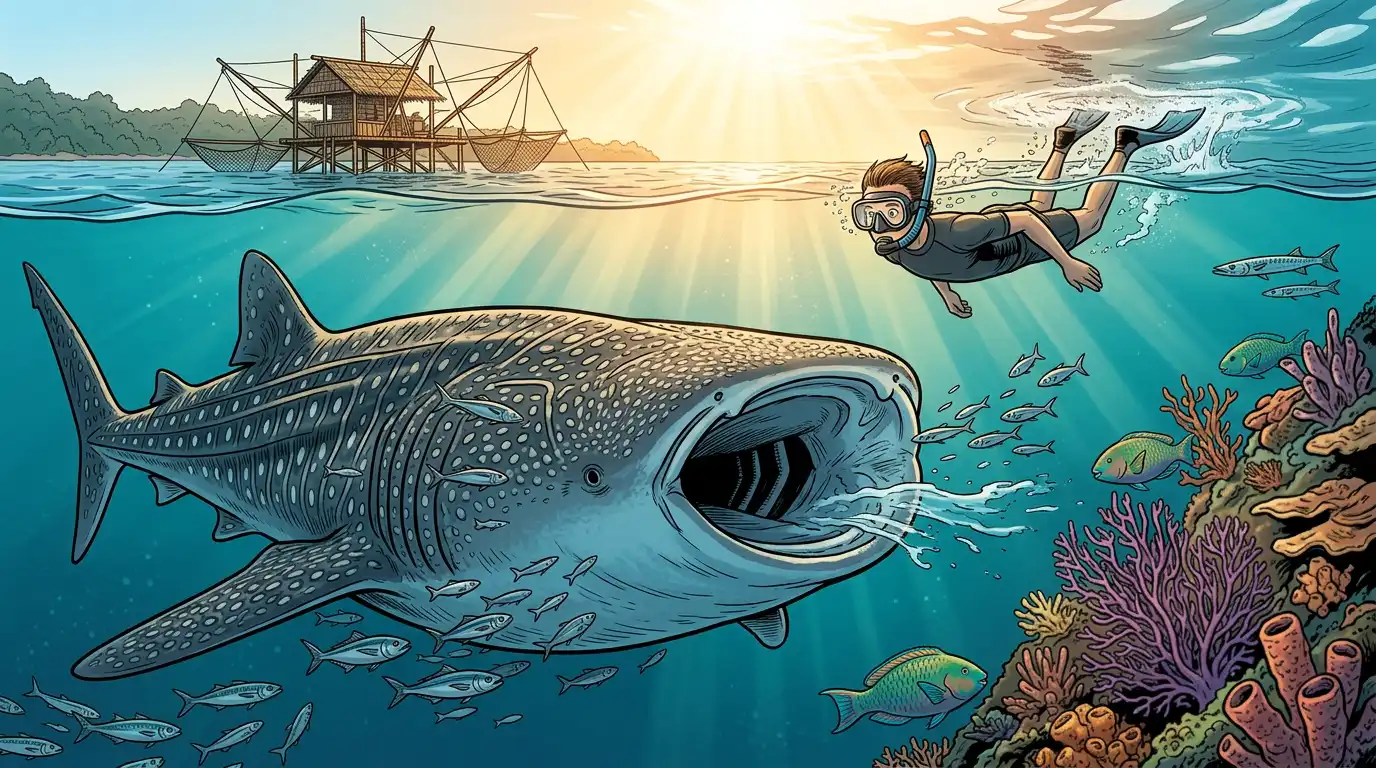
Raja Ampat vs Komodo represents the ultimate diving decision for anyone planning an Indonesian underwater adventure. These two destinations within the coral triangle offer distinctly different experiences, and understanding their unique characteristics will help you choose the right fit for your travel style, budget, and diving goals.
This guide covers everything you need to compare komodo and raja ampat: diving conditions, marine life encounters, accessibility, costs, and seasonal timing. Whether you’re an experienced diver chasing manta rays and sharks, a snorkeling enthusiast seeking pristine coral reefs, or a traveler wanting gorgeous topside experiences alongside amazing diving, this comparison addresses your key questions.
Choose Raja Ampat for unmatched marine biodiversity, pristine reef systems, and a true adventure to the world’s most biodiverse waters. Choose Komodo for easier access from Bali, dramatic landscapes featuring komodo dragons, and thrilling drift dives with large pelagics.
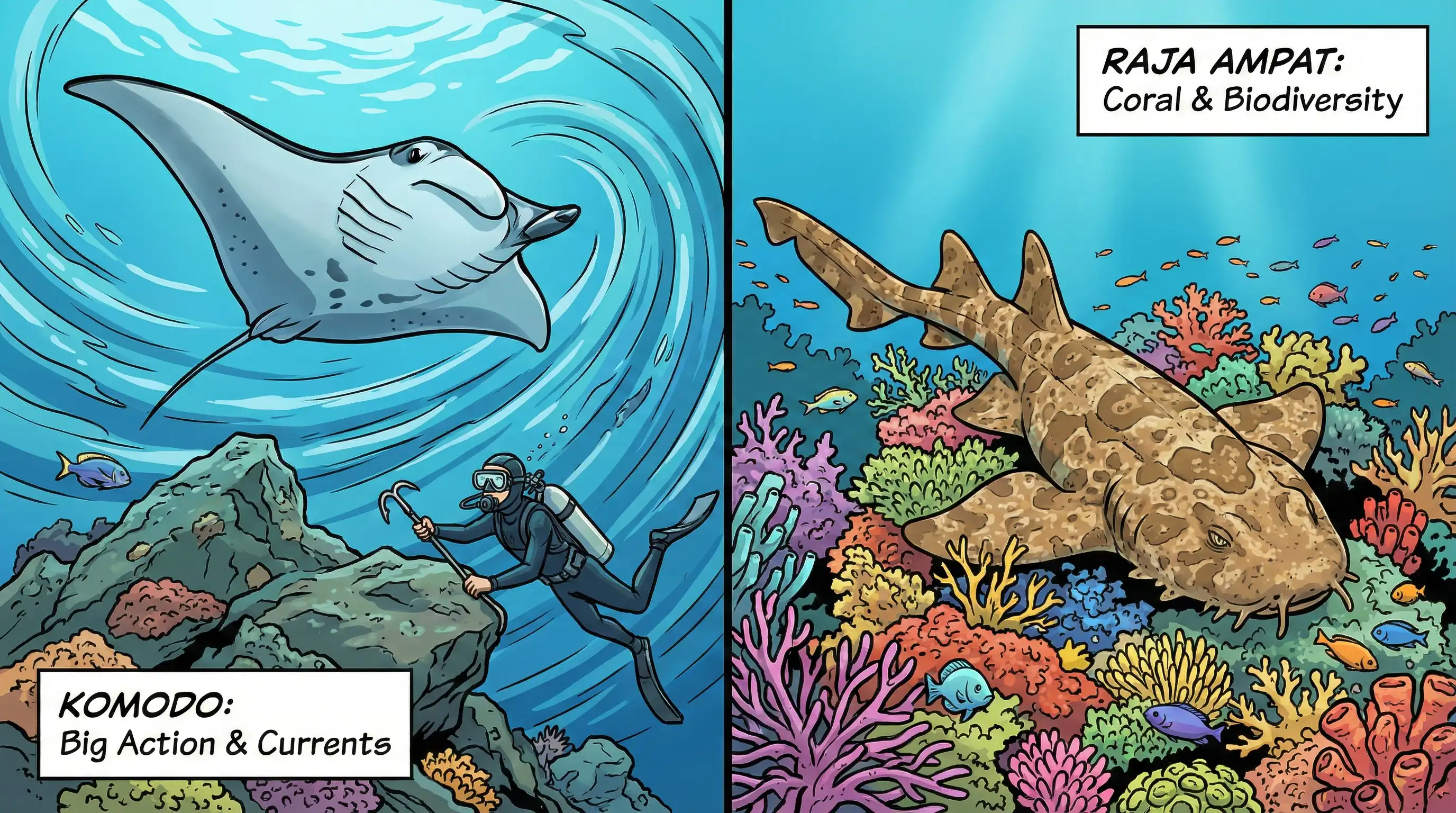
Indonesia’s Diving Triangle - Raja Ampat vs Komodo
Both Komodo and Raja Ampat sit within the coral triangle, the global epicenter of marine biodiversity stretching across Indonesia, Malaysia, Philippines, Papua New Guinea, Timor-Leste, and the Solomon Islands. This region harbors 75% of all known coral species and supports extraordinary concentrations of fish species found nowhere else.
These two destinations dominate diving destination discussions because they represent the pinnacle of what Indonesia’s waters offer—yet they deliver fundamentally different experiences that attract divers for distinct reasons.
Raja Ampat: The Last Paradise
Raja Ampat, meaning “Four Kings,” refers to the four main islands of Waigeo, Misool, Salawati, and Batanta in West Papua, plus over 1,500 smaller islets scattered across this remote paradise. This archipelago sits at the absolute heart of the coral triangle, earning its reputation as the crown jewel of global marine biodiversity.
The statistics here are absolutely incredible: over 1,500 fish species, more than 500 coral types representing 75% of the world’s known coral species, and reef surveys documenting fish density that defies belief. Sites like cape kri dive site have recorded over 374 fish species on a single dive—a world record for biodiversity. The soft corals, sea fans, and reef gardens here remain in pristine condition, with coral cover often exceeding 90% at premier sites like melissa’s garden.
Raja Ampat’s remoteness has preserved it as the world’s premier destination for divers seeking the most fish species and reef diversity anywhere on Earth.
Komodo National Park: Dragons and Dramatic Drifts
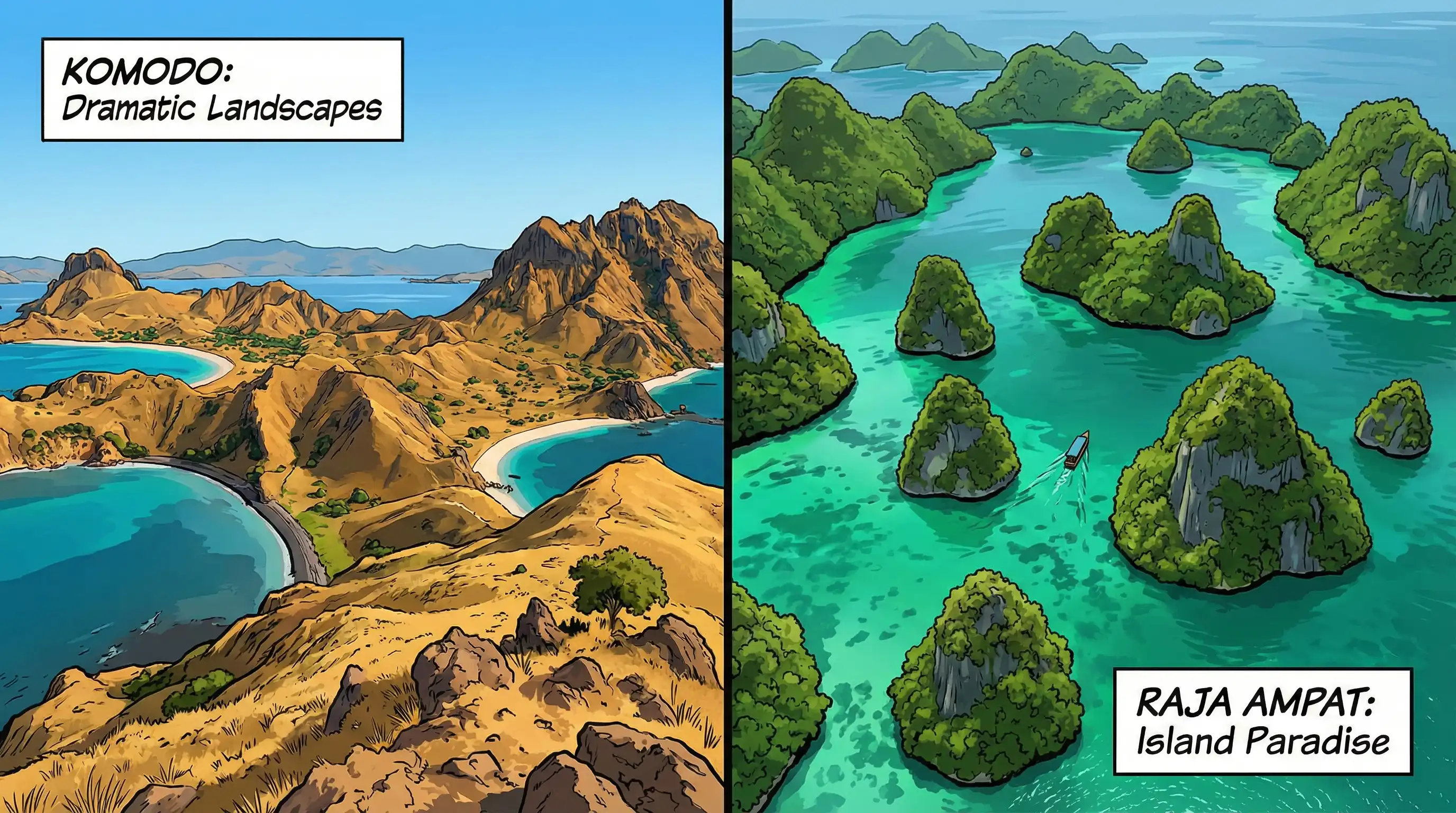
Komodo National Park encompasses 26 major islands in East Nusa Tenggara, centered around Komodo Island, Rinca, and the iconic padar island. This UNESCO World Heritage site delivers a dual appeal that few destinations can match: world-class diving and encounters with prehistoric komodo dragons—the world’s largest lizards reaching 3 meters in length.
The park’s underwater realm is defined by powerful currents where the Indian and Pacific Oceans meet, creating nutrient-rich upwellings that attract manta rays, reef sharks, and huge schools of pelagics. Sites like castle rock, batu bolong, and crystal rock offer exhilarating drift dives through current-swept pinnacles, while manta alley and karang makassar provide reliable manta ray encounters.
Indonesia Komodo’s combination of big and small critters underwater with dramatic landscapes and prehistoric wildlife above creates a complete adventure package accessible from labuan bajo.
Seasonal Considerations and Best Travel Times
Understanding seasonal patterns proves crucial when planning your trip, as raja ampat and komodo operate on nearly opposite optimal windows.
Raja Ampat Dry Season (October-April)
Raja Ampat’s prime diving season runs October through April, coinciding with calmer seas, minimal rainfall, and excellent visibility often exceeding 30 meters. Water temperatures remain consistently warm at 27-30°C throughout this period.
Manta ray activity peaks during certain months, with specific manta hotspots like Manta Sandy becoming particularly active. The dry season also means easier boat transfers between islands, more reliable liveaboard itineraries, and better conditions for exploring secret lagoons and karst landscapes.
Accommodation fills quickly during peak months, making advance booking essential for both live aboard trips and eco-resorts.
Komodo Dry Season (April-November)
Komodo’s optimal diving window spans April through November, with the dry season offering the calmest conditions and most comfortable diving. Water temperatures in the north stay pleasant at 27-29°C, while southern sites can drop to 22°C from cold upwellings—a small price for the spectacular marine life these nutrient-rich waters support.
The rainy season (December-March) actually brings excellent manta sightings despite choppier conditions, as increased plankton draws manta rays to feeding stations. Dramatic landscapes transform between seasons, with padar island’s famous viewpoint offering different color palettes.
Planning Around Opposite Seasons
The nearly opposite peak seasons for both destinations create interesting planning opportunities. Visit Komodo during April-November, then explore Raja Ampat October-April—making a combined trip feasible if you time it right around the seasonal transition months.
This inverse scheduling also means you can experience fabulous diving in Indonesia year-round by choosing the appropriate destination for your travel dates.
Accessibility and Travel Logistics
Indonesian domestic travel presents distinct challenges depending on your destination, and the accessibility difference between these two locations significantly impacts trip planning.
Getting to Komodo National Park
Komodo offers dramatically easier access, making it suitable for shorter trips and more spontaneous planning:
- Fly from Bali or Jakarta to Labuan Bajo (approximately 1.5 hours from Bali)
- Arrive at the port town gateway to Komodo National Park
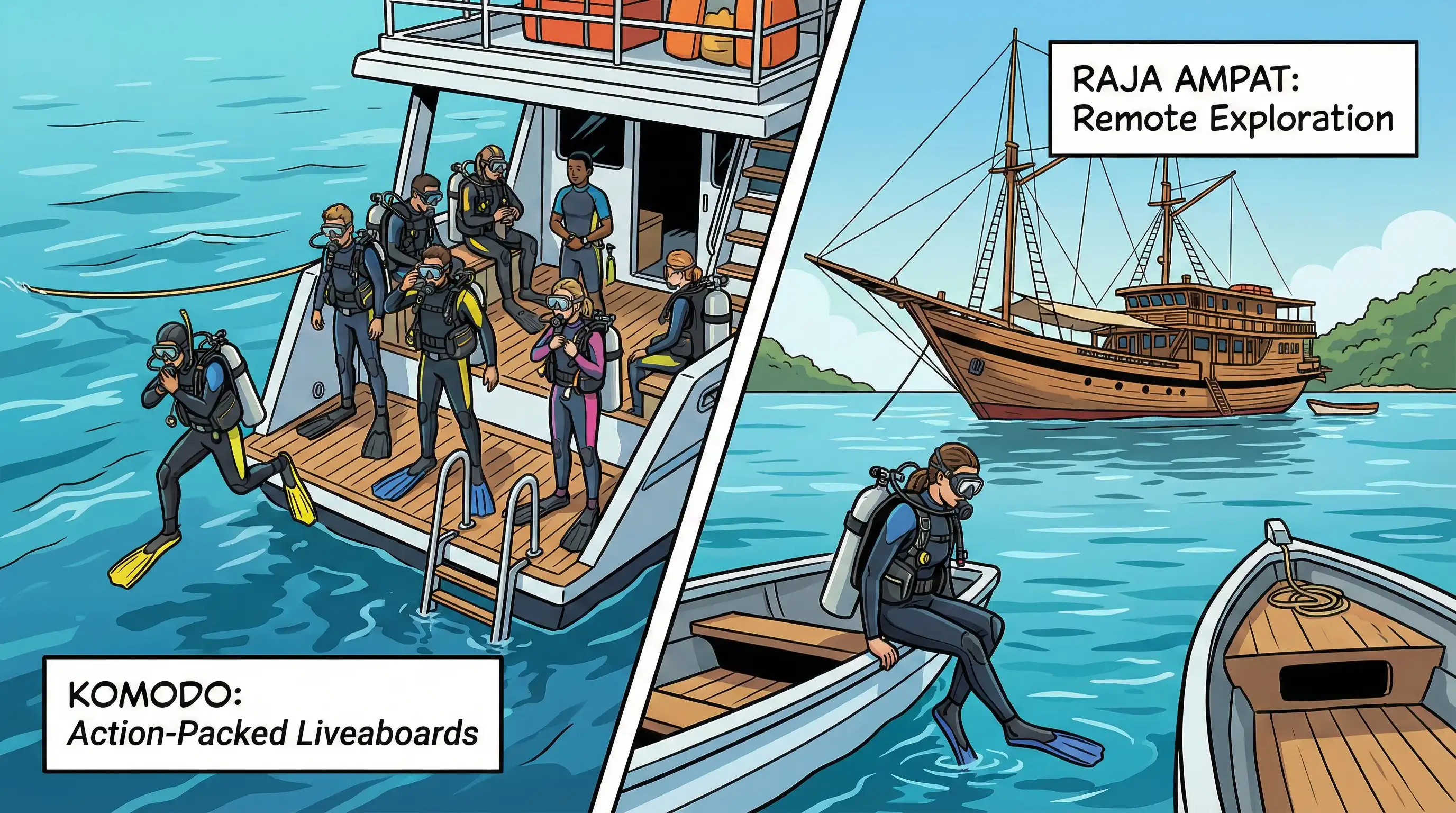
- Board day trip boats or liveaboards departing daily to dive sites
- Access the compact area of prime diving within 1-3 hours boat ride
The nearest airport in Labuan Bajo serves as a convenient hub with multiple daily flights from Bali. The town offers diverse accommodation from budget hostels to luxury resorts, plus dozens of dive operators and liveaboard options.
Reaching Raja Ampat
Raja Ampat demands significant logistical commitment reflecting its remote location:
- Fly internationally to Jakarta, Makassar, or Bali
- Connect to Sorong, West Papua (multiple flight segments required)
- Transfer by speedboat or liveaboard to your accommodation
- Navigate vast distances between island groups via boat
The journey typically consumes a full day from international arrival to final destination. No day trips from Sorong access the prime dive sites, liveaboards or remote eco-resorts/homestays near papuan villages are your only options.
Accessibility Comparison Table
| Factor | Komodo | Raja Ampat |
|---|---|---|
| International Gateway | Direct flights via Bali | Multiple connections required |
| Final Airport | Labuan Bajo | Sorong |
| Transfer Time to Diving | 1-3 hours | 3-6+ hours |
| Day Trip Viable | Yes | No |
| Accommodation Options | Extensive (all budgets) | Limited (resorts/homestays/liveaboards) |
| Minimum Recommended Stay | 3-5 days | 7-10 days |
For travelers with limited time or preferring flexibility, Komodo’s accessibility gives it a significant advantage. Raja Ampat rewards those willing to invest the effort with unparalleled exclusivity.
Budget and Cost Analysis
Cost differences between these destinations are substantial, driven primarily by accessibility, supply chains, and accommodation scarcity.
Komodo Budget Breakdown
Komodo offers options across the entire budget spectrum:
- Budget accommodation: $15-40/night in Labuan Bajo
- Mid-range hotels: $60-150/night
- Luxury resorts: $200-500+/night
- Day trip diving: $80-150 for 2-3 dives
- Liveaboard (3-4 nights): $500-1,500
- Premium liveaboard (7 nights): $1,500-4,000
- Park entrance fee: ~$20
Daily expenses in Labuan Bajo remain reasonable with abundant restaurant options and competitive diving operations.
Raja Ampat Investment Level
Raja Ampat commands premium pricing reflecting its remoteness:
- Homestays: $50-100/night (including meals)
- Eco-resorts: $200-500+/night
- Luxury resorts: $500-1,500+/night
- Liveaboard (7-10 nights): $3,000-7,000+
- Premium phinisi yachts: $5,000-10,000+
- Marine Park Entry Permit: ~$100
- Raja Ampat Visitor Entry Ticket: Additional fees apply
Limited supply chains mean everything costs more, and the lack of budget infrastructure makes Raja Ampat 2-3x more expensive than equivalent Komodo trips.
Cost Comparison Table
| Expense Category | Komodo | Raja Ampat |
|---|---|---|
| Budget Daily Rate | $50-100 | $150-250 |
| Mid-Range Daily Rate | $150-250 | $300-500 |
| Luxury Daily Rate | $300-600+ | $600-1,200+ |
| 7-Day Liveaboard | $1,500-3,000 | $3,500-7,000+ |
| Park/Entry Fees | ~$20 | ~$150+ |
| Domestic Flights | $50-150 | $200-400+ |
Budget-conscious travelers should choose Komodo for very high quality diving without premium pricing. Raja Ampat suits those prioritizing ultimate experiences over cost considerations.
Diving Experiences and Marine Life
The underwater experiences at each destination differ dramatically in character, even while both deliver absolutely incredible diving.
Raja Ampat Underwater World
Raja Ampat’s diving defines high quality diving through sheer abundance and diversity. The region’s protected position creates perfect conditions for reef development, resulting in coral gardens of extraordinary health and complexity.
Diving conditions: Generally calm with manageable currents, warm 27-30°C water, and excellent visibility reaching 25-35 meters. Some sites like Sardine Reef experience stronger tidal flows, but most diving suits intermediate to advanced beginners.
Signature dive sites:
- Cape Kri: World record biodiversity with 374+ species on single dives, fish pandemonium at its finest
- Melissa’s Garden: Pristine hard coral gardens stretching endlessly
- Manta Sandy: Reliable manta ray cleaning station
- Misool area: Dramatic karst topography with soft corals and small critters
The fish density here overwhelms, massive schools, endemic species, wobbegong sharks, epaulette sharks, pygmy seahorses, blue-ringed octopus, and nudibranchs create endless discovery. Raja Ampat gives a slight edge to anyone prioritizing reef health, biodiversity, and relaxed diving conditions.
Komodo Marine Encounters
Komodo offers a completely different diving personality, adrenaline-fueled, current-swept, and dominated by big animal action.
Diving conditions: Challenging unpredictable currents requiring solid buoyancy skills, temperature variations from 22-29°C (5mm wetsuit recommended for southern sites), and conditions demanding respect from experienced divers.
- Castle Rock: Current-swept pinnacle with more sharks, schooling fish, and giant trevally
- Batu Bolong: Small rock with incredible fish life on all sides
- Manta Point/Manta Alley: Reliable manta ray encounters
- Crystal Rock: Pristine corals with pelagic action
- Shotgun: Thrilling drift through a channel
Komodo delivers manta rays more consistently at dedicated manta hotspots, offers more frequent shark sightings, and provides the exhilarating drift dive experiences that thrill-seekers crave. The macro life, frogfish, nudibranchs, pygmy seahorses, rivals anywhere, hidden among black sand slopes and volcanic terrain.
Choose the best all year round liveaboard in Komodo: Komodo Sea Dragon
Above-Water Experiences
Beyond the diving, both destinations offer compelling topside adventures:
Komodo’s highlights:
- Komodo dragon treks on Komodo Island and Rinca
- Pink Beach with rare coral-tinted sand
- Padar Island’s iconic three-beach viewpoint
- Kalong Island bat emergence at sunset
- Dramatic landscapes of savanna and volcanic hills
- Secluded beaches throughout the national park
Raja Ampat’s highlights:
- Wayag and Piaynemo karst viewpoints
- Red Bird of Paradise and Wilson’s Bird of Paradise sightings
- Remote papuan villages for cultural immersion
- Kayaking through secret lagoons
- Snorkeling in shallow reef gardens
- Pristine jungle and limestone formations
Komodo offers more varied land activities including wildlife trekking and beach exploration. Raja Ampat emphasizes gorgeous topside scenery best appreciated by boat, with activities centering on water-based exploration and birdwatching.
Common Travel Challenges and Solutions
Both destinations present specific obstacles that proper planning can overcome.
Raja Ampat Logistics Complexity
Challenge: Multiple flight connections, permit requirements, and limited transportation options create planning headaches.
Solution: Book all flights at least 2-3 months in advance, secure liveaboard or resort reservations even earlier (6+ months for peak season), and budget extra time for potential delays. Many operators arrange permit purchases. Consider working with specialized travel agents familiar with the region.
Komodo Current and Safety Considerations
Challenge: Strong, unpredictable currents at popular dive sites require solid skills and can catch inexperienced divers off-guard.
Solution: Choose reputable dive operators who provide thorough briefings, honestly assess your experience level, and book with operators who maintain appropriate diver-to-guide ratios. Request exploratory dives at calmer northern sites if you’re building confidence. Both the north and south offer different conditions—work with guides to match sites to your ability.
Accommodation Booking Challenges
Challenge: Limited accommodation options in Raja Ampat and peak-season pressure at both destinations create booking difficulties.
Solution: Book 6-12 months ahead for Raja Ampat resorts and popular liveaboards at both destinations. Consider shoulder season travel for better availability. Homestays in Raja Ampat often have shorter booking windows but require flexibility.
Choosing Your Indonesian Diving Adventure
Raja Ampat vs Komodo ultimately comes down to what you prioritize in a dive safari Indonesia.
Choose Raja Ampat if you:
- Seek the world’s highest marine biodiversity
- Prefer pristine, uncrowded reef systems
- Want a remote, expedition-style experience
- Have flexible timing and generous budget
- Prioritize reef photography and small critters alongside diversity
Choose Komodo if you:
- Want easier accessibility from Bali
- Seek exciting big animal encounters and drift dives
- Have limited travel time (5-7 days feasible)
- Travel on a moderate budget
- Want to combine diving with komodo dragons and dramatic landscapes
Decision framework:
- Assess your diving experience honestly—Komodo’s currents demand solid skills
- Determine your realistic budget including all transportation
- Consider optimal timing based on your available travel dates
- Book accommodations and liveaboards early regardless of destination
- Consider combining both for the ultimate Indonesian adventure during seasonal transitions
Planning Resources and Accommodation Options
Essential booking platforms:
- Liveaboards.com for comparing liveaboard options
- Direct resort websites for Raja Ampat eco-lodges
- Local dive operators in Labuan Bajo for Komodo day trips
Recommended approaches:
- Komodo liveaboards: Multiple luxury options available, book 3-6 months ahead
- Raja Ampat liveaboards: Premium phinisi yachts require 6-12 month advance booking
- Raja Ampat resorts: Misool Eco Resort, Papua Paradise, and homestay networks
- Labuan Bajo accommodation: Range from budget hostels to waterfront luxury
Documentation requirements:
- Valid passport with 6+ months validity
- Raja Ampat Marine Park Entry Permit (purchase online or on arrival in Sorong)
- Komodo National Park entrance fees (payable at park or through operators)
- Dive certification cards and dive insurance verification
Weather and conditions monitoring:
- Windy.com for sea state forecasting
- Direct communication with operators for current conditions
- Flexibility for weather-dependent itinerary adjustments
Both destinations reward thorough preparation with experiences that define world-class diving. Whether you choose the pristine biodiversity of Raja Ampat or the accessible adventure of Komodo, Indonesia’s waters deliver encounters that justify the planning investment.