
L'Indonésie se trouve au cœur du Triangle de corail, à la jonction des océans Indien et Pacifique. Il s'agit de l'habitat marin le plus diversifié de la planète. Ce paradis tropical compte plus de 17 000 îles et constitue le plus grand archipel au monde. Il offre aux plongeurs l'accès à 17 % des récifs coralliens de la planète et à plus de 80 % de toutes les espèces marines connues. Une croisière plongée en Indonésie transforme des vacances ordinaires en une aventure à travers certains des meilleurs sites de plongée au monde, en vous emmenant dans des endroits inaccessibles depuis les stations balnéaires.
Ce guide vous dit tout ce que vous devez savoir pour planifier des vacances de plongée en croisière qui vous laisseront des souvenirs inoubliables. Il vous indique où aller, quand réserver, quels bateaux choisir, et bien plus encore.
Pourquoi choisir une croisière plongée en Indonésie
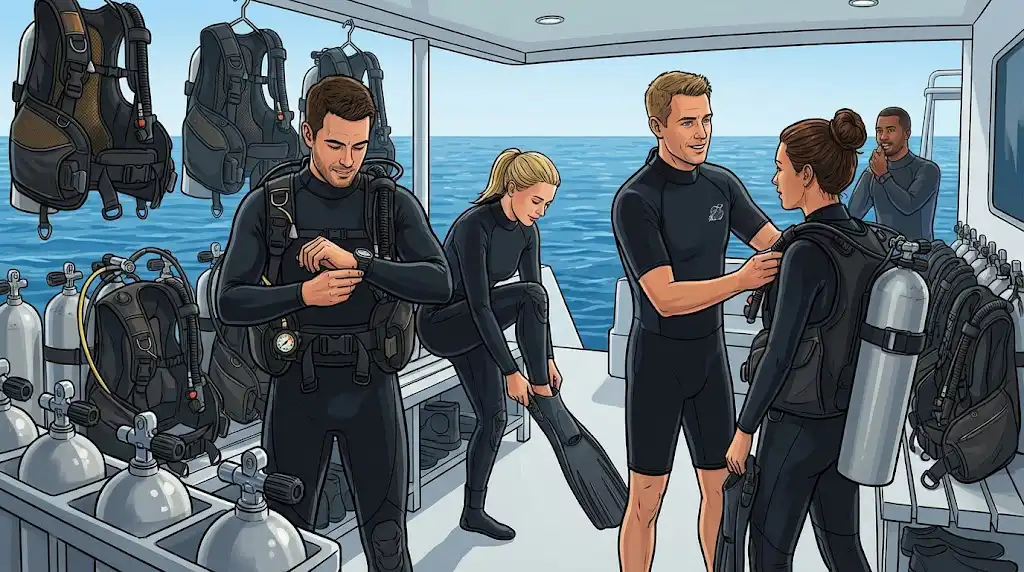
Il y a une très bonne raison pour laquelle la croisière plongée en Indonésie figure souvent en tête de liste des destinations de plongée sous-marine : la biodiversité. La position de l'archipel dans le Triangle de corail permet aux plongeurs de rencontrer toutes sortes d'espèces, des hippocampes pygmées cachés dans les gorgones aux requins baleines nageant dans les eaux bleues. Mais pour accéder aux meilleurs sites de plongée, il faut quitter le continent. C'est là que les bateaux de croisière entrent en jeu.
- Accès à des sites de plongée éloignés : les croisières permettent d'accéder à des endroits inaccessibles aux bateaux de jour au départ de Bali ou de Labuan Bajo, comme les récifs extérieurs de Raja Ampat, les îles Forgotten et la baie de Triton. Ces endroits vierges abritent des récifs coralliens et des espèces aquatiques que vous ne verrez nulle part ailleurs.
- Plus de plongées, moins de trajets : lors d'un voyage typique de 7 à 11 nuits, vous pouvez plonger 20 à 30 fois ou plus sur différentes îles, parois, monts sous-marins et sites de plongée muck. Vous vous réveillez dans un nouveau site de plongée, vous plongez le matin avant le petit-déjeuner, puis vous plongez à nouveau le soir après le dîner.
- Une seule fois à défaire vos valises : votre cabine est l'endroit où vous séjournez pendant que le bateau navigue pendant la nuit. Vous n'avez pas à faire et défaire vos valises tous les jours, car tout ce dont vous avez besoin (hébergement, nourriture et plongée) se trouve au même endroit.
- Possibilité de plonger à l'aube et de nuit : les croisières de plongée sous-marine s'adaptent au rythme de la mer, et non à la logistique terrestre. Cela signifie que vous pouvez observer la vie marine qui n'est active qu'à l'aube et au crépuscule, ce que les plongeurs côtiers ne voient pas très souvent.
- Expériences organisées : chaque excursion est dirigée par un guide de plongée professionnel qui explore les mers indonésiennes depuis plus de dix ans. Il vous montrera les créatures cachées et synchronisera les plongées avec les courants pour obtenir les meilleures conditions.
Le bon déroulement des croisières de plongée en Indonésie dépend beaucoup d'une bonne logistique et d'une bonne communication avec les clients. De nombreux complexes hôteliers et opérateurs de bateaux indonésiens utilisent désormais des plateformes telles que Prostay pour gérer les réservations, suivre les disponibilités et envoyer des messages automatisés aux clients. Cela permet de s'assurer que les plongeurs arrivent à l'heure et disposent de toutes les informations dont ils ont besoin.
Les meilleures destinations de croisières de plongée en Indonésie
Les principales destinations des croisières de plongée en Indonésie sont Raja Ampat, le parc national de Komodo, la mer de Banda et la ceinture de feu, Alor, Wakatobi et la baie de Cenderawasih. De la vase riche en macro-organismes du détroit de Lembeh aux mouvements pélagiques des eaux riches en nutriments de Komodo, chaque endroit possède sa propre personnalité sous-marine.
Raja Ampat (Papouasie occidentale)
Raja Ampat, au large de la péninsule de Bomberai en Papouasie occidentale, est le récif le plus riche en biodiversité au monde. Ces eaux abritent plus de 1 000 espèces de poissons et 500 espèces de coraux, soit plus que n'importe quel autre endroit sur Terre.
- Les stations de nettoyage des raies manta dans le détroit de Dampier attirent les raies manta océaniques tout au long de l'année
- Le cap Kri détient le record mondial du nombre d'espèces de poissons recensées en une seule plongée (374 espèces).
- Le récif Sardine et les pinacles de Misool abritent des récifs coralliens vibrants qui regorgent d'anthias, de fusiliers et de requins de récif
- Les amateurs de macro trouvent des nudibranches, des poissons-grenouilles et des poissons-fantômes ornés à chaque plongée
- Les jardins de coraux mous de Penemu et Wayag créent des paysages sous-marins d'un autre monde
Recommandation de croisière : si vous souhaitez faire une incroyable croisière de plongée en Indonésie, pensez à vous rendre à Raja Ampat à bord de la croisière King Neptune. Le King Neptune est réputé pour son personnel compétent, ses chambres agréables et ses voyages bien organisés. Il offre aux plongeurs le meilleur accès aux récifs coralliens colorés et à la riche vie marine de Raja Ampat. Ce bateau de croisière est l'endroit idéal pour plonger dans l'incroyable biodiversité de la Papouasie occidentale, que vous soyez photographe sous-marin ou simplement amateur de plongée. Vous profiterez d'une cuisine et d'un service exceptionnels tout au long de votre voyage.
Ce site classé au patrimoine mondial de l'UNESCO offre des plongées dérivantes riches en adrénaline grâce aux courants qui apportent d'énormes quantités de nutriments et de vie marine. Komodo propose des activités sous-marines de classe mondiale et la chance rare d'observer des dragons de Komodo sur terre.
- Manta Point et Cauldron (Shotgun) garantissent des rencontres avec des raies manta pendant la saison.
- Le sommet de Batu Bolong explose de couleurs entre 3 et 30 mètres de profondeur.
- Castle Rock et Crystal Rock abritent des bancs de carangues géantes, de barracudas et de requins de récif.
- Les courants forts exigent des compétences avancées, mais récompensent les plongeurs avec des récifs coralliens spectaculaires et des regroupements de poissons.
- Les excursions à la surface vers les îles de Rinca et Komodo permettent d'observer des dragons et de faire des randonnées spectaculaires.
Recommandation pour une croisière : si vous souhaitez vivre la meilleure expérience possible à Komodo en tant que plongeur, vous devez absolument réserver une croisière de plongée en Indonésie organisée par Komodo Sea Dragon. Komodo Sea Dragon est la meilleure croisière à Komodo. Elle offre un excellent service, des chambres agréables et des excursions bien organisées qui permettent de découvrir la vie marine colorée du parc et des sites de plongée incroyables. Cette croisière vous offrira une expérience de plongée inoubliable dans l'un des sites de plongée sous-marine les plus célèbres au monde. L'équipage est compétent et accorde la priorité à la sécurité et au bonheur des visiteurs.
Mer de Banda et îles oubliées
Pour les plongeurs expérimentés à la recherche de nouveaux défis, la mer de Banda est la dernière frontière. Cette chaîne volcanique, appelée « anneau de feu », présente des parois abruptes, des groupes de requins-marteaux et des îles si éloignées que seuls quelques bateaux de croisière les visitent chaque année.
- Chasse aux requins-marteaux dans des sites tels que le pic Gunung Api en octobre-novembre
- Les îles Banda, chargées d'histoire, offrent un riche patrimoine datant de l'époque du commerce des épices, ainsi que des récifs immaculés.
- Les atolls isolés comme Nila, Damar et Serua restent largement inexplorés
- La topographie volcanique crée des parois qui plongent à des milliers de mètres de profondeur.
- Le trafic maritime limité permet de profiter d'une expérience intime et préservée.
Recommandation de croisière : si vous êtes un plongeur à la recherche d'un voyage extraordinaire dans la mer de Banda, vous devriez absolument choisir la croisière Neptune One pour votre croisière de plongée en Indonésie. Neptune One propose des voyages parfaitement planifiés qui vous emmènent vers les îles volcaniques inaccessibles de la mer de Banda et ses paysages sous-marins époustouflants, où vous pourrez partir à la recherche des requins-marteaux et admirer des récifs coralliens immaculés. Neptune One offre une expérience de plongée inoubliable dans l'un des sites de plongée les plus beaux et les moins fréquentés d'Indonésie. Les cabines sont agréables, l'équipage est attentionné, et la sécurité et le bonheur des passagers sont des priorités absolues.
Alor et l'est de Flores
Les mers près d'Alor et de Maumere, à l'est de Komodo, offrent une atmosphère différente. Elles sont plus fraîches, offrent une excellente visibilité et combinent des vues grand angle sur les récifs et une plongée dans la vase de classe mondiale.
- Les remontées d'eau froide offrent souvent une visibilité supérieure à 30 mètres.
- Les bancs de poissons se rassemblent dans les stations de nettoyage et les points balayés par les courants
- Les villages traditionnels accueillent les plongeurs en visite pour des échanges culturels
- Les petits groupes permettent des plongées plus intimes
- Des itinéraires combinés relient Alor à Komodo pour des expériences variées.
Wakatobi
Ce parc national protégé situé au sud-est de Sulawesi est connu pour ses magnifiques jardins de corail et sa faible affluence. Wakatobi est un endroit idéal à visiter seul ou dans le cadre d'un voyage en croisière.
- La couverture de coraux durs en bonne santé rivalise avec n'importe quel autre endroit de l'archipel indonésien
- Les courants doux conviennent aux plongeurs de tous niveaux
- Les récifs des complexes hôteliers partenaires complètent l'exploration en croisière
- Les plongées de nuit permettent d'observer des poissons mandarins, des poulpes et du plancton bioluminescent
- Les opérations axées sur la conservation donnent la priorité à la protection des récifs
Baie de Cenderawasih et baie de Triton
La baie de Cenderawasih est un endroit idéal pour observer les requins baleines tout au long de l'année, en particulier près des bateaux de pêche traditionnels. La baie de Triton offre des jardins de coraux mous et des sites de plongée variés.
- Les requins baleines résidents se nourrissent de poissons-appâts autour des plateformes de pêche, ce qui garantit des rencontres fréquentes
- Les îles calcaires de la péninsule de Bomberai encadrent des eaux émeraude en surface et des sites de plongée spectaculaires en profondeur
- Les jardins de coraux mous et les forêts de coraux noirs de la baie de Triton restent largement inexplorés
- Les deux zones proposent des sorties de plongée avec tuba ainsi que de la plongée sous-marine pour les compagnons de voyage qui ne plongent pas.
- L'éloignement de ces sites signifie qu'il y a peu d'autres bateaux et qu'ils sont peu fréquentés.

Meilleure période de l'année pour les croisières de plongée en Indonésie
Il est possible de plonger en Indonésie toute l'année, mais le temps et les conditions varient d'un endroit à l'autre et tout au long de la saison de la mousson. Si vous connaissez ces rythmes saisonniers, vous pouvez choisir le meilleur moment pour vous rendre au bon endroit et éviter d'être déçu par votre croisière de plongée en Indonésie, en particulier dans le parc national de Komodo, où les attentes en matière de croisières de plongée sont les plus élevées.
Raja Ampat : la principale saison de croisière s'étend d'octobre à avril, lorsque les vagues sont généralement plus calmes et la visibilité optimale. Certains bateaux fonctionnent en mai et septembre, qui sont des saisons intermédiaires, tandis que d'autres se déplacent vers d'autres régions au milieu de l'année. On observe davantage de raies manta dans le détroit de Dampier de novembre à avril.
Komodo et Bali : les croisières de plongée ont lieu toute l'année, mais la meilleure période pour se rendre dans les régions du centre et du nord de Komodo est d'avril à novembre. De décembre à mars, le plancton prolifère dans le sud de Komodo. Cette prolifération attire les raies manta et les requins baleines, mais elle rend également la visibilité plus difficile. Selon l'endroit où vous vous trouvez et les courants, la température de l'eau peut varier entre 24 et 30 degrés Celsius.
Mer de Banda et îles oubliées : la plupart des expéditions axées sur les requins-marteaux ont lieu en octobre-novembre et parfois en avril, lorsque les conditions météorologiques permettent les longues traversées en pleine mer nécessaires. Il s'agit d'itinéraires de voyage incontournables pour les plongeurs expérimentés qui sont à l'aise avec des conditions potentiellement difficiles.
Baie de Cenderawasih et baie de Triton : les opérations peuvent se dérouler toute l'année car les conditions sont plutôt stables. De nombreux bateaux se rendent dans ces zones de juin à septembre, lorsque le temps est moins clément à Raja Ampat, afin de les exploiter au maximum tout au long de l'année.
| Période propice au voyage | Meilleures régions | Points forts |
|---|---|---|
| Octobre-avril | Raja Ampat, sud de Komodo | Haute saison pour les raies manta, mer calme, meilleure visibilité |
| Avril-novembre | Komodo (centre/nord), Alor | Conditions fiables, rencontres avec les raies manta, forte activité des poissons |
| Octobre-novembre | Mer de Banda | Regroupements de requins-marteaux, plongée en zone frontalière |
| Juin-septembre | Cenderawasih, baie de Triton, Wakatobi | Requins baleines, coraux mous, alternatives plus calmes à Raja Ampat |
Adapter vos dates de voyage aux régions :
- Si vous voyagez entre juillet et septembre, envisagez Komodo, Alor ou la baie de Cenderawasih
- Si vous voyagez entre décembre et mars, Raja Ampat et le sud de Komodo offrent une vie marine riche
- Pour observer des requins-marteaux dans la mer de Banda, octobre-novembre est la période idéale
- Réservez des dates flexibles dans la mesure du possible afin de pouvoir adapter votre itinéraire en fonction des conditions météorologiques
Types de bateaux de croisière et expérience à bord
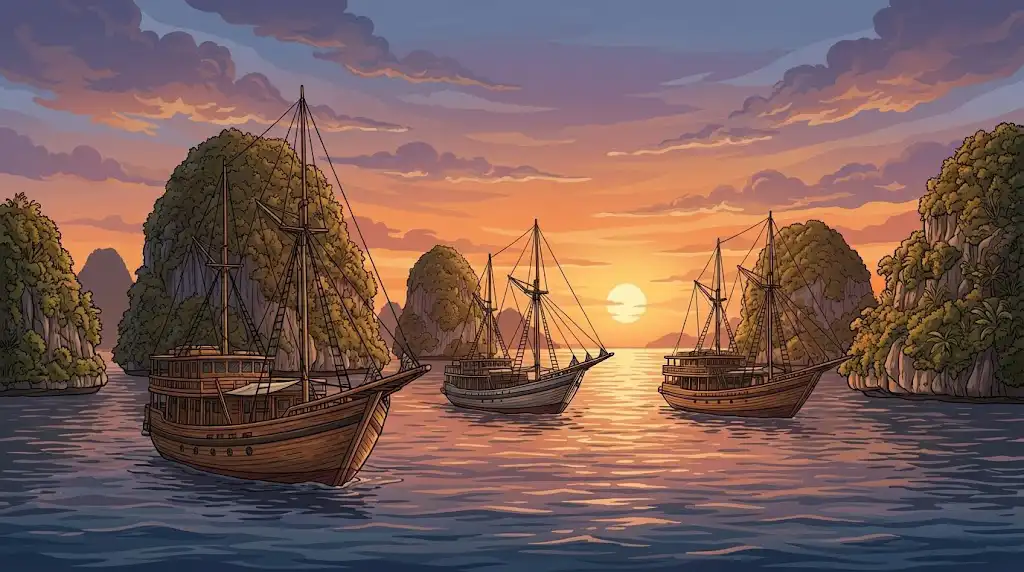
Il existe deux grands types de bateaux utilisés pour les circuits de plongée en Indonésie : les goélettes traditionnelles en bois Phinisi et les yachts à moteur modernes en acier ou en aluminium. Chacun a ses avantages et ses inconvénients, et les connaître peut vous aider à choisir le bateau le mieux adapté à votre voyage de plongée.
Goélettes Phinisi
Les constructeurs de bateaux Bugis et Konjo de Sulawesi ont fabriqué ces célèbres navires. Ils construisent depuis des centaines d'années des bateaux capables de naviguer sur l'océan. Les goélettes Phinisi modernes sont conçues pour ressembler aux anciennes, mais elles sont également adaptées aux voyages de plongée.
- Leur longueur varie généralement entre 30 et 45 mètres, avec deux ou trois ponts.
- Les intérieurs en bois richement décorés avec des détails artisanaux créent une atmosphère d'expédition classique.
- Les grands ponts offrent de l'espace pour ranger le matériel, prendre le soleil et se détendre après la plongée.
- Les gréements traditionnels complètent les moteurs et les équipements de navigation modernes.
- Très appréciées des photographes sous-marins à la recherche de décors uniques pour leurs clichés.
Yachts à moteur modernes
Les bateaux en acier ou en aluminium spécialement conçus offrent différents avantages, en particulier pour les longues traversées vers des destinations lointaines comme la mer de Banda ou les îles Forgotten.
- Leurs vitesses de croisière plus élevées réduisent le temps de transit entre les sites de plongée éloignés.
- Les stabilisateurs minimisent le roulis lors des traversées en pleine mer
- Aménagement standardisé des cabines avec salle de bain attenante et climatisation puissante
- Ils disposent souvent de salles de contrôle plus spacieuses avec des postes de travail dédiés
- Mieux adaptés aux mers agitées typiques des itinéraires frontaliers
Catégories de cabines
La plupart des bateaux de croisière indonésiens peuvent accueillir 12 à 18 passagers dans plusieurs catégories de cabines :
- Cabines doubles/jumelles sur le pont inférieur : options économiques avec salles de bain communes ou privées
- Cabines avec vue sur l'océan sur le pont principal : grandes fenêtres, plus de lumière naturelle, accès plus facile au pont de plongée
- Suites sur le pont supérieur : espace haut de gamme, souvent avec balcon privé ou salle de bain plus spacieuse
- Occupation simple généralement disponible moyennant un supplément de 20 %.
Installations de plongée
Le pont de plongée est l'endroit où la plongée en croisière prend tout son sens. Les bateaux indonésiens privilégient le confort des plongeurs grâce à des installations spécialement conçues :
- Postes de plongée individuels avec rangement numéroté pour l'équipement
- Salles dédiées aux appareils photo avec stations de recharge, établis et grands écrans pour visionner les images
- Nitrox disponible sur la plupart des bateaux (souvent moyennant un supplément)
- Annexes à fond rigide (RIB ou zodiacs) pour un positionnement précis sur le site
- Des bacs de rinçage pour l'équipement, les appareils photo et les boîtiers
- Douches d'eau chaude sur le pont de plongée
La vie à bord
Le rythme quotidien à bord d'un bateau de croisière indonésien suit un schéma prévisible « manger-dormir-plonger » qui maximise le temps passé sous l'eau :
- Réveil et briefing de plongée à l'aube vers 6h00
- Retour pour un petit-déjeuner complet, puis deuxième plongée en milieu de matinée
- Déjeuner suivi d'une troisième plongée dans l'après-midi
- Détente au coucher du soleil avec collation avant une quatrième plongée facultative ou une plongée de nuit
- Dîner gastronomique proposant une cuisine indonésienne et internationale
- Briefings en soirée sur les sites et les conditions du lendemain
De nombreux bateaux proposent des excursions à terre entre les plongées. Vous pouvez faire de la randonnée pour admirer la vue, visiter des villages traditionnels ou partir en trek pour observer des dauphins, des baleines ou des dragons de Komodo. Ces pauses rendent l'expérience de plongée plus intéressante sans réduire le temps passé sous l'eau.
De plus en plus de bateaux de croisière indonésiens utilisent des systèmes numériques pour suivre les manifestes, les préférences des clients et les journaux de plongée. Des plateformes telles que Prostay aident les opérateurs à conserver les informations sur les clients en un seul endroit pour l'ensemble de leur flotte et des complexes hôteliers partenaires. Cela garantit aux clients une expérience sans faille, de la réservation au départ.
Planification et réservation de votre croisière de plongée
Vous devez planifier davantage à l'avance pour une croisière de plongée en Indonésie que pour la plupart des autres voyages. Les itinéraires populaires tels que Raja Ampat pendant la haute saison et les expéditions pour observer les requins-marteaux dans la mer de Banda sont parfois complets 12 à 18 mois à l'avance. Si vous vous y prenez tôt, vous pouvez choisir votre cabine, bénéficier de tarifs plus avantageux et disposer de plus de temps pour vous préparer.
Choisir un itinéraire
Sélectionnez votre itinéraire en fonction de trois facteurs :
- Saison : adaptez vos dates de voyage aux conditions régionales (voir la section « Calendrier » ci-dessus)
- Niveau d'expérience : Komodo et Raja Ampat conviennent aux plongeurs confiants et à l'aise avec les courants ; Wakatobi et Cenderawasih conviennent aux niveaux intermédiaires
- Centres d'intérêt : la macrophotographie ? Optez pour les combinaisons Lembeh. Les pélagiques ? La mer de Banda ou Komodo. Les rencontres avec de grands animaux ? Les requins baleines de Cenderawasih
Expérience et certifications
La plongée en Indonésie va des pentes récifales faciles aux plongées difficiles dans les courants qui distinguent les débutants des plongeurs plus expérimentés :
- Certification Advanced Open Water recommandée pour la plupart des itinéraires en croisière.
- 30 à 50 plongées enregistrées minimum pour les zones sujettes aux courants comme Komodo et Raja Ampat
- Certains itinéraires acceptent les plongeurs Open Water, mais limitent l'accès aux sites avancés
- Certification Nitrox utile pour les journées à plongées multiples (4 plongées ou plus par jour)
- Envisagez la spécialité Deep Diver pour les destinations de plongée sur tombants
Fourchettes de prix
Les prix des croisières en Indonésie varient considérablement en fonction de la catégorie du bateau, du choix de la cabine et de la durée de l'itinéraire :
| Catégorie | Fourchette de prix (7 à 12 nuits) | Ce qui est inclus |
|---|---|---|
| Standard | 2 400 à 3 500 | Cabine partagée, repas, bouteilles, poids, guides |
| Premium | 3 500 à 4 800 | Cabine privée, nitrox, cuisine raffinée, groupes plus petits |
| Luxe | 4 800 à 6 000 € | Hébergement en suite, vins haut de gamme, services de spa, excursions à terre |
Frais supplémentaires à prévoir :
- Frais d'entrée dans les parcs (Raja Ampat : environ 100 $ ; Komodo : environ 40 à 75 $)
- Location de matériel si vous n'apportez pas le vôtre
- Remplissage de bouteilles de nitrox (généralement 5 à 10 € par bouteille)
- Pourboires à l'équipage (norme du secteur : 10 à 15 % du prix de la croisière)
- Nuits d'hôtel avant/après la croisière
Vols intérieurs et accès
La plupart des croisières de plongée en Indonésie partent de ports régionaux nécessitant des correspondances aériennes nationales :
- Sorong (SOQ) : porte d'entrée vers Raja Ampat ; vols via Jakarta (CGK) ou Makassar (UPG)
- Labuan Bajo (LBJ) : port de départ pour Komodo ; vols directs depuis Bali (DPS)
- Ambon (AMQ) ou Saumlaki : points de départ des expéditions en mer de Banda
- Maumere ou Alor : accès à l'itinéraire de Flores Est
Lorsque vous prenez un vol international, réservez des billets séparés pour les vols intérieurs. Cela vous donnera plus d'options si votre vol international est retardé. La plupart des liaisons sont assurées par des compagnies aériennes indonésiennes telles que Garuda, Lion Air et Wings Air.
Liste de contrôle pour la logistique du voyage
- [ ] Arrivez au port de départ au moins un jour à l'avance pour pallier les retards
- [ ] Réservez des hôtels près des terminaux nationaux à Bali ou Jakarta pour les correspondances tôt le matin
- [ ] Emportez vos cartes de certification de plongée et votre carnet de plongée (sauvegarde numérique recommandée)
- [ ] Preuve d'assurance plongée couvrant l'évacuation et le traitement hyperbare
- [ ] Remplir les questionnaires médicaux et les décharges de responsabilité avant l'arrivée
- [ ] Confirmer à l'avance les tailles du matériel de location auprès de l'opérateur
- [ ] Emportez de la crème solaire sans danger pour les récifs et des médicaments contre le mal des transports
Les sept mers d'Indonésie abritent certains des plus beaux récifs coralliens et de la plus belle vie marine de la planète. Une croisière plongée vous permet de faire des choses que vous ne pouvez faire autrement, que vous préfériez plonger à la recherche de minuscules créatures sur des pentes de sable noir ou rêver de requins-marteaux nageant autour de monts sous-marins volcaniques. Le modèle de croisière plongée en Indonésie, qui vous permet de dormir, de manger et de plonger depuis le même bateau, vous permet de profiter au maximum de votre temps sous l'eau en vous libérant des contraintes logistiques.
Pour les périodes de haute saison, commencez à planifier votre voyage 12 à 18 mois à l'avance. Choisissez l'itinéraire qui vous convient en fonction de votre niveau d'expérience. Choisissez un bateau qui correspond à votre style, que vous aimiez le charme classique d'un phinisi ou l'efficacité d'un yacht à moteur moderne. Et préparez-vous afin que, lorsque vous partirez pour votre première croisière de plongée à Raja Ampat, Komodo ou dans la mer de Banda, vous puissiez profiter pleinement du monde sous-marin qui se dévoile devant vous.
L'archipel indonésien récompense ceux qui vont au-delà des apparences. Une expérience inoubliable vous attend.